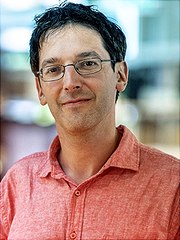
J. B. Ruhl serves as the David Daniels Allen Distinguished Chair in Law at Vanderbilt University School of Law, where he has established himself as a leading scholar at the intersection of environmental law, climate policy, and complexity theory. His interdisciplinary work bridges legal doctrine with ecological and systems science, focusing on adaptive governance frameworks for 21st-century environmental challenges. Ruhl's research centers on transforming environmental law to address climate change through innovative frameworks like ecosystem services integration , adaptive management , and complexity theory . His scholarship demonstrates how legal systems can evolve to manage nonstationary environments, particularly through reimagining regulatory approaches for climate adaptation infrastructure, endangered species protections, and sustainable development. Key contributions include foundational work on legal complexity metrics and the application of panarchy theory to environmental governance. Analysis of his recent publications reveals a pronounced shift toward climate disruption law , with increasing focus on 4°C scenarios, Green New Deal implementation challenges, and pandemic-environmental system interactions. His work consistently identifies structural barriers in existing environmental statutes while proposing concrete administrative reforms - particularly regarding permitting systems, regulatory flexibility, and cross-agency coordination. The trajectory shows growing emphasis on practical implementation frameworks rather than theoretical critiques. Ruhl maintains extensive collaborative networks across environmental law, with frequent co-authorship with scholars like James Salzman, Robin Craig, and Keith Hirokawa. His work appears in premier journals including Vanderbilt Law Review , Environmental Law , and Stanford Environmental Law Journal , demonstrating sustained influence in both legal and environmental policy circles. Current research increasingly engages with computational legal studies and systemic risk modeling, reflecting his pioneering integration of complexity science into legal scholarship.