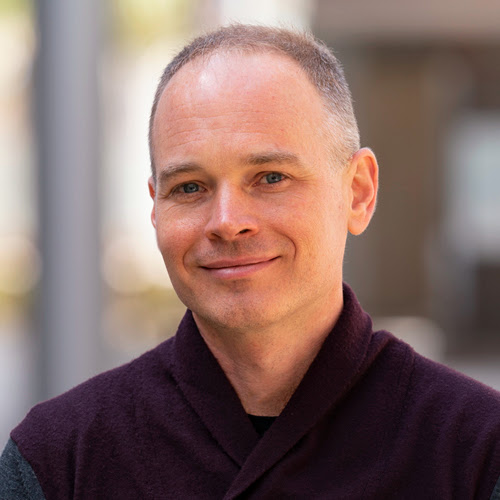
Kenneth C. Wilbur is a Professor of Marketing and Analytics at the University of California, San Diego's Rady School of Management. He holds the Sheryl and Harvey White Chair in Management Leadership and serves as Associate Editor for Marketing Science and the Journal of Marketing Research. Research focuses on quantitative marketing, customer analytics, and digital platform phenomena 18 award-winning papers across marketing, economics, and interdisciplinary journals Organizer of the Workshop on Platform Analytics with YouTube archives His work bridges empirical analysis with practical applications in advertising, blockchain technology, and regulatory compliance. Recent publications examine digital advertising inefficiencies, platform pricing algorithms, and policy impacts on consumer behavior. Scientific Awards John D. C. Little Award Finalist Don Morrison Long-Term Impact Award Finalist Frank M. Bass Award Winner Multiple Best Paper Finalists Teaching materials include UCSD courses: Customer Analytics and Introduction to Marketing Analytics. Publicly shares Quarto source files for educational reuse.
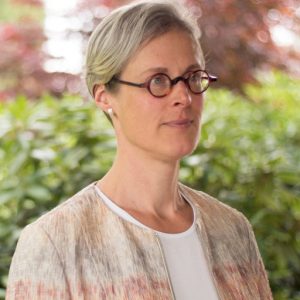
Claudia Ruitenberg is a Professor in the Department of Educational Studies at the University of British Columbia's Faculty of Education, specializing in philosophical and ethical dimensions of education with emphasis on early childhood contexts and global challenges like climate justice. Her research portfolio includes: Philosophical questions in early childhood education Ethics in and of early childhood education Speech act theory and educational discourses Educational hospitality frameworks Climate crisis and intergenerational justice Political education in populist contexts Recent publications demonstrate a critical shift toward climate emergency responses through educational ethics, examining how hospitality principles foster intergenerational solidarity. Her work challenges instrumental environmental education approaches, advocating for 'convivialist transformation' that rearranges desires and controls hubris, while integrating Levinasian ethics with multispecies pedagogy and pandemic-climate crisis intersections.
Dr. Benjamin de Haas is a vision scientist and faculty member at Justus Liebig University Giessen , Germany, within the Department of Psychology and Sports Science . He currently leads the ERC-funded Indivisual project and co-leads project C9 Factors influencing categorical face processing within the Collaborative Research Centre CRC/TRR 135. He is also a principal investigator in the NeurOscientific Workflow Assistance (NOWA) infrastructure project, dedicated to open, reproducible neuroscience. Research Focus Dr. de Haas pursues two intertwined questions: How do early and late stages of visual processing interact—from the initial registration of slanted edges to the recognition of faces? How and why do our perceptions differ from one person to the next? To answer these questions his group combines psychophysics, high-resolution eye-tracking, functional and quantitative MRI, and computational modelling, with a strong emphasis on face perception, individual differences, and naturalistic viewing conditions. Publications Overview Across more than 20 publications since 2016, Dr. de Haas has advanced understanding of individual differences in face processing, gaze control, and visual salience. His work repeatedly appears in Journal of Vision , Nature Communications , PNAS , and NeuroImage , highlighting a sustained focus on eye-movement behaviour, cortical representations of faces and scenes, and methodological best practices in neuroimaging. Current Supervision & Team Dr. de Haas currently supervises two PhD students: Elaheh Akbarifathkouhi Hilal Nizamoglu Together with Dr. Katharina Dobs (co-project leader) and affiliated post-docs and research technicians, the group forms the Indivisual laboratory at Giessen. Contact & Resources Email: Benjamin.de-Haas@psychol.uni-giessen.de Department of Psychology and Sports Science Otto-Behaghel-Str. 10F, 35394 Gießen, Germany
Miroslaw Staron is a Professor of Interaction Design and Software Engineering at Chalmers University of Technology. He maintains a unique 50/50 work arrangement, spending half his time on field research at Ericsson while holding his academic position. His research bridges academic theory with industrial practice through collaborations with major companies including Volvo Car Corporation and Volvo Information Technology. His research spans several key areas in software engineering: Software metrics and measurement systems in industry Model driven software development and empirical studies Defect prediction in software projects Requirements engineering in model-based development Applications of AI and machine learning in software engineering Automotive software development and security Staron's recent work demonstrates a strategic shift toward integrating AI technologies into software engineering processes, with particular focus on automotive applications. His publications from 2024-2025 reveal expertise in generative AI applications for code review automation, testing methodologies, and requirements engineering, showing how these technologies can transform traditional software development practices while addressing domain-specific challenges in automotive systems. Current research projects include: Kvantdatorer för framtidens mobilitetslösningar (2025-2027) Automatiserad och designoptimerad programvarukonstruktion/kodgenerering (2025-2029) Förvandla fordonsarkitektur med hjälp från AI (2021-2023) Arkitektonisk design och verifiering/validering av system med maskininlärning komponenter (2020-2024) With 78 publications documented in Chalmers' research database, Staron has established himself as a significant contributor to evidence-based software engineering research with strong industrial relevance.
Prof. Dr. rer. nat. Rasha Abdel Rahman is a leading figure in Neurocognitive Psychology at the Institute of Psychology, Humboldt-Universität zu Berlin . Her research bridges the domains of language production , visual perception , and semantic memory organization , with particular emphasis on electrophysiological mechanisms (EEG) and emotional influences on cognitive processing. Habilitation in Psychology (2008), Ph.D. in Psychology (summa cum laude, 2001), and M.S. in Psychology (1997) from Humboldt-Universität Since 2010: Heisenberg Professor of Neurocognitive Psychology 2009: Heisenberg Fellow Her research interests focus on: Language production mechanisms Interface between vision, semantics, and language Functional organization of semantic memory Attentional and emotional modulation of perception Face and object perception dynamics Mental imagery processes The laboratory employs behavioral and electrophysiological (EEG) methods to investigate how knowledge shapes perception and language processing. Recent studies examine: Emotional content's impact on social judgment AI-generated face perception Art perception influenced by artist morality Trustworthiness effects in visual consciousness Selected scientific awards include: Heisenberg-Fellowship (DFG, 2008) Heinz Heckhausen Junior Scientist Award (DGPs, 2002)
Mikael Johansson is a Professor in the Department of Psychology at Lund University, where he leads research on the cognitive and neural bases of memory and cognitive control. His academic appointments include membership in eSSENCE: The e-Science Collaboration, LAMiNATE (Language Acquisition, Multilingualism, and Teaching), LU Profile Area: Proactive Ageing, and LU Profile Area: Natural and Artificial Cognition. With 159 research outputs and leadership in 18 projects (8 active), he maintains a prominent position in cognitive neuroscience research. His research focuses on the neural mechanisms of memory using behavioral, electrophysiological (EEG/ERP), and functional magnetic resonance imaging (fMRI) methods. Key interests include interactions between memory systems, formation and retrieval of episodic memories, emotion regulation and emotional memory, mechanisms underlying incidental and intentional forgetting, and the relationship between eye-movements, mental imagery and memory. His work has significant implications for understanding memory functions in psychiatric conditions such as depression and post-traumatic stress disorder. Analyzing his extensive publication record spanning from 2012-2025 reveals a consistent focus on memory mechanisms with increasing integration of eye-tracking methodologies and clinical applications. His research demonstrates an evolving trajectory from basic memory processes toward understanding memory in real-world contexts and clinical populations, with recent work emphasizing the role of eye movements in memory construction and the neural dynamics of memory integration. Mikael Johansson serves as a member of The Swedish National Committee for Psychological Sciences at the Royal Swedish Academy of Sciences since 2011 and has received significant research funding including from The Bank of Sweden Tercentenary Foundation, Swedish Research Council, and Stiftelsen Marcus och Amalia Wallenbergs Minnesfond. His current major projects include TEAM: Transdisciplinary Approaches to Learning, Acquisition, Multilingualism (2024-2029), Tracking cognitive change as a function of normal ageing and different types of degenerative disease, and How the brain constructs the present and reconstructs the past via sequences of eye movements. He leads the Lund Memory Lab where his team investigates how the brain constructs and maintains coherent episodic memories through eye movements. His research group actively collaborates with international partners across multiple disciplines, bridging cognitive psychology, neuroscience, and clinical applications. The lab's work has gained significant attention, with several publications being highlighted in news outlets and academic discussions.
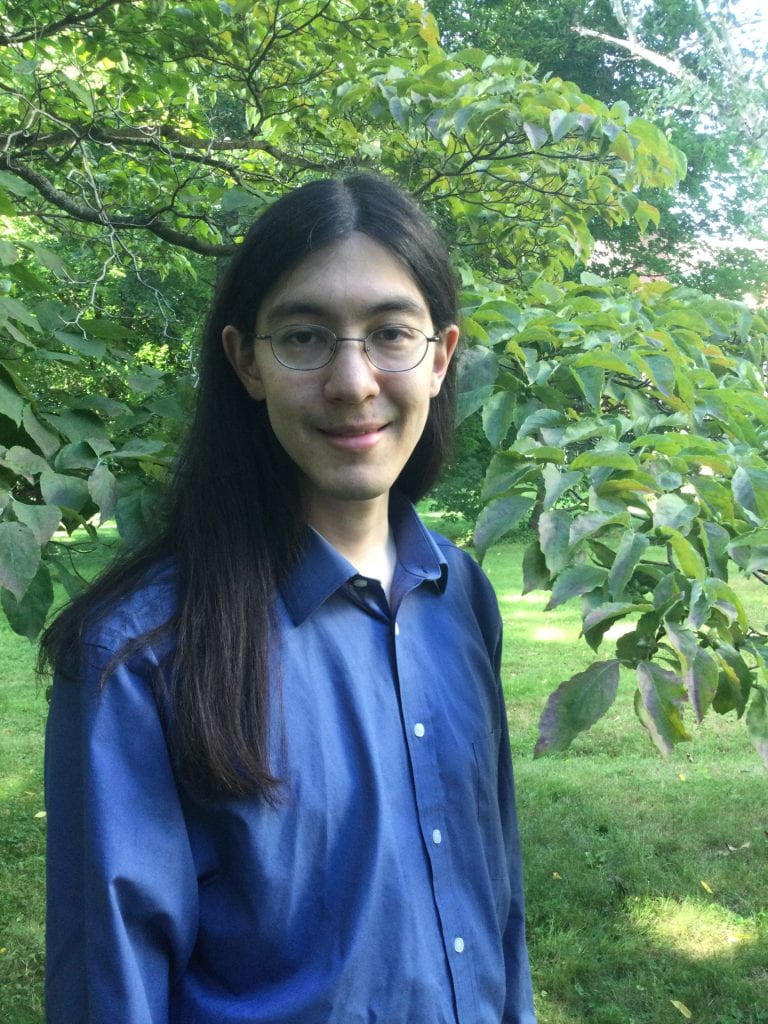
Liam Hynes-Tawa is a Lecturer on Music at Harvard University, specializing in modern Japanese and Renaissance European forms of tonality. His research explores the interplay between irreconcilable pitch systems, the nature of modes and keys, and their graphical representation in historical contexts. Education: BA in Music and East Asian Studies (Brown University), PhD in Music Theory (Yale University) His work bridges comparative musicology and historical music theory, with recent publications in Intégral , the History of Theory blog , and Analytical Approaches to World Music . He was awarded the 2022 Outstanding Publication Award by the Society for Music Theory for his contribution to the latter. Liam remains actively engaged in performance, playing cello, singing (especially from early notations), and composing music in his spare time.
Lucy Arendt serves as Professor of Business Administration – Management and Co-Director of the Center for Exceptional Leadership at St. Norbert College's Schneider Business School, where she teaches organizational behavior, leadership, and strategic management at undergraduate and graduate levels. Her global teaching initiatives include leading student cohorts to Europe for leadership studies and Mexico for international business immersion since joining the institution in 2016 after 26 years at UW-Green Bay. Her educational credentials include a B.S. and M.S. from the University of Wisconsin-Green Bay and a Ph.D. from the University of Wisconsin-Milwaukee. B.S., University of Wisconsin-Green Bay M.S., University of Wisconsin-Green Bay Ph.D., University of Wisconsin-Milwaukee Dr. Arendt's research centers on decision-making dynamics within disaster contexts, spanning mitigation through recovery phases. Her fieldwork across 15+ disaster zones—from New Orleans post-Katrina to Nepal's earthquake aftermath—examines how formal and informal leaders drive organizational and community resilience. This interdisciplinary work bridges business strategy with emergency management, emphasizing leadership's role in crisis navigation and long-term recovery. Her publication trajectory reveals evolving focus from early humor studies in organizational behavior toward comprehensive disaster resilience frameworks. Recent works analyze transformational leadership failures (2024), tornado recovery systems (2023), and engineered resilience metrics like the PEOPLES framework (2016), demonstrating consistent integration of organizational theory with real-world disaster response challenges across healthcare, infrastructure, and community systems. Notable recognition includes the UW-Green Bay Founders Association Award for Excellence in Teaching (2008-09) and a University Award for Collaborative Achievement (2013-14) for innovative international education programming. UW-Green Bay Founders Association Award for Excellence in Teaching (2008-09) UW-Green Bay Teaching Award for Experienced Teacher (2010) University Award for Excellence in Collaborative Achievement (2013-14) Her advisory impact extends through FEMA and NIST consultations, federal earthquake hazards committee leadership, and the Housner Fellows Leadership Development Program. She has directed disaster-reconnaissance teams for EERI across four continents, translating field insights into policy recommendations for governmental and nonprofit entities including Procter & Gamble and the U.S. Chamber of Commerce. As EERI board secretary/treasurer and federal Advisory Committee chair, she drives cross-sector collaboration on seismic safety standards. Her Center for Exceptional Leadership initiatives foster student development through experiential learning, while ongoing research partnerships with international agencies advance community resilience metrics for global disaster-prone regions.
Lianne Lefsrud serves as Associate Professor and Risk, Innovation, and Sustainability Chair (RISC) in the Department of Chemical and Materials Engineering at the University of Alberta's Faculty of Engineering. Her interdisciplinary research bridges engineering, social sciences, and policy to transform risk management practices across energy, mining, construction, and railroading industries, directly influencing regulations, building codes, and industry operations for sustainable development. Her academic credentials include: BSc in Civil Engineering (Cooperative Program), University of Alberta (1994) MSc in Interdisciplinary Civil & Environmental Engineering and Sociology, University of Alberta (1996) PhD in Strategic Management and Organization, Alberta School of Business (2014) Dr. Lefsrud's research centers on risk management frameworks for sustainability challenges. She examines hazard identification, social license to operate, and technology adoption drivers in high-hazard industries, with emphasis on prospective risk assessment (e.g., hydrogen infrastructure design) and retrospective analysis (e.g., microplastic pollution impacts). Her work integrates circular economy principles into energy systems while addressing unintended consequences across UN Sustainable Development Goals. Recent publications (2024-2025) demonstrate heavy focus on machine learning applications for rail and construction safety, hydrogen infrastructure risk analysis, and science denial mitigation. Key patterns show cross-industry adaptation of AI for incident prediction, regulatory gap analysis for emerging energy systems, and socio-technical approaches to reconcile sustainability goals with operational realities. Scientific recognition includes: Erb Post-Doctoral Fellowship (University of Michigan) Dow Sustainability Research Fellowship (Ross School of Business) Dr. Lefsrud mentors graduate students through industry-integrated projects like her Sustainable Design course where teams generated patents and city solutions. Her research secures Alberta Innovates funding with 1:4 industrial-to-federal matching, collaborating with Suncor, Transport Canada, and Canadian Standards Association. Grants target practical implementations including railcar inspection systems and hydrogen safety protocols. She co-founded Insight Risk Systems and leads the Lefsrud Lab, prioritizing inclusive teams with under-represented groups (women, Indigenous, LGBTQ2S+, neurodiverse) to tackle 'wicked problems' in sustainability. The lab leverages interdisciplinary partnerships across engineering, computer science, psychology, and environmental sociology for real-world risk management solutions.
Michael Hawkins serves as Associate Professor and Department Chair in the Department of History within Creighton University's College of Arts and Sciences. His research centers on empire, Islam, and agency in Asia with particular focus on historical time and Southeast Asian colonial dynamics. Education: PhD (2009) Northern Illinois University MA (2004) Boise State University BA (2002) Brigham Young University Hawkins' scholarship critically examines colonial power structures through lenses of time, gender, and cultural representation. His work reveals how imperial forces constructed notions of historical progress while indigenous communities negotiated agency within colonial frameworks. Special attention is given to American military rule in the Philippines' Muslim South, where he analyzes intersections of violence, masculinity, and temporal frameworks that shaped colonial governance. Recent publications demonstrate consistent thematic evolution from early examinations of Bud Dajo massacre narratives toward contemporary analyses of counterinsurgency warfare and colonial exhibitions. His research trajectory shows deepening engagement with spatial-temporal dimensions of empire, moving from textual analysis of historical consciousness to material studies of world's fair exhibits and military operations. Professional recognition includes: Magis Faculty Research Grant (2014) supporting Southeast Asian historical research Magis Core Development Grant (2013) for curriculum innovation J. William Fulbright Research Grant (2007-2008) enabling extended fieldwork in the Philippines Hawkins maintains active mentorship of undergraduate researchers while directing departmental operations. His grant portfolio reflects sustained institutional investment in Philippine and Southeast Asian studies, with particular emphasis on decolonizing historical methodologies. The authorship of both specialized linguistic resources (Tagalog Verb Dictionary) and broad historical analyses (Making Moros) demonstrates methodological range across cultural, military, and intellectual history.
Guoquan Huang is an Assistant Professor in the Department of Mechanical Engineering at the University of Delaware. He holds a B.Eng. in Automation from the University of Science and Technology, Beijing (2002), and M.Sc. and Ph.D. degrees in Robotics from the University of Minnesota (2009 and 2012). Prior to his current role, he was a Postdoctoral Associate at MIT's Computer Science and Artificial Intelligence Laboratory (CSAIL). His research focuses on robotics, computer vision, and autonomous systems, emphasizing probabilistic perception, estimation, and control for ground, aerial, and underwater vehicles. He leads the development of the OpenVINS platform for visual-inertial estimation and has contributed to advancements in SLAM (Simultaneous Localization and Mapping), sensor fusion, and multi-robot coordination. Education: B.Eng in Automation (Electrical Engineering), University of Science and Technology, Beijing, 2002 M.Sc. in Robotics, University of Minnesota, Twin Cities, 2009 Ph.D. in Robotics, University of Minnesota, Twin Cities, 2012 His research interests span robotics, computer vision, and autonomous systems , with a focus on: Visual-inertial navigation and SLAM Sensor fusion (LiDAR, IMU, camera) Autonomous vehicle control and safety Multi-robot cooperative localization His recent publications (2023–2025) emphasize robust algorithms for navigation in GPS-denied environments, real-time sensor calibration, and dataset development for aerial visual localization. He has pioneered techniques like decoupled error-state estimation and consistent parallel frameworks for SLAM. Labs/Teams: Leads the development of the OpenVINS research platform, focusing on visual-inertial state estimation. Collaborates on projects involving human-swarm interactions and resilient ground vehicle navigation.
Gabriele Gratton is a Professor in the Department of Psychology and Neuroscience Program at the University of Illinois Urbana-Champaign, and serves as a Theme Lead at the Beckman Institute for Advanced Science and Technology. With over 178 research outputs, Gratton has established a distinguished career in cognitive neuroscience with a focus on brain function, aging, and neuroimaging techniques. Gratton's research interests center around brain function and activity , particularly using Event-related Optical Signal (EROS) and other neuroimaging methods. Key areas include optical imaging , aging effects on cognition , event-related brain potentials , and cerebrovascular health . Much of their work investigates how vascular health, fitness, and aging interact to affect brain structure and cognitive performance across the lifespan. The research portfolio shows a strong trend toward multimodal neuroimaging approaches, with recent work focusing on trimodal brain imaging techniques that simultaneously investigate human brain function. There's also significant emphasis on understanding how physical activity and fitness impact cognitive aging, white matter integrity, and cerebrovascular health. Association for Psychological Science Fellow (2006) Foundation of Augmented Cognition Award (2005) President of Society for Psychophysiological Research (2009) SPR Award for Distinguished Contributions to Psychophysiology (2019) SPR Early Career Award (1997) Gratton has received extensive recognition for their work, with publications being picked up by news outlets and shared across social media platforms. Their research has been referenced by numerous scholars, with several papers accumulating significant reader attention on academic platforms like Mendeley. Much of this work is conducted through the Beckman Institute, where Gratton leads research themes focused on advanced brain imaging and cognitive neuroscience.
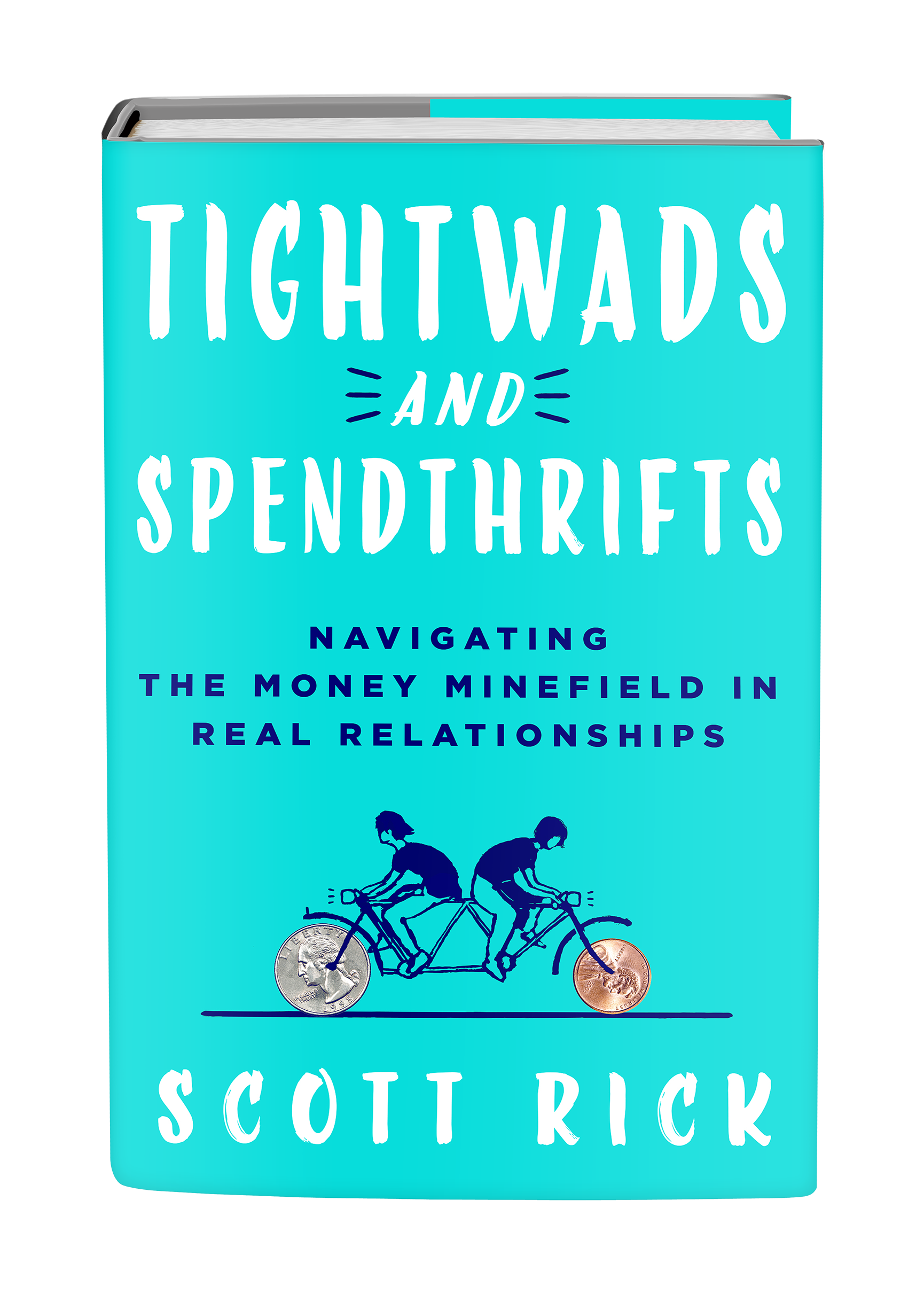
Scott Rick is an Associate Professor of Marketing at the University of Michigan’s Ross School of Business, holding a PhD in Behavioral Decision Research from Carnegie Mellon University (2007) and a post-doctoral fellowship at Wharton. His research focuses on the emotional drivers and consequences of consumer financial decisions, particularly the behaviors of tightwads and spendthrifts. He aims to understand deviations from economically rational or happiness-maximizing decisions and design interventions to improve consumer well-being. Education: PhD in Behavioral Decision Research, Carnegie Mellon University, 2007 Post-doctoral Fellowship at Wharton School, 2007–2009 Research Interests: Dr. Rick explores how emotions influence financial decisions, including spending habits, debt management, and interpersonal financial dynamics. His work spans consumer psychology, behavioral economics, and policy design. Recent projects investigate couples' financial decision-making and bank account structures' impact on relationships. Publications & Media: Rick has published in top journals like Journal of Consumer Research and Neuron , with media coverage in New York Times , Wall Street Journal , and NPR . His 2024 book Tightwads and Spendthrifts addresses financial challenges in relationships. Recent studies include subjective knowledge differences in couples and the effects of co-branded credit cards. Awards & Impact: Recognized with research and teaching awards at Ross. His work informs policy interventions and marketing strategies to enhance consumer decision-making quality and well-being.
Paolo Pasquariello is a Professor of Finance at the Ross School of Business, University of Michigan , where he holds the John C. and Sally S. Morley Professor of Finance chair. He earned his MBA (1998) , M.Phil. (2002) , and Ph.D. (2003) from New York University's Stern School of Business , following a BA (1994) at Luigi Bocconi University in Milan. Ross School of Business , University of Michigan: John C. and Sally S. Morley Professor (2023–present) Professor (2018–present) Associate Professor (2010–2018) Assistant Professor (2003–2010) Visiting Appointments : Hans Dalborg Visiting Professor of Finance, Stockholm School of Economics (2013) Visiting Scholar, Universita' Ca' Foscari, Department of Economics (2019) Research Interests span Information Economics , International Finance , and Market Microstructure . His work examines how information asymmetry, political uncertainty, and speculative behavior influence financial markets, with a focus on dislocations, contagion, and liquidity dynamics. Article Trends reveal a trajectory from foundational studies in currency markets and equity comovement to contemporary analyses of political risk , pandemic economics , and cross-market trading strategies . He integrates prospect theory and empirical finance to assess market quality and investor behavior. Scientific Awards : Michael J. Brennan RFS Best Paper Runner-Up Award (2014) for Financial Market Dislocations Media & Public Engagement : A frequent commentator on financial crises and economic policy, he has contributed to outlets like The New York Times , CNN , and The Hill . His LinkedIn blog series on pandemic economics and international finance reaches a global audience.
Maryam Dilmaghani is a Professor of Economics at the Sobey School of Business, Saint Mary's University. Her research focuses on gender economics, labor markets, health economics, and behavioral economics. She examines topics such as decision-making under competition, socio-cultural influences on economic behavior, and disparities in well-being across demographic groups. Her work frequently employs empirical approaches to analyze data from elite competitions, labor markets, and Canadian demographic trends. Key research themes include: Gender gaps in earnings, risk-taking, and corrupt behavior Impact of religiosity, education, and body image on economic outcomes Demographic patterns in fertility, homeownership, and citizenship Discrimination studies related to race, sexual orientation, and gender identity Her recent publications explore weather effects on chess player performance, LGBTQ+ economic experiences, and the causal links between education and health behaviors. This work highlights intersections between economic systems and sociocultural factors shaping individual choices and societal structures. Dr. Dilmaghani holds no currently listed awards but has produced a prolific body of peer-reviewed research. Her work contributes to policy debates on workplace diversity, urban planning equity, and labor market inclusion. She can be reached at maryam.dilmaghani@smu.ca for academic collaboration inquiries.