
Prof. Dr. Fabian Gieseke is a Professor and Chair of Machine Learning and Data Engineering at the University of Münster. He holds a PhD in Computer Science from Carl von Ossietzky University of Oldenburg and a dual degree in Mathematics and Computer Science from the University of Münster. His research focuses on Machine Learning, High-Performance Computing, and their applications in Geosciences, Smart Cities, and Astrophysics. Education: PhD in Computer Science (2012), Carl von Ossietzky University of Oldenburg University studies in Mathematics and Computer Science (2006–2011), University of Münster Research Interests: Data Mining and Machine Learning High-Performance Computing & Distributed Systems Deep Learning Applications in Environmental Science and Astrophysics Geospatial Data Analysis using Satellite Imagery Publications Trends: His recent work emphasizes large-scale environmental monitoring via deep learning, including canopy height estimation, forest biomass prediction, and national-scale tree counting. He also explores interactive systems for geospatial data retrieval and optimization of machine learning models for resource-constrained environments. Advising & Grants: Supervised over 30 theses on topics like satellite image analysis, deep learning on microcontrollers, and data marketplaces for smart grids. Active in securing grants for interdisciplinary projects combining AI with Earth observation. Labs/Teams: Leads the Machine Learning and Data Engineering group at the University of Münster, focusing on scalable AI solutions for real-world challenges in science and industry.
جستوجوی استاد و پژوهشگر
استاد راهنما، استاد دانشگاه یا پژوهشگر مناسب برای مسیر پژوهشیتان را پیدا کنید و با او ارتباط بگیرید.
نمایش ۷۶-۹۰ از ۵٬۴۴۸ استاد راهنما
اطلاعات این پروفایلها از صفحات عمومی دانشگاهها جمعآوری شده و ممکن است بهروز نباشد.
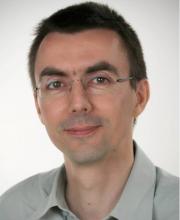
Tobias Dick serves as Professor and Head of the Division of Redox Regulation at the German Cancer Research Center (DKFZ) in Heidelberg, maintaining a primary affiliation with Heidelberg University's Faculty of Biosciences. His leadership spans molecular switch research within the SFB/TRR186 consortium focusing on spatio-temporal control of cellular signal transmission. Academic Background: PhD in Biochemistry, Freie Universität Berlin (1997, summa cum laude) Habilitation in Biochemistry, Heidelberg University (2009) Diploma thesis at German Cancer Research Center (1994) Study program in Biochemistry, Freie Universität Berlin (1989-1994) Research Focus: Dick pioneers investigations into thiol-based redox switches governing cellular signal transduction. His work establishes fundamental mechanisms of peroxiredoxin-mediated hydrogen peroxide signaling, protein persulfidation dynamics, and sulfur-based radical scavenging systems. Key contributions include developing real-time imaging probes for redox species and elucidating redox relays connecting peroxiredoxins to transcription factors like STAT3. Current research explores hydropersulfide protection against ferroptosis and metabolic adaptation through redox-sensitive enzymes. Publication Trends: Over 15 years of high-impact publications reveal an evolutionary trajectory from foundational redox imaging techniques (2008-2011) to sophisticated molecular mechanism studies (2013-2020), culminating in recent breakthroughs on sulfur signaling in cell death pathways (2023). His work consistently appears in premier journals like Nature Chemical Biology , demonstrating sustained innovation in redox biology methodology and conceptual frameworks. Scientific Recognition: ERC Advanced Grant (2017) Society for Free Radical Research Europe Basic Science Award (2017) Chica- and Heinz-Schaller-Award for young scientists (2009) Marie Curie Excellence Grant (2004) DFG Postdoctoral Fellowship (1998-2000) Studienstiftung des Deutschen Volkes Scholarship (1989-1994) Leadership & Mentorship: As founding vice-coordinator of DFG priority program SPP1710 (2014-present) and GBM Redox Biology Study Group (2011-2017), Dick shapes national research agendas. His division at DKFZ mentors next-generation scientists through ERC and DFG-funded projects, with trainees contributing to landmark publications on redox switches and cellular physiology. Research Infrastructure: The Division of Redox Regulation operates within DKFZ's state-of-the-art facilities, collaborating extensively through the SFB/TRR186 consortium. This environment enables cutting-edge investigations into redox-controlled cellular processes using advanced biochemical, imaging, and computational approaches.
Prof. Dr. Jürgen Janek is a leading researcher in solid-state electrochemistry, affiliated with the Institute of Physical Chemistry at Justus Liebig University Giessen and serving as Scientific Director of the KIT/BASF Joint Laboratory BELLA . He manages the Giessen Center for Materials Research and leads the FestBatt competence cluster. Expertise in atomic mobility in solids Focus on electrochemical energy storage Key participant in the POLIS Cluster of Excellence His recent research explores solid-state batteries , post-lithium systems (sodium/magnesium), and bioanalytics using TOF-SIMS. Collaborations with BASF AG and Degussa AG drive application-oriented projects on material stability and degradation. Scientific accolades include: Four-time Highly Cited Researcher (Clarivate) 2022 Leopoldina Greve Prize (with Kerstin Volz) Election to the German National Academy of Sciences Leopoldina (2022) Prof. Janek's work involves interdisciplinary collaborations across KIT, Ulm University, and industry partners. His group investigates mixed-ion conductors , electrode kinetics , and plasma-electrochemistry interfaces , supported by grants from BMBF and industry.

Prof. Torsten Wolfgang Kuhlen serves as a Universitätsprofessor at RWTH Aachen University, leading the Teaching and Research Area for Virtual Reality and Immersive Visualization within the Department of Computer Science. He is affiliated with Chair of Computer Science 12 (High Performance Computing), the Visual Computing Institute, and remains an integral part of the RWTH IT Center where his research group operates one of the world's largest Virtual Reality laboratories including the 30 sqm aixCAVE visualization chamber. The group maintains strong connections with Computational Science & Engineering Division, National High Performance Computing Center for Computational Engineering Science (NHR4CES), and VR in Science and Industry Network NRW e.V. Prof. Kuhlen's research spans virtual reality, immersive visualization, and multimodal 3D user interfaces with applications across simulation science, production technology, neuroscience, and medicine. His work combines basic research on advanced methods and algorithms with interdisciplinary collaborations involving RWTH Aachen institutes, Forschungszentrum Jülich, and industry partners. Recent publications demonstrate strong focus on audiovisual perception, immersive analytics, collaborative virtual environments, and practical VR applications in education and manufacturing. His research group has produced significant work on listening effort in virtual environments, immersive authoring techniques, and VR applications for scientific visualization. Notable projects include VRScenarioBuilder for automated vehicle testing and applications in monitoring additive manufacturing processes. The group actively participates in major conferences including IEEE VIS and EuroVis, with several award-winning contributions. Prof. Kuhlen has advised PhD students including Martin Bellgardt who recently completed his doctoral degree on "Increasing Immersion in Machine Learning Pipelines for Mechanical Engineering". The research group maintains state-of-the-art VR infrastructure including the aixCAVE facility which is open to all RWTH research groups.
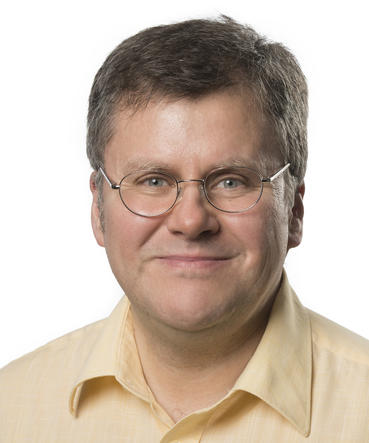
Joachim Weickert is a Professor of Mathematics and Computer Science at Saarland University where he heads the Mathematical Image Analysis Group since 2001. He received his diploma and Ph.D. in mathematics from the University of Kaiserslautern (1991, 1996), and a habilitation degree in computer science from the University of Mannheim (2001). Prior to his current position, he worked as a research assistant at the University of Kaiserslautern, as a post-doctoral researcher at the universities of Utrecht and Copenhagen, and as an assistant professor at the University of Mannheim. His research focuses on image processing, computer vision, and scientific computing, with special emphasis on techniques based on partial differential equations, variational principles, wavelets, morphological and nonlocal methods, as well as neuroexplicit approaches. He has developed mathematical models and efficient numerical algorithms for image restoration, enhancement, segmentation, compression, optic flow computation, stereo reconstruction, shape from shading, and signal processing methods for tensor fields. These ideas have been successfully applied in industry, biomedical image analysis, and other fields. Analysis of his recent publications reveals a strong trend toward combining traditional PDE-based methods with modern deep learning approaches, particularly in the areas of image inpainting and compression. His work increasingly explores the connections between numerical algorithms for partial differential equations and neural network architectures, demonstrating how mathematical foundations can inform cutting-edge AI techniques while maintaining strong theoretical guarantees. Gottfried Wilhelm Leibniz Prize (2010), considered the most important research award in Germany ERC Advanced Grant (2017) for "Inpainting-based Compression of Visual Data" Elected member of Academia Europaea - The Academy of Europe Jan Koenderink Prize for Fundamental Contributions in Computer Vision (2014) Multiple DAGM Prizes and Best Paper Awards throughout his career AAIA Fellow (2021) and Highly Ranked Scholar (2024) distinctions Professor Weickert has supervised over 250 bachelor's and master's theses and initiated the Master Programme in Visual Computing at Saarland University, the first of its kind in Germany taught in English. He has established numerous interdisciplinary collaborations with colleagues from medicine, bioinformatics, pharmacy, physics, mechatronics, and mechanical engineering. As Principal Investigator for Visual Computing within the Multimodal Computing and Interaction Cluster of Excellence, and former dean of the Faculty of Mathematics and Computer Science (2008-2010), he has played a significant leadership role in advancing visual computing research and education. He heads the Mathematical Image Analysis Group, which has been at the forefront of developing mathematical methods for image analysis. The group maintains strong connections with both theoretical mathematics and practical applications, bridging the gap between fundamental research and real-world implementation across various domains including medical imaging, industrial inspection, and multimedia processing.
Benjamin Busamمشاهده پروفایل
پژوهشگر
Dr. Benjamin Busam is a Senior Research Scientist at the Technical University of Munich , affiliated with the Chair for Computer Science Applications in Medicine under Prof. Nassir Navab. Starting September 2025, he will hold the Professorship for Photogrammetry and Remote Sensing at TUM. His career includes leadership roles at FRAMOS Imaging Systems and Huawei Research in London. Education: Mathematics (TUM), Mathematics and Physics (ParisTech, University of Melbourne), PhD in Mathematics (TUM, 2014) His research focuses on 3D computer vision , multi-modal sensor fusion , and their applications in collaborative robotics and augmented reality . He specializes in projective geometry , 6D pose estimation , and neural radiance fields , with a particular emphasis on photometrically challenging environments. Recent publications highlight advancements in 3D scene understanding , neural rendering , and medical imaging , often leveraging machine learning and vision-language models . His work has been recognized through awards like the EMVA Young Professional Award (2015) and Innovation Pioneer of the Year (2019) , along with multiple Outstanding Reviewer distinctions at leading conferences. Dr. Busam has supervised numerous PhD and MSc students on topics including 6D pose estimation , medical augmented reality , and robotic ultrasound , collaborating with institutions like MIT , École Polytechnique , and University of Padova .
Prof. Dr. Nabeel Aslam is a Full (W3) Professor in Physics at the Felix Bloch Institute for Solid State Physics , Leipzig University, Germany, since September 2023. He previously held a Tenure Track W1 Juniorprofessor position at TU Braunschweig (2022–23) and was a Feodor Lynen Fellow at Harvard University (2018–22). His research focuses on quantum sensing, spin qubits, and nanoscale nuclear magnetic resonance (NMR). Education: Dr. rer. nat. in Physics (2018), University of Stuttgart Diplom in Physics (2012), Johannes Gutenberg University Mainz Bachelor of Science in Economics (2012), Johannes Gutenberg University Mainz Research Interests span quantum information, solid-state physics, and nanotechnology. His work leverages nitrogen-vacancy (NV) centers in diamond for high-resolution quantum sensing, probing spin dynamics in 2D materials, and developing programmable quantum processors with mechanically mediated interactions. Recent efforts include biomedical applications of quantum sensors and enhancing NMR capabilities at the nanoscale. Publication Trends highlight advancements in quantum sensing technologies, spin-mechanical systems, and nanoscale spectroscopy. Key themes include NV center optimization, 2D material analysis, and quantum memory engineering for biomedical and quantum computing applications. Scientific Awards Quantum Futur group funding (2022) Bruker Thesis Prize (2020) Finalist in Quantum Futur Award (2019) Feodor Lynen Fellowship (2019) Exchange Program Fellowship by SFB/TRR 21 (2017) Advising & Grants include mentorship under Prof. Mikhail Lukin and Prof. Hongkun Park during his postdoc at Harvard. His current lab at Leipzig University investigates quantum information processing and biomedical sensing, supported by the Quantum Futur grant. Labs & Teams involve the Quantum Information Group at Leipzig University, focusing on quantum sensors, spin qubits, and related technologies.

Philipp Poradaمشاهده پروفایل
استادیار
Dr. Philipp Porada is a Junior Professor of Ecological Modeling at the University of Hamburg, affiliated with the Department of Biology within the Faculty of Mathematics, Computer Science and Natural Sciences. He works at the Institute of Plant Sciences and Microbiology, specifically in the Applied Plant Ecology group, based at the Otto Warburg House. His research integrates process-based modeling with ecological field studies to investigate non-vascular vegetation, biogeochemical cycles, and climate-vegetation interactions across multiple temporal and spatial scales. Porada's research focuses primarily on non-vascular vegetation (bryophytes, lichens, and biocrusts), examining their role in global biogeochemical cycles, biodiversity-ecosystem functioning relationships, and paleoclimate dynamics. His work spans from contemporary ecosystem processes to geological time scales, with particular emphasis on the impacts of climate change on non-vascular communities. He has developed several process-based models including LiBry for lichen and bryophyte communities, LiDELS for soil-vegetation interactions, and LYCOm for early vascular plants. His research demonstrates how non-vascular vegetation influences carbon sequestration, water cycling, and soil processes across diverse ecosystems from urban forests to polar regions. Analysis of Porada's publication record reveals a strong interdisciplinary approach combining ecological theory, biogeochemistry, and computational modeling. His work spans multiple ecosystems including peatlands, drylands, urban forests, and coastal blue carbon systems. A consistent theme across his research is understanding how non-vascular vegetation mediates the relationship between environmental conditions and ecosystem functions. His most recent work increasingly focuses on climate change impacts and potential mitigation strategies through vegetation management. Porada leads two major research projects funded by the German Research Foundation (DFG): 'Effects of nutrient limitation on non-vascular vegetation under climate change' and 'The role of early plants for palaeoclimate dynamics'. These projects reflect his dual interest in contemporary environmental challenges and deep-time ecological processes. His collaborative work, evident in his extensive publication record with international researchers, demonstrates strong interdisciplinary connections across ecology, biogeochemistry, and climate science. Dr. Porada maintains an active research laboratory focused on ecological modeling, with particular expertise in non-vascular vegetation dynamics. His team develops and applies process-based models to address questions ranging from micro-scale lichen water relations to global biogeochemical cycles. The research group collaborates extensively with field ecologists, climate scientists, and biogeochemists to ground-truth model predictions and explore new ecological phenomena.
Dorina Siebertمشاهده پروفایل
پژوهشگر
Dorina Siebert is a Researcher at the Chair of Metal Construction within the School of Engineering at the Technical University of Munich. She has been working as a research assistant at the Chair since 2019, contributing to various research projects related to steel and aluminum construction, fracture mechanics, and additive manufacturing in construction. Education: M.Sc. in Civil Engineering from Technical University of Munich (2012-2019) Affiliation: Chair of Metal Construction, School of Engineering, Technical University of Munich Contact: dorina.siebert@tum.de, Room 0101.Z1.038, +49 (89) 289-22527 Dorina's research primarily focuses on the fatigue strength of aluminum structures, fracture mechanics in railway bridges, and the application of additive manufacturing techniques in construction. Her work on powder bed-based laser beam melting of metal has significant implications for modern construction methods. She also investigates safe operating time intervals for historic steel bridges and has contributed to the development of a mobile vehicle barrier, demonstrating the practical applications of her theoretical work. Her publication record shows a strong trend toward computational and experimental analysis of material behavior under stress, particularly in aluminum alloys and steel structures. She has published extensively on fatigue properties, fracture mechanics calculations, and additive manufacturing applications, with a clear progression toward more complex modeling techniques and practical engineering solutions. Her work bridges theoretical computational models with real-world infrastructure challenges. Dorina teaches courses including 'Constructing with aluminum' for the Summer semester 2025 and 'Fracture mechanics and fatigue' for the Winter semester 2024/25. She also leads a seminar on plate buckling and steel bridge construction, sharing her specialized knowledge with engineering students. Her teaching directly reflects her research expertise, creating a strong connection between theoretical knowledge and practical application for her students.
- Code Clone Detection and Analysis
- Software Evolution and Maintenance
- Software Analytics Research
- +۳ مورد دیگر
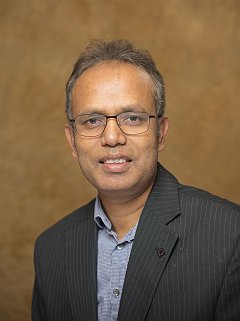
Chanchal K. Roy is Professor of Software Engineering/Computer Science at the University of Saskatchewan and Co-Director of the Software Research Lab. He leads an NSERC CREATE graduate program on Software Analytics Research and co-leads the Data Management group for an NSERC CFREF project on Food Security, with over 170 publications cited 6,000+ times. His research centers on software clone detection using the widely adopted NICAD system, software evolution, empirical studies, and AI-driven software analytics. Recent work integrates large language models for code generation, clone detection in the AI era, and developer interactions with tools like ChatGPT, emphasizing practical applications in maintenance and analytics. Analysis of his 15 most recent publications reveals a strong trend toward AI/ML integration in software engineering: 12 of 15 articles (2025) explore LLMs, quantum computing, or deep learning for tasks like bug localization, code snippet generation, and feature-toggle analysis. Key themes include empirical validation of AI tools, Stack Overflow data mining, and cross-domain frameworks for Society 5.0. His scientific awards include: Most Influential Paper Awards (SANER 2018, ICPC 2018) Outstanding Young Computer Science Researcher Award (CS-Can/Info-Can, 2018) New Researcher Award (University of Saskatchewan, 2019) New Scientist Research Award (College of Arts and Science, 2019) As lead of the NSERC CREATE program and CFREF data group, he mentors graduate students in software analytics while securing major grants. He actively serves on program committees for ASE, ICSE, and FSE, reviewing journals and organizing workshops on clone detection and empirical methods. His lab focuses on real-world applications in food security data management and software evolution. The Software Research Lab, co-directed by Roy, drives projects like NICAD and the NSERC CREATE initiative, emphasizing open-source contributions and industry collaboration. Current efforts include quantum-SE integration and AI-augmented maintenance tools under the CFREF food security mandate.

- Mathematics Education
- Teacher Training and Professional Development
- Curriculum Development
- +۷ مورد دیگر
Prof. Dr. Johanna Heitzer is a University Professor for Mathematics Education at RWTH Aachen University since 2011. She leads the Teaching and Research Area of Mathematics Education within the university's mathematics department. Her office is located in Room 352 of the Kreuzherrenstraße 2 building in Aachen. She serves as co-editor of the journal 'mathematik lehren,' co-author of the 'Mathematics - New Ways' textbook series, and holds numerous committee positions including membership in the Faculty Advisory Board and Structural Commission of the Center Council. 1989: High school diploma 1989-1994: Mathematics and Physics Teacher Training at RWTH Aachen 1994-1996: Traineeship at Aachen Teacher Training College 1997: Research assistant at University of Münster 1998-2007: Mathematics and Physics teacher at Korschenbroich Gymnasium 2007-2010: Scientific assistant and doctorate at RWTH Aachen 2011-present: University Professor at RWTH Aachen Professor Heitzer's research focuses on the training and further education of mathematics teachers, development of contemporary teaching materials, applied and interdisciplinary mathematics, and the transition from school to university. Her work emphasizes concept formation, linguistic communication in mathematics, and the historical development of mathematical ideas as teaching resources. She investigates mathematics-specific learning and cognitive processes through multiple research projects including the Aachen school-university project iMPACt. Her recent scholarly output demonstrates a strong trend toward integrating digital technologies in mathematics education, particularly 3D printing and e-learning tools. She has increasingly focused on the social relevance of mathematics, exploring concepts of fairness, sustainability, and citizen empowerment through mathematical modeling. Her work bridges theoretical mathematics education with practical classroom applications, maintaining a strong connection to both historical perspectives and contemporary educational challenges. Special prize from Sparkasse Bad Hersfeld-Rotenburg for best mathematics Abitur (1989) Borchers Plaque for doctoral examinations passed with distinction (2011) DMV honor as Mathemaker of the Month (2013) Brigitte Gilles Prize 2013 for the MINT-L4 Center Professor Heitzer has supervised numerous doctoral students, serving as primary or secondary advisor for at least nine PhD dissertations between 2016-2021. Her research projects include the School-University Project MathePlus Aachen (iMPACt), e-Learning 'Mathematics for Civil Engineers,' and the development of mathematics items for StudiChecks NRW. She has secured funding through the Quality Initiative for Teacher Education (both phases) and participates in the ComeIn project focused on digitalization in teacher training. Her grants consistently emphasize practical applications of mathematics education research with direct impact on classroom practice. As a founding member of the MINT-L4@RWTH center and initiator of the working group Mathematical Education for Sustainable Development, Professor Heitzer has established significant collaborative structures. She participates in the Subject Didactics Forum at the Teacher Training Center of RWTH Aachen and has served in leadership roles including Chair of the Center Council (2014-2016) and Board member of the Teacher Training Center (2014-2017). Her work connects with national and international networks through her membership in the Society for Mathematics Education (GDM), the German Association for Mathematics and Science Education (MNU), and the German Mathematical Society (DMV).
Prof. Dr.-Ing. Elisabeth Clausen is a Professor and Director of the Chair and Institute for Advanced Mining Technologies at RWTH Aachen University. She holds key roles in the Specialist Group for Raw Materials and Disposal Technology, serves as a rectorate representative, and leads the Commission for EU Research Funding. Her research spans Underground mining automation Acoustic emission diagnostics Sustainable mining systems Space resource extraction Advanced sensor technologies Her recent publications focus on autonomous mining machinery, underground communication systems, and acoustic emission analysis across 15+ studies from 2013–2025, with particular emphasis on Ultra-wideband positioning Thermographic detection Crack monitoring in planetary gearboxes Explosive atmosphere safety Mineral processing diagnostics Digitalization trends Prof. Clausen contributes to mining education reform through initiatives like CDIO™ and has developed innovative learning spaces in underground mines. She coordinates international educational labs and integrates sustainability into mining engineering curricula, with publications on Adaptive ventilation systems Mining education frameworks Future-proof mineral extraction Entrepreneurial mindset in engineering
Maximilian Hilger is a doctoral researcher at the Chair of Perception for Intelligent Systems, part of the Munich Institute of Robotics and Machine Intelligence at Technische Universität München (TUM). He joined the chair in 2024 and specializes in radar perception for autonomous systems. M.Sc. in Automation Engineering (RWTH Aachen, 2023) Doctoral studies previously at AASS, Örebro University, Sweden His research focuses on radar-based localization, mapping, and introspection in challenging environments, with publications addressing 4D imaging radar SLAM, loop closure techniques, and sensor fusion methodologies. Recent work includes evaluating radar odometry algorithms and developing robust mapping systems using intensity-augmented normal distributions transform. Key research themes: Radar perception for autonomous systems SLAM robustness and introspection Occlusion-resistant localization Sensor fusion in dynamic environments He collaborates with team members including Prof. Achim Lilienthal, Valeria Salazar, and Thomas Wiedemann at TUM's Siemens Technology Center campus in Garching, Germany.
Jay Pujaraمشاهده پروفایل
پژوهشگر
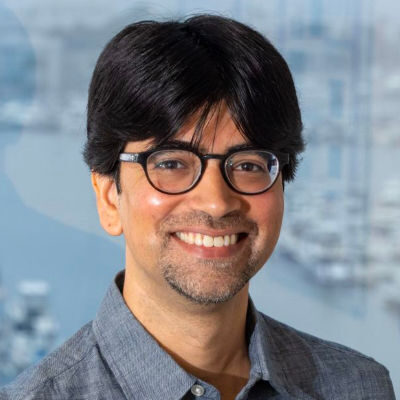
Dr. Jay Pujara is a Research Associate Professor of Computer Science at the University of Southern California (USC) and Director of the Center on Knowledge Graphs. He is also a Principal Scientist at the Information Sciences Institute (ISI) and leads research teams in data science and AI. Ph.D., University of Maryland, College Park (2016) M.S. and B.S. in Computer Science, Carnegie Mellon University Research Interests include artificial intelligence, probabilistic models, knowledge graph construction, statistical relational learning, NLP, and streaming inference. His work focuses on scalable algorithms for big data and uncertainty modeling in dynamic environments. Recent Publications highlight advancements in knowledge graphs, LLM reasoning, and table understanding. Notable topics include non-verbal abstract reasoning , faithful conversational datasets , and KGQA re-ranking . Scientific Awards : SWSA Ten-Year Award (2023), Outstanding Paper (IUI 2019), Top Reviewer (NeurIPS 2018), Best Paper (SRL Workshop 2016) Advising & Grants : Mentored 12+ graduate students, including Ph.D. advisees on topics like causal modeling and neuro-symbolic tasks. Secured NSF funding for table understanding in paleoclimate studies.
Marco Caccamo is a Professor at the Technical University of Munich (TUM) , holding the Chair of Cyber-Physical Systems in Production Engineering within the Faculty of Mechanical Engineering. He is also a Principal Investigator and Professor at the Department of Computer Science, with courtesy appointments in Electrical and Computer Engineering, Coordinated Science Lab (CSL), and Aerospace Engineering at the University of Illinois at Urbana-Champaign (UIUC). His research spans Embedded Systems , Real-Time Systems , and Cyber-Physical Systems (CPS) , focusing on resource management, reinforcement learning architectures, and 6D pose recognition for robotics. University of Pisa (B.Sc., 1997) Scuola Superiore Sant'Anna (Ph.D., 2002) Research highlights include predictable resource management on heterogeneous platforms, security frameworks for AI-based controllers , and UAV testbed development . His work integrates deep learning and real-time constraints in industrial applications like avionics, farming, and automotive systems. His 15 most recent publications emphasize cache optimization , memory bandwidth regulation , and reinforcement learning for CPS , with a focus on multi-core processors and DNN inference . Awards include the IEEE Fellow (2018), Alexander von Humboldt Professorship (2018), and multiple Best Paper Awards at RTSS, RTNS, and RTAS. NSF CAREER Award (2003) IEEE Fellow (2018) Alexander von Humboldt Professorship (2018) Best Paper Awards (RTSS 2024, RTNS 2023, ECRTS 2019) He has advised numerous Ph.D. students and postdocs, with a track record in UAV development and industrial collaborations . His lab, the Real-Time and Embedded System Laboratory , focuses on real-time OS and predictable computing .
فقط ۷۵۰ نتیجه اول نمایش داده میشود. برای رسیدن به نتایج دقیقتر، جستوجو را با فیلترها محدودتر کنید.