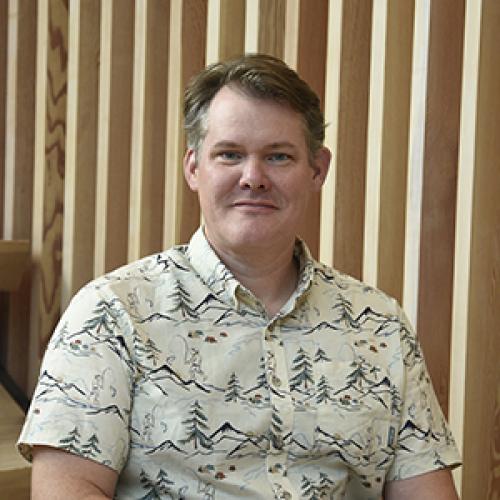
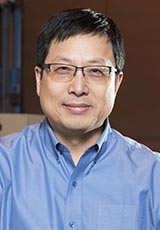
Ian Morrell serves as a Research Fellow in the Department of Wood Science & Engineering at Oregon State University's College of Forestry, specializing in advanced wood construction systems. His academic credentials include: M.S. in Civil Engineering from Washington State University (2018) B.S. in Civil Engineering from Gonzaga University (2016) Research focuses on sustainable building innovation through: Structural performance of mass timber assemblies Connection mechanics for engineered wood systems Integration of timber with complementary materials in hybrid structures His work addresses critical challenges in low-carbon construction and tall wood building technologies, contributing to industry advancements in renewable building resources.
Dr Johnathan Djabarouti is a Senior Lecturer in Architecture at the Manchester School of Architecture (Manchester Metropolitan University), registered with the Architects Registration Board (ARB) and an accredited conservation professional with the Institute of Historic Building Conservation (IHBC). He holds a PhD in Architecture (2021) and advanced qualifications in building conservation, professional practice, and higher education pedagogy. His research focuses on critical heritage studies, intangible heritage, and the intersection of architectural conservation with social equity and cultural narratives. Education: PhD, Manchester School of Architecture (2021) PGCert in Learning & Teaching in HE, Manchester Metropolitan University (2020) MSc in Building Conservation & Adaptation, University of Central Lancashire (2018) B.Arch (Hons), Manchester School of Architecture (2010) Research Interests: Dr Djabarouti’s work critiques traditional conservation paradigms, advocating for a socio-material approach that integrates intangible heritage (e.g., memories, emotions, narratives) with physical preservation. Key themes include participatory conservation, authenticity debates, and the role of built heritage in social equity. His research emphasizes storytelling as a tool for redefining conservation practice. Grants & Awards: AHRC Innovation Scholars Secondment Grant (£45,173, 2022) AHRC North West Consortium Doctoral Training Partnership (Full Award, £44,331, 2018) Fellow of the Higher Education Academy (2020) Professional Contributions: He has advised architectural practices and governmental bodies, lectured at RIBA and IHBC events, and co-founded the MSA Research Centre . His work bridges academia and practice, addressing contemporary challenges in heritage conservation through interdisciplinary collaboration. Labs/Teams: Core member of the Manchester School of Art Research Centre, contributing to projects like the Edgar Wood Renaissance and Conservation Education initiatives.
Stan Dosso is a Professor in the Department of Earth and Ocean Sciences at the University of Victoria, holding a BSc and MSc from UVic and PhD from UBC. His research focuses on ocean acoustics, geoacoustics, marine-mammal acoustics, earthquake seismology, and geophysical inverse theory. Research interests span acoustical oceanography, marine geophysics, and inverse methods applied to seabed characterization. Recent work includes developing Bayesian inversion techniques for geoacoustic profiling and passive acoustic monitoring of marine mammals in changing Arctic environments. Recent publications demonstrate strong emphasis on: Advanced geoacoustic inversion methods for seabed characterization Marine bioacoustics and conservation applications Tectonic seismology and subduction zone dynamics Innovative ocean sensing technologies Dr. Dosso leads archaeological excavations as Head of Post-Bronze Age excavations at Troy and Co-director of Gordion Excavations.
Tuomas Aakala is a Professor at the School of Forest Sciences , University of Eastern Finland, specializing in forest disturbance ecology and dendrochronology. His work bridges ecological theory, climate change impacts, and sustainable forest management. University: University of Eastern Finland School: School of Forest Sciences Academic Rank: Professor Email: tuomas.aakala@uef.fi Research Interests focus on boreal forest dynamics, wildfire regimes, historical ecology, and climate change adaptation. He applies statistical modeling (e.g., PCA, microclimate simulations) to analyze tree-ring data and ecological thresholds. Article Trends (2023–2025) reveal interdisciplinary work in Fire history reconstruction Forest carbon cycle Tree regeneration patterns Climate-growth relationships Historical deforestation Statistical ecology across Finland, Sweden, Brazil, and Yunnan. Collaborations include international teams in climate science, archaeology, and forest policy, with projects on triad forestry, snag dynamics, and medieval wood culture.
Jim Kiser is a Senior Lecturer at the College of Forestry, Oregon State University , affiliated with the Forest Engineering, Resources & Management department. Ph.D. in Forest Science (2009) M.S. in Forest Management with Statistics minor (1992) B.S. in Forest Management (1982) His research spans: Engineering applications in sustainable forestry Mycorrhizal and fungal ecology in forest systems Forest biometrics and geomatics Post-harvest damage assessment and growth modeling Surveying technology in forest environments Key publication trends include: Quantitative analysis of mechanical damage impacts on Douglas-fir Advances in aerial photography and satellite-based surveying Molecular and physiological interactions between trees and fungi Optimization of timber cruising and sampling methods He has advised multiple graduate students including Harris, Violet; Hill, Katie; and Sterling, Paige. His work integrates field engineering with ecological research, particularly in post-commercial thinning forest responses.
Stephen Hodder MBE is a Professor of Architecture at the Manchester School of Architecture, a collaboration between the University of Manchester and University of Salford. He is the founder and principal of Hodder+Partners, an award-winning architectural practice renowned for its innovative and sustainable designs. His career spans over four decades, marked by landmark projects such as the Centenary Building (RIBA Stirling Prize winner, 1996) and RHS Bridgewater (2021). Hodder’s work emphasizes contextual sensitivity, material integrity, and socially responsive design. Education: Bachelor of Architecture (Distinction), School of Architecture, University of Manchester Research & Interests: Hodder’s expertise lies in sustainable architecture, urban design, and the integration of cultural heritage with modern practice. His projects balance functional innovation with aesthetic rigor, often incorporating passive environmental systems and locally sourced materials. Articles & Awards: Over 60 major awards include the inaugural RIBA Stirling Prize and the RHS Bridgewater accolades. His work is frequently featured in journals like Architectural Review and Building Design . Roles & Grants: Former RIBA President (2013–2015), Chair of the Construction Industry Council (2019–2021), and external examiner at multiple institutions. His practice has pioneered sustainable methodologies, including passive cooling systems and timber diagrid roofs. Labs & Teams: Hodder+Partners collaborates closely with engineers and contractors to ensure integrated project delivery, emphasizing teamwork and client collaboration.
Dr. Atorod Azizinamini is a Professor of Civil Engineering at Florida International University (FIU), holding the Vasant H. Surti Professorship . He serves as Director of the Accelerated Bridge Construction University Transportation Center (ABC-UTC) and the Preeminent Institute for Resilient and Sustainable Coastal Infrastructure (InteRaCt) . His expertise spans bridge engineering , accelerated bridge construction (ABC) , and high-performance materials , with a focus on durability and seismic resilience. He earned a B.S. from the University of Oklahoma and a Ph.D. from the University of South Carolina (1985) . His career includes leadership roles at the University of Nebraska-Lincoln, where he directed the National Bridge Research Organization. Notable innovations include the Folded Plate Girder system and the Guide for Bridges for Life , advancing long-term bridge service life. Research Interests include: Structural applications of Ultra-High-Performance Concrete (UHPC) ABC methodologies and robotic construction Lunar infrastructure design Seismic-resistant bridge systems Concrete durability and corrosion mitigation Awards include the White House Champion of Change, CERF Charles Pankow Award, and multiple FHWA recognitions. His work has been published in over 200 journal articles, books, and technical reports, with a focus on advancing ABC and UHPC applications. Grants & Leadership : Principal Investigator for SHRP2 R19A ($232M initiative) Directed the Moss School of Construction, Infrastructure, and Sustainability (2018–2022) Advisor to global projects (e.g., Republic of Korea) Labs & Teams : ABC-UTC: Focuses on ABC technologies and UHPC innovations InteRaCt: Addresses coastal infrastructure resilience
Mariapaola Riggio is an Associate Professor of Wood Design and Architecture at Oregon State University's College of Forestry , holding the Richardson Chair in Wood Sciences and Forest Products . Her work bridges architectural design and structural engineering, focusing on sustainable wood applications in modern construction. PhD in Mechanical and Structural Engineering (University of Trento, 2007) MS in Architecture (University of Florence, 1997) Research spans: timber mechanics , green building , structural health assessment , and circular economy principles in wood construction. She teaches courses like Timber Tectonics in the Digital Age and Building Design Innovation with Wood , emphasizing digital fabrication and sustainable practices. Publications highlight timber's environmental performance, moisture management in CLT systems, and interdisciplinary pedagogy. Collaborations include partnerships with University of Oregon Architecture students. Scientific Award : Richardson Chair in Wood Sciences and Forest Products Advises graduate students in advanced wood product research while leading projects on timber structural monitoring and sustainable design strategies.
Dr. Arijit Sinha is a Professor and JELD-WEN Chair of Wood-based Composites Science at Oregon State University's College of Forestry, Department of Wood Science & Engineering. He serves as Director of the NSF Industry University Cooperative Research Center for Wood-Based Composites and advises multiple graduate students. His research focuses on sustainable building practices through renewable materials development, structural engineering innovations in timber systems, and lifecycle analysis. Core interests include timber mechanics, structural optimization, wood-based composites, and sustainable built environments. Dr. Sinha's extensive publication record demonstrates consistent focus on mass timber structural systems, seismic performance analysis, sustainable construction materials, and experimental testing methodologies. Recent work emphasizes resilience engineering through shake-table testing and environmental assessments. As Graduate Major Advisor, he currently mentors nine PhD students working on timber mechanics, sustainability analysis, and renewable materials development. His teaching portfolio includes courses on sustainability evaluation through life cycle analysis, advanced wood design, and renewable materials manufacturing.
Dr. Richard Mbatu is an Associate Professor in the School of Geosciences at the University of South Florida, with expertise in forest governance, climate change policy, and political ecology. His research focuses on sustainable development frameworks, particularly REDD+ initiatives in the Congo Basin and coastal resilience in Florida. He holds a Ph.D. in Environmental Science from Oklahoma State University and multiple graduate degrees in geography and environmental management. Research interests center on human-environment interactions, deforestation mitigation, and community-based adaptation strategies. Key themes include political economy of resources, international climate agreements, and equity in conservation policies. His work integrates field studies with policy analysis to address carbon emissions and biodiversity loss. Publications emphasize forest governance, climate adaptation, and socio-ecological systems, with recent articles exploring community agency in conservation and methane dynamics in agroforestry. Research demonstrates interdisciplinary approaches bridging environmental science and policy reform. Awards and Grants: Fulbright Scholar for climate resilience research in Eswatini NSF-funded PIACCART program director ($428,885) UN Environment GEO for Youth Lead Author Multiple teaching excellence awards Advises 15+ graduate students on climate adaptation theses and leads field research teams across Africa and Florida. Secured over $1M in grants for community resilience projects, including nature-based solutions in Tampa Bay and interdisciplinary training programs. Directs the Program in Interdisciplinary Approaches to Climate Change Adaptation Research and Training (PIACCART), fostering collaboration between scientists, policymakers, and vulnerable communities.
Vikki Edmondson is a Senior Lecturer in Civil Engineering at Northumbria University, delivering BEng and MEng courses. She has over two decades of industry experience in sectors like nuclear, rail, highways, and energy, which informs her research on infrastructure resilience and digital asset management. PGCE, 2015 Fellow of the Higher Education Academy (FHEA), 2016 Member of the Institute of Civil Engineers (ICE), 2015 Her research focuses on infrastructure legacy monitoring , climate change resilience , and remote sensing technologies , with secondary interests in digital infrastructure platforms and asset management . Her work bridges environmental, material, and transportation expertise. Recent publications span road texture dynamics , skid resistance modeling , and gender equity in civil engineering , reflecting her interdisciplinary approach. She supervises PGR student Irshad Ansari on non-destructive testing of concrete tanks. Scientific awards include: Fellow of the Higher Education Academy (2016)
Jed Cappellazzi is a Senior Faculty Research Assistant in the Wood Science & Engineering department at Oregon State University's College of Forestry. His work focuses on wood durability, fungal degradation, and preservation techniques for timber products. Research interests include: Fungal community dynamics in wood decay Thermal modification of lumber Biological degradation of mass timber Natural decay resistance in composite materials Chemical migration in treated wood Recent publications (2020-2025) highlight trends in fungal ecology, preservation methods, and composite material performance. Key areas include AWPA hazard mapping, thermally modified wood testing, and decay mitigation in mass timber systems. He is affiliated with the Utility Pole Research Cooperative and conducts field and laboratory studies on wood degradation.
Jeff Hatten serves as Department Head of Forest Engineering, Resources & Management (FERM) within Oregon State University's College of Forestry. His leadership role oversees academic programs and research initiatives focused on sustainable forest resource management in the Pacific Northwest. His educational background includes a PhD in Forest Resources from the University of Washington (2007) and a BS in Environmental Science from Western Washington University (1999). This foundation supports his expertise in forest ecosystem dynamics and soil processes. Hatten's research centers on forest soil biogeochemistry and watershed processes, with specific emphasis on soil productivity, fire impacts on soil systems, and silvicultural effects on sediment transport and water quality. His work integrates field measurements with continental-scale analyses to address carbon cycling and ecosystem resilience under disturbance regimes. Analysis of his 15 most recent publications reveals consistent focus on soil carbon dynamics across diverse forest ecosystems. Key trends include investigating deep soil carbon profiles, fire-affected carbon transformations, and mineral-organic interactions controlling carbon persistence. His research spans from molecular-scale processes (e.g., pyrogenic organic matter photochemistry) to landscape-level patterns (e.g., continental soil carbon storage predictors). As a Graduate Major Advisor, Hatten mentors students in forest science and soil ecology. His research program addresses critical questions in sustainable forest management through long-term experimental studies like the Long-Term Soil Productivity project, which examines timber harvesting impacts on soil health over decades.
Harry J. Paarsch is a Professor of Business Analytics (Economics) in the Department of Economics at the University of Central Florida's College of Business. His research focuses on econometric methods, auction theory, computational economics, and forestry economics. He developed open-source computational tools for auction modeling and holds patents in additive manufacturing laser control systems. Current work examines bidding behavior in informationally restricted auctions, intervention analysis of consumer credit during pandemics, and stochastic optimization for large-scale resource management. Earlier career includes roles at Amazon's Economics Team and Machine Learning Seller-Services Platform, applying econometric methods to e-commerce. Educational background includes PhD in Economics and MS in Statistics from Stanford University. He has held academic appointments internationally and published multiple books on structural econometrics of auctions through MIT Press.
Meng Gong is a Professor and Director at the Wood Science and Technology Centre, University of New Brunswick, specializing in wood engineering and sustainable construction technologies. He obtained his PhD in Wood Engineering from UNB after earning MSc and BSc degrees from Nanjing Forestry University. His current research focuses on engineered wood products, 3D printing applications, and tiny wood house construction. Dr. Gong leads the Advanced Wood Products and Construction research program as New Brunswick Innovation Research Chair. His work bridges wood science and structural engineering, emphasizing sustainable material innovation. Recent publications demonstrate advancements in cross-laminated timber, bamboo composites, and life-cycle assessment of wood products. Honored as Fellow of the International Academy of Wood Science in 2015, he actively contributes to construction standards through the National Research Council of Canada. Dr. Gong has authored over 100 research papers and textbooks including Wood Technology and Fracture and Fatigue in Wood .