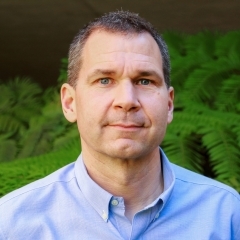
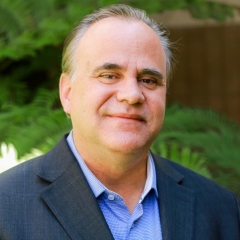
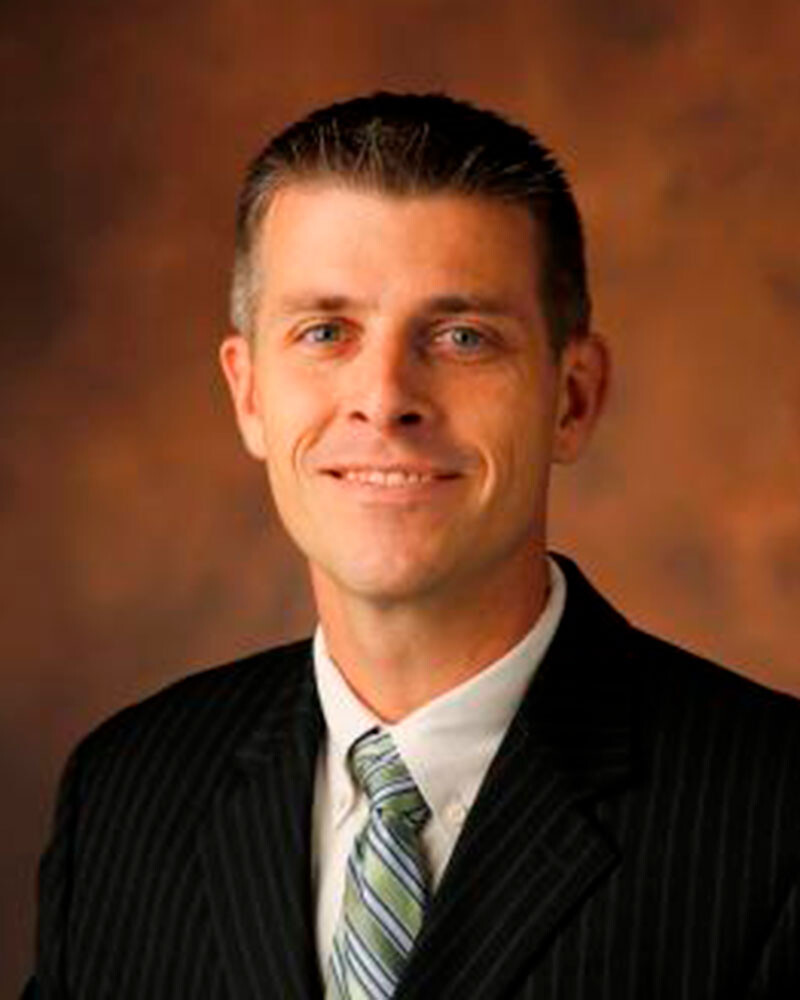
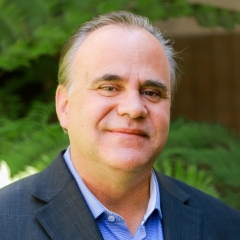
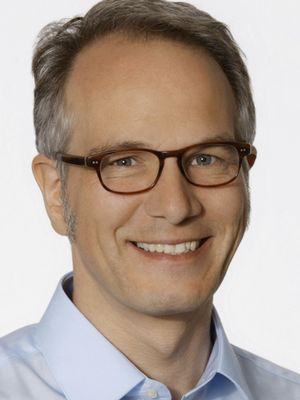
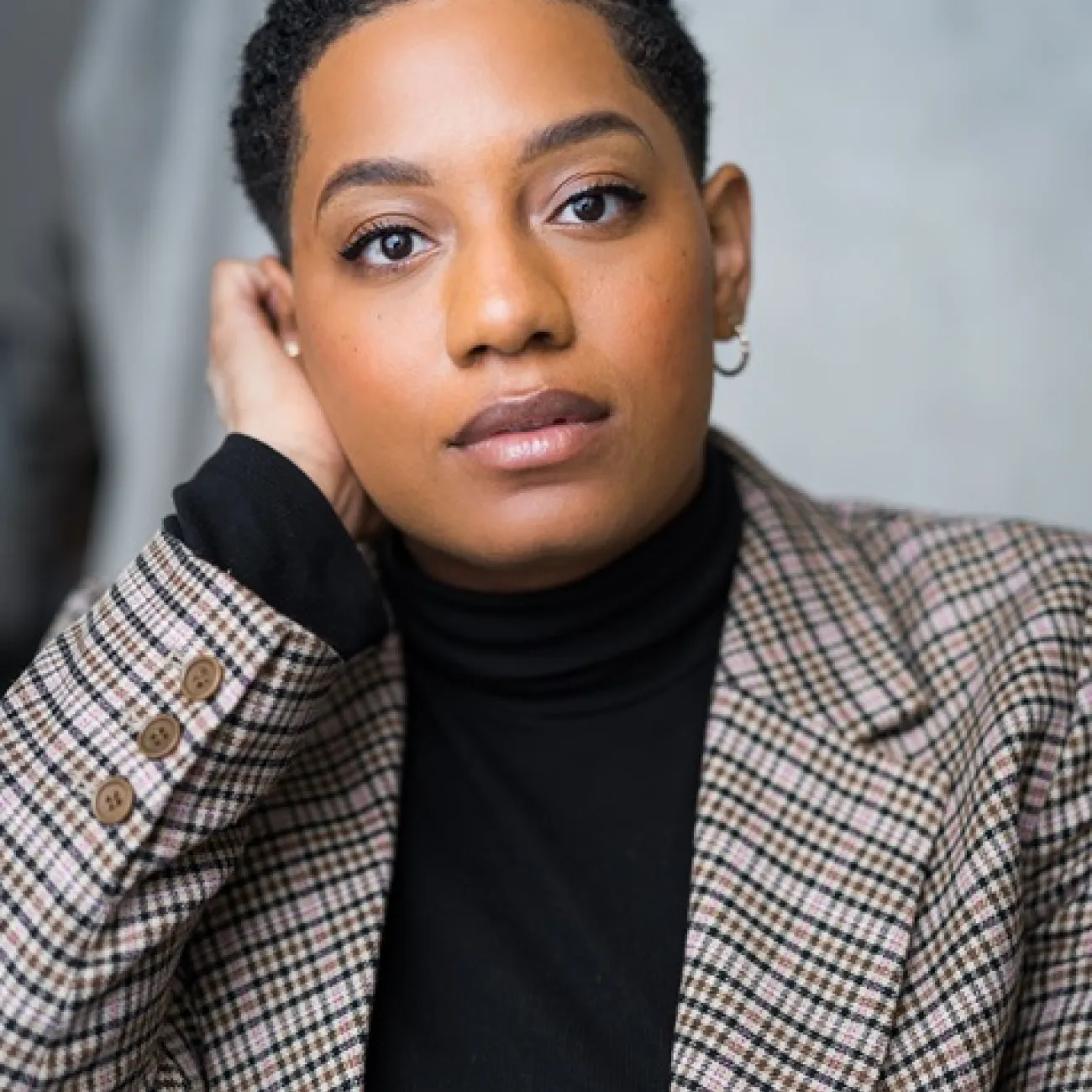
James S. Speck is the Seoul Viosys Professor of Solid State Lighting in the Department of Materials at the University of California, Santa Barbara (UCSB), within the College of Engineering. His research focuses on the materials science of wide bandgap semiconductors such as GaN and β-Ga₂O₃, emphasizing epitaxial growth, defect engineering, and device applications. He holds over 725 publications and has co-founded Soraa, a company commercializing GaN-based lighting technologies. Education: Sc.D. in Materials Science (MIT), S.M. in Metallurgy (MIT), B.Sc.Eng (University of Michigan). Research Interests: GaN-based semiconductors, nitride materials, epitaxial growth mechanisms, nonpolar/semipolar GaN, and β-Ga₂O₃. His work addresses threading dislocations, defect dynamics, and optoelectronic device performance. Awards: IEEE Photonics Society Aron Kressel Award, APS Fellowship, MRS Fellowship, and multiple best paper awards. Key Contributions: Pioneered MBE growth of GaN, developed V-defect engineering for LEDs, and advanced β-Ga₂O₃ research. Collaborates on Soraa’s high-brightness LED technologies. Lab/Teams: The Speck Group studies GaN heterostructures, defect mitigation, and wide bandgap semiconductor applications. Recent work includes V-defect-controlled LEDs and β-Ga₂O₃ etching techniques.
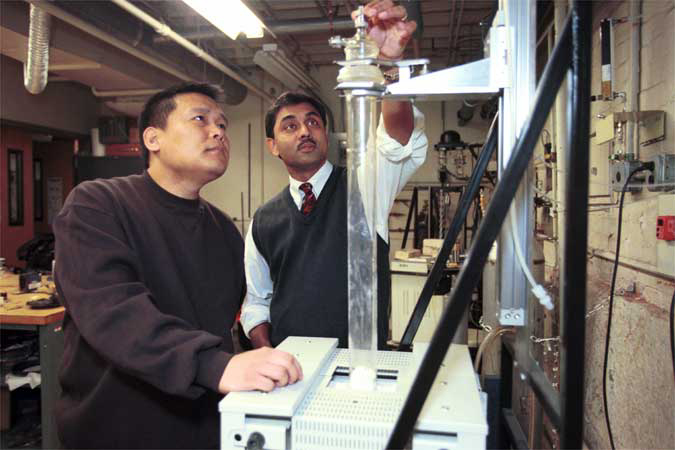
Soumendra N. Basu is a Professor of Mechanical Engineering and Associate Division Head of the Division of Materials Science and Engineering at Boston University. He earned his Ph.D. in Materials Science from MIT in 1989 and an M.S. in Materials Science from Case Western Reserve University. Basu leads two research labs and one undergraduate lab, focusing on materials degradation, coatings, and interface stability. High Temperature Oxidation Laboratory : Investigates oxidation behavior up to 1,600°C using advanced equipment. Microscopy Laboratory : Prepares electron-transparent samples for TEM analysis. Undergraduate Materials Laboratory : Trains students in metallography and materials testing. His research spans environmental barrier coatings for silicon-based ceramics, plasma-sprayed thermal barrier coatings , and photonic materials like InGaN alloys. He studies microstructural evolution, defect analysis, and degradation mechanisms under extreme conditions. Recent work includes modeling residual stresses and optimizing coatings for durability. Scientific Collaborators include: MIT Lincoln Labs Boston University colleagues: M. Gevelber, D. Wroblewski, V.K. Sarin UCLA's V. Gupta Basu has advised numerous graduate students, including Guosheng Ye and Dharanipal Doppalapudi , and his labs have received funding from NSF, DOE, and LANL. He also contributes to cricket, having won the MVP trophy for the Melbourne Cricket Club.
Kunal Mukherjee serves as an Assistant Professor in the Department of Materials Science and Engineering within Stanford University's School of Engineering. His teaching portfolio includes core courses such as MATSCI 152: Electronic Materials Engineering and MATSCI 183/213: Defects and Disorder in Materials, alongside extensive supervision of graduate research through MATSCI 300 (Ph.D. Research) and undergraduate studies. His research centers on semiconductor defects and quantum materials engineering, with particular expertise in dislocation dynamics, heteroepitaxial growth, and quantum emitter systems. Key focus areas include: Defect engineering in diamond for quantum sensing applications Mid-infrared photonic materials (PbSe, PbSnSe) for room-temperature operation Quantum dot laser reliability on silicon substrates Nanoscale positioning of color centers in diamond nanostructures Chalcogenide thin film growth for infrared photonics Analysis of his 15 most recent publications reveals a strong emphasis on defect-mediated phenomena across multiple material systems. His work bridges fundamental materials science with photonic applications, particularly in quantum technologies and infrared optoelectronics. The research demonstrates sophisticated control over dislocation formation, strain management, and phase stability in heterostructures. No scientific awards are documented in the provided materials. His academic supervision spans Ph.D. candidates (MATSCI 300), Master's students (MATSCI 200), and undergraduate researchers across multiple independent study courses, though specific student names are not listed. His laboratory work focuses on advanced materials growth and characterization, particularly employing correlative microscopy techniques to study dislocation luminescence and quantum emitter systems. Current efforts target scalable quantum photonic platforms and high-reliability infrared emitters through precise defect engineering.
James Speck serves as Professor in the Materials Department at the University of California, Santa Barbara's College of Engineering. He holds the Seoul Optodevice Distinguished Professorship of Solid State Lighting and maintains an active research laboratory focused on wide bandgap semiconductors. His work spans over 25 years of leadership in GaN-based semiconductor materials science at UCSB. Speck's research interests center on the relationship between epitaxial growth, microstructure, morphology, heterostructures, transport properties, and device performance in wide bandgap semiconductors. His group has made fundamental contributions to understanding growth mechanisms, defect generation, and the impact of threading dislocations in GaN systems. Over the past decade, his research has expanded to include binary oxides and emerging wide bandgap semiconductors like β-Ga 2 O 3 . His early work focused on epitaxial oxide films on semiconductors, ferroelectric thin films, and strain relaxation in highly mismatched epitaxial systems. The publication record demonstrates consistent research activity in III-nitride materials, with recent focus on semipolar and nonpolar orientations for improved device performance. His work spans fundamental materials science to practical device applications, particularly in solid-state lighting and laser technologies. The research shows particular emphasis on addressing efficiency limitations in LEDs and developing novel approaches for vertical-cavity surface-emitting lasers. Member of National Academy of Inventors IEEE Photonics Society Aron Kressel Award Materials Research Society (Inaugural Class) Japanese Journal of Applied Physics Best Paper Award Professor Speck has co-founded Soraa, a company commercializing GaN-based lighting technology. His research group has produced over 725 refereed publications, demonstrating extensive collaboration with colleagues including S. Nakamura and S.P. DenBaars. His work has received significant funding supporting fundamental materials research with applications in energy-efficient lighting and optoelectronic devices. The Speck group maintains active research facilities at UCSB focused on advanced semiconductor characterization and device development.
Steven DenBaars is a Professor of Materials and Electrical & Computer Engineering at the University of California, Santa Barbara (UCSB), where he holds the Mitsubishi Chemical Chair in Solid State Lighting and Displays. He serves as Director of the Institute for Energy Efficiency and Executive Director of the Solid State Lighting and Energy Electronics Center (SSLEEC). PhD, Electrical Engineering, University of Southern California BS, Materials and Metallurgical Engineering, University of Arizona MS, Materials Science, University of Southern California His research revolves around the growth and application of wide-bandgap (GaN-based) semiconductors for blue LEDs, laser diodes, high-power electronics, and quantum technologies. Key areas include MOCVD of III-V compound materials, strain engineering, and device fabrication. Recent publications highlight advancements in GaN-based microLEDs for quantum random number generation, UV LED efficiency, laser diode design, and strain relaxation techniques. Subfields span tunnel junctions, V-defect engineering, and metasurface light-emitting structures. 2021 ISCS Quantum Devices Award 2010 IEEE Photonics Society Aron Kressel Award 2008 JSAP Outstanding Paper Award 2005 IEEE Fellow 2014 National Academy of Inventors Fellow 2021 Central Coast Innovation Award Member, U.S. National Academy of Engineering He has co-founded four compound semiconductor companies (Nitres, Soraa, SLD Laser, Akoustis) and holds over 150 U.S. patents. His research group at UCSB includes 11 graduate students and postdocs focusing on III-nitride materials for optoelectronics and quantum applications. DenBaars leads the SSLEEC, a multidisciplinary lab advancing solid-state lighting and energy-efficient electronics through semiconductor innovation.
Joshua D. Caldwell is a Full Professor of Mechanical Engineering at Vanderbilt University's School of Engineering, with courtesy appointments in Electrical and Computer Engineering and Chemistry. He also directs the Interdisciplinary Program in Materials Science. His research focuses on nanoscale electromagnetic energy confinement, infrared nanophotonics, and material characterization, particularly in 2D materials like hexagonal boron nitride. Key achievements include identifying hyperbolic properties in hBN during a sabbatical at the University of Manchester and pioneering work on phonon polaritons. Education : B.A. in Chemistry from Virginia Tech (2000), Ph.D. in Physical Chemistry from University of Florida (2004). Postdoctoral work at the U.S. Naval Research Laboratory (NRL), where he became a staff scientist and later a supervisor. Research Interests : Development of advanced optical systems using polaritons, design of nanoscale optical components, and characterization of novel materials. The Caldwell lab houses state-of-the-art tools like Fourier transform infrared (FTIR) systems, ultrafast pump-probe microscopes, and nano-FTIR systems enabling sub-20 nm resolution. Recent work includes studies on hyperbolic shear polaritons and epsilon-near-zero materials. Grants & Recognition : Recipient of three NanoScience Institute (NSI) Grants at NRL and several awards for published works. Current projects emphasize thermal emission engineering and plasmonic quasi-BIC metasurfaces. Lab & Collaborations : The lab specializes in exfoliation/transfer of 2D materials and has developed the VINSE transfer tool. Collaborations include Prof. Kostya Novoselov (University of Manchester) on 2D material nanophotonics.
Rachel Oliver is a Professor of Materials Science at the University of Cambridge and Director of the Cambridge Centre for Gallium Nitride. Her research focuses on characterisation techniques for gallium nitride materials used in LEDs and laser diodes, with an emphasis on nanostructure engineering and quantum technology. Awarded OBE (2025), Fellow of the Royal Academy of Engineering (FREng) (2021), and Fellow of the Institute of Materials, Minerals and Mining (FIMMM) (2019) Developed atom-probe tomography and scanning capacitance microscopy to study nitride devices Her work on quantum dots and single-photon emitters has advanced quantum crystallography and optoelectronics. Recent publications highlight trends in nitride semiconductors , solar cell efficiency , and quantum device fabrication . Scientific Awards Royal Society University Research Fellowship (2006-2011) Chair in Emerging Technologies (2023) Grants EPSRC grant for semi-polar nitride structures Oliver's lab at the Department of Materials Science and Metallurgy explores nanoscale nitride structures for future devices, while advocating for gender equality in STEM.
Steven P. DenBaars is a Mitsubishi Distinguished Professor of Materials and a Distinguished Professor of Electrical & Computer Engineering at the University of California, Santa Barbara (UCSB). He serves as the Executive Director of the Solid State Lighting & Energy Electronics Center (SSLEEC) and Co-Director of the Interdisciplinary Center for Wide Bandgap Semiconductors. His research focuses on wide-bandgap semiconductors, particularly GaN-based materials for LEDs, lasers, and high-power electronics. DenBaars has pioneered advancements in solid-state lighting, including the first U.S. university demonstration of a blue GaN laser diode. Education : B.S., Materials and Metallurgical Engineering, University of Arizona (1984) M.S., Materials Science, University of Southern California (1986) Ph.D., Electrical Engineering, University of Southern California (1988) Research Interests : Wide-bandgap semiconductors (GaN), blue LEDs and lasers, high-power electronics, MOCVD growth techniques, and optoelectronic device fabrication. His work emphasizes improving efficiency and applications in lighting, displays, and energy electronics. Notable Contributions : Co-founder of Soraa, a leading company in semiconductor lighting technology. Key figure in the development of GaN-based microLEDs and UV LEDs. Awards : IEEE Fellow (2005) NAE and NAI Fellowships Aron Kressel Award (IEEE Photonics Society, 2010) NSF Young Investigator Award (1994) Labs & Teams : SSLEEC, IEE Group, and collaborations with industry partners like Cree Lighting Co. His lab focuses on MOCVD technology and device fabrication for next-generation optoelectronics.
Matthias Baitsch serves as Professor of Construction Informatics and Numerical Methods in the Department of Civil and Environmental Engineering at Bochum University of Applied Sciences, where he concurrently heads the BIM Institute. His academic trajectory includes research assistant and senior engineer roles at Ruhr-University Bochum (2000-2009), academic coordination at the Vietnamese-German University (2009-2012), and an acting professorship at the University of Kassel (2012-2014). His educational foundation comprises: Civil Engineering studies at the University of Dortmund (1991-1997) under the interdisciplinary "Dortmund Model" Doctorate from Ruhr-University Bochum (2003) on geometric imperfection-based optimization of compressive beam structures Professor Baitsch's research integrates computational mechanics with civil engineering practice, specializing in construction informatics, numerical optimization, and high-order finite element methods. His work pioneers distributed optimization frameworks, structural health monitoring for wind energy infrastructure, and BIM-based construction informatics. Key methodological contributions include hp-FEM implementations, parallel optimization algorithms, and mobile structural analysis tools. Analysis of his recent publications reveals three dominant research trajectories: (1) Advanced numerical methods for structural optimization under uncertainty, (2) Health monitoring-driven lifetime prediction for wind turbine systems, and (3) Computational modeling of tunnel environments using viscoacoustic inversion techniques. These threads demonstrate consistent focus on robust numerical implementations and real-world civil engineering applications. As Head of the BIM Institute, he leads institutional efforts in digital construction technologies, fostering industry-academia collaboration on building information modeling standards and applications. His teaching portfolio spans foundational mathematics, numerical methods, and computer science for civil engineering students, emphasizing practical computational skills.
Yiyu Ou is an Associate Professor in the Department of Electrical and Photonics Engineering at the Technical University of Denmark (DTU), where she leads research in optoelectronic devices, particularly light-emitting diodes (LEDs) and biomedical photonics. Her work bridges materials science, semiconductor engineering, and sustainable technology development. Department: Electrical and Photonics Engineering Institution: Technical University of Denmark (DTU) Research Focus: LED Systems, Silicon Carbide, Biomedical Implants Her research interests center on the development of advanced optoelectronic materials and devices, with a strong emphasis on nitride-based LEDs, fluorescent silicon carbide, and wireless optoelectronic biomedical implants. She explores novel packaging techniques, light extraction efficiency, and UV disinfection systems, contributing significantly to sustainable photonics and healthcare technologies. The recent trend in her publications shows a clear trajectory toward applied photonics in medicine and environmental health, including wireless implants, UV-B phototherapy, and wearable disinfection systems. Her work combines semiconductor physics with biomedical applications, demonstrating innovation in both materials and system integration. Scientific Awards and Recognition: No specific awards listed in the provided text. Yiyu Ou has served as Principal Investigator (PI) and supervisor on multiple research projects, including the DISOLE disinfection initiative and PhD supervision. Her grants focus on implantable UV-LED systems and innovative white LED light sources, often funded by Danish and European research councils. She collaborates extensively across disciplines, particularly with medical researchers and material scientists. She is affiliated with the Photonics group at DTU Fotonik, where her team works on diode lasers and LED systems. Research areas include porous SiC fabrication, hybrid white LEDs, and high-efficiency nitride devices, contributing to both fundamental science and commercial applications.
Dr. Tyler J. Grassman is an Associate Professor at The Ohio State University in the Departments of Materials Science and Engineering and Electrical and Computer Engineering. His research focuses on materials development and integration for electronic and photonic applications, particularly in photovoltaics and clean energy technologies. Joint appointment in Materials Science & Engineering and Electrical & Computer Engineering Research areas: epitaxy, heteroepitaxy, defect engineering, electron microscopy, computational materials science His recent work involves characterizing defects in III-V/Si heterostructures and optimizing metamorphic tunnel junctions for solar cells. Dr. Grassman received the NSF CAREER Award in 2021 for his research on dislocation-induced electronic states in III-V semiconductors. Scientific Awards: NSF CAREER Award (2021) He advises graduate students in Materials Science and Engineering and Electrical and Computer Engineering, including Marzieh Baan, Lauren Kaliszewski, and Tal Kasher. His laboratory at Fontana Laboratories (4012) uses advanced microscopy and computational modeling for materials discovery.
Angela Hoffman serves as Senior Lecturer and Associate Professor in the Department of English within Uppsala University's Faculty of Languages. Her academic career centers on the sociolinguistic dynamics of Swedish-American communities, with emphasis on language contact phenomena and heritage language preservation. Education: PhD in English, University of Minnesota–Twin Cities, 1999 MA in English, University of Kansas, Lawrence, Kansas, 1988 BA in English Teaching, summa cum laude, Bethany College, Lindsborg, Kansas, 1984 Hoffman's research investigates language shift, language ideology, and postvernacularity—the process where languages gain symbolic value as daily usage declines—within Swedish heritage communities in America. She employs sociolinguistic fieldwork, archival analysis, and discourse studies of community cookbooks, immigrant letters, church records, and oral histories to examine how Swedish has evolved in U.S. contexts. Her work reveals how cultural artifacts maintain linguistic identity across generations despite language shift pressures. Her publication portfolio demonstrates consistent focus on historical sociolinguistics of immigrant communities, particularly through textual analysis of Swedish-American cultural production. Recent work shows increasing emphasis on educational contexts for heritage language transmission and the role of religious institutions in language maintenance. A strong interdisciplinary thread connects linguistic analysis with cultural anthropology and historical studies. Scientific Awards: Pedagogical Prize (Pedagogiska priset) from Uppsala University (2011) Distinguished Teacher (Excellent lärare) from The Faculty of Languages at Uppsala University (2014) Hoffman supervises MA thesis projects and has held significant administrative roles including Director of Doctoral Studies (two terms), Deputy Chair, and MA Program Coordinator. She currently serves on Faculty of Languages and Department of English boards. Her collaborative work includes co-editing Historical Sociolinguistic Studies of Language Islands in the Americas with Anita Auer and Joshua R. Brown, and comparative studies of language shift in Swedish-American congregations with Brown. These partnerships form the core of her ongoing research network focused on transnational heritage language communities. Her team-based approach integrates archival research with contemporary fieldwork, particularly examining how community cookbooks and religious records document linguistic transitions. Current projects explore the intersection of food culture, music, and language maintenance in postvernacular contexts.
Dr. Liz Gre is a cross-departmental Lecturer at the University of Southampton in Music and Art and Media Technology, concurrently serving as EDI Lead for Music. Their work centers on collaborative sound practices rooted in Black and Indigenous storytelling traditions. Current research focuses on developing 'Endarkened Co-Composition,' a nonlinear method creating sonic outputs through shared narratives. Recent projects include Arachne: Rebirthing Dislocated Cultures (Gagosian Gallery) and Under the Skin of a Guild (Guildhall Art Gallery). External roles include Senior Fellowships in Three Gold Threads (2023-2024) and Embodied Cacophonies (2024-2026). Performances have been featured at venues including the Kennedy Center and Tate Britain. Gre's exhibitions span Lindisfarne Castle, Lisson Gallery, and Queens Museum, emphasizing interdisciplinary intersections between sound, narrative, and social justice.
Dr. Aimo Winkelmann is a Visiting Professor in the Department of Physics at the University of Strathclyde, United Kingdom. His research is centered on advanced electron microscopy techniques, particularly electron backscatter diffraction (EBSD), for the structural characterization of semiconductor thin films and microstructures. His research interests lie at the intersection of materials science, solid-state physics, and microstructural analysis. He specializes in: High-resolution crystallographic imaging Strain and defect mapping in semiconductors Development of EBSD and transmission Kikuchi diffraction methods Analysis of GaN and silicon-based thin films Simulation and interpretation of electron diffraction patterns His recent publications demonstrate a consistent focus on pushing the limits of diffraction imaging in scanning electron microscopes. The work spans from fundamental simulations of Kikuchi patterns to applied studies on strain in silicon membranes and luminescence in GaN microstructures, indicating a strong trend toward quantitative microstructural analysis in functional materials. Dr. Winkelmann has delivered invited and plenary talks at major international conferences, including the XVIIIth International Conference on Electron Microscopy (2024) and the Materials Research Society Fall Meeting (2023), highlighting his recognition in the field. He actively collaborates with a core research team at Strathclyde, including Prof. Carol Trager-Cowan, Dr. Jochen Bruckbauer, and Dr. Ben Hourahine, and contributes to open datasets supporting reproducibility in EBSD research. While no formal students are listed, his role in mentoring through collaborative research is evident.
Hector Basoalto is a Professor of Metallurgy and Multiscale Materials Modeling at the University of Sheffield's School of Chemical, Materials and Biological Engineering. He leads the M2i2 research group and serves as Beacon Director of the Materials Made Smarter Centre (MMSC), focusing on bridging academic research with industrial applications through partnerships with companies like Rolls-Royce, GKN, and Airbus. His research specialises in: Micromechanics and multiscale material modeling Integrated Computational Materials Engineering (ICME) Digital Threading frameworks for materials engineering Physics-based AI for materials Creep deformation in superalloys Additive manufacturing process modeling Key article trends include: Residual stress analysis in 3D printed components Thermal-fluid dynamics in laser and electron beam welding Microstructural modeling across scales Creep and fatigue behavior in aerospace alloys Uncertainty quantification in metallurgical processes Industrial applications of material informatics Scientific awards: NIST AM-Bench Challenge 2022 – 1st and 2nd prizes NIST AM-Bench Challenge 2018 – 1st prize He holds a PhD and B.Eng (Hons) and has led research teams at QinetiQ, HMV Catapult AFRC, and the University of Birmingham's PRISMM computational laboratory.