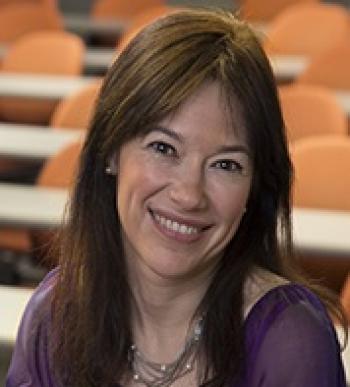
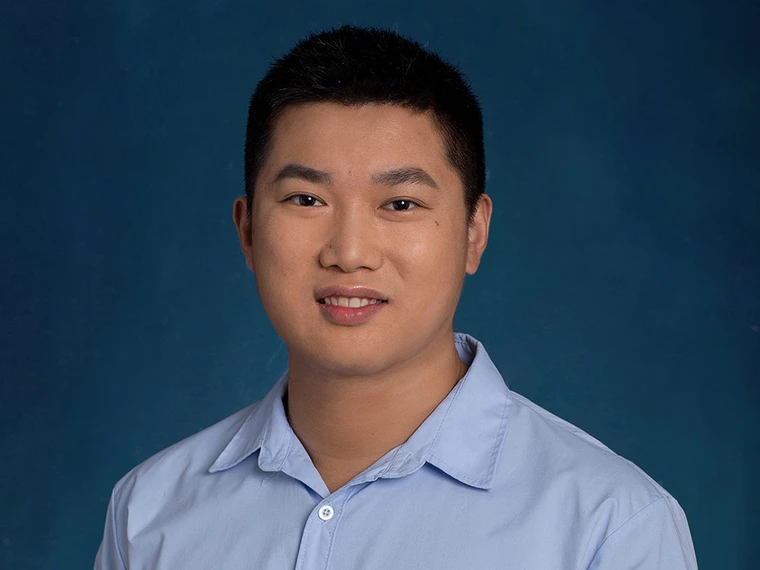
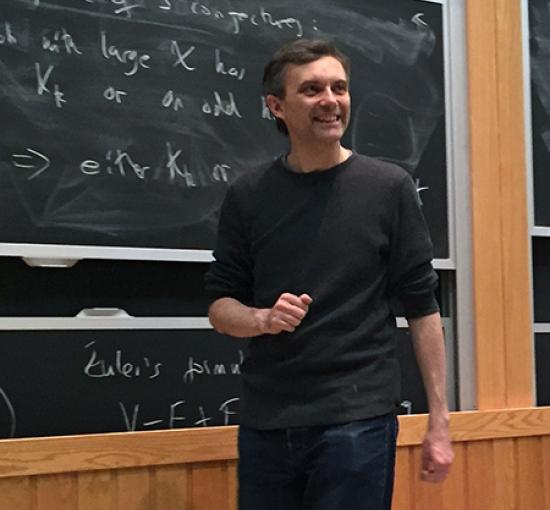
Elizabeth Bruch is an Associate Professor of Sociology and Complex Systems at the University of Michigan, serving as Associate Director of the Institute for Data and AI in Society. She holds External Faculty status at the Santa Fe Institute and is affiliated with the Center for Population Studies. With a Ph.D. from UCLA and an M.S. in Statistics, her research integrates choice modeling, network science, and agent-based simulations to study individual decisions in social environments. Key areas include residential segregation, dating markets, and higher education. Education: Ph.D. and M.S. in Sociology/Statistics (UCLA), B.A. in Sociology (Reed College) Affiliations: Santa Fe Institute, Institute for Advanced Study Berlin Her work has been published in Science , PNAS , and American Journal of Sociology , earning awards like the ASA Methodology Innovation Prize and the Merton Prize. Her upcoming book Date Like a Local (Princeton, 2026) explores urban influences on romantic behavior. Bruch’s research addresses societal challenges through computational methods, including pandemic modeling during the 2020 crisis and algorithmic analysis of dating markets. She serves on Santa Fe Institute’s Science Steering Committee and collaborates across disciplines to advance complexity science.
Maria Chudnovsky is a Professor in the Department of Mathematics at Princeton University. Her research focuses on structural graph theory, particularly in areas such as graph decomposition, induced subgraphs, and algorithmic applications of graph structure. She is renowned for her contributions to understanding perfect graphs, even-hole-free graphs, and the Erdős–Hajnal conjecture. Her work often explores the interplay between graph structure and algorithmic efficiency, with applications in combinatorial optimization and theoretical computer science. Notable contributions include foundational results on tree decompositions, chromatic number bounds, and the structure of metrizable graphs. Recent research trends include investigations into induced subgraph obstructions, tree independence numbers, and the properties of sparse graphs. She has published extensively on topics such as clique-stable set separation, rainbow matchings, and the complexity of graph coloring problems in restricted graph classes. Chudnovsky has been involved in significant collaborative projects, including work funded by the DMS-EPSRC grant 'The Power of Graph Structure' (2021). Her research frequently bridges theoretical insights with practical algorithm design, contributing to both fundamental and applied areas of discrete mathematics.
Michael Smith is the McCosh Professor of Philosophy at Princeton University. He holds a DPhil from Oxford University (1989) and has been a faculty member since 2004, previously at the Australian National University. His research focuses on ethics, moral psychology, philosophy of mind, political philosophy, and philosophy of law. Smith’s work integrates constitutivist theories of practical reason with analyses of moral agency. He has contributed to debates on moral rationalism, the nature of reasons for action, and the relationship between rationality and normativity. Education: MA, Monash University (1980); BPhil (1983), DPhil (1989), University of Oxford Smith’s scholarship emphasizes the interplay between ethical theory and psychological explanations of agency. Recent publications explore topics like carbon capture technologies, cultural clashes in moral reasoning, and probabilistic forecasting in oceanography. His philosophical contributions address foundational questions in meta-ethics, including the ‘moral problem’ and the implications of constitutivism for normative frameworks. He advises on interdisciplinary projects at the intersection of philosophy and emerging technologies. Notable research trends include applying philosophical analysis to environmental ethics and developing frameworks for resolving moral dilemmas through rational agency models. His work often bridges analytic philosophy with empirical inquiries in psychology and social science.
Dr. Alireza Nili is a Senior Lecturer in Service Science at QUT's School of Information Systems within the Faculty of Science. His expertise spans digitization of customer-centric services, AI/chatbots, IoT/IIoT, and sustainable technologies. He holds a PhD from Victoria University of Wellington and has coordinated large-scale courses like IT Systems Design (IFB103), achieving top teaching scores. Nili's research focuses on service ecosystems, trust in digital services, and public/retail sector innovations. He has secured over $1.4M in industry grants for projects involving Cisco, Amazon, and Services Australia. His awards include the 2023 Educator of the Year and multiple top conference paper recognitions. Nili supervises PhD students at Level 3 mentoring status and contributes to major conferences as track chair/associate editor. Research highlights include frameworks for chatbot governance, IOT in agriculture, and AI ethics. His work appears in IEEE Software , Communications of the ACM , and MIT Sloan Management Review . Current projects address consumer trust in AI technologies and spatial data systems. Nili's interdisciplinary approach combines design science with empirical methodologies to bridge theory and practice in digital service innovation.
Liangming Pan is an Assistant Professor at the University of Arizona's College of Information Science. His research focuses on building trustworthy large language models (LLMs) with an emphasis on logical reasoning, truthfulness, and safety. He holds a PhD in Computer Science from the National University of Singapore (2022), a Master's from Tsinghua University, and a Bachelor's from Beihang University. Education : PhD in Computer Science, National University of Singapore (2022) Master of Engineering in Computer Science, Tsinghua University (2017) Bachelor of Engineering in Computer Science, Beihang University (2014) Research Interests : Dr. Pan's work centers on enhancing LLMs' reliability through: Logical reasoning mechanisms to ensure faithful deductions Truthfulness verification to combat misinformation Safety protocols to mitigate societal harm Key Contributions : Developed TART, an open-source framework for explainable table-based reasoning Created benchmarks like SCITAB and FactCheck-Bench for evaluating LLMs Advanced techniques for knowledge editing and causal reasoning Awards : Best Paper Runner-Up at NeurIPS Table Representation Workshop (2024) Area Chair Award for Question Answering (IJCNLP-AACL 2023) Service & Outreach : He serves as an Area Chair for EMNLP (2024), COLING (2025), and ACL (2024). He has delivered invited talks at Tsinghua University, Peking University, and other institutions.
Wenping Wang is a Professor in the Department of Computer Science & Engineering at Texas A&M University, part of the College of Engineering. His research focuses on computer graphics, computer vision, geometric modeling, and visualization. He holds Fellowships from ACM and IEEE, and has received notable awards including the 2021 AsiaGraphics Outstanding Technical Contributions Award and the 2017 John Gregory Memorial Award. Wang's educational background includes a Ph.D. from the University of Alberta and M.Eng. and B.Sc. degrees from Shandong University. His work spans advancements in neural implicit surfaces, 3D reconstruction, and medical imaging applications such as orthodontic treatment prediction. He has authored numerous influential papers in top-tier conferences like SIGGRAPH and journals like ACM Transactions on Graphics. His research interests emphasize bridging geometric modeling with machine learning, particularly in neural rendering, surface parameterization, and medical visualization. Recent projects include developing frameworks for automatic tooth alignment and high-fidelity 3D geometry generation. Wang's contributions have significantly impacted both theoretical foundations and practical applications in computer graphics.
Professor Alexander Scott is a faculty member at the University of Oxford, holding positions as Professor of Mathematics and Dominic Welsh Tutor in Mathematics at Merton College. His research focuses on combinatorics, probability, algorithms, and graph theory, with a particular interest in the interplay between local and global structures in networks. He has organized the Oxford Combinatorics Seminar and co-founded the online Oxford Discrete Mathematics and Probability Seminar, fostering collaboration in these fields. Professor Scott’s work bridges theoretical foundations with applications in statistical physics and algorithmic design. He has supervised numerous graduate students in combinatorics and regularly teaches undergraduate courses in analysis and discrete mathematics. His contributions include advancements in extremal graph theory, probabilistic methods, and structural combinatorics, with over 150 publications in prestigious journals. He actively organizes academic events such as the annual One-Day Meeting in Combinatorics, hosting speakers from around the world. Despite the absence of explicit awards noted, his prolific research output and academic leadership reflect significant contributions to the field. His current interests continue to explore the Erdős-Hajnal conjecture, induced subgraph densities, and algorithmic challenges in combinatorial structures.
Viswanath Nagarajan is an Associate Professor of Industrial & Operations Engineering and Computer Science Engineering (courtesy) at the University of Michigan. His research focuses on combinatorial optimization, approximation algorithms, and stochastic models for routing, scheduling, and location problems. He previously served as an Assistant Professor at the University of Michigan (2014–2020) and a Research Staff Member at IBM T.J. Watson Research Center (2009–2014). He holds a Ph.D. in Algorithms, Combinatorics, and Optimization from Carnegie Mellon University (2004–2009) and a B.Tech. in Computer Science from IIT Bombay (1999–2003). His research explores uncertainty management in optimization, including stochastic models and approximation algorithms for decision-making under uncertainty. He has contributed to adaptive algorithms, submodular optimization, and applications in logistics, network design, and scheduling. Education: Ph.D., Algorithms, Combinatorics, and Optimization (Carnegie Mellon University, 2009) B.Tech., Computer Science and Engineering (IIT Bombay, 2003) Prof. Nagarajan has organized major conferences like IPCO 2019 and served on editorial boards for journals including Operations Research , ACM Computing Surveys , and ACM Transactions on Algorithms . His service includes program committees for SODA, APPROX, and IPCO. He advises Ph.D. students focusing on optimization theory and applications, with advisees securing positions at Yahoo! Research, the University of Chicago, Ford Motor Company, and Georgia Tech.
Xuezhe Ma is an Assistant Professor in the Department of Computer Science at the University of Southern California's Viterbi School of Engineering. Previously, he was a Ph.D. student at Carnegie Mellon University's Language Technologies Institute, where he worked under the supervision of Professor Eduard Hovy. His academic journey includes a Master's degree from Shanghai Jiao Tong University's Center for Brain-like Computing and Machine Intelligence and a Bachelor's degree in Computer Science from the same institution. Ph.D. in Computer Science, Carnegie Mellon University (completed ~2020) M.S. in Brain-like Computing, Shanghai Jiao Tong University B.S. in Computer Science, Shanghai Jiao Tong University Dr. Ma's research spans multiple areas at the intersection of Natural Language Processing and Machine Learning, with particular focus on structured prediction, syntactic and semantic parsing, machine translation, language generation, and deep generative models. His recent work has expanded into vision-language models, large language model architectures, and applications across computer vision tasks. His research combines theoretical foundations with practical implementations, as evidenced by his development of tools like NeuroNLP2 and MaxParser. His publication record shows a clear trajectory from foundational NLP work during his PhD (including papers on dependency parsing and sequence labeling) to more recent contributions in generative models and large language systems. The 15 most recent publications reveal a strong focus on addressing fundamental challenges in generative modeling, context handling, and multimodal integration, with applications spanning literary translation, medical imaging, and news diffusion analysis. AI2 Outstanding Intern Award (2018) Dr. Ma has secured research funding supporting his work in generative models and language technologies, with projects focusing on improving the efficiency and capabilities of large language models. His research group at USC is actively working on next-generation language understanding and generation systems, with particular emphasis on context-aware modeling and multimodal integration. He has established collaborations with industry partners including the Allen Institute for AI and has contributed to open-source projects like Texar. At USC, Dr. Ma leads research in the Information Sciences Institute, directing projects on efficient large language model architectures and multimodal reasoning systems. His lab focuses on developing novel approaches to context handling, model efficiency, and multimodal integration, with applications across diverse domains including healthcare, literary analysis, and news media.
Thatchaphol Saranurak is an Assistant Professor at the University of Michigan , specifically in the Computer Science and Engineering Division . Prior to this, he earned his PhD in Computer Science from KTH Royal Institute of Technology in 2018 under Danupon Nanongkai , followed by a postdoctoral research assistant professorship at Toyota Technological Institute at Chicago (2018-2020). Research Focus : His work bridges fundamental problems in graph theory, including Dynamic graph algorithms for max-flow and min-cut Expander graph decompositions and their applications Robust algorithms against adaptive adversaries Continuous optimization for combinatorial problems Scientific Contributions : He has made breakthroughs in deterministic graph algorithms, notably improving vertex connectivity bounds, developing near-linear time Gomory-Hu trees, and advancing dynamic matching algorithms. His research has been recognized by Sloan Research Fellowship NSF CAREER Award Presburger Award 2023 Teaching : He teaches courses like Expander and Graph Algorithms and Introduction to Algorithms (Winter 23, Winter 25). His lecture videos and notes are publicly available. Collaborations : He works with leading researchers including Sayan Bhattacharya , Joakim Blikstad , and Jason Li , with affiliations to institutions like TTIC , KTH , and SODA conferences.
Mohammad Modarres is the Nicole J. Kim Eminent Professor at the University of Maryland within the A.J. Clark School of Engineering. He serves as Director of the Center for Risk and Reliability (CRR) and is a Professor of Nuclear Engineering in the Department of Mechanical Engineering. Dr. Modarres co-founded the world's first degree-granting graduate curriculum in reliability engineering at the University of Maryland and has established himself as an international expert in reliability and risk analysis. Dr. Modarres received his educational credentials from prestigious institutions: B.S. in Mechanical Engineering from Tehran Polytechnic M.S. in Mechanical Engineering from MIT M.S. and Ph.D. in Nuclear Engineering from MIT Dr. Modarres' research spans multiple critical areas in engineering risk and reliability. His primary interests include probabilistic risk assessment, uncertainty analysis, probabilistic physics of failure, and probabilistic fracture mechanics. His work encompasses both experimental investigations and sophisticated probabilistic model development. He has made significant contributions to materials degradation science, prognosis and health management systems, and nuclear safety analysis. His research bridges theoretical developments with practical applications in complex engineering systems, particularly in nuclear power and aerospace sectors. Analysis of Dr. Modarres' recent publications reveals a strong trend toward integrating advanced data science techniques with traditional reliability engineering. His work increasingly incorporates machine learning, deep learning, and entropy-based approaches to solve complex problems in prognostics and health management. There's a clear focus on multi-unit systems, particularly in nuclear power applications, and a growing emphasis on data-driven methodologies for remaining useful life estimation and failure prediction. His research maintains a strong foundation in probabilistic methods while embracing cutting-edge computational approaches. Dr. Modarres has received numerous prestigious honors and awards throughout his distinguished career: Nicole Y. Kim Eminent Professorship in Engineering Minta Martin Professorship in A.J. Clark School of Engineering University of Maryland Distinguished Scholar-Teacher (2019) Tommy Thompson Award for outstanding lifetime contributions to nuclear safety (American Nuclear Society) Fellow, American Nuclear Society Fellow, Institute of Electrical and Electronics Engineers (IEEE) Life Fellow of IEEE 1996 Maryland Inventor of the Year Award (in Information Sciences) FDA Commissioner Special Citation for Contributions to Risk Assessment Methods (2004) 2008 International Research Leadership Award (Society for Reliability Engineering, Quality and Operations Management) Honorary Doctorate from Universidad Da Vinci de Guatemala As the founding director of the Center for Risk and Reliability, Dr. Modarres has built a world-renowned program that has awarded over 500 Ph.D. and master's degrees. His research has been supported by significant grants from government agencies and industry partners, particularly in nuclear safety, aerospace reliability, and critical infrastructure protection. He has mentored numerous students who have gone on to become leaders in reliability engineering across various industries. His center collaborates extensively with the International Atomic Energy Agency (IAEA) and other international organizations on risk assessment methodologies. The Center for Risk and Reliability (CRR), which Dr. Modarres directs, serves as a hub for multidisciplinary research in risk and reliability engineering. The center has recently renovated its facilities to enhance collaboration among researchers from different engineering disciplines. CRR maintains strong partnerships with industry leaders including Amazon Lab126 (as evidenced by their collaboration on device durability research) and has been instrumental in advancing probabilistic risk assessment tools used in nuclear power plant safety analysis. The center hosts regular seminars, workshops, and international conferences, positioning itself at the forefront of risk and reliability research globally.
Hamsa Bastani is an Associate Professor of Operations, Information and Decisions at the Wharton School, University of Pennsylvania, with a secondary appointment in Statistics and Data Science. She co-directs the Wharton Healthcare Analytics Lab and serves as an Associate Editor for Operations Research, M&SOM and OR Letters. Her academic journey began with summa cum laude graduation from Harvard in 2012 with an A.M. in physics and A.B. in physics and mathematics. She completed her PhD in Stanford's Electrical Engineering department under Mohsen Bayati, followed by a Herman Goldstine postdoctoral fellowship at IBM Research. Professor Bastani's research focuses on developing novel machine learning algorithms for data-driven decision-making, with applications spanning healthcare operations, social good, and revenue management. Her work demonstrates particular expertise in sequential decision-making (bandits, reinforcement learning), learning from auxiliary data sources (transfer learning, meta-learning), and designing effective human-AI interfaces (interpretability, fairness). She has made significant contributions to understanding how AI systems affect and augment human behavior, with the goal of designing AI tools that help humans thrive. Her publications reveal a strong trend toward high-impact applications of machine learning in critical societal domains. A significant portion of her recent work focuses on healthcare applications, including optimizing health supply chains in low- and middle-income countries, designing clinical trial protocols, and creating targeted public health interventions. Another major theme examines the complex relationship between humans and AI systems, particularly how AI affects learning outcomes and decision-making processes. Her work frequently bridges theoretical advances with practical implementation, as evidenced by country-scale deployments in Greece and Sierra Leone. Wagner Prize for Excellence in Operations Research Practice (2021) Pierskalla Award for Best Paper in Healthcare (2021, 2019, 2016) Behavioral OM Best Paper Award (2021) Public Sector in OR Best Paper Award (2024) INFORMS Data Mining Best Paper Award (2022) Wharton Teaching Excellence Award (2019, 2020, 2021) Professor Bastani has advised numerous PhD students who have gone on to prominent positions, including Pia Ramchandani (Director of Responsible AI at PwC), Arielle Anderer (Assistant Professor at Cornell Johnson), and Kan Xu (Assistant Professor at ASU Carey). Her research has been supported by collaborations with national governments, including the Greek government where she co-designed Eva, the national-scale reinforcement learning system for targeted COVID-19 testing, and the Government of Sierra Leone where she improved patient access to essential medicines by nearly 20% via decision-aware learning. She has also conducted the first large field study deploying generative AI tutors in high school math classes. She leads the Wharton Healthcare Analytics Lab and serves on the Steering Committee for the Penn Center for Health Incentives and Behavioral Economics and on the statistics advisory committee for the AHA Food is Medicine Initiative. Outside academia, she serves on the Workday AI Advisory Board, demonstrating her commitment to translating academic research into practical applications.
Dr. Han Hu serves as Assistant Professor in the Department of Mechanical Engineering at the University of Arkansas College of Engineering, holding the Twenty-First Century Professorship since 2025. He leads the NED3 research laboratory with active collaborations including Purdue University's Cooling Technologies Research Center and NASA Glenn Research Center. Education: Ph.D. in Mechanical Engineering, Drexel University (2016) B.S. in Theoretical and Applied Mechanics, University of Science and Technology of China (2011) His research integrates phase-change heat transfer with AI-driven methodologies, focusing on thermal management solutions for power electronics through multimodal sensing systems. Current projects include pumped two-phase cooling for microchannel heat sinks and machine learning applications for bubble dynamics analysis in pool/flow boiling scenarios, supported by NSF and NASA grants. Scientific Recognition: Twenty-First Century Professorship in Engineering (2025) University of Arkansas Outstanding Mentor (2022-2024) Multiple ASEE conference awards for student mentorship (2022-2024) Faculty Gold Medal and Mechanical Engineering Service Award (2023) Dr. Hu mentors seven Ph.D. students and numerous undergraduates, with his NED3 lab securing $2.5M in recent funding including NSF grants for immersion-cooled electric motors and NASA EPSCoR research on boiling heat transfer. His team collaborates with UA-PTC's Aerospace Center of Excellence and ZIN Technologies on practical thermal management applications. The NED3 laboratory operates advanced facilities for synchronized optical, acoustic, and thermal measurements, featuring high-speed thermal imaging systems and custom-built flow boiling test rigs validated through partnerships with power electronics industry leaders.
Giorgis Petridis is an Associate Professor at the University of Georgia, specializing in arithmetic combinatorics, a field rooted in combinatorial number theory with modern extensions into discrete analysis and finite field geometry. Born in Athens, Greece, he earned his PhD from the University of Cambridge under Tim Gowers and held a Visiting Assistant Professor position at the University of Rochester. He serves as an editor for Combinatorial Theory and is affiliated with the Number Theory and Arithmetic Geometry group, particularly its additive combinatorics and discrete analysis subgroup. Doctor of Philosophy (2011), University of Cambridge Certificate of Advanced Studies in Mathematics (2002), St John’s College, Cambridge BA (Hons) in Mathematics (2001), St John’s College, Cambridge His research focuses on additive combinatorics, exploring sumset estimates, polynomial configurations in prime lattices, and geometric incidence problems over finite fields. He investigates combinatorial geometry, including pinned distance problems and bisector arrangements, while also contributing to exponential sum bounds and expander graph theory. His work bridges theoretical mathematics with applications in pseudorandomness and discrete geometry. Recent publications highlight trends in finite field analysis, with 6 of 15 articles addressing arithmetic structures in prime-order fields. Key keywords include Combinatorics , Number Theory , and Finite Fields , with sub-fields spanning polynomial configurations, energy bounds, and geometric combinatorics. Scientific awards include the Creative Research Medal (2024) from the University of Georgia for mid-career research impact. Grants from the Simons Foundation (MPS-TSM-00007816) and multiple NSF DMS Awards (2054214, 1723016, 1500984, 1804049) support his work on discrete analysis and conferences. He co-advises five PhD students and has supervised multiple Master’s theses on topics like point-plane incidences and additive energy. Outreach includes leading high school math teams, organizing discrete analysis sessions, and contributing to public science communication guides.
Prof. Dr. Rudi Zagst is a Professor of Mathematical Finance at the Technical University of Munich (TUM), where he serves as Head of the Department of Mathematical Finance within the TUM School of Computation, Information and Technology. He has held this position since 2001 and is actively involved in teaching, research, and academic leadership. In 2003, he was appointed as a second member of the Faculty of Economics, and since 2004, he has served as Deputy Chairman of the joint elite degree program 'Finance & Information Management' of the University of Augsburg and TUM. Prof. Zagst earned his doctorate in business mathematics from the University of Ulm, where he later completed his habilitation in 2000. His academic journey began with a professional career at HypoVereinsbank AG, where he served as Head of Product Development in Institutional Investment Management before becoming Managing Director of RiskLab GmbH in 1997. His research focuses primarily on financial engineering, risk management, and asset management, with particular emphasis on portfolio optimization, mathematical finance, and quantitative risk management. His work bridges theoretical finance with practical applications, often incorporating advanced mathematical techniques to solve complex financial problems. Recent publications demonstrate his continued interest in GARCH models, portfolio optimization under various constraints, and the application of machine learning techniques to financial problems. Analysis of his recent publications (2024-2025) reveals a strong focus on portfolio optimization under complex market conditions, particularly using GARCH models to capture volatility dynamics. His work increasingly incorporates machine learning techniques (as seen in the credit spread analysis paper) while maintaining rigorous mathematical foundations. Many papers explore the intersection of theoretical finance with practical investment strategies, reflecting his commitment to bridging academic research with real-world financial applications. Professor of the Year 2007 (awarded by Unicum Profession magazine) Prof. Zagst has supervised numerous bachelor's, master's, and doctoral theses through TUM's Finance and Actuarial Science research group. His collaborative work with industry partners through the TUM CAIR Labs and RiskFactory demonstrates strong connections between academic research and practical financial applications. He has received research funding through various industry partnerships with major financial institutions including Allianz, Munich Re, and ERGO Group AG. Prof. Zagst leads the Research Group Finance and Actuarial Science at TUM, which includes Professors Matthias Scherer, Aleksey Min, and Christoph Knochenhauer. The group maintains strong industry connections through the TUM CAIR Labs initiative, collaborating with over 25 financial institutions including Allianz, Munich Re, Deloitte, PwC, and KPMG. Their RiskFactory laboratory serves as a bridge between academic research and practical financial risk management applications in the industry.