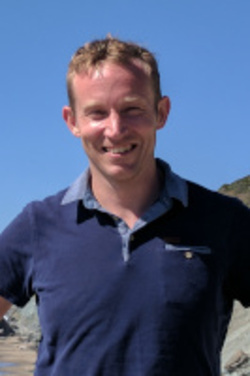
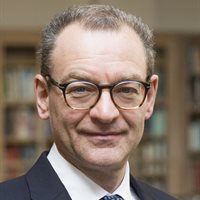
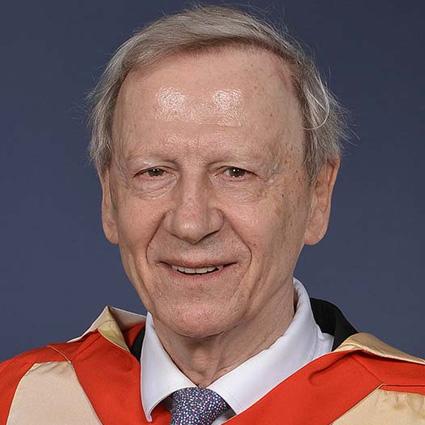
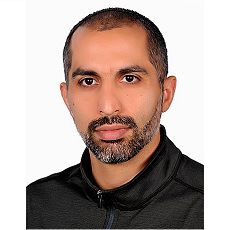
Rachel Morley is an Associate Professor at the School of Slavonic and East European Studies (SSEES), University College London. She holds a BA in French Language and Literature from the University of Oxford (1992), followed by BA, MA, and PhD degrees from UCL (1999, 2001, 2011). Her roles include Academic Director of Education and Student Experience at SSEES (2022–2027) and Co-Convenor of the UCL SSEES Cinema Research Group. Dr. Morley's research focuses on Cinema studies Cultural studies Feminist and queer theory Literary studies with emphasis on Soviet/Russian cinema, gender representation, and film historiography. She held a Leverhulme Trust Research Fellowship (2020–2022) for her project on female subjectivity in contemporary Russian cinema. Her teaching spans Russian cinema, poetry, language, and translation. Past roles include Postgraduate Teaching Assistant at SSEES (1999–2009) and lecturer at the University of Cambridge (2006, 2008). She has also supported international students as SSEES International and Affiliate Tutor (2014–2018). Key Achievements: Leverhulme Trust Research Fellowship Fellow of the Higher Education Academy (2016) Her work bridges film, literature, and cultural history, emphasizing underrepresented narratives and feminist perspectives in Russian and Soviet cinema.
Professor Sara Baker is a Professor of Developmental Psychology and Education at the University of Cambridge's Faculty of Education and a Fellow at Darwin College, where she served as Vice Master from 2021-2024. She is also a 2022 Senior Fellow in the Science of Learning with UNESCO-IBE/IBRO. Her work bridges cognitive science and educational practice, focusing on how children develop executive functions and self-regulation skills. Baker leads the Early Years Library project, co-founded the Research Centre for Play in Education, Development and Learning (PEDAL), and is a founding member of the Global Executive Functions Initiative. Sara Baker specializes in the science of learning, with research aimed at improving children's lives by identifying factors at home and school that support their agency over learning. Her work emphasizes developing executive functions and self-regulation through playful learning approaches. She uses lab-based experiments and collaborates with educators to translate cognitive science research into educational contexts. Her research spans multiple countries including the UK, USA, Mexico, Denmark, Slovakia, South Korea, Ghana, Rwanda, Nigeria, Kenya, South Africa, and more, reflecting a strong commitment to culturally relevant and globally applicable educational practices. Analysis of Professor Baker's recent publications reveals a strong focus on executive functions, self-regulation, and playful learning across diverse cultural contexts. Her work increasingly addresses cultural adaptation of assessment tools and educational practices, particularly for Global Majority countries. There's a clear trajectory from basic cognitive research toward practical applications in educational settings, with growing emphasis on teacher training, culturally relevant assessment, and the role of play in early childhood development. Her interdisciplinary approach connects developmental psychology, educational theory, and practical classroom applications. 2022 Senior Fellow in the Science of Learning with UNESCO-IBE/IBRO Professor Baker leads the doctoral program in the Faculty of Education and serves as an Academic Project Director in the School of Humanities and Social Sciences. She is the Cambridge academic lead on the Close the Gap partnership between Cambridge and Oxford, focused on postgraduate widening participation. Her research has been funded by prestigious organizations including the Newton Trust, Cambridge Humanities Research Grant, Economic and Social Research Council, LEGO Foundation, Nuffield Foundation, and Office for Students/Research England. She actively supervises doctoral students and seeks highly motivated candidates for October 2026 entry whose research aligns with her focus areas. Professor Baker co-founded and is actively involved with the Research Centre for Play in Education, Development and Learning (PEDAL), which investigates how children's play affects their development. She leads the Early Years Library project, a curated collection of evidence-based practices for early years educators, and is a founding member of the Global Executive Functions Initiative. Her work with the Connections international professional learning network focuses on self-regulation, while the Close the Gap project addresses widening participation in postgraduate education between Oxford and Cambridge.
Professor Matthew Treherne is a leading scholar in Italian literature at the University of Leeds, where he holds the position of Professor of Italian Literature in the School of Languages, Cultures and Societies within the Faculty of Arts, Humanities and Cultures. He currently serves as Pro-Dean for Research and Innovation, and co-directs the Leeds Centre for Dante Studies. His research bridges medieval and Renaissance literature with contemporary issues such as finance, ecology, and technology. PhD in Italian Literature, University of Cambridge (2007) Diploma in Management Studies, Judge Business School, University of Cambridge (2000) M.Phil in European Literature (Distinction), University of Cambridge (1999) BA in Modern and Medieval Languages (First-class), University of Cambridge (1997) Matthew Treherne's research focuses on Dante and late-medieval religious culture, with a strong emphasis on the liturgical imagination and theological discourse in poetry. He explores how Dante’s work can inform modern debates on the ecological crisis, financialisation, and time. His interdisciplinary approach integrates theology, philosophy, and cultural studies. He leads the project The Cultural Life of Money and Finance , which investigates how the humanities can shape financial futures. His recent publications include Dante’s ‘Commedia’ and the Liturgical Imagination and co-edited volumes on Dante’s theology. His recent scholarly articles and chapters show a consistent engagement with Dante’s theological and poetic structures, Tasso’s religious poetry, and the role of art and liturgy in early modern culture. Themes such as sacramentality, time, vision, and interdisciplinarity recur across his work, reflecting a deep commitment to understanding literature as a living, ethically engaged practice. University Teaching Fellowship Developmental University Teaching Fellowship Faculty of Arts Development Teaching Prize Treherne has supervised numerous PhD students and fosters research-led teaching, notably through projects like Discover Dante and the Leeds Dante Podcast . He has led major research initiatives, including the AHRC-funded Dante and Late Medieval Florence , and collaborates widely across disciplines and institutions. He is also active in public engagement, contributing to BBC Radio 4’s In Our Time and curating podcast series such as Conversations on Dante and Arts and Humanities Futures . He co-leads the Cultural Life of Money and Finance project with Invisible Flock, blending humanities research with creative practice.
Professor Adam Yuet Chau is a Fellow and Director of Studies at St John's College and holds the Professor of the Anthropology of China position at the Faculty of Asian and Middle Eastern Studies, University of Cambridge . His academic journey includes training at Stanford University (PhD in Anthropology, 2001) and teaching roles at Oxford and SOAS before joining Cambridge in 2008. Focus on Chinese religions and their social dimensions Specializes in ritual theory and cultural transformations Develops comparative frameworks for understanding religious practices His research spans religion under socialism , hosting in political/religious contexts , and ritual polytropy . Recent projects include editing Chinese Religious Culture in 100 Objects and analyzing 'spheres' (界) in Chinese society . Publications like Miraculous Response (2006) and Religion in Contemporary China (2011) establish him as a key figure in religious anthropology. Current and past PhD/MPhil students explore topics from temple festivals in Taiwan to religious subjectification . He actively reviews for leading presses (Cambridge, Oxford, Harvard) and journals ( Ethnos , Modern China ), and participates in international academic workshops.
Andrew Rice is a Professor of Computer Science at the University of Cambridge's Department of Computer Science and Technology, and holds the Hassabis Fellowship in Computer Science. He is also the Director of Studies in Computer Science at Queens' College. His research focuses on programming languages, software engineering, and machine learning applications in software development. He leads projects like Isaac Computer Science and ALTA (Automated Language Teaching and Assessment), advancing adaptive learning technologies. His work includes static analysis tools such as Error Prone at Google, energy efficiency studies in computing infrastructure, and contributions to the Computing for the Future of the Planet initiative. His teaching emphasizes practical skill development through flipped classrooms and video lectures, earning him the 2014 Pilkington Prize for teaching excellence. He has held visiting roles at Google and collaborated on energy consumption research for mobile devices and data centers. His research spans systems, networking, and natural language processing, with a strong focus on applying computational methods to real-world challenges. Key Projects: Isaac Physics/Computer Science, ALTA, Error Prone Static Analysis Research Themes: Programming Languages, Machine Learning, Energy Efficiency Awards: Pilkington Prize (2014)
Professor Helena Sanson is a Full Professor of Italian, History of Linguistics, and Women's Studies at the University of Cambridge , where she is also a Fellow of Clare College and serves as Postgraduate Teaching and Examining Officer for the Italian Section. She joined Cambridge in 2005 after teaching at University College London (1998-2003) following her British Academy Postdoctoral Fellowship. PhD from University of Reading (2002) Her interdisciplinary research focuses on the intersection of Italian linguistic history , literary culture , and gender studies from the Renaissance to post-Unification period. Particular emphasis includes women's contributions to linguistic thought , conduct literature analysis , and female roles in translation networks . Her work examines how women navigated language standardization, educational access, and literary production across social strata. Recent projects include Leverhulme-funded research on women's linguistic experiences in 18th-19th century Italy and co-edited volumes on transnational travelers' accounts and early modern female education . She founded the Women and Gender in Italy (1500-1900) book series and the journal Women Language Literature in Italy . Scientific awards include: British Academy Postdoctoral Fellowship Leverhulme Research Fellowship Philip Leverhulme Prize CRASSH Early Career Fellowship Isaac Newton Trust grant Senior Visiting Fellowship at University of Bologna She supervises graduate research in topics spanning women's writing , linguistic thought , translation history , and cultural marginalization in 16th-20th century Italy. Her work bridges philology, literary criticism, and social history through rigorous textual analysis.
Professor Eric Atwell is a Professor of Artificial Intelligence for Language at the University of Leeds' School of Computer Science, part of the Faculty of Engineering and Physical Sciences. He holds additional roles as a LITE Fellow at the Leeds Institute for Teaching Excellence (40% part-time), Turing Fellow at the Alan Turing Institute, and member of the Leeds Institute for Data Analytics (LIDA) and Language at Leeds (LATL). His research focuses on AI applications in corpus linguistics, text analytics, and computational analysis of religious and medical texts, with a strong emphasis on Arabic and Islamic studies. He leads the AI4L research group and has supervised over 60 research students and fellows, many of whom have pursued careers in academia, tech, and AI-driven fields. Education: PhD in Corpus Linguistics and Language Learning (University of Leeds, 2008), BA (First Class) in Computing and Linguistics (Lancaster University, 1981) Grants: Includes EPSRC-funded projects like Natural Language Processing with Arabic and Islamic Studies (£337K, 2013-2015) and EDUBOTS chatbots for education (£94K, 2019-2022) Teaching: Leads modules in Data Mining, Text Analytics, and AI across multiple programs, including online Masters and PhDs. Known for innovative teaching approaches and student support, receiving positive feedback for engagement and course design. Research Interests: AI applied to corpus linguistics, Quranic text analysis, Arabic NLP, chatbots for education, and decolonizing curricula. Notable projects include Quranic semantic search tools, Hadith corpus analysis, and AI-driven fact-checking systems. Publications: Over 277 publications, with recent work focusing on Quranic QA systems, Arabic dialect identification, and generative AI applications in education. His research is widely cited, earning recognition from ResearchGate for high readership. Awards: Recognized for his most-read research items on ResearchGate (June 2021). Gallup StrengthsFinder highlights his top traits as Learner, Achiever, Ideation, Intellection, and Maximizer. Labs/Teams: Leads the AI4L research group and collaborates with international institutions including SUSTECH Sudan, King Saud University, and SWJT University (China). Active in research networks like LIDA and LATL.
London School of Economics and Political Science (LSE)United Kingdom
Wim A Van der Stede is a **Professor of Accounting and Financial Management** at the **London School of Economics (LSE)**, specifically within the **Department of Accounting**. He holds the prestigious **CIMA Professorship** and serves in leadership roles such as LSE Council Member and Houghton Street Ventures Advisory Board member. His research focuses on **management control systems**, **corporate governance**, **executive compensation**, and **performance measurement**, with notable contributions to understanding incentive systems and organizational design. He has authored influential books like *Management Control Systems: Performance Measurement, Evaluation, and Incentives*, translated into multiple languages. Van der Stede’s academic leadership includes editorial roles in top journals like *Management Accounting Research* (Editor-in-Chief 2015–2024), and he has received awards such as the LSE Teaching Excellence Award (2016/17) and the AAA Outstanding International Educator Award (2019). His work integrates empirical studies with practical insights, addressing topics like budgeting, innovation selection, and the impact of information technology on organizations. He actively contributes to global accounting discourse through research, teaching, and advisory roles.
Professor Ben Bollig holds the position of Professor of Latin American Literature and Film at the University of Oxford's Faculty of Medieval and Modern Languages. He is also a Fellow and Tutor in Spanish at St Catherine's College, and an Associate Lecturer at St John's College. His research focuses on contemporary Latin American literature and film, with a specialization in Argentine poetry and its cinematic adaptations. He has authored or edited numerous books, including Moving Verses and The Poetry-Film Nexus in Latin America , and serves as editor of the Journal of Latin American Cultural Studies . Teaching responsibilities include the entire Spanish course for first-year students and Latin American literature and film options for upper years. He supervises MPhil/DPhil students in Latin American cultural studies, particularly Southern Cone literature and film. His work explores intersections of poetry, film, translation, and postcolonial theory, with a focus on Argentina's cultural production. He has published widely on topics such as poetic adaptation, political literature, and cultural activism. Key contributions include co-editing Latin American Cultural Studies: A Reader and producing translated volumes of Cristian Aliaga's work. His research themes span comparative literature, postcolonial studies, environmental humanities, and global cultural dynamics. He is actively engaged in academic leadership roles within his field, maintaining a strong international profile in cultural studies and literary criticism.
Stephen M. Hart is a Professor of Latin American Film, Literature and Culture at University College London (UCL), affiliated with the School of European Languages, Culture and Society (SELCS) and the Department of Spanish, Portuguese and Latin American Studies. He is a General Editor at Tamesis Publishers and founder-director of the Centre of César Vallejo Studies at UCL. Education: BA (1980), MA (1984), PhD (1985) from University of Cambridge Academic Career: Lecturer at Westfield College (1984-1990), Associate/Full Professor at University of Kentucky (1991-1998), Senior Lecturer/Reader at UCL (1998-present) Specializing in Latin American literature, film, and culture, Hart has published extensively on César Vallejo and Santa Rosa de Lima, including critical editions of their works. His research spans literary theory, art history, and East-West relations, with a focus on documentary film-making and magical realism as a framework for understanding post-truth narratives. Recent publications address colonial sainthood processes, poetic modernism, and China-Latin America connections. He has directed documentary projects in Cuba since 2006 and received honors including the Order of Merit from the Peruvian Government and Honorary Doctorates from Peruvian institutions. Key Awards: Order of Merit for Distinguished Services (Peruvian Government, 2004), Honorary Doctorate (San Marcos University, 2004), Corresponding Member of Academia Peruana de la Lengua (2014) Leadership Roles: Director of UCL's ESRC DTC (2014), Director of Documentary Film-Making Summer School (Cuba, 2006-present) Teaching: Undergraduate courses on Latin American supernaturalism and cultural dilemmas; MA documentary film-making courses
Anthony Giddens is a distinguished Professor of Sociology and Life Fellow of King's College, Cambridge. He served as Director of the London School of Economics (LSE) from 1999 to 2003 and is a Member of the House of Lords. In 2016, he was awarded an honorary doctorate by Goldsmiths, University of London. His academic career includes teaching at the University of Leicester and Cambridge, alongside his role as a global advisor to political leaders. Education: Began at the University of Hull, later completing studies at the London School of Economics (LSE). Research focuses on structuration theory, modernity, postmodernity, and political theory. His influential works include Capitalism and Modern Social Theory (1971), The Constitution of Society (1984), and The Third Way (1998). His theories on modernity and the 'third way' have shaped social democracy globally. Key awards include Fellowship in the American Academy of Science and Chinese Academy of Social Sciences. His work spans over 40 books, translated into 40+ languages. Advisory roles include influencing political strategies across Asia, Latin America, Australia, the U.S., and Europe. He advocates cosmopolitan values, emphasizing global interdependence in his 2016 honorary doctorate speech.
Dr. Sauleh Eetemadi is an Assistant Professor in the School of Computer Science at the University of Birmingham Dubai, contributing to both teaching and research in computer science. His academic and professional journey bridges industry innovation and higher education, with affiliations at Microsoft Research, IUST, and now the University of Birmingham. His educational background includes: PhD in Electrical and Computer Engineering, Michigan State University, 2016 MSc in Electrical and Computer Engineering, Michigan State University, 2005 BS in Computer Engineering, Sharif University of Technology, 2002 Dr. Eetemadi's research focuses on Natural Language Processing (NLP) and Machine Translation , particularly in the area of data selection for statistical and neural models. His work integrates algorithmic design, artificial intelligence, and large-scale language systems. He has taught courses such as Advanced Programming, Data Structures, Algorithm Design, AI, and NLP, reflecting a broad yet deep engagement with core computer science disciplines. Although specific publications are not listed in the provided text, his long-term work at Microsoft Research on developing a world-class machine translation service suggests a strong publication record in NLP, data optimization, and AI-driven language technologies. His research likely spans topics such as bilingual corpora filtering, model efficiency, and scalable translation systems. He has no listed scientific awards in the provided content. Dr. Eetemadi has advised students during his tenure at IUST and continues to mentor in his current role, though specific student names are not mentioned. He has not received any explicitly mentioned grants in the text, but his 13-year tenure at Microsoft Research implies involvement in major industrial research initiatives and collaborative projects. His transition from industry R&D to academia highlights a commitment to both practical innovation and academic education. He is associated with the Natural Language Processing group at Microsoft Research and currently contributes to research activities within the School of Computer Science at the University of Birmingham Dubai, though no formal lab or research team name is specified in the source.
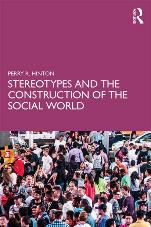
Perry Hinton is a Professor (Teaching Focused) in the Centre for Applied Linguistics at the University of Warwick, part of the Faculty of Social Sciences. He contributes to the interdisciplinary degree in Language, Culture and Communication, drawing on his expertise in psychology and cultural studies. University: University of Warwick School: Faculty of Social Sciences Department: Centre for Applied Linguistics Academic Rank: Professor Email: P.R.Hinton@warwick.ac.uk His research centers on the psychology of interpersonal perception, especially the interplay between cognition and culture. Key areas include stereotyping as a cognitive and cultural phenomenon and Western (particularly British) interpretations of Japanese culture, including media portrayals and anime. He also has a strong commitment to statistical education, having authored multiple textbooks on SPSS and data analysis. The recent publications reflect a consistent focus on cultural psychology, intercultural communication, and social representation. Themes include the construction of identity, media influence, cultural stereotypes, and cognitive biases in person perception. His work often takes a multidisciplinary approach, integrating insights from psychology, linguistics, and media studies. Perry Hinton has authored and co-authored several influential books in his field, particularly on stereotypes and statistical methods. While no formal scientific awards are listed, his sustained publication record in peer-reviewed journals and with major academic publishers (Routledge, Bloomsbury, Palgrave) indicates significant scholarly recognition. He has supervised or co-edited collaborative works, such as the 2023 volume on intercultural relations, suggesting advisory and mentoring roles. His career path includes positions at five British universities, progressing from lecturer to Head of Department, with extensive experience teaching psychology across disciplines including linguistics, education, and media studies. He joined Warwick's Centre for Applied Linguistics at the inception of its Language, Culture and Communication program in 2014. Hinton works within a multidisciplinary academic environment, contributing to a research culture that bridges psychology and applied linguistics. His collaborations, particularly with Troy McConachy, suggest active participation in intercultural research teams and scholarly networks focused on global communication and cultural understanding.
Professor Andrew J. Webber is a distinguished academic at the University of Cambridge, specifically within the Faculty of Modern and Medieval Languages and Linguistics. He is affiliated with Churchill College and holds the position of Professor of Modern German and Comparative Culture. With a career spanning several decades, Professor Webber has made significant contributions to the fields of German literature, film studies, and cultural theory. His research interests include modern German and comparative literature, German and comparative film and visual culture, cultural theory (particularly psychoanalysis, gender and sexuality), urban cultural studies, and digital humanities. He has led major research projects such as the Leverhulme-funded Cultural Topography of Berlin and the AHRC-supported Digital Critical Edition of Middle-Period Works by Arthur Schnitzler. Professor Webber has authored several influential monographs including Screening Work: The Films of Christian Petzold and Berlin in the Twentieth Century: A Cultural Topography . He has also edited important volumes like the Cambridge Companion to the Literature of Berlin and has supervised numerous students in their academic pursuits. Fellow of the British Academy (2019) Leverhulme Major Research Fellowship (2004-2007) AHRC Standard Research Grant (2014-2019) Distinguished International Visitor at UNSW (Sydney, 2014) Erich Auerbach Visiting Chair at University of Tübingen (2015) A respected educator, Professor Webber has been involved in teaching Modern German Literature, Culture and Thought at all levels, as well as Comparative Culture courses focusing on European Film and The Body. He has held leadership roles including Acting Director of CRASSH in 2009-10.
Mehdi Boussebaa is a Professor of International Management at the Adam Smith Business School, University of Glasgow. He leads the International Business and Enterprise Research Cluster and serves on the Management Subject Leadership Team. Prior to Glasgow, he held academic positions at the University of Bath School of Management (2008–2016), where he received multiple research awards. He completed a PhD in Management at the University of Warwick (2008) and a postdoctoral fellowship at Oxford Saïd Business School (2009). Education: PhD Management (Warwick, 2008), Postdoc (Oxford Saïd, 2009) Research Focus: Globalization, postcolonial theory, decolonizing management, professional service firms, and language politics His research bridges international business, organization studies, and critical management studies. Key themes include neo-colonialism in global business practices, Eurocentrism in management knowledge, and the role of English as a 'global' language. His work has been published in top-tier journals like Human Relations , Journal of International Business Studies , and Organization Studies . Recent articles explore topics such as transnational corporate power, West-centrism in professional service firms, and decolonizing international business education. He has received prestigious recognitions including the Carolyn Dexter Award (finalist) and multiple Dean’s Awards for Research Excellence. Editorial Roles: Co-Editor-in-Chief of Critical Perspectives on International Business , Editorial Board member of Human Relations , Journal of Management Studies , and others. Grants: Leverhulme Small Research Grants (2020, 2023), Research Seed Corn Fund Awards (2011, 2013). Visiting Positions: Universities in Canada (Alberta), China (Tongji, UIBE), France (Aix-Marseille), and Sweden (Lund). Brisly Jannatul Ferdous is a current doctoral supervisee exploring identity regulation in multinational enterprises. Mehdi teaches global business and management courses, emphasizing interdisciplinary and critical perspectives.