Roman Kuc is a Professor of Electrical Engineering at Yale University, affiliated with the School of Engineering & Applied Science. He directs the Intelligent Sensors Laboratory, focusing on biomimetic sensors for robotics and bioengineering. His research explores brain-based devices (BBDs), sonar sensing, and neuromorphic processing inspired by biological systems. He holds a BSEE from Illinois Institute of Technology and a PhD from Columbia University. Dr. Kuc’s work bridges signal processing, robotics, and bioengineering, with applications in autonomous systems and clinical diagnostics. He has published over 200 papers and authored textbooks like Electrical Engineering in Context and The Digital Information Age . Notable honors include an honorary doctorate from the Glushkov Institute of Cybernetics and the Yale Sheffield Distinguished Teaching Award. His research themes include cognitive mapping via sonar echoes, neural network-based classification of environmental features, and biomimetic approaches to echolocation. Recent work emphasizes sensorimotor integration and robust performance in uncertain environments. Scientific awards highlight his contributions to robotics, signal processing, and education. His lab develops systems that emulate biological sensory mechanisms, aiming to advance robotics, medical applications, and assistive technologies.
Guang Lin is the Associate Dean for Research and Innovation in the College of Science and a Full Professor in the School of Mechanical Engineering and Department of Mathematics at Purdue University. He leads the Data Science Consulting Services and has dual appointments in Statistics and Earth, Atmospheric, and Planetary Sciences. His research focuses on AI, machine learning, uncertainty quantification, and computational science, with applications in fluid mechanics, materials science, and healthcare. Lin holds a Ph.D. from Brown University (2007) and has received numerous awards, including the NSF CAREER Award and Purdue’s University Faculty Scholar distinction. He has authored over 250 publications and secured grants totaling millions, including DOE and NIH funding. His interdisciplinary work bridges academia and industry, emphasizing AI-driven solutions for complex systems. Education: Ph.D. Applied Mathematics (Brown, 2007), M.S. Applied Mathematics (Brown, 2004), M.S. Mechanics (Peking University, 2000), B.S. Mechanics (Zhejiang University, 1997). Research Grants: Includes DOE-funded projects on machine learning for plasma-wall interactions and NSF grants for multiscale modeling. Service: Editorships in SIAM MMS, ASME Journal, and leadership in Purdue’s AI initiatives. Teaching: Courses on Uncertainty Quantification, Fluid Mechanics, and Data Science.
Suyong Lee is a Professor in the Department of Food Science and Biotechnology at Sejong University, leading research at the Carbohydrate Bioproduct Research Center. His work bridges food science, artificial intelligence, and advanced processing technologies to develop innovative food systems. His research focuses on Artificial intelligence for food systems , Alternative food processing , and Food Texture Design , with particular emphasis on hydrocolloids, oleogels, and plant-based analogues. His laboratory specializes in rheo-processing technologies that integrate machine learning with hyperspectral imaging for non-destructive food analysis. Analysis of his recent publications reveals strong trends in AI-driven food characterization, with 60% of his 2023-2025 work applying machine learning to predict food properties. His research spans from fundamental carbohydrate chemistry to applied product development, particularly in sugar reduction, fat replacement, and gluten-free systems. Over 130 peer-reviewed research papers More than 30 patent applications h-index of 47 with 6548 citations He actively supervises research in food texture engineering and maintains strong industry collaborations, particularly in developing plant-based meat and dairy alternatives using hydrocolloid-based technologies. His laboratory operates cutting-edge facilities for rheological analysis, hyperspectral imaging, and AI modeling of food systems.
Curtis Lee Baker is a Professor in the Department of Ophthalmology & Visual Sciences at McGill University's Faculty of Medicine, with an associate appointment in the Department of Biomedical Engineering. His research focuses on understanding human visual perception through neural mechanisms relevant to real-world visual processing. His laboratory investigates how early visual processing detects complex cues like contrast, texture, and motion to establish figure-ground relationships and depth perception. Key research areas include: Neural mechanisms of second-order vision Texture and motion processing Figure-ground segregation Depth perception from motion parallax Computational modeling of visual cortex Dr. Baker employs diverse methodologies including single-unit electrophysiology, optical imaging, human psychophysics, and machine learning. His recent publications (2022-2014) demonstrate consistent focus on neural processing of visual boundaries, texture perception, and motion-based depth cues, with increasing integration of computational approaches like convolutional neural networks. His work bridges neuroscience, engineering, and computational modeling to understand fundamental visual processing mechanisms. Current students include Ana Ramirez Hernandez, Jinani Sooriyaarachchi, and Ethan Pirso, with several alumni having completed graduate work in neuroscience, physiology, and biomedical engineering. The lab actively recruits students with quantitative backgrounds for projects involving signal processing, machine learning, and neurophysiological data analysis.
Novi Quadrianto is a Professor of Machine Learning at the School of Engineering and Informatics, University of Sussex, where he joined as a Lecturer in February 2014. He is currently a Principal Investigator on three active EU grants: BayesianGDPR (ERC), TANGO (EU Horizon RIA), and Act.AI (ERC Proof of Concept). He also holds an Adjunct Professor position in Data Science at Monash University, Indonesia, and serves as Strategic Lab co-Leader of the BCAM Severo Ochoa Strategic Lab on Trustworthy Machine Learning in Bilbao, Spain. His educational background includes a PhD in Machine Learning from the Australian National University (2012) and a BEng in Electrical and Electronics Engineering from Nanyang Technological University, Singapore. During his PhD, he conducted research at multiple international institutions including HIIT-Finland, Yahoo! Research-US, University of Alberta-Canada, Fraunhofer IAIS-Germany, and IST Austria. From 2012-2014, he was a Newton International Fellow of the Royal Society at the University of Cambridge. Professor Quadrianto directs the Predictive Analytics Lab (PAL) since 2017, which focuses on "Responsible AI" research developing AI models that embed fairness, accountability, transparency, and trustworthiness. His research spans algorithmic fairness, federated learning, and computer vision, with applications in sustainable development, healthcare, and finance. His work has been funded by prestigious organizations including the European Research Council, EPSRC, and HM Treasury. His publications reveal a strong focus on addressing challenges in AI fairness, robustness, and privacy, particularly in dynamic environments and heterogeneous data settings. Recent work explores performative prediction, diversity-driven learning, and efficient vision transformer inference, demonstrating his leadership in cutting-edge machine learning research. European Research Council ERC Proof of Concept Grant (2023) Guarantor Researcher for BCAM Severo Ochoa Excellence Accreditation (2023) European Lab for Learning and Intelligent Systems (ELLIS) Scholar/Fellow (2020) European Research Council ERC Starting Grant (2019) Newton International Fellowship (2012) Microsoft Research Asia Fellowship (2009) Professor Quadrianto currently supervises six PhD students and five postdoctoral researchers. He has served as Action Editor for Transactions on Machine Learning Research since 2022 and as Associate Editor for IEEE Transactions on Pattern Analysis and Machine Intelligence since 2016. He has also been an Area Chair for major conferences including NeurIPS, ICML, and AAAI. His PAL laboratory hosts a team of 15 members focused on inter-disciplinary AI research with domain experts across various sectors. The PAL Lab operates three innovation strands: AI for Sustainable Development (supporting UN SDGs), AI for Healthcare (transforming health outcomes), and AI for Finance (personalized loan decision-making). The lab also leads initiatives in Diversity & Inclusion in AI and offers Pro-Bono Office Hours to organizations seeking guidance on machine learning aspects.
Anna Pidgeon is Professor in the Department of Forest and Wildlife Ecology at University of Wisconsin-Madison. Her research addresses habitat requirements of vertebrate species, particularly birds, within human-modified landscapes. Pidgeon investigates conservation challenges through habitat suitability modeling, landscape connectivity analysis, and remote sensing applications. Research integrates field surveys with satellite-derived metrics like Dynamic Habitat Indices to predict biodiversity patterns across scales. Current studies examine how climate change and land-use alter habitat resilience, with projects spanning Wisconsin forests, Patagonian ecosystems, and tropical regions. Methodological innovations include texture analysis of satellite imagery to quantify habitat heterogeneity. Educational background includes PhD in Wildlife Ecology from UW-Madison (2000), MS from Central Washington University (1995), and BS degrees from University of Minnesota in Life Science Education (1989) and Wildlife Management (1983).
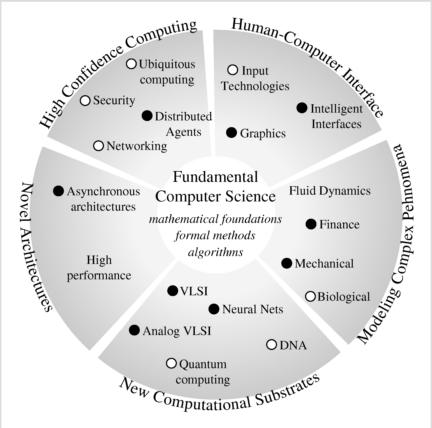
Alan H. Barr is a Professor of Computer Science at the California Institute of Technology (Caltech), affiliated with the Division of Engineering and Applied Science and the Computation & Neural Systems (CNS) department. He is a founding member of the Caltech Computer Graphics Group and a leader in developing mathematically rigorous methods for computer graphics and predictive modeling. His research focuses on enhancing computational modeling accuracy through approaches like interval analysis and constraint-based systems. Notable contributions include deformable models, quaternion interpolation, and cellular simulation frameworks. He has advised over 20 graduate students, many of whom became industry leaders at Pixar, Microsoft Research, and academic institutions like NYU and Brown University. Awards include the ACM SIGGRAPH Achievement Award (1988) and ACM Fellow (1995). Research Interests: Predictive modeling with error bounds Scientific visualization and MRI data analysis Biophysical systems simulation (e.g., cellular organelles) Self-assembling robotic structures for space colonization Mathematically robust computer graphics techniques Key Collaborations: Caltech Biological Imaging Center (Beckman Institute) JPL (Jet Propulsion Laboratory) New computational substrates research (quantum/DNA computing) Recent Work: Expanding into computational biology, medical imaging optimization, and high-confidence systems for managing complex computational interactions. Active in interdisciplinary projects across Caltech divisions.
Adrien Depeursinge is a Professor at HES-SO Valais-Wallis - Haute Ecole de Gestion, affiliated with the School of Economics and Services and the Management Information Systems department. His research focuses on radiomics, personalized medicine via image-based analysis, and clinical workflow optimization. He leads the development of the QuantImage platform, a physician-centered web-based tool for radiomics research, and contributes to radiomics standardization efforts through initiatives like the Image Biomarker Standardization Initiative (IBSI). His work emphasizes machine learning applications in healthcare, including tumor segmentation, biomarker extraction, and improving diagnostic accuracy through computational models. Key research themes include: 1) Radiomics – developing quantitative imaging features for cancer diagnosis/prognosis; 2) Medical Imaging Analysis – advancing texture-based models, multi-modal fusion, and automated lesion detection; 3) Physician-AI Collaboration – designing user-centric tools for clinical integration. His contributions span neuro-oncology (brain metastases), head-and-neck cancer, and multiple sclerosis imaging. Publications emphasize methodological advancements (e.g., kernel optimization in CNNs, steerable detectors) and clinical validation (e.g., reproducibility of radiomics features across imaging protocols). He collaborates with institutions like the University Hospital of Lausanne (CHUV) and international teams on projects like the HECKTOR challenge for PET/CT tumor segmentation. His work bridges technical innovation with clinical impact, aiming to translate radiomics into actionable clinical tools. QuantImage v2, his flagship tool, enables no-code development of machine learning models using clinical imaging data. Research also includes phantom-based validation of radiomics features and addressing challenges in feature stability across imaging modalities. Current projects explore improving contour quality for radiomics studies and optimizing AI explainability in medical decision-making.
Tommy Löfstedt is an Associate Professor at Umeå University , affiliated with the Department of Computing Science and the Department of Mathematics and Mathematical Statistics. His research focuses on machine learning , computer vision , and medical image analysis , with applications in life sciences, radiation therapy, and biomedical imaging. He leads multiple research projects, including AI-driven delineation in radiation therapy, quantitative MRI for radiotherapy, and machine learning for plant nutrient uptake. Current research emphasizes structured regularization methods to improve model interpretability and robustness. Key applications include medical image segmentation , Alzheimer's classification , and uncertainty estimation in MRI . Recent publications highlight his work on morphological regularization , adversarial attack mitigation , and multi-task learning in medical imaging contexts. His projects span 2022–2026 with funding for pediatric oncology automation and gynecological cancer staging. Affiliated with both computing and mathematical departments, he bridges algorithm development with applied mathematical frameworks in medical and life science domains.
Bjoern Menze is a Professor and Rudolf Mößbauer Tenure Track Chair at the Technical University of Munich (TUM), leading the Image-based Biomedical Modeling Group within the Munich School of Bioengineering. His research focuses on medical image computing, tumor growth modeling, and computational physiology, with applications in clinical neuroimaging and personalized radiotherapy design. He holds a Ph.D. in Computer Science from Heidelberg University and has held positions at ETH Zurich, INRIA Sophia Antipolis, MIT, and Harvard Medical School. His academic journey includes a postdoc at MIT’s CSAIL and Harvard Medical School, followed by roles at ETH Zurich and INRIA. His work bridges biomedical imaging with machine learning, emphasizing model-driven analysis of physiological processes. He has been a visiting professor at Maastricht University and contributes to initiatives like the Center for Translational Cancer Research at TUM. Key research areas include tumor growth modeling, quantitative imaging biomarkers, and integrating mathematical models with clinical data. His awards include the MICCAI Young Scientist Award (2014), Leopoldina Fellowship (2009), and DFG Research Fellowship (2008). He advises on medical AI, leads interdisciplinary projects, and publishes extensively in top journals like Nature Neuroscience and IEEE Transactions on Medical Imaging. His lab’s work spans applications such as glioblastoma radiotherapy optimization, whole-body bone lesion detection, and neural connectivity imaging. Collaborations include institutions like Harvard, MIT, and ETH Zurich. He emphasizes translating computational methods into clinical practice for personalized healthcare solutions.
Johannes Balling is a Postdoc researcher at the Laboratory of Geo-information Science and Remote Sensing, Wageningen University. His work focuses on tropical forest monitoring using satellite remote sensing, particularly integrating Synthetic Aperture Radar (SAR) and optical data to detect forest disturbances. He has contributed to projects analyzing deforestation patterns in regions like Indonesia and the Amazon, leveraging tools like Google Earth Engine for large-scale data analysis. Research Interests: Tropical forest dynamics, SAR applications, deforestation detection, multi-source satellite data fusion. Recent work emphasizes timeliness and accuracy in disturbance mapping through innovative combinations of radar and optical sensors. Collaborations include projects with researchers like Herold and Reiche, focusing on fire-related forest changes and real-time monitoring systems. His PhD thesis (2024) explored temporally-dense satellite remote sensing for tropical forest monitoring. He has published widely on SAR-based methods and their application to environmental challenges.
Dr. Andy Nguyen is a Senior Lecturer in Structural Engineering at the University of Southern Queensland, within the School of Engineering. He is an active researcher and educator, specializing in the Structural Health Monitoring (SHM) of critical civil infrastructure such as bridges, buildings, and transport tunnels. Bachelor of Engineering (BEng), NUCE, 1999 Master of Engineering (MEng), NUCE, 2003 Doctor of Philosophy (PhD), Queensland University of Technology (QUT), 2014 Dr. Nguyen's research is at the forefront of integrating advanced technologies into civil engineering. His primary focus is on developing and deploying sophisticated SHM systems that utilize sensors, data analytics, and machine learning to provide real-time insights into the structural integrity of ageing infrastructure. His work aims to enable proactive maintenance, extend the lifespan of structures, and enhance public safety. He has successfully implemented monitoring systems on major bridges and high-rise buildings in Queensland and New South Wales, with systems capable of even detecting distant earthquake events. His research interests span Structural Health Monitoring, Machine Learning for Engineering, Damage Detection, Finite Element Model Updating, Sustainable Building Materials like bamboo, and the application of AI for automated condition assessment of transport infrastructure. The analysis of his recent publications reveals a strong and consistent research trajectory centered on the application of data-driven and AI methods to solve practical problems in civil infrastructure. His work frequently combines signal processing techniques (like Stockwell Transform) with deep learning models for tasks such as crack detection in concrete and pavement. He also conducts significant research on model updating for complex structures like cable-stayed and arch bridges, using vibration data and optimization algorithms. The integration of machine learning for overload classification and the development of cost-effective, automated monitoring systems are key trends in his recent output. Advanced Queensland Fellow (2024-2027) Dr. Nguyen is actively involved in research supervision and collaboration. He is currently supervising several postgraduate students on projects related to AI-powered condition assessment, bamboo as a sustainable building material, and railway track design. He receives research funding from the Queensland Government through his Advanced Queensland Fellowship. His research has direct practical applications, as evidenced by his public engagement, such as writing for The Conversation on safeguarding ageing bridges, and his work with the Australian Network of Structural Health Monitoring. Dr. Nguyen's work embodies the development of a next-generation 'Living' Laboratory for engineering education, where research, teaching, and real-world infrastructure monitoring are integrated. His current projects involve creating smart, automated fault detection systems and advancing 'digital twin'-based monitoring platforms for infrastructure.
Surendranath Suman is an Assistant Dean of Research and Professor in the Department of Animal and Food Sciences at the University of Kentucky's College of Agriculture, Food and Environment. He also holds secondary appointments with the Center for Muscle Biology and the Division of Nutritional Sciences. With over 15 years of academic service at the university, he has progressed from Assistant Professor (2006-2012) to Associate Professor (2012-2017) and currently serves as Professor (2017-present). Dr. Suman earned his B.V.Sc. & A.H. from Kerala Agricultural University (1999), M.V.Sc. from Indian Veterinary Research Institute (2001), and Ph.D. from University of Connecticut (2006). He is also a Diplomate of the American College of Animal Sciences (2010). His research focuses on meat science with particular expertise in proteomics of meat quality, myoglobin chemistry and meat color stability, and novel strategies to improve meat quality. Dr. Suman has made significant contributions to understanding the biochemical mechanisms behind fresh meat color, particularly in beef and pork. His work integrates traditional meat science methodologies with high-throughput proteomic and metabolomic approaches to unravel complex biochemical pathways. Analysis of Dr. Suman's recent publications reveals a strong focus on meat color stability mechanisms, particularly through proteomic approaches. His research spans multiple species including beef cattle, pork, bison, and poultry, with particular attention to mitochondrial functionality, myoglobin chemistry, and post-translational modifications that influence meat quality attributes. Recent work has expanded into metabolomics applications in meat science. Scientific Awards and Recognition Distinguished Research Award, American Meat Science Association (2022) University Research Professor, University of Kentucky (2021) International Lectureship Award, American Meat Science Association (2019) Distinguished Alumni Award, University of Connecticut (2019) Meats Research Award, American Society of Animal Science (2018) Thomas Poe Cooper Distinguished Research Award, University of Kentucky (2017) Bobby Pass Excellence in Grantsmanship Award, University of Kentucky (2016) Special Visiting Researcher Fellowship, Government of Brazil (2014-2017) Early Career Achievement Award, American Society of Animal Science (2013) Dr. Suman has served as an invited speaker internationally across six continents and is an active editorial board member for numerous prestigious journals including Meat and Muscle Biology (Associate Editor), Journal of Animal Science, and Meat Science. His extensive editorial service reflects his standing as a leading authority in meat science research. He has successfully secured multiple research grants, as evidenced by the Bobby Pass Excellence in Grantsmanship Award he received in 2016. As Assistant Dean of Research, Dr. Suman plays a leadership role in advancing research initiatives within the College of Agriculture, Food and Environment. His collaborative research involves multiple laboratories both domestically and internationally, particularly with institutions in Brazil, given his Special Visiting Researcher Fellowship from the Brazilian government. His work bridges fundamental biochemistry with practical applications in meat production and quality assessment.
Dr. Husam Al-Najjar is a Lecturer at the School of Computer Science within the Faculty of Engineering and Information Technology at the University of Technology Sydney (UTS). He serves as the Course Director for the Bachelor of Information Systems (BIS) program. With expertise in geospatial technology and machine learning, Dr. Al-Najjar focuses on predicting and mitigating natural hazards and environmental issues to contribute to a sustainable digital earth. Dr. Al-Najjar earned his PhD from the University of Technology Sydney. Before joining academia, he worked in project management and has received numerous prestigious awards, scholarships, and grants throughout his career. Dr. Al-Najjar's research primarily centers on the application of machine learning techniques to address complex environmental challenges. His work spans geospatial AI, natural hazard prediction (particularly landslides and bushfires), and sustainable development. He has developed innovative approaches that integrate physical models with machine learning algorithms to improve prediction accuracy in data-scarce environments. His research also extends to remote sensing applications, urban planning, and smart city technologies, with a strong emphasis on practical solutions for real-world problems. Analysis of Dr. Al-Najjar's recent publications reveals a strong focus on applying explainable AI techniques to natural hazard prediction, particularly landslides. His work consistently bridges the gap between theoretical machine learning approaches and practical geospatial applications. He has made significant contributions to integrating physical models with AI, developing methods for handling imbalanced data through generative adversarial networks, and improving feature selection for remote sensing applications in environmental monitoring. Best Paper Award at the ISPRS Geospatial Week in Enschede, the Netherlands As an educator, Dr. Al-Najjar is actively involved in mentoring and teaching. He serves as Course Director for the Bachelor of Information Systems program and teaches courses in GIS, Information Systems, IS development methodologies, Design & Innovation, and Project Management. He welcomes prospective PhD candidates interested in his research areas and emphasizes the importance of detailed research proposals that demonstrate novelty and significance. His teaching philosophy focuses on fostering an engaging and inclusive learning environment that promotes student success and well-being. Dr. Al-Najjar is affiliated with 'The Trustworthy Digital Society' concentration at UTS and serves as a referee and holds editorial roles in respected journals. His work contributes to the development of geospatial AI frameworks that support decision-making in environmental management and disaster preparedness.
Matty Mookerjee is a Professor and Department Chair of the Department of Geological Sciences at Sonoma State University. He is a structural geologist specializing in three-dimensional kinematics of fault and shear zones. His contact email is matty.mookerjee@sonoma.edu , and his office hours are Monday 9-11 AM and Tuesday 1-2 PM in Darwin 123. Education Ph.D. in Geological Science, University of Rochester (2005) M.S. in Geological Science, University of Rochester (2001) B.A. in Geology, Oberlin College (1999) Indiana University Summer Field Camp (1999) His research integrates structural geology with cyberinfrastructure development, focusing on quantitative analysis of fault zones using grain shape and crystallographic texture studies, alongside creating digital tools for field data management. Recent projects span the San Andreas Fault, Denali Fault, Himalayas, and Rosy Finch Shear Zone. Mookerjee's publications highlight analog modeling of fault asperities, strain analysis in tectonic zones, and cyberinfrastructure tools for geological data. He has mentored students in collaborative research projects, particularly in kinematic studies and data repository development.