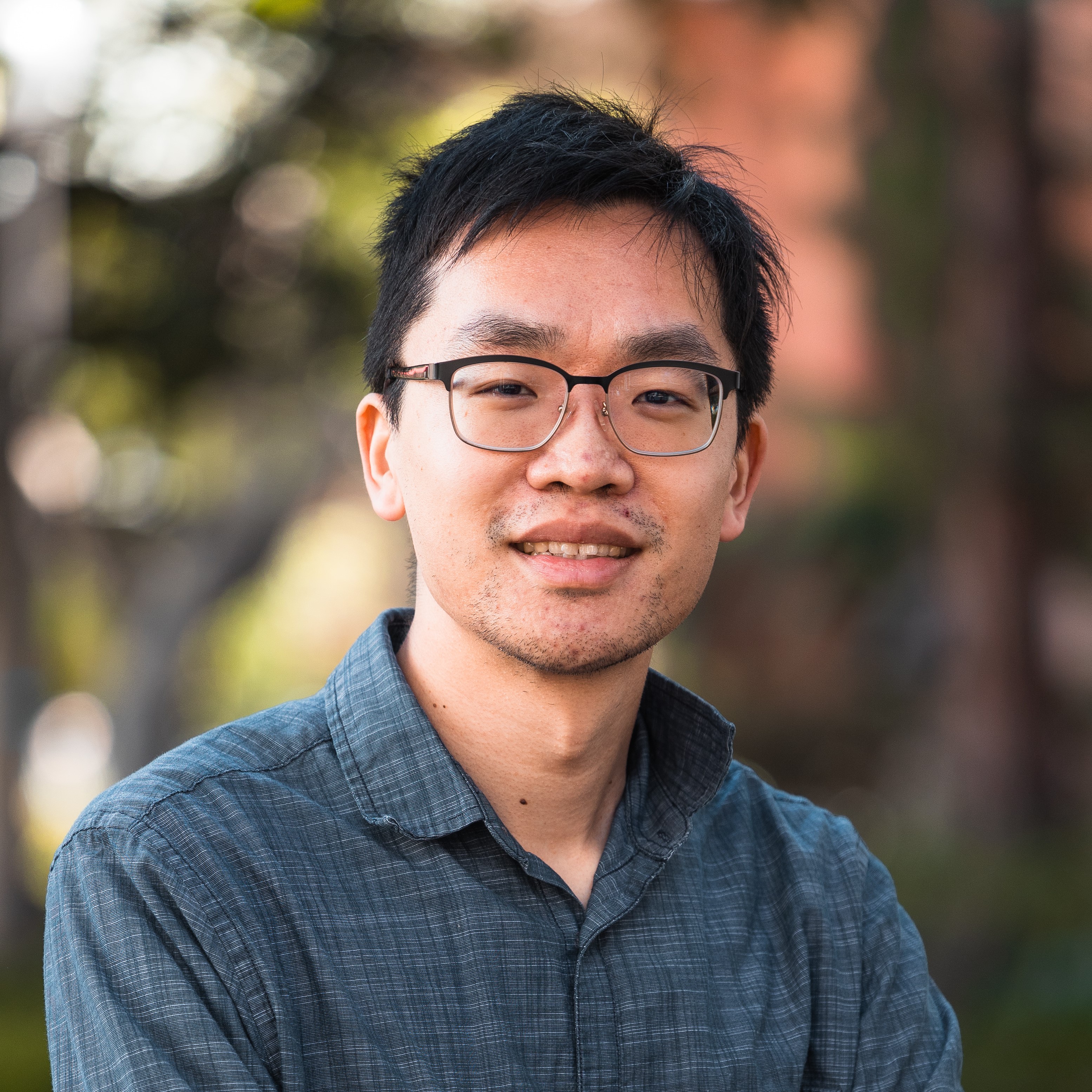
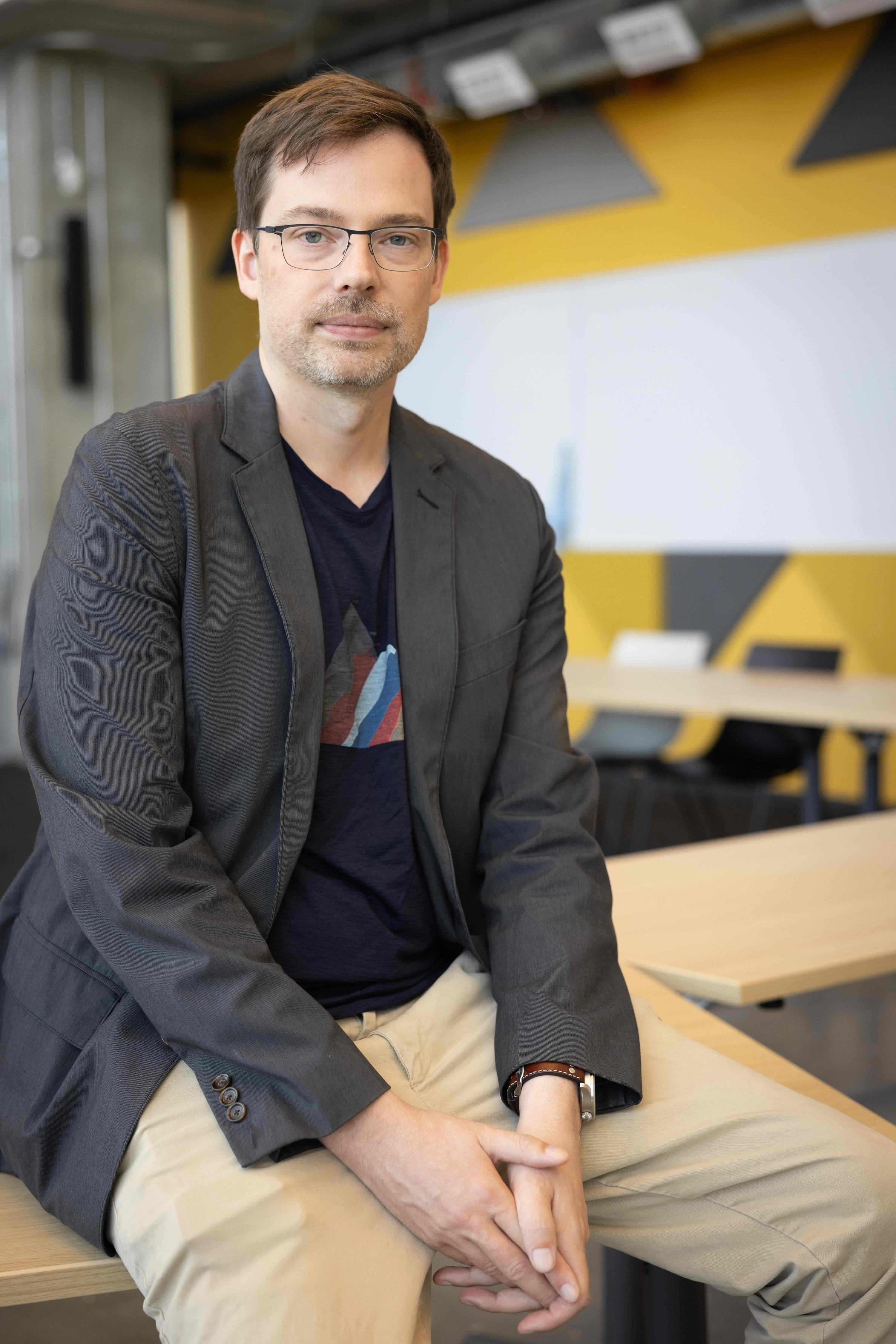
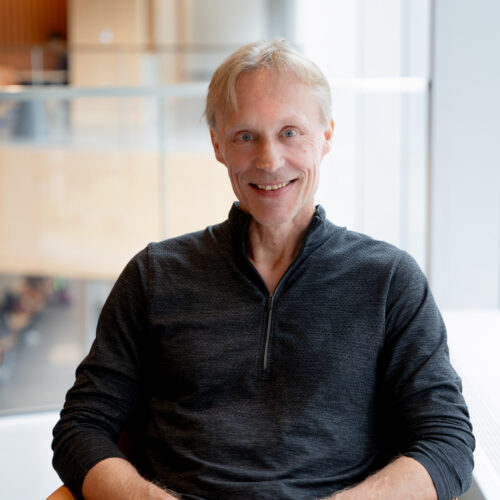
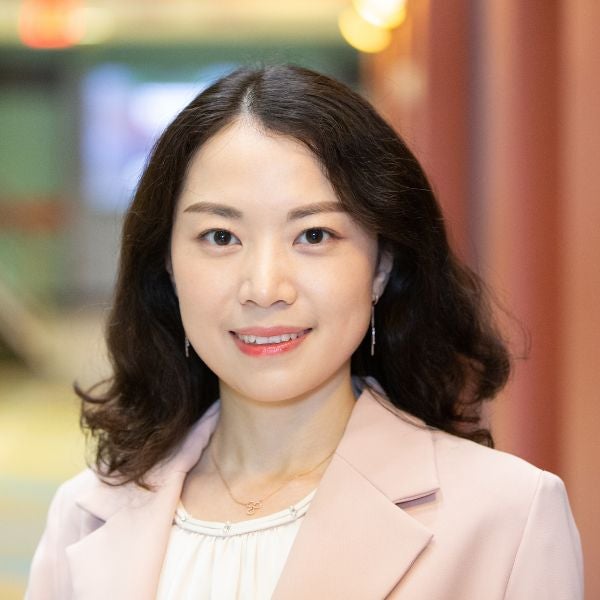
Nicholas Evans is Distinguished Professor of Linguistics and Director of the ARC Centre of Excellence for the Dynamics of Language (CoEDL) at the Australian National University’s School of Culture, History & Language. His work bridges fieldwork-based language documentation with theoretical questions in typology, cultural evolution, and social cognition. Focus on endangered Australian and Papuan languages Director of ARC Laureate Project on 'The Wellsprings of Linguistic Diversity' Co-leader of SCOPIC (Social Cognition Parallax Corpus) study Collaborator in global linguistic diversity initiatives His research explores how micro-level community multilingualism shapes macro-level linguistic diversity, with fieldwork spanning seven years in remote Indigenous communities. Recent projects include PARABANK (paradigm syncretism analysis) and Southern New Guinea language studies, particularly Nen and Yam family languages. Scientific recognition includes the Ken Hale Award (Linguistic Society of America), Anneliese Maier Forschungspreis, and fellowships in the Australian Academy of Humanities, Australian Social Sciences Academy, and the British Academy.
Dawn Song is a Professor in the Department of Electrical Engineering and Computer Science at the University of California, Berkeley, affiliated with multiple research centers including the Berkeley Artificial Intelligence Research Lab (BAIR) and the Berkeley Center for Responsible, Decentralized Intelligence (RDI). She holds leadership roles in AI safety, cybersecurity, and blockchain research. Her work bridges machine learning, security, and distributed systems, with notable contributions to formal verification, privacy-preserving technologies, and AI governance. Education: Ph.D. (2002) and M.S. (1999) in Computer Science from UC Berkeley and Carnegie Mellon University, respectively. She previously served as an Assistant Professor at Carnegie Mellon University before joining UC Berkeley in 2007. Research Interests: Dawn's work focuses on AI safety, cybersecurity, and the ethical implications of frontier AI. She explores topics such as large language model vulnerabilities, zero-knowledge proofs, blockchain security, and policy frameworks for AI governance. Her research combines theoretical rigor with practical applications, addressing challenges in secure systems, adversarial machine learning, and privacy-preserving computation. Publications: Her recent work includes groundbreaking studies on LLM memorization, smart contract decompilation, and AI agent cybersecurity evaluation. She also leads initiatives like the Singapore Consensus and California Report on AI safety priorities, emphasizing global collaboration in risk mitigation. Notable Awards: MacArthur Fellowship (2010), ACM Fellow (2019), IEEE Fellow (2019) Advising & Grants: She advises projects on AI policy and cybersecurity, securing grants from NSF, DARPA, and industry collaborations. Her lab develops tools like CyberGym for evaluating AI agents and zkPyTorch for secure machine learning. Labs & Teams: Her research groups at UC Berkeley focus on cutting-edge projects in AI safety, blockchain, and cybersecurity, collaborating with industry leaders and policymakers to advance both technical and ethical standards.
Prof. Dr. Thomas Hofmann is a Full Professor and Head of the Department of Computer Science at ETH Zurich since 2014. He also leads the Institute for Machine Learning. His research focuses on machine learning, deep learning, natural language understanding, and text understanding. Hofmann holds a Ph.D. from the University of Bonn (1997) and has held academic positions at Brown University (1999–2004) and TU Darmstadt. He transitioned to industry as Director of Engineering at Google (2006–2014), leading the Zurich R&D center, before returning to academia. He co-founded Recommind (2000) and 1plusX (Swiss marketing tech company), currently serving as Chief Scientist and board member at 1plusX. Education: Ph.D. in Computer Science, University of Bonn (1997) Postdoctoral Work: MIT (CBCL/AI Lab), UC Berkeley (EECS/ICSI) His research explores advanced machine learning techniques, including diffusion models, generative adversarial networks, and optimization dynamics. Hofmann’s entrepreneurial ventures reflect his focus on applying AI to real-world challenges, such as e-discovery and marketing technology. His work spans theoretical contributions (e.g., neural network training dynamics, continual learning) and applied innovations (e.g., image editing, portrait generation). Hofmann actively bridges academia and industry, influencing both research and commercial AI applications.
Chua Tat Seng is a Professor at the School of Computing, National University of Singapore (NUS), holding the KITHCT Chair Professorship since 2009. He serves as co-Director of the NExT++ Center, a joint research center between NUS and Tsinghua University focused on Extreme Search. His academic career spans over three decades at NUS, where he has held various leadership positions including Acting Dean of the School of Computing (1998-2000) and Acting Head of the Department of Information Systems & Computer Science (1996-1998). Professor Chua's research spans unstructured data analytics , multimedia information retrieval , recommendation and conversation systems , and emerging applications in e-commerce and fintech . He established the Lab for Media Search (LMS) at the School of Computing and has been instrumental in advancing multimodal learning and search technologies. His work bridges theoretical foundations with practical applications, particularly in developing trustable AI systems for real-world deployment. His recent publications demonstrate a strong focus on large language models for recommendation systems , multimodal learning , and generative AI applications . The research trends show increasing emphasis on LLM-based recommendation, multimodal understanding, and addressing fundamental challenges in AI reliability, fairness, and efficiency. His work spans theoretical advancements in representation learning to practical applications in e-commerce, finance, and healthcare domains. ACM SIGMM Technical Achievement Award 2015 Multiple Best Paper Awards across ACM Multimedia, IEEE Transactions, and MMM conferences (2007-2020) Professor Chua has supervised 37 PhD students since 2004, establishing himself as a dedicated mentor in the academic community. His research has been supported by substantial grants including NExT++ ($12 million), Base Metals Price Forecasting ($200,000), and Multilingual Multimodal Knowledge Graph ($500,000). He maintains active collaborations with Tsinghua University, University of Southampton, and industry partners like Four Elements Capital and Singapore Press Holdings. As co-Director of the NExT++ Center, he leads a major research initiative focused on Web Intelligence and User Empowerment. His visiting professorships at Tsinghua University (2017-present) and Zhejiang University (2021-present) reflect his international impact in the field of multimedia and AI research.
Sara Ng is a Visiting Assistant Professor in the Department of Linguistics at Western Washington University. She holds a PhD in Linguistics from the University of Washington (2024) and an MS in Computational Linguistics (2023), alongside a B.A. in Linguistics and B.S. in Applied Mathematics from the University of Utah (2017). Her research focuses on computational models of prosody, speech perception, and their integration with speech technologies like automatic speech recognition (ASR). She investigates how prosody conveys pragmatic meaning, influences conversational dynamics, and impacts listeners with hearing impairments. Her work bridges computational methods and linguistic theory, addressing challenges in clinical and technological applications. Education PhD in Linguistics, University of Washington, 2024 MS in Computational Linguistics, University of Washington, 2023 B.A. in Linguistics (Honors), B.S. in Applied Mathematics, University of Utah, 2017 Research Interests Ng’s research explores computational linguistics, prosody modeling, speech technology, and hearing impairment studies. She develops methods to leverage prosodic cues for tasks like punctuation prediction and investigates the impact of hearing loss on speech perception. Grants & Awards 2024: Nominated for UW Excellence in Teaching Award 2023: Excellence in Linguistic Research Graduate Fellowship 2017: University of Utah Top Scholar Award Teaching Ng teaches courses in phonetics, computational linguistics, and linguistics for honors students. She emphasizes pedagogical innovation and inclusivity, with experience as an instructor of record and teaching assistant at both Western Washington University and the University of Washington. Labs & Collaborations She collaborates with the TIAL Lab (University of Washington), Phonetics Lab, Hearing Aid Laboratory (Northwestern University), and CLILLAC-ARP (Université Paris Cité). Her work intersects with clinical and engineering domains, addressing real-world applications of speech technology.
Tien Tsin Wong is a Professor in the Department of Data Science & AI at Monash University, Australia. Previously, he served as a Professor at the Chinese University of Hong Kong (1999–2024) and held a Visiting Assistant Professor position at the Hong Kong University of Science and Technology (1998–1999). His research focuses on Generative AI, Computer Graphics, Computer Vision, and Computational Manga, with significant contributions to GPU techniques, image-based rendering, and multimedia compression. Education: He earned a B.Sc. (1992), MPhil (1994), and PhD (1998) in Computer Science from the Chinese University of Hong Kong. Research Interests: His work bridges computational techniques with artistic applications, particularly in manga and animation. Notable areas include generative models, diffusion-based video synthesis, and physically plausible scene generation. His research aligns with UN Sustainable Development Goals through innovations in education and digital accessibility. Awards : He has received the 2004 Young Researcher Award, 2005 IEEE Transactions on Multimedia Prize Paper Award, and two international invention medals (Geneva 2018, Asia Hong Kong 2019). Editorial Roles : He serves as an Associate Editor for Computer Graphics Forum , IEEE Transactions on Visualization and Computer Graphics , and Computational Visual Media . His editorial work underscores his influence in advancing visualization and graphics research. Labs/Teams : While not explicitly named, his collaborations span global institutions, focusing on computational manga, generative AI, and GPU-optimized techniques. His work often involves interdisciplinary teams addressing challenges in digital media and AI.
Colin Raffel , currently an Associate Professor at the University of Toronto and Associate Research Director at the Vector Institute , is a leading researcher in machine learning and natural language processing . His career spans roles at Hugging Face (Faculty Researcher), Google Brain (Senior Research Scientist), and UNC Chapel Hill (Assistant Professor). Education: PhD in Electrical Engineering (Columbia), MA in Music/Science (Stanford), BA in Mathematics (Oberlin) Key affiliations: Google Brain (2016-2020), Hugging Face (2021-present), Vector Institute (2023-present) His research focuses on language model development , attention mechanisms , efficient machine learning , and music information retrieval . Recent work explores model merging , parameter-efficient fine-tuning , and data-constrained language models . Teaching : Has instructed courses at University of Toronto and UNC Chapel Hill on Neural Networks , Deep Learning , and Information Theory . Academic service includes organizing ICLR workshops and serving as Senior Area Chair for NeurIPS and EMNLP . Notable awards : NSF CAREER (2022), Caspar Bowden Award (2023), NeurIPS Outstanding Paper (2023) Key contributions : Core developer of WT5 , Git-Theta , and mir_eval software
Arman Cohan is an Assistant Professor in the Department of Computer Science at Yale University, where he leads the Yale NLP Lab since its founding in January 2023. His research spans natural language processing and machine learning with emphasis on language modeling, representation learning, retrieval systems, and specialized domain applications including scientific discovery and AI for science. His primary research interests include: Natural Language Processing Machine Learning Large Language Models Information Retrieval AI for Science Scientific Problem-Solving Recent publications (2025) demonstrate intense focus on evaluating and advancing LLM capabilities across multimodal reasoning, scientific claim verification, financial domain applications, and biological modeling. The lab consistently produces high-impact work accepted at top-tier conferences including ACL, EMNLP, and ICLR, with 11 papers at ACL 2025 alone. Scientific awards include: Best Paper Award at AI4Research Workshop (IJCAI 2024) Outstanding Paper Award at EACL 2023 Best Paper Award at ACL 2024 for Olmo language model research Professor Cohan actively advises PhD students including Kaili Liu, Jacob Dunefsky, Alan Li, Yilun Zhao, and has graduated researchers such as Linyong Nan (now at Zoom) and Ansong Ni (now at Meta). The lab maintains strong industry partnerships and receives substantial research funding as evidenced by its prolific output and conference presence. The Yale NLP Lab hosts the annual New England NLP Workshop and regularly features speakers from leading institutions including Meta AI, Allen Institute for AI, and DeepMind, fostering a collaborative environment for advancing NLP research.
Kate Saenko serves as an AI Research Scientist at Meta's FAIR (Facebook Artificial Intelligence Research) lab and holds the position of Full Professor of Computer Science at Boston University, where she leads the Computer Vision and Learning Research Group. Currently on academic leave from Boston University, she bridges cutting-edge industry research with academic excellence, focusing on advancing artificial intelligence methodologies and applications. Her educational background includes a PhD in Electrical Engineering and Computer Science (EECS) from the Massachusetts Institute of Technology (MIT), followed by postdoctoral training at the University of California, Berkeley and Harvard University. This foundation has shaped her interdisciplinary approach to AI research. Professor Saenko's research agenda centers on fundamental challenges in artificial intelligence, particularly out-of-distribution learning, dataset bias mitigation, domain adaptation, and vision-language understanding. Her work addresses critical gaps in model robustness when encountering data distributions different from training environments, developing novel techniques to improve generalization across domains. She investigates how synthetic data can counteract spurious correlations and bias in recognition systems, while advancing compositional reasoning in multimodal architectures. Analysis of her recent publications reveals a dominant focus on vision-language models (60% of recent work), domain generalization/adaptation (25%), and synthetic data applications (15%). Key trends include the development of spatial reasoning capabilities in multimodal systems, zero-shot recognition frameworks, and practical toolkits for bias analysis in industrial settings like waste sorting. Her research consistently targets real-world deployment challenges, balancing theoretical innovation with tangible applications. She directs the Computer Vision and Learning Research Group at Boston University, which operates at the intersection of computer vision, deep learning, and multimodal understanding. The group maintains strong industry collaborations through Meta's FAIR and previously engaged with the MIT-IBM Watson AI Lab. Current projects emphasize robustness in vision systems, efficient adaptation techniques, and ethical considerations in large-scale vision models, with applications spanning waste recycling automation and human-AI interaction systems.
Robin Jia is an Assistant Professor in the Thomas Lord Department of Computer Science at the University of Southern California (USC) , where he leads the AI, Language, Learning, Generalization, and Robustness (Allegro) Lab . His research focuses on enhancing the reliability and robustness of large language models (LLMs) through mechanistic understanding, benchmarking under distribution shifts, and neurosymbolic integration. Key affiliations include collaborations with the USC Keck School of Medicine and contributions to legal frameworks like the EU's Digital Services Act. Robin's research spans multiple domains, including: Scientific analysis of LLM capabilities in in-context learning , data memorization , and numerical reasoning Advancements in robust NLP systems , emphasizing uncertainty estimation and calibration Development of methods combining LLMs with symbolic solvers for complex reasoning tasks Interdisciplinary applications in medicine and law , such as privacy-preserving synthetic data generation and medical misconception evaluation . His recent publications (2024-2025) address Fourier-based numerical embeddings (NeurIPS), neurosymbolic planning (NAACL), and multimodal benchmarking (COLM), with a strong emphasis on privacy , fairness , and transparency . Scientific awards include the Google Research Scholar Award (2023) , SoCalNLP Symposium Best Paper Awards , and ACL/EMNLP outstanding papers . He advises PhD students like Johnny Wei and Ameya Godbole, and has secured grants from the NSF , USC-Capital One , and USC-Amazon .
Geoffrey E. Hinton is a distinguished Professor in the Department of Computer Science at the University of Toronto. He is renowned for his foundational contributions to machine learning, particularly in the development of deep learning and neural networks. His research focuses on understanding learning processes in both artificial and biological systems, with key contributions including Boltzmann machines, backpropagation, and deep belief networks. He teaches advanced machine learning courses such as CSC2535, emphasizing topics like graphical models, variational inference, and deep learning architectures. His work has been published extensively in top journals and conferences, with recent papers exploring forward-forward algorithms, analog diffusion models, and scalable neural network training methods. Hinton has advised numerous PhD and master's students and collaborates with institutions like Vector Institute. He is a central figure in the global AI community, regularly presenting at conferences (e.g., 2023 talks on CBS 60 Minutes, BBC, and PBS). His lab focuses on advancing machine learning theory and applications, addressing challenges in vision, language, and generative models.
Liza Rebrova is an Assistant Professor in the Department of Operations Research and Financial Engineering (ORFE) at Princeton University's School of Engineering and Applied Science. She is also an associated faculty member of the Program in Applied and Computational Mathematics (PACM) and the Center for Statistics and Machine Learning (CSML). Her research focuses on randomized numerical linear algebra and the mathematics of data science, with connections to high-dimensional probability and stochastic optimization. She develops mathematically justified randomized algorithms for large-scale data, particularly interested in settings where data exhibits mathematical structure such as spectral decay, multi-modality, or non-negativity. Her work addresses challenges in data compression, recovery, and optimization under structured noise conditions. Dr. Rebrova's recent publications show a strong trend toward developing robust algorithms for linear systems, tensor data compression, and nonnegative matrix factorization. Her work bridges theoretical foundations with practical applications in machine learning and data science, with emphasis on memory efficiency and handling corrupted or incomplete data. NSF DMS-2309685 (Single PI, 2024-2026): "Outliers are not what they seem: data-aware, flexible, and robust randomized iterative methods" NSF DMS-2108479 (Collaborative, 2022-2024): "Fast, Low-Memory Embeddings for Tensor Data with Applications" (co-PIs Mark Iwen and Deanna Needell) She currently advises three PhD students (Jackie Lok, Shambhavi Suryanarayanan, and Sofiia Shvaiko) and has previously advised Abraar Chaudhry (PhD 2024) and Nicolo Grometto (Masters thesis 2023). At Princeton, she teaches graduate courses including ORF526 (Graduate Probability), ORF387 (Networks), and ORF523 (Convex and Conic Optimization).
Alan Ritter is an Associate Professor at the School of Interactive Computing , Georgia Institute of Technology, with additional affiliation to the Machine Learning Center . His research focuses on Natural Language Processing , particularly robust models across domains/languages with fewer labels and efficient resource use, plus data-driven dialogue agents for open-topic conversations. Research Interests : Robust NLP models, cross-lingual transfer, resource-efficient learning, dialogue systems, cultural bias measurement, and privacy-aware language models Students : Mentors Ph.D. students in Georgia Tech's ML and CS programs, including Junmo Kang, Yang Chen, and Duong Minh Le. Alumni include Fan Bai (Ph.D. 2023), Yang Chen (Ph.D. 2024), and Andrew Li (M.S. 2024). Awards : NSF CAREER Award, Amazon Research Award, ACL 2024 Best Social Impact Paper, IUI 2009 Best Student Paper. Recent Work : Studies training budget allocation between supervised and preference-based finetuning, cross-lingual information extraction, cultural bias in LLMs, and privacy risk mitigation in social media disclosures. Service : Served as Program Chair for NAACL 2025, Area Chair for multiple top-tier conferences (COLM, EMNLP, ACL, EACL, AAAI). Email : alan.ritter@cc.gatech.edu
Tommi Jaakkola is the Thomas Siebel Professor of Electrical Engineering and Computer Science and the Institute for Data, Systems, and Society at the Massachusetts Institute of Technology. He received his MSc in theoretical physics from Helsinki University of Technology in 1992 and his PhD from MIT in computational neuroscience in 1997. After completing a postdoctoral position in computational molecular biology as a DOE/Sloan fellow at UCSC, he joined the MIT EECS faculty in 1998. His research advances how machines can learn, predict or control, and do so at scale in an efficient, principled, and interpretable manner. His work in machine learning extends from foundational theory to modern applications, focusing especially on statistical inference and estimation tasks that lie at the heart of complex learning problems. He designs new methods, theory and algorithms to automate the use and generation of semi-structured data such as natural language text, images, molecules, or strategies. Jaakkola applies and develops algorithms to solve multi-faceted recommender, retrieval, or inferential tasks (particularly in biomedical contexts), design and optimize molecules or reactions for drug design, and model strategic, game theoretic interactions. His recent work heavily focuses on diffusion models, protein structure prediction, molecular design, and generative AI, with significant publications in top conferences including ICML, NeurIPS, and ICLR. His scientific contributions span multiple disciplines with significant impact in both theoretical machine learning and practical applications in computational biology and chemistry, including notable work on antibiotic discovery published in Cell. Current advisees: Julia Balla, Bowen Jing, Hannes Stärk, Peter Holderrieth, Chenyu Wang Recent graduates: Gabriele Corso (Boltz PBC), Ezra Erives (DE Shaw), Jason Yim (Xaira) Jaakkola maintains an active research program through MIT's Computer Science and Artificial Intelligence Laboratory (CSAIL) and the Institute for Data, Systems, and Society (IDSS), with his office located in the Stata Center (32-G470). His work bridges theoretical machine learning with practical applications, making significant contributions to both the academic field and potential real-world impact in healthcare and drug discovery.
Hanjie Chen is an Assistant Professor in the Department of Computer Science at Rice University, affiliated with the Ken Kennedy Institute. She holds a Ph.D. from the University of Virginia and a Master's from the University of Science and Technology of China. Her research focuses on Natural Language Processing, Interpretable Machine Learning, and Trustworthy AI, emphasizing model explainability, alignment with human needs, and applications in healthcare, sports, and medicine. She has advised numerous students and led initiatives in AI ethics and education. Education: Ph.D. (Computer Science, UVA 2023), M.Sc. (USTC 2018), B.Sc. (Nanjing University of Aeronautics and Astronautics 2015). Awards include the Outstanding Doctoral Student Award (UVA 2023) and John A. Stankovic Research Award (UVA 2023). She has organized workshops like BlackboxNLP and served on program committees for ACL, NAACL, and EMNLP. Her recent work includes developing benchmarks like SPORTU for multimodal LLMs, evaluating medical question-answering systems, and advancing methods for robust rationale evaluation (RORA). She teaches courses on Natural Language Processing and Trustworthy NLP, emphasizing pedagogical innovation recognized by teaching awards at UVA. Research collaborations include internships at Microsoft Research, IBM, and the Allen Institute for AI. She mentors students in SURF programs and advocates for diversity in tech, serving as a mentor in UVA's CSGSG Council.