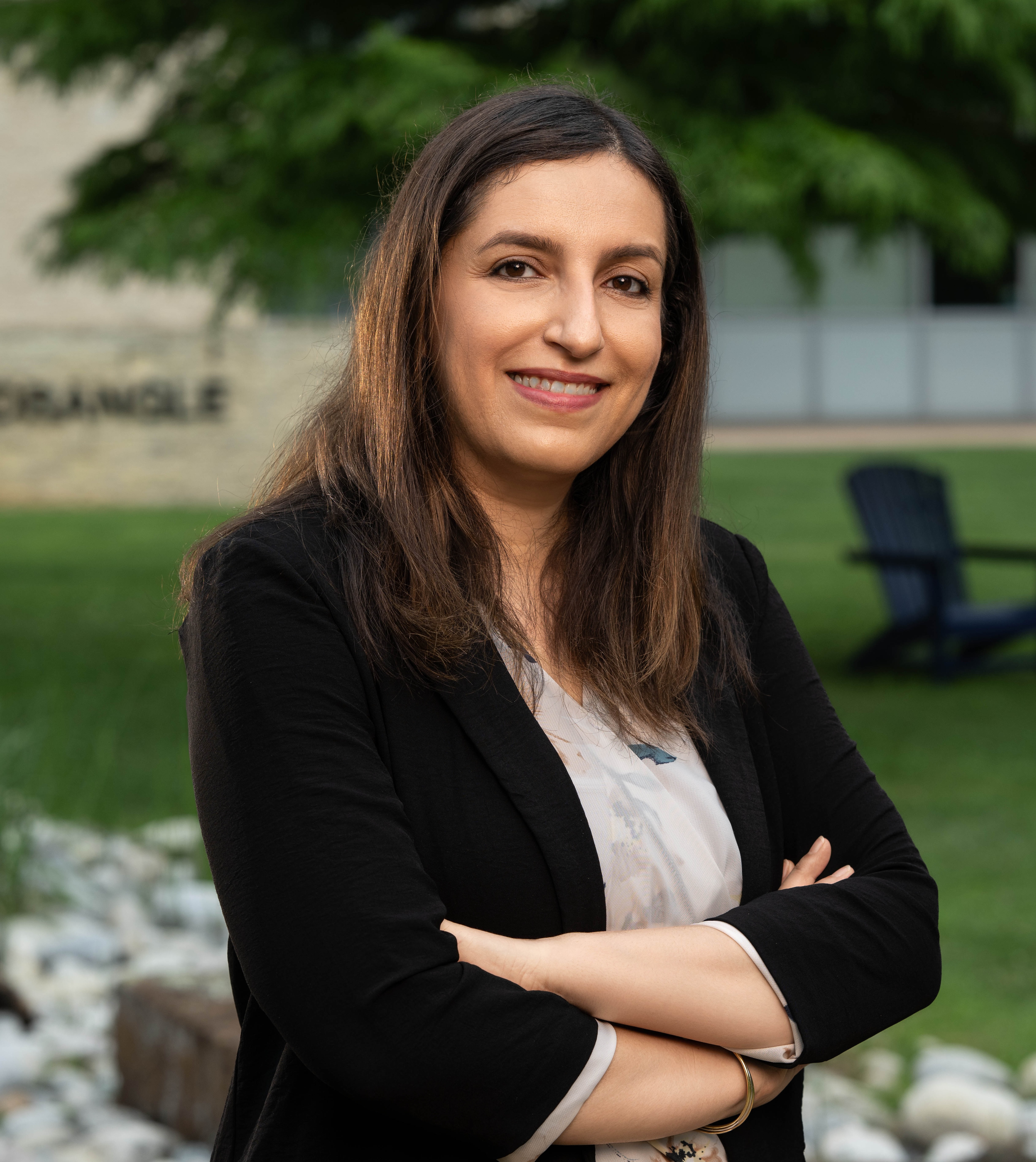
Zhijian Huang is an Associate Professor in the Department of Finance and Accounting at Saunders College of Business, Rochester Institute of Technology, with expertise in corporate finance, behavioral finance, and risk management. Education: B.Eng., Shanghai Jiaotong University (China) M.S., Michigan State University M.Eng., Cornell University Ph.D., Pennsylvania State University His research focuses on financial markets, cognitive dissonance in investor behavior, cryptocurrency volatility, and climate policy impacts on stock prices. Recent publications explore asymmetric responses to earnings news, social media sentiment effects, and credit risk modeling. Huang teaches courses in equity analysis, options/futures, and risk management, with a strong emphasis on derivative instruments and portfolio optimization strategies.
Jonathan Zhang is an Assistant Professor at Duke University's Sanford School of Public Policy and a Faculty Research Fellow at the National Bureau of Economic Research (NBER). He is also affiliated with the US Veterans Affairs Office of Mental Health. Previously, he served on the faculty at McMaster University and was a Postdoctoral Scholar at Princeton University. His academic journey includes a PhD in Economics from Stanford University (2020) and a BSc from UBC. Dr. Zhang's research spans health economics and public finance, with particular focus on physician behavior, health policies, and safety net programs. His work demonstrates deep interest in mental health and substance use issues, examining how healthcare systems impact vulnerable populations. His research methodology often leverages quasi-random assignment and natural experiments to establish causal relationships in complex healthcare settings. His publication record reveals significant contributions to understanding healthcare disparities, particularly regarding racial differences in medical testing accuracy, socioeconomic status impacts on mental health access, and veteran healthcare outcomes. His work frequently appears in prominent working paper series, with numerous 2025 publications indicating active and ongoing research programs. Dr. Zhang maintains active professional engagement through his Google Scholar profile and personal website (jonathanzhang.net). He will be visiting the University of Copenhagen from August 1 - November 15, 2025, suggesting international collaboration and scholarly exchange.
Professor Michael Naef is the Head of the Department of Economics and a Professor at Durham University's Business School. His research focuses on Experimental and Behavioral Economics and Neuroeconomics , exploring topics such as trust dynamics, cultural influences on cooperation, and neurochemical effects on decision-making. He leads the Department of Economics within a triple-accredited business school, emphasizing academic excellence and global connections. Key research interests include investigating how dopamine receptors modulate trust behavior, the origins of cooperative behavior in rice-farming cultures, and the role of testosterone in social interactions. His work combines experimental economics with neuroscience and psychology, often employing pharmacological interventions and neuroimaging techniques. Publications highlight contributions to understanding volatility in trust beliefs (2023), the neurobiological basis of social learning (2019), and testosterone's influence on competitiveness (2017). He advises PhD students Angel Li and Zekun Lin, focusing on advancing behavioral economic theory and applications. Prof. Naef's research has implications for understanding cultural economic differences, mental health impacts on decision-making, and the biological underpinnings of social preferences. His work bridges disciplines, fostering interdisciplinary collaborations in economics, neuroscience, and endocrinology.
Hanna Eklof is an Associate Professor at Umeå University's Department of Applied Educational Science within the Faculty of Social Sciences. Her research focuses on educational psychology and assessment, particularly examining test-taking motivation in international large-scale assessments. Her primary research interests include: Educational Psychology and Assessment Test-taking Motivation and Effort Mathematics Anxiety and Performance Working Memory and Cognitive Processes Large-scale Educational Studies (PISA, TIMSS) Psychometric Methods and Validation Dr. Eklof's recent publications demonstrate a consistent focus on understanding how student motivation affects performance in international assessments, particularly examining response processes, questionnaire-taking behavior, and the relationship between cognitive factors and academic achievement. Her work often employs sophisticated psychometric methods including Item Response Theory and process data analysis to investigate test-taking behavior. Her scientific contributions include numerous publications in high-impact journals examining test-taking motivation across different cultural contexts, the development of assessment tools like the Swedish MARS-E for measuring mathematics anxiety, and investigations into how cognitive factors like working memory mediate relationships between anxiety and performance.
Gilles Chemla is a Professor of Finance at Imperial College Business School and Co-Director of the Centre for Financial Technology. He holds affiliations with the Centre National de la Recherche Scientifique (CNRS), the Centre for Economic Policy Research (CEPR), and the Rimini Centre for Economic Analysis (RCEA). His academic journey includes a PhD in Economics from the London School of Economics, an MSc from Paris School of Economics, and an engineering degree from Ponts Paristech. Chemla’s research focuses on corporate finance, fintech innovation, causal inference methodologies, and corporate governance. His work bridges theoretical economics with practical applications in finance, energy markets, and policy. Recent articles explore AI adoption in finance, crowdfunding dynamics, and executive compensation dynamics. He has contributed to top journals like Journal of Financial Economics and Journal of Empirical Finance . Education: PhD in Economics, London School of Economics (1996) MSc in Economics, Paris School of Economics (1992) Engineering Degree in Mathematics and Economics, École des Ponts ParisTech (1992) Awards: Multiple teaching prizes (unspecified). Professional Roles: Non-executive director roles in corporations and financial institutions Associate Editor, Journal of Empirical Finance Chemla’s research also addresses interdisciplinary topics such as medical trial biases and policy-relevant experiments. He advises on fintech innovation, financial regulation, and energy market dynamics, leveraging mathematical modeling and data science expertise.
Ben Domingue is an Associate Professor at Stanford University's Graduate School of Education and, by courtesy, in the Department of Sociology. His research bridges psychometrics, quantitative methods, and interdisciplinary applications in education, psychology, and social sciences. He leads the development of the Item Response Warehouse, a data resource for psychometrics research, and explores how statistical tools can better measure complex educational and psychological outcomes like reading ability and treatment effects. PhD in Education from the University of Colorado at Boulder (2012). MA and BS in Mathematics from the University of Texas at Austin (2006, 2001). His work focuses on advancing psychometric methodologies, including response time analysis, item-level treatment effects, and predictive accuracy metrics (e.g., InterModel Vigorish). He investigates how genetic and environmental factors interact with educational outcomes and social mobility, using large-scale datasets like the Health and Retirement Study and Add Health. Recent articles emphasize AI-driven psychometric tools, cross-cultural validation of medical assessments, and equity in educational testing. 2024–2025: Associate Professor, Stanford GSE. 2015–2022: Assistant Professor, Stanford GSE. Affiliated: Stanford Center for Longevity, Bio-X, Population Health Sciences. Scientific awards include the Jacobs Foundation Research Fellowship (2022–2024) and AERA Open Outstanding Reviewer (2018, 2019). His advising roles span doctoral and master’s students, with a focus on psychometrics and social-genomic research.
Ed Hopkins is a Professor of Economics at King's College London and the Interim Head of the Economics Department within the King’s Business School. He holds a PhD from the European University Institute in Florence, Italy, and has held positions at the University of Edinburgh and as a visiting scholar at institutions including the California Institute of Technology and the University of British Columbia. His research focuses on game theory, behavioral economics, and social economics, with particular emphasis on topics such as tournament models, inequality, learning dynamics, and experimental economics. Key areas of interest include status concerns, marriage matching, and the implications of non-standard preferences in strategic interactions. Ed has contributed extensively to experimental economics, testing theoretical predictions in laboratory settings. He is actively involved in PhD supervision, accepting students for doctoral research. His work spans theoretical and empirical analyses, with notable contributions to understanding cyclical behavior in strategic situations, the role of information in decision-making, and the interplay between economic inequality and risk-taking.
Edmund Thompson is a Professor in the Management Strategy & Organisation School at the University of Bath's School of Management. He serves as Director of Doctoral Programmes and is affiliated with research centres including the Centre for Future of Work and the Centre for Climate Adaptation & Environment Research (CAER). Holding a PhD from the London School of Economics (1995), his research focuses on entrepreneurship, firm/national competitiveness, and their interplay with psychology, culture, and political economy. He actively supervises PhD students and contributes to UN Sustainable Development Goals. Key projects include studies on counterfeit purchasing ethics and customer-led distribution systems. His work bridges social sciences and business strategy, emphasizing real-world problem-solving through interdisciplinary approaches. Education: PhD in Role of Business in EU Political Integration (LSE, 1995) Main Research Areas: Entrepreneurship, Competitiveness, Individual Psychology, Political Economy Affiliations: Centre for Sustainable Energy Systems (SES), Centre for Regenerative Design & Engineering (RENEW) His recent articles explore student satisfaction dynamics, personality traits in gambling, and PhD supervision impacts. Thompson prioritizes scholarly careers addressing global challenges and mentors students aiming to contribute to impactful research. Grants/Projects: 'Counterfeit Purchasing’s Ethicality' (2020–), 'Customer-Led Distribution System' (2017–2019) He is involved in labs/teams advancing sustainability and climate adaptation research, reflecting his commitment to addressing contemporary societal and environmental issues.
Prof. Dr. Steffi Pohl holds the Chair of Methods and Evaluation/Quality Assurance at the Faculty of Education and Psychology, Freie Universität Berlin since 2019. Previously, she was a Junior Professor (2013-2019) and researcher at institutions including Friedrich-Schiller University Jena and University of Bamberg. She earned her PhD in Psychometrics from Friedrich-Schiller University Jena (2010) and holds a Diplom in Psychology (2004) from Freie Universität Berlin. Her research focuses on advanced statistical methods in educational and psychological testing, including response time modeling, missing data mechanisms, and causal inference in assessment. She has pioneered work on test engagement detection via response patterns and log数据分析. Awards include the 2020 Psychometric Society Early Career Award and 2011 Gustav A. Lienert Dissertation Prize. Pohl serves on editorial boards of Psychometrika , Journal of Educational and Behavioral Statistics , and Zeitschrift für Psychologie . She chairs the Berlin School of Mind and Brain faculty and holds governance roles in academic senates. Her research projects include the National Educational Panel Study (NEPS) and collaborations on test design innovations. Current teaching includes advanced courses in empirical research methods, multivariate statistics, and educational measurement. She actively develops methodologies for analyzing log数据 from digital testing platforms and improving assessment reliability in large-scale studies.
Lynn Carol Miller is a Professor of Communication at the University of Southern California’s Annenberg School for Communication and Journalism. Her research focuses on leveraging virtual environments, AI agents, and computational models to address health-related social behaviors, particularly in HIV/AIDS prevention and mental health. Funded by NIH, CDC, and DARPA (over $20M), her work integrates neuroscience, behavioral science, and technology. She pioneered interventions like SOLVE (Socially Optimized Learning in Virtual Environments) and Systematic Representative Design. Education: PhD in Personality Psychology from University of Texas at Austin. Key areas include health communication, gaming for behavior change, and computational modeling of social processes. She has supervised 17 doctoral students and collaborators across universities globally. Research emphasizes scalable interventions using fMRI-compatible tools and virtual reality. Notable contributions include reducing shame in HIV prevention games and analyzing neural correlates of risk-taking behaviors. Awards include the Early Career Award (2003) and ICA’s Outstanding Contribution to Communication Science (2020). Labs/Teams: Active in multidisciplinary teams at USC and collaborating institutions, focusing on virtual environment design, AI-driven interventions, and neurobehavioral studies. Current projects explore AI for public health and inclusive avatar representations in social VR.
Justin Kruger is an Associate Professor of Marketing at the Leonard N. Stern School of Business, New York University, where he joined in 2005. His academic journey began with a B.S. in Psychology from Santa Clara University in 1993, followed by a Ph.D. in Social Psychology from Cornell University in 1999. Professor Kruger's research focuses on everyday judgment and decision making, with specific emphasis on: Overconfidence in planning and self-assessment Myopia in comparative judgment Egocentrism in perspective taking Everyday heuristics Consumer Psychology and Behavior His work has been featured in numerous scholarly journals including the Journal of Consumer Psychology, Journal of Consumer Research, Journal of Experimental Social Psychology, Journal of Personality and Social Psychology, and Psychological Science. His research has also gained significant media attention, appearing in Newsweek, US News & World Report, The New York Times, The Harvard Business Review, as well as NPR and the BBC, with his work cited over 2,500 times (Google Scholar, March 2011). Professor Kruger has received several prestigious awards and grants: National Science Foundation Research Grant (2004) Department of Psychology, University of Illinois Hohenboken Teaching Award (2003) University of Illinois Research Board Research Grant (2000) Department of Psychology, Cornell University Graduate Teaching Award (1998) Incomplete List of Teachers Rated "Excellent" by their Students, University of Illinois (2000) At NYU Stern, Professor Kruger teaches Judgment and Decision Making in undergraduate, MBA, and PhD programs. His research reveals patterns in how people make judgments about themselves and others, with particular focus on the cognitive biases that lead to overconfidence, miscommunication, and poor decision making. His most influential work includes studies on the Dunning-Kruger effect (where incompetent people fail to recognize their incompetence) and egocentrism in communication (particularly in digital contexts like email).
Dr. Shirin Nilizadeh is an Associate Professor in the Department of Computer Science and Engineering at The University of Texas at Arlington's College of Engineering. She leads the Security and Privacy Research Lab, conducting interdisciplinary research at the intersection of cybersecurity, privacy, machine learning, and social media analysis. Her work addresses critical societal issues related to online security, privacy, and safety through data-driven approaches. Dr. Nilizadeh received her PhD in Computer Science from Indiana University in 2014, followed by MS in Computer Science from Amirkabir University (2007) and BS in Computer Engineering from Islamic Azad University (2004). Her research focuses on security and privacy in systems and social networks, employing techniques from machine learning and big data analytics. She takes a highly interdisciplinary approach, integrating AI, NLP, social sciences, and public health to address societal issues in cybersecurity and privacy. Her research objectives include: (1) detecting and characterizing emerging threats in online social networks like social engineering attacks, misinformation, and online hate speech; (2) advancing the adversarial robustness and fairness of ML and NLG systems; and (3) studying humans' online behaviors through data-driven interdisciplinary research. Analysis of her recent publications reveals a strong focus on AI-generated security threats, particularly phishing scams using LLMs, NFT fraud detection, social media toxicity analysis, and content moderation systems. Her work bridges theoretical security research with practical applications, often addressing real-world security challenges through innovative technical solutions. Among her notable scientific achievements are the prestigious NSF CAREER award (2023), Comcast Innovation Awards (2022 and 2024), College of Engineering Outstanding Early Career Research award (2024), and IEEE SP 2024 Distinguished Paper Award. Her work has also received best paper and technical poster awards at eCrime 2021 and NDSS 2022. Dr. Nilizadeh has successfully mentored numerous doctoral and master's students while securing significant research funding, including multiple NSF grants and Comcast Innovation Fund awards. She leads a vibrant research group that has produced impactful work cited in official reports submitted to The Supreme Court and the EU Committee on Civil Liberties, Justice, and Home Affairs. Her lab has also received coverage from WIRED, MIT Technology Review, Orange's Hello Future, and Communications of the ACM. She serves on numerous program committees for top international conferences including ACM CCS, USENIX Security, and POPETS, and has organized outreach programs like OurCS@DFW to broaden participation of underrepresented students in computing.
Lillian Lee is a Professor of Computer Science at Cornell University, affiliated with the College of Computing and Information Science. Her research bridges natural language processing (NLP) and social interaction, focusing on how computational methods can analyze and facilitate socially embedded processes. She co-developed the course “Natural Language Processing and Social Interaction” and leads the Cornell NLP Group. Her work spans sentiment analysis, computational social science, and multimodal interaction, with notable contributions to understanding language features in persuasion, online debate dynamics, and humor comprehension. Key research interests include analyzing digital traces of social interaction, evaluating AI systems through human-centered criteria, and exploring the interplay between language structure and societal influence. Recent projects examine pivotal moments in mental health counseling, cross-cultural historical narratives on Wikipedia, and the role of wording in message propagation. Awards: ACM Fellow, ACL Distinguished Service Award (2021), Test of Time Award, Fellow of the Association for Computational Linguistics Labs/Teams: Member of the Cornell Natural Language Processing Group Advising: Mentored numerous students whose work has driven impactful projects in NLP and computational social science
Károly Takács is Professor at Linköping University's Institute for Analytical Sociology. He holds a Ph.D. from University of Groningen and has held positions at Corvinus University of Budapest, Collegium Budapest, Netherlands Institute for Advanced Studies, and University of Brescia. He founded and led the Research Center for Educational and Network Studies at Hungarian Academy of Sciences. His research examines social networks in relation to cooperation, conflict, and reputation systems, with particular focus on gossip mechanisms and ethnic discrimination in educational contexts. He currently leads an ERC Consolidator Grant investigating how gossip influences reputation and cooperation across different social environments. Takács' publications develop theoretical frameworks for understanding reputation-centered cooperation and empirically test mechanisms through experiments, network analysis, and large-scale studies in educational settings. His work combines analytical modeling, experimental methods, and advanced network analysis techniques.
Jenine Brown is Associate Professor of Music Theory and Coordinator of Ear Training at The Peabody Conservatory of The Johns Hopkins University. She joined the faculty in 2015 and teaches the undergraduate ear training core curriculum and a graduate seminar on music cognition and analysis. Her work bridges empirical research and music-theoretical inquiry, with a strong focus on listener expectation and aural skills pedagogy. Ph.D. in Music Theory, Eastman School of Music Degrees from University of Michigan–Ann Arbor Executive Leadership Training, Johns Hopkins Carey Business School Her research takes an empirical approach to understanding how listeners perceive musical structure, especially in tonal and post-tonal contexts. She investigates pre-compositional structures and collaborates on projects exploring the pre-dominant function with Dr. Daphne Tan and others. Her pedagogical scholarship focuses on aural skills instruction, including reviews of digital tools and contributions to major publications such as The Routledge Companion to Aural Training in Music Education . She has published in Music Theory Spectrum , Music Perception , Frontiers in Psychology , and Journal of Music Theory Pedagogy . Her recent publications and presentations reflect a strong interdisciplinary trend, combining music theory, cognitive science, and educational research. Topics include listener expectation, aural pedagogy, Suzuki method applications, and empirical modeling of musical cognition. She frequently presents at major conferences such as the Society for Music Theory, Society for Music Perception and Cognition, and the International Conference on Music Perception and Cognition. Her scientific awards include: Johns Hopkins University Catalyst Award (2023) Peabody Conservatory CARES Award (2020) COVID-19 Research Accelerator Grant (2021) Brown is actively involved in academic service and mentoring. She has served as Associate Editor of Music Theory Online , President of the Music Theory Society of the Mid-Atlantic (2022–2024), and is a key contributor to the College Board’s AP Music Theory program, where she has served as Visiting Fellow and currently sits on the Test Development Committee. She mentors students through collaborative research, resulting in co-authored publications in Frontiers in Psychology and Research Studies in Music Education . Her leadership extends to hosting the 20th-anniversary MTSMA conference at Peabody in 2023. Brown leads initiatives in music cognition and aural skills development at Peabody, collaborating with colleagues across disciplines. She is central to curriculum development in ear training and integrates cognitive research into pedagogical practice. Her lab-like collaborative environment fosters student involvement in empirical research and conference presentations.