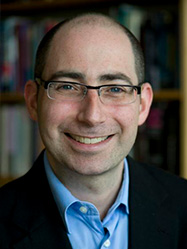
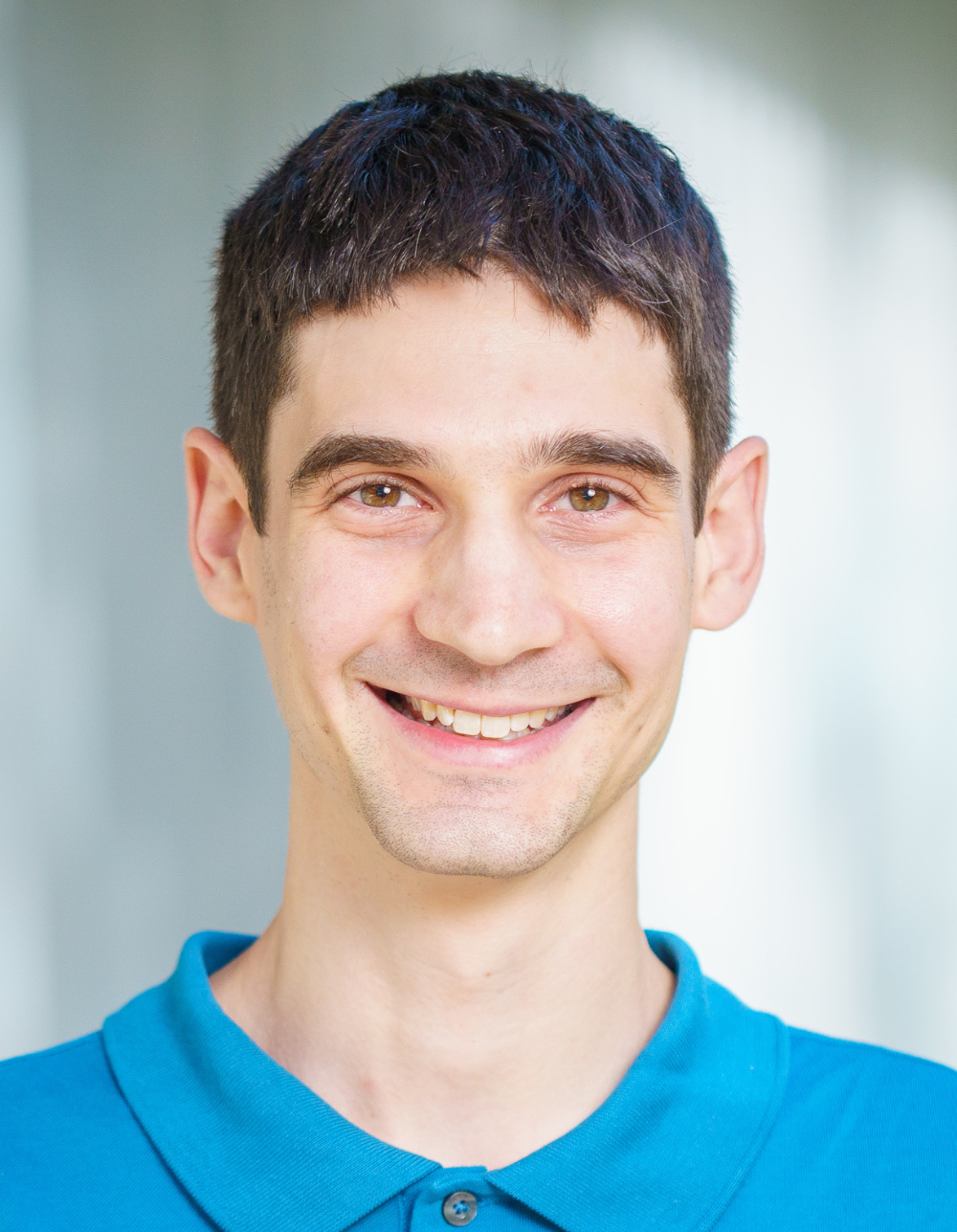
Branislav M. Randjelovic is an Associate Professor at the University of Nis, holding positions at both the Faculty of Electronics (Department of Mathematics) and the Faculty of Teacher Education in Leposavic (Department of Mathematics Teaching Methods). He was elected to the title of Associate Professor at both institutions in 2024 and 2021 respectively, having previously held Assistant Professor positions since 2016. His academic journey began with graduation from the Faculty of Electronics in Niš in 1994, followed by a Master's degree in Applied Mathematics in 2002, and culminating with a PhD in Applied and Industrial Mathematics in 2015. His research spans multiple domains including applied mathematics, graph theory applications in materials science, fractal analysis of microelectronic structures, and educational assessment methodologies. He has made significant contributions to applying graph theory to model microstructure evolution in sintering processes and has pioneered the use of fractal analysis in microelectronic ceramic materials. In educational research, he focuses on mathematics education, curriculum development, and comparative studies of educational systems in the Balkan region. His recent publications demonstrate a strong interdisciplinary approach, merging mathematical techniques with applications in materials science, educational assessment, and decision-making methodologies. His work frequently employs fuzzy logic, analytic hierarchy processes (AHP), and graph theory to solve complex problems across these diverse fields. Dr. Randjelovic serves as the Director of the Institute for Quality Assessment of Education and Upbringing of the Republic of Serbia (2016-2025) and previously directed the Registration Center for Professional Development of Education Employees in Niš (2008-2012). His leadership roles reflect his significant contributions to educational policy and assessment in Serbia. He has authored 13 books, published 40 journal papers with impact factor, participated in 12 scientific projects, and contributed to 102 national and 17 international education projects. His extensive work demonstrates a unique bridge between advanced mathematical research and practical educational applications.