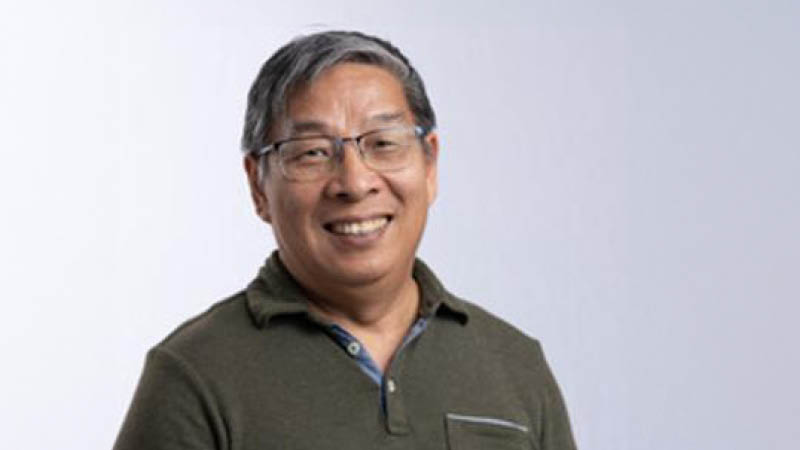
Omid Chatrabgounمشاهده پروفایل
استادیار
Dr. Omid Chatrabgoun serves as an Assistant Professor in Data Science and AI at the CEES School of Science, holding a PhD in Data Science from Shahid Chamran University (Iran, 2015). Previously affiliated with Malayer University, he teaches undergraduate and postgraduate courses including Statistical Learning, Data Science, and Machine Learning while actively supervising PhD students. His research focuses on uncertainty quantification and Bayesian machine learning for complex systems. Education: PhD in Data Science, Shahid Chamran University, Iran (2015) Dr. Chatrabgoun specializes in Modelling, Optimization, and Uncertainty Quantification (UQ) using (Deep) Gaussian processes, with applications spanning bioinformatics (Gene Regulatory Networks, Protein-Protein Interactions) and environmental engineering (coastal protection, flood modeling). He develops novel approaches for machine learning of linear operational equations to quantify uncertainty in highly complex systems, emphasizing computational efficiency through sparse approximations and kernel methods. His work bridges theoretical statistics with practical implementations in healthcare, environmental science, and industrial applications. Analysis of his 29 publications (2016-2025) reveals a consistent trajectory in Gaussian process methodologies, evolving from foundational graphical models to advanced deep Gaussian processes and probabilistic surrogate modeling. Key thematic clusters include bioinformatics network inference, environmental risk assessment, and computational optimization techniques, demonstrating interdisciplinary impact across computer science, statistics, and domain-specific applications. Dr. Chatrabgoun has secured research funding and conducted consultancy projects with the Iran National Science Foundation (INSF) and Research Institute for Grapes and Raisin (RIGR). His collaborative network spans international institutions, as evidenced by co-authorships across civil engineering, bioinformatics, and environmental science domains. Current projects involve developing machine learning frameworks for linear differential operators and expanding applications of pair-copula Bayesian models in high-dimensional data analysis. His research group actively explores uncertainty propagation in PDE-based models and spatio-temporal environmental simulations, maintaining strong industry-academia partnerships for knowledge exchange in data-driven decision systems.