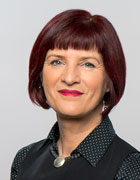
Prof. Dr. Sabine Maasen is a Professor of Sociology of Science at the Technical University of Munich (TUM) and serves as Director of the Munich Center for Technology in Society (MCTS). She is affiliated with the TUM School of Governance and contributes to the Wissenschaftlicher Rat (Scientific Council) of the German Science Council and the Scientific Commission of Lower Saxony. Education: Studied Sociology, Linguistics, and Psychology at Bielefeld University PhD in Sociology (1996) Habilitation (2001) Her research focuses on the sociology of science, with a specific emphasis on neuroscience sociology, technoscience, and the societal implications of digital technologies. She explores how neurotechnologies (e.g., neuroprosthetics, neurofeedback) and digital platforms (e.g., Web 2.0) reshape subjectivity and social norms. Recent publications highlight ethical challenges in large-scale projects like the Human Brain Project, the recontextualization of oxytocin as a "social hormone," and the interplay between technosocial systems and autonomy. Her work bridges neuroscience, sociology, and digital ethics. Labs/Teams: Director, Munich Center for Technology in Society (MCTS) Active in interdisciplinary collaborations at TUM School of Governance
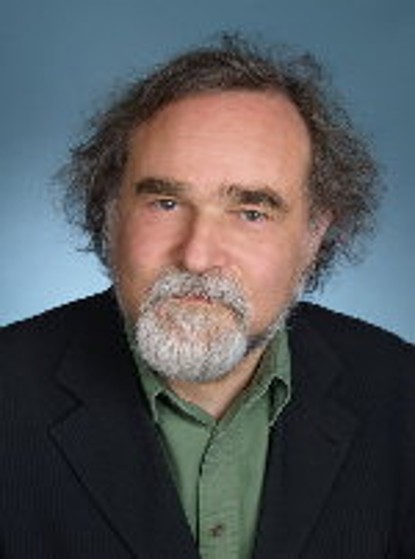
Christoph Durt is a philosopher and lecturer at the Technical University of Munich (TUM), focusing on the intersection of philosophy, digitalization, and AI. He holds a PhD from the University of California, Santa Cruz (2012), and has held academic positions across institutions including UC Berkeley, the University of Vienna, and the University of Heidelberg. His research explores philosophical foundations of digital technology, phenomenology, and the history of philosophy. Education: Studied Philosophy, Psychology, Computer Linguistics, and Intercultural Communication at universities in Heidelberg, Tucson (Arizona), and Munich. Completed his PhD at UCSC under advisors including Julian Nida-Rümelin and David Hoy. Research Interests Philosophy of AI and Digital Transformation Phenomenology of Subjectivity and Embodiment History of Philosophy (Ancient, Descartes, Kant, Nietzsche) Intercultural and Latin American Philosophy His work challenges reductive views of consciousness, emphasizing the role of embodiment and intersubjectivity in human experience. Grants & Projects Lead of the German Society for Philosophy’s 'Digital Philosophical Foundations' group (since 2022) Marie Curie Fellowships (2013–2018, 2021–2023) VolkswagenStiftung-funded project on AI integration (2020–2021) Labs & Collaborations Active in interdisciplinary networks like the Parmenides Foundation and FRIAS, focusing on digital ethics and AI’s societal impact.
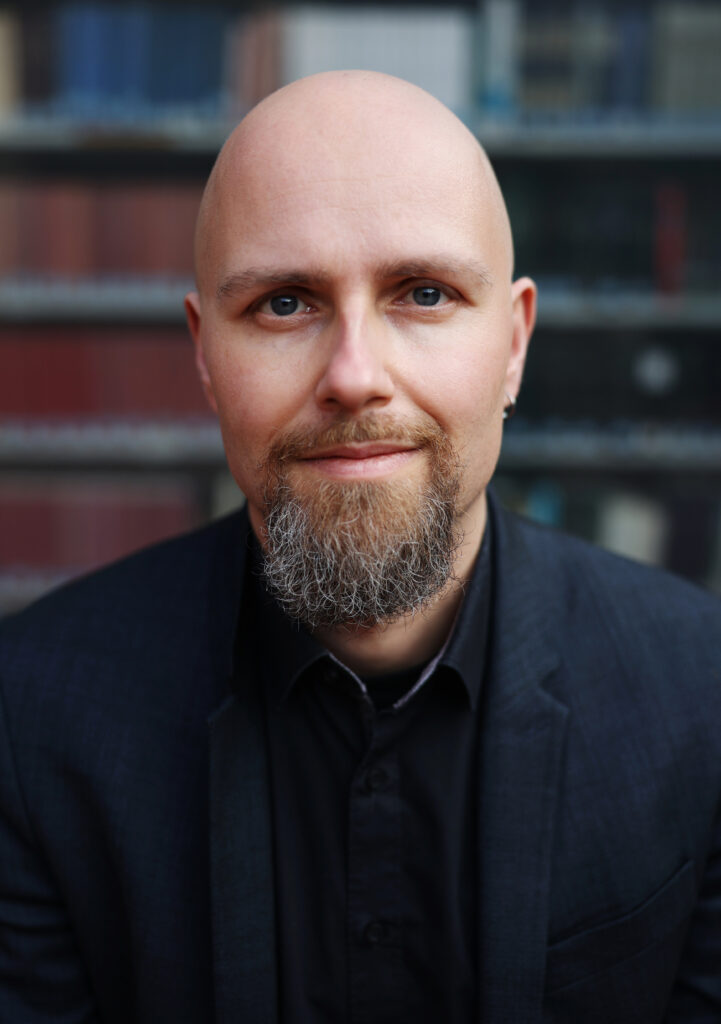
Prof. Dr. Tanja Penter is a Professor of Eastern European History at Ruprecht-Karls-University Heidelberg since 2013. Her research focuses on 19th-20th century Ukraine/Russia/Soviet Union, Stalinism vs. National Socialism, Holocaust studies, transitional justice, and memory politics. She leads the DFG-GRK 2840 'Ambivalent Enmity' and directs the Research Centre on Antiziganism. Education/Positions: PhD (1999, Cologne), Habilitation (2008, Bochum), prior roles at Hamburg University and Humboldt University Berlin. Awards include the 2011 René Kuczynski Prize for her book Coal for Stalin and Hitler . Publications span over 70 works, including monographs on Odessa 1917 and Donbas labor history. Key areas include Nazi/Soviet collaboration trials, Holodomor legacy, and post-Soviet victim compensation. She advises on historical commissions (e.g., German-Ukrainian, German-Russian) and contributes to encyclopedic projects on Nazi genocide. Teaching: Exam authority across all history programs at Heidelberg. Consultation hours during lectures: Wednesdays 11:00-12:30.
Prof. Dr. Jutta Weber is a Professor of Media Sociology at the Institute of Media Studies within the Faculty of Arts and Humanities at the University of Paderborn, a position she has held since October 2011. She maintains an active research and teaching profile with a focus on the intersection of technology, media, and society. Her research interests span Technology and Media Theory, Technoscience Studies, Cultural Media Studies, Surveillance, Military & Critical Security Studies, and Feminist/Gender Studies. Her work critically examines how technology shapes social relations, power structures, and everyday life, with particular attention to ethical implications of emerging technologies. Analysis of her recent publications shows a strong focus on the ethical dimensions of artificial intelligence, particularly in military contexts, alongside examinations of digital platforms, surveillance technologies, and epistemological questions in technoscience. Her work often bridges philosophical inquiry with sociological analysis of technological systems. Prof. Weber teaches a diverse range of courses including Media and Technology Theories, Media and War, and specialized seminars on platform wars, surveillance, and AI ethics. Her teaching reflects her interdisciplinary approach that combines media sociology with science and technology studies. She has collaborated with researchers such as J. Hälterlein on projects related to autonomous weapons systems and maintains an active research agenda examining the societal implications of emerging technologies.
Max Planck Institute for the History of ScienceGermany
Martina Schlünder is a visiting associate professor at the STS group of the Center for Technology, Innovation, and Culture at the University of Oslo. She holds a PhD in History of Medicine from Charité-Universitätsmedizin Berlin (2007) and has previously worked at Justus Liebig University Giessen, McGill University, ETH Zurich, and the Max Planck Institute for the History of Science in Berlin. Education: PhD in History of Medicine (Charité-Universitätsmedizin Berlin, 2007) Her research focuses on the History and Philosophy of Science and Medicine , drawing from Feminist Science Studies to examine biomedical research and human-animal relationships. She has investigated the historical challenges of clinical research within the Max Planck Society. Her recent publications include interdisciplinary analyses of avian mobility in airport contexts and technoscientific practices in postcolonial frameworks , reflecting her interest in sociomaterial practices and mixed knowledges. Scientific Awards: Marie Curie Postdoctoral Fellowship (2015–2018) Martina Schlünder has participated in collaborative projects such as Acoustic Borderlands at Frankfurt Airport and Technoscientific Turn of Reproduction , often bridging science studies with environmental and gendered perspectives.
Alfred Nordmann is a Professor at the Technical University of Darmstadt , focusing on the philosophy and history of science and technoscience . His work explores the epistemological, metaphysical, and aesthetic dimensions of technoscientific research, emphasizing the role of theories as tools for practical mastery of phenomena. Educated at the University of Hamburg (MA 1981, PhD 1986) Current associate at the University of South Carolina Founding member of the History and Philosophy of Technoscience book series (since 2013) Nordmann's research spans technoscientific fields such as nanotechnology , synthetic biology , and multilingual technology . He investigates how knowledge is produced through making and building, challenging traditional distinctions between science and technology. His recent publications address themes like multilingualism in technology , machine hermeneutics , and epistemic bricolage , reflecting a shift toward understanding technoscience as a domain where theories serve practical control rather than pure representation. Collaborative projects include work with Daria Bylieva on Technologies in a Multilingual Environment and with Astrid Schwarz on the German-French project Genesis and Ontology of Technoscientific Objects (2010-2013). He also co-edited volumes on responsible innovation and the hermeneutics of technology .
Prof. Sascha Dickel is a Universitätsprofessor of Media Sociology and Sociological Theory at Johannes Gutenberg University Mainz since 2021. Previously, he held positions as Junior Professor at Mainz (2017–2021), Guest Professor at the University of Vienna (2019), and research roles at TU Darmstadt, TU Munich, and other institutions. He specializes in media sociology, societal theory, digital participation, and qualitative methods. His research explores technological futures, citizen science, and the sociological implications of digital transformation. Dickel has authored/co-authored multiple books, including Prototyping Society (2019) and TechnoScienceSociety (2020), and led major projects like the BMBF-funded initiative on 'intelligent knowledge platforms for SMEs.' Education: - 2020: Positive intermediate evaluation of junior professorship - 2019: Habilitation (Venia Legendi in Sociology), TU Munich - 2010: Dr. phil., University of Bielefeld - 2005: Magister Artium in Political Science, Sociology, and Philosophy - 2001–2005: Studies at Goethe University Frankfurt (Political Science, Sociology, Philosophy) Awards: Philosophischer Buchpreis 2014 (for Enhancement-Utopien ) TTN-Essay-Preis 2013 (for Plädoyer für eine postromantische Ökologie ) What if? Visionen Award 2006 (for Bionostalgie ) Research Focus: Dickel’s work bridges sociology and technology studies, addressing topics like digital participation, prototyping as societal practice, and the ethical dimensions of human enhancement. His projects often involve interdisciplinary collaborations, such as the DFG-funded Humandifferenzierung SFB (2021–2025). His recent articles engage with AI ethics, posthumanist theory, and the societal impacts of digital communication frameworks. Teaching: Current courses include Introduction to Media Sociology and seminars on algorithmic society, science fiction, and hermeneutic methods. Past courses covered topics like posthumanism, science and society, and film sociology.
Max Planck Institute for the History of ScienceGermany
Sarah Blacker is a Researcher at the Max Planck Institute for the History of Science (MPIWG) in Berlin, specializing in the intersection of Science and Technology Studies, Postcolonial Studies, and Indigenous Knowledge Systems. Her work critically examines how biomedical discourses individualize health risk while obscuring structural inequalities. Her research analyzes the geneticization of health in North American institutions, investigating how public health campaigns and genomic medicine materials shift responsibility for health disparities onto individuals rather than societal factors. She currently leads the project Planning for Persistent Environmental Contamination: Public Health, Indigenous Traditional Knowledge, and Technoscience in Canada , which studies citizen science initiatives in settler-colonial contexts where environmental contamination evidence is politically contested. This work explores negotiations between First Nations actors and government policymakers regarding knowledge production, focusing on epidemiological methods as arbiters of valid evidence. Dr. Blacker actively contributes to decolonial scholarship through MPIWG events including the Decolonizing the Plan workshop series (2017-2018) and seminars on colonial planning and environmental contamination (2014-2016). Her methodology emphasizes situated knowledge and challenges Western scientific hegemony in environmental health science.
Max Planck Institute for the History of ScienceGermany
Christopher M. Kelty is a Professor at the University of California, Los Angeles, with appointments in the Institute for Society and Genetics, the Department of Anthropology, and the Department of Information Studies. His research spans social theory, technology, and urban ecology, focusing on digital cultures, open source movements, and human-animal interactions in Los Angeles. Book: The Participant (2019), exploring participation through four historical cases Book: Two Bits (2008), analyzing free software culture Recent publications address topics like internet evolution, urban wildlife governance, and digital liberalism. He leads the Labyrinth Project on urban animal management and an NSF-funded study of mediated participation across domains. As an open access advocate, he co-founded the Limn magazine and the Libraria collective. NSF grant for research on Participation Contributions to understanding nanotechnology ethics and digital infrastructures
Maya Indira Ganesh is an Assistant Research Professor and Associate Director (Research Partnerships) at the Leverhulme Centre for the Future of Intelligence, University of Cambridge. She co-developed the Master’s program in AI, Ethics & Society from 2021-2024. Her research focuses on AI's societal adoption, particularly among marginalized communities and expert publics. Previously, she worked with civil society organizations on gender justice and digital rights in India, Southeast Asia, and Europe. She holds a PhD in Cultural Studies from Leuphana University, Germany, and has authored works like Auto-correct (2025). Her expertise bridges academia and practice through curatorial advising, public speaking, and media arts analysis. She currently explores AI's materiality in mass digital culture, emphasizing aesthetics and visual transformation.
James Dorson is an Assistant Professor of North American Literature at the John F. Kennedy Institute for North American Studies, Freie Universität Berlin. He leads the Dahlem International Network Junior Research Group on 'American Literature and Managerialism, 1875–1925' and coordinates the DFG Research Network 'Model Aesthetics: Between Literary and Economic Knowledge.' His research focuses on the intersection of literary forms and social structures, particularly in American literary naturalism and economic criticism. Education: PhD (2011) in North American Studies from Freie Universität Berlin; M.A. (2007) and B.A. (2003) in English from Copenhagen University. Research interests include organizational aesthetics, economic literary criticism, environmental humanities, and narrative theory. He has published extensively on topics like the cultural work of literary naturalism, managerialism in American literature, and resilience in climate fiction. Recent grants include DFG funding for the Model Aesthetics Network (€83,000), a Feodor Lynen Fellowship (2018–2021), and multiple Ernst Reuter Society grants. He supervises PhD students in areas like postmodernism, cognitive poetics, and Black masculinity. Teaching includes courses on the office novel, economic criticism, and the environmental humanities. He organizes conferences like 'Model Imaginaries: Literature, Economics, Abstraction' (2024) and co-edits volumes on managerialism and data fiction.
Prof. Dr. Gabriele Gramelsberger is a Professor holding the Chair for Theory of Science and Technology at RWTH Aachen University. She serves as Vice Dean for Research in the Faculty of Arts and Humanities and co-leads the Master's program in Governance of Technology and Innovation. As Director of the Kate Hamburger Kolleg 'Cultures of Research', she explores the history, philosophy, and sociology of science and technology. Her research focuses on digital transformation, computational sciences, and environmental humanities. She founded the CSS Lab (2018) and is a member of the North Rhine-Westphalian Academy of Sciences. Key roles include editor-in-chief of the journal 'Philosophy & Digitality' and leadership in the 'Philosophy of Digitality' working group. In 2023, she received the K. Jon Barwise Prize for contributions to philosophy and computing. Her research spans reflective modeling, AI ethics, and the epistemology of computational sciences. She actively contributes to interdisciplinary initiatives like the RWTH Human Technology Center and the German Society for Philosophy (DGPhil). Her work bridges philosophy, technology, and environmental studies, addressing societal impacts of digital and scientific advancements. Awards: K. Jon Barwise Prize 2023 Labs/Teams: CSS Lab, Kate Hamburger Kolleg Grants: NRW Digital Fellowship 2017 Her teaching includes modules on philosophy of science, governance of socio-technical change, and computational modeling. She emphasizes open science infrastructure and critical analysis of technological impacts on knowledge production.
Michelle Christensen is a Visiting Professor for Open Science & Critical Culture at the Technische Universität Berlin, Faculty I Humanities and Educational Sciences, and the Einstein Center Digital Future (ECDF). She is also a Principal Investigator in the 'Object, Space, Agency' project at the Cluster of Excellence Matters of Activity, Humboldt University of Berlin, and co-leads the research group 'Design, Diversity and New Commons' at the Berlin University of the Arts and Weizenbaum Institute. B.A. International Development, Roskilde University M.A. Conflict Studies, University of Utrecht M.Sc. Gender Studies, University of Amsterdam M.A. Integrated Design, Cologne University of Applied Sciences Dr. phil. (Ph.D.) in Design Research, Berlin University of the Arts Michelle Christensen's research lies at the intersection of sociology, design, and critical theory. Her work critically examines the politics of objects, material-sociology, and the democratic potential of open technologies. She is deeply engaged in feminist/queer, decolonial, and post-anthropocentric approaches to design, exploring how technology can be reimagined through inclusive, pluralistic, and activist-oriented practices. Her research emphasizes transdisciplinarity and blurs boundaries between academia, activism, and civil society. Her recent publications and projects, such as 'Critical Inquiry + Design' and 'Politics of the Machines – Rogue Research,' reflect a strong focus on AI ethics, data embodiment, open science, and the design of more-than-human technoecologies. She frequently organizes transdisciplinary symposia and studio classes that bring together diverse fields to prototype critical perspectives on technology and society. Scientific awards and recognitions include: Humanity in Action Fellow Congressional Fellow in the United States Congress Michelle Christensen has advised and collaborated with numerous students and researchers through studio classes and project-based teaching. She has secured and led major interdisciplinary research initiatives, including those funded by ECDF, Weizenbaum Institute, and international academic networks. Her work often involves collaboration with institutions across Europe, Africa, and North America, emphasizing global knowledge exchange and equity. She is actively involved in research collectives and labs, including the Berlin Open Lab (UdK/TU Berlin), the Design Research Lab (UdK Berlin), and the Weizenbaum Institute. Her collaborative work with Florian Conradi forms a central part of her practice, combining critical inquiry with experimental design to challenge dominant technological paradigms.
Max Planck Institute for the History of ScienceGermany
Christos Lynteris is a Professor of Medical Anthropology at the University of St Andrews, leading research on zoonotic diseases and the history of epidemiology. His work integrates historical analysis, visual studies, and ethnography to explore how diseases like plague shape and are shaped by human societies. He currently directs the Wellcome Trust-funded project The Global War Against the Rat and the Epistemic Emergence of Zoonosis , examining rat control strategies from 1898–1948. Previously, he led the ERC-funded Visual Representations of the Third Plague Pandemic , analyzing photographic archives to trace the emergence of epidemic visualization. Education: PhD in Social Anthropology, University of St Andrews (2010) Postgraduate and undergraduate studies in Social Anthropology, University of St Andrews Research Interests: Zoonotic disease transmission and control Colonial medicine and public health Medical visual culture and photography Plague’s epistemic history Interdisciplinary approaches to epidemics Publications Overview: His work bridges anthropology, history, and critical theory, with a focus on plague’s visual and material legacies. Recent publications include Visual Plague: The Emergence of Epidemic Photography (MIT Press, 2022) and co-edited volumes on rural disease knowledge and zoonosis. Articles explore themes like anti-epidemic masks, maritime fumigation, and the political ontology of pandemics. Awards: Teaching Award, Sub-Honours, University of St Andrews (2011) Advising & Grants: Supervises PhD students in medical anthropology and historical anthropology. Co-investigator on UKRI/MRC projects addressing rodent-borne diseases in Madagascar and Tanzania. Former Mellon and Isaac Newton Fellow at CRASSH, University of Cambridge. Labs/Teams: Director of Research and Museums Officer at the Department of Social Anthropology. Collaborates with global institutions including the Max Planck Institute for the History of Science and the Collège de France.
Dr. Cansu Güner is a postdoctoral researcher in the Science and Technology Policy Research Group at the Technical University of Munich (TUM), within the Faculty of Science, Technology and Society Studies. She holds a Master’s in International Relations from Koç University (2013) and a PhD from TUM’s Department of Science, Technology and Society (2023). Her work bridges Science and Technology Studies (STS), feminist technoscience, and entrepreneurship, examining gender dynamics in tech cultures. Her doctoral research explored the interplay of gender and entrepreneurial practices, focusing on new life practices in techno-cultures. Her current postdoc project develops gender awareness training for academic appointment committees. She collaborates with UC Berkeley’s CSTMS, San Francisco State University’s STS Hub, and the Joachim Herz Foundation. Key research interests include reconfiguring entrepreneurship, digital cultures, and diversity in tech innovation. She has organized panels on global STS perspectives (e.g., “MCTS in Translation” at 4S 2020) and presented at venues like EASST/4S conferences. Active in professional societies, she is a member of EASST and 4S.