- Technology and Innovation Management
- Business Model Innovation
- Consumer Integration in Innovation
- +۱۲ مورد دیگر
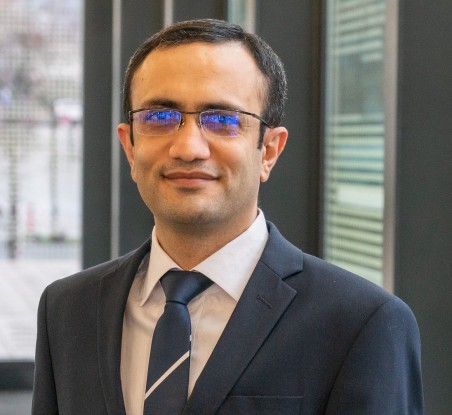
Prof. Dr. Sven Heidenreich is a full Professor of Business Administration, specializing in Technology and Innovation Management at the University of Saarland. He leads an active research group and holds a prominent position in the German-speaking academic community, with consistent recognition in national and international rankings. University: University of Saarland Department: Business Administration Research Focus: Technology and Innovation Management Email: sven.heidenreich@uni-saarland.de His research centers on innovation processes, particularly consumer integration, co-creation, resistance to innovation, and sustainable business models. He employs a quantitative-empirical approach to study individual and organizational aspects of innovation, with applications in digital services, video games, and green innovation. The recent publications reflect a strong trend in understanding consumer behavior in innovation contexts, including greenwashing, leapfrogging, co-creation, and the role of personality in entrepreneurial success. His work frequently appears in high-impact journals such as Journal of Product Innovation Management , R&D Management , and Technological Forecasting and Social Change . Top 0.5% researcher worldwide in Innovation Management (ScholarGPS 2024) JPIM Outstanding Reviewer Award 2023 Multiple appearances in WirtschaftsWoche Economist Rankings (2018–2024) Finalist, Best Paper Award, IRCSM 2024 Prof. Heidenreich supervises doctoral researchers and has led significant research projects, including the DFG-funded TRIP project on integrating different consumer types into new product development. His team includes postdocs, junior professors, and scientific staff, indicating active mentorship and collaborative research. He also collaborates with researchers across Europe and beyond. He leads the DFG project TRIP and has secured funding from major German research bodies. His lab focuses on empirical studies involving consumer panels, student experiments, and idea competitions to validate innovation theories in realistic settings.