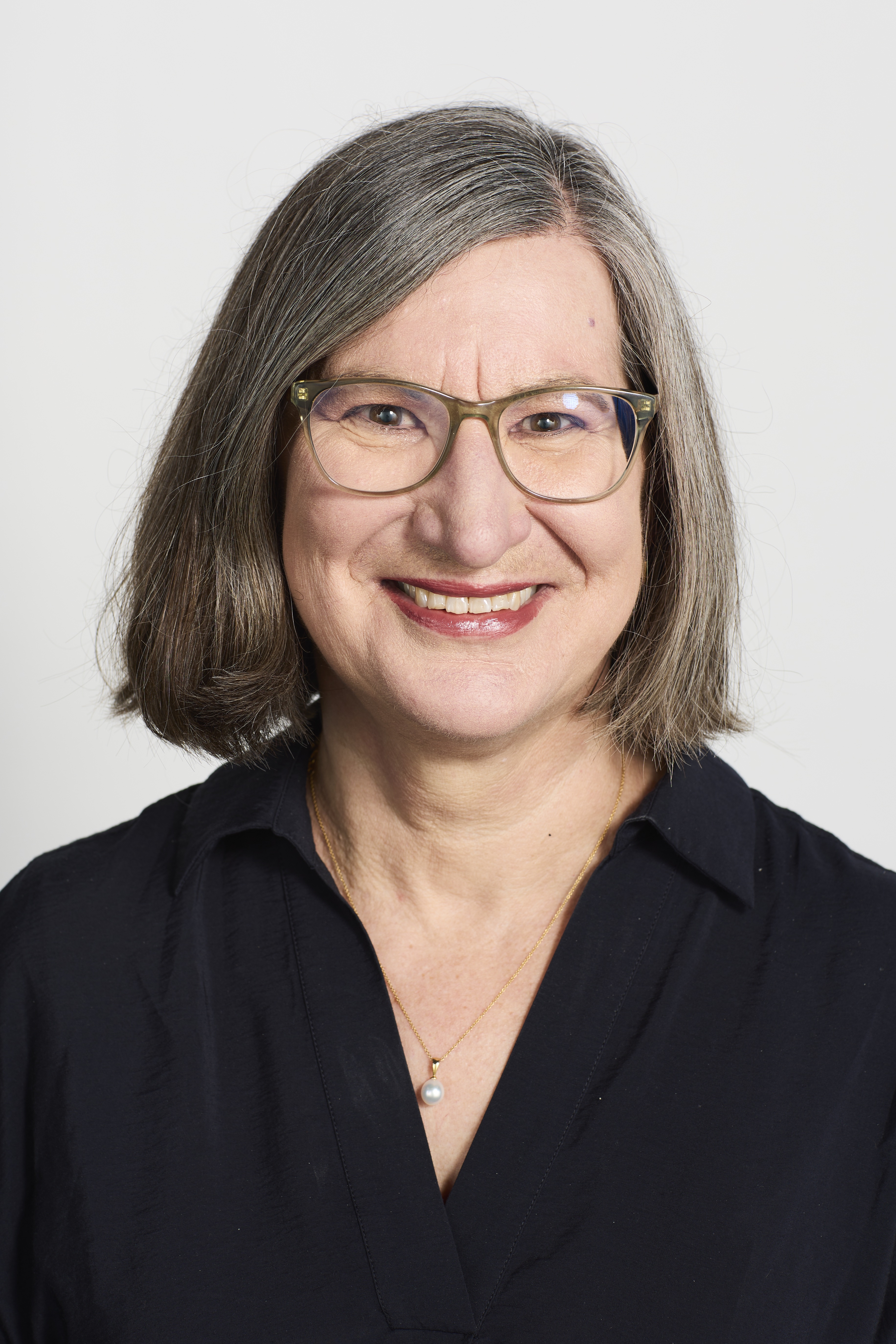
Professor Kathy Bowrey is a leading academic in Intellectual Property Law at UNSW Sydney's Faculty of Law. Her work explores laws shaping knowledge creation, technology, and culture, with expertise in IP, Indigenous rights, and open research advocacy. She holds a Doctor of Juridical Studies from the University of Sydney and a BA LLB from Macquarie University. Her research focuses on historical and contemporary IP frameworks, including their impact on creators, Indigenous communities, and global innovation systems. Notable projects include the ARC-funded 'Producing, Managing and Owning Knowledge in the 21st Century University' (2019–2022), which shaped Australia's open research policies. Awards include the 2022 ANZLHS Book Prize for *Copyright, Creativity, Big Media & Cultural Value* and fellowships at the State Library of NSW and Museum of Applied Arts and Sciences. She co-authored *Adventures in Childhood* (2023), examining IP in toy and media industries, and *David Unaipon* (2023), exploring Indigenous innovation. Professor Bowrey co-leads the International Society for the History and Theory of Intellectual Property (ISHTIP) and advises on national research policies. Her grants include ARC Discovery Projects on Australian copyright history and IP commercialization.
Professor Bing-Jie (Bruce) Ni is an Adjunct Professor at the University of Technology Sydney (UTS) within the School of Civil and Environmental Engineering and a full Professor at UNSW Sydney. He is an internationally recognised leader in environmental engineering, wastewater treatment, greenhouse-gas mitigation, microplastics fate, electrocatalysis and sustainable energy systems. Education PhD in Environmental Engineering, University of Science and Technology of China, Hefei (2005–2009) Research Interests Professor Ni’s research integrates process engineering, microbial biotechnology, materials science and mathematical modelling to develop sustainable technologies for high-efficiency pollutant removal, minimal carbon footprint and maximal energy recovery from wastewater. He is a global pioneer in: Modelling and control of nitrous oxide (N₂O) and methane (CH₄) emissions from wastewater systems, Micro- and nano-plastics ecotoxicity and mitigation in anaerobic digestion, Transforming sewage sludge into high-value liquid bio-energy (medium-chain fatty acids and long-chain alcohols), Designing cost-effective electrocatalysts from natural minerals for green hydrogen production and wastewater electrolysis. Research Output & Impact Over the last decade he has published 2 research books, 30 book chapters and >400 refereed journal papers , including 35 in Environmental Science & Technology and 85 in Water Research . His work has influenced global policy: the IPCC adopted his nitrous-oxide-emission model in 2019 to revise national greenhouse-gas inventories for the first time in 13 years. Awards & Recognition ARC Future Fellowship & ARC DECRA Fellowship Clarivate Analytics Highly Cited Researcher (Web of Science) Royal Society of Chemistry Highly Cited Researcher (2020–present) Mendeley Data Top 2 % Cited Researchers worldwide Listed among “Australia’s Most Innovative Engineers” (Engineers Australia, 2018) 50+ additional awards including Scopus Young Researcher Award, South Australian Water Awards, UQ Research Excellence Awards, and Outstanding Doctoral Dissertation Awards. Research Funding & Leadership He has secured ≈ AUD $10 million in competitive funding (six major ARC grants plus >20 government, university and industry projects). He serves as: Lead Guest Editor, Water Research Editorial Advisory Board, Environmental Science & Technology Associate Editor for Journal of Cleaner Production , Environmental Chemistry Letters , Environmental Research , Journal of Environmental Management Editorial Board member for five additional high-impact journals. Teaching & Supervision At UTS he teaches Renewable Energy Technologies , Environmental and Sanitation Engineering , Process Dynamics and Control , and Water and Wastewater Treatment . He is available to supervise Masters and PhD students in environmental biotechnology, process modelling and sustainable energy systems. Laboratory & Commercial Translation He heads active research teams at both UNSW and UTS and is the inventor of >10 granted patents , some of which are currently being commercialised to deliver real-world impacts in greenhouse-gas-neutral wastewater treatment and renewable energy production.
Charles Baden-Fuller is the Centenary Professor of Strategy and leader of the Strategy Group at Bayes Business School , City St George’s, University of London . He is concurrently a Senior Fellow at the Wharton School, University of Pennsylvania . Recognised among the world’s top strategy scholars, he has directed major multi-institutional research initiatives and served as Editor-in-Chief of Long Range Planning (1999-2010). Education & Qualifications BA (Oxon) – University of Oxford MA Economics – Cornell University PhD – London School of Economics Research Interests Charles’s work lies at the intersection of strategic management , business model innovation and digital transformation . His early research explained how mature firms can be rejuvenated and how alliances create competitive advantage. More recently he has advanced the concept of business models , investigating what they are, how they evolve, and how managerial cognition shapes their deployment in increasingly digitalised environments. Empirical settings span biotechnology, financial services, automotive software ecosystems and creative industries. Publications & Impact With over 80 refereed journal articles and five influential books—including the seminal Rejuvenating the Mature Business (Harvard Business Press)—his scholarship has shaped both academic theory and managerial practice. Recent articles (2021-2025) focus on digital platform alliances, entrepreneurial networking logics, and AI-enabled business model design. Honours & Awards Fellow of the Strategic Management Society (SMS Fellow, 2009) Fellow of the British Academy of Management Fellow of the British Academy Fellow of AACSB Doctoral Supervision & Research Funding He has supervised to completion more than six PhD students, many now faculty at leading universities. His research has attracted over £4 million in grants from the European Union , UK ESRC , EPSRC and the Mack Institute-Wharton , supporting multi-university teams at Bayes, Sussex, LSE, CREATE-Glasgow, Grenoble EM and Wharton. Professional & Outreach Roles Beyond academia, Charles serves as director or strategic advisor to several high-technology start-ups and as trustee of a major charity. He is a frequent keynote speaker for industry and policy audiences, and his research findings have been featured in the Financial Times , Management Today and other leading media.
Professor Nick Paul is a marine scientist at the University of the Sunshine Coast (UniSC), leading applied research in seaweed and algae for sustainable product development. He holds a PhD and BSc (Hons) from UNSW and a Graduate Certificate in Tertiary Education Management from the University of Melbourne. His work focuses on seaweed aquaculture innovations, including waste-to-resource biotechnology, functional foods, and environmental remediation. He leads international projects funded by organizations like ACIAR, CSIRO, and Advance Queensland. Research interests include seaweed-based solutions for livestock health, wastewater treatment, and sustainable aquaculture expansion near the Great Barrier Reef. He has pioneered commercial land-based seaweed farming and developed intellectual property in this field. Awards include the 2015 UNAA World Environment Day Award for Sustainable Water Management and the 2015 Queensland Water Innovation Forum Best Paper. He serves on the Asian Fisheries Society Council and Fiji’s National Seaweed Taskforce. Key publications span seaweed cultivation methods, marine genomics, and socio-economic impacts of aquaculture in the Pacific. Grants total over A$3.7 million for projects like diversifying Pacific Island seaweed industries and improving Indonesian seaweed production.
Dr. Sumsun Naher is a Senior Lecturer in the Department of Engineering at City, University of London , where she has worked since 2013. Previously, she served as Lecturer and Research Development Officer at Dublin City University (2006–2013) and as Scientific Officer at Bangladesh Council of Scientific & Industrial Research (1998–2000). Her academic career includes a Post Graduate Diploma in Academic Practice from City, University of London. PhD , School of Mechanical & Manufacturing Engineering, Dublin City University MSc , Materials & Metallurgical Engineering, Bangladesh University of Engineering and Technology BSc , Materials & Metallurgical Engineering, Bangladesh University of Engineering and Technology Her research focuses on semi-solid processing , laser processing , simulation & modelling of materials technologies , and materials characterisation . Recent work explores cellulose nanofiber-based water filters for antibiotic removal and phase change materials in geothermal energy systems. Key article trends reveal expertise in: Laser Surface Modification of metals and composites Advanced Casting Methodologies and semi-solid metal forming Nanoparticle Reinforcement in metal matrix composites Thermal Modelling for energy systems Sustainable Material Solutions in water treatment and energy Computational Materials Science via finite element analysis Naher has received the DCU Invent Commercialisation Award (2011) and holds fellowships from IMechE , Institute of Materials, Minerals & Mining , and Advance Higher Education Authority . She actively reviews for funding bodies and examines PhD theses internationally. As an organiser of the ESAFORM Conference and co-organiser of its Additive Manufacturing symposium since 2017, she contributes to academic leadership. Her professional roles include Board of Directors for the European Association of Materials Forming and participation in EU COST Action projects (Thixoforming, Thixosteel, Nanostructured Materials).
Maria Rumyantseva is a Senior Lecturer and Academic Fellow in Innovation Studies at the University of Sydney Business School . She serves as Deputy Director of the Sydney Nano Institute and is affiliated with the Sydney Environment Institute. With a PhD from the University of St. Gallen, Maria employs longitudinal process-based methodologies to advance innovation management theory and practice. Interdisciplinary research intersecting strategy, international business, and ecosystem analysis Industry collaborations with startups (Genesis, Incubate programs) and scientists Multiple teaching awards and media recognition for pedagogical innovation Research Focus : Commercialisation of nano-scale inventions (Sydney Nano Institute), mapping innovation ecosystems (CSIRO spinoffs), assessing Australian international competitiveness, and developing process-based qualitative methodologies. Selected Awards : Best Paper Award (R&D Management Journal Workshop, 2024) Top Citations (Strategic Management Journal, 2023; Journal of International Business Studies, 2023) Dean's Citations and USS Teaching Awards (2020-2024) Supervision & Grants : Supervises research students on topics like government roles in ecosystem emergence and innovation in state-owned enterprises. Leads grants including the 2024 Innovation and Commercialisation Policy Node and 2021 Nano Technology-Economy-Society project.
Professor Klaus McDonald-Maier is a full Professor in the School of Computer Science and Electronic Engineering (CSEE) at the University of Essex , where he leads the Embedded and Intelligent Systems (EIS) Research Laboratory and heads the Intelligent Embedded Systems and Environments Research Group . He is also Director of Impact , Visiting Professor at the University of Kent, and Visiting Research Affiliate at NASA Jet Propulsion Laboratory, California Institute of Technology. Education PhD in High-Performance Parallel Neural Network Architectures, Friedrich-Schiller-University Jena (Germany, 1999) Electronic Engineering studies, University of Ulm (Germany) Electronic Engineering studies, Cardiff University (Wales) Electronic Engineering studies, École Supérieur de Chimie Physique Électronique de Lyon (CPE-Lyon) (France) Research Interests Professor McDonald-Maier’s research integrates embedded systems , System-on-Chip (SoC) architectures , and AI-driven robotics . He pioneers visual place recognition techniques that remain robust under severe appearance and viewpoint changes, develops cybersecurity frameworks based on ICMetrics for autonomous vehicles and IoT, and designs approximate real-time computing solutions for energy-constrained multicore and FPGA platforms. His work on radiation-tolerant systems supports space and nuclear applications, while his bio-inspired algorithms enable lightweight, neuromorphic perception on resource-limited robots. Publication Trends Between 2022 and 2025 his output converges on FPGA-accelerated AI , secure edge intelligence , visual navigation for autonomous systems , and healthcare analytics . He repeatedly couples rigorous algorithmic innovation with practical hardware deployment, yielding energy-efficient, real-time systems validated in domains ranging from autonomous driving to post-stroke rehabilitation. Scientific Awards & Recognition Best Paper Award – IEEE Transactions on Sustainable Computing (2024) Best Paper Award – IEEE/ACM DATE (2024) Best Paper Award – IEEE Systems Journal (2022) Best Paper Award – IEEE Sensors Journal (2021) Best Paper Award – IEEE Access (2020) Research Grants & Industrial Collaboration He has secured major funding from EPSRC , EU Horizon 2020 , Innovate UK , and industry partners. Current projects span trustworthy autonomy, radiation-hardened edge AI, and AI-enhanced rehabilitation technologies. He is Chief Scientist of UltraSoC Technologies Ltd and CEO of Metrarc Ltd , commercialising University research in semiconductor debug and cybersecurity respectively. Laboratory & Team Leadership As Director of the Embedded and Intelligent Systems Laboratory (EIS Lab) , he oversees a multidisciplinary team of researchers and PhD students, providing state-of-the-art FPGA, robotics, and embedded-systems facilities. The lab collaborates closely with NASA JPL, UK Atomic Energy Authority, and leading semiconductor firms to translate fundamental research into high-impact industrial solutions.
Dr. Fahad Ibrahim is an Assistant Professor in the Department of Marketing at Birmingham Business School, University of Birmingham. He holds a PhD in Management from the University of Hull and has prior academic experience as a Lecturer at Swansea University and a Teaching Fellow at the University of Birmingham. He is a Fellow of the Higher Education Academy (FHEA) and actively contributes to research and teaching in marketing. Education: PhD in Management, University of Hull, 2019 MSc in Marketing Management, University of Hull, 2010 Bachelor of Business Administration (BBA), North South University, Bangladesh, 2009 His research focuses on consumer research, digital marketing, service marketing, strategic marketing, innovation, and big data & AI in marketing . He also explores topics in employee relations, occupational health and safety, and institutional theory as they relate to marketing practice. His methodological approach includes both quantitative and qualitative research methods. Dr. Ibrahim has published in top-tier journals such as the Journal of Travel Research , Journal of Business Research , and Technological Forecasting and Social Change . His recent work examines innovation in international firms, the impact of security threats on tourism, privacy in online health communities, and consumer behavior toward superfoods. His research demonstrates a consistent trend in understanding consumer and organizational behavior in digital and global contexts. Scientific Awards: Journal of Travel Research Charles R. Goeldner Article of Excellence Award, 2024 University Studentship Award, University of Hull He has successfully supervised a PhD student to completion and welcomes inquiries from prospective PhD students. He also serves as an ad hoc reviewer for several academic journals. His industry experience includes working as a Strategy Development Manager in advertising, with campaigns for major brands like Coca-Cola, Lafarge Holcim, and Chevron, including a global strategic campaign adopted in 64 countries. Dr. Ibrahim teaches courses such as Problem Solving and Strategic Marketing, Digital and Innovative Marketing, and Branding in the Digital Age. He is not associated with any specific lab or research center mentioned in the text, but his work is deeply integrated into the academic and industry-facing missions of the Birmingham Business School.
Professor Zhenguo Huang is a distinguished academic at the University of Technology Sydney (UTS), where he serves as Director of the Centre for Green Technology and leads the University's Hydrogen Energy Program. His work focuses on developing novel technologies for clean fuels, emission measurement, and environmental decontamination, with particular emphasis on hydrogen storage solutions as Australia advances its hydrogen strategy. He holds a Professor position in the School of Civil and Environmental Engineering within the Faculty of Engineering and Information Technology. Professor Huang received his PhD from the University of Wollongong in 2007, followed by a postdoctoral appointment at The Ohio State University in the US. His undergraduate degree is a BSc from Northeastern University in Shenyang, China. This strong foundation in materials science and engineering has enabled his significant contributions to the field of clean energy technologies. His research spans multiple cutting-edge areas in energy conversion and storage, with particular focus on hydrogen storage materials, CO2 conversion technologies, and advanced electrolytes. His pioneering work on two-dimensional boron-containing nanosheets has opened new possibilities in energy applications, particularly for hydrogen storage under mild conditions. He also investigates liquid-phase hydrogen carriers that could enable practical large-scale hydrogen storage and transport. His research integrates fundamental materials science with practical engineering solutions for the clean energy transition, with significant emphasis on commercialization potential. Analysis of Professor Huang's recent publications reveals a strong progression from basic research on boron compounds to applied technologies with commercial viability. His work demonstrates increasing sophistication in nanoscale engineering of hydrogen storage materials, with particular emphasis on lowering operating temperatures and improving cycling stability. The research shows a clear trajectory toward practical implementation, with growing attention to techno-economic analysis and system integration for real-world applications. His significant contributions to the field have been recognized through multiple prestigious awards: ARC DECRA fellowship ARC Future Fellowship Humboldt Research Fellowship for Experienced Researchers (Alexander von Humboldt Foundation) University of Wollongong Vice-Chancellor's Award for Outstanding Achievement in Research Commercialisation, Impact and Engagement UTS Vice-Chancellor's Awards for Research Excellence: Research Leadership and Development Award SCIAS Fellow, Siebold-Collegium Institute for Advanced Studies, Germany Professor Huang actively supervises PhD students and has secured substantial research funding from diverse sources including the Australian Research Council (ARC), Cooperative Research Centre Projects (CRC-P), and industry partnerships. His current projects include multiple ARC Discovery Projects focused on hydrogen storage materials and boron nanomaterials, as well as industry-funded research with organizations like Boron Molecular and HB11 ENERGY HOLDINGS. He serves as a Research Advisor at the National Institute for Materials Science in Japan and has established strong international collaborations, particularly through his role as Chair of the International Hydrogen Carriers Alliance. He heads the Boron for Energy Storage and Transfer (BEST) Lab at UTS, which focuses on three main research directions: hydrogen storage materials, boron-containing 2D materials, and advanced electrolytes. The lab brings together cross-disciplinary expertise to tackle challenges in clean energy technologies, with particular focus on practical solutions for the hydrogen economy. His breakthrough in hydrogen storage and Na-ion batteries has been successfully commercialized in partnership with Melbourne-based specialist chemical manufacturer, Boron Molecular.
Dr. Bradley Elphinstone is a Senior Lecturer in the School of Health Sciences at Swinburne University of Technology, where he conducts research and teaching in clinical and health psychology, with a focus on mindfulness, nonattachment, self-compassion, and gender-affirming mental health. He is actively involved in PhD supervision and has led research on public trust in genomic data, emotional well-being, and digital mental health interventions. His research interests include: Clinical and Health Psychology Social and Personality Psychology Mindfulness-Based Interventions Nonattachment and Self-Compassion Gender Euphoria and Transgender Mental Health Public Trust in Health Data Systems His recent publications (2020–2025) reflect a strong trend in psychometric scale development (e.g., Gender Euphoria Scale, Equanimity Scale), emotional regulation, and public health psychology, particularly during the pandemic. His work bridges clinical psychology with public engagement and policy, especially in genomic governance and mental well-being. Scientific contributions include: Development and validation of psychological scales Studies on trust and compliance during public health crises Exploration of non-dualistic approaches to mental health (e.g., A Course in Miracles) Telehealth and dignity therapy for older adults Dr. Elphinstone supervises multiple PhD students on topics ranging from financial well-being to gender identity and digital interventions. He has secured external funding, including a grant from the Department of Health and Aged Care on genomic data trust. He is also involved in collaborative research networks and public engagement through platforms like The Conversation. He is affiliated with research teams focused on: Mindfulness and psychological development Trans and gender diverse mental health Digital and telehealth interventions Public attitudes toward biobanks and genomics
Dr David Johnson is an Associate Professor of Entrepreneurship at Durham University Business School, where he serves as Associate Chair for the £9 million Smart & Scale initiative supporting SME innovation in North-East England. He is also a Fellow of the Wolfson Research Institute for Health and Wellbeing and maintains active Visiting Fellow positions at international institutions. Johnson's educational background includes: PhD in Management (Entrepreneurship), University of Edinburgh Business School MSc by Research (Entrepreneurship), University of Edinburgh Business School MBA, Adam Smith Business School, University of Glasgow Master's degree in Science, University of Edinburgh Bachelor's degree in Science, University of Leeds PG Cert in Learning, Teaching, and Assessment Practice His research centers on academic entrepreneurship , life science commercialisation , and university-industry engagement , with particular focus on linguistic approaches and machine learning applications. Johnson examines how institutional practices shape entrepreneurial activities across contexts ranging from regenerative medicine to Freemasonry, emphasizing the built environment's role in ecosystem development. Johnson's publication trajectory reveals evolving methodological sophistication, shifting from early studies on regenerative medicine venturing (2014-2017) toward computational linguistics and machine learning applications (2024-2025). His work consistently bridges theoretical frameworks with practical innovation challenges, spanning entrepreneurial ecosystems, technology transfer, and narrative analysis in resource mobilization. His scientific recognition includes: NASA Innovation and Technology Transfer: Space2Pitch Final Visiting Research Fellow at Interface, Edinburgh Fellow of Wolfson Research Institute for Health and Wellbeing Visiting Research Fellow at Skolkovo Institute Visiting Research Scholar at Wisconsin School of Business Fellow of Higher Education Academy Johnson supervises postgraduate students including Clare Talbot-Jones and Olivia King, supported by over £500,000 in research funding: Science commercialisation activities at university-industry boundary (£390,824) Cardiology-focused point-of-care device development (£38,934) Primary Research Support Fund for Zambian field research (2025) Global Engagement Grant for Dartmouth College knowledge exchange (2024) He actively leads research infrastructure as Co-Director of Durham Enterprise Centre and through his Smart & Scale initiative role, while contributing to interdisciplinary health research via the Wolfson Institute fellowship.
Dr. Tim Lindgren is a Senior Lecturer in the Fashion program at the School of Design, Faculty of Creative Industries, Education & Social Justice, Queensland University of Technology (QUT). With over thirty years of experience as a commercial fashion designer in Australia and China, he brings extensive industry expertise into his academic role. He is the study area coordinator for the fashion program and actively contributes to curriculum development, including the implementation of mid-year entry. He also serves as the Academic Integrity Officer and Equity Representative for the School of Design. PhD, Queensland University of Technology Master of Global Competition and Consumer Law, University of Melbourne Master of International Business (Hons), Griffith University Graduate Certificate of Research Commercialisation, QUT Tim’s research focuses on fashion in China, fashion consumption, wearable technology, policy and legal frameworks in fashion, and principles of the circular economy. His methodologies are primarily qualitative, involving field-based primary data collection. His teaching spans both practical and theoretical domains, including fashion studios, product development, and wearable technology. His recent publications (2010–2021) explore the evolving role of Chinese fashion designers, the Shanghai fashion system, branding in China, and the integration of industry experience into academia. These works reflect a consistent engagement with global fashion systems, cultural legitimacy, and sustainable innovation. Award-winning fashion label (specific awards not named) Tim supervises postgraduate research and is an expert witness in legal fashion matters. He contributes to Standards Australia and the International Standards Organization. He is also recognized for integrating equity, integrity, and sustainability into his pedagogical practice, preparing students to be ethical leaders in the global fashion industry. He leads research on the future of fashion and market failures, and his work emphasizes sustainable practices and systemic change within the fashion industry.
Dr Luke Johnson is a Lecturer/Assistant Professor in Biochemistry and Microbiology at University College Dublin’s School of Biomolecular and Biomedical Science (SBBS) and a Conway Institute Fellow. He leads an interdisciplinary research group that couples enzyme engineering with chemoenzymatic synthesis to create terpene natural products and semiochemicals for sustainable agriculture and human-health applications. Education: BSc – University of Sheffield PhD – University of Sheffield (Structural enzymology of phosphoryl-transfer enzymes) Research Interests: Johnson’s programme centres on four inter-linked themes: (i) discovery and biosynthetic logic of terpene natural products, (ii) engineering terpene synthases and accessory enzymes for altered product profiles, (iii) developing modular chemoenzymatic cascades that convert inexpensive prenol precursors into complex terpenoids, and (iv) leveraging these technologies to produce insect pheromones and semiochemicals that replace broad-spectrum insecticides within Integrated Pest Management strategies. Recent work focuses on scaling microbial fermentation of Solanum habrochaites -derived terpene semiochemicals to control hemipteran pests, an effort supported by BBSRC IAA and NetZero Innovation Institute funding. Scientific Awards & Grants: Entrepreneur Lead, BBSRC ICURe Explore – CounTERPart Semiochemicals (2023) BBSRC Innovation-to-Commercialisation grant – “Advancing high-value terpenoidal semiochemicals for crop protection” (2023-2024) NetZero Innovation Institute Seedcorn – “In-situ biocatalytic production of terpene semiochemicals” (2022) Research Team & Infrastructure: Johnson’s laboratory is embedded within SBBS and the Conway Institute at UCD, providing access to state-of-the-art facilities in structural biology, high-resolution NMR, and microbial fermentation. While no doctoral students are currently listed, active collaborations span Cardiff University, industrial partners in agri-tech, and translational programmes funded by BBSRC and Innovate UK.
Bilal Ahmad serves as a Postdoctoral Researcher and Technology Lead for Software Solutions in Edtech at the Learnovate Centre, Trinity College Dublin, focusing on translating stakeholder needs into innovative web and mobile applications. Education: PhD in Software Engineering from Lero, the Irish Software Research Centre (University of Limerick) MSc in Computer Science BSc in Computer Science His research bridges Software Engineering and Human-Computer Interaction, with specialized expertise in Edtech, Smart Ageing, UX Research, and Global Software Development. He has extensive experience developing technology solutions for diverse user groups, notably creating a social volunteering network application for older adults during his PhD collaboration with IBM Ireland. His work emphasizes practical implementation of software solutions to address real-world challenges in aging populations and educational technology. Scientific awards: No specific awards documented in the source material. Advising and grants: No information provided regarding student supervision, research grants, or funding sources. Labs and Teams: Bilal is actively engaged with the Learnovate Centre (a Trinity College Dublin-affiliated Edtech research hub) and previously collaborated with IBM Ireland. He recently participated in NDRC Dublin's Pre-commercialisation program as part of a multi-disciplinary postdoctoral research team, while maintaining entrepreneurial involvement through hackathons and startup events.
Catherine Stanton is a Research Professor at University College Cork (UCC) and a Principal Investigator at APC Microbiome Ireland, with a joint appointment as Adjunct Professor in the College of Medicine and Health, Department of Psychiatry. She is also a Principal Research Officer at Teagasc Moorepark, reflecting her dual academic and research leadership roles in food, nutrition, and microbiome science. Her educational background includes a BSc (2.1H) and MSc in Nutrition/Food Chemistry from UCC, a PhD in Biochemistry from Bournemouth University, UK, and a DSc from the National University of Ireland. Her research focuses on the nutritional and health impacts of functional foods, particularly probiotics and bioactive metabolites. Key areas include: Nutritional aspects of dairy and functional foods Probiotic cultures and their health benefits Infant gut microbiota and dietary influences Bioactive lipids (e.g., CLAs, SCFAs, n-3 FAs) Bioactive peptides and microbial metabolite production Her recent publications reflect a strong emphasis on gut-brain axis interactions, microbial production of neuroactive compounds like GABA, and the metabolic effects of gut bacteria on host lipid profiles. This work bridges food science, microbiology, and human health, particularly in early-life nutrition and chronic disease prevention. She has received significant recognition through awards such as: ELIE METCHKOFF 2010 Award (jointly with Paul Ross, Colin Hill, Gerald Fitzgerald) APC Scientist of the Year 2011 UCC Research COMMERCIALISATION Award (2012) Catherine has secured substantial research funding from SFI, EU FP7, DAFF, DAFM, and EI, leading projects like COMBINE, FIBEBIOTICS, CFMATTERS, and TODDLERFOOD. She actively mentors researchers and contributes to major international expert groups including FAO/WHO, IDF, and Agropolis Foundation. Her work is integral to the APC Microbiome Ireland and Food Health Ireland research centres, where she leads research on microbial metabolites and functional food development. She is affiliated with key research platforms including: APC Microbiome Ireland – Microbial Metabolites Core Food Health Ireland Teagasc Moorepark