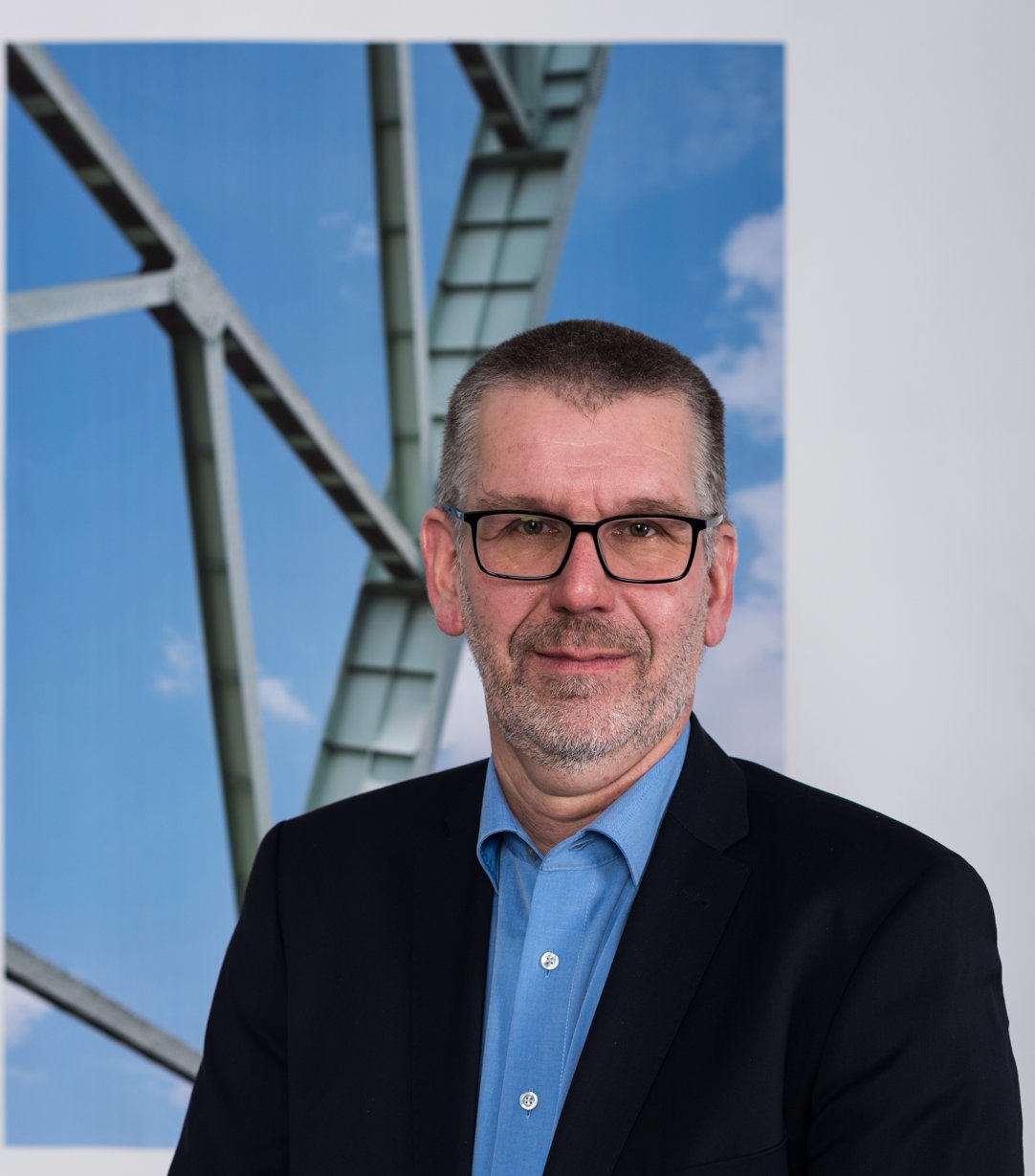
Albert Schultheiß serves as a Lecturer at Nürtingen-Geislingen University of Applied Sciences, leveraging extensive industry experience in urban development planning and GIS software systems. He earned his architecture degree from the Technical University of Munich and built his career through roles at Government Building Master Immich and Landeswohnungs- und Städtebaugesellschaft Bayern GmbH, where he initiated the StadtCAD urban development project. Since 1994, he has led StadtCAD's evolution through self-employment and currently manages euroGIS IT-Systeme Entwicklungs- und Vertriebs GmbH. His research interests focus on Urban Planning, Urban Development, Geographic Information Systems (GIS), and IT integration in urban design processes. As an approved vocational trainer for IT specialists by the Chamber of Industry and Commerce, he bridges academic instruction with professional practice. Mr. Schultheiß actively contributes to the field through memberships in the Bavarian Chamber of Architects, the Association for Urban, Regional and State Planning (SRL), and specialized working groups including 'IT in urban planning' (Baden-Württemberg Association of Cities) and 'Networked Information Systems' (SRL).
Dr. Gabriela Gutierrez-Huerter O is a Senior Lecturer in International Management at King’s Business School, King’s College London. She is a Fellow of The Higher Education Academy and actively contributes to research, teaching, and policy impact in international business, corporate social responsibility (CSR), and sustainability. Her work bridges academia and practice, particularly in the areas of modern slavery, business ethics, and sustainable organizational change. Her research interests include: International Management and Strategy Corporate Social Responsibility and Business Ethics Modern Slavery and Business and Human Rights Sustainability in Business Schools Cross-national transfer of organizational practices in multinational enterprises Dr. Gutierrez-Huerter O’s recent publications reflect a strong trend in ethical governance, sustainability reporting, and institutional dynamics within multinational firms. Her work increasingly focuses on actionable sustainability, academic advocacy (e.g., OS4Future), and real-world impact, particularly in combating modern slavery through standards development. She frequently collaborates with scholars on transdisciplinary and policy-relevant research. Her scientific awards include: Financial Times award for real-world impact (2023), recognizing her contribution to the first British Standard on organizational responses to modern slavery She has secured research funding from the ESRC and AHRC for projects on modern slavery in the UK construction sector and broader sustainability initiatives. Although she is not currently accepting PhD students, she has supervised research and is actively involved in academic leadership through her roles in OS4Future and the BSI technical committee on modern slavery. She is a member of the Academy of International Business (AIB), Academy of Management (AOM), and the European Group for Organizational Studies (EGOS). She is involved in the following research labs and teams: OS4Future – an academic advocacy movement for sustainability in research, teaching, and impact British Standards Institution (BSI) technical committee on modern slavery King’s Business School research group on Strategy, International Management & Entrepreneurship
Paolo Neirotti is a Full Professor at the Department of Management and Production Engineering (DIGEP) at Politecnico di Torino. He serves as Director of the School of Masters and Continuing Education and is a member of several key university bodies including the Interdepartmental Center SmartData@PoliTO - Big Data and Data Science Laboratory, the University Committee for Research, Technology Transfer and Services to the Territory, and the Executive Committee of the Master's and Continuing Education School. Professor Neirotti's research focuses on digital transformation, lean production, and smart work. His work examines how digital technologies are changing organizations at multiple levels: industry structure and competitive dynamics, work practices and employee skills, and business practices with emphasis on customer relationship management and employer-provided training. His research spans diverse industries including hospitality, power generation and distribution, cultural heritage, and automotive. Methodologically, he combines industry-level studies analyzing effects of information systems expenditures with firm-level case studies and surveys. Recent publications demonstrate his focus on business model innovation, socio-technical dimensions of digitalization, and organizational adaptation to technological change. His work often addresses the tensions between innovation and operational stability, particularly in the context of smart work arrangements that gained prominence during and after the pandemic. Guest Editor, THE JOURNAL OF PRODUCT INNOVATION MANAGEMENT (2021-present) Guest Editor, INTERNATIONAL JOURNAL OF TECHNOLOGY MANAGEMENT (2019-present) Guest Editor, TECHNOLOGICAL FORECASTING AND SOCIAL CHANGE (2017-present) Professor Neirotti actively supervises PhD students and has led numerous research projects including FISP - Field study Pedagogy (2020), DIG_WORK - The Digital Transformation of Work (2020), and DIMA-HUB (2016-2017). He has directed commercial research initiatives on smart working post-COVID-19 and digital transformation across multiple sectors including the electricity industry. He coordinates the Continuous Innovation Network (CINet) and participates in RENIR - Research Network on Industrial Resilience. His international collaborations include agreements with institutions in Myanmar and France, and he previously served as Contract Professor at the University of Grenoble II (2011-2013).
Dr. Torsten Meyer is a researcher in the Department of Mining History at the German Mining Museum Bochum. He specializes in environmental and cultural landscape history, the history of science and technology, and UNESCO World Heritage authenticity processes. University: German Mining Museum Bochum Academic Rank: Researcher Key Research Areas: Environmental History, Cultural Landscape History, Heritage Conservation His work focuses on the intersection of mining history, ecological restoration, and the scientification of building knowledge. He has led projects on post-industrial landscapes and contributed to understanding the economic and environmental impacts of mining. Recent publications include analyses of post-mining landscape recovery, industrial heritage authenticity, and the evolution of construction methodology. Awards include the Heinrich Winkelmann Fellowship.
Dr. Stefan Przigoda is a PartTime Lecturer at the Faculty of Historical Sciences, Ruhr-Universität Bochum, and serves as Head of the Bergbau-Archive Bochum and Deputy Head of the Library and Photo Library departments at montan.dok (Montanhistorisches Dokumentationszentrum) since 2003. He studied History, Political Science, and Journalism in Mainz and Berlin, focusing his PhD on the history of business associations in the Ruhr coal industry. Education: PhD in History (specializing in Ruhr mining associations), studies in History, Political Science, and Journalism. His research spans the Social, Economic, and Corporate History of Mining , with a focus on industrial associations, audiovisual records (especially industrial films), and archival practices in economic contexts. He has led digitization projects like DigiPEER and DigiPortA , emphasizing 3D visualization, stereophotography, and technical drawings as tools for historical research. Recent publications address industrial heritage (e.g., 'Schwarzes Gold'), labor dynamics ('Konflikt – Mitbestimmung – Sozialpartnerschaft'), environmental history ('Luft', 'Wasser'), and geopolitical resource extraction (Bäreninsel mining studies). His work bridges academic research and public engagement through museum exhibitions and collaborative projects. Scientific Awards: Heinrich Winkelmann fellowship As a member of committees like the Arbeitskreis Filmarchivierung NRW and the Vereinigung deutscher Wirtschaftsarchivare e.V. , he contributes to archival digitization and media preservation. His roles at the Deutsches Bergbau-Museum Bochum involve managing collections, advancing digital infrastructure, and fostering interdisciplinary research on mining history.
Prof. Dr. Nataša Živić is a Professor of Information and Coding Theory and Real-Time Image Processing at the Faculty of Digital Transformation , HTWK Leipzig . Her work bridges theoretical foundations in coding, cryptography, and signal processing with practical applications in IoT, smart grids, automotive systems, and blockchain technologies. Academic background: Dr.-Ing. habil. and Dr.-Ing. in Electrical Engineering, University of Siegen; Magister and Dipl.-Ing. from University of Belgrade. Professional journey: Founder of Secutanta GmbH; Senior Technical Security Engineer at Volkswagen (Cariad); academic roles at University of Siegen. Her research focuses on secure and robust communication , including noise-tolerant data authentication, joint channel coding and cryptography, and real-time image processing. She explores probabilistic AI algorithms and distributed ledger technologies for industrial applications in mobility and energy systems. The 15 most recent publications highlight her leadership in applying blockchain and DLT to automotive and IoT contexts, advancing secure communication in smart metering and charging infrastructure, and integrating machine learning for environmental and financial prediction. Her work spans IEEE, MDPI, and Springer venues, reflecting strong academic impact. Scientific Awards: Best Paper and Innovation Award, IEEE SEGE 2015 Best Paper Award, UBICOMM 2010 She has led DAAD-funded international projects with universities in the USA, Korea, and China, and contributes to standardization as a member of DIN and ISO committees on security (SC 27) and AI (SC 42). She is also an IEEE Senior Member and active reviewer for top journals. Her research addresses real-world challenges in automotive security, smart energy, and digital transformation.
Marta Peña Carrera is a faculty member at the Universitat Politècnica de Catalunya (UPC), affiliated with the Department of Mathematics at the Escola Tècnica Superior d'Enginyeria Industrial de Barcelona (ETSEIB). She is actively involved in the SOC-STEM research group, which focuses on the social impact of STEM disciplines. Her work spans research, teaching innovation, and competitive R&D&I projects. Department: Department of Mathematics School: Escola Tècnica Superior d'Enginyeria Industrial de Barcelona Research Group: SOC-STEM - Impacte Social de les STEM Email: marta.penya@upc.edu ORCID: 0000-0003-3889-8584 Her research interests center on mathematics and STEM education, with a strong emphasis on pedagogical innovation, educational equity, and the societal implications of science and technology. She integrates interdisciplinary approaches to enhance teaching practices and student engagement in engineering and mathematical sciences. The analysis of her recent publications and projects reveals a consistent focus on educational innovation, STEM dissemination, and the development of teaching methodologies. Her work spans competitive research projects, technical reports, indexed journal articles, and conference contributions, reflecting a multidisciplinary approach that bridges mathematics, engineering education, and social impact assessment. Scientific Awards and Recognition: Premi o reconeixement (Award or Recognition) Marta Peña Carrera has led and contributed to multiple teaching innovation and competitive R&D&I projects, demonstrating her active role in securing academic funding and advancing pedagogical practices. She has advised or collaborated on doctoral theses and technical-scientific documents, contributing to the training of future researchers and engineers. She is a key member of the SOC-STEM research group, which investigates the societal dimensions of STEM fields, promoting inclusive and impactful science education. The group engages in interdisciplinary collaboration, policy influence, and public outreach to strengthen the connection between science, technology, and society.
Anke Hassel is Professor of Public Policy at the Hertie School in Berlin, where she teaches courses including The Policy Process: Employment & Welfare and Policy-Making: Actors, Institutions & Processes . She previously served as Scientific Director of the WSI at the Hans Böckler Foundation (2016-2019) and currently holds membership on the German Federal Government's High-Tech Forum since January 2019. Her research focuses on the political economy of advanced industrial nations with particular expertise in labor market institutions, social partnership systems, and comparative welfare state development. Recent work examines the digital transformation of work, green transitions in emission-intensive sectors, and the evolving relationship between growth models and social cohesion. Her scholarship bridges theoretical analysis with practical policy engagement through sustained collaboration with social partners and government bodies. Hassel's publications reveal a consistent focus on institutional adaptation to economic transformation, with recent articles analyzing platform work fissures, inflation dynamics in coordinated market economies, and the role of social dialogue in just transitions. Her work demonstrates how traditional corporatist arrangements adapt to digitalization and climate challenges while maintaining social stability. Fellow Economist 2024 (European Commission) Hassel has maintained extensive policy advisory roles including chairing the expert group on Workers' Voice and Good Corporate Governance in Transnational Companies in Europe (2015-2018), serving on the German Bundestag's fact-finding committee on growth and prosperity (2012-13), and contributing to the expert commission on the future of the Hans Böckler Foundation (2015-17). Her research is frequently commissioned by governmental and foundation bodies seeking evidence-based analysis of labor market transformations.
Guy Paré is a Full Professor in the Department of Information Technology at HEC Montréal, where he also holds the Digital Health Research Chair (renewed until 2030) and serves as Associate Director of the Health Cluster. With a distinguished career spanning decades, Professor Paré has established himself as a leading expert in health informatics and digital transformation in healthcare. Professor Paré earned his M. Sc. in Management from HEC Montréal and his Ph.D. in Administration from Florida International University. His academic journey has led him to become one of Canada's most influential researchers in digital health, with numerous publications in top-tier journals spanning information systems, medical informatics, and healthcare management. Professor Paré's research focuses on the intersection of information technology and healthcare, with particular emphasis on digital health solutions, implementation of information systems in clinical settings, and the impacts of technological change on healthcare organizations. His work spans from theoretical contributions to practical applications that improve healthcare delivery. He has pioneered research in telemedicine, teleconsultation, digital twins in healthcare, and AI applications in medical practice. His studies often employ qualitative research methods to understand the complex socio-technical dynamics of healthcare IT implementation, with a strong focus on user-centered design and organizational change management. Grand Prix de pédagogie Jean-Guertin 2024 (highest teaching honor at HEC Montréal) Fellow of the International Academy of Health Sciences Informatics (2023) Journal of Information Technology Best Paper Award (2022) Grand Prix de recherche Pierre-Laurin (2020) Prix Esdras-Minville (2019) As an educator and mentor, Professor Paré has supervised numerous master's students and research projects, guiding emerging scholars in the field of health informatics. His leadership extends to major research initiatives including the Digital Health Research Chair, which has recently been renewed until 2030. Professor Paré's expertise is sought after by influential organizations worldwide including the World Health Organization, the French Ministry of Health, Canada Health Infoway, and the Quebec Ministry of Health and Social Services. His work bridges academic research with practical healthcare challenges, making significant contributions to both scholarly knowledge and real-world healthcare delivery improvements.
Ziv Katalan serves as Adjunct Professor in the Operations, Information and Decisions department at the University of Pennsylvania's Wharton School and Managing Director for Wharton Global Initiatives. He holds a PhD in Management Science/Operations Research from Columbia University (1995) and a BS in Mathematics from Tel-Aviv University (1987). His educational background includes: BS in Mathematics, Tel-Aviv University (1987) PhD in Management Science/Operations Research, Columbia University (1995) Dr. Katalan's research focuses on optimizing production and service systems through operations research methodologies, specifically examining resource allocation dynamics, scheduling under uncertainty, and manufacturing performance impacts of product variety expansion. His work bridges theoretical modeling with practical applications in supply chain and service operations management. His publications (1994-2005) in Operations Research, Management Science, and Queueing Systems reveal consistent themes: stochastic modeling of production-inventory systems, economic lot scheduling under demand variability, and queueing network analysis for multi-class service systems. A significant portion addresses base-stock policy optimization across rental fleets, manufacturing lines, and polling systems. He has received multiple teaching honors: Wharton MBA Program Core Teaching Award (2013) Wharton MBA Program for Executives Elective Teaching Award (2006, 2011) MBA Core Curriculum Cluster Teaching Award (1997, 1999, 2001) First Place Student Paper Award, ORSA Technical Section (1994) Honorable Mention, George E. Nicholson Competition (1994) Dr. Katalan has taught business analytics, operations management, and quantitative finance across Wharton's MBA programs and Penn's Executive Master’s in Technology Management (EMTM). As EMTM Co-Director (2002-2007), he led this engineering-business joint program. His industry-focused research demonstrates strong connections between theoretical operations models and real-world business applications, particularly in resource-constrained environments.
Mehmet Aytekin is an Associate Professor at the Department of Business Administration , Faculty of Economics and Administrative Sciences , Gaziantep University . His research spans Production Management , Supply Chain Management , and Operational Strategy , with a focus on Sustainability and Blockchain Applications in healthcare logistics. Education: PhD in Business Administration (2003, Gebze Technical University), Master’s (Cumhuriyet University), Licence (Inönü University) Research: Interests include Green Supply Chains , Corporate Sustainability , and Healthcare Logistics . His work explores the intersection of Operational Efficiency and Environmental Responsibility . Projects: Led studies on Logistics Collaboration , Green Manufacturing , and Blockchain in Healthcare . Notable projects include "Innovative Midyat Rural Development Plan" and "Organic Pepper Seedling Project" . Books: Authored 17 publications, including chapters on Industry 4.0 , Healthcare Cost Analysis , and Blockchain in Healthcare .
Céline Rosselin-Bareille is a Professor of Anthropology at the University of Picardy Jules Verne since 2023, where she is attached to the 'Habiter le Monde' research team (UR4287). Her academic journey began with a PhD in Anthropology from the University of Paris V – René Descartes in 1998, followed by a Habilitation to Supervise Theses from the University of Toulouse Jean Jaurès in 2021. Prior to her current position, she served as a lecturer in social anthropology at the University of Orléans in Sciences and Techniques of Physical and Sports Activities (Staps) from 1999 to 2023. Her research centers on how material culture articulates the construction of subjects and the making of the world, with particular focus on bodies, vital processes, and sensorialities engaged in hostile situations. This has led to extensive fieldwork on public works divers (2011-2018), examining how these professionals navigate underwater environments through embodied techniques and material engagements. Her work consistently bridges disciplinary boundaries through dialogues with sociology, geography, psychology, and neuroscience. She co-founded the MàP (Matière à Penser) research group in 1994, which has been instrumental in developing approaches to material culture studies. Analysis of her recent publications reveals a consistent focus on elemental interactions, hostile environments, and the relationship between material culture and subject formation. Her work demonstrates a growing interdisciplinary approach, increasingly incorporating perspectives from engineering and robotics studies alongside traditional anthropological frameworks. The recurring themes across her publications include sensory anthropology, technical practices, and the embodiment of knowledge in challenging work environments. Rosselin-Bareille actively contributes to the academic community through multiple institutional roles. She serves on the Bureau of Working Group 01 (Body, Sciences, Technology and Society) of the AISLF (International Association of French-Speaking Sociology), is a member of the editorial board of the journal Socio-anthropologie since 2021, and co-directs the seminar 'Hostile Worlds and Couplings to Technology' with Caroline Moricot. She has been a member of the AFEA (French Association of Ethnology and Anthropology) board since its founding in 2009 and again since 2019, where she leads a commission on anthropology professions. Her advisory work includes serving as an elected member of the National Committee for Scientific Research (section 38: Anthropology and comparative study of contemporary societies) for 2021-2023. She co-designed the Tillion-Rivière thesis prize with the Ministry of Culture and AFEA, which rewards involved and participatory research, and participates in a think tank of teacher-researchers focused on anthropology training. Her collaborative projects often involve interdisciplinary teams, as evidenced by her recent publications on industry 4.0 and collaborative robotics that bring together engineering, sociology, and ergonomics perspectives. Rosselin-Bareille maintains active research affiliations beyond her home institution, having been a researcher at CETCOPRA (University of Paris 1 – Panthéon Sorbonne) from 2015-2023. Her work with the 'Habiter le Monde' laboratory continues her long-standing interest in how people inhabit spaces and engage with material environments, extending from her early work on single-room housing to her current research on underwater work environments.
Jane Hillston serves as Professor of Quantitative Modelling and Dean of Research Culture and REF at the University of Edinburgh, where she previously led the School of Informatics as Head. A pioneering researcher in formal methods, she developed foundational frameworks for analyzing dynamic system behavior and resource consumption. Her research centers on stochastic process algebras and quantified verification, with the PEPA process algebra enabling rigorous assessment of performance characteristics in complex systems. This work bridges theoretical computer science with practical applications in systems biology and performance engineering, emphasizing mathematical precision in modeling temporal dynamics and resource constraints. Hillston's exceptional contributions have earned her the highest honors across multiple institutions: First recipient of all three British Computer Society top awards: Needham Award, Distinguished Dissertation Award, and Lovelace Research Medal Fellow of the Royal Society (2022) and Royal Society of Edinburgh (2007) Member of Academia Europaea (2018) RSE Lord Kelvin Medal and Suffrage Science Award MBE (2023) for advancing computer science and women in STEM A vocal champion for equality and inclusion in academia, her leadership extends beyond research to shaping institutional culture through her Dean role. While her technical work focuses on verification methodologies, her advocacy has significantly impacted diversity initiatives in computational sciences.
Esperança do Rosário Jales Ribeiro is a Professor at the School of Education of the Polytechnic Institute of Viseu , specializing in Psychology and Educational Sciences . With a PhD in Psychology (2001) and an Aggregation Title in Education (2016), her career spans over three decades, including leadership roles such as Director of the Department of Psychology and Educational Sciences (2022–present) and President of the Technical-Scientific Council (2019–2023). She is a member of the Order of Portuguese Psychologists with specializations in Educational Psychology , Special Educational Needs , and Community Psychology . Education PhD in Psychology (Educational Psychology), University of Minho (2001) Master’s in Educational Sciences (Educational Psychology), University of Coimbra (1991) Bachelor’s in Psychology (School Guidance), University of Coimbra (1986) Her research focuses on Inclusive Education , Special Educational Needs , Community Psychology , and Socioeducational Intervention . Recent publications address topics like inclusive physical education ethics , parental support for children with neurodevelopmental disorders , and intergenerational digital inclusion . She has led projects such as IPV Inova e Inclui (2022–2023) and Diversidade e Inclusão no Ensino Superior (2019–2021), emphasizing collaboration with institutions like the Directorate General for Higher Education and the European Commission’s Bologna Process . She has contributed to community initiatives , including the Viseu Inter Age Stories (VIAS) app for elderly inclusion and the CSI Project against elder isolation. Her work also involves policy advising, such as coordinating the Educational Charter of Viseu Municipality (2016–2018).
Leonidas A. Zampetakis is an Assistant Professor in the Department of Psychology at the University of Crete, where he has been a faculty member since 2019. He also serves as a Member of Collaborating Teaching Staff at the Hellenic Open University since 2011. Previously, he held contracted teaching positions at the Technical University of Crete (2007-2013) and the University of Crete (2010-2011). His educational background includes: Integrated Master's in Biotechnology from the Agricultural University of Athens Postgraduate studies in Environmental Quality Control at the Technical University of Crete Postgraduate studies in Industrial Management at the Technical University of Crete Doctoral thesis at the Technical University of Crete, funded by the Research Capacity Enhancement Program Postdoctoral studies at the Foundation for Research and Technology funded by the Greek Institute of Health Sciences Dr. Zampetakis' research focuses on Work and Organizational Psychology, with particular emphasis on the psychology of entrepreneurship as a process of creating added value. His work centers on Positive Organizational Behavior, studying emotional intelligence, creativity, and positive emotions in the workplace using quantitative measurement tools. His most recent publications demonstrate sophisticated methodological approaches including item response theory and daily diary studies to examine dynamic workplace phenomena. He has led significant research projects including: "ForEMOsT: Sinking inequality: Business startup motivation and business growth in female entrepreneurship" (2015-2016) "EMO-ENTRE: Emotions evoked by entrepreneurship as a career choice" (2013-2015) "Identification of the Environmental Perception of the Rural Population of Crete" (2012-2015) His teaching responsibilities include Organizational Psychology and Positive Organizational Behavior courses at both undergraduate and graduate levels. His research program consistently bridges theoretical organizational psychology with practical workplace applications, with increasing methodological sophistication in analyzing daily work experiences and emotional processes.