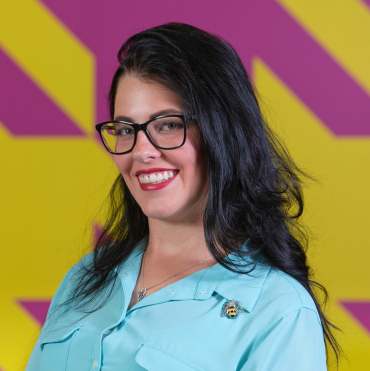
Christine (Neko) Robinson is a Professor of Computer Art at Savannah College of Art and Design (SCAD), serving since 2018. She holds an M.F.A. in Animation from SCAD and a B.F.A. in Studio from Louisiana Tech University. Her work includes curriculum development in digital fluency and student mentorship. Robinson's expertise spans: 3D animation pipeline development Digital art creation and theory Film production workflows Color theory applications in animation Interactive digital communication Her research integrates technical animation skills with artistic visual storytelling. Her creative works demonstrate consistent focus on animation techniques, color theory application, and visual narrative across student films, thesis projects, and commercial productions. Projects consistently explore the intersection of technical execution and artistic expression in both 2D and 3D formats. Major recognitions include: SCAD Graduate Award: Color Mention for Fallen Swan (2017) SCAD Award for student film Kabir (2015) At SCAD, Robinson mentors students toward educational goals and develops digital fluency curricula. Her industry background includes roles as a 3D animator for Syfy Channel productions and as an art vendor for the Baton Rouge Arts Council.
Professor Laura J. Gurak holds a Ph.D. in Communication and Rhetoric from Rensselaer Polytechnic Institute. She is a Professor in the Department of Writing Studies at the University of Minnesota, where she also served as the founding chair from 2007 to 2016. Her work focuses on the intersection of rhetoric, technology, and trust in digital environments. Key areas include technical communication, science communication, and the socio-psychological aspects of online interaction. Her educational background includes a B.A. in Public Communication (1989), M.A. in Technical Communication (1990), and Ph.D. in Communication and Rhetoric (1994), all from Rensselaer Polytechnic Institute. She has authored influential books such as Cyberliteracy (2001) and Technical Communication (2024, co-authored with John M. Lannon). Gurak’s research explores ethos construction in digital spaces, trust in online communities, and the rhetorical dynamics of technological discourse. Her work bridges theoretical frameworks with applied studies, including analyses of internet activism, e-health communication, and the ethics of technical writing in the digital age. She has contributed to over 50 peer-reviewed articles and edited volumes. Her academic leadership includes roles in curriculum development for technical communication education, emphasizing digital literacy and visual communication. She has pioneered studies on privacy in internet-based research, particularly in health-related contexts like the Men’s INTernet Sex (MINTS) Study. Gurak’s research has been supported by grants focusing on technical communication pedagogy, digital rhetoric, and interdisciplinary program development. She is actively involved in professional organizations and serves as a reviewer for major journals in rhetoric and technical communication.
Marta Arias is an Associate Professor in the Computer Science Department at Universitat Politècnica de Catalunya (UPC), Barcelona, and a member of the LARCA research group. She has held academic positions since 2007, including roles at Columbia University and the University of Edinburgh. Her research focuses on Machine Learning, Data Mining, Algorithm Design, and Logic in Computer Science. She teaches advanced courses in Machine Learning, Information Retrieval, and Complex Networks at undergraduate and master's levels, including the Erasmus Mundus program in Data Mining and Knowledge Management. Educations: PhD in Computer Science from Tufts University (2000-2004), Postgraduate Studies at University of Edinburgh (1999-2000), B.Sc. in Computer Science from UPC (1992-1997). Professional experience includes software engineering and research roles in New York and Barcelona. Research highlights include developing algorithms for real-time ranking systems, Twitter-based financial forecasting, and causal network analysis. Notable contributions include the 'Best Paper Award' at AIPESW@ECAI 2020 and a 3rd place award in football performance research. Her work spans theoretical foundations (e.g., Horn clause learning) and applied domains like cybersecurity, healthcare analytics, and energy systems. Teaching responsibilities include labs and lectures on Machine Learning, Information Retrieval, and Programming, with active involvement in curriculum design and pedagogical innovation. Ongoing projects include enterprise risk analysis, synthetic data generation, and network modeling.
Hamid Sarlak is an Associate Professor at the Department of Wind Energy, Technical University of Denmark (DTU). His research focuses on fluid mechanics, turbulence modeling, aerodynamics, and renewable energy systems. He holds a Ph.D. from DTU (2014), an M.Sc. from Sharif University of Technology (2010), and a B.Sc. from Amirkabir University of Technology (2007). He has conducted research on wind turbine design, solar chimney systems, and offshore wind energy technologies. His work contributes to UN Sustainable Development Goals related to affordable and clean energy (SDG 7) and climate action (SDG 13). Key research areas include wake interaction dynamics, floating offshore wind turbines, and thermal energy storage systems. He has led and participated in projects such as DigiWind (2024–2027) and IEA Wind Task 19 and 54 (cold-climate wind energy). His recent articles investigate wake interactions in FOWT rotors, solar chimney performance under crosswind, and wave excitation effects on offshore platforms. His educational contributions include co-authoring sections in DTU’s International Energy Report 2024. He has collaborated extensively with institutions like Johns Hopkins University and contributed to CFD simulations of wind turbine wakes and wave-energy converters. His work emphasizes numerical modeling, experimental validation, and sustainable energy solutions.
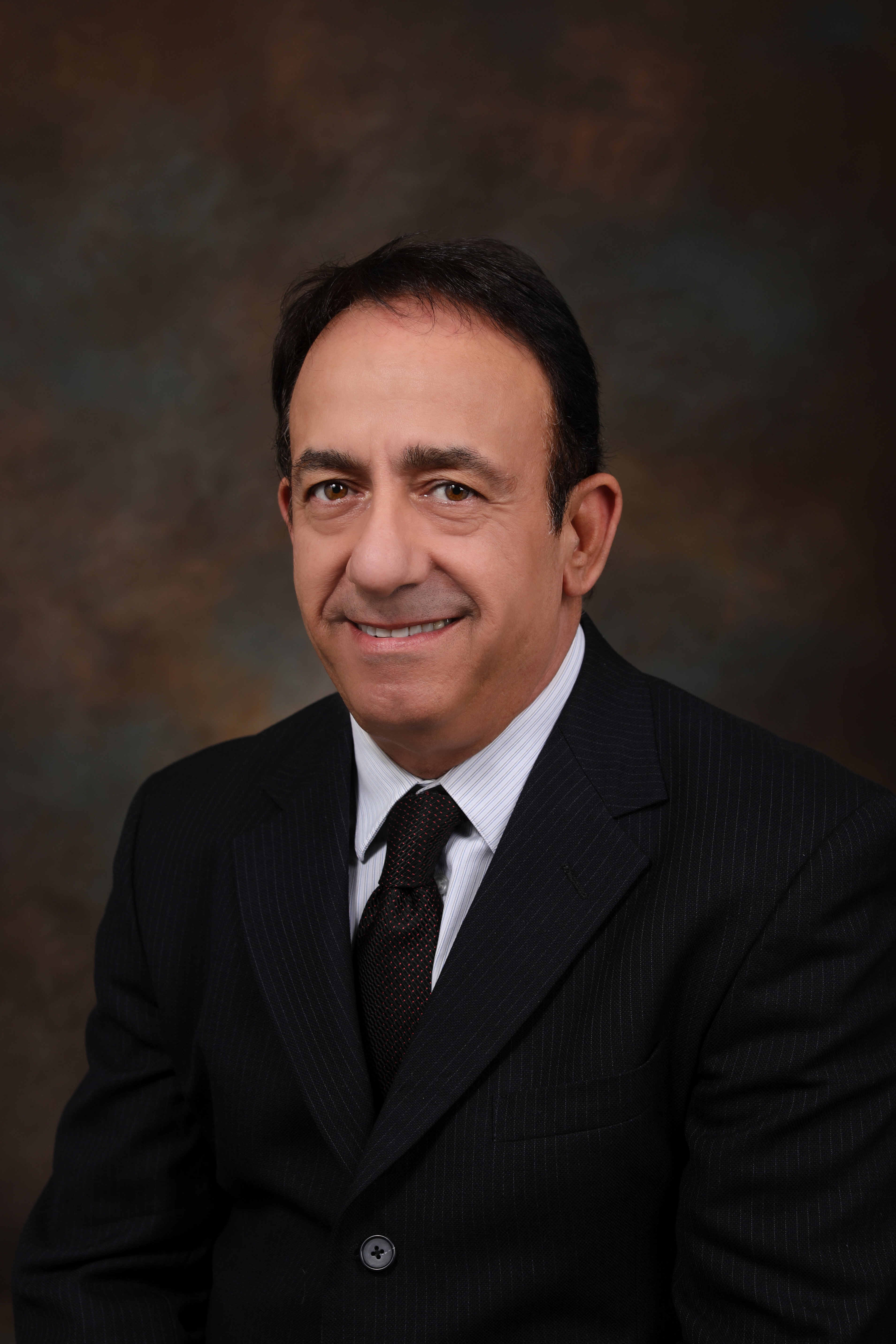
Dr. Selahattin Ozcelik serves as Professor and Graduate Coordinator in the Department of Mechanical and Industrial Engineering at Texas A&M University-Kingsville, affiliated with the Frank H. Dotterweich College of Engineering. His office is located in ENGC 325, MSC 191, Kingsville, Texas. Education background: Ph.D. from Rensselaer Polytechnic Institute (1996) M.S. from Texas A&I University (1992) B.S. from Istanbul Technical University (1988) Research focuses on adaptive control systems and renewable energy applications: Robust adaptive control algorithms for dynamic systems Mobile robot navigation and autonomous control Bio-inspired computational models including artificial immune systems Offshore wind turbine platform design and optimization Current research projects include: Development of security engineering curriculum CASCaded Mentoring And Design Experiences program Multidisciplinary robotics initiative UAV-based pipeline inspection systems
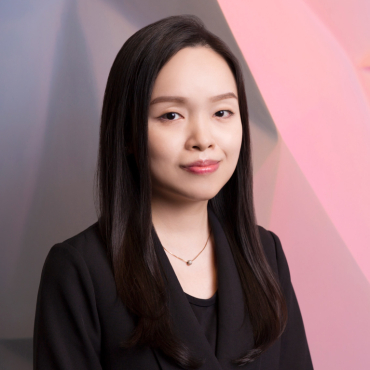
Chung Mei (Chris) Wong serves as Professor of Foundation Studies at the Savannah College of Art and Design (SCAD) since 2014, following her role as Adjunct Professor of Foundation Studies at SCAD Hong Kong (2013-14). Her academic career includes educator positions at Hong Kong Baptist University, Hong Kong Arts Development Council, and Hong Kong Youth Arts Foundation (2013-14), plus leadership as Head of Art Department at YMCA of Hong Kong Christian College (2005-11). Her educational credentials comprise: M.F.A. in Fine Art, Middlesex University London M.A. in Cultural Management, The Chinese University of Hong Kong B.F.A. in Fine Art, The Chinese University of Hong Kong Wong's research centers on contemporary art practice and pedagogy, emphasizing painting, installation, photography, and printmaking within cultural identity frameworks. Her foundation studies expertise integrates experimental techniques with traditional art education to develop emerging artists' conceptual and technical skills across diverse media platforms. Exhibition trends reveal consistent output since 2003, with intensified activity after 2010 featuring interdisciplinary approaches. Recent works (2015-2018) demonstrate significant engagement with digital photography, zine culture, and printmaking innovations, often addressing urban narratives through community-based projects across Hong Kong, London, and international venues. Her distinguished recognition includes multiple Hong Kong Art Biennial participations and Charriol Foundation competition accolades, reflecting exceptional versatility across painting and installation media. Finalist, Hong Kong Contemporary Art Award, Hong Kong Contemporary Art Fair, 2013 The Textile Alliance Scholarship, The Lees Charitable Foundation Ltd., 2011 Second (Open Group), "Clouds Ramble, Rain Is Brought Forth" Art Contest, Galerie Klee, 2010 Finalist, Hong Kong Art Biennial 2005, Hong Kong Museum of Art, 2005 Finalist (Painting), Philippe Charriol Foundation 20th Anniversary Art Competition, 2005 Finalist (Painting) and Finalist (Installation), Philippe Charriol Foundation 18th Art Competition, 2004 Two-dimensional Art Award, "Gallery Ferry Competition, a Dynamic City," Art Promotion Office, 2003 Finalist, the 7th International Art Fair, 2003 UCAN Art Spot Open Group Distinguish Award, 2003 Norman W. M. Ko Best Artist Award, SCSG, 2000 Merit (Painting), Hong Kong Education Department, 1998 Wong's mentorship spans institutional leadership at YMCA Christian College and community-based teaching through Hong Kong Youth Arts Foundation. While graduate student advising isn't explicitly documented, her foundation studies professorship involves comprehensive curriculum development and direct supervision of emerging artists' creative development. No research grants are referenced in source materials. She actively participates in Hong Kong's artist collectives including Fotan Studios and Hong Kong Open Printshop, fostering collaborative environments that bridge academic training with community art practice through open studio events and public exhibitions.
Fabien Moutarde is a Full Professor and Director of the Center for Robotics at MINES ParisTech (PSL University, Paris, France). He holds a PhD in Physics and an Habilitation to Direct Research in Engineering Sciences. Dr. Moutarde coordinates French engineering education at ParisTech_Shanghai (SPEIT) in China. Research Areas Deep Learning & Reinforcement Learning Computer Vision for Intelligent Vehicles Collaborative Robotics Traffic Analysis & Forecasting Human Gesture Recognition Recent Article Trends His work focuses on autonomous driving using Deep Reinforcement Learning, pedestrian trajectory prediction with spatio-temporal attention, and multi-modal localization techniques combining vision with Wi-Fi. Key applications include urban traffic analysis, collaborative robotics, and end-to-end driving systems. Leadership & Teaching Co-created specialized Machine Learning courses Pioneered Deep Reinforcement Learning lectures Led French-Chinese academic coordination Former UML/Java curriculum developer Publications With 28 h-index, his research includes 30+ IEEE/ACM publications on autonomous vehicles, gesture recognition, and traffic mining. Representative conferences: CVPR, NeurIPS, IROS, ITSC.
Tom Zajdel is an Assistant Professor in the Department of Electrical and Computer Engineering at Carnegie Mellon University's College of Engineering. He holds a Ph.D. in Electrical Engineering from the University of California Berkeley (2018) and a B.S. in Electrical and Computer Engineering from The Ohio State University (2012). His research bridges engineering education and bioelectronics, with specific interests in student motivation, bioelectronic interfaces, and medical applications. His educational background includes: Ph.D. in Electrical Engineering, University of California Berkeley (2018) B.S. in Electrical and Computer Engineering, The Ohio State University (2012) Dr. Zajdel's research explores two primary domains: understanding student motivation in electronics education and developing bioelectronic technologies for biosensing and medical applications. His work integrates pedagogical innovation with biomedical engineering to create novel educational approaches and medical devices. Recent publications demonstrate strong focus areas in: Engineering education pedagogy and curriculum development Bioelectronic systems for cellular control and medical applications Machine learning applications in biomedical devices He has received the Gene Golub Outstanding Dissertation Award for his doctoral research. Current projects include developing low-cost medical ventilators and bioelectric devices for tissue engineering. Dr. Zajdel leads research initiatives in educational technology and bioinstrumentation, collaborating with interdisciplinary teams to advance innovations in both engineering education and biomedical applications.
Agnes d’Entremont is a Professor of Teaching in the Department of Mechanical Engineering and Associate Dean Equity, Diversity and Inclusion (EDI) pro tem at the Faculty of Applied Science, University of British Columbia. She holds degrees from McGill University (B.Eng) and UBC (M.A.Sc, Ph.D), with professional credentials as a P.Eng, Fellow of the Canadian Society for Engineering in Education (FCEEA), and member of the American Society for Engineering Education (ASEE). Her work bridges biomechanics research and innovative engineering education. **Research & Teaching**: Agnes specializes in human joint biomechanics using MRI technology, particularly childhood hip disorders in collaboration with BC Children’s Hospital. Her teaching focuses on biomechanics, dynamics, and interdisciplinary outreach, including pioneering courses like APSC 366 ('The Art of the Possible') for non-engineering students. She emphasizes experiential learning, team-based projects, and open educational resources (OER). **Awards**: Notable recognitions include the 2021 BCcampus Open Education Award, 2020 ASEE Outstanding New Educator Award, and the 2020 Killam Teaching Prize. Her scholarship addresses systemic barriers in STEM through equity-focused curriculum design and outreach program evaluation. **Leadership**: She leads initiatives on EDI in engineering education, competency mapping for inclusion, and policy analysis on affirmative action. Her OER projects (e.g., Mechanics Map, Mechanics WeBWork Problems) prioritize accessibility and collaborative learning. **Collaborations**: Agnes collaborates across disciplines and institutions, including partnerships with BC Children’s Hospital and national engineering education associations (ASEE, CEEA). Her work aims to democratize engineering knowledge and foster societal engagement with technical decisions.
Dr. Robert Doherty is a Senior Lecturer in Culture, Literacies, Inclusion & Pedagogy at the University of Glasgow's School of Education. His research focuses on Education Policy, Politics of Education, and Discourse Analysis. He has contributed to numerous publications on topics like social capital, neoliberalism in education, and curriculum reform. Dr. Doherty teaches across teacher education programs and coordinates educational studies components for concurrent teacher training. Research Interests: Education Policy Analysis Social Exclusion and Inclusion Teacher Education Practices Neoliberalism in Educational Systems Key Research Trends: His work often critiques policy frameworks through a Foucaultian lens, examining governmentality and discourse in education. Recent publications address Scotland’s educational reforms and the role of technology in pedagogy. Awards: Fellow of the Higher Education Academy Research Fellow, Applied Educational Research Scheme (AERS) Teaching and Grants: He coordinates programs for probationary teachers and has led courses in the School’s Ed.D. program. His 2005 AERS fellowship supported research on social capital theory. Consulting and Affiliations: Served as an External Examiner for Strathclyde University’s Ed.D. programs (2007–2009). Member of the General Teaching Council for Scotland (GTCS).
Dave Sullivan is a Teaching Professor and Director of Peer Education in the Department of Computer Science at Boston University. He joined in 2006, advancing from Lecturer to Master Lecturer in 2018. His roles include teaching, curricular innovation, and leading the undergraduate course assistant program. Education: AB in Physics (Harvard College), SM and PhD in Computer Science (Harvard University). Research focuses on education innovation (e.g., data-centric courses for non-majors) and technical areas like probabilistic reasoning in software and social norms in AI. His publications span pedagogy and technical domains. Awards: BU’s highest teaching honor (Metcalf Award) and the Neu Family Award Advising/Grants: Coordinates peer education programs but no grants listed. Labs/Teams: No specific lab affiliations mentioned.
Dr. Sahar Soltani is a Research Fellow at the Department of Architecture, Monash University, affiliated with the Future Building Initiative lab and the Australian Research Centre for Interactive and Virtual Environments (IVE). She holds a PhD in Architecture from the University of South Australia (2021), complemented by a Bachelor and Master of Architectural Engineering from Iran. Her research focuses on computational sustainability, industrialised construction, and Industry 4.0 technologies, with emphasis on bridging academic and industry needs through collaborative projects. Her expertise spans spatial analysis for social sustainability, digital transformation in construction (e.g., BIM, Mixed Reality), and education innovation. Key projects include: Leading Building 4.0 CRC initiatives for construction productivity and skills training Evaluating regional construction hubs and modern methods of construction (MMC) Developing frameworks for AI integration in technical education Dr. Soltani collaborates with institutions like RMIT, University of Adelaide, and Technical University of Denmark, and actively engages with industry partners to ensure practical outcomes. Her work addresses challenges in sustainable built environments, digital collaboration, and workforce upskilling. Research outputs include over 18 peer-reviewed articles and conference papers, focusing on topics like mixed reality in education, Industry 4.0 applications in transportation, and spatial configuration for social equity. She supervises graduate research students and reviews for journals such as Buildings , Architectural Science Review , and Smart and Sustainable Built Environment . Future work continues to explore AI-driven construction solutions, digital twin technologies, and the socio-technical dimensions of industrialised building systems.
Ali Adjorlu is an Assistant Professor at Aalborg University's Department of Architecture, Design and Media Technology. His research focuses on innovative applications of Virtual Reality (VR) to support marginalized populations, particularly children with Autism Spectrum Disorder (ASD), hearing impairments, and social anxiety. He leads the Multisensory Experience Laboratory and collaborates on interdisciplinary projects such as the GAMESS initiative, which develops game-based learning tools for social skills training in ASD education. His work bridges technology, education, and healthcare, emphasizing accessibility and user-centric design. Key collaborations include: Co-supervision of the Haptic Feedback for Hearing Impaired PhD project (2022–2025) Leadership in the GAMESS project (2022–2024), addressing ASD social skills through gamified VR Partnerships with Cirkus Summarum and Danish National Children’s Choir for inclusive VR applications Research interests include: VR interventions for ASD life skill training (e.g., public transportation, communication) Music therapy in immersive environments Hearing conservation and auditory training for cochlear implant users Accessibility frameworks for neurodiverse and disabled populations His publications highlight VR's potential in education, healthcare, and social inclusion, with notable contributions to conferences like IEEE VR and SMC. He actively engages with public media to disseminate research outcomes, appearing in articles about VR therapy for autism and hearing impairment interventions. Adjorlu’s work also explores: VR-based empathy training for parents of hearing-impaired children Collaborative music interfaces for ALS patients Remote UX evaluation methodologies for assistive technologies His research has led to practical tools like Earnormous (a hearing health VR game) and DecibelDefender (concert safety training), demonstrating real-world impact. He emphasizes iterative design processes involving end-users to ensure interventions are both effective and accessible.
Aida Olivia Pereira de Carvalho Guerra is an Associate Professor at Aalborg University's Department of Sustainability and Planning, within the Technical Faculty of IT and Design. She serves as Vice-Director of the Aalborg Centre for Problem-Based Learning in Engineering Science and Sustainability (UNESCO-affiliated) and is part of the Institute for Advanced Study in PBL. Her research emphasizes Problem-Based Learning (PBL), curriculum development, sustainability integration in engineering education, student agency, and competencies for sustainable development. Education: B.Sc. in Biology and Geology, Faculty of Science, University of Porto (2006) M.Sc. in Geology, University of Porto (2008) PhD in PBL and Education for Sustainable Development in Science and Engineering Education (EESD) (date unspecified) Research Interests: Aida Guerra focuses on advancing pedagogical practices in engineering education, particularly through PBL and Challenge-Based Learning (CBL). Her work explores how educational environments can foster student proactivity, sustainability competencies, and readiness for real-world challenges. She also investigates institutional transformation and academic leadership in global contexts, collaborating with organizations like UNESCO on initiatives promoting sustainable development goals (SDGs). Projects & Grants: Principal Investigator (PI) for projects such as 'ENVIHEI: Student-centered learning for ENVIronmental sustainability at Higher Education Institutions' (2024–2026) and 'Early career engineers' preparedness for transition to work' (2025–ongoing). Co-Investigator (CoI) in collaborative efforts like 'Supporting university student proactivity for social and academic well-being: What PBL can do' (2025). Labs & Teams: She contributes to the Aalborg Centre for Problem-Based Learning and the Institute for Advanced Study in PBL, actively organizing workshops and international conferences on topics like sustainability education and pedagogical innovation.
Dr. Huiling Ding is a Professor of English at North Carolina State University, serving as Director of Labor Analytics and Workforce Development at the Data Science Academy, and Faculty in the Ph.D. program in Communication, Rhetoric, & Digital Media. She holds the distinguished title of University Faculty Scholar and leads interdisciplinary research in AI ethics, risk communication, and social justice. Ding’s work bridges technical communication with global health crises, focusing on pandemic response strategies and the societal impacts of emerging technologies. Education: Ph.D. Rhetoric and Composition (Purdue University, 2007) M.A. English (Northern Illinois University, 2002) Research Interests: Ding’s research explores the intersection of AI and society, emphasizing ethical AI development, labor market analytics, and health communication. Her projects include analyzing global pandemic responses, AI-assisted recruiting technologies, and transcultural risk communication strategies. She also investigates how digital tools can empower workforce resilience and promote equitable socio-technical systems. Grants & Funding: NSF NRT-AI Grant ($2.99M, 2024-2030) for sustainable agriculture AI training NEH Embedding AI in Society Ethically (EASE) Center ($500K) UI Trust Fund Forecast Modeling for NC ($7.6M, pending) Awards: Recognitions include the 2016 Best Book Award for Rhetoric of a Global Epidemic , Nell Ann Pickett Award (2014), and the 2024 Faculty Innovation Fellowship from BHEF. Leadership Roles: She chairs ACM’s SIGDOC, advises international academic partnerships (e.g., 3+2 programs with Chinese universities), and collaborates with global institutions on AI ethics frameworks. Labs & Teams: Directs the Labor Market Analytics Lab within the Data Science Academy, focusing on real-time analytics and credential-skill mapping to align education with workforce needs.