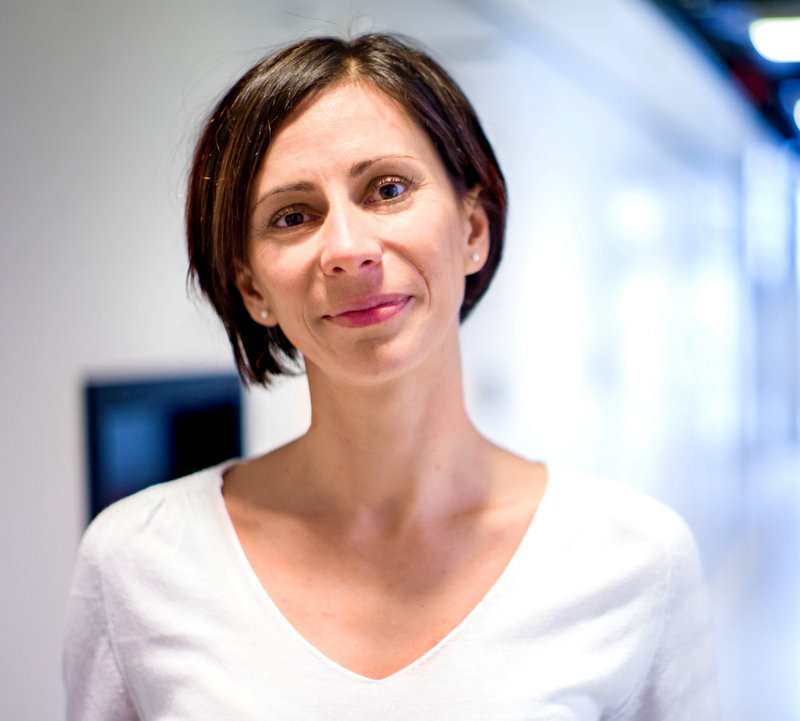
Andrea Stevenson Won is a researcher at Cornell University in the Department of Communication , focusing on virtual reality (VR), human-computer interaction, and social dynamics in immersive environments. Her work explores avatar embodiment , nonverbal behavior , and accessibility in VR for users with disabilities. Research Themes : Virtual embodiment and its psychological effects Accessibility solutions for blind and low-vision users in social VR Nonverbal communication analysis in immersive environments Pro-social behavior through VR interventions Collaborative VR systems and AI integration Recent Article Trends : 2024: Investigated avatar behavior transformation in mixed reality ( MRTransformer ), AI-guided accessibility tools, and nonverbal cue adaptations 2023-2022: Focused on educational VR applications, 360° video narratives, and longitudinal team dynamics 2021-2014: Pioneered avatar embodiment studies, anxiety detection via movement tracking, and homuncular flexibility in VR
Dr. Richard Y. Zhao is a tenured Professor in the Department of Pathology and Microbiology-Immunology at the University of Maryland School of Medicine. His research combines molecular biology, fission yeast genetics, mammalian biology, and virology to study virus-host interactions, particularly for HIV and Zika virus. He previously held academic positions at Northwestern University and Columbia University and has contributed to over 120 peer-reviewed articles. B.S., China Oceanography University (1981) M.S., Oregon State University (1995) Ph.D., Oregon State University (1991) Postdoctoral Training, Columbia University (1991-1992) Dr. Zhao's research focuses on: Virus-host interactions and pathogenicity High-throughput drug screening for antivirals Role of viral proteins in neuroinflammation and cancer Translational genomics in precision medicine His recent publications highlight SARS-CoV-2 ORF3a, Zika envelope proteins, and HIV protease inhibitors, emphasizing host-pathogen mechanisms across species. He has served on NIH panels and editorial boards for journals like Cell Research and Retrovirology . Scientific awards include: Fellow, American Academy of Microbiology (2019) Bernard L Mirkin Endowed Chair (2001-2004) Honorary Director, Shandong Gallo Institute (2009) Distinguished Service from SCBA (2015) Outstanding Service from CBA-USA (2016) Dr. Zhao also contributes to clinical diagnostics and personalized medicine through molecular testing and pharmacogenetics programs.
Angel Hsing-Chi Hwang is an Assistant Professor of Communication at the University of Southern California (USC) Annenberg School for Communication and Journalism and a core faculty member at the USC Center for AI in Society . Her research focuses on the societal impact of artificial intelligence (AI) on work practices, with a particular emphasis on human-AI interaction (HAII), digital mental health, and the future of work. She holds a PhD in Communication from Cornell University with a concentration in Human-Computer Interaction and completed postdoctoral training at the Cornell Bowers College of Computing and Information Science . Research Interests: Human-AI collaboration and ethical design Sociotechnical consequences of AI deployment at scale AI in healthcare systems and mental health services Creative processes and AI empowerment in professional domains Methods for scalable AI impact assessment Online labor markets and AI-driven work transformations Recent Work: Her publications explore topics such as the integration of AI in mental healthcare ecosystems, gender dynamics in AI-mediated teams, and the ethical implications of generative AI in creative industries. She actively engages with industry through collaborations with Microsoft Research, Google Research, and other tech institutions. Affiliations & Activities: Organizing workshops on AI disclosure, ownership, and accountability (CHIWORK 2025) Contributing to conferences like ACM CHI and ICWSM Collaborating with interdisciplinary teams on AI ethics and policy initiatives
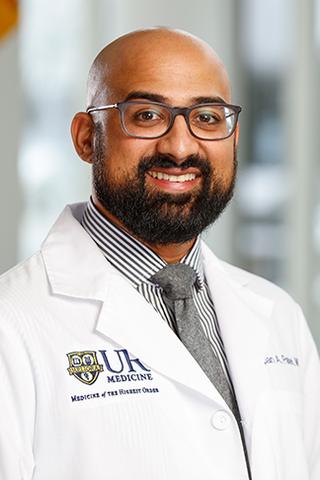
Arpan A. Patel, M.D. serves as Associate Professor in the Department of Hematology/Oncology at the University of Rochester School of Medicine and Dentistry. Board-certified in Hematology, Internal Medicine, and Medical Oncology, he specializes in lung cancer (including small cell, non-small cell lung cancer, and mesothelioma) and head and neck cancer through UR Medicine's comprehensive cancer program. His educational foundation includes: MD from Medical University of Lublin (Poland), 2012 Internal Medicine Residency at SUNY Upstate University Hospital, 2013-2016 Hematology & Oncology Fellowship at University of Florida College of Medicine, 2016-2019 Dr. Patel's research examines thoracic oncology, quality improvement, financial toxicity, patient distress, and medical education. His clinical philosophy emphasizes compassionate, patient-centered care addressing financial burdens and quality-of-life concerns through multidisciplinary teamwork. He actively conducts clinical trials to advance lung cancer treatment while documenting patient distress in veteran populations. His scholarly output reveals consistent focus on hematologic disorders, oncology documentation, and medical education innovation. Publications demonstrate expertise in rare hematologic conditions (HLH, PNH), anticoagulant management, and curriculum development for resident training - reflecting dual clinical strengths in hematology and oncology. Recognition includes: Chief Fellow Award and Craig S Kitchens Award for Mentorship (2019) Gold Humanism Honor Society inductions (2018, 2012) Multiple teaching excellence awards (2015, 2012) Quality improvement honors (2018, 2015) As an educator, he develops innovative curricula for oncologic documentation while mentoring residents. His work bridges clinical practice and scholarly inquiry through the University of Rochester's academic medical center. Dr. Patel collaborates within multidisciplinary oncology teams to deliver comprehensive cancer care through Accountable Health Partners network.
Jeffrey J. Borckardt is a Professor in the Department of Psychiatry and Behavioral Sciences at the Medical University of South Carolina (MUSC). His primary research focuses on neuromodulation techniques, including transcranial direct current stimulation (tDCS), transcutaneous auricular vagus nerve stimulation (taVNS), and transcranial focused ultrasound (tFUS), applied to chronic pain management and opioid use reduction. He leads multidisciplinary clinical trials investigating the efficacy of these technologies in diverse populations, including veterans and patients with hypermobile Ehlers-Danlos syndrome. Key research areas include the neurobiological mechanisms of pain, the integration of psychological interventions like cognitive-behavioral therapy (CBT), and the development of telehealth-delivered therapies. His work emphasizes improving healthcare access disparities and optimizing interprofessional teamwork. He collaborates across institutions, including the VA and international ENIGMA initiatives, to advance translational neuroscience. Recent studies explore the synergistic effects of tAN and tDCS with behavioral interventions, pain biomarkers in spine treatments, and real-time fMRI neurofeedback for addiction. His clinical trials often involve double-blind, sham-controlled designs to rigorously evaluate neuromodulation efficacy. Institutional Affiliations: MUSC College of Medicine, VA Medical Center Research Themes: Neuromodulation, Pain Rehabilitation, Opioid Crisis Mitigation
Maria Dove, Ed.D., is a Professor in the Department of Education at Molloy College. Her research focuses on co-teaching strategies, multilingual education, and educator collaboration to support diverse learners. She has published extensively in journals like NYS TESOL Journal and Language Magazine , emphasizing collaborative planning and resilience-building in educational settings. Dr. Dove’s work highlights the importance of shared instructional practices and teacher teamwork. Her educational background includes an Ed.D., though specific degree details are not provided. Collaborations with colleagues like Dr. Honigsfeld are central to her scholarship, focusing on practical solutions for multilingual learners and capacity-building in schools. No academic awards are explicitly mentioned in the provided materials.
Jamie Collins is a Professor in the Department of Management at Texas Tech University's Rawls College of Business. He holds a PhD in Strategy & Entrepreneurship from Texas A&M University, along with an MBA and BS in Finance. Prior roles include Professor and UC Chair of Strategy at the University of Canterbury (New Zealand) and Director of Sam Houston State University's Center for Entrepreneurship. His research focuses on strategic leadership perceptions, innovation investments, and teaching approaches' impact on student success. He has taught at Clemson, Texas A&M, and Baylor, with visiting roles in Belgium and Italy. Collins teaches strategic management, entrepreneurship, and international management courses. Key research areas include entrepreneurial intuition, venture creation, and the intersection of gender/equality in business programs. His 2020-2024 publications emphasize innovation strategies, educational methodologies, and behavioral skills development. He has collaborated across disciplines from military training to sports performance optimization.
Desmond McEwan is an Assistant Professor in the School of Kinesiology at the University of British Columbia, Faculty of Education. His research focuses on sport and exercise psychology, particularly teamwork, group dynamics, and human thriving in high-performance teams. His research interests include Sport Psychology, Teamwork, Group Dynamics, High-Performance Teams, and Human Thriving. He examines how team cohesion, psychological safety, and resilience contribute to individual and team success in sport settings. His work often involves both elite and youth athletes, with applications in coaching and performance support. Recent publications (2023-2025) show a strong trend in exploring psychological safety, team resilience, and human thriving in sport. His work spans systematic reviews, longitudinal studies, and qualitative investigations, often focusing on interventions to improve teamwork and well-being. Key themes include the role of social support, leadership, and identity in team functioning. McEwan advises graduate students, including Stef Atkinson who completed a Master of Arts in Kinesiology on trust in the coach-athlete relationship. He is open to collaborations on clusters and grants. He directs the Sport and Performance Psychology Lab at UBC, which conducts research on team dynamics and thriving in sport.
Michael Burke is a Professor and Earl P. and Ethel B. Koerner Chair in Strategy and Entrepreneurship at Tulane University’s A. B. Freeman School of Business. He holds affiliations with the Stone Center for Latin American Studies and serves as Chair of Tulane’s Social-Behavioral Institutional Review Board. His academic journey includes roles at New York University (1985–1991) and visiting professorships at the University of Sheffield (2004). Education: Ph.D. in Psychology (Illinois Institute of Technology, 1982), M.S. in Industrial Psychology (Purdue University, 1980), and B.A. in Psychology (University of Notre Dame, 1977). Burke’s research focuses on Organizational Behavior and Occupational Safety , with emphasis on teamwork effectiveness, safety training, and interrater agreement methodologies. His work spans cross-cultural studies (e.g., Peru, Colombia, Mexico) and integrates psychological principles with practical workplace applications. Key contributions include over 60 publications, including seminal articles on safety training efficacy, meta-analytic methods, and climate assessment. His awards include the 2023 Tulane Convergence Award for interdisciplinary collaboration and multiple Dean’s Excellence Awards (2014–2017). He has supervised 2 dissertations/theses in recent years and actively contributes to academic governance, serving as Editor of Personnel Psychology (2007–2010) and on editorial boards for major journals. Burke’s international experience includes collaborations in Latin America, Australia, and Europe, leveraging his fluency in French.
Andreas Richter is a Professor of Organisational Behaviour at Cambridge Judge Business School (University of Cambridge), specialising in creativity and innovation in teams, leadership development, and team effectiveness. His research integrates theoretical insights with practical applications in healthcare, pharmaceutical, and financial sectors. He holds a PhD in Management from Aston University and advanced degrees from Giessen University. He advises multinational corporations and public institutions globally, including TomTom, UNICEF, and the UAE Ministry for Internal Affairs. His work focuses on enhancing team collaboration through psychological safety, leadership training, and resource distribution. Richter serves on editorial boards of top journals like the Academy of Management Journal and Journal of Applied Psychology . Key research themes include: Team processes & creative environments Leadership learning mechanisms Failure recovery systems Temporal dynamics in innovation Notable contributions include frameworks for converting workplace shame into creativity and analyzing team effectiveness through multiplex leadership networks. His 2019 study on learning from failure highlights team resource systems' role in transforming adversities into growth opportunities. Executive education expertise includes designing positive leadership programs addressing empathy and dark triad traits in management. Richter has developed innovative team-building models for organisational change, such as the 'twelve steps to heaven' framework for successful transitions.
Crina Damsa is a Professor at the Department of Education, University of Oslo. Her research focuses on collaborative learning, interdisciplinary learning, and the role of digital technologies (including AI) in knowledge work and education. She leads projects like Unpacking collaboration: Multimodal analysis and combined method designs and Learning Ecologies in Higher Education , and is involved in research groups such as HEDWORK and LIDA. PhD in Educational Research, University of Oslo (2013) MSc in Learning Design and Technology, Utrecht University (Netherlands) BA in Language and Literature, Babes-Bolyai University (Romania) Her work examines sociocultural and sociomaterial aspects of learning, with a focus on student-centered environments, design-based research, and multimodal learning analysis. She supervises PhD students and contributes to methodological advancements in learning sciences. Editorial roles: Area Editor for Learning in Context , member of editorial boards for journals like Journal of the Learning Sciences and Frontline Learning Research Projects: Academic Hospitality in Interdisciplinary Education (AHIE) , Digital Integration of Video Assessment (DIVA) , Digital Tracing of Collaborative Learning (DigiT) , Global Teacher Education (GatherED)
Dr. Lucie Kruse is a researcher at the Department of Informatics, University of Hamburg, specializing in Human-Computer Interaction (HCI) and Virtual Reality (VR). Her work focuses on immersive user interfaces for cognitive and physical training, particularly for older adults and those with dementia. She has been an active member of the University of Hamburg's HCI group since 2018 and served on the Ethics Commission since 2023. Her research interests include: Virtual Reality Exergames Serious Games Assistive Technologies Accessibility in VR Mental Health Applications Her publications from 2021-2025 demonstrate expertise in designing VR systems for healthcare, analyzing age-related interaction patterns, and developing inclusive interfaces. She has received multiple awards including the 2024 Honorable Mention for Best Poster at ACM SUI and the 2023 Honorable Mention at ACM CHI. Scientific Awards: Honorable Mention for Best Poster Award at ACM SUI (2024) Runner-Up Prize at Metaverse for the Good (2024) Honorable Mention at ACM CHI'23 Interactive Demo (2023) Honorable Mention at ACM VRST (2021) She has supervised multiple theses on topics like AI agents for mental health, accessibility of chatbots for seniors, and VR exergame design. Her work spans collaborations with institutions like HITLab NZ and Western Sydney University's MARCS Institute.
Milo Koretsky is a Professor in Chemical and Biological Engineering and Education at Tufts University, holding the McDonnell Family Bridge Professorship. He is Co-Director of the Institute for Research on Learning and Instruction and a CEEO Fellow at the Center for Engineering Education Outreach. His roles include editorial positions for journals like the International Journal of STEM Education and Chemical Engineering Education . Koretsky earned his BS and MS from UC San Diego and PhD from UC Berkeley, all in Chemical Engineering. Prior to Tufts, he was at Oregon State University, where he pioneered curricular reforms and developed tools like the Concept Warehouse. His work focuses on engineering education research, instructional design, and fostering inclusive learning environments. Education : PhD (1991), MS (1985), and BS (1984) in Chemical Engineering from UC Berkeley and UC San Diego. Affiliations : School of Engineering, Department of Education, and the IRLI at Tufts. Research Interests: Engineering education research, learning engagement, instructional technology, and organizational change. His group investigates disciplinary practice development, epistemic practices in engineering, and the transition from university to professional roles. Recent work emphasizes equity in STEM education and the role of social interactions in learning. Publications span 226+ articles, focusing on STEM education trends, virtual laboratory design, and pedagogical innovation. Notable contributions include adaptive learning modules and analyses of instructional technology impact. Awards : Donald R. Woods Lectureship, ASEE Hall of Fame, and William Elgin Wickenden Award. Teaching : Courses include Advanced Thermodynamics, Qualifying Papers, and Learning Assistant Seminars. Lab/Team : The Koretsky Group studies classroom engagement, technology tools, and faculty development. Current members include researchers like Sarah Kaczynski and Harpreet Auby.
Stephen Humphrey is the Alvin H. Clemens Professor of Management and Organization at the Smeal College of Business, Pennsylvania State University. His research focuses on social relations at work, with a primary emphasis on teamwork dynamics, negotiation theory, and organizational behavior. He holds a PhD in Organizational Behavior and Human Resource Management from Michigan State University and a BS in Psychology from James Madison University. Professor Humphrey's research explores two core areas: (1) the 'bottom-up' formative design of teams (including composition, role allocation, and reward structures), and (2) the 'top-down' management of existing teams (focusing on temporal dynamics, structural adaptation, and conflict resolution). His work on team microdynamics examines multilevel, multi-period, and multi-theoretical aspects of teamwork. His recent publications demonstrate strong research trends in team dynamics, organizational reputation, negotiation pedagogy, and ethical decision-making. Articles frequently employ meta-analytic approaches and focus on contextual factors influencing team performance across diverse settings. The research consistently bridges theoretical frameworks with practical organizational applications. Professor Humphrey teaches negotiation skills across undergraduate, MBA, EMBA, and executive education programs. He has developed several negotiation simulations derived from real-world scenarios and teaches doctoral seminars on organizational research design. As faculty advisor, he mentors PhD and DBA students in research methodology and academic development.
Sarah Howard is an Honorary Professor at the School of Education, University of Wollongong, and concurrently holds roles such as Visiting Professor at Vrije Universiteit Brussel. Her research focuses on leveraging new technologies and data science to understand classroom practices, teacher change, and technology integration. Key areas include cultural and individual factors influencing teachers' digital technology use, blended learning environments, and automated classroom observation systems. She leads projects like national app use studies in primary schools and data/video mining methods for digital-physical space integration. Her academic roles include supervision of higher-degree research students across multiple institutions. Funding includes ARC grants and internal university schemes exploring rural student potential, generative AI in education, and flexible learning spaces. Her work emphasizes innovative educational technologies, teacher professional development, and systemic educational change. Recent publications span AI in education, blended learning frameworks, and teacher readiness for online instruction. She collaborates internationally, with a focus on integrating theoretical and practical insights to drive educational innovation.