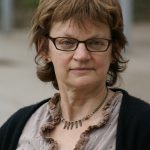
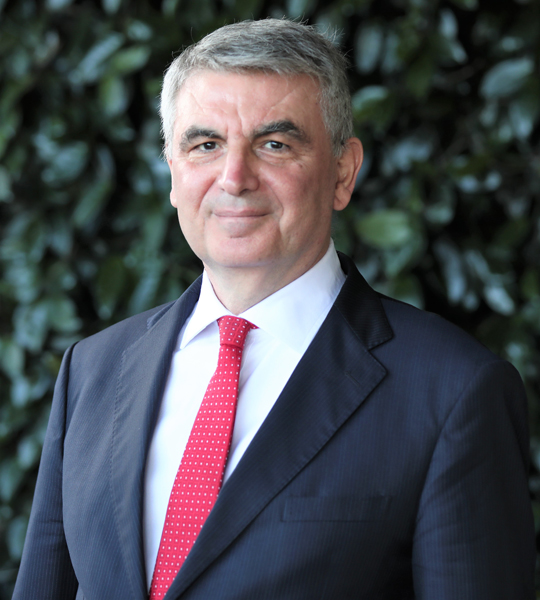
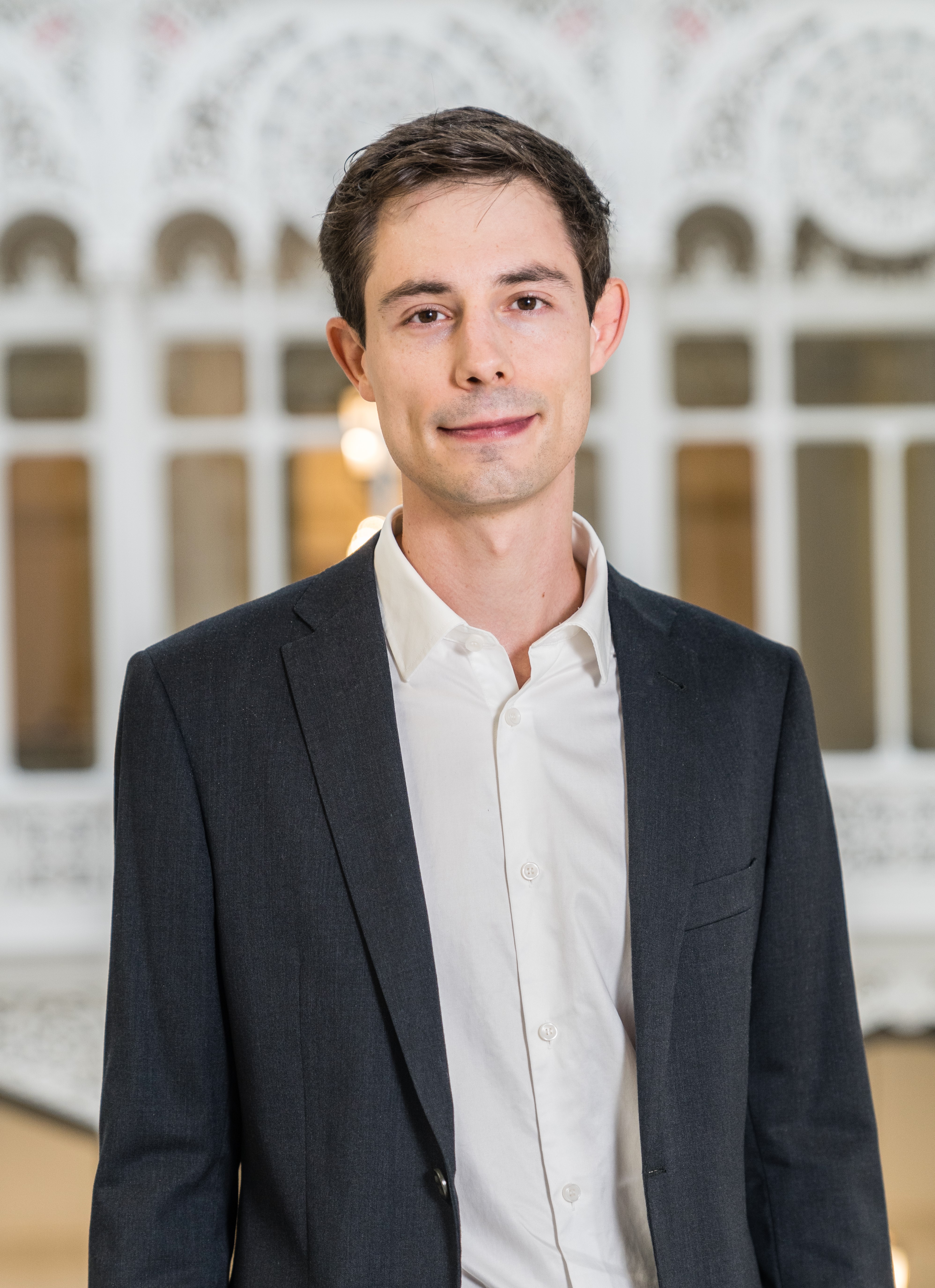
Vincenzo Atella is a Full Professor in the Department of Economics and Finance at the University of Rome Tor Vergata. His primary research areas include Health Economics, Applied Microeconomics, and Microsimulation. He actively teaches courses such as 'Impact Analysis of Development Policies and Programs' and 'Health Economics and Policy' at the Master's level. Research Interests Health Economics Applied Microeconomics Microsimulation Non-Communicable Diseases (NCDs) Public Health Policy Healthcare Cost Analysis Publication Trends Atella's recent articles focus on the intersection of health economics and public policy, addressing topics like obesity-related costs, mental health impacts of the pandemic, pharmaceutical pricing, and intergenerational trauma effects. His work often employs microsimulation and cross-sectional analysis to evaluate health and economic outcomes. Contact Information Email: atella@uniroma2.it Office Hours: Tuesday - Wednesday, 4-5 pm Room: P2 S37 Phone: +39 06 7259 5723
Dr. Francisco Jorge Oliver Rullán is an Associate Professor of Applied Economics at the University of Balearic Islands' Faculty of Economics and Business. He serves as secretary of the Applied Economics department and maintains an active research and teaching profile within the institution. His office is located in room DB245 on the second floor of the Gaspar Melchor de Jovellanos building. Dr. Oliver earned his PhD in Economics from the University of Balearic Islands and holds a Master's degree in Applied Economics from Pompeu Fabra University. His academic career has been marked by significant contributions to economic research and institutional service, including serving as Vice-dean of the Faculty of Economics and Business from 2009 to 2013. His research primarily focuses on portfolio decision-making, labor supply behavior under different taxation systems, income redistribution mechanisms, and social welfare analysis. Dr. Oliver employs sophisticated econometric modeling techniques to examine microeconomic theory applications in public finance contexts. His work bridges theoretical economic concepts with practical policy implications, particularly regarding budgetary considerations and fiscal policy design. Dr. Oliver has established a robust publication record in both national and international journals indexed in the Social Sciences Citation Index (SSCI). His work appears in prestigious outlets including the Journal of Economic Inequality, Review of Income and Wealth, Economica, and International Journal of Manpower, alongside leading Spanish journals such as Revista de Economía Aplicada and Hacienda Pública Española. He is an active member of the Economic Analysis and Modelling (GAME) research group, a consolidated R+D+I structure at the university. His teaching portfolio includes Macroeconomics, Macroeconomics I, and supervision of Final Degree Projects across Business Administration, Economics, and Tourism programs, including double-degree combinations. For the 2025-26 academic year, he will also teach Monitoring and Evaluation for Optimal Governance in the Master's Degree in Economics of Tourism.
Robert Gary-Bobo is Professor of Economics at the University of Paris 1 Panthéon-Sorbonne (Centre d’Économie de la Sorbonne) and Adjunct Professor at ENSAE/IPP Paris. He is also an affiliated member of CREST and a senior member of the Institut Universitaire de France. His career has included prior appointments at the University of Cergy-Pontoise, the Paris School of Economics, and École Polytechnique. Education & Affiliations Professor of Economics, University of Paris 1 Panthéon-Sorbonne Adjunct Professor, ENSAE – IPP Paris Affiliated Member, CREST Senior Member, Institut Universitaire de France Research Interests Robert Gary-Bobo’s work lies at the intersection of public economics , health economics , education economics , and applied econometrics . Using modern micro-econometric techniques and game-theoretic modeling, he investigates how public policies affect individual behavior and market outcomes. Recurrent themes include the efficiency of public hospitals, the economic value of educational credentials, optimal design of student-loan and pension systems, and the evaluation of large-scale social programs. His research on health care explores economies of density in home-care services and the productive efficiency of French public hospitals. In education , he studies grade-retention policies, class-size effects, and the signaling value of diplomas in the French labor market. A methodological hallmark of his recent papers is the use of finite-mixture and non-parametric approaches to handle unobserved heterogeneity in program evaluation. Publications Over the past decade his output has concentrated on empirical studies of French administrative data, leading to more than a dozen working papers and journal articles since 2021. The dominant thrust is policy-oriented econometric work on health and education, complemented by theoretical investigations into optimal taxation, student-loan design, and relational contracting. Scientific Awards Robert Gary-Bobo was elected Senior Member of the Institut Universitaire de France, a selective national honor recognizing outstanding research contributions. Teaching & Doctoral Supervision He currently teaches graduate courses in Public Economics, Health Economics, and Economics of Education at both ENSAE/IPP Paris and the Master in Public Policy at University Paris 1. While no explicit list of supervised PhD students is provided, his extensive teaching and research activities indicate continuous involvement in doctoral training. Laboratories & Teams He is affiliated with the Centre d’Économie de la Sorbonne (University Paris 1) and CREST, two leading French research centers in economics and econometrics. These affiliations provide access to large administrative datasets and foster collaboration with applied econometricians and public-policy scholars.
Emeritus Professor Holly Sutherland is affiliated with the University of Essex and is a leading expert in tax-benefit microsimulation modeling. She previously served as Director of EUROMOD, a flagship European microsimulation model, until October 2018. Her research focuses on gender impacts of redistribution policies, child poverty measurement, and expanding microsimulation tools to developing countries. With over 30 years of experience, she has coordinated numerous EU-funded projects and co-authored five books on microsimulation. Her work evaluates policy reforms and their distributional effects, contributing to evidence-based policymaking across Europe. Key areas include fiscal consolidation, minimum wage impacts, and poverty reduction strategies. She has advised on tax-benefit systems in multiple EU countries and pioneered methods to assess policy scenarios in real-time (nowcasting). Her contributions ensure policy tools are accessible to regions lacking advanced modeling infrastructure.
Andrea Piano Mortari is an Assistant Professor of Economics at the University of Rome Tor Vergata. He specializes in health economics, dynamic microsimulation, and the exposome. His work integrates economic analysis with public health challenges, focusing on chronic disease prevention, healthcare productivity, and mental health. He leads major research initiatives including EU-funded projects STAGE, Obelisk, and LongITools, and is Principal Investigator of a NIH-funded study on Alzheimer’s disease. Prof. Mortari teaches Microeconomics and Research Methods for Social Sciences at the undergraduate level. His research emphasizes policy-relevant analysis, such as evaluating the economic impacts of obesity, diabetes drugs, and public health interventions. He has contributed to projects like the DARE FALLSPREDICT wearable sensor initiative and analyses of healthcare costs linked to overweight/obesity in Italy. His work frequently intersects with spatial econometrics and longitudinal data modeling. He serves on the Project Council of DECIDEHealth and collaborates with international organizations to model disease burden and health system resilience. Notable contributions include studies on the economic implications of the Great Recession on health outcomes, psychotropic drug use during the pandemic, and cost-effectiveness of chronic disease prevention strategies in Europe and the U.S. His research portfolio spans over 25 years, with publications addressing aging populations, healthcare productivity, and the interplay between socioeconomic factors and health. Methodologically, he combines dynamic microsimulation with spatial analysis to forecast healthcare needs and evaluate policy impacts across demographic groups.
Panos Tsakloglou is a Professor at the Department of International and European Economic Studies, Athens University of Economics and Business (AUEB). He holds a PhD from the University of Warwick. His academic career includes visiting professorships at institutions such as the London School of Economics (2005, 2020) and the University of Bristol (1987–1990). He has served in key government roles, including Deputy Minister of Social Insurance (2020–present) and Chairman of the Greek Government’s Council of Economic Advisers (2012–2014). He is also a Research Fellow at the Institute for the Study of Labor (IZA, Bonn) and a Senior Research Fellow at the Hellenic Observatory (LSE). His research focuses on inequality, poverty, social exclusion, returns to education, and the redistributive role of the state . He has published over 90 articles in leading journals and contributed to international research projects. His work has influenced Eurostat’s social exclusion statistics and policy frameworks. Prof. Tsakloglou has advised Greek Prime Ministers and held memberships in influential bodies such as the EU Economic and Financial Committee, the National Council for Research and Technology, and the Independent Authority for the Evaluation of Tertiary Education. He is an editorial board member of journals including the Journal of Economic Inequality and Politica Economica . His professional network includes collaborations across Europe, with over 50 research/consultancy projects and extensive conference participation. He has also served as an advisor to the Greek Ministry of Labour and Social Affairs.
Howard Reed is a Professor (Practice) of Public Policy at Northumbria University and Economics Lead for the Common Sense Policy Group. His expertise includes public policy analysis, health economics, and tax-benefit system modeling. He holds a PhD in Economics from an unspecified institution, an MSc from University College London (1995), and a BA (Hons) Economics (1994). Reed’s research focuses on microsimulation modeling of tax-benefit systems, distributional impacts of policy reforms, and Universal Basic Income (UBI) feasibility. He developed the Landman Economics Tax-Transfer Model (TTM), a leading UK tool for analyzing welfare and tax policies. His work evaluates reforms from 2010 onwards, including Universal Credit rollout and austerity impacts on public services. He has secured over £2 million in funding from bodies like NIHR, Wellcome Trust, Scottish/Welsh Governments, and charities. Collaborations include teams with the Open University, University of Bristol, and University of Southampton. Notable projects include costings for UBI schemes and analyses of UK inequality trends up to 2030. Reed’s publications span policy reports and peer-reviewed articles on topics like UBI affordability, pandemic-era policy shifts, and climate mitigation framing. His work emphasizes evidence-based policy design to address economic and social challenges.
Francesco Figari is a Professor in Public Economics at the University of Insubria (Italy). His research focuses on tax-benefits microsimulation modelling, labour supply, public policies, redistributive effects, and poverty/deprivation in Europe. Previously, he worked as a Research Fellow at ISER on the EUROMOD project. Research Interests: His work bridges public policy analysis with quantitative methods, emphasizing how tax and benefit systems influence economic behavior and societal well-being. He has contributed to understanding poverty dynamics and the distributive impacts of fiscal reforms across European nations.
Andrew Shephard is a Professor at the Faculty of Economics and Business (FEB) at KU Leuven, affiliated with the Economics Research Group. His research focuses on public economics, labor economics, and tax policy design, with particular emphasis on optimal taxation frameworks, family economics, and structural econometric modeling. He currently leads two major projects: 'Divorce Law Reforms, Matrimonial Regimes and Family Behaviour' (2024–2026) and 'Intertemporal equilibrium collective models with limited commitment' (2024–2034). Key research contributions include seminal work on tax credit reforms, charitable fundraising mechanisms, and the optimal taxation of low-income families. His publications appear in top journals such as Econometrica , Review of Economic Studies , and International Economic Review . Professor Shephard has held leadership roles, including membership in the Council of the Faculty of Economics and Business and the Campus Council FEB, Leuven and Kortrijk Campus. His work bridges theoretical economic modeling with applied policy analysis, addressing real-world issues in tax policy design and labor market dynamics.
Professor Robert Tanton holds a PhD in Economics from the University of Canberra and has been affiliated with the National Centre for Social and Economic Modelling (NATSEM) since June 2005. His primary research focuses on spatial disadvantage, wellbeing analysis, and spatial microsimulation techniques. He is internationally recognized for expertise in poverty measurement, housing stress analysis, and small-area estimation methodologies. Tanton leads projects applying microsimulation models to assess socioeconomic indicators, including work presented to the Senate Select Committee on Housing Affordability and collaborations with organizations like AURIN. Education: PhD in Economics, University of Canberra (specializing in small-area estimation) Research Interests: Spatial analysis of economic disadvantage Wellbeing metrics and policy evaluation Microsimulation models for public policy Health economics and informal care costs Environmental policy and urban development Grants & Collaborations: Chief Investigator on multiple Australian Research Council (ARC) grants Commissioned work for government agencies including the Tasmanian Social Inclusion Unit and Commonwealth Bank Member of the Australian Urban Research Infrastructure Network (AURIN) Key Contributions: Developed spatial microsimulation frameworks for poverty and wellbeing analysis Authored over 140 publications on socioeconomic disadvantage, health economics, and policy impact assessments Advised on tax reform, EV policy, and mental health costing through microsimulation models
Max Löffler is an Assistant Professor in the Department of Microeconomics and Public Economics at Maastricht University and a Research Fellow at the same institution since December 2023. He is also affiliated with the ERC-funded HIPPO project at the University of Cologne, reflecting his strong ties to leading European economic research centers. His research focuses on public economics and labor economics, with particular emphasis on taxation, inequality, labor supply modeling, and urban/regional economic issues. His work combines structural econometric methods with empirical analysis to evaluate the welfare and distributional effects of public policies. The recent publications reveal a consistent trend in studying the real-world impacts of taxation, labor market policies, and inequality, while expanding into newer domains such as climate change exposure and the long-term economic consequences of surveillance. His research often involves collaboration with prominent economists and utilizes large-scale microdata and policy simulation models. IZA Discussion Papers and Standpunkte Published in journals: American Economic Journal: Economic Policy , Journal of the European Economic Association , Journal of Economic Inequality , Labour Economics , German Economic Review , Perspektiven der Wirtschaftspolitik Löffler has advised or contributed to policy-relevant research through institutions such as IZA, ifo Institute, and ZEW. He has not received any explicitly mentioned scientific awards in the provided text. He does not appear to lead a named lab or research team, but is deeply embedded in collaborative research networks focused on public policy evaluation.
Enrico Longo is a Post-Doc Researcher at the Department of Economics within the Faculty of Business, Economics and Social Sciences at Universität Hamburg, Germany. He maintains academic affiliations with Ca' Foscari University of Venice as a Research Associate (Cultore della materia) and previously held a Research Fellow position at Insubria University of Varese. His work bridges experimental economics with policy analysis, focusing on distributive justice and fiscal reforms. PhD in Economics (2017-2022), Ca' Foscari University of Venice Visiting PhD student (2020), Wirtschaftsuniversität Wien MSc in Economics (2016-2017), Collegio Carlo Alberto MA in Professional and Financial Accounting (2013-2015), University of Turin BEc in Business Administration (2009-2012), University of Bergamo His research employs experimental game theory to study inequality and distributive justice, while his policy work involves tax-benefit microsimulation modeling. Recent publications examine collective action coordination and fiscal policy evaluation. Longo teaches Behavioral Economics and Public Economics at Universität Hamburg (2023-2024), and previously taught mathematics-related courses at Ca' Foscari University. He possesses advanced technical skills in z-Tree, EUROMOD, and STATA, with multilingual fluency (Italian, English, German, French, Spanish).
Dr. Núria Badenes Plá is a Professor at the Complutense University of Madrid and a key contributor to the Institute for Fiscal Studies. Her academic career spans over 25 years with a focus on Applied Economics, particularly in public economics, taxation, and microsimulation modeling. She has co-authored 41 journal articles, 18 collective works, 8 books, and directed 2 PhD theses. Research Interests: Dr. Badenes Plá's work examines how fiscal policies affect income distribution, with specific expertise in gender financial gaps, tax reform assessments, and microsimulation techniques like EUROMOD. Her research covers household economic behavior during crises, wealth taxation models, and the redistributive impacts of universal basic income. Key collaborations with José Manuel González Páramo and Borja Gambau Suelves 2024 thesis direction on microsimulation modeling at UNED 2011 thesis on altruistic behavior in negotiations at Complutense Scientific output includes 75 citations (H-index: 4) since 1994, with recent 2024-2023 articles analyzing tax reforms, pandemic economic impacts, and gender financial dynamics in Spain. She has contributed to policy debates on fiscal neutrality, local government reforms, and environmental taxation.
Esteban Garcia Miralles is an Economist at the Bank of Spain's Research Department and External Researcher at the University of Copenhagen's Department of Economics. His work bridges central banking research with academic economics, focusing on critical policy issues affecting European economies. His educational background includes a PhD in Economics from the University of Copenhagen, followed by a Postdoctoral Fellowship at the Institute for Fiscal Studies. This strong academic foundation supports his research in public finance and labor economics. Garcia Miralles' research interests center on the intersection of public policy and individual behavior, particularly regarding retirement decisions, taxation systems, household financial behavior, and health economics. His work often employs rigorous microeconometric methods to analyze how policy changes affect economic decisions across different demographic groups, with special attention to pension systems, inheritance taxation, and fiscal responses to economic shocks. His publication record shows a consistent focus on European fiscal policy challenges, with recent work examining post-pandemic inflation effects, energy crisis responses, and retirement behavior. The articles demonstrate methodological sophistication combining theoretical modeling with empirical analysis of large administrative datasets, particularly from Spanish tax records. Winner of the Alexandre Pedrós Prize for research on inheritance taxation Finalist for the AldE Young Researchers' Prize Regular contributor to high-impact economics journals including American Economic Journal: Economic Policy and Journal of Public Economics As a researcher at the Bank of Spain, Garcia Miralles contributes to the institution's analytical work on fiscal policy, including the development of microsimulation tools for policy evaluation. His collaborations span multiple European institutions, reflecting the transnational nature of contemporary fiscal challenges. His work frequently appears in policy discussions, with features in major Spanish media outlets including El País and El Mundo, demonstrating its relevance to current economic debates.