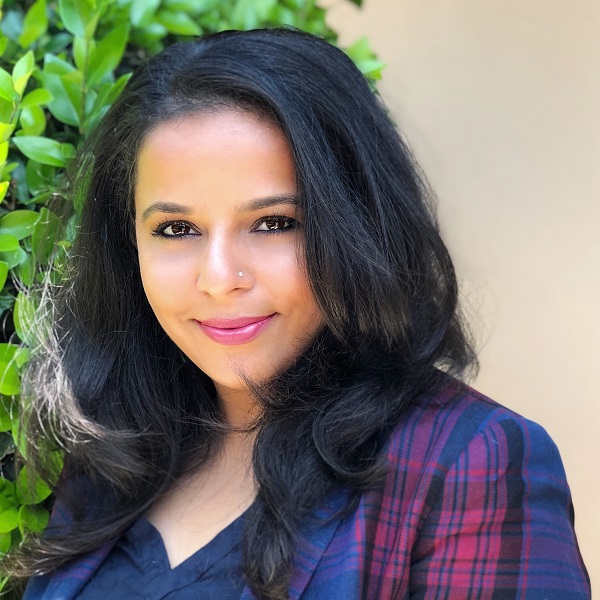
John Collins is a Professor of Philosophy at the University of East Anglia, where he is the Head of the School of Philosophy within the School of Politics, Philosophy and Area Studies. His research interests include the philosophy of language, the philosophy of linguistics, the concept of truth, the philosophy of science, and the philosophy of cognitive science. His recent publications cover topics such as polysemy and roots, world and truth in conflict, the status of indefinites, and the disunity of personal taste.
Margarita Esau is a Researcher at the University of Siegen, affiliated with Faculty III (Business Informatics and New Media) and the Department of Business Informatics focusing on IT Security and Consumer Informatics. She holds an M.A. in Human-Computer Interaction (HCI) from the University of Siegen, complementing her Bachelor’s degree in Media Technology from Deggendorf University of Applied Sciences. Her research emphasizes sustainable practices, voice interaction, and user experience design, particularly in food consumption and smart living technologies. Key projects include investigations into smart refrigerators, vegan practice transformation via ICT, and voice interaction’s role in fostering embodied knowledge. She contributes to initiatives like the “Smart Live” and “Ganesha” projects, exploring how technology can enhance consumer empowerment and ethical decision-making. Esau’s publications span topics such as digital taste mediation, human-centered digital sovereignty, and multimodal interaction design. Her work often bridges technical innovation with societal impact, addressing issues like AI transparency and sustainable household practices. Collaborations include designing smart mirrors for morning routines and exploring networks of practices to inform interconnected system design. Her research also extends to prison resocialization through psychosocial ICT and the ethical implications of AI in everyday technologies. Esau’s interdisciplinary approach integrates empirical studies, design thinking, and critical theory to advance HCI’s role in shaping responsible technological futures.
Rachel Etta Rudolph is an Assistant Professor in the Department of Philosophy at the University of California, San Diego. Her work focuses on philosophy of language, value theory, social philosophy, and philosophy of artificial intelligence. She holds a PhD in Philosophy from UC Berkeley (2019) and a BA in Philosophy and German from McGill University, following studies in the Liberal Arts Program at Dawson College. Prior to UCSD, she was a faculty member at Auburn University's Philosophy Department. Her research explores experiential language (e.g., 'tasty' or 'blue'), linguistic commitments, and AI’s role in reflecting/conveying these commitments. Upcoming engagements include a keynote at the Rocky Mountain Philosophy Conference (April 2025) and a talk at the University of Rochester’s Center for Language Sciences (March 2025). Key research themes include social generics, bias in language models, conceptual engineering, and markedness confounds in stereotype detection. She has published widely in journals like Philosophical Studies , Inquiry , and Semantics and Pragmatics , and collaborates with researchers in computer science and cognitive science. Education: PhD in Philosophy, UC Berkeley, 2019 BA in Philosophy and German, McGill University Liberal Arts Program, Dawson College Key Projects: Developed frameworks for metalinguistic negotiation and conceptual exploration Explores AI’s ethical implications through bias detection and conceptual revision
Dr. Krassimir Velikov holds an Adjunct Associate Professor position at North Carolina State University's Department of Chemical and Biomolecular Engineering in the College of Engineering. He also maintains a part-time academic role at Utrecht University's Soft Condensed Matter & Biophysics department since 2009. Additionally, he serves as a Team Leader and Science Leader in Colloidal Dispersions and Nanoscale Structuring at Unilever R&D in Vlaardingen, the Netherlands, and leads the 'Molecular Structure of Food' program at NanoNextNL. Krassimir Velikov's educational background includes: Bachelor's in Chemistry from the University of Sofia, Bulgaria M.Sc. in Chemical Physics and Theoretical Chemistry (1994) from University of Sofia Second M.Sc. in Chemical Engineering (1997) from University of Sofia Ph.D. (2002) completed under Prof. Alfons van Blaaderen at both FOM AMOLF (Amsterdam) and Utrecht University's Soft Condensed Matter & Biophysics department, followed by a postdoctoral fellowship at Utrecht University. His research interests span soft condensed matter, colloidal dispersions, and nanoscale structuring. He investigates colloidal self-assembly and interface science in dispersions (e.g., suspensions, foams, emulsions), and applies these principles to food systems to enhance stability, texture, taste, and bioavailability of bioactives. He also studies the physical chemistry of digestion and delivery mechanisms for functional ingredients. Strategic themes in his work include Earth and Sustainability, Foundations of Complex Systems, and Life Sciences. Velikov's professional roles extend beyond academia: he leads Unilever’s R&D teams and manages international projects and intellectual property strategies. His program directorship at NanoNextNL focuses on food-related molecular structure research, fostering academic-industrial collaboration. He is affiliated with the Leonard S. Ornstein Laboratory at Utrecht University and contributes to the Soft Condensed Matter Group. His work locations include Unilever’s R&D facilities in Vlaardingen and research spaces in Utrecht and Amsterdam.
Etkin Parlar is a researcher in the Department of Inorganic Chemistry within the Faculty of Chemistry at an unspecified university. Holding a BSc and MSc, Parlar actively contributes to interdisciplinary research at the interface of inorganic chemistry, materials science, and molecular biology. Education: Bachelor of Science (BSc) Master of Science (MSc) Research Interests: Parlar's work centers on Inorganic Chemistry, with a focus on DNA microarray synthesis, surface chemistry, oxidation reactions, nanomaterials, and biosensors. Key investigations involve the use of indium tin oxide and gold substrates for DNA synthesis, aiming to improve oligonucleotide quality and develop novel data storage solutions through two-dimensional barcodes. The research also extends to biological systems, such as the role of bitter taste receptors in gastric acid secretion and zinc homeostasis. Publication Trends: The 2024-2025 publications reveal a trajectory toward innovative applications of DNA technology, including nonaqueous oxidation methods for microarray synthesis and parallel DNA synthesis for data storage. These works bridge chemistry, materials science, and biotechnology, with emphasis on substrate integrity (indium tin oxide/gold) and cross-disciplinary biological implications. Awards: No scientific awards were mentioned in the available information. Collaborations: Parlar engages in extensive cross-disciplinary teamwork, evidenced by co-authorship with experts in molecular biology, nutrition science, and analytical chemistry. The research likely operates within specialized laboratory facilities for surface modification and DNA analysis, though specific team structures remain unspecified.
Peter Nathan Lasersohn holds dual professorships in Linguistics and Philosophy at the University of Illinois. His primary appointment resides in the Department of Linguistics within the College of Liberal Arts & Sciences, with significant cross-disciplinary work spanning formal semantic theory and philosophical linguistics. His educational background includes a Ph.D. (1988) and M.A. (1985) from Ohio State University, and a B.A. (1981) from Earlham College. His research fundamentally explores event-based semantic theories , plural and coordinate constructions , pragmatic vagueness , and relative truth , with substantial contributions to understanding how context shapes meaning. Analysis of his publication trends reveals consistent focus on truth-value semantics, with recent work (2021) advancing theories of non-rigid common nouns while earlier foundational texts established frameworks for plural reference. His scholarship consistently bridges linguistic formalism and philosophical inquiry, particularly regarding subjectivity in truth-theoretic systems. Professor Lasersohn maintains active academic engagement through editorial roles for Natural Language Semantics (1999-present) and Studies in the Linguistic Sciences (2002-2009), alongside numerous invited lectures at international conferences on perspectival meaning and compositional pragmatics. His office resides in 4096 Foreign Languages Building at 707 South Mathews Avenue, Urbana, IL 61801, where he conducts research supported by ongoing scholarly activities including conference presentations and editorial oversight of major linguistics journals.
Raphaël Doenlen is a Scientist and Lecturer at the École Polytechnique Fédérale de Lausanne (EPFL) , affiliated with the School of Life Sciences and its departments Center for Psychiatric Genomics (CPG-GE) and Life Sciences Engineering (SSV-ENS) . His research bridges neuroscience, immunology, and pharmacology. Research Focus : Neuroimmune interactions, behavioral neuroscience, immunopharmacology, and biomedical device development for in vivo monitoring. Publications : 2007-2017 work spans neural-immune signaling, aging, radiation effects on cognition, and conditioned immune responses. Teaching : Lecturer in School of Life Sciences Engineering , contributing to life sciences curricula. Contact: raphael.doenlen@epfl.ch , EPFL, SV 1540 (Bâtiment SV), Station 19, Lausanne, Switzerland.
Antonio Donaire Gonzalez is a Full Professor in the Department of Inorganic Chemistry at the Faculty of Chemistry, Universidad de Murcia (UM). His academic career spans over three decades since earning his doctorate from Universitat de València in 1991. Throughout his career, he has established himself as a prominent researcher in bioinorganic chemistry and biocatalysis, with particular expertise in metalloproteins, enzyme chemistry, and sustainable chemical processes. Professor Donaire earned his doctorate from Universitat de València in 1991 with a thesis titled Estudio químico y estructural de la carboxipeptidasa a interacción con inhibidores aniónicos inorgánicos y pseudoproductos de la hidrólisis enzimática . His doctoral research laid the foundation for his subsequent work in metalloenzymes and protein chemistry. He is affiliated with multiple research groups at UM including Sustainable Chemistry, Metallodrugs, and Química de la Coordinación-Bioinorganica. His research interests center on bioinorganic chemistry with a focus on metalloproteins, enzyme mechanisms, and biocatalysis. Professor Donaire has made significant contributions to understanding structure-function relationships in metalloenzymes like carboxypeptidase and carbonic anhydrase. In recent years, his research has evolved toward sustainable chemistry applications, with emphasis on biocatalytic processes using green solvents such as ionic liquids and supercritical carbon dioxide. His work bridges fundamental bioinorganic chemistry with practical applications in CO2 capture, biofuel production, and synthesis of bioactive compounds. Analysis of his 15 most recent publications reveals a clear trajectory from fundamental studies of metalloproteins to applied research in green chemistry and sustainable biocatalysis. His work demonstrates expertise in enzyme chemistry, solvent engineering, and process optimization, with consistent focus on developing environmentally friendly processes for producing value-added chemicals, pharmaceuticals, and biofuels. His research group has pioneered approaches using sponge-like ionic liquids and biphasic systems for various biocatalytic transformations under solvent-free or green solvent conditions. Professor Donaire has been actively involved in several research groups at Universidad de Murcia, including Sustainable Chemistry, Metallodrugs, and Química de la Coordinación-Bioinorganica. These collaborative efforts have enabled him to pursue interdisciplinary research at the interface of inorganic chemistry, biochemistry, and chemical engineering. His work demonstrates consistent productivity with publications spanning from 1989 to 2023, showing evolution from blue copper protein studies to current sustainable chemistry applications.
Shani Ross is an Associate Professor and Associate Chair for Undergraduate Programs in the Department of Bioengineering at George Mason University. She focuses on bladder neurophysiology and closed-loop neuroprosthetics. BSc Electrical Engineering, Howard University (2004) MS & PhD in Biomedical Engineering with bioelectrical concentration, University of Michigan (2006, 2013) Her research spans neural engineering, neuromodulation, and biomedical device development. Key areas include peripheral nerve stimulation, deep brain stimulation, and neuroprosthetics for restoring physiological function. Recent publications highlight work on graphene-based neural electrodes, decoding algorithms for bladder pressure estimation, pudendal neuromodulation effects on blood flow, and trigeminal nerve stimulation in equine models. Her work integrates computational methods with biomedical applications.
Victoria Walden is a Teaching Professor at the University of Sussex's School of Media, Arts and Humanities, specializing in Modern Languages and Cultures. Her research explores the intersection of digital media, Holocaust memory, and film philosophy through intermedial analysis. University of Sussex, UK School of Media, Arts and Humanities Modern Languages and Cultures department Academic focus on media's role in memory production Research interests include: Digital entanglement in Holocaust memory Intermedial cinematic analysis (archive, animation, apps) Postcolonial memory anxieties in British cinema Media's affective learning potential Walden's publications examine digital memorial museums, Hammer horror's cultural implications, and the philosophical dimensions of Holocaust film. Her work emphasizes ethical digital interventions and the spectator's role in memory construction. Recent projects investigate non-representational memory approaches and mixed reality applications.
Ruth Egger is a Research Assistant and Doctoral Student in Early Modern History at the Department of History, University of Tübingen since 2023. She is part of the Early Modern History team within the Faculty of Humanities, working alongside professors specializing in early modern history. Her educational background includes a Master of Letters (MLitt) in Art History: Dress and Textile Histories from the University of Glasgow (2018-2019), where she completed her thesis titled 'Mapping Dress and Identity. The Costumed Figures in John Speed's Theatre of the Empire of Great Britaine, 1611-1612.' She also holds a Magistra (Mag.) in Celtic Studies from the University of Vienna (2008-2014), with her diploma thesis focusing on 'Fairies, Witches, and the Devil. The Interface between Elite Demonology and Folk Belief in Early Modern Scottish Witchcraft Trials.' Egger's research centers on Early Modern Cultural History with specialization in Dress and Textile Histories, Visual and Material Culture, and Museums and Collections. Her work explores how dress and textiles functioned as cultural artifacts in early modern European collections, particularly examining cross-cultural exchanges between Europe and other regions. She investigates how objects from Africa and the Americas were collected, interpreted, and recontextualized within European cabinets of curiosities during the 16th-18th centuries. Her publications and conference presentations reveal a consistent focus on early modern European material culture, particularly regarding the collection and reinterpretation of dress and textiles from Africa and the Americas in European contexts. Egger examines how these objects were translated across cultural boundaries and how their meanings were transformed when incorporated into European collections. Her work bridges museum studies, art history, and cultural history to provide new insights into early modern collecting practices. Egger is an active member of several professional organizations including CIETA (Centre International d'Etude des Textiles Anciens) in France, The Costume Society and The Association of Dress Historians in the UK, and Netzwerk Mode Textil in Germany. Her museum experience includes curatorial positions at the Landesmuseum Württemberg and Kunstgewerbemuseum Berlin, where she contributed to exhibitions including 'unschwäbisch-pompös. 125 Jahre Landesgewerbemuseum' (2021-2022) and 'A Matter of Taste. Exemplary Design around 1900' (2021-2022).
Rainer Wenrich , Professor for Art Education and Art Didactics at the Catholic University of Eichstätt-Ingolstadt (Faculty of Philosophy and Education), is a leading scholar in art pedagogy, museum education, and fashion studies. With a career spanning decades, he bridges art, cultural education, and interdisciplinary research. Key Affiliations : Catholic University of Eichstätt-Ingolstadt, Harvard Project Zero, International Dress Historians' Association Research Focus centers on: Visual literacy and design thinking Postmodern fashion semiotics Dialogical pedagogy in museums Technology integration in art education Sustainability in creative practices Publication Trends (2013-2025) reveal persistent exploration of: Clothing as cultural communication Intergenerational art education Museum-school collaborations Immersive learning environments Baroque influences in contemporary fashion Editorial Leadership includes co-founding: Dialoge - Dialogues (2021) Body Creativities (2020) Contemporary History in Museums (2021) His collaborative projects with institutions like Harvard, Columbia, and the Museum Brandhorst demonstrate commitment to global educational innovation.
Richard Fry serves as an Associate Professor in the Design Department at Brigham Young University - Provo, within the College of Fine Arts and Communications. His academic work bridges design thinking, education, and interdisciplinary innovation. Research focuses on design thinking pedagogy Develops crossdisciplinary educational frameworks Integrates technology in design education His scholarship examines how design methodologies can enhance innovation capacity across academic and professional settings, with particular emphasis on collaborative learning environments. Fry's publications reveal sustained engagement with design process modeling and creativity cultivation strategies for both design and engineering students. While his work spans nearly two decades, recent research trends emphasize studio pedagogy optimization and concept-driven project frameworks. Notably, he pioneered intensive design thinking workshops and boot camps that have demonstrably increased innovation aptitude in technology and engineering populations.
Surabhi Bhutani is an Associate Professor in the School of Exercise and Nutritional Sciences at San Diego State University, affiliated with the College of Health and Human Services. Her research spans nutrition, obesity, chemosensory science, and public health, with particular focus on how sensory perception influences dietary behaviors and metabolic health outcomes. She has led multiple NIH-funded projects investigating COVID-19's impact on chemosensory function and pandemic-related weight changes. Education: PhD Kinesiology and Nutrition, University of Illinois at Chicago (2009-2013) NIH T-32 Post-Doctoral Fellowships: Northwestern University (2016-2018), University of Wisconsin (2014-2016) MSc Foods and Nutrition, Delhi University (2003-2005) BSc Foods and Nutrition, Delhi University (2000-2003) Her research examines bidirectional relationships between chemosensory dysfunction (smell/taste) and metabolic conditions like obesity, utilizing methods from sensory neuroscience, epidemiology, and behavioral intervention trials. Recent work demonstrates how olfactory impairment interacts with body composition to influence dietary choices, and how circadian rhythms modulate sensory perception. Publication trends reveal three dominant themes: 1) COVID-19-related chemosensory disturbances and their metabolic consequences, 2) neural and behavioral mechanisms of food perception and intake regulation, and 3) intermittent fasting efficacy across demographic groups. Her work employs diverse methodologies including neuroimaging, population surveys, and clinical trials. Awards and Honors: Grants Research and Enterprise Writing Fellowship (2018) Multiple NIH T-32 Postdoctoral Fellowships Kamath Award for PhD Productivity (2010) Distinction Awards in Master's studies She actively mentors graduate and undergraduate researchers, with 20+ students supervised since 2018. Current projects include developing olfactory training interfaces for COVID-19 smell recovery and investigating chronotype influences on sensory perception. She leads collaborations through the Global Consortium of Chemosensory Research and serves as Associate Editor for BMC Nutrition.
Cheryl Akner-Koler is a Researcher at Konstfack University of Arts, Craft and Design , specializing in interdisciplinary design research that bridges Industrial Design , Culinary Arts , and Haptic Perception . She collaborates with institutions like Örebro University's School of Hospitality, Culinary Arts & Meal Science to explore sensory design applications. Key research areas: Haptics , Multi-sensory Design , Culinary Aesthetics , and Inclusive Technology . Co-developed the HAPTICA project (funded by the Swedish Research Council 2016–2019) to integrate tactile, taste, and somatic experiences across disciplines. Invented tactile aids (Distime, Monitor, Ready-Ride) for deafblind individuals, focusing on environmental perception and mobility. Recent work includes haptic attribute modeling for hybrid food design communities and anticipative co-creation methods for sustainable futures. Her publications span journals like The International Journal of Food Design and conferences such as E&PDE.