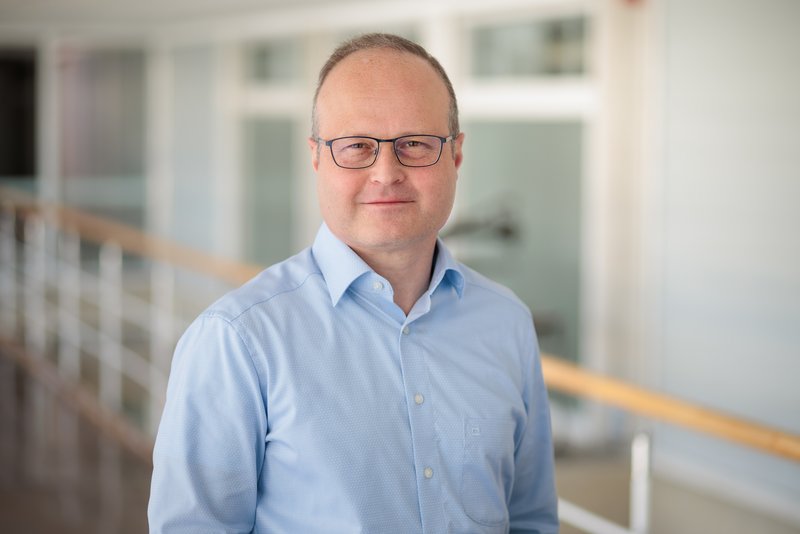
Prof. Wolfgang Blochinger is a Professor in the Department of Computer Science at Reutlingen University, specializing in Services Computing and IT Security. He leads teaching programs in Wirtschaftsinformatik (Business Informatics) at both Bachelor and Master levels, focusing on foundational topics such as Programming Basics, Operating Systems, IT Security, Cloud Computing, and Big Data Technologies. His research emphasizes Cloud Computing and High Performance Computing, particularly in elasticity control, parallel processing, and cloud resource optimization. His research projects include developing elastic parallel systems for HPC applications, cloud migration strategies, and automated cloud service generation. Notable contributions involve frameworks like TASKWORK for elastic task parallelism and the Elasticity Description Language for cloud applications. He has published extensively on serverless computing, cost-efficient cloud resource utilization, and container-based isolation techniques. Prof. Blochinger collaborates with industry partners through the university's labs, including the AI-Reallabor AIDA and Cloud Lab. His work bridges academia and industry, addressing real-world challenges in distributed systems and cloud infrastructure. Current research trends focus on self-tuning cloud services and adaptive parallel algorithms for scalable computing environments.
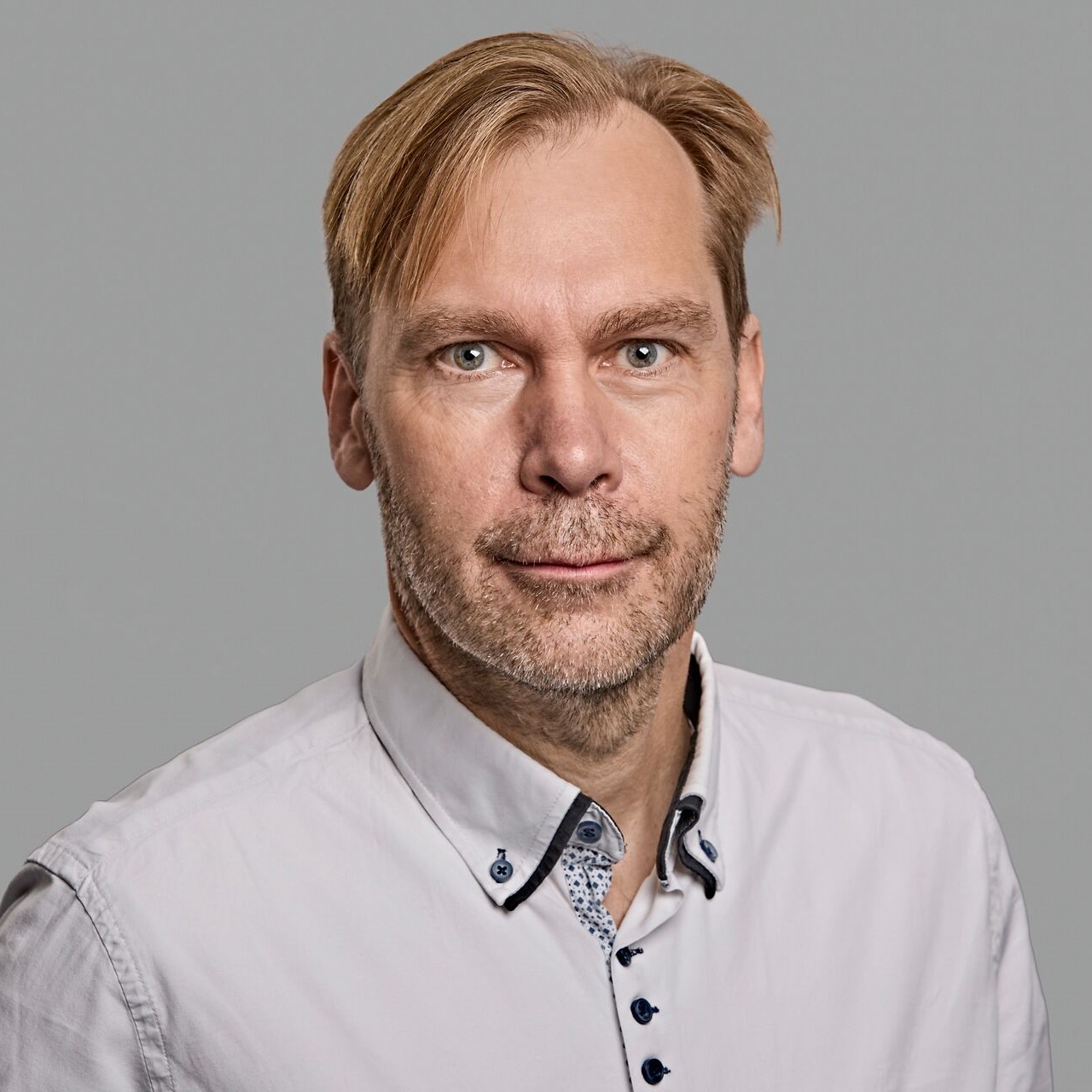
Prof. Dr. Timo Ehmke is Full Professor and holder of the Professorship for Educational Research, in particular Empirical Educational Sciences at Leuphana University of Lüneburg . He leads an extensive research program centered on empirical educational science, teacher education, assessment, and mathematics education. Research Interests Design and evaluation of evidence-based teacher-training programs, especially in mathematics Adaptive learning support and competency-oriented instruction Impact of linguistic complexity on student performance in realistic mathematical tasks Assessment instruments for inclusive subject teaching and second-language learners Large-scale educational studies (TIMSS, NEPS) and comparative measurement of competencies Research Output & Impact Across 183 peer-reviewed publications, Prof. Ehmke’s work reveals a consistent focus on translating empirical findings into practical tools for teachers. His recent articles explore how linguistic demands affect mathematical problem-solving and how adaptive instructional strategies can close achievement gaps. The research integrates psychometrics, educational psychology, and subject-didactics to inform both policy and classroom practice. Awards & Distinctions Leuphana Transfer Award 2023 – Recognised for outstanding knowledge transfer from research to educational practice. Projects & Funding Prof. Ehmke has coordinated or co-coordinated 17 major projects since 2011, securing funding from the German Federal Ministry of Education and Research (BMBF) and the German Research Foundation (DFG) . Flagship initiatives include: LERN-IF (2021-2026): Learning-process diagnostics and feedback in inclusive subject teaching (BMBF) Effects and Interaction of Linguistic and Subject-Specific Requirements (2019-2023, DFG) Boundary-Crossing II : Transdisciplinary evaluation framework for teacher-education collaborations (BMBF) Leuphana Teacher Training 2020 : Concept development for future-oriented teacher education (BMBF) DaZKom-Video : Performance-oriented assessment of German-as-a-second-language competency among pre-service teachers (BMBF) Laboratories & Teams He heads an active research team embedded within Leuphana’s research focus on education and participates in university-wide teacher-education networks, fostering collaboration between educational researchers, subject didacticians, and school practitioners.
Michael Schart is Professor of Methodology and Didactics of German as a Foreign Language at Friedrich Schiller University Jena since 2021. Previously, he held academic positions at Keio University (2007-2021), University of Wuppertal (2018), University of Waterloo (2017-2018), and several Japanese institutions. His research focuses on empirical teaching research, CLIL, task-based language teaching, and reflective teacher training. Doctorate (2002) in Philosophy from Friedrich Schiller University Jena DFG Fellowship (1997-2000) at Justus Liebig University Giessen Master’s in German as a Foreign Language (Jena, 1996) Intensive Japanese Language Studies at Reitaku University (1992-1993) Schart’s research emphasizes action research, classroom interaction, and curriculum development for German language instruction. He has led projects on virtual classroom dynamics (2020/21), task-based teaching at beginner levels (2007-2009), and program evaluation at Keio University (2003-2007). His work bridges qualitative methodology with practical pedagogy. Recent publications address CLIL implementation, feedback mechanisms, and digital learning environments. He co-edits journals InfoDaF and KONTEXTE , and leads the research center FLUSS for teacher professionalization in German as a foreign language education.
Prof. Kira Weber is an Assistant Professor at the University of Hamburg 's Faculty of Education . Her research focuses on AI-driven feedback systems in education, teacher professional development, classroom management, and educational technology adoption. She leads studies analyzing the impact of prompt engineering on AI feedback quality and investigates how teacher educators' AI literacy influences pedagogical practices. Her work bridges educational psychology with technological innovation, emphasizing video-based interventions and peer feedback mechanisms. Her research explores topics such as the role of self-efficacy beliefs in AI tool adoption among student teachers, the effects of expert feedback on pre-service teachers' competencies, and the influence of socioeconomic factors on teacher professional development needs. She has published extensively on professional vision measurement, reflective practice in teacher training, and digital tools for feedback quality enhancement. Recent studies include analyses of LLMs in educational feedback (2025), mixed-methods investigations of teacher educators' AI literacy (2024), and longitudinal studies on peer feedback expertise development (2022–2023). Her work consistently emphasizes practical applications of research in teacher training programs and classroom settings. Prof. Weber's academic contributions span over 30 peer-reviewed articles since 2017, covering domains from self-concept measurement in primary education to cutting-edge AI applications. She is affiliated with the University of Hamburg's Faculty of Education , contributing to both research and pedagogical innovation.
Dr. Tobias Bahr is a computer science education researcher at the Institute of Educational Science , University of Stuttgart , focusing on technology didactics. He holds a PhD (Dr. phil.) in educational science and teaches courses on computer science didactics, educational research methods, and quantitative methodologies. Education: 1. Staatsexamen in Mathematics and Computer Science (2014–2021), University of Stuttgart; Erasmus+ Exchange, University of Bergen (2017–2018) His research focuses include computational thinking , gender dynamics in STEM , and AI integration in education . He leads projects like MakeTechEarly (2024–2027) and LPI (2023–2025), examining interdisciplinary STEM programs and teacher training interventions. Recent publications analyze AI chatbot usage in higher education, hybrid teacher training models, and computational thinking in early education. He has presented at conferences including EDUCON , ISSEP , and WiPSCE , with a focus on empirical studies and evidence-based practices. Teaching portfolio includes Didactics of Computer Science I/II and Quantitative Research Methods . He has developed AI-assisted task differentiation tools and conducted workshops on agile teaching methods in computer science education.
Prof. Dr. Daniela Caspari is a Professor of Didactics of Romance Languages and Literatures at Freie Universität Berlin's Department of Philosophy and Humanities, where she has served since 2002. She directs the Institute of Romance Philology and previously held research positions at TU Berlin and HU Berlin. Her academic credentials include a PhD (1994) and Habilitation (2002) focused on foreign language pedagogy. Research Focus: Caspari specializes in competency-oriented language teaching, empirical research methods, and literature didactics. Her work explores intercultural learning, teacher education reform, and the role of children's literature in language acquisition. Current projects examine multilingual education challenges and innovative teaching methodologies for Romance languages. Publication Trends: Her recent articles (2020-2024) analyze language policy, teacher training efficacy, and motivational strategies in multilingual classrooms, emphasizing empirical approaches and curriculum design for French, Spanish, and Italian pedagogy. Leadership & Service: She chairs the German Society for Foreign Language Research (DGFF), contributes to national education standards committees, and leads projects like K2Teach and ViFoNet. She coordinates master's programs and mentors future educators through digital and in-person consultations.
Christine S. Sing is a linguist and educator affiliated with the Department of English Studies at the University of Siegen, Germany. She holds a PhD from the University of Regensburg, focusing on American presidential rhetoric and ideological discourse. Her research integrates discourse analysis, corpus linguistics, and cognitive linguistics, with specialization in ESP (English for Specific Purposes), second language writing, and business communication. She has taught at multiple institutions, including the Universities of Vienna, Giessen, and Heidelberg, as well as the Vienna University of Economics and Business. Her ongoing post-doctoral project examines technicality in L2 student writing through corpus and qualitative analysis. Key research areas include Systemic Functional Linguistics (SFL), critical discourse analysis (CDA), and the role of English as an international lingua franca (ELF). She actively publishes on topics such as multimodal discourse analysis, academic writing pedagogy, and the intersection of business communication and multilingualism. Education: PhD in Linguistics, University of Regensburg Masters in General Linguistics, University of Poitiers Undergraduate Studies in English/French/German, University of Heidelberg Her teaching spans courses on corpus linguistics, discourse analysis, business English, and academic writing. She has contributed to interdisciplinary research projects, including the DFG-funded 'Cultures of Lying' at the University of Regensburg.
Reyhaneh Jabbarvand is an Assistant Professor in the Department of Computer Science at the University of Illinois at Urbana-Champaign, where she leads the Intelligent CAT Lab. Her research focuses on improving software quality, reliability, and maintenance through neuro-symbolic approaches that combine AI techniques with formal methods. Her research interests span Neural Program Analysis, Software Testing (with emphasis on mobile apps and autonomous software), Bug Localization, and Applied Optimization for Software Analysis. She has made significant contributions to the fields of energy testing for Android applications, neuro-symbolic approaches for code analysis, and large language models for software engineering tasks. Dr. Jabbarvand's recent publications reveal strong trends in applying machine learning to software engineering problems, particularly using neuro-symbolic methods to bridge the gap between deep learning and formal program analysis. Her work on code translation, test flakiness, and test oracle generation demonstrates her focus on practical applications of AI in software development workflows. Google PhD Fellowship in Programming Technology and Software Engineering Rising Star in EECS NSF CAREER Award Dr. Jabbarvand has received research funding from multiple sources including NSF, IBM Research, and C3.ai. She actively mentors students through her Intelligent CAT Lab and has served on numerous program committees for major software engineering conferences including ICSE, FSE, and ISSTA. She teaches courses on Advanced Topics in Software Engineering, ML for Code, and Software Engineering I. Her lab focuses on neuro-symbolic approaches to software engineering problems, bringing together PhD, undergraduate, and high school students to tackle challenges in AI-assisted software development and testing.
Dr. Wolfgang Bay is a professor at Johann Wolfgang Goethe University Frankfurt am Main, where he holds the Vertretungsprofessur für Germanistische Literaturwissenschaft mit dem Schwerpunkt Lese- und Literaturdidaktik since 10/2024. He is also fully on leave at Pädagogische Hochschule Schwäbisch Gmünd since 08/2022 for habilitation within the FuN-Kolleg "Heterogenität gestalten – starke Grundschulen entwickeln". Research Interests: Reading and literary didactics Digital transformation in German education Narrative comprehension processes Heterogeneity-sensitive teaching Empirical research methodologies Multimodal and media-integrated learning Projects: Leads the habilitation project ProLuD (Professionell Lesen unterrichten in einer Kultur der Digitalität) and TRILL (Reading interventions using LLMs). Collaborates on LIESL, LeadCom, and When Games Play You. Collaborations: Engages with institutions like the Ministry of Education Saarland, Institute for Educational Analyses Baden-Württemberg, and Symposion Deutschdidaktik working groups.
Jürgen Kurtz is a full Professor of Teaching English as a Foreign Language (TEFL) at Justus Liebig University Giessen since 2011, after holding a full professorship at Karlsruhe University of Education (2001-2011). He served as chair of the English department at JLU Giessen (2013-2015) and has been a visiting professor at Saint Mary’s University (Halifax, Canada). His work bridges theory and practice in EFL education. Education: Dr. phil. in Cognitive Psychology/First Language Acquisition (1989, summa cum laude), Habilitation in TEFL (2000) Research Focus : Improvisation and creativity in structured EFL learning environments Textbook analysis, development, and digital innovation Hybrid learning models for pre-service EFL teacher education Standards-based instruction and neoliberal critiques in language education Publications & Editorial Work : Author of books and articles on EFL pedagogy, textbook use, and digital learning. Speaker of the editorial board for Gießener Beiträge zur Fremdsprachendidaktik (since 2013), overseeing over 50 publications in the series. Professional Contributions : Founder of the TEFLhybrid@JLU project, developer of innovative EFL courses, and active in in-service teacher training through The English Academy (TEA) . His work explores augmented reality applications and critical approaches to textbook use.
Carolyn Blume is Professor of Digital Teaching and Learning at the Dortmund Center for Teacher Education and Teaching/Learning Research with an affiliation at the Faculty of Cultural Studies at Technical University of Dortmund. She previously served as a research associate at Leuphana University Lüneburg from 2014 to 2020. Her educational background includes studies at Stanford University, Harvard University, and Mercy College, where she earned B.A., M.Ed., and C.A.S. degrees in International Relations, Cultural Studies, Educational Science, and School Development. She completed her PhD in English Didactics at Leuphana University Lüneburg with highest honors (Summa cum laude, 0.4). Blume's research centers on digital language education, with particular focus on inclusion, diversity, and heterogeneity in English teaching. Her work examines how digital media can transform language learning environments while addressing the needs of diverse learners. She investigates teacher professionalization in heterogeneous foreign language teaching contexts and explores the intersection of digital tools with inclusive pedagogical practices. Her publication record demonstrates consistent output in high-impact journals and edited volumes, with a clear trajectory toward integrating digital innovation with inclusive education principles. Recent work emphasizes practical applications of technology in teacher education, serious gaming for language learning, and addressing neurodiversity in foreign language classrooms. Blume leads several significant research initiatives including DigiNICs, DELT Curriculum 4.0, and ReaLiTea: Research Literacy for Teachers. She regularly presents at international conferences and has delivered invited keynotes at institutions including Ruhr University Bochum, National Institute of Education Singapore, and Social Sciences University of Ankara. She supervises a research team comprising Dr. Christina Ringel, Stewart E. Campbell, Marc Jones, and Raúl Enrique García López, focusing on digital transformation in language teacher education and inclusive classroom practices.
Prof. Dr. Anita Schilcher is a Professor of Didactics of German Language and Literature at the University of Regensburg, Faculty of Languages, Literature and Cultural Studies, Institute of German Studies. She has held this position since 2007 and also serves as Director of the Regensburg University Center for Teacher Education (RUL) since 2013. Her work focuses on German language and literature didactics, with particular emphasis on reading and writing promotion, children's and young adult literature, and teacher education. Her educational background includes: 1987: Abitur at the Gymnasium Pfarrkirchen 1987-1993: Studies for primary school teaching, Master's degree in German Literature with minors in Psychology and General Pedagogy 1992-1994: Preparatory service for primary school teaching 1997-2000: Doctorate in Didactics of German Language and Literature at the University of Passau 2007: Habilitation on writing didactics Prof. Schilcher's research interests span multiple areas of German didactics and language education. She has made significant contributions to the understanding of narrative competence, literary education, and the development of reading and writing skills in primary education. Her work on writing didactics has led to innovative teaching approaches that bridge theoretical understanding with practical classroom application. She has also conducted extensive research on children's and young adult literature, examining gender representation and the educational potential of popular culture texts. Her current research focuses on evidence-based reading promotion, teacher competencies, and the integration of media in literary education. Her recent publications reveal a strong focus on practical applications of educational research, particularly in developing and evaluating reading and writing promotion programs. She has been instrumental in large-scale projects like FiLBY (integrated reading promotion in Bavaria) and ELiS (evidence-based reading promotion in schools), which combine theoretical research with practical implementation in classrooms across Germany and Europe. Her work consistently bridges the gap between educational theory and classroom practice, with a particular emphasis on developing evidence-based teaching strategies that can be effectively implemented by teachers. Her scientific recognition includes: Karl-Heinz-Pollok Memorial Prize for her habilitation Prof. Schilcher has supervised numerous doctoral students, with completed dissertations covering topics such as ancient mythology in contemporary children's literature, linguistic-cognitive activation through teacher questions, narrative abilities in primary and secondary education, and oral competencies of teacher trainees. She has been involved in significant research grants including FALKO (subject-specific teacher competencies), FiLBY (integrated reading promotion in Bavaria), RESTLESS (Regensburg self-regulation training for reading and writing strategies), and ELiS (evidence-based reading promotion in schools), demonstrating her leadership in large-scale educational research initiatives. She leads the research network for "didactic-empirical writing research" (dieS) and is a member of the project team of ZSK Regensburg. Her work with the Regensburg University Center for Teacher Education (RUL) has positioned her as a key figure in shaping teacher education in Bavaria, particularly through her involvement in the development and implementation of the new primary school curriculum (LehrplanPlus).
Prof. Dr. Tobias Dörfler is W3 Professor for Educational-Psychological Diagnostics at Heidelberg University of Education, serving as Scientific Director of the university's Test Library. He holds key administrative roles including Vice Dean of the Faculty of Education and Social Sciences, member of the Board of Directors of Heidelberg School of Education, and head of the DiaKom research group. Education: Dipl.-Psych. in Psychology and Human Medicine (minor) - University of Leipzig (1996-1997) Diploma in Biochemistry - University of Leipzig (1996-1997) Dr. phil. - RWTH Aachen University (2004) Research Focus: Professor Dörfler's research centers on educational-psychological diagnostics, with particular emphasis on self-regulated learning, assessment methods, and teacher education. His work integrates cognitive psychology principles with educational practice, focusing on developing diagnostic tools for educational settings and understanding learning processes in both typical and atypical development. Current Projects: He leads the DiaKom research group investigating diagnostic competencies in educational contexts. His research spans multiple domains including mathematical learning difficulties, reading and writing development, and the assessment of teacher professional knowledge through innovative methods like vignette-based assessments and eye-tracking studies. Scientific Contributions: Professor Dörfler has authored numerous publications in high-impact journals including Learning & Instruction , Journal of Educational Psychology , Frontiers in Psychology , and Journal for Mathematics Didactics . His recent work explores the intersection of stress, cognition, and educational assessment, as well as the development of diagnostic tools for language and learning disorders. Advising and Supervision: He currently supervises four doctoral students: Christina Ingelfinger, Nursin Karadeniz, Gina-Maria Trunte, and Irene Zemp. His mentorship extends to numerous former doctoral students and postdocs who have gone on to academic positions at institutions including University of Education Ludwigsburg, University of Tübingen, and University of Education Freiburg. Leadership Roles: Beyond his professorship, Professor Dörfler serves as Scientific Director of the Testothek (university test library), coordinates multiple educational modules, and sits on various university committees including doctoral committees and examination boards. He is actively involved in state-level educational initiatives in Baden-Württemberg.
Prof. Dr. Marta García García serves as a Professor in the Department of Romance Philology at the University of Göttingen, specializing in Didactics of Romance Languages with primary focus on Spanish as a Foreign Language (ELE). Her academic role integrates teaching, research leadership, and development of innovative pedagogical frameworks for language educators. Her research program centers on critical examination of oral interaction in language learning environments: Conversation Analysis in L2 Spanish classrooms Development of interactional competence among learners Action research methodologies for teacher training Bilingual Content and Language Integrated Learning (CLIL) Spanish heritage language education in German contexts Digital tool integration in language pedagogy Analysis of her publication trajectory (2004-2021) reveals sustained investigation into conversational competence in Spanish acquisition, with particular emphasis on turn-taking mechanics, topic management strategies, and discourse marker usage. Her work consistently bridges theoretical conversation analysis with practical classroom applications, establishing evidence-based approaches for developing oral proficiency through structured interactional tasks. Prof. García García has supervised multiple award-winning master's theses, including Nico Bertram's study on language anxiety in Spanish speaking exams and Max Schlumbohm's research on bilingual sports/Spanish modules. She directs significant externally funded initiatives including CRITERION (Critical Spanish Language Teacher Education), VISIONS (video-based online Spanish teaching modules), and the Curriculum Internationalization-funded SpiELE project which develops digital teaching units through international expert collaboration.
Prof. Dr. Sara Hornäk is Professor for "Didactics of Fine Arts" at the Düsseldorf Art Academy (Kunstakademie Düsseldorf) since April 2020, where she also serves as Vice Rector since 2023. Previously, she was Professor of Art Education at the University of Siegen (2018-2020) and Professor of Art and its Didactics with a focus on Sculpture at the University of Paderborn (2006-2018). Her educational background includes: Studied sculpture at the Düsseldorf Art Academy under Klaus Rinke and Fritz Schwegler (1990-1997) Studied philosophy at the Heinrich Heine University in Düsseldorf (1990-1997) Master student of Fritz Schwegler (1995) First State Examination in Art and Philosophy (1997) Second State Examination in Art and Philosophy (2000) Doctorate in Philosophy at the Düsseldorf Art Academy on "Spinoza and Vermeer. Immanence in Philosophy and Painting" (2003) Prof. Hornäk's research focuses on the intersection of artistic practice and art education, with particular emphasis on sculptural action, material studies, and spatial discourses. She explores how artistic processes can inform educational methodologies, especially in the context of inclusion and digital transformation. Her work bridges philosophy, particularly Spinozist thought, with practical art education, examining concepts of immanence, sensory perception, and the relationship between body, material, and space. Her recent publications demonstrate a strong focus on transmedia perspectives on bodily and spatial experiences, inclusive art education practices, and the theoretical foundations of art didactics. There's a clear trajectory from her early work on sculpture and philosophy to her current exploration of digital and analog approaches in art education, with consistent attention to materiality, spatial dynamics, and inclusive practices. Her notable recognition includes: Award for Innovation and Quality in Teaching (2014), received together with Prof. Dr. HJ Schmid, Dr. Klemp, A. Heggemann, and J. Lohn Prof. Hornäk has been deeply involved in teacher training and educational development throughout her career. She has led significant projects including the "Digital Teacher Training" project (2019-2020) funded by the BMBF and the "ComeArts" project (2023) on digital education. She has served in numerous administrative roles including Deputy Equal Opportunities Officer (2021-2023), participation in accreditation procedures, and membership in various appointment committees. Her work significantly influences art teacher education in Germany through curriculum development, particularly in the practical semester and research-based learning formats. Prof. Hornäk has organized and participated in numerous conferences and discussion forums, including the "SILOGESPRÄCHE" artistic and art-historical discussion forum at the University of Paderborn (2008-2019), various "Kunstpädagogischer Tag" (Art Education Days) events since 2008, and the "Ringvorlesung Lernen ohne Lehren – Kunst vs. Pädagogik?" (2021). These initiatives create collaborative spaces for exploring the theoretical and practical dimensions of art education.