Ningyuan Cao is an Assistant Professor in the Department of Electrical Engineering at the University of Notre Dame, College of Engineering. He leads the Circuit and System Intelligence Research Lab , focusing on the intersection of advanced hardware design and real-time/low-power machine learning applications. Education : Ph.D., Electrical and Electronics Engineering, Georgia Institute of Technology (2020) M.S., Electrical Engineering, Columbia University (2015) B.S., Electrical and Electronics Engineering, Shanghai Jiao Tong University (2013) His research investigates custom analog/mixed-signal circuits , digital architecture , and micro-system design for machine learning acceleration, distributed intelligence, and data-driven IC design automation. Key application domains include Internet-of-Everything, tactile internet, and mixed reality systems. Recent publications highlight work on Bayesian neural networks , privacy-preserving bio-signal encoders , transformer-based surrogate models , and compute-in-memory architectures . Technical themes span neuromorphic computing, uncertainty quantification, and hardware security.
Mark D. Gross is a Professor of Computer Science and Director of the ATLAS Institute at the University of Colorado Boulder, where he leads an interdisciplinary hub for creativity and invention. His academic journey began at MIT with BS and PhD degrees, followed by faculty roles at Carnegie Mellon University (2004-2013), University of Washington Seattle (1999-2004), and CU-Boulder (1990-1999, 2014-present). As co-founder of Modular Robotics Incorporated and Blank Slate Systems LLC, he bridges academia and entrepreneurship. Education: BS and PhD in Computer Science from MIT Gross’ research spans design methods, modular robotics, computational design tools, and tangible interaction. He pioneered sketch recognition software like 'The Electronic Cocktail Napkin' and explores physical computing through projects such as shape-changing interfaces, interactive construction kits, and augmented reality systems. His work integrates IoT, digital fabrication, and educational technology. Recent publications highlight innovations in AR/VR collaboration, shape-changing robotics, and interactive fabrication. Key themes include climate communication through data physicalization, AI-driven creative systems, and soft robotics for dynamic interfaces. Despite no explicit awards listed, his career demonstrates sustained impact through ACM conference leadership (Creativity and Cognition 2009, TEI 2011) and industry partnerships. Gross’ prior industry experience includes positions at Atari Cambridge Research and Logo Computer Systems. His lab at ATLAS fosters radical creativity through projects like PaperMech, DynaBlock, and WearAir, emphasizing hands-on learning and cross-disciplinary experimentation.
John R. Decker is an Associate Professor at the School of Information at Pratt Institute. He serves as Reviews Editor for Renaissance Quarterly , the journal of record for specialists in Art, Literature, and History of the Renaissance. Education: PhD in History of Art and Architecture from University of California, Santa Barbara MA in History of Art and Architecture from University of California, Santa Barbara MS in Data Analytics & Visualization from Pratt Institute Advanced Certificate in Information Experience Design from Pratt Institute BA in Art, Concentration in Art History from California State University, Stanislaus Dr. Decker is a historian with expertise in cultural heritage and data analytics. His research examines how images and objects function as tools of self-fashioning and investigates the role of visual and material cultures—including social media and the Internet—in asserting, mediating, and sustaining claims about "truth" and "reality" across socio-political contexts. He specializes in making complex issues accessible through data analysis, visualization, and storytelling, with particular attention to how audiences interact with information. His Information Experience Design training informs his commitment to creating usable, digestible, and engaging content. Analysis of Dr. Decker's recent publications reveals consistent focus on Renaissance studies, particularly audience reception and devotional practices in early modern Europe. His work bridges historical scholarship with contemporary data visualization techniques, demonstrating expertise in visual culture, material religion, identity formation, and historical intersections of technology and spirituality. His publications show increasing integration of digital humanities methodologies with traditional art historical research. As Reviews Editor for Renaissance Quarterly , Dr. Decker significantly contributes to scholarly discourse in Renaissance studies. His technical proficiency spans Python, R, SQL, HTML, CSS, and JavaScript, positioning him at the intersection of digital humanities and cultural heritage. He maintains an active presence on Mastodon where he engages with academic technology communities.
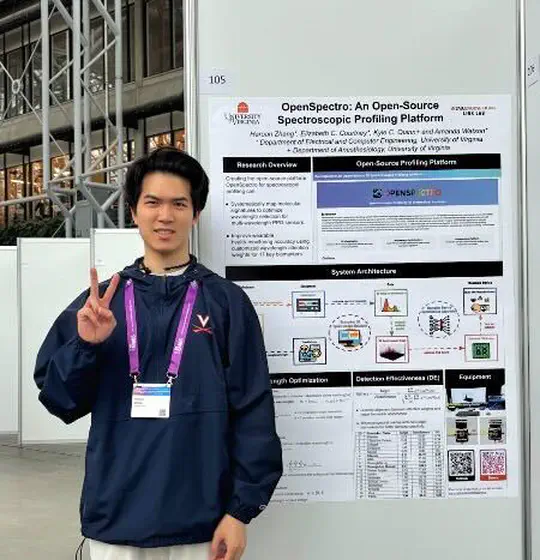
Amanda Watson is an Assistant Professor in Electrical and Computer Engineering at the University of Virginia, with joint appointments in Computer Science. She leads the Watson Research Lab within the UVA Link Lab, a multidisciplinary center for Cyber-Physical Systems (CPS) and Internet of Medical Things (IoMT) research. Her work bridges wearable technology with healthcare and athletic performance applications, focusing on noninvasive monitoring, physiological signal analysis, and safety-critical medical devices. She is also the cofounder and CEO of Luminosity Wearables, commercializing a noninvasive continuous glucose monitor. Education: PhD in Computer Science (2020) - College of William & Mary MSc in Computer Science (2016) - College of William & Mary Bachelors in Computer Science and Mathematics (2014) - Drury University Her research spans multiple domains including: Wearable spectroscopy for nutrition and skin health Machine learning for drug overdose and fall risk detection Biomechanical monitoring in sports medicine Wearable support for visual and neurological impairments IoMT device integration and analytics Recent publications (2024-2025) show strong emphasis on calibration-free physiological monitoring systems, with technical contributions in spectral analysis , multi-wavelength sensing , and rapid prototyping for healthcare wearables. Applications range from maternal health to gerontological social isolation detection. Lab and Team: The Watson Research Lab at UVA develops wearable solutions for clinical and athletic contexts, with ongoing collaborations in the PRECISE Center at University of Pennsylvania and LENS lab at William & Mary alumni network. She works with multidisciplinary teams including engineers, clinicians, and data scientists.
Michele White is a Professor of Communication at Tulane University, associated with the Program for Gender and Sexuality Studies within the School of Liberal Arts. She holds a Ph.D. from the Graduate Center, City University of New York. Her research focuses on media and visual culture, particularly the intersection of feminist, queer, and anti-racist theories with digital media technologies. She examines how digital platforms shape gendered interfaces, beauty cultures, and online hate, while exploring embodied experiences of touch and emotion through screens. White has co-edited special issues like Feminist Media Histories on 'Genealogies of Feminist Media Studies' (2018) and is co-editing Anti-feminisms in Media Culture . Her books include Producing Masculinity (2019), Producing Women (2015), and The Body and the Screen (2006). Her current projects include Touch/Screen/Theory , which investigates digital devices and embodied feelings. Her teaching spans new media studies, communication theory, and feminist critiques of digital culture. Her work critically engages with platforms like eBay, LambdaMOO, and social media, analyzing how they reflect and reproduce gender, race, and class dynamics. She addresses contemporary issues such as anti-feminist discourses, digital mourning practices, and the politics of online identity.
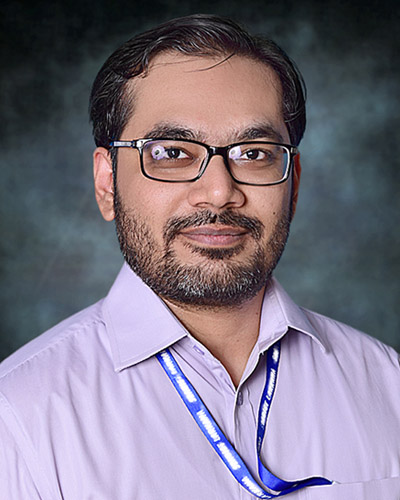
Murtaza Ahmed Siddiqi is an Assistant Professor of Computer Science at the University of Texas at San Antonio (UTSA), affiliated with the College of Sciences. His expertise spans cybersecurity, machine learning, and network intrusion detection systems (NIDS). He holds a Ph.D. in Engineering from Yeungnam University and an M.S. from Mohammad Ali Jinnah University. His research focuses on optimizing NIDS through machine learning techniques, analyzing social engineering threats, and addressing security challenges in emerging technologies like 5G, drones, and smart cities. He has published extensively on topics including feature selection methods, agile normalization approaches, and tactile internet frameworks. Dr. Siddiqi’s work bridges theoretical advancements with practical applications, emphasizing real-world security solutions. His publications highlight interdisciplinary approaches combining machine learning with network security, emphasizing efficiency and adaptability. His recent studies address IoT device security in 5G networks and vulnerability analysis in unmanned aerial systems. He actively contributes to educational and technical advancements in cybersecurity through teaching and collaborative research initiatives. His academic contributions include over 15 peer-reviewed articles since 2015, covering domains such as intrusion detection optimization, WSN security, and APT defense strategies. While no specific awards are listed, his prolific publication record reflects sustained scholarly engagement. He collaborates on grants and lab initiatives focused on improving cyber resilience in modern communication systems.
Brian Curtis is an Associate Professor of Painting at the University of Miami's College of Arts and Sciences, where he serves as Coordinator of Undergraduate Drawing and both Undergraduate Painting and Graduate Painting programs. With a career spanning over three decades at the University, Curtis has established himself as a dedicated educator and practicing artist specializing in representational painting and perceptual drawing. His research interests focus on the intersection of traditional art practices with contemporary challenges, particularly exploring perceptual drawing, sacred geometry, and the relationship between art and technology. Curtis has developed a critical perspective on postmodern approaches to art education, advocating for the continued importance of perceptual skills in artistic development while engaging thoughtfully with digital technologies. Curtis's scholarly work reveals consistent themes examining the cognitive and perceptual foundations of artistic practice. His publications, particularly the widely adopted Drawing from Observation textbook (now in its second edition), demonstrate his commitment to foundational art education. His more recent work delves into neuroscience perspectives on artistic perception, the impact of digital technologies on creative processes, and philosophical examinations of art's purpose in contemporary society. Nominated for Foundations in Art Theory and Education (F.A.T.E.) Master Educator Award (2015, 2011) Dean's Research Leave (2012) Dean's Excellence in Teaching Award (1999) Multiple Merit Awards from national exhibitions (1986-2012) Max Orovitz Summer Research Grants (1987, 1989, 1998) As an educator, Curtis has secured numerous grants supporting technological integration in art education, including funding for computer labs and digital equipment. His extensive exhibition record, with solo shows from 1979 to 2017, demonstrates his active engagement with the artistic community. Curtis has also curated exhibitions and organized professional conferences, contributing significantly to the field beyond his teaching and creative work.
Faith Holland serves as an Adjunct Associate Professor in the Foundation School at Pratt Institute, where she teaches courses related to digital media, new media art, and internet culture. She maintains a parallel career as a professional multimedia artist with exhibitions at prestigious institutions including The Whitney Museum of American Art (New York), NRW Forum (Düsseldorf), Fotografisk Center (Copenhagen), and DAM Gallery (Berlin). Her academic work directly informs and intersects with her artistic practice, creating a cohesive exploration of technology's impact on human experience. Holland's research focuses on the intersection of gender, intimacy, and technology through diverse media including sculpture, performance, video, animated gifs, and net art. Her work employs humor and tenderness to critically examine our embodied relationships with digital technologies. Key areas include feminist technology studies, queer digital spaces, internet pornography critique, and the materiality of digital interfaces. Through projects like 'Improving, Non-Stop' and 'Artist's Statement,' she offers incisive commentary on digital beauty standards and art world rhetoric. Her artistic output reveals evolving interests from early explorations of digital eroticism and internet culture to more recent investigations of artificial intelligence and machine learning systems. Works like 'Artificial Intelligence Forced to Confront Its Own Death' represent innovative approaches where she trains AI models on organic decay processes, creating conceptual frameworks for technology to imagine mortality. This progression demonstrates her sustained engagement with emerging technologies while maintaining consistent critical perspective. Holland has received significant recognition including a 2021 New York State Council on the Arts grant, NYFA Fellowship Finalist status in Digital/Electronic Art, artist residencies at Jamaica Center for Arts and Learning and Harvestworks, and being a finalist for Fotomuseum Winterthur's Post-Photography Prototyping Prize. Her work has been critically acclaimed in major publications including Artforum, The New York Times, The New Yorker, and Hyperallergic. As both an educator and practitioner, Holland occupies a unique position at the intersection of academic discourse and contemporary art practice. Her teaching at Pratt Institute and the School of Visual Arts directly incorporates her professional experience, providing students with insight into the evolving landscape of digital art and technology criticism. She is represented by Microscope Gallery, which has presented her solo exhibitions in New York.
Dr. Ye Sun is an Associate Professor in the Department of Mechanical and Aerospace Engineering and Electrical and Computer Engineering at the University of Virginia, with a concurrent appointment as Adjunct Associate Professor at Michigan Technological University. She earned her PhD in Electrical Engineering from Case Western Reserve University in 2014. Her research integrates engineering innovation with human health and behavior, focusing on wearable sensors, IoT, and cyber-physical systems for healthcare and transportation safety. Her interdisciplinary work spans: Human-centered monitoring technologies Wearable robotics and sensor networks Human-machine interaction in critical domains Data-driven solutions for healthcare and transportation Analysis of her 15 most recent publications (2022-2025) reveals dominant themes: AI-driven wearable systems (68% of articles), rehabilitation robotics (33%), biomedical signal processing (27%), and IoT-enabled health monitoring (20%). Emerging trends include physics-guided machine learning, soft robotics, and non-invasive neural interfaces. Dr. Sun has secured significant NSF funding including: NSF-CAREER-CPS (2018-2023): $500,000 for 'System-on-Cloth: Cloud Manufacturing Framework for Embroidered Wearable Electronics' NSF-TTP Supplement (2019-2023): $99,986 for commercialization of embroidered electronics NSF-ECCS (2017-2020): $330,504 for mitigating triboelectric artifacts in wearables
Benjamin Ogrodnik serves as Assistant Professor in the Department of Art and Design at Augusta University's Pamplin College of Arts, Humanities, and Social Sciences, where he teaches courses including Art History II, Art Since World War II, and specialized seminars on aesthetics and environmental art. His academic credentials include a Ph.D. in Film/Cinema/Media Studies from the University of Pittsburgh (2019), an M.A. in English Language and Literature from The Ohio State University (2011), and dual B.A. degrees in English Language and Literature and Mass Communication/Media Studies from Pennsylvania State University (2009). Ogrodnik's research critically examines experimental cinema , Latinx art practices , and avant-garde film history through lenses of gender, queerness, and spatial politics. His work consistently investigates material film processes (hand-processed, Super 8) and regional film histories, particularly in post-industrial contexts like Pittsburgh's Rust Belt. Key contributions include re-evaluating marginalized filmmakers such as Sally Dixon and Sharon Green while analyzing contemporary interventions in landscape aesthetics. His publication trajectory from 2008-2024 reveals sustained focus on recovering suppressed narratives in media art history, with recent scholarship expanding into Latinx visual culture and immersive exhibition practices. The corpus demonstrates rigorous engagement with film materiality, institutional critique, and the sexualization of cinematic space across decades of American media production.
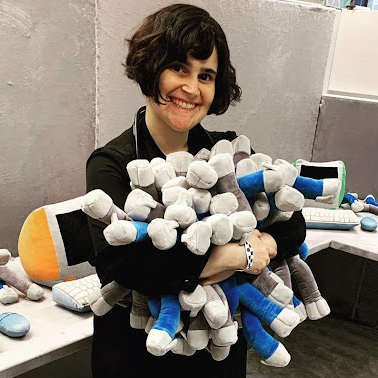
Sophia Brueckner is an Associate Professor at the University of Michigan's School of Information and Digital Studies Institute, combining speculative design with technical expertise. As co-director of the Center for Ethics, Society, and Computing (ESC), she explores algorithmic bias and human-machine relationships through interdisciplinary collaborations. Sc.B. in Computer Science and Applied Mathematics, Brown University MFA in Digital + Media, Rhode Island School of Design MS in Media Arts and Sciences, MIT Media Lab Her research spans: Wearable technology for embodied knowledge Algorithmic accountability frameworks Critique of tech industry practices Speculative design futures Breathing-performance interdependencies Digitized emotional expression Her 2017-2023 publications reveal patterns in: Human-body interface ethics Museum algorithmic bias detection Emotional data sublimation Engineering empathy integration Sonic tactile communication Computational creativity critique Awardee of $470k Biosciences Initiative grant for 2INSPIRE research. Key projects include: Bowerbot: AI curatorial behavior critique Warming Wall: Incarceration isolation mitigation ESC Swag: Tech industry ethics intervention Empathy Amulet: Networked emotional connections White Cube/Black Box: Museum algorithmic bias visualization
California State University, Long BeachUnited States
Dr. Young Ha is Professor and Area Coordinator of Fashion Merchandising & Design in the Department of Family and Consumer Sciences, College of Health and Human Services, California State University, Long Beach. Education Ph.D. in Consumer Sciences (Emphasis Fashion Merchandising), The Ohio State University M.S. in Consumer Sciences (Emphasis Fashion Merchandising), The Ohio State University B.S. in Textiles and Clothing, Hanyang University Research Interests Dr. Ha’s research bridges consumer psychology and retail technology. She investigates how consumers respond to visual and sensory cues in both physical and digital retail environments, with particular attention to: Online visual merchandising and website design quality Mobile coupon adoption, privacy trade-offs, and omni-channel shopping Social media word-of-mouth and its influence on young consumers Emotional and cognitive mechanisms underlying shopping intentions Publication Landscape Across more than fifteen years, her scholarly output has progressively tracked the evolution of digital retailing—from early studies on general Internet apparel shopping (2004) through nuanced explorations of mobile couponing (2012-2015) and recent work on interactive online learning tools (2020). The trajectory underscores a consistent focus on consumer–technology interactions, with methodological breadth spanning experimental designs, survey-based profiling, and critical literature reviews. Scientific Awards Best Paper Award (2014), American Collegiate Retailing Association (ACRA) Distinguished Paper Award (2013), Pan Pacific Business Research Conference Sara Douglas Fellowship for Professional Promise (2005), International Textiles and Apparel Association (ITAA) Layman Grant (2009), University of Nebraska Excellence in Teaching Award (2005), The Ohio State University Lois E Dickey and Esther A Meacham Endowment Research Award (2004), The Ohio State University Advising & Grants While specific doctoral or master’s advisees are not named in the provided material, Dr. Ha’s receipt of teaching and research awards, along with her coordination of the Fashion Merchandising & Design area, indicates active mentoring and curriculum leadership. Grant funding includes the University of Nebraska Layman Grant and multiple Ohio State University endowment awards that have supported her consumer-behavior research. Labs & Teams No dedicated laboratory or research group titles are supplied; however, as Area Coordinator she oversees the Fashion Merchandising & Design program and likely collaborates with interdisciplinary teams across CSULB’s College of Health and Human Services.
University of California, Los AngelesUnited States
Eddo Stern is a Professor and Chair of the Department of Design Media Arts at the University of California, Los Angeles (UCLA). He teaches courses on game design, computer game development, and physical computing in an artistic context. His work explores the intersection of physical existence and electronic simulation, focusing on themes like violence, memory, and identity. Stern is a leading advocate for independent game development and its potential as an artistic medium. His research interests span game design as cultural critique, digital art, and the synthesis of technology with traditional art forms. Key projects include Games After Life (2019) and Vietnam Romance (2015), which interrogate historical narratives through interactive media. Stern’s work has been exhibited globally at institutions like the Tate Liverpool, Sundance Film Festival, and the Walker Art Center. Notable awards include the Rockefeller Foundation New Media Fellowship and grants from Creative Capital and the Edith Russ Foundation. He co-founded the UCLA Game Lab, fostering interdisciplinary research in game studies. Stern’s creative practice spans installations, video sculptures, and collaborative game projects, often blending humor with critical analysis of technology’s societal impacts. Grants and collaborations include support from the Beall Center for Art + Technology and the University of California Institute for Research in the Arts. His work frequently addresses geopolitical themes, pop culture, and the commodification of history through participatory and immersive formats.
Alka V. Citrin is an Adjunct Lecturer in the Department of Marketing at the Scheller College of Business, Georgia Institute of Technology. She holds a Ph.D. in Marketing from Washington State University, where she received the university-wide Outstanding Teaching Assistant Award. Her research focuses on the interplay between organizational strategies (e.g., outsourcing/offshoring) and consumer behavior dynamics, particularly in digital contexts. Dr. Citrin’s academic work bridges marketing theory and practice, addressing topics such as customer relationship management (CRM) in outsourced environments, the impact of interactivity in new media, and strategic adaptability in product innovation. She has published in top journals including the Journal of Marketing Research and Journal of Product Innovation Management , and her findings have been presented globally at marketing conferences. Education: Ph.D. in Marketing, Washington State University (with Teaching Excellence Award) Industry Experience: Over 10 years in international marketing management and product development Entrepreneurship: Founder/CEO of Amazing Star Education (educational aids firm) Her research emphasizes practical relevance, exploring how firms navigate challenges like information quality in online marketing, consumer confidence during crises, and tactile experience barriers in e-commerce. Dr. Citrin’s work has contributed to frameworks for integrating customer orientation in outsourced relationships and aligning strategic flexibility with innovation outcomes. Award: Outstanding Teaching Assistant Award (University-wide recognition at Washington State University) Professional Contributions: Combines academic rigor with industry insights, advising firms on CRM strategies in globalized contexts and leveraging digital platforms for consumer engagement.
Meryem Simsek is a researcher at the International Computer Science Institute (ICSI) since 2016. She earned her Dipl.-Ing. (2008) and Ph.D. (2013) in Electrical Engineering from the University of Duisburg-Essen, Germany, as a scholar of the German National Academic Foundation. Her academic career includes a post-doctoral visiting scientist role at Florida International University (2013) and a group leadership position at the Vodafone Chair Mobile Communication Systems at Technical University Dresden (2014). She chairs the IEEE ComSoc Tactile Internet technical sub-committee and serves as secretary of the IEEE P1918.1 working group, while leading the ETSI IP6 work item on IPv6-based Tactile Internet. Education: Dipl.-Ing. in Electrical Engineering and Information Technology, University of Duisburg-Essen (2008) Ph.D. in Reinforcement Learning-Based Inter-Cell Interference Coordination, University of Duisburg-Essen (2013) Her research focuses on 5G wireless systems, resource management in heterogeneous networks, tactile internet standards, and network design optimization. She employs machine learning and reinforcement learning for self-organizing networks and ultra-reliable low-latency communication (URLLC). Her publications highlight trends in integrated access/backhaul networks, 6G xURLLC, serverless mobile computing, and IoT/metaverse convergence. Scientific Awards: IEEE Communications Society Fred W. Ellersick Prize (2015) Dr. Simsek contributes to IEEE P1918.1 standards for tactile internet, leads ETSI IP6 work items, and collaborates on 5G/6G research. She has no formal student advisement records listed but shapes wireless network innovation through her leadership roles.