Prof. Dr. Philipp Kügler is a Professor at the Computational Science Hub and Acting Director of the Institute of Applied Mathematics and Statistics at the University of Natural Resources and Life Sciences, Vienna. His research focuses on mathematical modeling of complex biological systems, particularly in cardiac and neuronal dynamics. His recent publications highlight studies on: Noise-induced arrhythmias in cardiomyocyte models Proarrhythmic effects of herbal products Stochastic bursting patterns in neuron models These works demonstrate his expertise at the intersection of applied mathematics and biomedical research.
Prof. Dr. Martin Matzner is a Professor at Friedrich-Alexander University Erlangen-Nürnberg, holding the Chair of Digital Industrial Service Systems. He studied Business Informatics at the University of Münster and Turku School of Economics, earned his doctorate in 2012 for work on service networks, and received a teaching license in Business Informatics in 2016. His research focuses on IT-supported services, business process management, and design-oriented business informatics research, with significant contributions to digital transformation and smart service systems. Current affiliation: Friedrich-Alexander University Erlangen-Nürnberg Previous roles: University of Münster (2007-2017) Key research areas: Business Process Management, Process Mining, Smart Service Systems, Predictive Analytics His recent publications emphasize predictive process monitoring using machine learning, transfer learning for cross-domain applications, explainable AI in business processes, and platform ecosystem governance . He has pioneered methods for adaptive AI control in manufacturing and context-aware process analytics , with applications spanning logistics, healthcare (ICU admission prediction), and human resources. His work bridges technical process mining with sociotechnical perspectives , particularly in algorithm adoption and ethical implications. Prof. Matzner's research has produced 15+ recent publications (2025-2024) in journals like International Journal of Production Research , Computers in Industry , and conferences including ECIS and ICIS. Topics demonstrate a progression from process efficiency optimization to human-AI collaboration and regulated AI risk assessment . His methodological toolkit spans LSTM networks , graph-based neural models , and LRP explanation techniques .
Florian Zimmermann is a Professor at the University of Bonn and Research Director at IZA. He contributes to behavioral and experimental economics, focusing on memory effects, belief formation, and motivated cognition. His work intersects with finance, climate policy, and ideology, often analyzing decision-making under uncertainty. His research includes How associative memory influences market interactions Motivated climate change denial through survey experiments Measurement of moral universalism in economic contexts Preferences for information and attention allocation Trust dynamics linked to personal experiences Scientific recognition includes the ERC Starting Grant (2020) for studying memory’s role in economic expectations. He serves as Associate Editor at the Quarterly Journal of Economics and Journal of the European Economic Association , advancing editorial excellence in top journals.
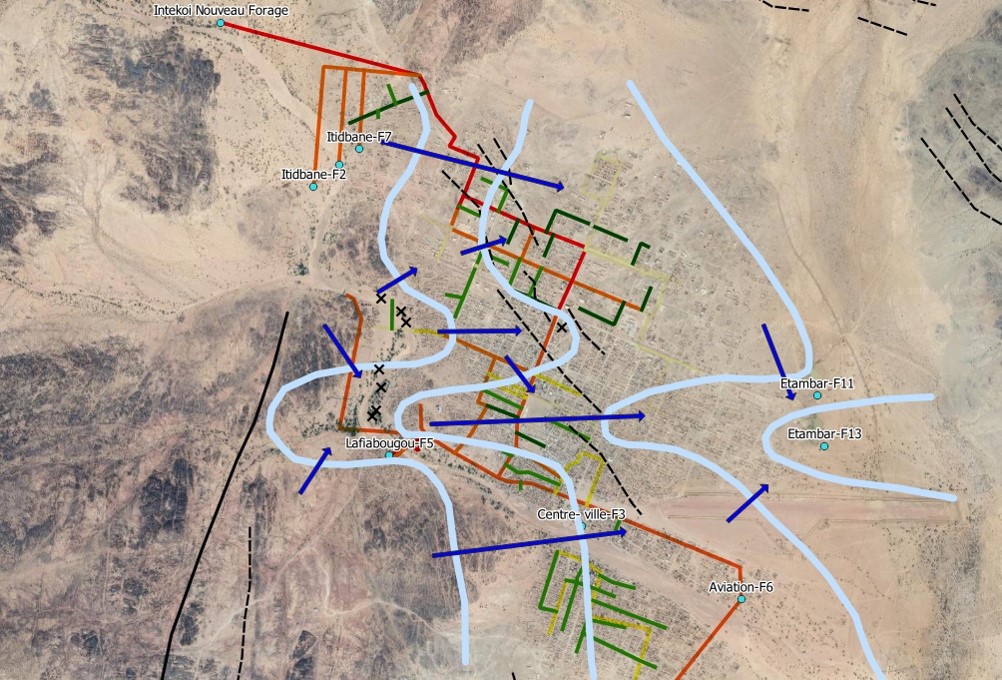
Andreas Braun is a Senior Lecturer at the Department of Geography, University of Tübingen, Germany. He leads lectures and courses on physical geography, geospatial methods, and remote sensing applications. Currently serving since January 2022, his academic responsibilities include teaching, thesis supervision, and research in geoinformatics with a focus on humanitarian response applications. PhD in Geography (2014-2019), University of Tübingen Baden-Württemberg Certificate in University Didactics (2015-2017) Professional experience at Stuttgart's Land Surveying Office (2013) His research bridges geospatial technologies with humanitarian applications, emphasizing remote sensing for environmental monitoring in refugee camps, urban structure analysis, and climate change adaptation. Key areas include SAR data utilization, geosimulation for landscape dynamics, and machine learning applications in geospatial projects. Scientific publications span topics like urban heat island effects in Vietnam, refugee camp monitoring using satellite imagery, and landscape change modeling. His work appears in journals such as IEEE Journal of Selected Topics in Applied Earth Observations , Remote Sensing , and Journal of Flood Risk Management . Teaching activities cover physical geography methods, GIS, remote sensing, and applied geoinformatics for both B.Sc. and M.Sc. programs. He supervises interdisciplinary projects connecting geography with social sciences, focusing on urban planning, climate adaptation, and environmental justice.
Dr. Viktoriia Muliavka is a Postdoctoral Researcher at the University of Bamberg's Faculty of Social Sciences, Economics, and Business Administration. She holds a Ph.D. in Sociology from the Graduate School for Social Research at the Institute of Philosophy and Sociology of the Polish Academy of Sciences (2023), an M.A. in Economy and Society from Lancaster University (2018), and a B.A. in Sociology from the National University of Kyiv-Mohyla Academy (2015). Her academic work bridges Eastern and Western European political contexts with particular expertise in Ukrainian and Polish political systems. Her research spans social inequality, political participation, labor protection, post-socialist transformations, and comparative research methodologies. Muliavka's work demonstrates particular strength in analyzing protest participation across class lines in Central Eastern and Western Europe, with a focus on working-class mobilization. Her recent publications reveal a growing specialization in Universal Basic Income policy, where she examines both theoretical frameworks and empirical implementations across European contexts. The analysis of her recent publications shows a clear trajectory from studying protest participation and social movements in post-socialist contexts toward more comprehensive policy analysis, particularly regarding social welfare systems. Her work on UBI represents a significant contribution to understanding how basic income models might function within the European social model, with attention to both political feasibility and social justice implications. Her comparative approach consistently links theoretical frameworks with empirical evidence from multiple European contexts. Dr. Muliavka maintains active research collaborations with scholars across Europe, particularly with Dominic Afscharian, Marius Ostrowski, and Lukáš Siegel on UBI-related research. Her work appears in prominent journals including Democratization , Basic Income Studies , and Social Movement Studies , as well as through policy reports with organizations like Transparency International Ukraine and the Foundation of European Progressive Studies.
Thomas Dunning serves as a Battelle Fellow with a joint appointment in the Advanced Computing, Mathematics & Data division at Pacific Northwest National Laboratory (PNNL), a U.S. Department of Energy national laboratory. His research spans computational chemistry, quantum mechanics, and high-performance computing infrastructure development. His primary research interests focus on computational chemistry methodologies , particularly in quantum chemistry software development, electronic structure theory, and molecular modeling. Dunning has pioneered advancements in correlated molecular wave function calculations, basis set development, and high-accuracy simulations for chemical systems ranging from noble gas dimers to environmental contaminants. His work bridges theoretical chemistry with practical high-performance computing applications. Dunning's publication record demonstrates consistent contributions to quantum chemistry software frameworks and benchmark methodologies, with emphasis on NWChem development, accurate potential energy surfaces, and molecular interaction modeling. His research trends show evolution from fundamental molecular physics in the 1990s toward integrated environmental and materials applications in later work. Battelle Fellow (prestigious internal PNNL recognition for exceptional scientific contributions) As a Battelle Fellow, Dunning leads critical research initiatives in computational chemistry infrastructure without documented student advisement or external grant mentions in the provided materials. His work maintains strong connections to PNNL's Environmental Molecular Sciences Laboratory and advanced computing facilities.
Matteo Esposito is a postdoctoral researcher at the University of Oulu, Finland, where he works in the M3S Cloud Group. His research focuses on the intersection of Large Language Models, Software Quality, Software Maintenance, and Software Architecture. Prior to his academic career, he served as R&D Vice Director at an Italian cybersecurity firm. Matteo earned his European Label Ph.D. in "Computer Science, Control, and Geoinformation" from the University of Rome, Tor Vergata, where he also completed his MSc Degree in Computer Science Engineering with highest honors (110 cum Laude) in October 2021. His primary research interests span several cutting-edge domains in software engineering: Secure Software Engineering and Security Artificial Intelligence and Large Language Models applications in software development Software Quality, Maintenance, and Architecture Quantum Software Engineering, a rapidly emerging field bridging classical and quantum computing Matteo's recent publications demonstrate a strong focus on applying AI techniques, particularly Large Language Models, to various software engineering challenges. His work spans multiple domains including defect prediction, security analysis, microservice architecture analysis, and quantum computing integration. A significant trend in his research is the application of network analysis methods to understand software architecture evolution and identify potential degradation points in microservice systems. Matteo is actively involved in the academic community, serving on program committees for major software engineering conferences including ESEM, ECSA, and ICSA. He has also organized workshops, such as the First International Workshop on Quantum Software Engineering: The Next Evolution (QSE-NE) co-located with FSE 2024. As a passionate educator, Matteo has served as a Teaching Assistant at the University of Rome "Tor Vergata" since 2019, instructing courses in Software Engineering and Algorithms. He is committed to promoting tech literacy, digital inclusion, and community-driven technological empowerment. Matteo is a member of the M3S Cloud Group at the University of Oulu, where he collaborates with researchers on cloud computing, microservices, and software architecture topics. His work bridges theoretical research with practical applications in mission-critical systems.
Lingling Fan is an Associate Professor (100 Young Academic Leaders of Nankai University) at Nankai University, China. Her research focuses on software security analysis, software testing and analysis, and big data-driven analysis, with significant contributions to mobile application security, particularly in Android security and accessibility. Her research interests include: Software Security Analysis, with emphasis on mobile application security and vulnerability detection Software Testing and Analysis, particularly for Android applications and accessibility issues Big Data-driven Analysis for security and quality assessment of software systems Dr. Fan's publication record shows strong trends in automated security testing, vulnerability detection in open-source ecosystems, and accessibility analysis for mobile applications. Her work spans multiple disciplines including software engineering, security, and human-computer interaction, with a particular focus on practical applications for Android ecosystem and measurable real-world impact. Her notable scientific awards include: ACM SIGSOFT Distinguished Paper Award (ASE 2022) ACM SIGSOFT Distinguished Paper Award (ICSE 2021) ACM SIGSOFT Distinguished Paper Award (ICSE 2018) Research Tool Award at NASAC 2018 National Scholarship from The Ministry of Education, China (2018) ACM SIGSOFT CAPS Award (ASE 2018) Dr. Fan has served in various academic service roles including as a program committee member for major conferences such as ASE, ICSE, FSE, and ISSRE. She has also been a reviewer for prestigious journals including IEEE Transactions on Information Forensics and Security (TIFS), IEEE Transactions on Dependable and Secure Computing (TDSC), IEEE Transactions on Software Engineering (TSE), and ACM Transactions on Software Engineering and Methodology (TOSEM).
Manuela Nagel is a prominent researcher in plant cryopreservation and seed science. She serves as Head of the Cryo and Stress Biology Working Group at the Leibniz Institute of Plant Genetics and Crop Plant Research (IPK) in Gatersleben, Germany, a position she has held since 2016. Additionally, she is a Lecturer (Privatdozentin) at the University of Hohenheim since 2019. Dr. Nagel is actively involved in several professional organizations, including serving as Working Group Chair for Plant Biobanking at the European, Middle Eastern & African Society for Biopreservation and Biobanking since 2020, Seed Symposium Convenor at the International Seed Testing Association since 2019, and Treasurer of the Gemeinschaft Deutscher Kryobanken since 2016. Dr. Nagel's research focuses on plant conservation through advanced preservation techniques. Her work spans several critical areas: Cryopreservation of plant genetic resources at ultra-low temperatures Seed longevity and storage physiology In vitro storage techniques for plant conservation Stress biology in crops, particularly related to drought and temperature Genetic resources conservation for food security Analysis of Dr. Nagel's recent publications reveals a strong focus on plant cryopreservation techniques, seed science, and genetic resource conservation. Her work spans fundamental research on plant stress responses and practical applications for preserving crop diversity. A notable trend is her increasing focus on global conservation strategies for important food crops like potato and wheat, reflecting growing concerns about climate change impacts on agricultural biodiversity. Her research combines molecular, physiological, and genetic approaches to address challenges in plant conservation. Dr. Nagel has served as a peer reviewer for numerous prestigious journals including New Phytologist (2 reviews), Plant Biology (2 reviews), and Journal of Experimental Botany, demonstrating her standing in the scientific community. As Head of the Cryo and Stress Biology Working Group at IPK, Dr. Nagel leads research on preserving plant genetic diversity through cryopreservation and other advanced techniques. Her team works on optimizing protocols for various crop species, with particular emphasis on potato, Allium species, and other important agricultural crops. The group's research is critical for maintaining global food security through the preservation of genetic resources.
Manju Puri is a Professor at Duke University's Fuqua School of Business and affiliated with the National Bureau of Economic Research (NBER). Her research focuses on banking, financial decision-making, and relationship lending. Her primary research interests include Finance , Banking , Loan Defaults , Relationship Lending , Risk Assessment , and Financial Data Analysis . Her work examines how banks use relationship-specific information to reduce loan defaults and improve lending decisions. Her recent publications analyze the impact of customer-bank relationships on loan default rates using large datasets from German banks. Her research demonstrates that banks with relationship-specific information act differently in screening and monitoring borrowers, which helps reduce loan defaults. She has found that even establishing a simple savings or checking account and observing activity prior to loan granting can significantly reduce default rates. Her work has been highly cited in the field of banking and finance, particularly in understanding how information asymmetry affects lending practices.
Dr. Jörg Pohle is a PostDoc researcher at the Humboldt Institute for Internet and Society (HIIG) where he heads the research programme 'Data, actors, infrastructures: The governance of data-driven innovation and cyber security' and the 'Global Privacy Governance' project. His interdisciplinary work bridges Informatics, Law, and Sociology, focusing on data protection theory and practice, privacy governance, and the societal implications of digital technologies. Pohle completed his doctorate at Humboldt-Universität zu Berlin with a dissertation on the history and theory of data protection and its implications for ICT system design. His academic background spans Law, Political Science, and Computer Science, with early work examining security of voting computers and related security discourse. His research interests include the intersections of Informatics and Law, Informatics and Sociology, modellification processes, and data protection by design. He has developed critical frameworks like 'Welt → Modell → Technik → Welt' for analyzing how power structures become embedded in sociotechnical systems. His work often takes historical perspectives on data protection debates while addressing contemporary challenges in technology governance. Analysis of his recent publications reveals a strong focus on translating data protection principles into practical applications, particularly in healthcare contexts like nursing care and pandemic response. His research increasingly addresses AI governance challenges, examining large language models' impact on scientific practices and developing legal design patterns for law-technology translation. He advocates for freedom-preserving approaches to digital governance and information separation of powers in digital environments. Pohle serves as a board member of the Working Group on Digitalization as a Challenge for Sociological Theory within the German Sociological Society. He has contributed to significant research projects including 'Strengthening Digital Skills through Micro-Credentials,' 'DUCAH @ HIIG,' and 'Making Repositories and AI Systems Usable in Everyday Nursing Care.' He is a prolific organizer of the annual Interdisciplinary Workshop on Privacy, Data Protection & Surveillance and regularly contributes to policy discussions through media appearances in Handelsblatt, Leipziger Volkszeitung, and specialized podcasts examining the intersection of IT and law.
Michael Lyu is a Professor at The Chinese University of Hong Kong specializing in software engineering with a focus on cloud reliability, AIOps, and log analysis. His research bridges the gap between theoretical advances and practical industrial applications in large-scale cloud systems. His research interests span Software Engineering , Cloud Computing Reliability , AIOps , and Log Analysis . Dr. Lyu's work addresses critical challenges in modern cloud operations, including failure diagnosis, anomaly detection, and reliability engineering. His recent research has pivoted toward leveraging large language models for software engineering tasks, particularly in code generation and log analysis. His publication portfolio demonstrates consistent contributions to major software engineering conferences (ASE, ICSE, ESEC/FSE) from 2018-2025, with a noticeable increase in LLM-related research since 2023. The trend shows a clear evolution from traditional software engineering topics toward AI-driven approaches for cloud operations. ICSE 2021 Keynote: "Reliability-Driven AIOps for Cloud Resilience" ASE 2023: Maat: Performance Metric Anomaly Anticipation for Cloud Services ASE 2024: LILAC: Log Parsing using LLMs with Adaptive Parsing Cache Dr. Lyu actively mentors students, with numerous co-authored publications showing his advisees as first authors. His work receives significant attention in both academic and industrial software engineering communities, addressing practical problems faced by large-scale cloud service providers. His research group appears focused on developing data-driven approaches for improving cloud system reliability through advanced analytics of logs, traces, and KPIs.
Dr. Patrick Nell serves as Junior Group Leader of the Regulatory Networks of Stem Cell Differentiation research group at the Leibniz Research Centre for Working Environment and Human Factors (IfADo) at TU Dortmund University since 2022, operating within the Toxicology department under Department Head Prof. Dr. Jan G. Hengstler. His academic training includes a B.Sc. in Biology with medical specialization from Radboud University Nijmegen (2009-2014), an M.Sc. in Molecular and Developmental Stem Cell Biology from Ruhr University Bochum/Tongji University Shanghai (2014-2016), and a Ph.D. in Stem Cell Technology, Liver Physiology, and Transcriptional Regulatory Networks from IfADo (2016-2021). Nell's research centers on stem cell differentiation mechanisms, particularly using iPSC-derived hepatocyte-like cells to model liver development, toxicity, and disease. His work integrates transcriptomics, regulatory network analysis, and bile acid metabolism to develop advanced in vitro testing systems for toxicology, with emphasis on endocrine disruptors, cholestatic injury, and liver-intestine crosstalk. His 14 publications (2018-2025) reveal consistent focus on stem cell-based toxicology models, including studies on bisphenols, parabens, and bile acid transporters. Key contributions include biomarker discovery for hepatotoxicity, FXR-modulated hybrid cell states, and roadmaps for regulatory acceptance of stem cell testing methods. The Regulatory Networks of Stem Cell Differentiation group employs stem cell engineering, transcriptomics, and bioinformatics to advance predictive toxicology models and regenerative medicine applications, maintaining strong collaborations across international research networks.
Prof. Dr. Gisela Degen is a Professor and Scientific Associate in Systemic Toxicology at the Leibniz Research Centre for Working Environment and Human Factors (IfADo) at Technical University of Dortmund, Germany. Her research focuses on mycotoxin exposure assessment through biomonitoring, particularly examining aflatoxins and ochratoxin A in vulnerable populations including infants, nursing mothers, and occupational groups in both developed and developing countries. Her primary research interests include: Mycotoxin exposure assessment through biomonitoring Aflatoxin and ochratoxin A metabolism and toxicokinetics Human exposure pathways in different populations Species differences in toxin metabolism Impact of mycotoxins on developmental processes Prof. Degen's recent work demonstrates increasing sophistication in analytical approaches, with multiple publications utilizing HPLC-MS/MS for precise biomarker measurement and exploring molecular mechanisms of toxin distribution. Her research shows strong international collaboration, particularly with Bangladeshi researchers, examining exposure patterns in resource-limited settings. She has contributed to handbook chapters on environmental medicine and participated in scientific consensus statements on endocrine-disrupting chemicals. Her scientific contributions span numerous high-impact publications in toxicology journals including Archives of Toxicology and Mycotoxin Research. She has served on advisory committees including the Scientific Committee on Consumer Safety (SCCS), contributing to regulatory discussions on chemical safety.
Dr. Liming Zhu serves as Research Director at CSIRO's Data61 and conjoint full professor at the University of New South Wales (UNSW), where he leads research in AI/ML infrastructure, responsible AI, and software engineering. He chairs Standards Australia's blockchain committee and contributes to AI trustworthiness initiatives through the National AI Center's Responsible AI think tank. His research interests span software architecture , responsible/ethical AI , blockchain , quantum software , and cybersecurity . Recent work focuses on reference architectures for foundation model systems, guardrail frameworks for AI safety, and vulnerability analysis tools. His publications demonstrate strong emphasis on bridging ethical principles with practical implementation in AI systems. His recent publications (2024-2025) reveal concentrated research on generative AI safety frameworks, architectural patterns for foundation model agents, and blockchain applications for software supply chain security. Key themes include multi-layered AI safety mechanisms, human-AI collaboration models, and vulnerability tracing methodologies. Professional contributions include: Chairperson of Standards Australia's blockchain committee Member of AI trustworthiness-related committees Member of Responsible AI think tank at National AI Center Steering Committee Member for AIware 2025 Dr. Zhu has supervised over 20 PhD students and taught software architecture courses at UNSW and University of Sydney. His leadership extends to conference organization, serving as General Chair for ICSSP 2023 and Steering Committee Member for multiple conferences including AIware, CAIN, and ICSA.