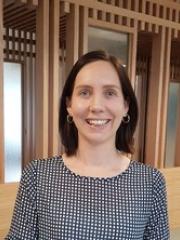
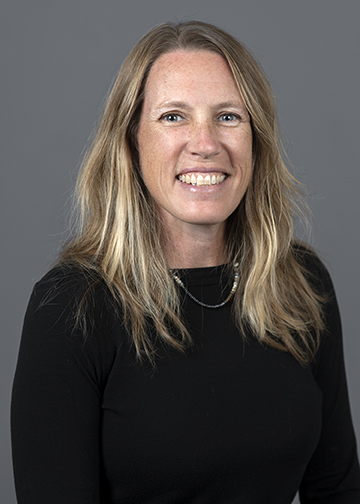
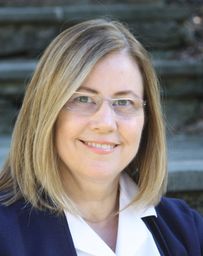
Timothy Cootes is a Research Professor at the University of Manchester's Division of Informatics, Imaging & Data Sciences. He holds an MSc teaching role in Mathematical Methods and has led projects like BoneFinder and ASPIRE™. His research focuses on statistical models for medical image analysis, facial interpretation, and musculoskeletal disease diagnosis. Education: Bachelor's in Maths and Physics from Exeter University PhD in Civil Engineering (storm sewer overflow) from Sheffield City Polytechnic Research Interests: Statistical shape/appearance models for medical imaging Machine learning applications in osteoporosis/osteoarthritis analysis Facial feature tracking and recognition systems Groupwise image registration techniques Awards: 2015 ISBI Grand Challenges Prize 2010 IAPR Fellowship 2023 Highly Commended Oral Presentation Collaborations: Dr. Paul Bromiley (medical imaging) Dr. Claudia Linder (musculoskeletal projects) Dr. Adrian Davison (facial recognition) Key Impacts: Developed Active Appearance Models (AAMs) for facial recognition Co-created BoneFinder automated bone analysis software Contributed to global osteoarthritis risk assessment frameworks
Davin Wallace is an Associate Professor at the University of Southern Mississippi's School of Ocean Science and Engineering, where he investigates coastal and marine system responses to storms, sea-level rise, and sediment dynamics across timescales ranging from days to millennia. His research employs field observations, laboratory analyses, and numerical modeling, with active sites across the Gulf of Mexico, Bermuda, and the Philippines. Education: Ph.D. in Earth Science, Rice University (2007-2010) B.S. in Geology and German, Tulane University (2003-2006) Research Focus: Dr. Wallace's work bridges paleotempestology, coastal geomorphology, and sedimentary processes. His research examines hurricane impacts on sediment structures, barrier island resilience under sea-level rise, and Holocene coastal evolution. He specializes in reconstructing historical storm patterns using geologic proxies and assessing anthropogenic influences on coastal erosion. Publication Trends: His recent articles demonstrate interdisciplinary approaches to coastal vulnerability, combining geophysical data, machine learning, and multiproxy sediment analysis. Work consistently addresses climate change impacts, with emphasis on sedimentation mechanisms during extreme events and Quaternary landscape evolution. Scientific Recognition: No major awards documented in provided sources. Academic Leadership: Leads the USM Coastal Evolution and Hazards Research Lab, supervising field campaigns and collaborative projects. Secured grants for Gulf Coast studies from NSF and NOAA. Mentors graduate students in geological oceanography programs and coordinates international research teams across field sites.
Megan Steele is an Honorary Senior Research Fellow at the University of Queensland's School of Public Health. Her research focuses on public health interventions, mental health in forensic settings, cancer survivorship, and Indigenous health equity. She contributes to initiatives like the Aboriginal and Torres Strait Islander Impact Strategy and collaborates with law enforcement and healthcare agencies to improve crisis response and patient outcomes. Key research areas include forensic mental health patients' physical activity, suicide crisis interventions, and substance use among justice-involved youth. Her work integrates data linkage studies and systematic reviews to address healthcare gaps in vulnerable populations. She has co-authored over 70 publications spanning oncology, neuroprotection, and public health policy. Her recent studies highlight innovative methods like bioimpedance spectroscopy for lymphedema diagnosis and explore exercise safety in cancer survivors. Collaborations with German oncology centers inform integrative therapy approaches. While no formal awards are listed, her extensive publication record demonstrates significant scholarly impact. Advising and grant details are not explicitly stated, but her involvement in multi-disciplinary projects suggests active team-based research. She contributes to initiatives like the Mental Health and Climate Change Research Network and Public Health Connect platform, fostering cross-sectoral partnerships.
Mark Harris is an Associate Professor and Interim Department Chair in the Department of Cyber Security at Augusta University's School of Computer and Cyber Sciences. He holds a Ph.D. in Business/Commerce and Management Information Systems from Virginia Commonwealth University, along with multiple other degrees. His research focuses on socio-behavioral aspects of information security, particularly trust-based models influencing technology adoption (e.g., mobile payments, telemedicine). He has received awards including the Augusta University Graduate School Distinguished Service Award (2020) and SCCS Outstanding Faculty Award (2020). Education: Ph.D., Business/Commerce & MIS, Virginia Commonwealth University (2010) MS, Business, Old Dominion University (2003) BSBA, Management Information Systems, Old Dominion University (1999) Recent Research Trends: Recent publications emphasize trust frameworks in telemedicine adoption, mobile payment systems, and cybersecurity compliance strategies. His work bridges behavioral psychology with technological adoption barriers, frequently using empirical reviews to identify gaps in theoretical models. Awards & Service: Recipient of 2018 International Journal of Information Management Review Excellence Award Curriculum Sub-Committee Member at Augusta University's Graduate School Editorial Board Member for International Journal of Information Management Teaching & Leadership: Serves as Director of the Master’s in Information Security Management Program (2016–2022) and currently chairs multiple university committees. Teaches graduate courses on information security research and legal issues in cybersecurity.
Dr. Diana M. Falkenbach is a tenured Associate Professor in the Psychology Department at John Jay College of Criminal Justice, City University of New York (CUNY), and Director of the M.A. program in Forensic Psychology. She holds a PhD in Clinical Psychology from the University of South Florida, an MS in Counseling from Georgia State University, and a BA in Psychology from Emory University. Her research focuses on psychopathy, aggression, and assessment methodologies, with special attention to diverse populations including women, juveniles, and noncriminal groups. Current projects explore psychopathic traits in police, FBI, and corporate settings. She has contributed to peer-reviewed journals and authored chapters in forensic psychology and criminology. Education : PhD in Clinical Psychology, University of South Florida (2004) MS in Counseling, Georgia State University (1996) BA in Psychology, Emory University (1994) Research Interests : Dr. Falkenbach’s work examines the etiology of psychopathy, aggression, and the development of assessment tools. She investigates psychopathic traits in understudied groups, including women and juveniles, and explores the overlap between criminal psychopathy and “successful” adaptations in professions like policing and corporate roles. Her recent studies address cross-cultural variations in psychopathy and the validity of aggression assessment instruments. Publications : Over 15 peer-reviewed articles and book chapters since 2001, focusing on psychopathy subtypes, forensic assessment, and aggression. Key themes include psychopathy’s relationship with professional success, emotional intelligence, and malingering in criminal defendants. Labs/Teams : Directs the M.A. program in Forensic Psychology at John Jay, fostering graduate training in forensic research and clinical practice.
Nabil Kahale is an Associate Professor of Finance at ESCP Business School in Paris. His research focuses on financial derivatives, Monte Carlo methods, optimization, and machine learning. He holds a PhD in theoretical computer science from MIT (1993) and an HDR (French habilitation) from Université Paris 1 Panthéon-Sorbonne (2020), enabling him to supervise PhD students. His academic career includes prior roles in theoretical computer science and consulting for banks. He has published widely in top journals such as Mathematical Finance , Management Science , and SIAM Journal on Computing . Education: Bachelor of Science in Engineering, École Polytechnique (1987) PhD in Theoretical Computer Science, MIT (1993) HDR in Economics, Université Paris 1 Panthéon-Sorbonne (2020) Research Interests: His work bridges finance and computational methods, emphasizing practical applications of stochastic models and algorithmic efficiency. Key areas include derivative pricing, risk management, and the integration of machine learning into financial systems. Professional Contributions: He has served as a consultant for banking institutions and a referee for the French Ministry of Economy and Finance. His research also intersects with social and economic policy analysis, such as evaluating the economic impact of public health measures. Labs/Teams: While no specific lab affiliation is mentioned, his collaborations span interdisciplinary teams in finance, computer science, and applied mathematics through his publications and consulting work.
Barry Williams is an Associate Professor in the Department of Banking and Finance at Monash University. Previously, he held roles at Bond University as a Professor of Finance and founding Co-Director of the Globalisation and Development Center. He also serves as a Visiting Research Professor at the KOF Swiss Economic Institute (ETH Zurich) and collaborates with the Australian Prudential Regulation Authority (APRA). His academic journey includes prior positions at The University of Queensland and Monash University, preceded by experience in the State Bank of Victoria's Economics Department. Education: PhD in Finance (date unspecified), MCom in Economics from the University of Melbourne (1987–1991), and BEc in Economics from La Trobe University (1985). Research focuses on banking industry dynamics, including bank performance, risk, and multinational operations. Key areas include non-interest income impacts, systemic risk, and cross-border banking efficiency. His work explores regulatory frameworks, capital buffers, and crisis management in global contexts. Notable collaborations span Asia-Pacific regions and involve studies on foreign bank efficiency and governance. Recent articles highlight bankruptcy resolution mechanisms, bank risk dynamics, and capital structure strategies. His projects include analyzing foreign bank contributions in Australia and investigating national governance effects on financial stability. Barry actively supervises PhD students and maintains affiliations with leading institutions in finance and economics. Professional contributions include advisory roles at APRA and KOF, emphasizing policy-relevant research. His interdisciplinary approach bridges theoretical frameworks with practical banking challenges, influencing both academic discourse and regulatory practices.
Antonis Papapantoleon is a Professor of Mathematical Finance at the Delft Institute of Applied Mathematics (DIAM), part of the Faculty of Electrical Engineering, Mathematics and Computer Science (EEMCS) at TU Delft. He is also affiliated with the Delft FinTech Lab and serves as an Affiliated Researcher at the Institute of Applied and Computational Mathematics (IACM), FORTH. Previously, he held roles including Assistant Professor at the National Technical University of Athens (NTUA), Juniorprofessor at TU Berlin (2011–2017), and Deputy Professor at the University of Mannheim (2016–2017). His research focuses on stochastic systems, Lévy processes in finance, term structure/LIBOR modeling, systemic risk management, model-free methods, and applications of machine learning in finance. Key contributions include advancements in affine LIBOR models, systemic risk analysis, and copula-based risk allocation. His work has been published in top journals like Annals of Applied Probability , Mathematical Finance , and Finance and Stochastics . His research has been supported by the Hellenic Foundation for Research and Innovation (HFRI), Europlace Institute of Finance, DAAD, MATHEON, and private corporations. He has delivered invited talks globally and co-edited Advanced Modelling in Mathematical Finance (Springer, 2016). Current affiliations include leadership in the Delft FinTech Lab and active participation in international collaborations. His work bridges theoretical stochastic analysis with practical financial applications, emphasizing robust frameworks for risk measurement and derivatives pricing.
Alan Mislove is a Professor of Computer Science at Northeastern University and serves as Senior Associate Dean for Academic Affairs and Interim Executive Director of the Institute of Experiential Artificial Intelligence (EAI). He is also a core faculty member of the Cybersecurity and Privacy Institute and EAI at Northeastern. His research focuses on algorithmic auditing, fairness, and privacy in online systems. Notably, he has testified before Congress on algorithmic discrimination, challenged the CFAA in ACLU litigation, and contributed to landmark FTC and DOJ cases against Meta. His work has been funded by the NSF, Army Research Office, Google, and Amazon Web Services. Mislove’s academic leadership includes roles in Khoury College, where he supports over 2,000 students and faculty. He has advised numerous PhD students, including current research scientist Piotr Sapieżyński. His lab explores algorithmic transparency, PKI security, and middlebox traffic differentiation. Key awards include the 2017 ACM SIGCOMM Test of Time Award and recognition for work on QUIC protocol evaluation. He has authored over 150 publications, including seminal studies on Facebook ad discrimination and Uber’s surge pricing. His teaching spans systems, networks, and social computing courses, emphasizing experiential learning. Mislove actively serves on program committees for IMC, PETS, and other top conferences, and contributed to policy as Deputy U.S. CTO for Privacy (2023–2024).
Steven De Haes is the Dean of Antwerp Management School and a Full Professor of Digital Strategy & Governance at the University of Antwerp. He specializes in IT governance, digital transformation strategies, and enterprise architecture. His research focuses on bridging IT strategy with organizational goals, emphasizing accessibility and sustainability in digital technologies. Roles: Dean, Professor, Academic Director of executive programs (IT Governance, Cyber Security, Data Science). Research: Published in international journals and co-authored books like "Enterprise Governance of IT" and "Governing Digital Transformation" . Leadership: Former Director of Research and Associate Dean at Antwerp Management School (2008–2018). Expertise: IT strategy alignment, digital transformation governance, and COBIT framework development. His work highlights the importance of board-level engagement in IT decisions and the ethical implications of emerging technologies like AI. He collaborates with organizations like PWC and Samsung Belgium to advance sustainable digital practices.
Marit Christensen is a Professor of Work and Organizational Psychology at the Norwegian University of Science and Technology (NTNU), Department of Psychology. She is affiliated with the Centre for Health Promotion Research and has led several Nordic and EU-funded projects, including the H2020 project 'H-work' focusing on mental health interventions in SMEs and public workplaces. Her research focuses on occupational health, work engagement, organizational interventions, and psychosocial working environment tools like the ARK program. She holds a doctoral degree from NTNU (2012) on work demands/resources and health. Key projects include developing the ARK program for university psychosocial environment mapping, leading the H2020 H-work initiative, and cross-cultural studies on healthy workplaces with UC Berkeley and the University of Sheffield. She collaborates with international institutions like the University of Tampere and Han University of Applied Sciences. Her research emphasizes mental health promotion, leadership impact, and work-life balance, particularly during crises like the pandemic. She has authored over 50 peer-reviewed articles and book chapters, focusing on burnout assessment (BAT tool), multilevel interventions, and workplace adaptation strategies. Her work addresses organizational challenges in healthcare sectors, academic environments, and SMEs, advocating for participatory health promotion strategies and evidence-based practices. She has contributed to policy recommendations for sustainable workplace interventions.
Diane M. Styers is an Associate Professor in the Department of Geosciences and Natural Resources at Western Carolina University's College of Arts and Sciences. Her work integrates geospatial technologies with community engagement to address global climate resilience challenges through human-centered research approaches. Her educational qualifications include: Postdoctoral Research in Remote Sensing and Geospatial Analysis, University of Washington Ph.D. in Forest Ecology, Auburn University M.A. in Geography, Georgia State University B.S. in Human Development & Family Studies, University of North Carolina at Greensboro Dr. Styers specializes in public participatory GIS (PPGIS) to incorporate local landscape knowledge into climate adaptation strategies. Her technical expertise spans LiDAR data analysis, object-based image analysis (OBIA), MODIS/Landsat time series, multi-sensor integration, forest ecology, and dendroecology. She investigates how social-ecological processes drive landscape changes affecting Earth's resources, with particular focus on community resilience against climate-related risks. Her publication record reveals strong thematic trends in applying geospatial methods to socio-ecological systems, with increasing emphasis on rivercane conservation, forest community dynamics in Appalachia, biodiversity education using NEON data, and vector-borne disease mapping. Recent works demonstrate sophisticated integration of remote sensing with community-based adaptation frameworks. Dr. Styers actively mentors students through co-authored publications and teaches diverse courses including Introduction to Geospatial Analysis, Remote Sensing, GIS applications, and field-based programs like Sustainability in Costa Rica. Her instructional approach emphasizes authentic science engagement using big data resources.
Anja Feldmann is Director at the Max Planck Institute for Informatics in Saarbrücken and Professor of Internet Network Architectures at Technische Universität Berlin (since 2006). Previously she held a full professorship at Technische Universität München (2002–2006) and conducted research at AT&T Labs Research , Saarland University , and Carnegie Mellon University , where she earned her Ph.D. in 1995. Education Ph.D. in Computer Science, Carnegie Mellon University, 1995 M.Sc. in Computer Science, Carnegie Mellon University, 1991 Diplom in Computer Science, Universität Paderborn, 1990 Research Interests Anja Feldmann’s research centers on measurement-driven understanding of the Internet. She tackles challenges such as software-defined networking , cloud-network interactions , performance debugging , and traffic characterization . A growing focus is the privacy and security of networked systems, evidenced by recent studies on online tracking, DNS security, and disinformation ecosystems. Her group designs scalable measurement platforms that combine passive and active monitoring , programmable data planes , and machine-learning analytics to dissect phenomena ranging from terabit-scale traffic to covert tracking on illegal streaming sites. Recent Publication Themes The 2021-2025 publications reveal a methodological evolution toward large-scale, longitudinal measurement . Topics include: Impact of global events (COVID-19, CrowdStrike outage) on Internet traffic Cross-country tracking ecosystems and privacy leaks DNS root and routing plane stability and security ML-driven real-time monitoring at terabit speeds Disinformation campaigns on encrypted messaging platforms Scientific Awards Gottfried Wilhelm Leibniz Prize (2011) – Germany’s highest research honor Berliner Wissenschaftspreis (2011) Elected Member of the German National Academy of Sciences Leopoldina (2009) Advising & Grants While individual student names are not listed, Prof. Feldmann leads a vibrant team at MPI-INF’s Internet Architecture department. She has supervised numerous doctoral candidates and post-doctoral researchers whose work is reflected in the co-authored papers. Funding sources include the German Research Foundation (DFG) via the Leibniz Prize and EU Horizon projects, although explicit grant numbers are not provided in the source material. Labs & Teams She heads the Internet Architecture department at MPI-INF, located at the Saarland Informatics Campus . The department operates state-of-the-art measurement infrastructure—including programmable switches, honeynets, and global vantage points—to support empirical network science.
Marianne Baxter is Professor of Economics at Boston University, specializing in macroeconomics, international finance, and business cycle analysis. Her research examines global economic interactions including risk-sharing mechanisms, consumption-investment dynamics, and pricing strategies in international markets. Major research streams investigate household consumption patterns across different wealth groups, exchange rate pass-through in retail pricing (notably IKEA case studies), and determinants of bilateral trade flows. Her work integrates theoretical modeling with empirical analysis using firm-level and household datasets. Professor Baxter teaches international macroeconomics and finance courses. She has contributed methodological frameworks for analyzing saving-investment correlations and terms of trade fluctuations.
Efthimios S. Skordas is an Associate Professor of Experimental Solid State Physics at the Department of Physics, National and Kapodistrian University of Athens. Born in Lefkada, Greece in 1960, he holds a Mathematics degree (1984) from the University of Crete and a Doctorate (1992) from Uppsala University, Sweden. His research focuses on seismicity analysis through the lens of natural time analysis, complex systems, and non-extensive statistical mechanics. University of Crete (1984, Mathematics) Uppsala University (1992, Doctorate) His work demonstrates deep expertise in earthquake prediction, detection of pre-seismic anomalies through geoelectric/magnetic field variations, and entropy dynamics under time reversal. Recent publications highlight applications of natural time analysis to diverse domains including cardiovascular health monitoring. He has authored over 120 peer-reviewed publications and two monographs, with an h-index of 32. Skordas' research bridges geophysics with interdisciplinary applications, showing particular emphasis on entropy fluctuations, order parameter analysis, and multi-scale seismicity patterns. His laboratory contributes to understanding the physical interconnection of seismic electric signals with earthquake dynamics.