Greg Morrisett is the Jack and Rilla Neafsey Dean and Vice Provost of Cornell Tech, a graduate campus in New York City focusing on technology, business, law, and design. Previously, he served as Dean of Computing and Information Sciences at Cornell University and held the Allen B. Cutting Chair in Computer Science at Harvard University (2004–2015). He earned a B.S. from the University of Richmond and M.S./Ph.D. from Carnegie Mellon University. His research focuses on programming language technologies for secure, reliable software systems, including typed assembly language, proof-carrying code, and provably correct compilers. Notable projects include CertiCoq, GoNative, and CRASH-SAFE. He is an ACM Fellow and recipient of awards such as the Presidential Early Career Award and NSF Career Award. He has advised over 17 PhD students and mentored numerous postdocs. His work spans formal verification, cryptographic protocols, and secure systems design. Morrisett has served on editorial boards for journals like Communications of the ACM and advisory councils for NSF, DARPA, and Microsoft Research. Current research includes formal verification of cryptographic protocols with the INRIA Prosecco Team and advancing compiler correctness through projects like CertiCoq.
Veijo Vaakanainen is a University Lecturer of Swedish at the Centre for Language and Communication Studies, University of Turku (since 2023). His roles include teaching Swedish for medical and economics students, designing language courses, and integrating AI into pedagogy. He previously held part-time teaching positions at the University of Turku’s Department of Scandinavian Languages and German, as well as Åbo Akademi University’s Swedish Department (2016–2023). His expertise spans second/third language acquisition, cross-linguistic influence, and digital tools in education. Education: PhD in Scandinavian Languages from the University of Turku (2016–2025), funded by Svenska kulturfonden and Svenska litteratursällskapet i Finland. Earlier roles include secondary school teaching (2018–2019) and research on formulaic sequences in learner languages (2017). Research focuses on connectors in L2 Swedish writing, leveraging Systemic Functional Linguistics and keystroke logging. He explores multilingualism, AI applications in language learning, and effective digital pedagogy. Recent work includes analyzing connector usage dynamics in Swedish and German learner texts, and developing interactive learning materials using QR codes and gamification. Teaching innovations include AI-integrated language courses and collaborative digital projects. He emphasizes student-centered approaches, evidence-based methods, and ethical sustainability in education. No scientific awards are explicitly listed, but his work has been supported by prestigious Finnish cultural and literary foundations.
Max S. New is an Assistant Professor in Computer Science & Engineering at the University of Michigan, affiliated with the MPLSE research community . He works on the mathematical foundations of programming languages, focusing on Gradual Typing , Category Theory , Secure Compilation , and Effect Handlers . His research bridges formal methods with practical language design. Educational background : PhD in Computer Science, Northeastern University (2020) Postdoctoral Research, Wesleyan University (with Dan Licata) Max's recent work explores the intersection of Dependent Lambek Calculus and parsing verification, Synthetic Guarded Domain Theory for gradual typing semantics, and Relative Monads in computational models. His publications span top venues like PLDI , POPL , and ICFP , emphasizing formal verification and category-theoretic abstractions. He has served as Committee Member in OOPSLA and POPL, Session Chair for type systems tracks, and Program Co-Chair for HOPE workshops. His PhD students include Eric Giovannini, Steven Schaefer, and Jesse Slater (co-advised with Xinyu Wang).
Dr. Xiaolin Zhou serves as the Director of the Center for Brain and Cognitive Sciences and Chair of the Department of Psychology at Peking University in Beijing, China, holding dual leadership roles that underscore his prominence in cognitive neuroscience and academic administration. His educational trajectory includes: Bachelor's degree from East China Normal University Ph.D. in Psychology of Language from the University of Cambridge (awarded 1992) Zhou's research spans cognitive neuroscience with emphases on language processing, emotion regulation, attentional mechanisms, and social cognition. His methodological approach integrates neuroimaging (fMRI, ERP) and behavioral paradigms to investigate neural substrates of cognition, particularly examining clinical populations with chronic pain, Parkinson's disease, and aggression disorders. His work bridges theoretical cognitive models with clinical applications. Analysis of recent publications reveals a cohesive interdisciplinary framework where language processing intersects with social decision-making and clinical neuroscience. His team consistently employs multimodal neuroimaging to dissect how reward systems modulate emotional responses and how cortical networks adapt in pathological conditions, establishing China as a significant contributor to global cognitive neuroscience. Editorial leadership includes Specialty Chief Editor for Psychology of Language at Frontiers in Psychology and Associate Editor for Cognitive Neuroscience at Frontiers in Human Neuroscience, reflecting his influence in shaping scholarly discourse. As Director of the Center for Brain and Cognitive Sciences, Zhou oversees a multidisciplinary research ecosystem integrating psychology, neuroscience, and clinical applications, fostering collaborations that advance China's cognitive neuroscience infrastructure through cutting-edge brain imaging and behavioral research facilities.
Adele Goldberg is the Moses Taylor Pyne Professor of Psychology and Associate Chair at Princeton University. She leads the Psychology of Language Lab, where she conducts research on the usage-based constructionist approach to language, emphasizing emergent generalizations based on construction functions, input statistics, and domain-general cognitive processes. Dr. Goldberg's research spans construction grammar, language acquisition, metaphor processing, autism and language, neurolinguistics, and computational linguistics. Her groundbreaking work demonstrates that humans learn language through general cognitive processes rather than language-specific knowledge. She has shown that knowledge of language consists of form-function correspondences (constructions) and that conventional metaphors are more emotionally engaging than literal paraphrases, as evidenced by increased amygdala activation in fMRI studies. Her research on autism has revealed challenges faced by autistic individuals in language learning, particularly regarding flexible extension of word meanings and processing complex word meanings. She has extensively studied statistical preemption in language learning - how speakers learn to constrain generalizations based on the frequency of competing alternatives. Her work with Boyd demonstrated that younger children are less likely to generalize abstract constructions compared to older learners when exposed to the same input. Moses Taylor Pyne Professor of Psychology, Princeton University Associate Chair, Department of Psychology Director, Psychology of Language Lab Dr. Goldberg has mentored numerous students including Abby Fergus and collaborates extensively with researchers like Sammy Floyd, Arielle Belluck, and Karina Tachihara. Her recent work explores parallels between usage-based constructionist approaches and large language models, examining how both human and artificial systems learn from statistical patterns in language input.
Dr. Luke Adamson is a tenure-track Researcher in Research Area 3 'Syntax and Lexicon' at the Leibniz-Zentrum Allgemeine Sprachwissenschaft (ZAS), Berlin. Previously, he held a Postdoctoral Fellowship at Harvard University (2020–2022) and served as Lecturer at Rutgers University (2022–2023). He earned his PhD in Linguistics from the University of Pennsylvania (2019) and holds dual degrees from Oberlin College: a Bachelor of Arts in Psychology and a Bachelor of Music in Cello Performance (2010–2014). His research focuses on nominal features, grammatical gender, and syntactic modularity, with notable projects exploring gender locality hypotheses, coordination resolution in three-gendered languages, and suppletion phenomena. Collaborators include prominent linguists such as Elena Anagnostopoulou (University of Crete), Ruth Kramer (Georgetown University), and Stanislao Zompì (Universität Potsdam). Key contributions include work on gender assignment constraints in languages like Greek, Swedish, and Lithuanian, as well as syntactic interfaces in Jarawara and Italian. Recent presentations include invited talks at the University of Geneva (June 2025), Yale University (October 2024), and the Brussels Conference on Generative Linguistics (December 2024). He co-edits Linguistic Inquiry Squibs & Discussion and organizes the ZAS Brown Bag Lunches. His work has been supported by grants from the National Science Foundation and the European Research Council. Adamson’s academic networks span formal linguistics and typological studies, with ongoing projects addressing politeness pronouns in Romance languages, emotive predicates in clausal complements, and allosemy in Greek gender systems.
Minju Kim is a Professor in the Korean Department within the School of Modern Languages and Literatures. She holds significant academic and editorial roles, including President of the International Circle of Korean Linguistics (ICKL) and Editor-in-Chief of The Korean Language in America . Her expertise spans Pragmatics, Grammaticalization, Discourse Analysis, Language and Gender, and Language Education. She earned her B.A. and M.A. from Yonsei University and her Ph.D. from the University of California, Los Angeles (UCLA). Dr. Kim’s research focuses on Korean linguistic structures, including honorifics, stance markers, and historical grammaticalization processes. Notable contributions include studies on Korean connectives, modal particles, and gendered language use in media. She has received the Korea Foundation Field Research Grant (2025). Her publications reflect interdisciplinary engagement in linguistics and sociolinguistics, with recent work addressing topics like Korean semi-honorific styles and cross-linguistic comparisons. She actively contributes to academic discourse through editorial roles and international collaborations.
Dr. habil. Peter Arkadiev is a prominent linguist specializing in morphology, syntax, and typology, with a focus on Baltic, Slavic, and Northwest Caucasian languages. He holds a research position at the University of Potsdam, Institute of Slavistics, funded by the German Research Foundation (DFG) since December 2024. Previously, he held roles including Visiting Professor at the University of Mainz, Senior Fellow at the Freiburg Institute for Advanced Studies, and Marie Curie Senior Fellow. His academic credentials include a Habilitation in typological linguistics (2019) and a PhD from the Russian State University for the Humanities (2006). Research Interests: - Language Typology and Cross-Linguistic Comparison - Areal Linguistics and Language Contact - Case Systems and Argument Structure - Tense-Aspect-Actionality - Morphological Complexity and Polysynthesis - Baltic, Slavic, and Northwest Caucasian Languages Awards: Member of Academia Europaea (2023), Professor of the Russian Academy of Sciences (2022), Marie Curie Senior Fellowship (2023–2024), and multiple DFG-funded projects. His work bridges theoretical linguistics with empirical fieldwork, particularly in the North Caucasus. Publications span over 30 peer-reviewed articles and edited volumes, focusing on topics like prefixal perfectivization, applicative constructions, and morphological borrowing. Current research includes the DFG-funded project 'Typology and Diachrony of Ambifixation' (2024–2027).
Doc. PhDr. Martina Kášová, PhD. is an Assistant Professor at the Department of German Studies within the Faculty of Arts at the University of Prešov. Her research focuses on locutionary acts, German subjunctive and Slovak conditional structures, advertising communication, and corpus linguistics. She holds degrees from the University of Pavol Jozef Šafárik in Prešov and conducted studies abroad at Friedrich Schiller University in Jena and the University of Bayreuth. Key publications include monographs on political advertising linguistics (2011) and comparative German/Slovak grammatical analysis (2007), as well as a German grammar textbook (2011). Her work bridges theoretical linguistics with applied communication studies, emphasizing cross-linguistic comparisons and sociocultural dimensions of language use.
Chengzhi Chu is an Associate Professor of Chinese and Senior Program Advisor (Chinese) at the University of California, Davis. He is affiliated with the Graduate Group in Linguistics and holds a Ph.D. from the University of Hawaii. His research focuses on Chinese linguistics, cognitive semantics, second language acquisition, and the application of technology in language instruction. He has authored/co-authored multiple textbooks, including the Chinese Breeze graded reader series, and developed the ChineseTA software for language teaching materials. His work integrates theoretical linguistics with practical pedagogy, emphasizing cognitive approaches to language structure and learning. Dr. Chu's research explores topics such as motion event semantics, figure-ground relationships in Chinese, and the design of effective language-teaching resources. He has published extensively on prepositions, reflexives, and mood particles in Mandarin, as well as the historical interplay between Chinese script and language. Notably, he co-developed the Corpus of Chinese Interlanguage (CCI 1.0), a foundational resource for studying learner language. His teaching spans advanced Chinese language courses, classical Chinese, and research methodologies. He has contributed to edited volumes on Chinese pedagogy and instructional materials. While no formal awards are listed, his impactful contributions to applied linguistics and language education are evident through his scholarly output and educational tools. As an advisor to graduate students, Dr. Chu supports research in linguistics and language education. His work bridges computational linguistics with traditional language studies, exemplified by software like ChineseTA and his corpus-based research. He is actively involved in the North American Conference on Chinese Linguistics and other academic networks.
Eva Liina Asu-Garcia is an Associate Professor of Phonetics at the University of Tartu's Faculty of Arts and Humanities, Institute of Estonian and General Linguistics (0.80 position), and an Associate Professor of Swedish Language at the Institute of Foreign Languages and Cultures (0.20 position). She has been affiliated with the University of Tartu since 1995, holding various academic positions including Lecturer, Research Fellow, Senior Research Fellow, and now Associate Professor. She also served as Head of Department at the Institute of Foreign Languages and Cultures from 2021 to 2024. Dr. Asu-Garcia earned her Doctoral degree in Linguistics from the University of Cambridge in 2004, with her dissertation titled 'The Phonetics and Phonology of Estonian Intonation,' supervised by Prof. Francis Nolan. Prior to this, she completed an M. Phil in English and Applied Linguistics (1996-1997) and a B.A. in English Language and Literature (1989-1995) from Tartu University. Her research primarily focuses on phonetics, with special emphasis on Estonian intonation, prosody, and speech production. She investigates the acoustic and articulatory properties of Estonian quantity distinctions, intonation patterns in various discourse contexts, and cross-linguistic aspects of phonetics, particularly in relation to Swedish and Spanish language learners. Her work often combines experimental methods with theoretical linguistics to understand how prosody functions in communication. She has published extensively in international journals and conference proceedings, with recent work examining multimodal aspects of speech, cross-cultural perception of vocalizations, and the documentation of endangered language varieties. Dr. Asu-Garcia has received numerous awards and scholarships throughout her career, including the Kordelin Foundation Scholarship (2016, 2006), Valter Niilus award (2010), and several Cambridge Overseas Trust scholarships. She is an active member of multiple professional organizations including the International Speech Communication Association (ISCA), International Phonetics Association (IPA), and the British Association of Academic Phoneticians (BAAP). She currently supervises PhD student Katrin Leppik (researching Estonian vowel categories and quantity degrees in Spanish L1 speakers) and Master's student Vootele Valter (studying Ruhnu Swedish language clusivity). She has successfully supervised several other students to completion of their degrees. Dr. Asu-Garcia also leads research projects funded by the Ministry of Education and Research and the Nordic Council of Ministers, focusing on multimodal analysis of spoken Estonian and documentation of Ruhnu Swedish dialect.
David Butt is an Associate Professor in the Department of Linguistics at Macquarie University . His research focuses on Systemic Functional Linguistics , exploring grammatical evidence in social, institutional, literary, and medical contexts. He investigates latent textual patterning, including self-construction in psychotherapy and scientific discourse. Current Supervisions : Cohesion in psychotherapy, Vygotsky’s developmental theories, multilingual studies, political bias in New Caledonia debates. Research Trends : Analysis of grammatical cohesion, semiotic modeling, cross-linguistic studies, and institutional discourse robustness.
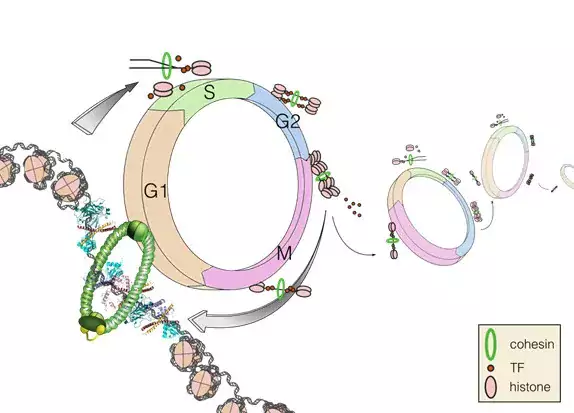
Jussi Taipale is a Professor of Medical Systems Biology at Karolinska Institutet and holds professorships at University of Helsinki. His research focuses on transcription factor binding mechanisms , cancer genomics , and gene regulatory networks . The interdisciplinary Taipale Lab operates across three international locations: Wellcome Sanger Institute (UK), Karolinska Institutet (Sweden), and University of Helsinki (Finland), with over 20 members including senior scientists, postdoctoral fellows, and graduate students. Ph.D., University of Helsinki (1996) Postdoctoral training: University of Helsinki, Johns Hopkins University Research spans transcription factor cooperativity , epigenetic regulation , chromatin accessibility , and noncoding mutation analysis . Key methodologies include HT-SELEX , CUT&RUN , ATI assays , and CRISPR-based functional genomics . The lab has significantly advanced understanding of Myc-driven oncogenesis , TF-nucleosome interactions , and dinucleotide specificity mechanisms . Notable discoveries include chromatin context-dependent enhancers , water-mediated DNA recognition , and novel composite transcription factor motifs . The group maintains active collaborations across Europe and has trained numerous alumni now leading academic and industry positions worldwide.
Professor Diana Slade is a leading academic in applied linguistics and healthcare communication at the Australian National University (ANU), where she serves as Director of the ANU Institute for Communication in Health Care (ICH) and the School of Literature, Languages & Linguistics. With a PhD from the University of Sydney and over 30 years of experience, she specializes in linguistics, healthcare communication, and translational research. Her work bridges disciplinary boundaries, focusing on improving clinical communication to enhance patient safety and care quality. Key roles include founding the ANU ICH (2018) and the International Consortium for Communication in Healthcare (IC4CH, 2020), fostering global interdisciplinary collaboration. Her research spans healthcare communication challenges in emergency departments, clinical handovers, end-of-life care, and chronic disease management. Notable projects include the ACCELERATE trial protocol and interventions targeting bedside handovers. With $6.9M AUD in research funding, she has led 20+ cross-disciplinary projects across Australia and Hong Kong. Her publications include 58 articles, 6 co-authored books (e.g., Analysing Casual Conversation , Effective Communication in Clinical Handover ), and 20 book chapters. Professor Slade’s work emphasizes translational research, ensuring theoretical insights directly inform clinical practice. Her contributions have been cited 9,172 times (Google Scholar, 2023), reflecting her international impact. Current research explores self-management of heart failure and improving decision-making for dialysis patients through enhanced communication strategies. Grants and funding have supported projects like ‘Improving communication to enhance patients’ health literacy’ (2022–2026). She advises on healthcare communication policies and trains clinicians globally, advocating for values-based compassionate care. Her legacy includes foundational work in spoken English analysis and pioneering frameworks for healthcare communication training.
Nicolas Ballier is a Professor at Université Paris Cité (formerly Université Paris Diderot), where he teaches and conducts research in linguistics and digital humanities. Previously, he taught at the Université de Rouen and Paris 13. His work focuses on the intersection of linguistics, computational methods, and language learning technologies, with particular expertise in neural machine translation and speech processing. His primary research interests include: Corpus prosody Neural machine translation Automatic analysis of learner corpora Digital humanities Epistemology of linguistics (third revolution of grammatisation) Interpretability of neural machine translation systems Representation of speech in Whisper audio models Dr. Ballier's recent work explores how computers transform linguistic data (the 'third revolution of grammatisation'), with a focus on neural machine translation interpretability and speech analysis using large language models like Whisper. His research bridges theoretical linguistics with practical applications in language learning and translation technologies, particularly focusing on how these technologies can be made transparent and useful for translators and language learners. His 15 most recent publications (2022-2024) demonstrate a strong focus on neural machine translation interpretability, Whisper applications for language assessment, and learner corpus analysis. The publications span multiple prestigious venues including EAMT, ACL, LREC-COLING, and specialized journals in speech technology and computational linguistics, showing consistent productivity and impact in his fields. Dr. Ballier has been PI or team member on numerous European-funded projects including DOKTORAND (2012-2016), KVARK project (2014-2026), PHC Ulysses (2019), multitraiNMT (2021), and LT-LIder project (2024-Nov 2026). He has developed platforms like PAPTAN for neural machine translation experiments and MAKE-NMT VIZ for investigating machine translation interpretability. He has supervised PhD students through collaborative projects and has been involved in research initiatives like DLLA (Deep Learning for Language Assessment) exploring CEFR levels with keylog data, Neuroviz (2021-2022), and SPECTRANS (2020-2022) focusing on specialized neural translation and probing information flow in neural networks.