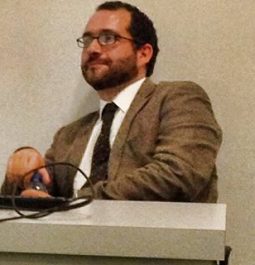
Pedro Faria Lopes is an Associate Professor at the Department of Information Science and Technology (ISTA), School of Technologies and Architecture, ISCTE – Instituto Universitário de Lisboa. He is also an Associate Researcher at ISTAR-Iscte, contributing to the Digital Living Spaces research group. His academic roles involve teaching and supervising students in digital multimedia, human-computer interaction, and game design. His educational background includes: PhD in Electrical and Computer Engineering, Higher Technical Institute - UTL (1996) Master's degree in Electrical and Computer Engineering, Higher Technical Institute - UTL (1989) Bachelor's degree in Electrical Engineering, Higher Technical Institute - UTL (1985) Pedro Faria Lopes's research interests focus on digital multimedia, human-computer interaction, computer games, sound and video for multimedia, computer animation, and digital content creation for lifelong and e-learning contexts. His work bridges technology and education, emphasizing interactive and engaging digital experiences. He has contributed extensively to the development of serious games, multimedia applications, and educational technologies. His recent publications highlight trends in educational video games, procedural content generation, interactive storytelling, and digital inclusion through mobile applications. These works reflect a strong commitment to applying computing technologies in educational, social, and cultural domains, particularly through game-based learning and accessible design. He has supervised numerous graduate students, with 15 completed and 3 ongoing Master’s dissertations, as well as 1 completed and 1 ongoing doctoral theses, primarily at ISCTE. His teaching activities include courses such as: Human-Computer Interaction Digital Game Design and Production Sound, Video and Digital Content Authoring Visualization and Human-Computer Interaction Multimedia Management Although no specific scientific awards are listed in the provided text, his sustained research output and academic leadership suggest recognition within his fields. His work in digital living spaces and educational technologies indicates active engagement in interdisciplinary research projects.
فیلترهای فعال: