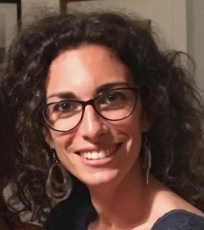
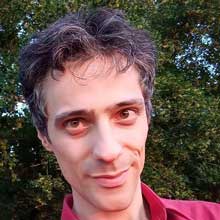
Marco Mancini is a Full Professor at the Department of Modern Literature and Culture, Sapienza University of Rome. His academic career spans teaching and research in linguistics, with a focus on historical linguistics, philology, and structuralism. Teaching: He offers courses in Glottology and Linguistics (12 credits) for Master's students, with semesters starting in October and February. Research: His work bridges ancient languages, Iranian studies, and Mediterranean linguistic evolution, emphasizing protohistory of structuralism and cultural exchanges. Recent Publications: His 2023-2025 articles explore topics like the revival of the Pahlavi language, phonetic typology of Mediterranean languages, and the role of historical linguistics in understanding language change. Collaborative projects include ECO4CO , applying predictive algorithms to health emergencies. Academic Service: He contributes to Italian linguistic historiography, notably commemorating scholars like Walter Belardi and Palmira Cipriano. His affiliations include the Società Italiana di Glottologia and Accademia dei Lincei.
Claudio Di Meola is a Full Professor at Sapienza University of Rome, affiliated with the Department of European, American and Intercultural Studies. He teaches German linguistics and language courses, including German Language I and German Translation III, and coordinates exam schedules for undergraduate and master's students. His institutional email is claudio.dimeola@uniroma1.it, and he holds office hours by appointment. Di Meola's research centers on German linguistics with interdisciplinary foci in cognitive linguistics, morphosyntax (e.g., connectors, prepositions), semantics (metaphor, polysemy, verb tenses), and contrastive linguistics. His work bridges theoretical frameworks with practical applications in language pedagogy, particularly for Deutsch als Fremdsprache (German as a Foreign Language). Key themes include the simplification of German grammar ( Leichte Sprache ), tense semantics, and cross-linguistic analysis between German and Italian. His recent publications (2020–2024) predominantly explore grammar pedagogy , tense semantics , and contrastive linguistics . Articles analyze the optimization of German teaching materials, structural complexities in German syntax, and pragmatic dimensions of tense usage in discourse. Recurring subfields include morphosyntax, lexical semantics, DaF curriculum design, and cognitive-linguistic approaches to language simplification.
Dr. Ilaria Vidotto is a Researcher at the Department of European, American and Intercultural Studies (Sapienza University of Rome). Her work focuses on French literature , particularly Proustian and Balzacian studies , with expertise in stylistics , narrative theory , and intercultural analysis . Key research themes include: Stylistic analysis of À la recherche du temps perdu Comparative study of 19th-century literary discourse Temporal structures in modernist literature Intertextual relationships between French and Italian authors Recent publications examine: Stylistic evolution from juvenilia to mature works Epistolary practices in Proustian narrative Metaphorical use of screens in literary contexts Comparative techniques in 19th-20th century French literature
Roberto Batisti is a Contract Lecturer at the Department of Humanities , Ca' Foscari University of Venice . He holds a PhD in Culture Letterarie, Filologiche e Storiche from the University of Bologna (2014), with research on compensatory lengthening in Ancient Greek. His academic career includes research roles at the University of Bologna (2016-2020) and the ERC-funded project PURA – PUrism in Antiquity (2022–present). PhD in Classical and Historical Studies (University of Bologna, 2014) Classical Teaching Qualification (TFA, University of Bologna, 2015) Master’s Degree in Classical Philology (University of Bologna, 2010) Bachelor’s Degree in Classical Philology (University of Bologna, 2007) His research focuses on Historical Linguistics with emphasis on Ancient Greek phonology and Indo-European reconstruction . Recent work examines h-anticipation , postnasal deaspiration , and sound laws in Mediterranean languages. He explores compensatory lengthening , ancient particle usage , and cross-linguistic etymology in Indo-European contexts. Article trends show strong engagement with phonological rules ( h-anticipation , Verner’s Law ), lexical diffusion ( columba/κόλυμβος ), and historical syntax ( Attorno all'etimologia di τραυλός ). His work bridges Comparative Linguistics and Cultural Studies , with recurring themes in foreignness terminology and poetic language analysis . Advising includes co-supervising theses on Valenzgrammatik , Homeric datives , and inclusive Greek pedagogy . Organized conferences include the international Figure dell’altro (2018), DSA and Classical Languages (2019, 2020), and the Indo-European Research Colloquium (2022). Active in Societas Linguistica Europaea (since 2020) and Indogermanische Gesellschaft (since 2019).
Federica Guerini is a Professor in the Department of Letters, Philosophy, and Communication at the University of Bergamo since 2024. Her academic career began with a PhD in Linguistics from the University of Pavia in 2004, followed by recognition through the 9th International Prize for Studies on Plurilingualism in 2005. Her research focuses on: Language contact dynamics among Ghanaian immigrants in Bergamo Linguistic landscapes as cultural indicators Orthographic choices and identity expression Interaction between Italian and Italo-Romance dialects Toponymic and anthroponymic analysis Recent publications explore modal particles in Romance languages, dialectal word classes, and comparative syntactic structures across Italian regions. She has been actively involved in editing and publishing critical editions of historical dialectological works. Scientific Awards: 9th International Competition and Prize for Studies on Plurilingualism (2005)
Roberto Basili is an Associate Professor in the Department of Computer Science at the University of Roma, Tor Vergata, where he has been a member of the Artificial Intelligence group (ART) since 1991. His academic appointments span both the Faculty of Engineering and the Department of Linguistics, reflecting his interdisciplinary approach to natural language processing and computational linguistics. Professor Basili's research focuses on Natural Language Processing, Machine Learning, Knowledge Representation, and their applications in Information Retrieval and the Semantic Web. His work particularly emphasizes semantic tagging, word sense disambiguation, ontology engineering, and music genre categorization. He leads the ART (Artificial Agent @ Roma Tor Vergata) research group, which develops frameworks for language-driven ontology learning and question answering systems. His publication record shows consistent contributions from the early 1990s through 2006, with recent work emphasizing kernel methods for semantic role labeling, ontology-driven information retrieval, and hierarchical semantic analysis. The research trends indicate a progression from foundational work in lexical acquisition and parsing toward more sophisticated semantic analysis and ontology integration, reflecting the evolution of the NLP field itself. Professor Basili has secured significant research funding through multiple EU Framework Program projects including PrestoSpace (FP6), FF-Poirot (FP5), and MOSES (FP5), as well as NSF grants and Italian national research initiatives (PRIN). These projects demonstrate his ability to lead large-scale collaborative research efforts addressing both theoretical challenges and practical applications in language technology. His teaching responsibilities include courses on Distributed Databases and Information Retrieval, Database Systems, Fundamentals of Programming in the Faculty of Engineering, and Trattamento Automatico delle Lingue (Natural Language Processing) in the Department of Linguistics. This dual appointment underscores his bridging of computer science and linguistic approaches to language processing.
Baldi Benedetta is a Full Professor in Modern Language Teaching (SSD L-LIN/02) at the University of Florence's Department of Literature and Philosophy, where she has been affiliated since 2004. She advanced from Researcher to Associate Professor (2015) and Full Professor (2020). Her institutional leadership includes: President, Degree Course in Humanities for Communication (2015–present) President, Master's Degree in Communication Theories (2020–present) Coordinator, Master's in Institutional Advertising and Multimedia Communication (2017–present) Her research explores the intersection of language, media, and society, with emphasis on: Political communication : Delegitimization strategies, populist rhetoric, and media framing in Italian politics. Linguistic theory : Morphosyntax, phonology, and dialectology (especially Arbëresh, Aromanian, and Romance varieties). Intercultural studies : Identity formation, mass media influence, and metaphorical discourse. Baldi's publications (15 most recent, 2021–2025) reveal a focus on micro-variation in dialects, clitic systems, and political discourse analysis. She frequently employs comparative frameworks across Italian, Albanian, and Balkan languages. Her editorial roles include directing book series like 'Glottodidattica' and 'Communication and Philosophical Cultures'. She led the University of Florence unit for the national PRIN project on political delegitimization (2013–2016) and has collaborated with institutions like IRRE Liguria and Co.re.com Toscana. No research lab or student advisees are mentioned.
Neri Binazzi (born 1963 in Florence) is an Associate Professor in Italian Linguistics at the Department of Literature and Philosophy (DILEF) of the University of Florence. He teaches Italian Sociolinguistics and Italian Dialectology in undergraduate and graduate programs at the School of Humanities and Education. Binazzi has been a tenured researcher in Italian Linguistics since January 1, 2005, and was promoted to Associate Professor in September 2014. In March 2021, he obtained qualification as a Full Professor in the competitive sector 10/F3 Italian Linguistics and Philology. Binazzi earned his degree in Italian Dialectology with Gabriella Giacomelli in 1988 and completed his PhD in Italian Linguistics in 1993. His academic journey began with post-doctoral fellowships and research grants at the University of Siena, where he also taught in the 'Writing Workshop' from 2000 to 2004. He subsequently taught Sociolinguistics at the Faculty of Education of the University of Florence during the 2002/2003 and 2003/2004 academic years. Binazzi's research spans sociolinguistics and Italian dialectology, with a particular focus on lexical behavior, linguistic identity manifestation, and the dynamics between standard Italian and dialects. His work examines popular Italian ('italiano popolare'), the language of the semi-educated ('lingua dei semicolti'), and dialect theater. A significant portion of his career has been devoted to coordinating the 'Vocabolario del fiorentino contemporaneo' (VFC) project at the Accademia della Crusca since 2000. The VFC database contains over 3,200 lexical entries and aims to document approximately 7,000 terms when completed. His monograph 'Le parole dei giovani fiorentini: variazione linguistica e variazione sociale' (1997) established important foundations for his research trajectory. His recent publications (2022-2025) reveal a strong focus on digital humanities approaches to dialect documentation, epistolary writings from marginalized communities, and the intersection of literature with regional language varieties. Binazzi has increasingly collaborated on interdisciplinary projects that combine linguistic analysis with historical, sociological, and digital methodologies. Principal Investigator of the Florentine Research Unit for Project CHANGES (2023-2026), focusing on digital documentation of dialect corpora Coordinator of the 'Vocabolario del fiorentino contemporaneo' (VFC) project at the Accademia della Crusca since 2000 Member of the Udine-Florence local unit for the PRIN DigitALIa project (Digitization of Italian Linguistic Atlases) Member of the Florentine Research Unit for the PRIN project on Dante's 'Commedia' critical edition Correspondent for the Italian Journal of Dialectology in Tuscany since 1995 Binazzi's research group centers around the VFC project, which has evolved into a significant digital humanities initiative. The project has expanded to include collaborations with institutions across Italy and internationally, particularly through the CHANGES project which connects humanities scholarship with digital innovation. His work demonstrates how linguistic research can contribute to broader cultural heritage preservation efforts while providing insights into contemporary language use and social identity.
Lorenzo Ferroni is an Associate Professor of Greek Language and Literature at the Department of Literature and Philosophy, University of Florence. His academic career spans multiple international institutions including Université Laval (Canada), KU Leuven (Belgium), and CNRS (France), where he conducted research on Neoplatonic philosophy and classical philology. His educational background includes: Graduation from Liceo Classico 'Michelangiolo' in Florence (1995) Diploma in Humanities from Scuola Normale Superiore in Pisa (2000) PhD in Greek and Latin Philology from the University of Florence (2006) Professor Ferroni's research focuses on Classical Philology with special emphasis on textual criticism and the history of ancient text traditions. His primary areas of interest include Plato studies (particularly manuscript traditions and text constitution), Neoplatonic thought (especially Plotinus), Attic oratory (focusing on Andocides), and Aristophanes' comedy. His work bridges philological precision with philosophical interpretation, examining how ancient texts were transmitted and interpreted through centuries. His scholarly contributions include numerous publications on Plotinus' Enneads, critical editions of Plato's dialogues (particularly the Ion), and studies on Maximus Planudes' compendia of Platonic works. Professor Ferroni has received significant research funding, most notably a Marie Curie IEF Fellowship for the 'Plotinus against Gnostics: a New Survey' (PaGaNS Project). Among his notable awards and recognitions: Marie Curie IEF Fellowship (2015-2017) National Scientific Qualification (Abilitazione Scientifica Nazionale) in Greek Language and Literature (2021-2030) National Scientific Qualification in Classical and Late Antique Philology (2018-2027) Qualification as Maître de conférences in Ancient Languages and Literatures in France (2015) Professor Ferroni is actively involved in organizing international scholarly events, having co-organized numerous conferences and workshops on Plotinus, Plato, and textual criticism methods. His teaching at the University of Florence includes Greek Language and Literature courses focusing on classical texts and their historical contexts. His research continues to advance our understanding of Neoplatonic philosophy and the textual transmission of ancient Greek literature.
Francesca Strik Lievers serves as Associate Professor in the Department of Modern Languages and Cultures at the University of Genoa, holding the academic classification GLOT-01/A in Glottology and Linguistics. She actively participates in departmental governance as a Member of the Department Board and teaches multiple courses including Glottology and Linguistics, General Linguistics, Semantics and Lexicon, and Advanced Linguistics across undergraduate and graduate programs in Modern Languages, Translation, and Cultural Services. Her research spans core linguistic domains with emphasis on glottology , semantic evolution , and cross-linguistic phenomena in Romance languages. Key interests include periphrastic constructions in Italian, linguistic synesthesia, contrastive acquisition patterns between Italian and Spanish, and mechanisms of linguistic creation in Romance languages. Her work bridges theoretical linguistics with cognitive and applied perspectives. Current publications reveal strong focus on diachronic semantics and cognitive-linguistic interfaces, particularly examining how syntactic structures evolve through semantic shifts and sensory metaphor systems. Her recent meta-analysis on linguistic synesthesia demonstrates interdisciplinary engagement with cognitive neuroscience frameworks. Professor Strik Lievers maintains active teaching responsibilities with office hours by appointment in Palazzo Serra (Room III.12), prioritizing student accessibility through direct email coordination (francesca.striklievers@unige.it) prior to semester commencement.
Marcello Barbato is Professor of Romance Philology and Linguistics at the University of Naples "L'Orientale" with an extensive international academic career spanning institutions including Université Libre de Bruxelles and University of Zurich. His scholarly profile encompasses deep expertise in historical linguistics, philology, and medieval Romance languages with particular focus on Italian, Spanish, and Catalan linguistic traditions. Full Professor since 2019 Associate Professor 2013-2019 Chair of Romance Linguistics at Université Libre de Bruxelles (2007-2013) Researcher at University of Zurich (2003-2007) Barbato's research centers on historical linguistics, philological analysis of medieval texts, and linguistic evolution across Romance languages. His work demonstrates particular strength in analyzing multilingual medieval manuscripts, phonological evolution, and the relationship between Latin and emerging Romance languages. He has made significant contributions to understanding Italian dialectology, particularly Northern Italian varieties, as well as the linguistic features of medieval Iberian texts. His recent publications reveal a consistent focus on linguistic phenomena across historical Romance languages, with particular attention to morphological and phonological evolution. Barbato's work bridges traditional philological methods with contemporary linguistic analysis, creating a rich interdisciplinary approach to historical language study. Scientific Recognition: Membro dell'Advisory Board di "Romance Philology" (2020-) Associato con incarico di ricerca all'Opera del Vocabolario Italiano (2019-) Codirettore della collana "Transizioni. Stratigrafie linguistiche tra latino e romanzo" (2017-) Multiple research grants from Swiss National Fund, Italian PRIN projects, and Belgian FNRS Barbato has directed significant research initiatives including "Mappatura dell'italo-romanzo antico (MIRA)" as project partner and served as responsible for a research unit in the "Corpus del vocabolario italiano delle origini" project. He has organized numerous international conferences including "La stratigrafia linguistica dei manoscritti medievali" (2017) and "Documentazione e ricostruzione in linguistica romanza" (2021), establishing himself as a key figure in the international Romance linguistics community. His editorial work includes directing multiple academic series and serving on the scientific committees of prestigious journals including "Medioevo Romanzo" and "Bollettino del Centro di studi filologici e linguistici siciliani". Barbato's academic leadership extends to his role as Vice President of the SiBA (University Library System) Committee at the University of Naples "L'Orientale".
Bayarma Khabtagaeva is an Associate Professor at the Department of Asia, Africa and Mediterranean at the University of Naples L'Orientale since 2022, where she conducts research on Mongolic, Turkic, and Tungusic languages. Previously, she was an Associate Professor at the University of Szeged in Hungary (2002-2021), where she earned her PhD with summa cum laude in 2007 and habilitation in 2019. Her research focuses on Mongolic and Turkic languages, linguistic contact in Siberia, and documentation of endangered languages in Siberia and China. Notably, she conducted fieldwork with Ewenki of Barguzin in 2009 and with Mongolic and Tungusic populations in Inner Mongolia in 2017. Her work bridges linguistic analysis with cultural anthropology, examining how language reflects social structures and cognitive frameworks. Her recent publications demonstrate a consistent focus on etymology, lexical semantics, and language contact phenomena across Siberian languages. The articles reveal sophisticated comparative analyses of plant and animal nomenclature, kinship terms, and body part terminology, showing how these lexical domains reflect historical connections and cultural practices across Altaic language families. CEEPUS (Central European Exchange Program for University Studies) - 2018 CEEPUS (Central European Exchange Program for University Studies) - 2017 Humboldt Research Fellowship - 2018 Campus Hungary Fellowship - 2014 Hungarian State Eötvös Fellowship - 2012 Hungarian State Eötvös Fellowship - 2008 Young Scientist Award of the Institute for Linguistics of Hungarian Academy of Sciences - 2011 János Bolyai Research Scholarship - 2008 Professor Khabtagaeva has served as co-editor of the International Journal of Eurasian Linguistics since 2019. Her teaching includes Mongolian Language and Literature courses at both undergraduate and graduate levels. She has received multiple research fellowships including the prestigious Alexander von Humboldt Research Fellowship for experienced researchers (2018-2020) and has been a visiting professor at numerous institutions including Charles University in Prague, Freie Universität Berlin, and Ca' Foscari University of Venice. Her fieldwork has taken her to Siberia, Finland, and the United States, where she documented endangered languages and conducted comparative linguistic research. She has organized several international workshops on Mongolic studies, language contact in the Altaic world, and endangered languages in Northern Asia.
Alberto Manco is a Full Professor of Glottology and General Linguistics (SSD L-LIN/01) at the University of Naples L'Orientale, Department of Literary, Linguistic and Comparative Studies. He coordinates the doctoral program in Literary, Linguistic and Comparative Studies since November 2023 and has served as Director of the linguistic section of AIΩN Annals since 2014. His academic career spans multiple decades with significant contributions across linguistic theory, historical linguistics, and comics linguistics. Professor Manco earned his PhD in Theory of Languages and Language through a co-tutelle program with the University of Chambéry, France. His educational background has informed his interdisciplinary approach to linguistic research, bridging historical, theoretical, and applied perspectives across multiple linguistic traditions. His primary research interests include Glottology, General Linguistics, Textual Linguistics, Historical Linguistics, and the Linguistic Analysis of Comics. He has made significant contributions to gender linguistics, toponymy, ethnonyms, and translation studies. Professor Manco's work consistently explores the intersection between linguistic theory and cultural phenomena, particularly through analysis of comics and popular culture. His research demonstrates a strong focus on how language functions in historical contexts and contemporary media, with special attention to psychomechanics of language and pertextuality. His extensive publication record shows consistent scholarly output with emphasis on theoretical linguistics, particularly regarding Guillaume's linguistic theory, historical etymology, and linguistic phenomena in comics. Professor Manco has also made notable contributions to gender linguistics and political discourse analysis in social media, demonstrating his ability to connect traditional linguistic scholarship with contemporary communication forms. FFABR 2017 research grant from MIUR Bourse Roch Valin from Université Laval du Québec President of the Center for Italian Language and Culture in Tbilisi, Georgia As an educator, Professor Manco teaches General Linguistics for the undergraduate program in Linguistic and Cultural Mediation and Textual Linguistics for multiple Master's programs. He has supervised numerous doctoral students through his role on the doctoral committee. His research has been supported by multiple grants, including serving as Principal Investigator for the PRIN 2020 project "Atlante linguistico multimediale dell'Italia intramediana antica." Professor Manco actively participates in international academic collaborations, including Erasmus exchanges with universities in Romania and France, and has organized numerous international conferences. His work bridges multiple linguistic traditions and fosters cross-cultural academic dialogue, reflecting his commitment to expanding linguistic scholarship beyond national boundaries.
Gian Claudio serves as a Lecturer at the University of Naples 'L'Orientale', holding dual affiliations with the Department of Asia, Africa and Mediterranean and the Department of Human and Social Sciences. His academic career spans over a decade, including research positions as University Researcher (2016-2022) and current teaching appointments for the 2025-2026 academic year across multiple Hausa language and literature courses at both undergraduate and graduate levels. His research centers on African linguistic systems with specialized expertise in Hausa and Kushi languages. Key investigations include kinship terminologies, lexicographic methodologies, language documentation practices, and socio-linguistic dynamics affecting minority languages in Nigeria. This ethnolinguistic work integrates anthropological perspectives to examine language-culture interrelationships, contributing significantly to endangered language preservation efforts and documenting Arabic loanword influences in Central/East African languages. Analysis of his 43 publications (2020-2024) reveals consistent thematic focus on African language structures and preservation challenges. Recent works demonstrate methodological diversity spanning historical linguistics, discourse analysis, and comparative lexicography, with recurrent examination of kinship systems and language endangerment. Publications frequently address practical documentation challenges while maintaining theoretical rigor in linguistic anthropology. Professionally, Gian Claudio directs the Journal of African Languages and Literatures, providing editorial leadership since 2020. While no scientific awards appear in current records, this editorial role signifies peer recognition within African linguistics scholarship. The available information indicates no doctoral student supervision or major research grants, though his course development in linguistic research methodologies suggests pedagogical mentorship at the undergraduate level.