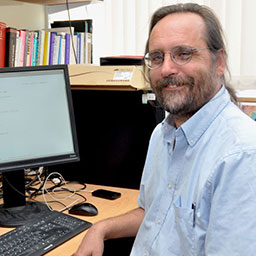
Dana Weinstein is a Professor in the Department of Electrical and Computer Engineering at Purdue University, West Lafayette campus. Her research focuses on cutting-edge MEMS resonators, RF device integration, and acoustoelectronic systems. Academic Rank: Professor Department: Electrical and Computer Engineering University: Purdue University Email: danaw@purdue.edu Research Interests: Microelectronics and MEMS Resonators Radio Frequency (RF) Devices and 2D Materials Silicon Photonics and Ferroelectric Transducers Acoustoelectronics and GaN/SiC Heterostructures Integrated Nonreciprocal RF MEMS Devices Scientific Awards: NSF CAREER Award (2017) NSF CAREER Award (2012) Editorial Leadership in IEEE Nanotechnology Express (2015) Key Article Trends: Her recent publications explore advanced MEMS resonators, high-frequency RF devices, acoustoelectric interactions, and integration of 2D materials into CMOS-compatible platforms. Topics include Sezawa wave SAW devices, GaN/SiC heterostructures, BEOL-compatible transistors, and ferroelectric-based transducers.
Patty Stabile is an Associate Professor in the Department of Electrical Engineering at Eindhoven University of Technology (TU/e), specializing in Indium Phosphide (InP) photonic integrated circuits for next-generation optical networks and computing systems. She is affiliated with the Electro-Optical Communication group and EAISI High Tech Systems. MSc in Electrical Engineering (2004) from Politecnico di Bari PhD in Nanoscience (2008) from National Nanotechnology Laboratory, Lecce Her research focuses on integrating electronics and photonics for ultra-high-speed data routing, leveraging optical parallelism inspired by brain architecture. She also explores low-cost passive coupling concepts and novel materials like 2D materials to enhance photonic platforms. Key contributions include pioneering work on InP-based switch matrices and high-speed transceiver modules, with publications in Microsystems & Nanoengineering , IEEE Photonics Technology Letters , and Journal of Optical Communications and Networking . She received the Early Career Women in Photonics – Special Recognition in 2016. Active in academic communities, Patty serves on the IEEE Photonics Benelux Chapter board, is a member of the TU/e Young Academy of Engineering, and contributes to educational programs in automotive dynamics and brain-inspired optical computation.
Torsten Lindström is a faculty member at Linnaeus University, affiliated with the Faculty of Technology and the Department of Mathematics . His research focuses on qualitative analysis of dynamical systems with applications to ecology and epidemiology , encompassing differential equations , discrete-time models , and stochastic processes . He is actively involved in the International Center for Mathematical Modeling (ICMM) and the Stochastic Analysis and Stochastic Processes research group. His research spans ecological modeling, predator-prey dynamics, and mathematical education. He has authored a textbook on Linear Algebra and contributes to Ordinary Differential Equations Dynamical Systems Teacher education in Geometry courses. Notably, he is the editor of a special volume on mathematical models in biology. His recent publications analyze stochastic disease spread , limit cycles , and stability theory , reflecting interdisciplinary work between mathematics, ecology, and education. Collaborations with institutions like the University of Oslo and SpringerLink highlight his international engagement. Teaching materials, including recorded lectures on Linear Algebra and Dynamical Systems, are publicly accessible.
Professor Rodica Ramer is a distinguished academic in the School of Electrical Engineering and Telecommunications at the University of New South Wales. She holds the position of Professor of Microelectronics and is responsible for the RF, microwave and millimetre-wave engineering program, microwave antennas, and electromagnetics. Her extensive academic career spans decades with significant contributions to microwave engineering and related fields. Professor Ramer's research interests encompass a broad spectrum of advanced technologies including Microwave, millimetre-wave, and terahertz technologies; RF MEMS switches and integrated switch matrices; RF MEMS phase shifters and tunable filters; CMOS integrated RF MEMS; reconfigurable devices and integrated blocks; and microwave antennas. Her work bridges theoretical exploration with practical applications, particularly in the development of novel microwave components and systems. Analysis of Professor Ramer's recent publications reveals a strong focus on cutting-edge microwave component design, with particular emphasis on 3D printing applications for antenna systems, waveguide technology innovations, and RF MEMS integration. Her research consistently addresses challenges in miniaturization, performance enhancement, and cost reduction for microwave systems across various frequency bands from microwave to terahertz ranges. AAEE Member ASEE Member IEAust Member European Microwave Association Member IEEE MTT-S Senior Member IEEE AP-S Senior Member IEEE CommSoc Senior Member IEEE WIE Senior Member Electromagnetics Academy Fellow Professor Ramer has been instrumental in advancing microwave engineering education and research at UNSW. Her work spans theoretical development, practical implementation, and mentoring of junior researchers. She has contributed significantly to the microwave community through her leadership roles in professional organizations and her extensive publication record that demonstrates continuous innovation in the field.
Frank Würthner is a Professor at Julius-Maximilians-Universität Würzburg, Germany, where he leads the Chair of Organic Chemistry II and directs the Center for Nanosystems Chemistry (CNC). His research focuses on designing functional dyes and developing supramolecular methodologies for creating advanced organic nanomaterials with applications in optoelectronics, photovoltaics, photocatalysis, and biomedical systems. Research interests span: Supramolecular engineering of π-conjugated systems Functional dye chemistry and self-assembly Nanoscale architectures for energy conversion Photocatalytic water splitting systems Organic electronic and photonic materials Host-guest systems for photophysical modulation Recent publications (2019-2025) demonstrate strong focus on exciton engineering, carbon nanomaterials development, supramolecular polymerization control, and advanced optoelectronic materials. Key trends include systematic exploration of dye aggregates, nanographene systems, energy transfer mechanisms, and applications in light-emitting devices and solar energy conversion. Major scientific recognition includes: ERC Advanced Grant (awarded twice) Leads the Würthner Group with extensive research facilities for synthesis, spectroscopy, microscopy, and device fabrication. The group collaborates internationally through initiatives like the International Research Training Group 2991 with IISER Thiruvananthapuram on supramolecular functional materials.
Dr. Anoop Singh is a Professor at the Department of Management Sciences, Indian Institute of Technology Kanpur (IITK). His work focuses on Power Sector Regulation , Renewable Energy Policy , and Energy Economics , with significant contributions to energy pricing , climate policy modeling , and cross-border energy cooperation . He founded the Centre for Energy Regulation (CER) and Energy Analytics Lab (EAL) at IITK. His research interests span power sector reforms, regulatory governance, energy pricing, renewable energy integration, project financing, and climate policy modeling. He has led initiatives in smart grid development , minigrid economics , and energy analytics , often contextualized within India's energy transition. Key Publications : 15+ works on electricity market reforms, renewable policy, and regulatory frameworks Projects : ADB-funded regional power exchange studies Scientific Awards include: Amity Academic Excellence Award (2013) Best Business Model Award, Asia Clean Energy Forum (2010) UNU/IAS and ADB Institute fellowships He served on the Planning Commission's Working Group on Power for the 11th and 12th Five-Year Plans and actively participates in global regulatory dialogues . His students and mentees engage in energy policy research with applications to sustainable development and infrastructure finance .
Dr. Mohamed Djemai is a Full Professor at École Nationale Supérieure de l'Électronique et de ses Applications (ENSEA), Cergy, and INSA Hauts-de-France. He is affiliated with the Quartz Laboratory (EA 7393) and LAMIH UMR CNRS 8201 at University Polytechnic Hauts-de-France. His research focuses on nonlinear control systems theory, with emphasis on hybrid and variable structure systems, sliding mode approaches, fault detection, and applications to power systems, robotics, and vehicle dynamics. IEEE Senior Member Associate Editor for Nonlinear Analysis: Hybrid Systems Co-Facilitator of National Working Group GT-SDH (2014–present) Member of IFAC-TC-1.3 (Discrete Event and Hybrid Systems) since 2001 Member of IFAC-TC-2.1 (Control Design) since 2005 His recent publications address fractional-order control of multiagent systems, stability analysis on time scales, fault-tolerant satellite attitude control, and robust consensus algorithms for nonlinear systems. Key methodologies include sliding mode control, event-triggered control, and observer-based fault detection. Current teaching activities encompass diagnostics, linear systems, signal processing, and sensor conditioning. The trend in Dr. Djemai's research since 2022 involves advanced control strategies for cyber-physical systems, distributed fault detection mechanisms, and time scale theory applications to intermittent communication problems. Notable collaborations include work with Michael Defoort, Stefano Di Gennaro, and international institutions like Kyungpook National University and University of Reims. Scientific contributions include: IEEE Senior Member recognition Development of robust exact filtering differentiators Innovations in fixed-time consensus protocols Leadership in IFAC technical committees Editorial role in hybrid systems analysis His laboratory work at Quartz and LAMIH supports applications in aerospace systems, renewable energy conversion, and industrial risk management architectures.
Birgit Leisen Pollack is a Professor of Marketing at the University of Wisconsin Oshkosh , specializing in services marketing, customer satisfaction, and green marketing. Her research explores the intersection of consumer emotions, sustainability, and brand loyalty, with a focus on behavioral intentions in service environments. Ph.D., New Mexico State University (1998) MS, New Mexico State University (1993) BA, Universitat Trier, Germany (1991) Her work emphasizes the psychological drivers of customer loyalty, particularly in sustainable services, and has developed frameworks linking service quality to repurchase intentions. Recent articles examine Gen Z's eco-conscious consumption patterns and the amplification of warm emotions through green service attributes. She is a co-author of foundational research on the Net Promoter Index and has contributed to marketing education through experiential learning studies. Her collaborations with scholars like Alexandrov and Lilly highlight interdisciplinary approaches to service marketing.
Professor Andrew Flewitt is a Fellow of the University Engineering Department at the University of Cambridge, where he has held a lectureship since 2002 and was promoted to Professor of Electronic Engineering in 2015. His research focuses on degradation mechanisms of inorganic thin film transistors metal oxide thin film transistors silicon nanowire-polymer composites MEMS (MicroElectroMechanical Systems) for sensing and microfluidic applications acoustic wave devices for biosensing As a member of the Institute of Physics and the Institution of Engineering and Technology, he contributes to professional communities and serves as an Editor for the IEEE journal 'Electron Device Letters.' His work bridges materials science, electronics, and biomedical applications, particularly in thin-film and MEMS technologies.
Malaika Brengman serves as a Senior Lecturer and postdoctoral researcher at the Free University of Brussels, specializing in consumer behavior within retail contexts. Her academic work bridges Communication Sciences, Business Studies, and Media Innovation through interdisciplinary research on digital retail environments. Her research focuses on consumer decision-making processes in physical and virtual retail spaces, with particular expertise in trust formation, digital signage effectiveness, and the psychological impact of emerging technologies. Key interests include: How virtual worlds influence retail appeal and consumer threat perception The relationship between store environment design and initial trust development Implicit measurement techniques for assessing service experiences Consumer responses to AI-driven personalization in retail settings Analysis of her recent publications reveals a strong emphasis on augmented reality applications, vaccine attitude segmentation, and social media addiction pathways, demonstrating methodological diversity across behavioral experiments and large-scale consumer surveys. Her scientific contributions have been recognized through multiple awards including the Best Conference Paper Award (2010), Best Extended Abstract Award (2020), and a Highly Commended Paper distinction (2016). These accolades highlight her impact in retail technology and consumer psychology research. Brengman actively supervises doctoral candidates and serves on PhD committees, with documented supervision of at least 153 academic works. She frequently engages with media as an expert on consumer finance topics, particularly regarding energy pricing impacts and savings behaviors during economic uncertainty. Her current projects include Brubotics (human-centered robotics) and SHALGO (algorithmic systems research). She maintains significant external engagement through advisory roles in consumer protection initiatives and regular media commentary on retail trends and consumer behavior patterns.
Daniel Quint is a Professor in the Department of Economics at the University of Wisconsin-Madison. His research focuses on Microeconomic Theory , Industrial Organization , and their intersections with Auction Theory , Mechanism Design , and Game Theory . He has taught advanced courses such as Advanced Microeconomic Theory (Econ 805), PhD Micro I (Econ 711), and Law and Economics (Econ 522), emphasizing theoretical rigor and practical applications. Quint's recent research includes analyzing digital platform collusion , procurement auction dynamics , and firm conduct under tariffs . He has published extensively on English auctions , differentiated products , and market design challenges, with a particular emphasis on equilibrium behavior and empirical validation of theoretical models. His work on matching markets spans both historical (e.g., medieval markets) and modern applications like school choice, kidney exchange, and supply chain networks. Though no scientific awards are mentioned, his contributions to graduate education and seminar leadership (e.g., UW Theory Seminar, UW IO Seminar) underscore his academic impact.
Carlo Ricciardi is a Full Professor in the Department of Applied Science and Technology (DISAT) at the Polytechnic University of Turin, where he serves as Coordinator of basic subjects for the 2nd year of Engineering and is a member of the Interdepartmental Center CWC - CleanWaterCenter@PoliTo. His research focuses on nanomechanical sensing and memristive nanodevices, with applications spanning biomedical engineering, environmental monitoring, and brain-inspired computing systems. His research interests center on the intersection of nanotechnology and biological systems, particularly in developing bio-inspired nanodevices for sensing applications. Ricciardi's work bridges fundamental nanoscience with practical implementations in memristive devices , nanomechanical sensors , and brain-inspired computing architectures . His research group explores how nanoscale phenomena can be harnessed for biomedical applications, environmental monitoring, and next-generation computing paradigms that mimic neural processing. The recent publications reveal a strong trend toward neuromorphic computing using nanowire networks, with significant work on self-organizing systems that exhibit brain-like computational properties. His research spans multiple disciplines including nanotechnology, materials science, electronics, and biophysics, with a particular emphasis on creating sustainable and efficient computing systems inspired by biological principles. The work often combines experimental fabrication with theoretical modeling to understand complex phenomena at the nanoscale. Young Scientist Award (European Materials Research Society, 2002) Keynote Paper Finalist, Biosensors 2010 (2010) Premio Giovedì Scienza (2012) National Scientific Qualification as Associate Professor Sector 02/B1 (MIUR, 2013) National Scientific Qualification - Second Band - Sector 02/B3 (MIUR, 2013) Ricciardi actively mentors doctoral students and serves on multiple PhD program committees across Physics and Engineering disciplines. He has secured substantial research funding through competitive national and international projects including the EU-funded GreenChips-EDU (2023-2027), NEURONE (2023-2025), and MEMQuD (2021-2024) projects. His collaborations span academia and industry, with partnerships including the University of California Berkeley and various European research institutions. As Principal Investigator of the NaMeS research group, Ricciardi leads investigations into two interconnected research domains: nanomechanical sensing and memristive nanodevices. The group operates specialized laboratories including the CHILAB Laboratory in Chivasso and the Nanoscience Vibrometric Lab, focusing on developing innovative sensor technologies and neuromorphic computing architectures that draw inspiration from biological systems.
Ludovic Sacchelli is an Inria researcher (CR) affiliated with the McTAO team at the Centre Inria d'Université Côte d'Azur and the Laboratoire J.A. Dieudonné of Université Côte d'Azur. His research spans control theory, sub-Riemannian geometry, and mathematical neuroscience, focusing on optimal control, observers, and estimation problems. His work on sub-Riemannian manifolds and control systems includes stabilization techniques for non-uniformly observable systems and applications to UAV control, neural fields, and bioprocess modeling. He has contributed to heat kernel analysis, line fields interpolation, and geometric models for sound processing. His recent publications address topics like distributed state estimation in neural models, polynomial state-affine control systems, and geometric algorithms for orientation field interpolation. He has also explored observability singularities in bilinear systems and stabilization of weakly contractive systems. Teaching roles include instructing Measure Theory , Stochastic Processes , and applied mathematics at institutions such as Université Côte d'Azur, Polytech Nice, Lehigh University, and École Polytechnique. His mentorship includes supervising a Masters research project on numerical implementation of line fields interpolation in 2019.
Dr Mark Poolman is a Senior Research Fellow in Systems Biology at the School of Biological and Medical Sciences, Oxford Brookes University . His research focuses on metabolic modeling , systems-wide analysis , and computational approaches to understanding biological processes in plants, microbes, and pathogens. His funded projects include: BBSRC Institute Strategic Programme : Microbes and Food Safety (2023–2028). European Commission -funded work on antimicrobial targets (2021–2025). CCnet project for carbon recycling (2019–2025). Dr Poolman’s work spans photosynthesis , photorespiration , nitrogen fixation , and metabolic engineering in organisms like Clostridium autoethanogenum , Phaeodactylum tricornutum , and Escherichia coli . His recent publications highlight trends in algorithm development for elementary mode analysis , applications of flux balance analysis in plant and microbial systems, and industrial biotechnology for sustainable chemical production.
Zhongqi Liu, M.Sc., is a researcher at the Chair of Thermodynamics (Prof. Dongsheng Wen) at the Technical University of Munich. His work focuses on integrating machine learning with experimental heat transfer analysis for subcooled flow boiling applications. University: Technical University of Munich Department: Chair of Thermodynamics Academic Rank: Researcher Research interests include Heat Transfer , Machine Learning , Subcooled Flow Boiling , and Energy Systems . His projects aim to enhance experimental data processing and critical heat flux prediction using data-driven methods, as seen in the Boiling Image Dataset . Recent publications span biomedical imaging, cancer phototherapy, and nanotechnology, highlighting interdisciplinary applications of machine learning and optical imaging. Notable work includes optoacoustic dyes , photodynamic therapy , and nanocarrier development .