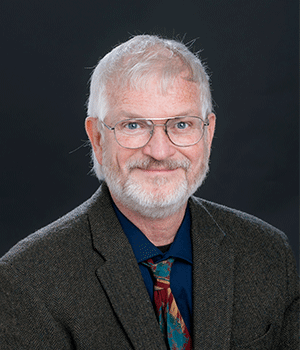
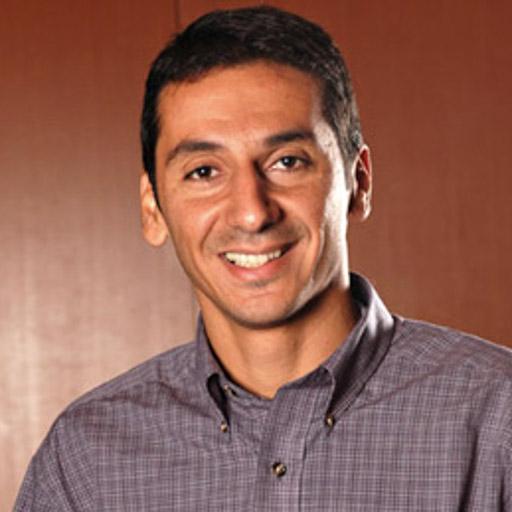
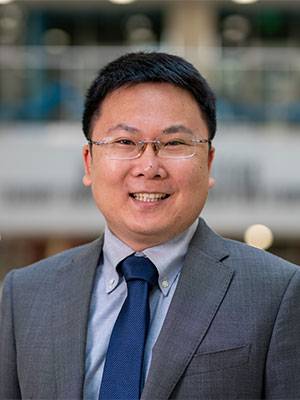
Vincent Groenhuis is a postdoctoral researcher at the Robotics and Mechatronics (EEMCS-EE-RAM) group , University of Twente. He holds a BSc, MSc, and PhD in Computer Science, Embedded Systems, and Medical Robotics respectively, all cum laude. His work focuses on image-guided medical robotics for bladder cancer diagnosis (Next-gen In-Vivo project) and MRI/ultrasound-guided breast biopsy (Sunram/MURAB projects), alongside innovations in pneumatic and electric stepper motors with two patents spun into companies. Education : BSc Computer Science (cum laude), MSc Embedded Systems (cum laude), PhD Medical Robotics (cum laude) Key Collaborations : Hamlyn Surgical Robot Challenge, European Robotic Forum, ICRA, BioRob, IROS His research integrates 3D-printed actuators with MRI safety protocols, enabling compact, reconfigurable systems for endovascular interventions and biopsy procedures. Article trends emphasize sensorless positioning , pneumatic computation , and multi-axis motor design . Awards include Best Video (Sunram 4, Hamlyn 2017) and Best Design (Sunram 3, Hamlyn 2016) . Supervised student projects span ultrasound needle steering , auto-rewind spool holders , and emergency disengagement mechanisms .
Dr. Ai-Ping Hu is a Principal Research Engineer at the Georgia Tech Research Institute's Intelligent Sustainable Technologies Division and an Adjunct Professor at Georgia Tech's Woodruff School of Mechanical Engineering. His research bridges agricultural robotics and medical robotics through nonlinear control and vision-guided manipulation. Ph.D. in Mechanical Engineering, Georgia Tech B.S. in Mechanical & Aerospace Engineering, Cornell University His primary research areas involve agricultural robotics (harvesting, pollination, and path planning systems for unstructured environments), nonlinear control (adaptive algorithms for underactuated systems like brachiating robots), and vision-guided manipulation (sensor integration for precision tasks in both agricultural and medical contexts). The 15 most recent publications highlight his work in agricultural automation (soft grippers for blackberry harvesting, graph-based path planning) and medical robotics (MRI-guided injection systems, super-resolution imaging for spinal procedures). His technical focus spans soft robotics, sensor integration, and control theory for underactuated systems. Dr. Hu has contributed to robotics education and industrial automation through interdisciplinary courses and patented visual servoing systems for agricultural robots. His work demonstrates cross-domain applications of control theory in both food production and medical devices. Co-founded robotics startup applying learning control to manufacturing robots Active reviewer for IEEE and ASME journals He works within Georgia Tech's Intelligent Sustainable Technologies Division , where his robotics research targets both food and medical technology challenges.
Dan Stoianovici is a Professor of Urology, Mechanical Engineering, and Neurosurgery at Johns Hopkins School of Medicine. He serves as Director of the Urology Robotics Program (URobotics) and holds additional appointments as Professor of Oncology and Professor of Neurological Surgery. His academic career at Johns Hopkins began in 1997 following completion of his fellowship in urology research at the institution. Dr. Stoianovici earned his undergraduate degree in mathematics and physics from the National College Fratii Buzesti in Romania and completed his Ph.D. at Southern Methodist University. His educational background bridges mathematics, physics, and engineering, forming the foundation for his interdisciplinary work in medical robotics. His research focuses on designing, manufacturing, and controlling robots for direct image-guided intervention (DIGI), with particular emphasis on prostate cancer diagnosis and treatment. He has pioneered numerous robotic systems including the Ball Worm transmission, PneuStep pneumatic stepper motor, and MrBot - a fully actuated MRI-stealth robot. His work bridges engineering innovation with clinical urological applications, developing technologies that enable precise biopsies and therapies through image-guided robotics. An analysis of his recent publications reveals consistent focus on MRI-compatible robotics, ultrasound-guided interventions, and precision needle placement systems. His work demonstrates strong interdisciplinary collaboration between engineering, radiology, and urology departments, with particular emphasis on overcoming technical challenges in creating medical devices that function within imaging environments. Outstanding Paper Award, Engineering and Urology Society (2012, 2010) Patrick C. Walsh Prostate Cancer Research Award (2012, 2007) Best Paper Award, IEEE/ASME Transactions on Mechatronics (2008) David H. Koch Award for Treatments and Cure of Recurrent Prostate Cancer (2006) Research Award, Prostate Cancer Foundation (2006) Technology Fellowship Award for Mentorship, Teaching, and Education (2005) Dr. Stoianovici serves on editorial boards for multiple journals including Minimally Invasive Therapy & Allied Technologies and Journal of Robotics. His URobotics Program, established in 1996, functions as an integrated, multi-disciplinary team collaborating with radiology departments and international research groups. The lab's unique combination of engineering expertise and clinical application, coupled with specialized manufacturing capabilities, enables rapid prototyping and development of advanced medical robotics solutions.
Wally Block is a full Professor in the Department of Biomedical Engineering at the University of Wisconsin–Madison, where he has led an MRI-focused laboratory since 2000. Previously, he was a systems engineer at GE Healthcare on the first commercial MRI scanners, and he earned his PhD from Stanford University in 1998. Education PhD 1998 – Stanford University MS 1988 – Stanford University BS 1986 – University of Illinois, Urbana-Champaign Research Focus Professor Block’s laboratory pioneers ultra-fast MRI acquisition and reconstruction techniques that dramatically shorten scan times and simplify workflows. Central to his current agenda is image-guided, minimally invasive brain therapy , particularly leveraging intraparenchymal drug-delivery routes to bypass the blood–brain barrier. This highly interdisciplinary program integrates signal processing, machine learning, mechanical engineering, biophysics, and advanced image processing to enable transformative treatments for neurological diseases. Scientific Recognition Fellow, American Institute for Medical and Biological Engineering Senior Fellow, International Society for Magnetic Resonance in Medicine Multiple Distinguished Reviewer awards from Magnetic Resonance in Medicine and Journal of Magnetic Resonance Imaging Vilas Associate Professorship, UW-Madison Honored Instructor Award, UW Housing Whitaker Foundation Grantee Teaching & Mentorship Professor Block regularly teaches cornerstone courses such as Biomedical Engineering Capstone Design (B M E 400/402), Medical Devices Ecosystem: The Path to Product (B M E 640), and directs graduate research credits ( MED PHYS 990 ). He also offers advanced independent study opportunities through B M E 799 , fostering the next generation of engineers and physician-scientists. Laboratory & Collaborative Environment His lab, located in the Wisconsin Institute for Medical Research (WIMR), hosts a multidisciplinary team of graduate students, post-doctoral researchers, and clinical collaborators. The group maintains active partnerships with neurosurgeons, radiologists, and industry leaders to translate novel MRI methods into first-in-human trials.
Brian Armstrong is a Professor in the Department of Mechanical Engineering at the University of Wisconsin-Milwaukee’s College of Engineering & Applied Science. His research focuses on image metrology, medical imaging applications, human motion analysis, and control systems. He holds a PhD from Stanford University and dual BS degrees from MIT in Physics and Mechanical Engineering. Education: PhD in Electrical Engineering/Robotics, Stanford University (1988) MS in Electrical Engineering, Stanford University (1984) BS in Physics, MIT (1980) BSc in Mechanical Engineering, MIT (1980) Research emphasizes practical applications of technical research, such as motion tracking for MRI improvement, robotics, and Doppler radar. His work bridges theoretical control systems with medical and industrial applications. Recent publications highlight advancements in motion tracking systems for real-time adaptive imaging and biomechanical studies on ACL injury mechanics. Awards: None explicitly listed in text. His contributions are recognized through peer-reviewed publications and academic service. Advising/Grants: No specific student names or grant details provided. Teaching emphasizes Socratic methods and hands-on controls laboratory programs. Labs/Teams: Involved in robotics and imaging research teams, though specific lab names are not mentioned.
Lyes Kadem is a Professor in the Department of Mechanical, Industrial and Aerospace Engineering at Concordia University, where he also serves as Director of the Laboratory of Cardiovascular Fluid Dynamics. His research focuses on cardiovascular fluid dynamics, medical devices, and advanced imaging technologies such as MRI and ultrasound. He specializes in hemodynamic analysis, computational fluid dynamics (CFD), and 3D printing applications in medicine. Dr. Kadem leads a multidisciplinary team investigating flow dynamics in heart valves, cardiac devices, and disease models. His work integrates experimental methods, numerical simulations, and AI-driven approaches to address challenges in cardiovascular diagnostics and therapy. Notable contributions include developing frameworks for cardiac ultrasound robotic systems and open datasets for medical imaging analysis (e.g., CACTUS). His teaching portfolio includes courses in thermodynamics (ENGR 251, MECH 351) and renewable energy (MECH 451). He actively supervises research in biomechanical engineering, with a focus on translational solutions for conditions like mitral regurgitation and aortic valve dysfunction. Dr. Kadem’s lab collaborates on innovations such as 3D-printed heart valve prototypes and robotic systems for remote cardiac ultrasound. His research emphasizes patient-specific modeling, with applications in clinical decision-making and medical device optimization.
Prof. Dr. Thomas Schultz is a Professor at the University of Bonn's Department of Computer Science, where he leads the Visualization and Medical Image Analysis Group. His research focuses on developing computational tools for quantitative image analysis, machine learning, and interactive visualization, with applications in neuroimaging and ophthalmology. He holds an MSc and PhD in Computer Science from Saarland University and MPI Informatik, with postdoctoral experience at the University of Chicago and Max Planck Institute for Intelligent Systems. His work integrates techniques from computer vision, machine learning, and medical imaging to analyze complex biological data. Recent publications demonstrate a strong focus on AI applications in healthcare, particularly in medical image segmentation, surgical phase recognition, and diffusion MRI tractography. His research shows consistent innovation in adapting deep learning approaches to clinical challenges in ophthalmology and neurology. Dr. Schultz has supervised doctoral students working on diverse topics including drusen segmentation, tractography algorithms, and adversarial robustness in medical imaging. As head of his research group, he fosters collaborations between computer scientists and medical researchers to advance diagnostic and analytical techniques.
Wenhui Chu is an Instructional Assistant Professor in the Department of Computer Science & Engineering at Texas A&M University, affiliated with the College of Engineering. His research focuses on machine learning, computer vision, artificial intelligence, and MR-compatible robotic systems. He holds a Ph.D. in Computer Science from the University of Houston (2021) and an M.S. from Boston University (2016). Dr. Chu’s work emphasizes medical imaging applications, particularly in cardiac MRI analysis and MRI-guided robotic interventions. His recent publications explore deep learning techniques for automated segmentation, low-field MRI synthesis, and ferric applicator simulations for therapeutic delivery. His awards include the 2024 Student Recognition Award and a 2016–2021 Graduate Fellowship from the University of Houston. His advising and grants focus on interdisciplinary projects at the intersection of AI and biomedical engineering, though specific grant details are not listed. He is associated with labs and teams advancing medical robotics and imaging technologies, leveraging his expertise in neural networks and clinical applications.
Yan Wang is the William Smith Foundation Dean's Professor of Mechanical Engineering at Worcester Polytechnic Institute (WPI). He leads the Electrochemical Energy Laboratory and focuses on advanced materials and technologies for energy storage systems, including lithium-ion batteries, supercapacitors, and flow batteries. His research emphasizes improving energy density, safety, and recyclability while commercializing innovations through ventures like Ascend Elements and AM Batteries. He holds a BS from Tianjin University (2001), MS from Tianjin University (2004), PhD from University of Windsor (2009), and a postdoc at MIT (2010). Research interests include battery electrode design, battery recycling processes, and fundamental electrochemistry. He has pioneered closed-loop recycling strategies and developed dry-powder electrode manufacturing to reduce toxic solvents. His work aligns with federal initiatives in clean energy, including solar panel recycling funded by federal grants. Awards: 2024 Boston Globe Tech Power Players 50, TIME Top GreenTech Company recognition (2024), William Smith Foundation Professorship Commercialization: Cofounded Ascend Elements (battery recycling) and AM Batteries (dry-powder electrode tech) Recent Milestones: 2024 Poland recycling plant deal, Georgia plant operational since 2023, $1.2M steel innovation grant (2024) Labs/Teams: Electrochemical Energy Laboratory at WPI, collaborating with industry partners on battery tech and medical imaging systems. His work spans academic research and industrial applications, with patents in additive-manufactured electrodes and ultrasonic motor designs.
Mark Cutkosky is the Fletcher Jones Professor in the School of Engineering at Stanford University. His research focuses on bioinspired robotics, tactile sensing, and advanced manufacturing. He leads the Biomimetics and Dexterous Manipulation Lab, developing innovative robotic systems for applications in healthcare, space exploration, and industrial automation. Education: PhD in Mechanical Engineering, Carnegie Mellon University (1985) Research Interests: Cutkosky designs robots and sensors inspired by biological systems, such as gecko-inspired adhesives and whisker-like tactile sensors. His work emphasizes practical applications, including MRI-compatible teleoperators for medical procedures, miniature implantable sensors for cardiac monitoring, and robots for Martian cave exploration. He also explores soft robotics, haptic interfaces, and rapid prototyping tools. Key Projects: ReachBot: A compact robot for extreme environments like Martian lava tubes Gecko-inspired adhesives for space and industrial gripping VITALS: Implantable sensor networks for post-surgical cardiac care Grants & Labs: His lab has pioneered tactile sensor networks and bioinspired design frameworks. Current work includes collaborative projects on surgical robotics, biomedical devices, and materials science.
Dr. Joseph Femino is a Clinical Associate Professor of Orthopaedic Surgery and Chief of Musculoskeletal Oncology at the University of Southern California (USC), affiliated with the Keck School of Medicine of USC and Norris Cancer Center. He specializes in musculoskeletal oncology, pediatric orthopaedic surgery, and multidisciplinary cancer care. Education: Bachelor’s degree from Yale University MD from Johns Hopkins University School of Medicine Orthopaedic residency at Johns Hopkins Hospital Orthopaedic oncology fellowship at University of Washington Pediatric orthopaedic surgery fellowship at Children’s Hospital Los Angeles Research interests focus on musculoskeletal tumors, reconstructive surgery, robotic-assisted procedures, and optimizing treatment protocols for bone sarcomas. His work emphasizes minimizing opioid use in pediatric patients and advancing stem cell transplantation for Ewing sarcoma. Publications highlight innovations in MRI compatibility of surgical implants, limb reconstruction techniques, and robotic precision in oncologic interventions. He collaborates with Norris Cancer Center to develop integrated cancer treatment programs. Advising/Grants: No formal advisees listed. His clinical leadership includes mentoring junior oncologists and leading institutional research programs. Labs/Teams: Leads the Musculoskeletal Oncology service line at USC, coordinating with medical oncologists and surgical teams for multidisciplinary care.
Alpay Özcan is a Professor in the Department of Electrical and Electronics Engineering at Bogazici University, affiliated with the Faculty of Engineering. His research focuses on medical imaging (especially MRI), medical robotics, systems science, control theory, and their applications in neuroscience and oncology. He holds dual BSc degrees in Electrical Engineering and Mathematics from Bogazici University, and advanced degrees from Imperial College London and Washington University in St. Louis. Education: BSc (EE, Math) from Bogazici University; MSc (Systems Science & Math) from Washington University; DSc (Systems Science & Math) from Washington University. Leadership Roles: Head of the Systems Science and Mathematics Lab; Director of the Magnetic Medical Devices Lab. Research: Develops advanced MRI techniques, AI-driven diagnostic tools, and robotic systems for medical interventions. His recent work includes predicting genetic mutations in brain tumors using MRI, optimizing nanoparticle-based hyperthermia devices, and applying machine learning to radiogenomics. He has supervised multiple students and holds grants from TUBITAK and Bogazici University. Awards include the 2013 Certificate of Excellence in MRI Reviewing. Labs: Systems Science and Math Lab (SSML), Magnetic Medical Devices Lab (MMDL). Active in EU Cost Action CA18206 and guest editor for Frontiers in Physiology.
Dr. Sang-Eun "Sam" Song is an Associate Professor and F.T. Harrington Endowed Chair at the University of Akron's College of Engineering and Polymer Science. He holds joint appointments in Mechanical Engineering, Biomedical Engineering, and Electrical and Computer Engineering. His interdisciplinary research focuses on surgical robotics, medical devices, and telemedicine, supported by grants from NIH, NSF, DOD, and NASA. Dr. Song has pioneered over 14 U.S. patents since 2014, emphasizing innovation in robotic systems for orthopedic surgery, image-guided interventions, and soft robotics in healthcare. Education: Ph.D./DIC in Mechanical Systems Engineering, Imperial College London, UK M.S. in Mechanical Systems Engineering, University of Liverpool, UK B.S. in Mechanical Engineering, University of Ulsan (ROTC), South Korea Research Interests: Dr. Song’s work spans robotic orthopedic surgery , image-guided interventions , and advanced telemedicine . He develops cutting-edge devices like MRI-guided robotic needle guides, nondestructive osteochondral tissue harvesters, and telehealth systems. His contributions to soft robotics include granular jamming-based surgical tools and devices for minimally invasive procedures. He emphasizes translating research into clinical applications through patented innovations. Grants & Awards: His research has been funded by leading agencies including NIH, NSF, DOD, and NASA. While no personal awards are listed, his work has produced impactful patents and collaborations with hospitals and industry. Labs & Teams: Dr. Song leads the Immersive Robotics Lab (IRL) , focusing on integrating robotics with clinical needs. His team collaborates across engineering, medicine, and healthcare to advance surgical technologies.
Professor Eric Yeatman is a Professor of Microengineering at Imperial College London's Department of Electrical and Electronic Engineering, leading the department since 2015. His affiliations include the Hamlyn Centre for Robotic Surgery, the Data Science Institute, and the Energy Futures Lab. He specializes in microengineering, MEMS, energy harvesting, and medical robotics, with over 250 publications and patents. A Fellow of the Royal Academy of Engineering, IEEE, and IET, he received the Royal Academy of Engineering Silver Medal in 2011. Co-founder and Chair of Imperial-X, he also served as CEO and Chairman of Microsaic Systems, developing miniature mass spectrometers. His research bridges microelectronics and healthcare, focusing on energy-autonomous systems, tactile sensing, and minimally invasive surgical tools. Projects include thermally drawn fibers for medical catheters and AI-driven bionic systems. Over £25M in research funding has supported collaborations with industry and academic partners. Education: Details not specified in text. Awards: Royal Academy Silver Medal (2011), multiple fellowships. Grants: Principal investigator on 30+ projects with £25M funding. Labs: Hamlyn Centre, Energy Futures Lab, Space Lab.