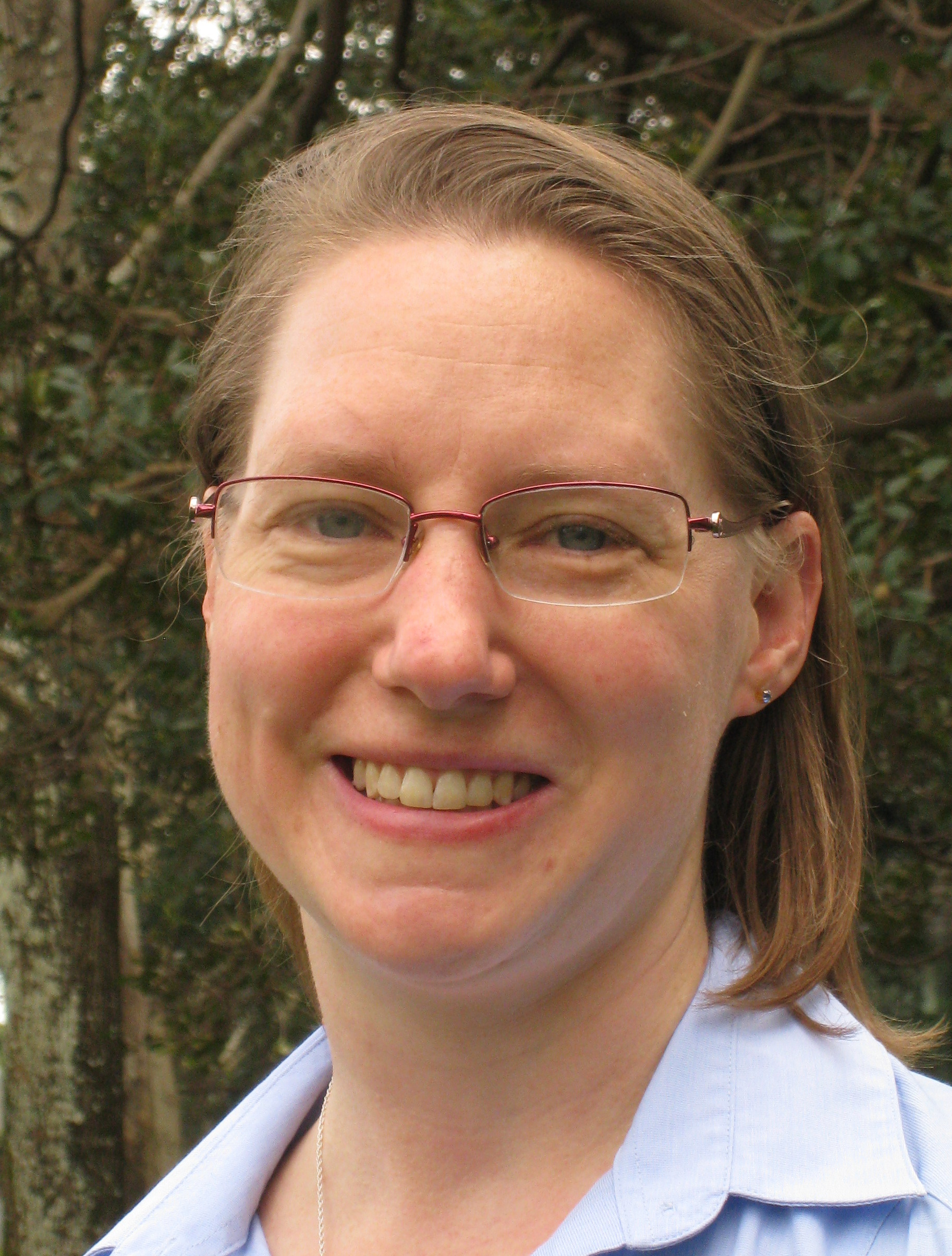
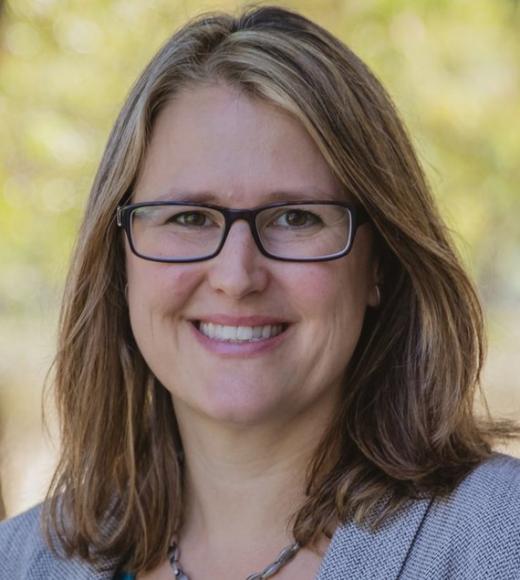
Kim Joo-yeon is an Associate Professor at the Department of Clothing and Textiles , Seoul National University , within the College of Human Ecology . She holds a Ph.D. in Fiber and Polymer Science from North Carolina State University, with prior Master's and Bachelor's degrees in Clothing and Textiles from Seoul National University. Research Interests focus on Textile Engineering , Nanotechnology , and Environmental Materials , particularly photocatalytic fabrics, biodegradable filters, and sustainable textile processing. Her work integrates Photocatalytic degradation of pollutants Nanoparticle functionalization Smart filtration systems Waste-to-resource strategies Publications (2022–2024) highlight innovations in Photocatalytic fabric design Bacterial adhesion control Multi-jet electrospinning MOF-based gas filters with a focus on environmental and healthcare applications. She teaches undergraduate courses in Clothing Material Evaluation and Experimental Studies , and graduate courses in Textile and Polymer Chemistry and Filter Materials . Kim leads the Textile Materials Lab , part of the multidisciplinary W.E.A.R. Lab ( Wearable Ergonomics + Anthropometrics Research ), addressing real-world challenges through textile innovation.
Prof. Dr.-Ing. Stephan Staudacher is the Director of the Institute of Aircraft Propulsion at the University of Stuttgart. His work focuses on aircraft propulsion systems, gas turbine performance, and turbomachinery design. He holds a professorship in the Faculty of Mechanical Engineering and Aerospace, leading research in advanced engine technologies, erosion effects, and fault detection algorithms. Research interests include engine reliability, computational fluid dynamics (CFD), and experimental validation of propulsion systems. His publications emphasize topics like neural network applications for fault detection, ice crystal icing simulations, and particle transport in additive manufacturing processes. Recent studies highlight the optimization of composite-cycle engines and assessment of mission severity caused by erosion. Key contributions include advancements in engine condition monitoring, transient performance analysis, and the development of Stuttgart University’s Altitude Test Facility (ATF). His work bridges theoretical models with industrial applications, addressing challenges in both civil and military aviation propulsion systems.
Associate Professor Judy Hart is a materials scientist at the School of Materials Science & Engineering, UNSW Sydney , specializing in the development of semiconducting materials for renewable energy applications. Her work integrates computational (DFT) and experimental approaches to understand composition-property relationships in systems like solid solutions , heterostructures , and doped materials for photocatalysis and solar cells . She leads projects funded by ARC Discovery and Linkage grants , including work on photo-electro-catalysis systems and stabilizing ceramic materials . Education: PhD in Materials Engineering (Monash University, 2007), BEng (Materials) (Monash, 2002) Professional Experience: Senior Lecturer (UNSW, 2017–), Lecturer (UNSW, 2013–2017), University of Bristol (2007–2012) Research Interests Her research focuses on designing materials for renewable energy , particularly photoelectrochemical water splitting and organic oxidation reactions . Key areas include Density Functional Theory (DFT) , defect engineering , band gap tuning , and nanostructured materials . She investigates ferroelectric polarization effects , metal oxide heterostructures , and stability of battery components , with applications in hydrogen production , CO2 conversion , and advanced battery materials . Scientific Awards Ramsay Memorial Fellowship (University of Bristol, 2007–2009) Teaching Contributions She is co-author of the 1st Australian & New Zealand edition of "Materials Science and Engineering: An Introduction" , and teaches courses on computational materials science , corrosion-resistant surfaces , mechanical behavior of metals , and materials design .
Kaushik Nayak is an Associate Professor in the Department of Electrical Engineering at the Indian Institute of Technology Hyderabad . His research spans semiconductor device physics, mesoscopic electronics, and electro-thermal effects in nanoscale transistors, with recent work on diamond MOSFETs, 2D material contacts, and thermal resistance in nano-sheet FETs. Ph.D., Indian Institute of Technology Bombay M. Tech., Microelectronics, IIT Bombay B.E., Electronics & Telecommunication, Utkal University He teaches advanced courses on semiconductor device modeling, mesoscopic electronics, and electromagnetic wave propagation. His publications focus on nanoelectronics, device variability, and high-temperature operations. Contact: knayak@ee.iith.ac.in .
Mohamed Shaat is an Assistant Professor of Mechanical Engineering in the Engineering Department at St. Mary's University, San Antonio, Texas. Holding a Ph.D. from New Mexico State University (2017), he previously served as Assistant Professor at Abu Dhabi University (2019-2021) and held postdoctoral positions at Southern Methodist University (2022-2024) and Boston University (2021-2022). His research bridges energy storage systems, active matter physics, and advanced materials engineering. His educational foundation includes: Ph.D. in Mechanical Engineering, New Mexico State University, 2017 M.Sc. in Mechanical Engineering, New Mexico State University, 2016 M.Sc., Zagazig University (Egypt), 2012 B.Sc., Zagazig University (Egypt), 2007 Dr. Shaat's research program focuses on interdisciplinary innovation in energy storage (SOFCs & ASSBs), mechanics of active matter, nano-confined fluids, chiral metamaterials, and topological/non-Hermitian mechanics. He integrates machine learning with continuum mechanics to optimize electrochemical systems and additive manufacturing, exploring nontraditional phenomena in complex materials for next-generation engineering applications. Analysis of his 60+ journal articles reveals a dominant trajectory in nonlocal elasticity theory and topological mechanics, with increasing integration of machine learning (2020-2024). His work spans nanostructure mechanics, metamaterial design, and energy storage optimization, demonstrating consistent innovation in theoretical frameworks for complex material systems. His scholarly recognition includes: World's Top 2% Scientist (Stanford University, Mechanical Engineering & Transports, since 2019) Outstanding Graduate Award, New Mexico State University (2017) Merit-Based Enhancement Fellowship, New Mexico State University (2017) Best Master's Thesis Award, Zagazig University (2013) Committed to academic service, Dr. Shaat serves on the editorial board of Scientific Reports and as Specialty Associate Editor for Frontiers in Mechanical Engineering. His extensive peer review for Nature, Nature Communications, and Applied Physics Letters reflects his field authority. While specific grant details aren't disclosed, his postdoctoral appointments and publication volume indicate successful research funding. His teaching includes Materials Engineering and Materials Laboratory courses, emphasizing hands-on student mentorship. Though laboratory infrastructure isn't explicitly detailed, his research scope suggests computational modeling expertise and likely collaboration with experimental teams for materials characterization in energy storage and metamaterials development.
Barbara Linke is a Professor in the Department of Mechanical and Aerospace Engineering at the University of California Davis, affiliated with the College of Engineering. She leads the Laboratory for Manufacturing and Sustainable Technologies Research (MASTeR) and serves as Principal Investigator at the Advanced Highway Maintenance and Construction Technology (AHMCT) Research Center. Her research focuses on sustainable manufacturing processes, abrasive machining, and smart manufacturing technologies, with applications in aerospace, biomedical, and automotive sectors. Dr. Linke holds a Dr.-Ing. habil. and has been recognized with the UC Davis Chancellor’s Fellow (2021-2022) and the Outstanding Junior Faculty Award from the College of Engineering. She advises the UC Davis Student Chapter of the Society of Manufacturing Engineers (SME) and the Women Machinists’ Club. She collaborates with the Fire Research Group at UC Berkeley and the Wildfires Research Working Group at UC Davis, integrating sustainability into wildfire-related infrastructure projects. Her research interests include energy-efficient manufacturing systems, lifecycle assessments, and the integration of Industry 4.0 technologies. Notable contributions include developing frameworks for sustainable additive and subtractive manufacturing, analyzing residual stresses in aluminum alloys, and advancing mobile 3D printing for disaster response. Her work bridges engineering education with cutting-edge research, emphasizing hands-on projects like the Shigley Hauler design competition. Dr. Linke’s labs and affiliations include the Materials Decarbonization and Sustainability Center and the UC Davis AI Center in Engineering, reflecting her commitment to interdisciplinary innovation. She has authored over 50 peer-reviewed articles, with recent focus on smart manufacturing systems, renewable energy integration in machining, and sustainable biomedical implant production.
Professor Ali Yapar is a faculty member at Istanbul Technical University in the Electronics and Communication Engineering department. His research focuses on Electromagnetics , Microwave Engineering , and Antenna Technologies , with a particular emphasis on inverse scattering problems and microwave imaging for biomedical applications. He has supervised numerous graduate students and led projects related to breast cancer treatment and rough surface imaging. PhD in Electronics and Communication Engineering from Istanbul Technical University (1997) MSc in Electronics and Communication Engineering (1995) His recent publications analyze advanced techniques for microwave hyperthermia systems, reverse time migration methods, and Newton-based solutions for electromagnetic inverse scattering. Key projects include TUBITAK-funded initiatives on microwave tomography and brain stroke imaging. He serves as a project investigator and executive for electromagnetic research programs. Research areas span Electromagnetic Wave Propagation , Green's Function Applications , and Dielectric Material Analysis . Collaborations include IEEE members and international researchers in computational electromagnetics.
Koenraad Muylaert is a Full Professor at the Faculty of Science, KU Leuven, and head of the Biology department at KU Leuven Kulak. His research focuses on microalgae ecology and phytoplankton physiology , with applications in eutrophication studies , wastewater treatment , and biofuel production . Based in Kortrijk, Belgium, he works with international teams in Ecuador, Qatar, and Belgium. Current projects on mountain lake eutrophication and urban aquatic systems Specializes in nano-material flocculation and omega-3 fatty acid production from microalgae Research Trends from his recent articles show emphasis on: Microalgae harvesting innovations (cellulose nanocrystals, PDMAEMA polymers) Comparative processing techniques (DAF vs sedimentation, drying methods) Biotechnological applications in flavor chemistry and microbiome interactions Laboratory operates at KU Leuven's Kortrijk campus, with strong collaborations in environmental engineering and food science . His work bridges fundamental ecological research with industrial biotechnology for sustainable solutions.
Jaal Ghandhi is a Professor in the Department of Mechanical Engineering at the University of Wisconsin-Madison. His research focuses on combustion and fluid mechanics in internal combustion engines, utilizing laser-based diagnostics to study temperature and concentration fields. He holds significant academic roles and has received multiple prestigious awards, including the John Bollinger Chair and ASME/Society of Automotive Engineers Fellowships. Education: PhD 1995 (Princeton University), MS 1988 (UW-Madison), BS 1986 (UW-Madison) His research interests include laser diagnostics, turbulent flow, and advanced engine design. Recent work emphasizes thermal barrier coating performance, diesel engine efficiency, and hydrogen-based fuels. Over 20 years, his publications span combustion dynamics, material durability, and engine thermodynamics. Awards include the NSF CAREER Award, Grainger Professorship, and multiple teaching accolades. He teaches graduate courses in energy sustainability, combustion, and engine experiments. His research contributes to sustainable engineering through improved engine efficiency and reduced emissions, with collaborations in automotive and energy sectors.
Jim Gatheral is a Presidential Professor of Mathematics at Baruch College, City University of New York (CUNY), where he leads the Financial Engineering MS Program. He holds a Ph.D. in Theoretical Physics from Cambridge University (1983), advised by John C. Taylor, and a B.Sc. in Mathematics and Natural Philosophy from the University of Glasgow (1979). Research Focus: His work centers on volatility modeling, market impact dynamics, optimal execution strategies, and stochastic volatility frameworks. Key contributions include rough volatility theory, affine forward variance models, and advancements in Heston and SABR models. He authored The Volatility Surface: A Practitioner’s Guide (2006), a seminal text in quantitative finance. Professional Contributions: Gatheral has published extensively in journals like Quantitative Finance , Finance and Stochastics , and SIAM Journal on Financial Mathematics . He co-developed the arbitrage-free SVI volatility surface parameterization and contributed to market impact models under perfect competition. His work integrates theoretical physics insights with financial engineering. Engagement: He delivers presentations globally, including at the SIAM Financial Mathematics and Engineering Conference (2019) and Bloomberg Quant Seminars. His research bridges academia and industry, addressing practical challenges in derivatives pricing and risk management.
Dr. Maria Anna Polak is a Professor in the Department of Civil and Environmental Engineering at the University of Waterloo, cross-appointed in the Faculty of Engineering. Her research focuses on advanced structural analysis, composite materials, and innovative construction technologies. She specializes in concrete structures, fiber-reinforced polymers (FRP/GFRP), and nondestructive evaluation methods. Her work addresses challenges in structural safety, durability, and sustainable design through computational modeling and experimental validation. Research Interests: Finite Element Analysis of Reinforced Concrete Structures FRP/GFRP Reinforcement for Concrete Applications Punching Shear Behavior and Design 3D-Printed Construction Materials Nondestructive Testing (NDT) with LiDAR and Ultrasonics Time-Dependent Behavior of Polymers and Composites Her recent publications emphasize advancements in computational modeling (FEA) for complex structural systems, material characterization of novel composites, and optimization of concrete components under seismic and environmental loads. Notable trends include integration of emerging technologies like smartphone LiDAR for on-site assessment and development of predictive models for FRP-degraded systems. Grants & Collaborations: Her work has been supported by industry partnerships (e.g., Horizontal Directional Drilling research) and academic initiatives. She contributes to international standards through experimental validation of design methods for modern construction materials. Labs/Teams: Active in the University of Waterloo's Structural Engineering and Applied Mechanics research group, focusing on smart infrastructure and material innovation.
Auezhan Amanov is an Associate Professor at the Faculty of Engineering and Natural Sciences, Tampere University, specializing in the Engineering Materials Science (EMS) department. His research focuses on tribology, surface engineering, and advanced materials processing. He leads the 'Tribology and Surface Modification' research group, aiming to enhance machine element performance through surface treatments and manufacturing innovations. Dr. Amanov is an active member of international tribology societies (STLE, JAST, KTS), chairing the 'Surface Engineering' committee at STLE. His work emphasizes improving wear resistance, fatigue life, and tribological performance of materials like titanium alloys, high-entropy alloys, and thermal spray coatings. His research integrates additive manufacturing, laser-based processes, and severe plastic deformation techniques to optimize material properties. Key contributions include studies on ultrasonic nanocrystal surface modification (UNSM) for enhancing mechanical and tribological characteristics. Collaborations with industries and academic institutions globally drive his mission to translate research into practical solutions for manufacturing efficiency and sustainable development. Dr. Amanov holds an h-index of 34 (Google Scholar) and has authored numerous peer-reviewed articles on materials science and tribology advancements. Teaching responsibilities include tribology and fatigue-related courses, reflecting his expertise in both academic and applied engineering domains. His vision includes advancing circular economy practices through bearing restoration technologies and improving 'Made in Finland' manufacturing competitiveness through material science innovations.
Wagdi George Habashi is a Professor and NSERC-Industrial Research Chair at McGill University's Faculty of Engineering, Department of Mechanical Engineering. He leads the Computational Fluid Dynamics (CFD) Lab, focusing on aerodynamics, fluid mechanics, and icing-related simulations. His research emphasizes in-flight icing prediction, computational wind engineering, and CFD-driven optimization of aircraft and jet engine systems. Education: Ph.D., Cornell University M.Eng., McGill University B.Eng., McGill University Research Interests: Habashi's work bridges analytical and computational methods to address multi-physics/multi-scale engineering challenges. Key areas include in-flight ice crystal ingestion in jet engines, ice surface roughness modeling, supercooled droplet dynamics, and CFD-based risk management for icing. His team develops tools like FENSAP-ICE for real-time aero-icing simulations and explores mesh adaptation, parallel computing, and reduced-order modeling. Labs/Teams: Computational Fluid Dynamics Lab (CFD Lab).
Dr. Pinon Hermida Victor is a Researcher at the Institute of Electronic Structure and Laser (IESL) under the Foundation for Research and Technology – Hellas (FORTH). He holds a PhD in Physics from the University of A Coruña (2011) and has conducted extensive research on Laser-Induced Breakdown Spectroscopy (LIBS), focusing on femtosecond lasers, double-pulse configurations, and applications in material analysis, archaeology, and environmental science. His career includes roles at Applied Photonics Ltd (UK) as Senior Applications Scientist (2014-2020) and postdoctoral fellowships at FORTH-IESL through the Marie Curie ATLAS program (2006-2008). Research interests span LIBS methodology development, optical fiber systems for high-power lasers, and software for spectral analysis. Notable contributions include portable LIBS instrument design and radiation-resistant optical components for nuclear facilities. Awards include the 2008 LIBS Contest and the 2011 Premio Extraordinario de Doctorado. Recent work focuses on applying LIBS to archaeological mollusc shell analysis for climate and environmental studies. He collaborates internationally on LIBS quantification challenges and instrument durability in harsh environments. Education: PhD in Physics (2011), University of A Coruña; Diploma in Physics (2001), University of Santiago de Compostela Key Roles: Senior Applications Scientist (Applied Photonics), Marie Curie Fellow (FORTH-IESL), Researcher (Laboratory of Industrial Applications of Lasers) Lab Affiliations: IESL-FORTH and University of A Coruña laser labs
Dr Yongle Sun is a Lecturer in Additive Manufacture at Cranfield University , specializing in cross-scale modelling of metal manufacturing processes for aerospace and energy applications. BSc & MSc in Mechanics from Xi'an Jiaotong University PhD in Mechanical Engineering from The University of Manchester His research focuses on multi-physics modelling of additive manufacturing and welding processes, with particular emphasis on residual stress/distortion prediction and mitigation. Current projects include: NEWAM (cross-scale additive manufacturing) SAM (smart manufacturing) I-Break (process innovation) With over £10M in research funding, his work bridges mechanistic models with engineering applications through collaborations with: GE Avio Aero WAAM3D Airbus EPSRC Innovate UK Key achievements include: First author of 16 leading journal papers Co-author of 35+ peer-reviewed works H-index of 23 Queen's Anniversary Prize contribution Top-cited paper in International Journal of Impact Engineering