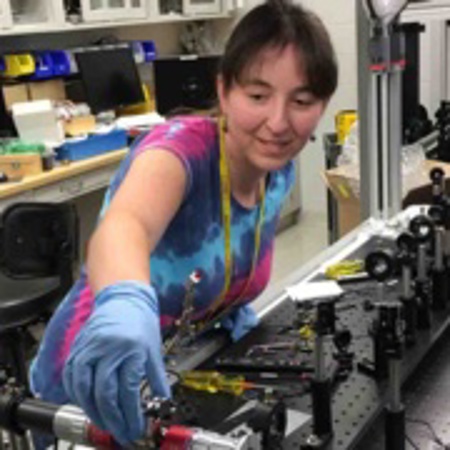
Richard Harrison is a Professor and Head of Department at the University of Cambridge, affiliated with the Department of Earth Sciences. He leads the NanoPaleoMagnetism group, focusing on experimental and computational approaches to magnetic nanoparticles in terrestrial and extraterrestrial environments. His research spans fundamental rock and mineral magnetism, mineral physics, and materials science applied to natural systems. He integrates computational modeling, experimental techniques, and advanced microscopy, such as soft X-ray dichroic imaging and micromagnetic simulations, to study nanoscale magnetic processes. His work on first-order reversal curve (FORC) diagrams has significantly influenced paleomagnetic data analysis, with applications in meteorite magnetism, environmental magnetism, and early Earth studies. Recent publications highlight his interdisciplinary approach, combining AI (e.g., few-shot learning) with 3D imaging tools to analyze magnetic microstructures. Topics include subduction zone magnetism, Martian serpentinization, magnetofossils, and environmental pollution, reflecting his broad impact across Earth, Planetary, and Environmental Sciences.
Helen Williams is a Researcher at the Department of Earth Sciences , University of Cambridge. Her work focuses on developing and applying novel isotope tools to study geological and planetary processes, including mantle heterogeneity, magma ocean crystallization, and subduction zone redox cycles. She collaborates with geophysicists, volcanologists, and planetary scientists through multidisciplinary team-based research. Key research areas: Mantle and core processes, critical metals, planetary habitability, subglacial environments Her group utilizes high-precision plasma mass spectrometry and fieldwork to analyze natural samples like igneous rocks, meteorites, and sediments. Specific projects address ore deposit formation, volatile element cycling, and the evolution of Earth's interior chemistry over 4 billion years.
Daniel Gavin is a Professor and Department Head in the Geography, Climate Studies department at the University of Oregon's College of Arts and Sciences. With expertise spanning biogeography, paleoecology, and forest ecology, his research focuses on understanding Earth's biotic responses to climate change across various spatial and temporal scales. Dr. Gavin's research interests include reconstructing forest composition and natural disturbances through recent history (hundreds of years) and more distant history (thousands of years) using interdisciplinary research designs. His work examines sediment records extending back to the last Ice Age (18,000 years ago) to understand how populations and communities reorganize through periods of fast and slow climate change. He also investigates shorter sediment records of the past 2000 years to provide context for human-induced impacts of the last 200 years, and tree-ring records of the past 400 years to address tree population dynamics at annual resolution. His recent publications reveal a research trajectory focused on Holocene environmental change, particularly examining the interplay between climate, fire, vegetation, and geological processes. His work spans diverse geographical locations including the Pacific Northwest, Indonesia's tropical peatlands, and the Great Basin. Key methodologies in his research include lake sediment analysis, pollen and macrofossil analysis, tree-ring studies, and multi-proxy paleoenvironmental reconstructions. Dr. Gavin has received the GSA Quaternary Geology and Geomorphology Division Distinguished Career Award, recognizing his significant contributions to the field. His scholarly output demonstrates consistent productivity with numerous high-impact publications in leading earth science and ecology journals. As an educator, Dr. Gavin teaches courses including Biogeography (Geog 323), Long Term Environmental Change (Geog 430/530), Advanced Biogeography (Geog 423), and Quantitative Methods in Paleoecology (Geog 607). His teaching emphasizes the relevance of biogeography during a time of increasing human impact and climate change, developing students' appreciation for historical and ecological factors influencing life patterns on Earth.
Tom Lapen is a Professor at the University of Houston specializing in Geology and Geochemistry. His research integrates field studies, geochemical analyses, and isotopic techniques to investigate planetary formation, crustal evolution, and tectonic processes. With an h-index of 37 and over 4,500 citations, his work spans terrestrial and extraterrestrial geology, emphasizing high-impact publications in journals like Science and Earth and Planetary Science Letters . Research Focus: Professor Lapen's expertise centers on isotope geochemistry, geochronology, and planetary materials. Key themes include: Martian meteorite chronology and magmatic evolution Subduction zone dynamics and deep earthquake mechanisms Mountain-building processes in the Andes and Pamirs Analytical advancements in U-Pb and Lu-Hf dating Early Solar System volatile accretion Publication Trends: His recent articles (2009-2020) demonstrate a strong focus on planetary geochemistry (Mars, Moon), isotope systematics (Nd, Hf, Sm), and tectonics. The research frequently combines cutting-edge analytical methods with field observations to resolve timescales of geological events, from meteorite ejection to orogenic uplift.
Jade Star Lackey is a Professor of Geology at Pomona College, where he has been faculty since 2007. He directs both the Pomona College X-ray Fluorescence Laboratory and co-directs the Oxtoby Isotope Laboratory (OIL), facilities that host researchers from over a dozen institutions. Currently on leave for the 2025-2026 academic year, he remains an active researcher and educator specializing in igneous and metamorphic systems. His research focuses on stable isotope geochemistry applied to magmatic and hydrothermal systems, particularly within the Sierra Nevada batholith. Key interests include: Deciphering magma system evolution through single-crystal zoning analysis Monitoring fluid fluxes using isotopic studies of marble roof pendants Applying oxygen isotope analysis to garnet and zircon in peraluminous magmas Resolving terrane cooling histories via titanite isotopes Evaluating trace element mobility in natural coal fires His work combines field studies in California, Canada, Sweden, and Australia with advanced laboratory techniques. Lackey's publication record shows consistent trends in Sierra Nevada batholith evolution and hydrothermal fluid dynamics , with emphasis on oxygen isotope systematics in accessory minerals. His most recent work integrates zircon U-Pb dating with stable isotopes to unravel hydrothermal system histories and magmatic flare-ups. The research spans Precambrian to Pleistocene timescales, connecting deep crustal processes with surface climate impacts. Major scientific recognition includes: Gordon and Betty Moore Foundation grant ($922,816) establishing the Oxtoby Isotope Lab National Science Foundation funding for magma source studies ($87,145) NSF grant ($200,000) for XRF curricular enhancement American Chemical Society Petroleum Research Fund award ($50,000) Research Corporation Cottrell Grant ($100,000) for biogeochemical research As an advisor, Lackey has mentored over a dozen undergraduate researchers who appear as co-authors on his publications, including Windham (PO'11), Frazer (PO'09), and Romero (PO'12). His grants from NSF, Moore Foundation, ACS, and Keck Consortium have directly supported student fieldwork and laboratory research. The Oxtoby Isotope Laboratory and XRF facility serve as central hubs for collaborative projects across Southern California institutions. Laboratory leadership defines his institutional impact: he spearheaded the Oxtoby Isotope Lab founding in 2017 and operates a 4.2 kW Thermo-ARL wavelength dispersive XRF system pushing rare earth element analysis capabilities. These facilities enable cutting-edge research on mineral chemistry and isotopic signatures critical to his magmatic and hydrothermal studies.
Matthias Frische is a Researcher in the Magmatic and Hydrothermal Systems department at the Helmholtz Centre for Ocean Research (GEOMAR) in Kiel, Germany. With over two decades of experience since completing his mineralogy studies at Georg-August University of Göttingen, he has established himself as a specialist in geochemical analysis of hydrothermal systems and volcanic processes. His career progression from PhD researcher (2001-2005) through postdoctoral positions (2005-2010) to his current permanent research role demonstrates his expertise in marine geosciences. Frische's research focuses on the geochemical characterization of hydrothermal systems, with particular emphasis on trace element distribution in sulfide deposits, volcanic gas emissions, and halogen cycling in subduction zones. His methodological expertise includes LA-ICP-MS analysis and stable isotope measurements, with applications ranging from seafloor massive sulfide deposits to volcanic monitoring. Recent work examines hydrothermal mineralization at continental breakup zones, gold mineralization processes, and the geochemical signatures of ancient island arcs. Analysis of his recent publications (2021-2025) reveals consistent contributions to understanding hydrothermal processes across diverse geological settings including the East Pacific Rise, Indian Ocean ridges, Papua New Guinea volcanic systems, and ancient geological terrains in Tibet and Egypt. His work bridges fundamental geochemical research with practical applications in mineral exploration and understanding Earth's volatile cycles. Frische actively participates in the international scientific community through presentations at major conferences including Goldschmidt and EGU meetings. His collaborative approach is evident in his extensive co-authorship network spanning multiple continents and institutions.
Louis-Maxime Gautreau is a Researcher at GEOMAR Helmholtz Centre for Ocean Research Kiel within the Dynamics of the Ocean Floor division and Magmatic and Hydrothermal Systems unit since February 2021. His work focuses on magmatic-ore deposit relationships, metal/volatile transfers through Earth's crust, and submarine volcanic systems with emphasis on seafloor mineral resources. His educational background includes: Doctor of Natural Sciences (Dr. rer. nat.), Kiel University (2025) Master's Degree in Geosciences Engineering, National School of Geology, Université de Lorraine (2014-2017) Mining Engineering Degree, Universidade Federal de Minas Gerais (2016-2017) General Scientific Studies, Classe Préparatoire Sainte-Geneviève (2012-2014) Research interests span magmatic processes, hydrothermal systems, and statistical methods in petrology/geochemistry applied to metal deposit formation. His work integrates field studies, geochemical analysis, and modeling to investigate submarine volcanic environments and seafloor mineralization processes. Recent publications demonstrate consistent focus on Conical Seamount (Papua New Guinea), examining magma evolution, volatile degassing, and ore formation mechanisms through SIMS analysis of melt inclusions and integrated geological-geochemical studies. Current projects include the DOMETRAP initiative (Dynamics of Ore Metal Transport in Alkaline Porphyry systems) under the German Research Foundation's DOME priority program and post-doctoral research on metal/volatile transfers at the Izu-Ogasawara subduction zone (Sofu Seamount). He actively participates in international research expeditions aboard vessels KAIMEI, SONNE, and METEOR, contributing to integrated studies of arc rifting, metallogeny, and microplate evolution in submarine environments.
Jack Loveless is a Professor of Geosciences at Smith College, specializing in earthquake-related processes using high-precision GPS data to analyze surface motion in tectonically active regions. He compares contemporary deformation with long-term geological records to understand seismic hazards. Education: Ph.D. in Structural Geology from Cornell University (2007) B.S. in Geology from University of New Hampshire (2002) His research spans diverse regions including the Atacama Desert (Chile), southern California, Japan, Tibetan Plateau, and Olympic Peninsula (USA), focusing on faulting, subduction, and stress modeling. Key methodologies include boundary element models, GPS data inversion, and software tools like Blocks and tridisl .
Sarah Mazza is an Assistant Professor of Geosciences at Smith College, specializing in hard-rock geology and geochemistry. Her research focuses on understanding Earth's evolution through volcanic studies and isotopic analysis, with teaching responsibilities including Introduction to Earth Processes and History, Mineralogy, and Petrology. Her educational background includes: B.S. from the University of North Carolina M.S. and Ph.D. from Virginia Polytechnic Institute and State University (Virginia Tech) Dr. Mazza's research spans geochemistry , volcanology , and structural geology , investigating planetary formation processes through intraplate volcanism , stable isotope fractionation , and subduction zone dynamics . Fieldwork locations include Bermuda, Virginia, West Virginia, Scotland, and Nepal, combined with advanced laboratory techniques for tungsten and zinc isotopic analysis. Her publication trends reveal a dominant focus on isotope geochemistry to decode Earth's history, particularly tungsten isotopes as tracers for slab dehydration in subduction zones, mechanisms of intraplate volcanism in Bermuda and eastern North America, and tectonic evolution of ancient orogens like the Caledonides. This work bridges field observations with geochemical modeling to address fundamental questions in Earth sciences. No specific scientific awards were documented in the provided materials. Dr. Mazza actively mentors undergraduate researchers through diverse projects including mafic sediment analysis from Bermuda, petrographic surveys of Bermuda and New Hampshire samples, and whole-rock analysis of Lassen National Park basalts. She secured a 2023 visiting scientist position at Lawrence Livermore National Laboratory (LLNL) for zinc and tungsten isotopic data collection, demonstrating successful grant acquisition for cutting-edge instrumentation access. Her laboratory at Smith College maintains active geochemical and petrological research programs, with collaborations spanning international institutions including the University of Münster (Germany), Cornell University, and LLNL, focusing on volcanic rock analysis and stable isotope applications.
Dr. Marcel Regelous serves as Research Associate and Privatdozent (PD) at the Chair of Endogenous Geodynamics within the GeoZentrum Nordbayern (GeoCenter Northern Bavaria) at Friedrich-Alexander-Universität Erlangen-Nürnberg (FAU). He additionally holds critical operational roles as Laboratory Manager for multiple advanced analytical facilities including clean rooms, inductively-coupled plasma mass spectrometers, thermal ionization mass spectrometers, and MC-ICP-MS laboratory, while also serving as Safety Officer for the GeoZentrum. His research spans multiple interconnected domains of Earth and planetary sciences, with primary focus on the chemical evolution of Earth's mantle and crust, igneous petrogenesis, cosmochemistry of the early solar system, and meteorite petrology. Dr. Regelous employs cutting-edge microanalytical techniques including electron microprobe and laser-ablation ICP-MS to examine chemical compositions of volcanic glasses and other geological materials, avoiding complications from hydrothermal alteration that affect bulk rock analyses. Analysis of his publication record reveals significant contributions to understanding mantle melting processes at spreading ridges, the formation mechanisms of ophiolites like the Troodos Ophiolite of Cyprus, continental insulation effects on mantle temperatures following rifting, and nickel isotope heterogeneity in the early Solar System. His work demonstrates expertise in correlating abyssal peridotite and mid-ocean ridge basalt compositions, subduction zone element transport mechanisms, and the links between flood basalt magmatism and paleoclimate. Dr. Regelous maintains extensive collaborative networks across international research institutions, with co-authorship on numerous high-impact publications in journals including Nature Geoscience, Earth and Planetary Science Letters, and Chemical Geology. His laboratory facilities support not only his own research but also that of students and collaborators across multiple disciplines of geoscience.
Professor Esther Schmädicke is a distinguished geoscientist specializing in Mineralogy and Petrology at the GeoCenter Northern Bavaria, Friedrich-Alexander-Universität Erlangen-Nürnberg (FAU). She holds a dedicated professorship for Mineralogy (Petrology) and has established herself as a leading researcher in the field of mantle petrology and metamorphic processes. Her research primarily focuses on: Water in nominally anhydrous mantle minerals and its distribution in the upper mantle Transport of water in subduction zones Petrology of mantle rocks including stability of hydrous minerals Reconstruction of pressure-temperature histories of metamorphic rocks Modeling of phase equilibria in various rock systems Professor Schmädicke's research spans multiple geological settings worldwide, with field areas including the Bohemian Massif (Erzgebirge, Odenwald, Granulitgebirge), Rehoboth Terrane (Namibia), Cyclades (Greece), Shackleton Range (Antarctica), and the Mid-Atlantic Ridge. Her recent publications demonstrate a continued focus on water in mantle minerals, eclogite petrology, and high-pressure metamorphic processes. Analysis of her publication record shows consistent contributions to understanding mantle water content, subduction zone processes, and the petrogenesis of high-pressure rocks, with particular emphasis on the role of water as a critical component in deep Earth processes and tectonic evolution. Her scientific contributions include: Investigating water incorporation in various mantle minerals like garnet, omphacite, and orthopyroxene Studying the petrology of ultrahigh-pressure rocks and their formation mechanisms Reconstructing metamorphic histories of various rock types across different tectonic settings Developing models for phase equilibria in complex rock systems Professor Schmädicke has maintained a productive research career spanning over three decades, with continuous publication output from the 1990s to the present. Her work demonstrates a consistent focus on the role of water in mantle processes and the petrology of high-pressure metamorphic rocks, making significant contributions to our understanding of deep Earth processes and the global water cycle within Earth's interior.
Dr. Simon Engelhart is an Associate Professor in the Department of Geography at Durham University, UK. His research focuses on sea-level changes across multiple timescales, integrating geological data with modern geodetic observations to understand coastal inundation from tsunamis and storms, earthquake-induced land-level changes, and climate-driven sea-level rise. Durham University (2022–present) University of Rhode Island (2013–2019) University of Pennsylvania (Postdoc & PhD, 2005–2012) His work employs microfossils , geochemical proxies , and mangrove sediment analysis to reconstruct past sea levels and earthquake history, particularly in subduction zones like Cascadia and the Aleutian arc. Recent publications highlight 21st-century coastal flood risks , paleo-tsunami stratigraphy , and multi-proxy sea-level databases , with applications to climate resilience and tectonic hazard assessment. Scientific leadership includes: Project Leader, IGCP Project 639 Project Leader, INQUA CMP1701P Guest Editor, Quaternary Science Reviews Editorial Board Member, OpenQuaternary He supervises PhD and MRes students in coastal geoscience and collaborates globally on subduction zone dynamics , glacial isostatic adjustment , and coastal infrastructure risks .
Professor Jeremy Lloyd is a distinguished academic in the Department of Geography at Durham University, specializing in Quaternary environmental reconstruction with particular focus on palaeoceanography and sea-level changes. His research has significant implications for understanding past climate dynamics and their relationship to current and future environmental changes. His primary research interests encompass three interconnected areas: the interaction between palaeoceanography and ice sheet dynamics, relative sea-level changes and coastal evolution, and the reconstruction of Asian Monsoon climate. Dr. Lloyd's work on ice-ocean interactions has concentrated on Greenland margins and the Antarctic Peninsula, investigating the timing and nature of deglaciation and the link between ocean circulation and ice stream dynamics. His sea-level research spans multiple geographic regions including the UK, Iceland, and Mexico, providing critical data for testing glacio-hydro-isostatic models. His monsoon research focuses on developing new proxies from the Pearl River Estuary to reconstruct Southeast Asian Monsoon variations. Analysis of his recent publications (2023-2025) reveals a strong interdisciplinary approach combining multiple proxy methods including foraminifera, diatoms, and geochemical analyses. His work spans diverse geographic regions from Scotland and Greenland to Antarctica and the Pearl River Estuary, demonstrating the global relevance of his research. The publications showcase methodological innovations in sea-level reconstruction, ice-ocean interactions, and paleoclimate proxy development, often involving large international collaborations. Professor Lloyd actively supervises graduate students including Jennifer Taylor, Raphael Kahlenberg, and Sirui Huang. His research involves extensive collaborations with scientists from institutions across Denmark, Germany, Poland, Hong Kong, and the United States, reflecting the international nature of his work. Notable collaborators include Dr. Antoon Kuijpers (Geological Survey of Denmark and Greenland), Dr. Matthias Moros (Baltic Sea Research Institute), Dr. Andrzej Witkowski (University of Szczecin), and Professors Colm Ó Cofaigh and Antony Long at Durham University. His laboratory work involves multi-proxy paleoenvironmental reconstruction, with particular expertise in foraminiferal analysis, geochemical fingerprinting, and sea-level indicator development. Fieldwork spans Arctic regions including Greenland and Svalbard, as well as coastal sites in the UK, Iceland, and China, supporting his diverse research interests in ice-sheet dynamics, sea-level change, and monsoon systems.
Susannah Dorfman serves as Associate Professor in the Department of Earth & Environmental Sciences and Adjunct Associate Professor in the Department of Physics & Astronomy at Michigan State University's College of Natural Science. Her research laboratory, Experimental Mineralogy @ MSU, focuses on simulating planetary interior conditions using laser-heated diamond anvil cell experiments reaching pressures up to 2.5 Mbar and temperatures to 6000 K. Dr. Dorfman's research spans four primary areas: physical properties of deep Earth minerals, element cycles and redox in the deep Earth, strength and deformation of materials at high pressures, and geoscience education research. Her work combines in situ synchrotron diffraction and spectroscopy with ex situ electron microscopy techniques to investigate phase equilibria and physical properties of planetary materials including mantle silicates and carbonates. Her recent publications (2024-2025) demonstrate continued activity across mineral physics, planetary science, and educational research domains, with particular emphasis on iron-nitrogen-carbon systems relevant to planetary cores, sodium solubility in deep mantle minerals, and pandemic impacts on geoscience education. COMPRES Distinguished Lecturer (2017-2018) Dr. Dorfman advises multiple graduate students and postdoctoral researchers, including Mingda Lv, Jiachao Liu, and most recently Dr. Biao Wang who joined in Spring 2025. Her research group maintains active collaborations with synchrotron facilities and participates in COMPRES (Consortium for Materials Properties Research in Earth Sciences) activities, where she previously chaired the Education, Outreach, and Infrastructure Development Committee.
Eric D'Asaro is a Senior Principal Oceanographer and Professor of Oceanography at the Applied Physics Laboratory, University of Washington (APL-UW). He is affiliated with the Ocean Physics department and has made significant contributions to the field of physical oceanography over his extensive career. Dr. D'Asaro earned his B.A. and M.S. in Physics from Harvard University in 1976, followed by a Ph.D. in Oceanography from MIT/WHOI in 1980. His educational background provided the foundation for his innovative research at the intersection of fluid mechanics, oceanography, and engineering. Dr. D'Asaro's research spans a wide number of environments from upper ocean mixed layers to nearshore coastal fronts to fjords to deep convection. Starting from a core interest in turbulence and internal waves, his work has expanded to include new aspects of small-scale oceanography, including submesoscale processes, and the role of all of these mixing processes in controlling biochemical processes in the ocean. For the past 30 years, his experimental work has focused on exploiting the unique capabilities of "Lagrangian Floats," a class of instruments that try to accurately follow the three dimensional motion of water parcels particularly in regions of strong mixing. By measuring big signals, like hurricanes or major blooms, it is easier to unravel the underlying processes because the signal to noise is high. His work bridges fluid mechanics, oceanography, and engineering, making significant contributions to our understanding of ocean mixing processes and their role in global climate systems. His research has important implications for climate modeling, carbon cycling, and predicting the behavior of extreme weather events like hurricanes. Wave Measurements at Ocean Weather Station PAPA Air-Sea Momentum Flux in Tropical Cyclones Salinity Processes in the Upper Ocean Regional Study (SPURS) Lateral Mixing Autonomous Lagrangian Floats for Oxygen Minimum Zone Biogeochemistry Hurricane Lagrangian Floats North Atlantic Bloom EXPORTS: Export Processes in the Ocean from RemoTe Sensing Lagrangian Submesoscale Experiment (LASER) Dr. D'Asaro's laboratory and research team focus on developing and deploying innovative instrumentation for oceanographic measurements, particularly Lagrangian floats that can accurately follow water parcels. His work has resulted in numerous publications spanning from 2000 to the present, with a particularly high output in recent years (2023-2025).