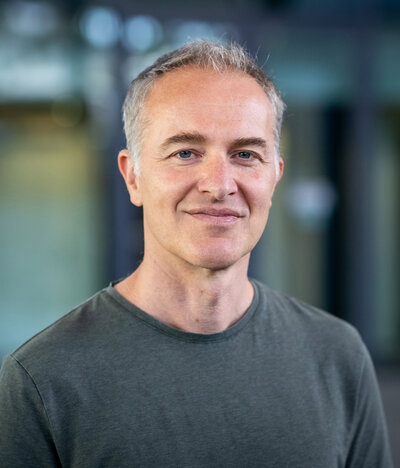
Rudi Pendavingh is an Assistant Professor at the Department of Mathematics and Computer Science at Eindhoven University of Technology. Affiliated since 1999, he specializes in matroid theory , combinatorics , and topological graph theory within the Combinatorial Optimization group. Research Interests include: Matroid theory with focus on excluded minors and representability over partial fields Topological graph theory, particularly Colin de Verdière invariants for surface-embedded graphs Discrete optimization modeling and algorithmic complexity Geometric combinatorics in polyhedral complexes like Dressians Recent Publications highlight his work on: Stable tournament formats using finite projective planes (2025) Bounding topological graph parameters via combinatorial methods (2024) Computational enumeration of matroid minors (2024) Asymptotic analysis of Dressian dimensions (2024) Contact : Email: r.a.pendavingh@tue.nl Phone: +31 40 247 4235 Office: MetaForum 4.105, TU/e Campus
Oleg Pikhurko is a Professor of Mathematics at the University of Warwick, affiliated with both the Mathematics Institute and DIMAP (the Centre for Discrete Mathematics and its Applications). His office is located in room B2.12 at the University of Warwick in Coventry, UK. Pikhurko has established himself as a prominent researcher in combinatorics with significant contributions to extremal combinatorics, graph theory, and related fields. His research interests span a wide range of topics in discrete mathematics including extremal combinatorics and graph theory, descriptive combinatorics, graph limits, random structures, and algebraic, analytic and probabilistic methods in discrete mathematics. Pikhurko's work bridges theoretical foundations with practical applications, often employing sophisticated mathematical techniques to solve challenging problems in combinatorial structures. The analysis of Pikhurko's recent publications reveals a consistent focus on extremal combinatorics, particularly Turan-type problems, hypergraph theory, and graph limits. His work demonstrates increasing sophistication in handling complex combinatorial structures, with recent papers exploring connections to measure theory, geometry, and coding theory. Notably, his research shows a progression from classical combinatorial problems toward more abstract and interdisciplinary approaches, including measurable versions of combinatorial theorems and applications to high-dimensional spaces. ERC Advanced Grant 'Finite and Descriptive Combinatorics' (2022-2026) Pikhurko has successfully supervised numerous PhD students including Teresa Sousa (2006), David Offner (2009), Zelealem Yilma (2011), Matthew Fitch (2019), and Matteo Mazzamurro (2023). He currently co-advises Irene Gil Fernández and Zhuo Wu, both expected to complete their PhDs in 2025. His research group focuses on 'Finite and Descriptive Combinatorics,' reflecting his dual interest in finite combinatorial structures and their descriptive (measurable) counterparts. The ERC Advanced Grant awarded in 2022 has provided significant funding to support this research program through 2026. Beyond traditional research, Pikhurko founded the Hedgehog Fund, which encourages innovative proofs of mathematical results presented in his lectures. He also maintains an Erdos Lap Number of 2, having sat on the lap of Barbie Freidin (Erdos Lap Number 1) who herself sat on Paul Erdos's lap.
Simon Dekeyser is an Associate Professor at KU Leuven’s Faculty of Economics and Business, affiliated with campuses in Antwerp, Kortrijk, and Leuven. He serves as Coordinator of the Accounting Research Group and Head of Subdivision 17 (Antwerp Campuses). His roles include academic leadership and teaching in accounting and auditing. He holds memberships in the Council of the Faculty of Economics and Business and the Campus Council FEB (Antwerp). His research focuses on audit quality, audit regulation, corporate governance, and multinational corporate reporting. Notable projects investigate EU Audit Reform impacts, auditor market dynamics, and SME financial health in the European space industry. He has published extensively in journals like Journal of Accounting Research and Contemporary Accounting Research , addressing topics such as audit committee effectiveness, non-audit fee caps, and auditor industry specialization. Teaching responsibilities include courses in external auditing standards, financial reporting, and research methods. He advises multiple research projects as a Promotor, with current projects exploring audit human capital management and cross-border audit regulation effects. His work bridges academia and policy, contributing to understanding audit markets and regulatory frameworks. He collaborates internationally, evidenced by publications co-authored with researchers from China, Italy, and Greece.
Benjamin Peter is a Group Leader at the Max Planck Institute for Evolutionary Anthropology in Leipzig, Germany, leading the 'Genetic Diversity through Space and Time' group. He holds a PhD from the University of California, Berkeley (2014), an MSc from the University of Bern (2010), and a BSc in Biology from the University of Bern (2008). His research focuses on population genetics, ancient DNA analysis, and human evolutionary history. Education: PhD in Integrative Biology, UC Berkeley (2014) MSc in Ecology and Evolution, University of Bern (2010) BSc in Biology (Plant Sciences), University of Bern (2008) Research Interests: Dr. Peter specializes in reconstructing human evolutionary history through ancient DNA, population genetics, and genomic analysis. His work addresses topics such as Neanderthal admixture, Denisovan ancestry, and the genetic basis of human adaptation to high-altitude environments. He develops computational methods for analyzing ancient genetic data and interpreting population structure dynamics. Article Trends: His recent publications emphasize ancient genomic studies, including analyses of early modern human genomes, Neanderthal social organization, and Denisovan admixture in East Asian populations. His work often integrates archaeological and genetic data to elucidate human migration and evolutionary trajectories. Labs/Teams: He leads a research group focused on genetic diversity dynamics, collaborating with institutions globally. His team employs cutting-edge sequencing and computational tools to explore evolutionary questions.
Hans-Peter Seidel is a leading academic in computer graphics, serving as Director of the Max Planck Institute for Informatics and Full Professor at Saarland University since 1999. Previously held roles include Full Professor at University of Erlangen (1992–1999) and Assistant Professor at University of Waterloo (1989–1992). Holds a PhD in Mathematics (1987) and Habilitation in Informatics (1989) from University of Tübingen. Research focuses on 3D image analysis, digital geometry processing, visual computing, and free viewpoint rendering. Key achievements include pioneering work in surface editing, motion capture, and multi-view video processing. Has organized major conferences like Eurographics and SIGGRAPH, serving as editor for journals including IEEE TVCG and Computer Aided Geometric Design. Recipient of the Eurographics Distinguished Career Award (2012), Gottfried Wilhelm Leibniz Prize (2003), and numerous fellowships. Led initiatives such as the Cluster of Excellence on Multimodal Computing and Interaction (M2CI) and the Max Planck Center for Visual Computing and Communication (MPC-VCC). Active in academic leadership roles including Eurographics Chair and DFG committees. Publications span over 30 SIGGRAPH and 50 Eurographics contributions, with an h-index of 62 and 14,000+ citations. Recognized as a top-cited researcher in computer graphics. Current research explores advanced visualization techniques and geometric modeling innovations.
Sara Grundel is a leading researcher at the Max Planck Institute for Dynamics of Complex Technical Systems in Magdeburg, Germany. Her work focuses on computational methods in systems and control theory, particularly in model order reduction, gas network simulation, and optimization of energy systems. Education: Diplom in Mathematics, ETH Zurich (2005) PhD in Mathematics, Courant Institute of Mathematical Sciences, New York University (2011) Research Interests: Sara’s research encompasses mathematical control theory, stability analysis, and numerical methods for differential-algebraic equations. She applies these techniques to gas and energy networks, epidemic modeling, and multi-agent systems. Her interdisciplinary work bridges computational mathematics with real-world engineering and public health challenges. Recent Publications: Her 15 most recent articles (2024–2012) demonstrate expertise in parametrized PDEs, model reduction for coupled systems, and control strategies for SARS-CoV-2 containment. Key subtopics include adaptive meshing, stability-preserving algorithms, and optimization of nonlinear network dynamics. Scientific Contributions: Developed clustering-based model reduction techniques for networked systems Investigated hyperbolic discretization methods using Riemann invariants Advanced polynomial root radius optimization with affine constraints Collaborations: Sara frequently collaborates with researchers like Peter Benner and Martin Gersen on energy grid simulations and control theory. She participates in international conferences (GAMM, IEEE CDC, MTNS) and contributes to edited volumes in applied mathematics.
Wim De Roeck is an Associate Professor in the Department of Mechanical Engineering at KU Leuven's Faculty of Engineering Technology. He serves as contact person for the Mecha(tro)nic System Dynamics (LMSD) research group at Group T Leuven Campus and heads Subdivision 20 within the same campus. Additionally, he holds multiple program director roles for Elektromechanica programs across different KU Leuven campuses. His research focuses on acoustics, vibration analysis, and fluid dynamics with particular emphasis on aeroacoustics and flow-structure interactions. De Roeck's work bridges theoretical and experimental approaches to address noise and vibration challenges in mechanical systems. His research spans multiple application domains including automotive systems, aerospace components, and HVAC technologies, with a strong focus on micro-perforations, flow ducts, and Helmholtz resonators. Analysis of his recent publications reveals a consistent focus on advanced measurement techniques (particularly two-port and three-port characterization methods), impedance modeling of micro-scale components, and the development of both experimental and numerical approaches to understand flow-acoustic interactions. His work increasingly incorporates data-driven methodologies while maintaining strong foundations in fundamental acoustics and fluid mechanics principles. As an educator, De Roeck contributes to multiple courses including Strength of Materials for Machine Design, Finite Element Based Design, and Vehicle Dynamics, demonstrating his interdisciplinary expertise across mechanical engineering domains. He actively participates in institutional governance as a member of the Board and Council of the Faculty of Engineering Technology and serves as secretary for the POC Elektromechanica committee, reflecting his significant administrative contributions alongside his research and teaching responsibilities.
Bojan Mohar is a Professor in the Department of Mathematics at Simon Fraser University (SFU), within the Faculty of Science. He holds a Ph.D. in Mathematics from the University of Ljubljana, Slovenia (1986). His research focuses on advanced topics in graph theory, including topological graph theory (graphs on surfaces, planar graphs), graph minors, graph coloring (list coloring, edge-coloring, nowhere-zero flows), algebraic graph theory (Laplace eigenvalues, spectral analysis), and graph algorithms. Mohar's work bridges theoretical foundations with computational methods, emphasizing interdisciplinary applications. His research interests span diverse areas such as the spectral properties of infinite graphs, graph embeddings, and combinatorial optimization. He is affiliated with the Centre for Operations Research and Decision Sciences (CORDS) at SFU. Mohar has made significant contributions to understanding graph structures, eigenvalues, and algorithm design, with a particular emphasis on topological and algebraic aspects. His recent work includes proofs of long-standing conjectures in graph theory and the development of efficient approximation algorithms for graph genus calculations. Mohar’s academic contributions are reflected in his extensive publication record, focusing on graph minors, eigenvalue analysis, and topological embeddings. He teaches courses such as MATH 345 D100: Introduction to Graph Theory (Fall 2025). No formal advising relationships or awards are explicitly listed in the provided materials, though his research impact is evident through collaborations and symposium participations like the International Symposium on Computational Geometry (SoCG).
Thomas J.R. Hughes is the Peter O’Donnell Jr. Chair in Computational and Applied Mathematics and a Professor of Aerospace Engineering and Engineering Mechanics at The University of Texas at Austin. He is affiliated with the Oden Institute for Computational Engineering and Sciences (Oden Institute), where he leads the Computational Mechanics Group. His research focuses on computational mechanics, isogeometric analysis, and biomedical modeling. Education: B.E. and M.E. in Mechanical Engineering from Pratt Institute; M.S. in Mathematics and Ph.D. in Engineering Science from the University of California, Berkeley. Research Interests include Isogeometric Analysis (integrating CAD and FEA), stabilized numerical methods for fluid flows, patient-specific biomedical simulations, and phase-field modeling. His work spans applications in cardiovascular systems, tumor growth, and geophysical flows. Hughes has authored over 150 journal articles, with recent contributions on isogeometric analysis, fluid-structure interaction, and computational geosciences. Notable awards include the von Neumann Medal (USACM), Gauss-Newton Medal (IACM), and Worcester Reed Warner Medal (ASME). He is a member of the National Academy of Engineering. His group advises students and postdocs in computational methods and collaborates with centers like the Oden Institute’s Computational Visualization Center. Current projects include isogeometric analysis, nanoparticle drug delivery, and ice sheet modeling.
Marcel Campen is a Professor at Osnabrück University specializing in Computer Graphics and Geometry Processing. His research focuses on surface parametrization, quad mesh generation, and computational geometry. He has made significant contributions to the field of geometry processing, particularly in developing algorithms for quad layout generation, surface mapping, and mesh repair. His research interests span Computer Graphics, Geometry Processing, Surface Parametrization, Quad Mesh Generation, 3D Modeling, and Mesh Repair. Campen's work addresses fundamental challenges in representing and processing complex geometric shapes, with applications ranging from animation and simulation to reverse engineering and meshing. His research often combines theoretical insights with practical implementations, resulting in algorithms that are both mathematically sound and computationally efficient. Campen's publications demonstrate a strong focus on developing robust and efficient methods for geometry processing. His work on quad layout generation, parametrization techniques, and surface mapping has resulted in several award-winning papers, including Best Paper Awards at SGP 2021 and 2022. His research often bridges theoretical concepts with practical implementations, making his contributions highly influential in both academic and industrial settings. Best Paper Award (1st place) at SGP 2022 Best Paper Award at SGP 2021 Campen has made significant contributions to the field through his doctoral thesis on quad layout generation and numerous publications in top-tier conferences including SIGGRAPH, Eurographics, and SGP. His work on directional field synthesis, similarity maps, and bijective mappings has advanced the state of the art in geometry processing. He has also contributed to practical tools like libQEx for robust quad mesh extraction, demonstrating his commitment to making theoretical advances accessible to practitioners.
Ingrid Daubechies is a prominent mathematician and physicist known for her foundational work in wavelet theory. Born in Belgium, she earned her B.S. and Ph.D. from the Free University of Brussels. She transitioned from a physics background to applied mathematics, becoming a leading authority on wavelets while at AT&T Bell Laboratories. In 1993, she became the first woman tenured professor of mathematics at Princeton University, later joining Duke University as the James B. Duke Professor of Mathematics. Her research spans signal processing, image compression, and interdisciplinary applications in biology and art restoration. Daubechies' academic journey includes roles at Bell Labs, Princeton, and Duke, alongside extensive collaborations in computational biology and mathematics education. She has pioneered wavelet-based algorithms for data compression (JPEG 2000), developed metrics for biological morphology analysis, and contributed to art restoration techniques using mathematical imaging. Her leadership roles include presidency of the International Mathematical Union (2011–2014) and advocacy for women in mathematics. Recognized with prestigious awards like the National Academy of Sciences Award, John von Neumann Lecture Prize, and Nemmers Prize, her work bridges pure mathematics and applied sciences. She has supervised numerous research projects and authored influential texts, including Ten Lectures on Wavelets . Her legacy includes advancing computational tools for diverse fields, from medical imaging to evolutionary biology.
Christian Heine is a researcher at the Institute of Computer Science , University of Leipzig. His work focuses on advanced data visualization techniques, particularly those grounded in topological and geometric analysis of scalar fields, ensemble data, and high-dimensional datasets. Key Research Areas: Topological visualization, scalar field analysis, medical imaging, and uncertainty quantification. Methodologies: Bayesian inference, fiber trajectories, volume rendering, and dynamic workflows. Applications: Meteorological data analysis, medical diagnostics, and interactive visualization systems. He has published extensively on these topics, with recent work addressing spatio-temporal trends in climate data and noise-robust visualization techniques. His research often integrates interdisciplinary approaches, bridging computer science and applied sciences.
Hans Van Oosterwyck serves as a full Professor in the Department of Mechanical Engineering at KU Leuven's Faculty of Engineering Sciences. He leads the Prometheus-Mechanobiology subdivision and actively contributes to the iSi Health and LIMNI research institutes, driving interdisciplinary work at the engineering-biology interface. His research centers on cellular mechanobiology in vascular and musculoskeletal pathologies, with pioneering work in traction force microscopy and organ-on-chip systems . Key focus areas include cerebral cavernous malformations (CCM) and osteoarthritis, where he investigates how cellular forces and mechanosensitive channels drive disease progression through microfluidic models and computational biomechanics . Analysis of his 2023-2025 publications reveals a dominant trend toward 3D force measurement techniques in disease modeling, particularly using degradable hydrogels for chondrocyte studies and vessel-on-chip platforms for CCM. Over 60% of recent work targets CCM pathomechanics, emphasizing Piezo/TRPV channels and cellular force dynamics. Prof. Van Oosterwyck directs multiple FWO-funded projects including "Cerebrale caverneuze misvormingen op een chip" (2023-2026) and "De relatie tussen osteoarthritis en krachten" (2023-2027). His team develops advanced tools like the Confocal BioAFM nano-opto-mechanical platform for multiscale biological analysis. He heads the Prometheus-Mechanobiology subdivision within KU Leuven's Biomechanics unit, leveraging collaborations through iSi Health for physics-based in silico health modeling and LIMNI for micro-nano technology integration. This ecosystem enables translational research from cellular mechanics to clinical applications.
Martin Feda is an Associated Researcher at the Institute of Computer Graphics, Vienna University of Technology, where he previously served as Assistant Professor. His research focuses on advancing radiosity methods for photorealistic image synthesis, with significant contributions to algorithmic efficiency and visual quality in global illumination rendering. Feda's primary research interests include radiosity, photorealistic image synthesis, and parallel graphics algorithms. He has pioneered techniques for stochastic radiosity, progressive refinement, and parallel implementations to accelerate computation. Key innovations involve hierarchical subdivision algorithms, methods for reducing shadow leaks without explicit meshing, improvements to intermediate radiosity images through directional light, and overshooting techniques to speed up progressive radiosity. His work consistently bridges theoretical advancements with practical applications for handling highly complex scenes. Analysis of his 1991-1997 publication record reveals a clear evolution in radiosity research: early work established parallel implementations on transputers and foundational radiosity algorithms, while later contributions developed sophisticated stochastic and hierarchical methods. The trajectory shows increasing emphasis on Monte Carlo techniques and computational optimizations to achieve greater efficiency and visual fidelity in global illumination, with consistent publication in top-tier graphics venues like Eurographics and Computer Graphics Forum.
Nada Sissouno is a Professor of Mathematics and Didactics of Mathematics at the Faculty of Electrical Engineering, Media and Informatics at Amberg-Weiden University of Applied Sciences since November 2023. She also serves as Vice Dean and Co-head of the Competence Center Grundlagen (CCG). Additionally, she maintains a position as a guest researcher at the Research Group: Applied and Numerical Analysis and Optimization and Data Analysis at the Technical University of Munich (TUM). Her educational background includes a Doctorate in Mathematics (Dr. rer. nat.) from TU Darmstadt (2007-2011) and a Diplom in Mathematics with a minor in psychology from TU Darmstadt (2000-2007). She has completed further education as a Diversity Manager in 2021 and holds certificates in teaching in higher education from the Bavarian Universities (2014-2016). Professor Sissouno's research focuses on mathematical methods in signal and image processing, data science, dynamical systems, numerical simulation, and approximation theory. Her work particularly emphasizes spline functions on domains, wavelets and frames, and evidence-based development of teaching methodologies. Her recent publications demonstrate strong expertise in mathematical imaging, phase retrieval problems, and approximation theory, with applications spanning ptychographic imaging, variational inpainting methods, and structural sparsity in multiple measurements. Her collaborative research bridges theoretical mathematics with practical applications in signal processing and image analysis, with a particular focus on developing robust numerical algorithms for complex data analysis problems. She has published in prestigious journals including Advances in Computational Mathematics, Journal of Fourier Analysis and Applications, IEEE Transactions on Signal Processing, and Inverse Problems. Referentin für Talentmanagement & Diversity at TUM (2022-2023) Deputy spokesperson of Research Associates' Council of the TUM (2019-2023) Gender equality officer of Department of Mathematics (2019-2022) Professor Sissouno teaches mathematics courses for engineering and computer science students, with a focus on making mathematical concepts accessible and relevant to practical applications. She has been involved in teacher training and the evidence-based development of teaching methodologies, demonstrating her commitment to both research excellence and educational innovation.