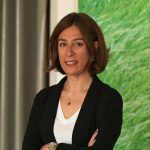
Mitsopoulou Chrysoula is a Professor in the Department of Political Science and History at Panteion University, specializing in political philosophy and critical theory. Her research examines social ontology through Marxist frameworks, focusing on theorists including Gramsci, Lefebvre, and Heller. She regularly publishes in academic journals such as Utopia and contributes to edited volumes on political philosophy. Her research explores: Marxist interpretations of everyday life and social structures Cultural hegemony and subaltern studies Dialectical analysis of art and politics Critical reevaluations of 20th-century political theorists Publications demonstrate consistent engagement with radical philosophy since 1996, with recent work (2016-2017) examining Lefebvre's critical Marxism and revolutionary aesthetics. She participates in academic seminars and contributes to departmental research initiatives, though no specific laboratory affiliation is mentioned.
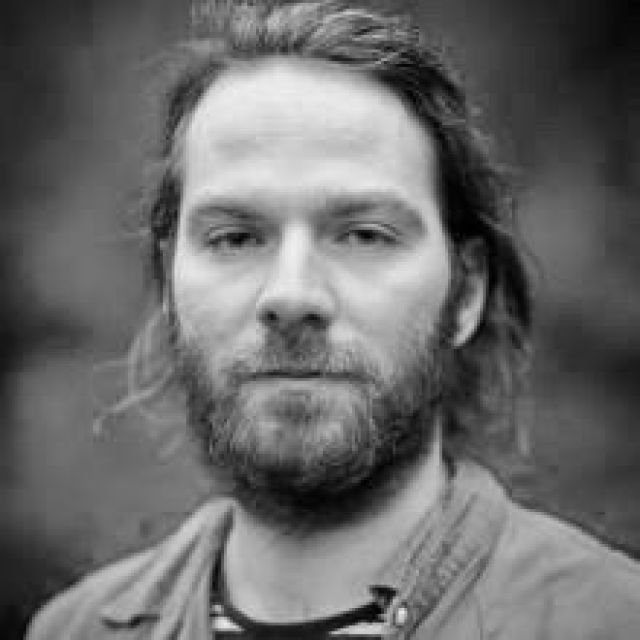
Prof. Dr. Robel Abay is a Visiting Professor for Disability Studies at Alice Salomon Hochschule Berlin (ASH Berlin), specializing in intersectional disability justice, decolonial methodologies, and critical race theory. His work focuses on the intersections of disability, race, migration, and coloniality, with an emphasis on participatory research approaches. Currently serving as a substitute professor for participatory approaches in social and health sciences until March 2025, he will transition to a visiting professorship in Disability Studies from April 2025 to March 2026. Dr. Abay's academic journey includes: PhD in Rehabilitation Sciences, Humboldt-Universität zu Berlin (2019-2023), dissertation on "Participatory Research on Discrimination and Participation in Employment of BIPoC with Disability Experiences" MA in Social Work in Interdisciplinary Research and Practice, University of Kassel (2017-2019) BA in Social Work, University of Kassel (2014-2017) Study Abroad in Sociology of Race and Ethnic Relations, Cardiff University, Wales (2016) BA in Sociology and Political Sciences, Addis Ababa University, Ethiopia (2007-2010) Dr. Abay's research centers on intersectional disability justice, examining how ableism, racism, and colonial legacies intersect to shape experiences of marginalization. His work employs decolonial methodologies to challenge Eurocentric knowledge production and promote pluriversal approaches in social work. He investigates the lived experiences of Black, Indigenous, and People of Color (BIPoC) with disabilities, particularly at the intersections of migration, queerness, and climate crisis. His scholarship critically analyzes power relations embedded in social structures, with a focus on developing transformative practices that foster social justice and equity. Through participatory research methods, he centers the voices of marginalized communities in knowledge production, challenging traditional academic hierarchies and epistemic violence. Dr. Abay's recent publications reveal a strong focus on decolonial approaches to disability studies, with particular attention to intersectionality and participatory methodologies. His work consistently examines how colonial legacies persist in contemporary social structures, particularly in healthcare, education, and migration systems. A significant portion of his scholarship addresses the experiences of BIPoC with disabilities, highlighting how racialization and ableism intersect to create unique forms of marginalization. His research increasingly engages with climate justice, exploring connections between environmental crisis, migration, and disability. The methodological approach across his publications emphasizes pluriversalism, challenging Eurocentric frameworks and advocating for diverse knowledge systems in social work research and practice. Dr. Abay has received several notable research fellowships and funding awards: "The Good Family Visiting Faculty Fellowship" from Queen's University, Canada (January-September 2026) Early Career Support from Hans-Böckler-Stiftung at ASH Berlin (October 2023-September 2024) Dr. Abay serves as a peer mentor for displaced scholars through The Kaldor Centre for Displaced Scholars Peer Mentoring Program at the University of New South Wales, Sydney. His current research projects include "Queer(ing) Migration," funded by The Good Family Visiting Faculty Fellowship and Hans-Böckler-Stiftung, which examines the experiences of queer refugees in Berlin through an intersectional lens. He is also involved in the GLOHRA (Global Health Research Alliance) project, which addresses structural challenges of decolonization in global health research. Additionally, he co-leads the AdiCoBe project, the first initiative by and for people with African roots and disability experiences in Germany, funded by aidFIVE gemeinnützige Gesellschaft mbH. Dr. Abay founded and coordinates the IDJ-Network (Intersectional Disability Justice), a collaborative platform for scholars and activists working at the intersections of disability, race, and coloniality. He is an associated research member at the University of Johannesburg, South Africa, and actively participates in the Migration and Social Transformation Network (MSTN). His institutional affiliations include membership in the German Alliance for Global Health Research (GLOHRA), the Society for Transdisciplinary and Participatory Research (GTPF), and the Center for Inclusion Research Berlin (ZfIB). He also serves as co-spokesperson for the "Flucht, Migration, Rassismus- und Antisemitismuskritik" (Migraas) working group of the German Society for Social Work (DGSA).
Graciela Villanueva serves as Professor of Hispanic-American Literature in the Department of Romance Languages at the School of Languages, Literature and Human Sciences (UFR LLSH) of Paris-Est University Créteil Val de Marne (UPEC). An elected member of the UPEC Board of Directors since 2022, she also contributes to the Executive Committee of the University Research School (EUR) Francophonies and Multilingualisms as coordinator of the 'Imaginary Communities and Language Policies' research axis. Her research spans Spanish American Literature with particular expertise in Argentine literature across three centuries (19th-21st). Villanueva's scholarly focus encompasses: Textual and transtextual studies of major authors Genetic criticism examining textual evolution Cultural studies of Hispanic America Memories of violence in literature and film She has developed extensive expertise on Jorge Luis Borges, César Aira, Juan José Saer, Julio Cortázar, Rodolfo Walsh, and contemporary writers including Patricio Pron and Alan Pauls. Analysis of her recent publications reveals consistent engagement with narrative innovation in Latin American literature and how authors process historical trauma, particularly regarding political violence in 20th and 21st century Hispanic America. Villanueva demonstrates growing interest in the intersection of literature with visual media, especially documentary cinema's representation of violence memory. Dr. Villanueva maintains an active role in academic mentorship and institutional leadership: Supervised 7 completed PhD theses and 1 HDR (Habilitation à Diriger des Recherches) Currently guiding 4 doctoral candidates Served on 30 thesis committees (including 8 as chair) Participated in 4 HDR evaluation committees Elected to UPEC Board of Directors (2022) Member of EUR FRAPP Executive Committee (2020-present)
Maryam Mirza is an Associate Professor of South Asian Literature in the Department of English Studies at Durham University. She joined Durham in September 2018 after holding prestigious fellowships including an Alexander von Humboldt Postdoctoral Fellowship at the University of Bonn and a BeIPD-COFUND Postdoctoral Fellowship at the University of Liege. She currently serves as Director of Postgraduate Research (Admissions and Funding) and has previously chaired the International Committee (2020-2023). Mirza received her PhD from Aix-Marseille University in 2012. Prior to joining Durham, she taught at several institutions in Pakistan including Kinnaird College for Women and the National College of Arts, Lahore. She was also recipient of a Charles Wallace Pakistan Trust Visiting Fellowship held at Newcastle University. Her research interests lie at the intersection of South Asian postcolonial literature, gender studies, sociology, political philosophy, law and economics. Mirza's scholarly work explores themes of resistance, gender, class, and identity in contemporary South Asian literature. Her approach combines literary analysis with interdisciplinary perspectives from social sciences and humanities, creating nuanced understandings of power dynamics and cultural production in postcolonial contexts. She has published extensively on authors including Arundhati Roy, Kamila Shamsie, Manju Kapur, Tahmima Anam, Jhumpa Lahiri, and Meena Kandasamy. Mirza's publications reveal a consistent focus on South Asian women's writing and the complex interplay of gender, class, and postcolonial identity. Her work spans analyses of major authors like Arundhati Roy, Kamila Shamsie, and Tahmima Anam, examining how contemporary fiction engages with social structures, resistance movements, and the everyday experiences of marginalized communities. Recent publications show increasing attention to diaspora experiences, transnational identities, and the intersections of literature with legal and political frameworks, particularly evident in her 2023 monograph 'Resistance and Its Discontents in South Asian Women's Fiction'. Alexander von Humboldt Postdoctoral Fellowship (University of Bonn) BeIPD-COFUND Postdoctoral Fellowship (University of Liege) Charles Wallace Pakistan Trust Visiting Fellowship (Newcastle University) Mirza actively supervises PhD and MA students, currently directing the research of Apabrita Mitra Sarkar (PhD) and Nusaiba Meshquat (MA), while serving as second supervisor for Annie Zaidi's PhD. She has previously directed Rawan Althunyan's completed PhD (2020-2024) and currently supervises Aidan Bracebridge's PhD. Her teaching includes convening specialized modules on South Asian literature and postcolonial studies, and she is set to launch a new Level 3 module focusing on South Asian literature and film in October 2025. She will be on research leave in Epiphany 2025 to focus on her scholarly projects. Mirza is currently collaborating with Dr. Stuti Khanna (IIT Delhi) on a book entitled 'South Asian Literature: Twenty-First Century Perspectives' under contract with Routledge UK, which aims to bring anglophone writings from India and Pakistan into sustained conversation with contemporary works in Hindi and Urdu languages, representing an important interdisciplinary contribution to the field.
Jared Benson serves as an Associate Teaching Professor in the Department of History and is affiliated with the Humanities program at the University of Colorado Colorado Springs within the College of Letters, Arts, & Sciences. He teaches undergraduate courses examining global revolutions, U.S. history, and specialized topics in resistance theory and ideological frameworks. His educational foundation includes: Master of Arts in History (2011), University of Colorado Colorado Springs Bachelor of Arts in History (2009), University of Colorado Colorado Springs His graduate research centered on Resistance Movements across the Modern Middle East, Modern Mexico, and Native American Ethnohistory. Professor Benson's scholarly work investigates Social Movement and Resistance , Ideological Construction , and Power Dynamics through the lens of Socialization Through Narratives and Subaltern Studies . His approach critically analyzes how dominant power structures shape societal narratives while centering marginalized perspectives and exploring alternatives to state-centric models. This manifests in courses examining revolutionary movements and ideological systems across diverse historical and cultural contexts. His teaching methodology emphasizes reciprocal learning where students actively co-create knowledge. By engaging controversial viewpoints and unconventional frameworks, he cultivates critical thinking skills necessary for understanding complex global trajectories. Office hours are held in COLU 2040 with contact via jbenson2@uccs.edu.
Santiago Ruiz Chasco is an active sociology scholar specializing in urban studies, social inequality, and critical criminology at the University of Seville. His academic career centers on examining the complex relationships between spatial organization, social hierarchies, and security discourses in urban contexts, particularly in Spanish cities like Madrid. His research interests focus on: Urban sociology and spatial inequality Critical analysis of citizen insecurity discourse Territorial stigmatization of marginalized communities Police practices and social control Marxist theoretical frameworks applied to contemporary urban issues Sociological discourse analysis methodologies Dr. Ruiz Chasco's publication record demonstrates consistent scholarly output with a particular emphasis on comparative neighborhood studies. His work frequently examines contrasting urban spaces like Madrid's Salamanca and Lavapiés neighborhoods to reveal how social inequalities become embedded in spatial organization and security discourse. His research shows a methodological commitment to qualitative approaches that integrate historical, structural, and discourse-based analyses. As a scholar, Ruiz Chasco contributes to critical perspectives on urban social issues, challenging conventional security narratives and revealing how discourses of citizen insecurity often mask deeper social inequalities. His work with the DSYDEA research group continues to advance understanding of social domination and inequality in Andalusian contexts.
Stuart Davis is an Associate Professor in the Department of Communication Studies at the Weissman School of Arts and Sciences, City University of New York (CUNY). His research critically examines digital communication, media activism, and political discourse, with a focus on Latin American contexts. Davis holds a Ph.D. in Media Studies from UT Austin and a B.A. in Cultural Studies/Political Science from UNC Chapel Hill. Research Focus Davis investigates the intersection of media, power, and social justice, emphasizing: Digital Activism : Grassroots media in favelas and border regions Political Communication : Populism, right-wing movements, and health disinformation Media Imperialism : Global platforms like Netflix and infrastructural power dynamics Cross-cultural Health Communication : Language barriers during crises like COVID-19 Teaching & Advising He teaches core courses including Intro to Digital Communication & Culture and Platforms, Power, and Publics , while regularly supervising master's theses and independent studies in communication theory and research methods. Grants & Funding PSC-CUNY Grant (2020-2022) : Studying activist media in Rio de Janeiro's favelas PSC-CUNY Grant (2018-2019) : Evaluating community-based digital media training in Brazil Professional Service Davis chairs Baruch's Financial Aid Committee, serves on the PSC-CUNY International Committee, and contributes editorial expertise to journals including Popular Communication and Global Media Journal: Mexico .
W. Andy Knight is a distinguished Professor of International Relations in the Political Science Department at the University of Alberta, Faculty of Arts. He is a Fellow of the Royal Society of Canada (FRSC) and was awarded the University of Alberta's highest honor - the University of Alberta Distinguished Professor in 2021. Knight also served as the 2021-22 Fulbright Distinguished Chair in International and Area Studies at Yale University. Previously, he was the Director of the Institute of International Relations at the University of the West Indies, Trinidad & Tobago, and co-founder of the Diplomatic Academy of the Caribbean. Professor Knight's educational background includes a PhD, MA, and Hons BA. His academic journey has led him to become a globally recognized scholar in international relations, with numerous leadership roles including past Chair of the Political Science Department at the University of Alberta. Professor Knight's research focuses on International Relations, International Organization, United Nations System, Global Governance and Multilateralism, Global Security, Human Rights, Responsibility to Protect (R2P), Small Island States, Sub-Altern Peoples, and Terrorism. His work examines critical issues such as global health governance, global health security, Children and war, Piracy in the Horn of Africa, Hegemony, Democracy and Good Governance, and the vulnerabilities and resiliency of small island developing states (SIDS). His current research at Yale University tackles the issue of Summative Global Governance in an intermestic era. Professor Knight's recent scholarly output demonstrates a clear trend toward examining global security challenges through interdisciplinary lenses, with particular attention to health security, regional governance in Africa and the Caribbean, and the evolving nature of international cooperation in the 21st century. His work increasingly bridges traditional international relations theory with practical policy applications, especially in the areas of pandemic response and health diplomacy. Fellow of the Royal Society of Canada (FRSC) University of Alberta Distinguished Professor (2021) Fulbright Distinguished Chair in International and Area Studies at Yale University (2021-22) Harry Jerome Trailblazer by the Black Business and Professional Association of Canada Named by Venture Magazine among Alberta's top 50 most influential people Professor Knight has served as Co-editor in Chief of both African Security journal and International Journal. He has supervised numerous graduate students and currently welcomes honours undergraduate, MA, and PhD students interested in multilateralism, regionalism, hegemonic transition, small and subaltern states, Statelessness, children and armed conflict, R2P, extremism, counter-terrorism, female suicide terrorism, human security, human rights and human dignity. His service includes appointments on the Board of Governors of the International Development Research Centre (IDRC) from 2007-2011 and advisory roles with the World Economic Forum's Global Agenda Council on the Welfare of Children. Professor Knight leads significant research initiatives including his current work on Summative Global Governance at Yale University. He is deeply involved with the Caribbean Journal of International Relations and Diplomacy, which he helped establish during his time at the University of the West Indies. His collaborative work spans multiple institutions and disciplines, reflecting his commitment to interdisciplinary approaches to global challenges.
Gonzalo Andrés Saraví is a Professor-Researcher at the Centro de Investigaciones y Estudios Superiores en Antropología Social (CIESAS) in Mexico City since November 2002. He is a member of the Sistema Nacional de Investigadores at Level III, the highest level of recognition for researchers in Mexico. His academic credentials include a PhD in Sociology from the University of Texas at Austin, a Master's in Social Sciences from FLACSO-Mexico, and a degree in Social Anthropology from the University of Buenos Aires, Argentina. His research focuses on the intersection of youth studies and social inequality in Latin America. He has conducted extensive work on urban experiences of adolescents and young people from different social classes, belonging and inequality in school, transitions to adulthood, and contemporary youth subjectivities. His methodological approach emphasizes qualitative methodologies, including participatory and visual methods, with a strong ethnographic foundation. Saraví's scholarly work demonstrates a consistent focus on the cultural, social, and subjective dimensions of class inequality. His recent publications (2020-2023) show a continued exploration of school belonging among disadvantaged youth, the impact of the pandemic on educational systems, and the accumulation of disadvantages in Latin American contexts. His research bridges theoretical frameworks with empirical studies conducted primarily in Mexico but with broader implications for Latin America. Sistema Nacional de Investigadores Level III Visiting Research Associate at University of Oxford (2012-2013) Visiting Research Associate at IDAES of National University of San Martín, Argentina (2019-2020) As an academic mentor, Saraví has contributed significantly to the field through his extensive publications and collaborative research projects. His current research project focuses on "City and Inequalities: Urban Experiences, Otherness, and Resistance," continuing his long-standing interest in urban sociology and social inequality. His work has established important connections between institutional structures and subjective experiences of inequality, particularly among youth populations in marginalized contexts.
Ebru Yetişkin is an Associate Professor at Istanbul Technical University specializing in digital culture and Science, Technology, and Society (STS), renowned for her transdisciplinary curatorial practice bridging academic research and contemporary art. Her academic credentials include: Bachelor's in Radio-TV-Cinema from Istanbul University Faculty of Communication (1999) Master's in Science, Technology and Society from Istanbul Technical University/Louis Pasteur University (Garanti Bank scholarship) PhD in Sociology from Mimar Sinan Fine Arts University (2008) Her research critically examines digital culture through postcolonial lenses, investigating how contemporary art functions as STS research methodology. She pioneers 'Nettachmental Thought' to challenge conventional knowledge production, focusing on network politics and epistemic justice within Turkish sociotechnical contexts while exploring subaltern perspectives in science-policy interfaces. Her scholarly output centers on STS archaeology in Turkey, exemplified by the 2018 article 'Another Laboratory: Nettachmental Curation' which analyzes curation as epistemic intervention. This work reveals consistent patterns of using artistic practice to deconstruct power structures in knowledge networks while advancing transdisciplinary methodologies for studying science-society entanglements. Supported by Erasmus and Garanti Bank scholarships, her research manifests through curated knowledge platforms rather than traditional scientific awards. She has established enduring intellectual infrastructure via seminar series including Science, Technology, Society Talks (2018-present) and Contemporary Art // An Unknown (2019-present), fostering collaborative research ecosystems. As director of Contemporary Istanbul Plugin New Media Department (2015), she founded Istanbulab collective which operates as a living laboratory for STS. Current initiatives include co-curating Akbank Art Center's seminar series with Duygu Kaşdoğan and developing exhibition-based research like 'An Archeology of STS in Turkey' presented at the 4S Conference (Sydney 2018), demonstrating how physical/virtual spaces become sites for epistemic experimentation.
Romain Busnel is a Research Fellow at CEVIPOL (Centre d'Études des Relations Internationales et Politiques Publiques) at the Free University of Brussels, holding a doctorate in political science from the University of Lille and the University of Montreal under joint supervision. His research examines state- illicit activity relationships through comparative analysis of coca growers in Peru and Bolivia, anti-corruption mechanisms in Mexico (ANR CORRUPT-AL project), and migrant mobilizations at the Guatemalan-Mexican border. Core interests span political sociology, transnational governance, and subaltern state interactions in Latin America. Publications appear in leading journals including Critique Internationale, Cahiers des Amériques latines, Politix, Cultures & Conflits, European Review of Latin American and Caribbean Studies, International Journal of Drug Policy, and Revista de Ciencia Política y Gobierno, reflecting interdisciplinary engagement with political economy and social movements.
Antonia Darder is a Professor at the California Institute of Integral Studies (CIIS) in the School of Education, Department of Educational Leadership and Interdisciplinary Studies. Her academic career spans over two decades of scholarly work focused on critical pedagogy, decolonizing methodologies, and social justice education. Dr. Darder's research interests center on critical pedagogy, decolonizing methodologies, race and racism studies, Latina/o critical theory, public pedagogy, and the impact of neoliberalism on educational spaces. Her work consistently examines how structural inequalities manifest in educational settings and how critical consciousness can serve as a tool for liberation and social transformation. She approaches education as a political act that must challenge systems of oppression and create spaces for marginalized voices. Her publication record demonstrates a clear evolution from early work examining race and multiculturalism to more recent focus on decolonizing research methodologies. Her scholarship reveals deep engagement with Paulo Freire's critical pedagogy tradition while developing her own theoretical contributions, particularly regarding borderland intellectuals and the politics of knowledge production. The articles show consistent attention to how community-based resistance, artistic expression, and alternative media forms can serve as vehicles for public pedagogy and social change. Dr. Darder has collaborated with prominent scholars including Peter Mayo, Rodolfo D Torres, and Carmel Borg. Her work has been published in leading journals such as Policy Futures in Education, Educational Studies, and Ethnicities, and through major academic presses including Routledge and New York University Press. As a public intellectual, Dr. Darder has contributed to discussions on community radio as a tool for resistance, the embodiment of public pedagogy through artistic expression, and the critical examination of neoliberal policies within academic spaces. Her scholarship consistently bridges theory and practice, emphasizing the importance of education as a transformative force for social justice.