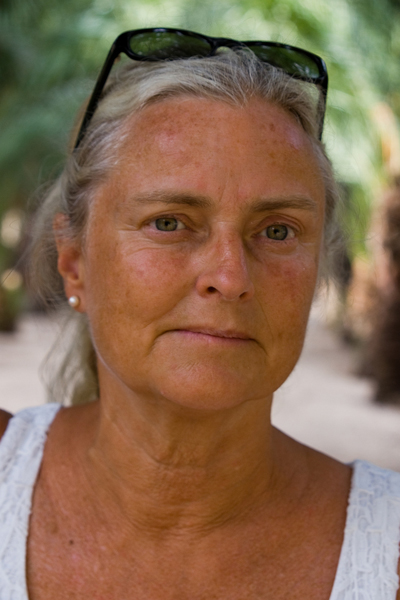
Carita Paradis is a Professor Emerita at Lund University's Centre for Languages and Literature, specializing in English Linguistics. She holds a PhD from Lund University (1997) and has held leadership roles including Chair of the Swedish Research Council's Linguistics panel (2010–2015). She coordinates the Language, Cognition and Discourse@Lund (LCD@L) research group, focusing on discourse meaning, language acquisition, and sociocultural variation. Her research spans cognitive linguistics, discourse analysis, semantics, and sensory language. She has authored/co-authored over 100 refereed publications, 5 books, and edited 10 journal volumes. Awards include membership in Academia Europaea (2016) and leadership roles in Scandinavian linguistic associations. She has supervised 14 PhD students and 8 postdocs, taught at all academic levels, and participated in numerous national/international research projects. Her editorial roles include serving on Cognitive Semantics, Languages, and Human Cognitive Processing series.
Albert H. Titus is a Professor in the Department of Biomedical Engineering and an Adjunct Professor in the Department of Electrical Engineering at the University at Buffalo, State University of New York. He serves as Associate Vice President for Regulatory Support in the Office of the Vice President for Research and Economic Development. His research focuses on analog VLSI design for neuromorphic visual processing, biosensors, wearable devices, optoelectronic systems, and neural networks. Education: PhD in Electrical and Computer Engineering, Georgia Institute of Technology (1997) MS in Electrical Engineering, University at Buffalo (1991) BS in Electrical Engineering, University at Buffalo (1989) Research Interests: His work spans wearable and implantable sensors, bioinstrumentation, neural network-based visual processing, analog VLSI implementations, optoelectronics, and electronic packaging. He pioneered CMOS-based neuromorphic systems and developed patented technologies for glare sensing and RF power calorimetry. Publication Trends: His recent articles emphasize CMOS-integrated sensors, machine learning for bioimpedance analysis, implantable medical devices, and xerogel-based optical biosensors. These works bridge biomedical engineering and microelectronics. Scientific Recognition: He is a Fellow of the National Academy of Inventors and has received the SUNY Chancellor’s Award for Excellence in Service (2017), NSF CAREER award, and Western New York Inventor of the Year (2010). His inventions include a patented low-power glare sensor (U.S. Patent 7,586,079) featured in Popular Science’s 2011 Top Ten Inventions. Academic Leadership: As a faculty member, he has supervised nearly 20 PhD and over 40 MS students, while teaching courses in circuits, IC design, sensors, and signal processing across electrical and biomedical engineering disciplines.
Gale M. Sinatra is a Professor at the Rossier School of Education and jointly appointed in the Psychology Department at the University of Southern California . Her research focuses on conceptual change learning , science education , and public understanding of science , particularly around controversial topics like climate change and evolution. PhD, MS, BS in Psychology from University of Massachusetts, Amherst Her recent publications explore refutation texts , epistemic emotions , and sustainability education , with a 2021 co-authored book Science Denial: Why It Happens and What to Do About It . Awards include National Academy of Education membership (2022), AERA Sylvia Scribner Award (2020), and Fellowships in APA and AERA. She has served as President of APA Division 15 and Associate Dean for Research at Rossier. NSF Grant (2018) for Augmented Reality in Paleontology Education Mattel Children’s Foundation Grant (2014) for Speedometry Program SSHRC Grant (2014) for Epistemic Belief Change Research
Dr. Pieter van Oel is an Associate Professor in the Water Resources Management group at Wageningen University & Research, focusing on sociohydrology and addressing water crises in South America and Africa. His expertise spans civil/hydraulic engineering, environmental management, hydrology, irrigation systems, and drought diagnosis. He teaches courses like Design in Land and Water Management and supervises PhD students such as Louise Cavalcante and Daniel Wiegant. His research emphasizes societal dimensions of water challenges, including drought impacts, agent-based modeling, and serious gaming for community engagement. Projects include analyzing drought policies in Brazil, improving water governance in Kenya, and evaluating groundwater vulnerability in Ethiopia. He collaborates on initiatives like the Diagnosing Drought project and Socio-hydrological Simulation tool development. Key contributions include critiques of drought monitoring systems' alignment with local realities and frameworks for sustainable agroforestry management. His work bridges science and policy, advocating for interdisciplinary solutions to water scarcity and climate resilience.
John Byabazaire is a Research Fellow at the School of Computer Science, University College Dublin (UCD). He holds a PhD in Computer Science from UCD (2024), following a BSc (Gulu University, 2013) and MSc (Waterford Institute of Technology, 2018). His research focuses on IoT systems for data collection, remote sensing, AI-driven end-to-end system management, and fog analytics. He has held academic roles including Assistant Lecturer at Gulu University (2018–2019) and teaching roles at UCD since 2019, including Occasional Lecturer and Senior Teaching Assistant. His research spans smart agriculture, data quality in IoT, and education technology. Notable contributions include frameworks for yield mapping in precision agriculture, trust-based data validation in IoT, and machine learning approaches for livestock health monitoring. He has secured grants like the National ICT Initiatives Support Program (Uganda Government, 2019–2020). Teaching includes courses on cloud computing, web development, and distributed systems. His articles emphasize IoT data quality, agricultural analytics, and educational technology innovation. He actively promotes technology adoption in African education and agriculture sectors through collaborative projects.
Margaret Greenwald serves as Associate Professor and Ph.D. Coordinator in the Department of Communication Sciences and Disorders (CSD) within Wayne State University's College of Liberal Arts and Sciences. Previously department chair (2014-2020), she is a Licensed and Certified Speech-Language Pathologist (CCC-SLP) recognized in 2022 as Wayne State's Outstanding Graduate Mentor in the health sciences. Her academic credentials include: M.A. in Speech-Language Pathology (University of Florida) Ph.D. in Communicative Sciences and Disorders (University of Florida) Post Doctoral Research Training in Cognitive Neuropsychology (University of Maryland, Department of Neurology) Dr. Greenwald's research centers on adult neurogenic communication disorders , specializing in aphasia, traumatic brain injury, and stroke rehabilitation through cognitive neuropsychology. Her work employs Magnetoencephalography (MEG) to map brain-behavior relationships during language and musical processing tasks, revealing critical insights for rehabilitation. She actively bridges clinical practice with neuroscience to develop evidence-based interventions. Analysis of her recent publications shows consistent focus on neuroimaging applications for understanding language disorders, with growing emphasis on telepractice implementation and the cognitive effects of musical training. Her work demonstrates strong translational value, connecting basic neuroscience to clinical rehabilitation protocols while maintaining rigorous methodological standards. Her scientific recognition includes: Outstanding Graduate Mentor in the Health Sciences, Wayne State University (2022) As an educator, Dr. Greenwald teaches graduate courses in aphasia, neuromuscular speech disorders, research methods, and doctoral seminars, plus undergraduate speech-language pathology instruction. She supervises doctoral research as Ph.D. coordinator and mentors students through clinical research projects. Her teaching integrates current neuroscience findings with clinical practice standards. She maintains active professional engagement through memberships in the American Speech-Language Hearing Association (ASHA), Academy of Aphasia, and International Neuropsychological Society, contributing to both clinical guidelines development and research community advancement.
Yanhua Li is an Associate Professor in the Computer Science Department and Data Science Program at Worcester Polytechnic Institute (WPI), where he has served since 2021 (previously as Assistant Professor from 2015-2021). He is also an affiliated researcher at UMass Transportation Center (UMTC). His educational background includes dual PhDs: Computer Science from University of Minnesota, Twin Cities (2013) and Electrical Engineering from Beijing University of Posts and Telecommunications (2009), along with an MS (2006) and BS (2003) in Electrical Engineering from Sichuan University. Dr. Li's research focuses on artificial intelligence and spatial-temporal data science with applications in smart cities and urban intelligence. His work particularly emphasizes imitation learning and meta learning in AI for understanding and influencing urban human agents' decision-making strategies, such as taxi drivers' passenger-seeking behaviors and urban travelers' transit choices. His laboratory develops advanced computational methods for urban transportation systems, traffic prediction, and spatial-temporal data analytics. His publication record shows a strong trajectory in top AI and data science venues, with recent work bridging foundation models with urban computing, enhancing robustness in spatial-temporal representation learning, and applying generative models to urban traffic estimation. His research spans computer vision, reinforcement learning, generative modeling, and spatio-temporal data analysis with applications in transportation, environmental monitoring, and urban planning. Best Applied Data Science Paper Award at SDM 2019 NSF CAREER Award (2020) Runner-up for the 10-Year Impact Award for SIGSPATIAL Conference (2024, for 2014 paper) Dr. Li has secured significant research funding including an NSF CAREER award ($529k), multiple NSF grants totaling over $2 million, and industry collaborations with DiDi Chuxing Research. He has advised numerous PhD students who have gone on to faculty positions at institutions like San Diego State University and SUNY Binghamton University. His research group maintains active collaborations with industry partners including DiDi Chuxing, Pitney Bowes Inc., and NVIDIA. He leads several research initiatives including the CityLines project for urban transportation systems and has contributed to foundational work in spatial-temporal imitation learning. His laboratory continues to expand into new areas including applying large language models to urban dynamics prediction and developing advanced methods for environmental monitoring.
Dr. Ara J. Schmitt is a Professor of School Psychology and Associate Dean for Research and Faculty Advancement at Duquesne University's School of Education. He holds a Ph.D. from Illinois State University (2001) and a B.S. from the University of Illinois at Urbana-Champaign (1996). His research focuses on neuropsychological assessment, evidence-based interventions for learning disabilities, school-based chronic illness management, and bullying dynamics. Dr. Schmitt has authored numerous peer-reviewed articles, book chapters, and textbooks, including Patterns of Learning Disorders (2006) and Theory and Cases in School-Based Consultation (2020). Education: Ph.D., School Psychology, Illinois State University (2001); B.S., Psychology, University of Illinois (1996) Professional Roles: Associate Dean for Research, School Psychology Program Director, Adjunct Faculty Collaborator His research interests emphasize applied interventions in schools, including neurocognitive assessments, concussion management, and bullying prevention. He has pioneered studies on Taped Problems Intervention adaptations for remote learning and explored cognitive predictors of bullying behavior in adolescents. Recent work addresses socially responsive evaluation practices in health psychology and disparities in concussion awareness among athletes and parents. Dr. Schmitt has advised over 20 graduate students and contributed to national initiatives like the CCTC 2020 guidelines for health psychology training. His work bridges clinical practice and education, particularly in supporting students with chronic illnesses and neurodiverse needs.
Zhiru Sun is an Associate Professor at the University of Southern Denmark, affiliated with the Department of Design, Media and Educational Science. Their research focuses on the intersection of education, humanities, and data science, with expertise in Learning Analytics (LA), Digital Humanities (DH), and AI applications in education and humanities. Sun holds a Ph.D. in Educational Technology from The Ohio State University (2011–2015), alongside advanced degrees in Applied Statistics and Cultural Foundations of Technology. Key research interests include student motivation and performance analysis, historical data mining in DH, and human-centered AI in education. They have received notable awards such as the Outstanding Proposal Award (2021) and the Loadman Outstanding Dissertation Award (2016). Sun leads projects like 'Empowering Humanities Education with Deep Learning' and 'Flipped Classroom Design for Self-Regulation.' Their work spans collaborative learning algorithms, flipped classroom efficacy, and generative AI policy analysis in education. Educations: Ph.D. in Educational Technology, M.Sc. in Applied Statistics, and M.Sc. in Cultural Foundations (all from The Ohio State University) Key Projects: FREI: The Danish Family Revolution, DH Visualization Tools Teaching: Courses include Digital Humanities, Data Science, and Web-mediated Communication Recent publications address learner empowerment in online environments, negotiation skills in collaborative games, and group formation algorithms for optimal learning outcomes.
Karan Ahuja is the Lisa Wissner-Slivka & Benjamin Slivka Assistant Professor of Computer Science at Northwestern University, directing the Sensing, Perception, Interactive Computing & Experiences (SPICE) Lab. He earned his Ph.D. in Human-Computer Interaction from Carnegie Mellon University (2023) and a B.Tech. in Computer Science (2017). His research focuses on creating technologies that sense and understand human behavior, with applications in mobile health, extended reality, and natural user interfaces. Key projects include LemurDx for ADHD diagnosis, EITPose for wearable hand pose tracking, and MobilePoser for full-body pose estimation via consumer IMUs. Awards include Forbes 30 Under 30 (2024), MIT 35 Innovators Under 35 Asia Pacific, and ACM SIGCHI's Outstanding Dissertation Award. He has worked at Google, Apple, Microsoft Research, Meta Reality Labs, and IBM Research. His lab emphasizes real-world deployments, with technologies licensed and integrated into products used by millions. Prospective students are invited to join his lab at Northwestern via a dedicated application form. Research spans embedded systems, computer vision, and on-device ML, with a focus on impactful applications in healthcare and XR.
Simran Kaur is a Senior Lecturer and Head of the Education Academy at Monash University Malaysia, School of Business, Department of Management. She holds a PhD in Management from the same institution and has a strong interdisciplinary background in psychology and business. Her academic leadership includes roles as Discipline Coordinator (2023–2024) and Change Champion for the Digital Learning Uplift Project. Her educational qualifications include: Bachelor of Psychological Science and Business (Hons.), Monash University Malaysia Doctor of Philosophy (PhD) in Management, Monash University Malaysia Postgraduate Certificate in Academic Practice (PGCAP), Lancaster University Simran Kaur’s research focuses on behavioural aspects in management and marketing, with key interests in consumer behaviour, brand management, decision-making, Islamic marketing, and higher education pedagogy. She integrates psychological insights into marketing theory, exploring how identity, religion, and digital media influence consumer choices. Her teaching philosophy emphasizes critical thinking, collaboration, and experiential learning, reflected in her training in LEGO® SERIOUS PLAY®. Her recent publications span topics such as sacred consumption, influencer marketing, country image during crises, and Halal consumer behaviour. These works reflect a strong trend in understanding cultural, emotional, and cognitive drivers of consumer decisions, particularly in Asian and Muslim-majority contexts. Her scientific awards highlight her excellence in teaching and academic development: Education Excellence Award (2023) Purple Letter for Teaching Excellence, S1 2024 Purple Letter for Teaching Excellence, S2 2022 Fellow of the Higher Education Academy (2021) She is actively involved in academic service, including peer review for Marketing Intelligence & Planning , supervision of non-HDR students, and organizing curriculum reviews and academic conferences. She serves as an invited speaker and contributes to digital pedagogy innovation. While no formal lab or research center is mentioned, her role as Change Champion and involvement in projects like the Digital Learning Uplift indicate leadership in educational transformation.
Amy Scott Metcalfe is a Professor in the Department of Educational Studies at the University of British Columbia (UBC), affiliated with the Faculty of Education. She holds dual appointments with the Institute for Gender, Race, Sexuality and Social Justice, emphasizing interdisciplinary approaches to higher education studies. Her research focuses on international comparative higher education systems, academic governance, and sociological analysis of university policies. She critiques managerialism trends and explores gender disparities in academic productivity. Metcalfe employs visual methodologies, including photo-ethnography and extended photo essays to document institutional change. Teaching responsibilities are managed through the Department of Educational Studies, with course details available via UBC’s official portal. Her scholarship spans Canadian and global contexts, addressing issues like faculty internationalization, research ethics frameworks, and the impact of pandemic disruptions on academic collaboration. Key contributions include longitudinal studies on Canadian professors’ perceptions of work-life balance, comparative analyses of gender gaps in research output across North America, and critical examinations of university-industry-government networks. She advocates for equity-centered pedagogies and anti-colonial approaches in higher education policy.
Rachit Dubey is an Assistant Professor in the Department of Communication at UCLA, affiliated with the College of Letters & Science. He holds a PhD in Computer Science from Princeton University, an M.S. in Education from UC Berkeley, and a BEng in Computer Science from Nanyang Technological University. His research bridges computational modeling, behavioral experiments, and policy design to address climate change challenges, focusing on human motivation and policy impact. Key research areas include using AI-generated visualizations to enhance climate communication, understanding cognitive underpinnings of climate inaction, and designing interventions to reduce polarization. His work has been featured in Nature Human Behavior , Nature Sustainability , and PNAS . Notable contributions include demonstrating that binary climate data visuals significantly amplify perceived urgency compared to gradual trends, and developing computational models of grief using reinforcement learning. He received the 2024 SfNC Dissertation Award for his doctoral work. Dr. Dubey collaborates closely with policymakers to bridge research and practice, and is recruiting PhD students in cognitive science, climate policy, and machine learning. His lab, the Computational Cognitive Policy Lab, emphasizes quantitative rigor and interdisciplinary collaboration.
Jianping Fu is a Professor in the Department of Mechanical Engineering at the University of Michigan , with joint appointments in Biomedical Engineering and Cell and Developmental Biology. His research integrates micro/nanoengineering , mechanobiology , and stem cell biology to model human development and disease. Education: PhD (MIT, 2007), BE (University of Science and Technology of China, 2000) His research interests focus on stem cell bioengineering , developmental bioengineering , and mechanobiology , particularly in modeling early post-implantation human development, neural tube formation, and pluripotent stem cell mechanoregulation. His work combines biomimetic culture systems with microfluidic gradients to study embryogenesis and organogenesis. Recent publications highlight advances in human embryo modeling (2024 Cell, Nature, Cell Stem Cell), neural tube patterning (2024 Nature), and mechanobiology of stem cells (2024 Nature Reviews Physics). These studies emphasize computational methods , single-cell analysis , and standardization of embryo models . Scientific honors include: Friedrich Wilhelm Bessel Research Award (2022) ISSCR Merit Award (2024) Fellow, American Institute for Medical and Biological Engineering (2019) NSF CAREER Award (2012) Life Member, World Association of Chinese Biomedical Engineers (2024) Dr. Fu mentors extensively, with 20+ alumni including PhD students and postdocs now in academic and industry positions. His lab has received $3M NIH funding for immunological diagnostics and MTRAC grants for translational research. Collaborations with institutions like Cincinnati Children's Hospital and Rice University enhance his interdisciplinary approach to regenerative medicine.
Brian Magerko is Professor of Digital Media in the School of Literature, Media, and Communication at Georgia Institute of Technology , where he also serves as Director of Graduate Studies for the Digital Media program and holds an adjunct appointment in the School of Interactive Computing . He directs the Expressive Machinery Lab and has led over $20 million in federally funded research at the intersection of cognition, computation, and creativity. Education Ph.D. Computer Science and Engineering, University of Michigan (2006) M.S. Computer Science and Engineering, University of Michigan (2001) B.S. Cognitive Science (minor Computer Science & Jazz Performance), Carnegie Mellon University (1999) Research Interests Dr. Magerko’s scholarship integrates cognitive science , AI , and computational media to investigate three core themes: (1) social and creative collaboration between humans and AI; (2) design of interactive narrative, music, and arts-based computational experiences; and (3) inclusive STEAM education that leverages personal expression—most notably through the widely-adopted EarSketch platform, which engages learners in computer science via music remixing and coding. Publication Trends Recent publications (2022-2025) reveal a surge in work on generative and co-creative AI systems , AI literacy frameworks , and accessible computing education . Studies span dance improvisation agents (LuminAI), inclusive design for blind and visually-impaired learners, and large-scale evaluations of creativity and learning outcomes in EarSketch classrooms across the United States. Awards & Honors Methods Paper Recognition, ACM CSCW 2022 Best Paper Award, ACM Creativity & Cognition 2021 & 2017 Ivan Allen College Researcher of the Year 2018 NCWIT Engagement Excellence Award 2017 Multiple Best Student Paper Awards (AIED 2021, ICCCI 2021) CETL Thank-a-Teacher Award 2008 Grants & Advising Dr. Magerko has served as PI or Co-PI on numerous NSF, NEA, and private foundation grants totaling more than $20 million. His projects fund interdisciplinary teams of graduate and undergraduate students, post-docs, and external collaborators, producing open-source software, museum installations, and K-12 curricula. Labs & Teams As head of the Expressive Machinery Lab , he mentors researchers creating AI partners for dance, drawing, music, and storytelling. The lab’s artifacts have been exhibited at the Smithsonian, ArtScience Museum Singapore, MoogFest, and other international venues.