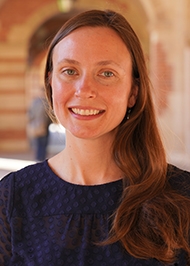
Katrina Perehudoff is a Visiting Professor at the Faculty of Law at the University of Amsterdam, specializing in Health Law . Her research bridges Human Rights , Pharmaceutical Policy , and Global Health Governance . Research Focus: Legal frameworks for access to medicines, EU pharmaceutical reforms, and equity in global health policy. Contact: s.k.perehudoff@uva.nl Social Media: @KatPerehudoff Her work critically examines the European Union's extraterritorial obligations under the Convention on the Rights of Persons with Disabilities and explores governance models like the COVID-19 Technology Access Pool (C-TAP) for equitable vaccine distribution. She advocates for decolonizing health governance and addressing structural inequities in medicine access through human rights-based approaches. Recent publications highlight trends in IP transparency , global health law , and sustainable development , with sub-fields including pharmaceutical regulation, health equity, and pandemic recovery strategies.
Abigail Bigham is an Associate Professor and Vice Chair for Undergraduate Studies in the Department of Anthropology at the University of California, Los Angeles (UCLA). Her research focuses on human population genetics, molecular evolution, and high-altitude adaptation, particularly in Andean and Tibetan populations. She holds a PhD in Anthropology from Penn State University (2008) and a BA in Anthropology from the University of Arizona (2001). Her team investigates genetic and epigenetic mechanisms underlying adaptation to hypoxia, diet, and infectious diseases. Key research areas include the genetic basis of altitude-related traits like hemoglobin concentration, pulmonary function, and metabolic adaptations. Her lab also explores the evolutionary impact of dietary changes (e.g., potato-rich diets in the Andes) and immune responses to pathogens such as HIV and dengue. Recent work includes epigenetic studies of high-altitude acclimatization and the functional validation of adaptive alleles. Dr. Bigham’s projects often involve interdisciplinary collaborations, integrating genomic data with physiological measurements and anthropological fieldwork. She has conducted field studies in Peru, Tibet, Guatemala, and Nepal, focusing on indigenous populations to understand how genetic variation contributes to survival in extreme environments. Her lab’s website (https://bigham-lab.anthro.ucla.edu/) provides access to datasets and research tools. Her academic contributions span over 50 peer-reviewed articles and grants addressing high-altitude physiology, evolutionary genetics, and global health. She actively advocates for ethical discussions on race and genetics, challenging simplistic biological determinism through public outreach and educational initiatives.
Fardina Alam is a Lecturer in the Department of Computer Science at the University of Maryland, College Park. She holds a Ph.D. from George Mason University (2023), where she specialized in Structural Bioinformatics and Machine Learning. Her academic rank reflects UMD's Professional Track Faculty, equivalent to an Assistant Professor of Teaching. Dr. Alam's research focuses on deep learning applications in protein structure prediction, generative AI, and ethical data practices. She has contributed to projects funded by an NSF FET Grant (#1900061) and published in journals like Biomolecules. Awards include the 2023 Outstanding Dissertation Award and 2022 Editor's Choice Article recognition. Education: Ph.D. (Computer Science, George Mason, 2023); M.S. (Computer Science, George Mason, 2019); B.S. (Computer Science and Engineering, Military Institute of Science and Technology, Bangladesh, 2013). Her teaching emphasizes data science ethics and interdisciplinary applications, including a new course for UMD's Data Science minor. Professional roles include Associate Guest Editor at Bioinformatics Advances (2024), Faculty Advisor to the Bangladeshi Graduate Student Association, and Program Co-Chair for the ACM-BCB Computational Structural Bioinformatics Workshop (2023). Research Interests: Structural Bioinformatics, Generative AI, Responsible AI Ethics, Deep Learning, Machine Learning, and Data Science. Her work bridges computational biology and AI, with a focus on equitable data practices and protein structure analysis. Recent projects address challenges in generating physically-realistic protein structures and improving question-answering systems through equitable data strategies. Awards: Recipient of the 2023 Outstanding Dissertation Award (George Mason University), 2023 Best Paper Award, and 2022 Biomolecules Editor's Choice Article. These accolades highlight contributions to protein structure prediction and bioinformatics methodology. Advising & Grants: NSF FET Grant #1900061 supported her computational biology research. She advises the Nobanno graduate student group and chairs workshops in her field. Her teaching and research aim to promote inclusivity, particularly for underrepresented groups in STEM. Labs/Teams: Active contributor to the Computational Biology Lab at George Mason University and collaborates with UMD's interdisciplinary teams on data ethics and AI applications. Her work aligns with UMD's vision for data-driven education and innovation.
Daniela Andrei is an Associate Professor at Curtin University's School of Management and Marketing, affiliated with the Faculty of Business and Law. She coordinates large-scale applied research projects addressing workforce aging, safety, and employee wellbeing. Her work focuses on understanding forces shaping work experiences across the lifespan and their impacts on performance and safety. She is an Associate Investigator with CEPAR Stream 3 (Organisations and the Mature Workforce) and a member of Cost Action - LeverAGE. Research interests include aging workforce management, safety culture in high-risk industries (e.g., maritime), and HR practices for age diversity. Her studies often involve collaborations with industry and government bodies like Safe Work Australia and the International Mining for Development Centre. Her recent articles analyze interventions for aged care job demands, safety leadership behaviors, and maritime industry fatigue. Notable contributions include frameworks for 'Include, Individualize, Integrate' HR practices and meta-strategies for age-diverse workforces. She has advised on organizational metastrategies for managing younger and older workers, emphasizing inclusive design. Labs/Teams: Active in CEPAR's benchmarking surveys of the Australian workforce and the Age in the Workplace research network. Engaged in cross-disciplinary projects linking occupational health, leadership, and sustainable work design.
Timothy C. Brown is an Associate Professor in the Department of Sociology at San Diego State University's College of Arts and Letters. He holds a PhD in Sociology from Louisiana State University. His research examines how social, individual, and environmental inequalities influence criminality, victimization, and criminal justice experiences, with a focus on marginalized communities. Key research areas include rural Southern gangs, female law enforcement experiences, and racial disparities in justice systems. Dr. Brown's research explores: Crime impacts on minority groups Contextual inequality's role in violence Community-gang dynamics in rural settings His publications frequently analyze violence patterns, correctional system challenges, and policing environments. He has received awards including the UALR Bright Spot Award and Outstanding Graduate Student Award. Advising includes supervision of 15+ graduate students on topics ranging from bumblebee habitats to prison financial literacy. Grant funding exceeds $120,000 from agencies including FINRA and the Bureau of Justice Assistance. Dr. Brown leads research collaborations on rural gang dynamics and correctional education, serving on editorial boards for Deviant Behavior and American Journal of Criminal Justice .
Jari Lindh ( University Lecturer at the Faculty of Social Sciences, University of Lapland ) is a leading scholar in structural social work and disability services. His research focuses on the intersection of legal, organizational, and professional discourses in disability social work, with a regional emphasis on Lapland and welfare areas. Field of Science: Social Work Current Projects: RAVATTI (Structural Disability Social Work, 2023-2025), HaraVa (Considerate Disability Social Work, 2021-2023) Research Interests Structural Social Work Vocational Rehabilitation Legal and Organizational Discourse Socio-technical Systems in Rehabilitation Discretion in Disability Services Client Self-Determination Rights Selected Publications (2023-2025) address telerehabilitation adaptation, structural social work reforms, relational discretion frameworks, and implementation of disability rights in service systems. Activities include: Keynote Speaker at 2025 International Social Work Conference Media contributions on disability social work (2024, 2023)
Dr. Tuyen Huynh is an Assistant Professor and inaugural Bridge to Faculty Postdoctoral Scholar in the Department of Psychology at the University of South Carolina. She holds a Ph.D. in Human Sciences from the University of Nebraska-Lincoln and completed postdoctoral training at the University of Wisconsin-Madison. Her research integrates mindfulness practices with family systems theory to address disparities in child and family well-being, particularly among underserved communities. She emphasizes health equity, maternal mental health, and community resilience through interventions targeting caregiver-child relationships. Dr. Huynh’s work combines qualitative and mixed-methods approaches, exploring topics like pandemic impacts on maternal mental health, mindfulness in prenatal care, and resilience in HIV-affected families. She is committed to diversity, equity, and inclusion in academia and mentoring first-generation scholars. Her research has been published in journals like Mindfulness , Midwifery , and Autism . Her academic background includes a focus on child development, contemplative science, and structural inequity. She is preparing to accept graduate students for the 2025-2026 academic year, continuing her dedication to training future psychologists from diverse backgrounds.
Emma Anderson is a Senior Lecturer in the School of Humanities and Social Science at The University of Brighton. She is affiliated with the Centre for Arts and Wellbeing, Centre for Transforming Sexuality and Gender, and the Inclusive Digital Societies Research Excellence Group. Her research focuses on critical social and community psychology, employing discourse analysis and creative methodologies to explore how individuals navigate neoliberal contexts, particularly regarding mental health, wellbeing, and social citizenship. Her work includes participatory research with lived-experience researchers on arts in mental health, discursive analyses of happiness and wellbeing, and gendered approaches to self-help. She has collaborated on projects such as the Brighton and Hove Common Ambition initiative, addressing homeless healthcare systems. Anderson has presented her research at international conferences, including the International Society of Critical Health Psychology in Bratislava, Slovakia. Her research interests span critical approaches to health and citizenship, creative methodologies, media’s role in everyday life, and post-feminist sensibilities. Her publications reflect a strong engagement with interdisciplinary topics, blending psychology with social policy and arts-based interventions.
Jeff Szychowski is a Professor and Chair of Biostatistics at the University of Alabama at Birmingham (UAB), School of Public Health. He holds multiple academic roles, including Department Chair and Vice Chair of Research and Faculty Development. He earned his PhD in Statistics from the University of Alabama. His research focuses on clinical trials, maternal and fetal medicine, hypertension management, and biostatistical methodologies. He has led numerous grants, including NIH-funded studies on maternal health and cardiovascular outcomes. Szychowski has advised over a dozen graduate students and contributed to over 200 scholarly works, with recent studies emphasizing blood pressure control in hypertensive pregnancies and structural barriers in global maternal care. He actively participates in professional committees and serves as a peer reviewer for journals like the American Journal of Obstetrics and Gynecology. Education: PhD in Statistics, University of Alabama (2006). Research Interests: Clinical trials in maternal-fetal medicine, hypertension in pregnancy, categorical data analysis, and biostatistical methodologies. His work bridges statistical rigor with clinical impact, particularly in high-risk obstetric populations. Grants: Over 30 grants, including leadership of the CHAP trial (Chronic Hypertension and Pregnancy), NIH-funded studies on maternal cardiovascular health, and interventions to reduce disparities in maternal outcomes. Professional Activities: Member of the Society for Clinical Trials and Society for Maternal-Fetal Medicine. Chair of Alabama Chapter committees and DSMB roles. Active in curriculum development and educational policy at UAB. Key Contributions: Pioneered protocols for antihypertensive therapy in pregnancy, evaluated postpartum outcomes, and addressed racial disparities in peripartum cardiomyopathy. His work in Cameroon highlighted structural barriers to maternal care in conflict zones. Labs/Teams: Leads the Biostatistics Department at UAB, fostering interdisciplinary research in maternal health, cardiovascular biology, and clinical trial design.
Dr Nicholas Reynolds is a Lecturer in the Department of Economics at the University of Essex, where he teaches courses including Introduction to Health Economics and Policy (EC386) and Topics in Applied Economics (EC995). His research spans health economics, human capital dynamics, and innovation studies, with a focus on American socioeconomic trends. Education: PhD in Economics, Brown University, 2020 Research Interests: Reynolds specializes in mortality trends among white Americans, cohort analysis of health and human capital decline for post-1947 birth cohorts, and patent-based innovation measurement. His work integrates econometric analysis with long-term socioeconomic data to examine structural changes in labor markets and health outcomes, emphasizing methodological rigor in studying spillover effects and policy impacts. Publication Trends: His recent work reveals two dominant research streams: (1) the persistent decline in health and human capital among Americans born after 1947, analyzed through demographic and economic lenses, and (2) innovation dynamics using patent text analysis, particularly examining model selection challenges in long-run studies. These streams intersect at socioeconomic determinants of health and technological progress. Scientific Awards: No scientific awards listed Advising and Grants: Current PhD Students: Elena Faieta, Pavel Tukpetov Previous PhD Student: Aitor Irastorza Fadrique (awarded November 2023) Research Grant: British Academy (2021) for project 'Why did health and human capital decline for Americans born after 1947, and was there a similar decline in the United Kingdom and Canada?'
Cristian Ciobanu serves as Professor in the Department of Mechanical Engineering at Colorado School of Mines, where he has maintained continuous faculty appointment since 2004. His academic journey includes postdoctoral research at Brown University prior to joining Mines, with progressive promotions from Assistant to Associate to full Professor by 2014. Educational background: PhD in Physics, The Ohio State University (2001) MS in Physics, The Ohio State University (1998) BS in Physics, University of Bucharest (1995) His research program integrates computational and experimental approaches to address fundamental challenges in nanoscale surface physics and two-dimensional materials . Specialized expertise includes evolutionary algorithms for atomic structure optimization, development of materials for renewable energy applications, and investigation of self-organized nanostructures on crystal surfaces. Current work emphasizes machine learning applications in high-entropy alloy design and piezoelectric property engineering of layered systems. Publication trends reveal sustained focus on transition metal dichalcogenides, computational materials discovery, and piezoelectric response enhancement through alloying. Recent work increasingly incorporates machine learning for materials design while maintaining strong experimental validation through advanced microscopy and spectroscopy techniques. Key recognitions include: NSF Career Award (2009-2014) Research Excellence Award at Colorado School of Mines (2013) Fellow of the Institute of Physics (elected 2014) Ohio State Presidential Fellowship (2000-2001) Research funding has been secured through competitive mechanisms including the NSF Career Award, supporting his authorship of over 60 technical publications and a coauthored book on atomic structure determination. He actively advises graduate students in computational materials science and nanotechnology research within the Mechanical Engineering department. His scholarly activities are complemented by professional memberships in the Materials Research Society, American Physical Society, and American Vacuum Society. While specific laboratory facilities aren't detailed in source materials, his publication record indicates capabilities in computational modeling, scanning probe microscopy, and thin film characterization relevant to nanoscale materials research.
Danielle Crookes is an Assistant Professor of Sociology and Health Sciences at Northeastern University, holding dual affiliations with Bouvé College of Health Sciences and the College of Social Sciences and Humanities. Her research focuses on structural, political, and social factors influencing the health of communities of color, particularly immigrant populations and their descendants. She examines how policies, racism, and xenophobia affect health outcomes, with a special emphasis on cardiometabolic health and stress-related conditions. Dr. Crookes earned a DrPH in Epidemiology from Columbia University (2019) and an MPH from Temple University. She completed a postdoctoral fellowship in the METRIC T32 program at Emory University, focusing on cardiovascular health inequities. She is currently a Health Equity Faculty Scholar at Northeastern’s Institute for Health Equity and Social Justice Research. Her work bridges social epidemiology and public policy, addressing disparities in diabetes management, hypertension, and cervical cancer outcomes among Latino populations. Key themes include sanctuary policies, migration trajectories, and intersectionality frameworks in health research. She collaborates with community health centers to improve healthcare access for vulnerable groups. Scientific contributions span over 30 peer-reviewed articles, emphasizing policy impacts on health equity and immigrant well-being. Awards include her Health Equity Faculty Scholar appointment, recognizing her commitment to reducing systemic health disparities. Professional associations include the American Heart Association and the Population Association of America. Her research extends to pandemic-related mental health challenges faced by Latinx families and innovative uses of electronic health records for equity-driven studies. Ongoing projects explore transgenerational trauma and policy interventions to mitigate racialized health inequities.
Luchang Jin is an Associate Professor in the Department of Physics at the University of Connecticut, where he is a member of the Particle-Astro-Nuclear (PAN) Group. His research focuses on theoretical particle physics and lattice Quantum Chromodynamics (QCD), with emphasis on precision calculations of hadronic contributions to fundamental constants like the muon's anomalous magnetic moment (g-2). He holds a Ph.D. in Physics from Columbia University (2016) and a B.Sc. in Physics from Peking University, Beijing, China (2011). Dr. Jin's work spans lattice QCD simulations, electroweak interactions, and high-precision calculations of hadron properties. Notable contributions include studies of hadronic light-by-light scattering, pion structure, and CKM matrix element determinations. His research has been recognized with awards including the DOE Early Career Award (2020) and the Kenneth G. Wilson Award (2019). He teaches advanced courses such as Quantum Field Theory and Mechanics at UConn, and his academic affiliations include membership in the American Physical Society. His publications emphasize computational methods in lattice gauge theory, including HMC algorithm improvements and quasi-distribution frameworks for parton distribution functions.
Rosen Valchev is an Associate Professor of Economics at Boston College, affiliated with the Morrissey College of Arts and Sciences. He holds a Ph.D. from Duke University. His research focuses on Macroeconomics, International Finance, and Financial Economics, with emphasis on exchange rate dynamics, business cycle analysis, and global economic systems. Education: B.S./B.A. (Duquesne University), M.A. and Ph.D. (Duke University) Teaches ECON3372 and ECON8872 International Finance courses Key research interests include the durability of the dollar in global trade, risk-driven business cycles, and information asymmetry in financial markets. His work examines topics like currency internationalization, bounded rationality in decision-making, and pricing rigidities under uncertainty. Recent projects explore how geopolitical shifts and economic policies affect international monetary systems. Selected publications include studies on risky business cycles, dollar dominance in trade finance, and the disconnect in exchange rate theories. He contributes to the NBER and maintains an active presence in academic working paper series.
Roberto Abadie is an Assistant Professor at the University of Wisconsin-Madison School of Education, specializing in medical anthropology with a focus on health inequalities and social stratification. His research examines marginalized populations, particularly people who inject drugs (PWID), and addresses ethical issues in public health and clinical trials. Abadie holds a Ph.D. in Anthropology from the Graduate Center, CUNY, and completed a postdoctoral fellowship in bioethics at the Mayo Clinic. His work is funded by the NIH/NIDA and the Greenwall Foundation. His research interests include: Health disparities in marginalized communities Research ethics and participant protection Social determinants of HIV/HCV epidemics Drug policy and harm reduction strategies Abadie’s publications highlight the intersections of substance use, public health crises, and structural inequities. His award-winning book *The Professional Guinea Pig* critiques the exploitation of research participants in clinical trials. Key awards: Best Book of the Year Award (Medical Sociology Section, British Sociological Association) His work has informed grants and policy recommendations on opioid use disorder treatment, fentanyl-related risks, and post-disaster health systems in Puerto Rico. He advocates for ethical research practices and equitable healthcare access.