Dr Aaron C L Lam is a researcher in the Department of Mechanical Engineering at Imperial College London, specializing in Metal Forming and Materials Modelling. His work focuses on lightweight alloy forming processes, particularly Creep Age Forming (CAF), to enhance aerospace structural components. He holds a PhD in Mechanical Engineering (2016) from Imperial College, an MEng in Biomedical Engineering (2012) with First Class Honours, and a Certificate in Business from the Imperial Master Class Programme (2012). His research interests include optimizing CAF to reduce manufacturing costs while improving material properties and minimizing residual stresses. Key areas of study involve microstructural evolution during thermal treatments and springback prediction in sheet metal forming. Dr Lam is affiliated with professional bodies such as the Institution of Mechanical Engineers (AMIMechE) and the City & Guilds of London Institute (ACGI). He contributes to academic outreach and supervision, with current PhD opportunities in Mechanics and Characterisation of Next Generation EAF Recycled Steels available through his department. Contact him at aaron.lam08@alumni.imperial.ac.uk .
Dr Thomas James Dunnett is a Researcher in the Department of Mechanical Engineering at Imperial College London. His research focuses on Metal Forming and Materials Modelling, addressing critical areas such as the Linkage of Intermediate Damage in Mechanics to Material and Fracture Models, Scale Effects in Necking, and High Strain Rate, High Strain Constitutive Model Development. He holds an MEng in Mechanical Engineering and a PhD in Materials Characterisation. His qualifications include advanced degrees in mechanical engineering and materials science, positioning him to contribute to cutting-edge research in structural materials and deformation mechanisms. Contact details include a direct telephone number and institutional email address. Current research opportunities include 6 PhD Studentships in Mechanics and Characterisation of Next Generation EAF Recycled Steels for Forming and Welding Applications, coordinated alongside senior faculty members like Professors Liliang Wang, Daniel Balint, Jianguo Lin, and Drs Jun Jiang and Zhusheng Shi.
Dr. Omar Al Fakir is a researcher at the Department of Mechanical Engineering, Imperial College London, focusing on lightweight materials for low-carbon vehicle structures. His work is part of the TARF-LCV consortium, funded by an EPSRC grant, which aims to develop recyclable and cost-effective materials for automotive applications. He holds a PhD and MEng in Mechanical Engineering from Imperial College London (2016 and 2011, respectively). His research emphasizes recycled aluminum and magnesium alloys, evaluating their ductility, formability, and optimization in Hot Forming and Cold-Die Quenching (HFQ) processes. Key areas include material modeling, mechanical testing, and finite element analysis (FEA) to assess feasibility in vehicle body structures, targeting over 40% mass reduction. He collaborates with prominent researchers such as Professor Jianguo Lin and contributes to interdisciplinary projects like the 6 PhD studentships in Mechanics and Characterisation of Next Generation EAF Recycled Steels.
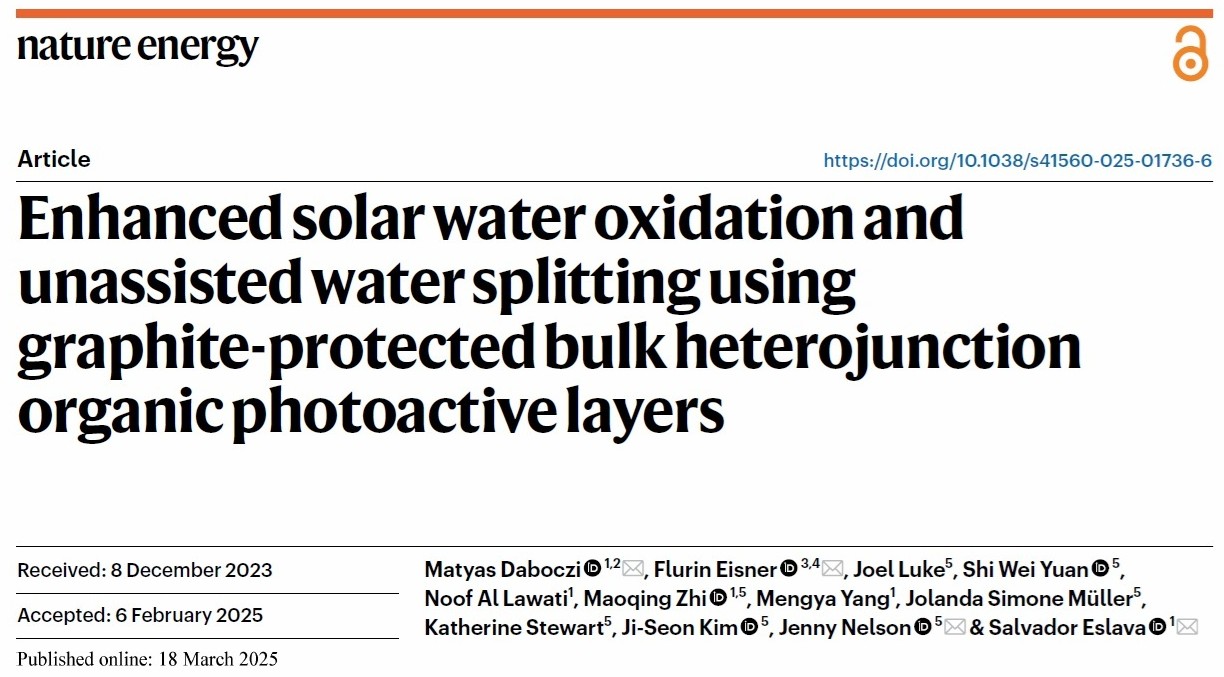
Dr. Matyas Daboczi is a Marie Skłodowska-Curie Research Fellow at the HUN-REN Centre for Energy Research and a Visiting Researcher at Imperial College London’s Eslava Group. His research focuses on solution-processable materials for solar energy conversion, including perovskites, oxides, and organic thin layers, with applications in photoelectrochemical cells for water splitting and biomass oxidation. He holds a PhD in Experimental Solid State Physics from Imperial College London (2020) and MSc degrees in Chemical Engineering from Budapest University of Technology and Economics (2014-2016) and Université Catholique de Louvain (2014-2015). His work emphasizes optimizing optoelectronic properties and interfacial engineering to enhance device efficiency and stability. Key research areas include hybrid organic-inorganic solar cells, photoelectrochemical water splitting, and photocatalytic CO₂ reduction. Recent advancements include graphite-protected organic photoactive layers for unassisted solar water splitting and ultrastable halide perovskite photoanodes. Dr. Daboczi has contributed to high-impact journals like Nature Energy and Nature Communications , with a focus on materials characterization, device fabrication, and sustainable energy systems. He advises PhD student Liza Lutter and collaborates with global institutions to advance solar energy technologies.
Dr. Aditya Rawal is a Researcher at UNSW Sydney, affiliated with the Mark Wainwright Analytical Centre. His research focuses on structural chemistry, spectroscopy, and the development of advanced materials for energy storage and environmental applications. Dr. Rawal has contributed to over 160 peer-reviewed articles, with recent work emphasizing nanomaterials synthesis, defect engineering in catalysts, and novel battery technologies. His studies often bridge fundamental material science with practical applications in sustainable energy and resource recovery. His research interests include graphene-based membranes, mechanochemical synthesis of ceramic materials, and the characterization of composite materials for high-voltage energy storage systems. Dr. Rawal’s work has explored applications such as superionic conductors for lithium-sulfur batteries and bio-inspired materials derived from spider silks. He collaborates on interdisciplinary projects, leveraging advanced analytical techniques available through UNSW’s infrastructure. Key trends in his publications include the optimization of nanomaterial properties for battery performance and the development of sustainable materials from industrial byproducts. His work on mining tailings and acid waste recovery highlights environmental sustainability themes. While no awards are explicitly listed, his prolific publication record and institutional affiliations suggest recognition in his field.
Niall Connolly is a University Teacher in Philosophy at the University of Sheffield , affiliated with the School of History, Philosophy and Digital Humanities. He previously held adjunct and part-time roles at Trinity College Dublin and University College Dublin. His research spans metaphysics , philosophical logic , and philosophy of language , with secondary interests in philosophy of science, early modern philosophy, ethics, and metaethics. He has published extensively on fictionalism, bare particulars, and the ontology of non-existent entities, often bridging analytic philosophy with interdisciplinary questions. Connolly’s recent publications analyze semantics of indexicals in answering machine paradoxes (2018), bare particular theory (2015), and ontological coherence in metaphysics. He critiques ontological permissiveness and explores the implications of fictional resistance in moral epistemology. 2022 : Fictional Characters and Characterisations (Pacific Philosophical Quarterly) 2018 : Answering Machine Paradox (Dialectica) 2015 : Defense of Bare Particulars (Philosophical Studies) His teaching portfolio at Sheffield includes courses on Self and Society , Fiction and Truth , and Metaphysics , while past roles involved modules on philosophy of science and mind. Wray Prize for best undergraduate thesis in Philosophy (TCD, 1997) John Isaac Beare Prize for top philosophy grades (twice awarded, TCD)
Dr. Luke Delmas is a Senior Lecturer at the Department of Chemistry within Imperial College London . He plays a pivotal role in undergraduate practical chemistry education and transferable skills training. Additionally, he co-founded the Chemical Kitchen project and manages summer research opportunities and study abroad exchanges. 2011: BSc (Hons) in Chemistry from The University of the West Indies, Barbados 2013: MPhil in mechanically interlocked molecules under Prof. Avril Williams at The University of the West Indies 2015: MRes in Green Chemistry with Distinction from Imperial College London 2019: PhD in metal-organic/hydrogen-bonded frameworks from Imperial College London His research spans Inorganic Chemistry , Medicinal and Biomolecular Chemistry , Organic Chemistry , and Physical Chemistry , with a focus on Materials Engineering and broader chemical sciences. Imperial College President’s PhD scholarship At Imperial, Delmas coordinates undergraduate practical training, oversees international exchange programs, and contributes to characterisation methods education in inorganic chemistry.
Dr. Thomas Baddeley is a Senior Research Fellow in the Department of Chemistry at the School of Natural and Computing Sciences, University of Aberdeen. His work bridges academic research and pharmaceutical industry applications, particularly through his role as Head of DMPK/Analytical Chemistry at TauRx Therapeutics. He is also a co-founder of the North East Analytical Research (NEAR) Symposium, promoting regional collaboration in analytical science. PhD in Chemistry, University of Aberdeen (2002) BSc Hons in Chemistry, University of Aberdeen (1998) His research focuses on analytical and bioanalytical method development for pharmaceuticals, particularly in neurodegenerative disease therapeutics. He specializes in drug metabolism and pharmacokinetics (DMPK), material characterization, and impurity profiling, following ICH Q3 and M7 guidelines. His work supports clinical and non-clinical development of novel compounds, including tau aggregation inhibitors for Alzheimer’s and frontotemporal dementia. His recent publications (2015–2023) span neuropharmacology, analytical chemistry, and structural chemistry. Key themes include the mechanisms of hydromethylthionine in tauopathies, mitochondrial function in neurodegeneration, and crystallographic analysis of organic and steroidal compounds. His work frequently involves collaborations with clinical and industrial partners. Dr. Baddeley has co-authored patents related to phenothiazine-based tau aggregation inhibitors, demonstrating translational impact. He has presented at key forums including the NEAR Symposium, REID Bioanalytical Forum, and INFORM. He has not been noted to supervise students or receive specific awards in the provided text. His research is supported through industry collaboration and institutional fellowships. Dr. Baddeley is actively involved in analytical science through research, knowledge exchange, and symposium leadership, contributing significantly to both academic and pharmaceutical communities.
Christopher J. Lupton is a Research Fellow in the Department of Biochemistry & Molecular Biology at Monash University, specializing in high-resolution structural characterization of protein complexes. His work primarily utilizes advanced techniques including electron microscopy, electron diffraction, and crystallography to investigate membrane proteins, immune complexes, and molecular mechanisms relevant to disease. His research focuses on Structural Biology and Protein Biochemistry , with particular expertise in membrane protein systems, metalloproteases, and immune complex assembly. Recent work reveals atomic-level insights into GPCR-transporter hybrids (LYCHOS), lysosomal recruitment machinery, complement system neoepitopes, and metastatic signaling factors. His publications demonstrate consistent use of cutting-edge structural methodologies to address fundamental questions in molecular biophysics. Lupton's recent publications (2022-2024) in high-impact journals including Nature , Science Advances , and Nature Communications show a cohesive research trajectory centered on determining the structural basis of protein complex function. Key themes include membrane protein architecture, autoinhibitory mechanisms in signaling proteins, and conformational changes in immune effectors. His collaborative work spans structural biology, cell biology, and disease mechanisms. Lupton completed his PhD at Monash University in 2017 with research titled 'Biophysical Characterisation of the Josephin Domain of Ataxin-3', establishing his foundation in protein structural analysis. His ORCID profile (0000-0002-4617-4853) documents 14 research outputs with significant citation impact, including multiple highly visible publications in 2024 that have been widely disseminated through news outlets, social media, and academic platforms.
E. Charles Sykes is a Professor of Chemistry and Chemical and Biological Engineering at Tufts University, holding the John Wade Professorship. He leads the Sykes Lab, which focuses on surface science, nanoscience, and catalysis using advanced scanning probe techniques such as STM and LT-STM. His research explores molecular motors, single-atom alloy catalysts, chiral surface chemistry, and radiation-enhanced materials. Education: PhD (2002) in Chemistry from the University of Cambridge and BS/MS (1998) in Chemistry from the University of Oxford. His work bridges fundamental surface science with applications in energy and biomedical technologies. Research interests include designing cost-effective catalysts at the single-atom limit, studying molecular rotation dynamics, and developing chiral surfaces for enantiospecific reactions. His team has pioneered studies on atomic-scale alloy catalysts and demonstrated the world's first single-molecule electric motor. Key achievements include ACS Catalysis Lectureship Awards and Fellowships in the Royal Society of Chemistry and AVS. The lab actively collaborates with industry and academic institutions, supported by grants from NSF, NIH, and DOE. Labs/Teams: Sykes Lab at Tufts University, focusing on advanced microscopy and surface chemistry. Current projects include radiation-activated nanomaterials and curved crystal surface chemistry.
Professor Chi King Lee is a full Professor in the Department of Civil Engineering at the School of Engineering & IT, University of New South Wales (UNSW) Canberra, Australia, a position he has held since June 2015. Prior to this, he served at Nanyang Technological University (NTU), Singapore, as Lecturer (1998–2000), Assistant Professor (2000–2001), and Associate Professor (2002–2015). He earned his PhD from Imperial College London in 1996, with earlier degrees from the University of Hong Kong. His research spans: Structural and numerical engineering Sustainable construction materials (e.g., green concrete, ECC) Protective engineering (blast, impact, progressive collapse) Steel structures and integrated sustainable design His recent publications reflect a strong focus on sustainable materials, structural resilience under extreme loads, and advanced numerical modelling. He has over 190 journal articles, 11 book chapters, and serves on the Editorial Board of Engineering Structures . He actively supervises PhD students and offers competitive scholarships. Scientific contributions include: Editorial Board, Engineering Structures (2021–present) Consultant for PSA Singapore and structural software firms Extensive publication record in high-impact journals He mentors PhD candidates in sustainable materials and protective engineering, with research supported by institutional and industry collaboration. His work integrates numerical simulation, experimental validation, and practical application in civil and defence infrastructure.
Rachel Mary Mc Loughlin is a Professor in Immunology and Biochemistry at Trinity College Dublin . Her research focuses on Staphylococcus aureus pathogenesis, T cell biology , neutrophil responses , and vaccine development . She has led numerous projects funded by institutions such as Science Foundation Ireland , Wellcome Trust , and GlaxoSmithKline . Education : Not explicitly detailed in the text. Research Interests include: Host-Pathogen Interactions with Staphylococcus aureus Immunomodulation via cytokines (IL-10, IL-6, Type I IFN) Vaccine Design targeting skin and respiratory immunity Neutrophil Apoptosis and autophagy during infections T Cell Memory in bacterial infections Her peer-reviewed publications (over 90) span immunology, microbiology, and vaccinology , with recent work on Staphylococcus aureus immune evasion mechanisms and IL-22 regulation. She has received multiple honors, including the TCD Faculty of STEM Award (2023) and Science Foundation Ireland Early Career Researcher of the Year (2017) . Grants and Projects : Skin delivery and tissue-resident T cell responses (GSK, 2021–2025) Characterisation of skin resident memory CD4 T cells (GSK, 2019–2024) Vaccination: Knowledge is Power (HRB, 2018–2022) Staphylococcus aureus immunosuppressive memory (Wellcome Trust, 2017–2021)
Prof. Dr. Kornelius Nielsch is the Director of the Institute for Metallic Materials (IFW Dresden) and a Full Professor for Metallic Materials and Metal Physics at Technical University of Dresden (TU Dresden). He previously held academic positions at the University of Hamburg (Professor, 2007–2015), Max Planck Institute for Microstructure Physics (Project Leader, 2003–2007), MIT (Postdoc, 2002–2003), and University of Bielefeld (Habilitation, 2007). Education Diploma in Physics, Gerhard-Mercator-University Duisburg (1993–1997) Diploma Thesis: Fabrication of semiconductor nanoparticles in the gas phase and its physical characterisation, Lund University (1997) PhD in Physics (with highest honors), Max Planck Institute for Microstructure Physics (1997–2002) PhD Thesis: Highly ordered ferromagnetic nanowire arrays: Electrochemical synthesis and magnetic characterization Research Focus Thermoelectric nanowires for energy conversion Nanograined bulk materials and devices Topological insulators and Weyl semimetals Multifunctional nanowires and nanotubes Atomic Layer Deposition for 3D nanostructures Magnetic characterization of nanoscale systems Superconducting materials and applications Scientific Activities & Grants Coordinator of DFG Priority Programme 1386: Nanostructured Thermoelectric Materials Editor-in-Chief of Semiconductor Science and Technology (since 2012) Five major funded projects (2009–2019): DFG SPP 1386, EU H2020 TISP, DFG SpinCAT, SAB GroTEGx, EU FP7 M3D Acknowledged as a top 100 materials scientist (2000–2010) by Thomson Reuters (2011) Habilitation on multifunctional magnetic nanowires and nanotubes Awards Young Investigator Award (BMBF, 2002) Research Prize of Saxony-Anhalt (2006) Top 100 Materials Scientist Recognition (2011)
Associate Professor Tadhg Ó'Cróinín is a microbiologist based at the School of Biomolecular and Biomedical Science , University College Dublin (UCD) . Since 2008 he has held academic appointments rising to Associate Professor in June 2023. He served as Head of Microbiology (2016-2022) and Associate Dean for Study Abroad (2011-2016) and currently chairs the UCD Student Finance Committee . Education BA (Moderatorship) in Microbiology, Trinity College Dublin (1995) PhD in Paediatrics, University College Dublin (1999) Professional Diploma in University Teaching & Learning, University College Dublin Research Interests Dr Ó’Cróinín’s group investigates the molecular basis of bacterial virulence, focusing on gastrointestinal pathogens such as Campylobacter jejuni , Salmonella enterica and Helicobacter pylori , as well as biofilm-forming pathogens on medical devices including Staphylococcus aureus and Pseudomonas aeruginosa . A unifying theme is the role of DNA supercoiling as a global regulator of virulence gene expression, biofilm formation and antibiotic resistance. The laboratory employs in vitro cell-culture models, 3-D intestinal spheroids, in vivo infection models, high-content imaging and genome-scale analyses to dissect these processes. Publication Themes Recent publications (2024-2025) reveal three major strands of work: (i) elucidating how DNA-relaxation in C. jejuni triggers an invasive phenotype and tight-junction disruption; (ii) developing antifouling and antimicrobial bioresorbable coatings for orthopaedic titanium implants to combat MRSA and P. aeruginosa biofilms; and (iii) genomic and phenotypic characterisation of novel yeast species from Irish soils. Earlier seminal studies established the role of DNA supercoiling and nucleoid-associated proteins (Fis, HU, Lrp) in regulating motility, invasion and intracellular survival across Salmonella , E. coli and Bordetella . Honours & Awards College of Science Teaching Award (2018) College of Science Teaching Award (2024) Chair, Professional Development Committee, Microbiology Society (2018-2021) Council Member, Microbiology Society (2018-2021) Grants & Supervision Since 2008 Dr Ó’Cróinín has been PI or Co-PI on >12 competitively funded grants from Science Foundation Ireland, EMBO, NIH, and industry partners, totalling in excess of €1.5 M. He has successfully supervised 7 PhD and 3 Master’s research students , mentoring them through projects spanning bacterial pathogenesis, antibiotic resistance and biofilm biology. Laboratory & Collaborations Research is conducted within the Microbiology Research Laboratory at UCD’s Health Sciences Centre. The group maintains active collaborations with clinical (Our Lady’s Children’s Hospital), materials-science (AMBER, CRANN) and international partners (NIH Bethesda, VU Amsterdam) to translate insights into infection control and biomaterial innovation.
Sven De Sutter is a Visiting Professor (Paid guest professor) in the Mechanics of Materials and Constructions research group at Vrije Universiteit Brussel (VUB) , Belgium. His affiliation with VUB centres on advancing structural engineering solutions for lightweight, high-performance composite and concrete systems. Research Focus: Fracture mechanics and damage characterisation of cementitious and composite materials Acoustic emission monitoring and digital image correlation for real-time structural health assessment Development of hybrid textile- or fibre-reinforced concrete beams for lightweight construction His investigations integrate experimental validation with analytical modelling, aiming to optimise safety and durability while reducing material usage in civil infrastructure. Publication Trends: Across 26 outputs captured between 2013 and 2019, De Sutter’s work consistently targets composite-concrete hybrid beams , employing acoustic emission as a primary non-destructive evaluation tool. Key themes include fracture monitoring, damage source identification, and the structural performance of carbon- and textile-reinforced lightweight systems, reflecting a trajectory towards sustainable, resilient construction technologies. Scientific Recognition: While the provided text does not list any specific awards or honours, his publications have attracted 230 citations (Scopus) and an h-index of 6, indicating growing impact within the engineering community. Supervision & Grants: De Sutter has co-supervised at least one Master’s thesis (2012) entitled “Analyse en haalbaarheidsstudie van een innovatief lichtgewicht composiet bekistingssyteem voor betonnen balken” . Further doctoral supervision or grant details are not disclosed in the text. Laboratory & Collaboration: He conducts research within the VUB Mechanics of Materials and Constructions laboratories, collaborating closely with colleagues such as Prof. T. Tysmans, Dr. S. Verbruggen, Dr. D. Angelis, and others, forming an active network around advanced composite and concrete experimentation.