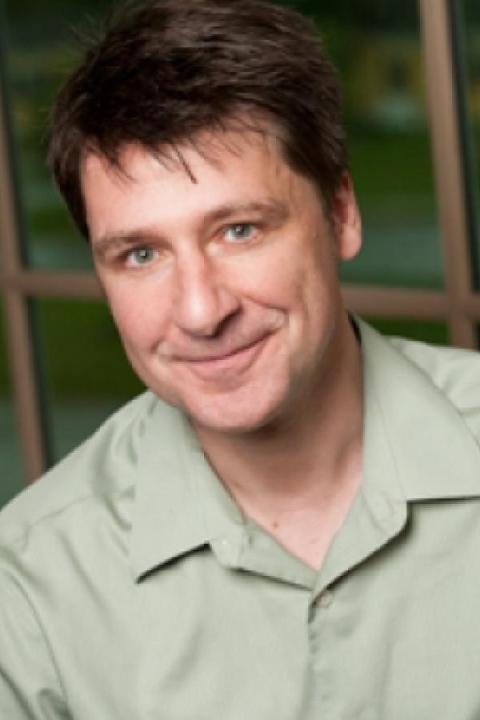
Professor Antony Darby holds a faculty position in the Department of Architecture & Civil Engineering at the University of Bath , where he serves as Director of Research and Knowledge Exchange . His research focuses on structural dynamics and concrete structure assessment, supported by facilities like the world-unique VSimulators (a collaboration with the University of Exeter). He works with interdisciplinary teams to address motion serviceability criteria and develops passive vibration control methods using impact dampers. Expert in structural strengthening with advanced composites (e.g., carbon fiber) Lead author of Concrete Society’s TR55 design guidance UK principal expert on Eurocode 2 committee for FRP guidelines His work aligns with UN Sustainable Development Goals (SDGs) related to sustainable cities and climate action. Recent publications span topics like structural stone scaling, offshore wind foundations, and occupant comfort in tall buildings. He actively supervises doctoral students and engages in industry knowledge exchange activities.
Prof. Dr.-Ing. Frank Thielecke is a full Professor and the head of the Institute of Aircraft Systems Engineering (Flugzeug-Systemtechnik) at Technische Universität Hamburg (TUHH), Germany. His research is centered on advanced aircraft systems, avionics, flight control, and the integration of emerging technologies such as hydrogen and hybrid-electric propulsion. Institution: Technische Universität Hamburg Department: Institute of Aircraft Systems Engineering (Flugzeug-Systemtechnik) Email: frank.thielecke@tuhh.de Office: Neßpriel 5, Room 1.012, 21129 Hamburg His research interests include integrated modular avionics (IMA), model-based systems engineering (MBSE), aircraft load estimation, health monitoring, fault diagnosis, and sustainable aviation technologies. He leads a research group actively contributing to next-generation aircraft design, with a strong focus on digitalization, virtual testing, and system safety. The recent publications highlight a consistent trend in developing model-based tools and architectures for avionics and aircraft systems. Key themes include the design of IMA platforms, virtual integration, system validation, hydrogen aircraft systems, and control algorithms for UAVs and flexible aircraft. His work frequently appears in AIAA, DASC, DLRK, and CEAS conferences and journals. Prof. Thielecke has been involved in numerous collaborative research projects focusing on more-electric aircraft, fuel cell systems, and advanced actuation. He has contributed to the development of frameworks such as ASHLEY and SArA for avionics platform design and systems architecting. His team also works on noise reduction in hydraulic systems and condition monitoring for aircraft subsystems. He supervises a group of researchers and PhD students, many of whom co-author his publications. While specific student names are not listed, long-term collaborators like Oliver Luderer, Thimo Bielsky, Nils Külper, and Philipp Chrysalidis are likely doctoral candidates or postdoctoral researchers in his group. He has secured funding for projects related to hydrogen aircraft, hybrid propulsion, and digital avionics engineering. His lab, the Institute of Aircraft Systems Engineering, operates test benches for avionics, hydraulic systems, and flight control validation. The team uses advanced simulation, co-simulation (e.g., FMI), and hardware-in-the-loop techniques for virtual integration and testing. Ongoing work includes the development of tools for early validation of flight control platforms and automated requirement-based testing.
Dante Fratta is a Professor in the Department of Civil & Environmental Engineering at the University of Wisconsin-Madison, where he has been actively involved in research and teaching since 2000. His work focuses on geotechnical engineering, environmental monitoring, and fiber optic sensing technologies. Education: PhD (1999) – Georgia Institute of Technology M.A.Sc. (1995) – University of Waterloo Diploma (1993) – Universidad Nacional de Córdoba Research Interests: Geomaterial process evaluation using elastic and electromagnetic waves, fundamental physical behavior of soils and rocks, geophysical assessment of near-surface environments, and distributed fiber optic sensing methods. Recent Publication Trends: He has pioneered applications of Distributed Acoustic Sensing (DAS) and fiber optic technologies for geotechnical, environmental, and energy infrastructure monitoring, including wind turbines, geothermal systems, and mining operations. Scientific Awards: Benjamin Smith Reynolds Award for Excellence in Teaching (2012) Chi Epsilon Excellence in Teaching Award (2008) Best Paper Award, GeoCongress Sensing Methods and Devices Track (2006) Distinguished Alum, Universidad Nacional de Córdoba (2013) Multiple keynote and invited speaking engagements Teaching: Fratta teaches graduate and undergraduate courses in geotechnical engineering, including Foundations, Applied Geophysics, and Pre-Dissertator Research, with active involvement in Spring 2025 classes.
Mahmoud Karimi is a Senior Lecturer at the School of Mechanical and Mechatronic Engineering , University of Technology Sydney (UTS), leading the Vibroacoustics Research Group within the Centre for Audio, Acoustics and Vibration. He holds a PhD in Mechanical Engineering from UNSW with specialization in vibration and acoustics, and has conducted visiting research at University of Cambridge, Technical University of Munich, and INSA Lyon. His research focuses on computational hydroacoustics, vibroacoustics, and uncertainty quantification in noise/vibration problems. Academic Leadership : Editor-in-Chief of Acoustics Australia since 2025 Research Income : Attracted $6M in competitive grants ($2M as Chief Investigator) since 2017 Technical Expertise : Specializes in acoustic black hole structures, flow-induced vibration modeling, and leak detection in buried pipelines Scientific Awards : Recipient of ARC DECRA Fellowship (DE190101412) 2019-2022 Research Trends : His 91+ publications demonstrate expertise in hybrid acoustic modeling techniques, sustainable hempcrete development, and vibration energy harvesting solutions with applications in mining, rail systems, and water infrastructure. International Collaborations: University of Cambridge (UK), Technical University of Munich (Germany), INSA Lyon (France) Teaching Portfolio: Advanced numerical methods, dynamics & control, and computational modeling at UTS
Eilif Pedersen is a Professor and Program Leader for Marine Technology at the Norwegian University of Science and Technology (NTNU). He leads the Department of Marine Technology under the Faculty of Engineering. His research focuses on mathematical modeling, simulation of machinery systems, and energy-efficient solutions in marine and offshore contexts. He is actively involved in projects such as SEACo, SFI Smart Maritime, and ViProMa, emphasizing virtual prototyping and hybrid power systems. Key research areas include bond graph methodology, thermodynamic system modeling, and dynamic analysis of marine systems. Pedersen supervises numerous PhD and industrial projects, including studies on hybrid propulsion, wind turbine dynamics, and fuel cell integration. He has contributed to over 50 publications, with recent work addressing co-simulation techniques, energy conservation in marine systems, and emission reduction strategies. His expertise spans marine engines, fluid dynamics, and renewable energy applications. Collaborations with industry partners like Rolls-Royce and Kongsberg Digital highlight his commitment to bridging academic research with practical maritime challenges.
Xiao Chen is a Researcher at the Technical University of Denmark (DTU), specializing in advanced testing and digitalization of composite and offshore steel structures for wind energy systems. With a PhD from Nagoya University (2011), his work focuses on structural integrity, fatigue analysis, and Digital Twins for wind turbine blades. PhD in Engineering, Nagoya University (2011) Senior Researcher (2019–present) and Researcher (2017–2018) at DTU Associate Professor (2016–2017) and Assistant Professor (2013–2015) at Chinese Academy of Sciences His research explores nonlinear buckling, fracture mechanics, and Industry 4.0 technologies for structural health monitoring. Recent publications highlight AI-driven damage detection, thermographic analysis, and finite element modeling of composites. He leads projects like QualiDrone and AQUADA-GO, funded by EUDP and VILLUM FONDEN. Key article trends include composite fatigue , digital twins , drone-based inspection , and machine learning for structural monitoring. He received the 2022 Best Presentation Award at an international conference. Projects: Villum Experiment Project DiscoverBlaDE AQUADA-GO QualiDrone DARWIN RELIABLADE RELIfe
Dr Yuting Zhang serves as a Research Fellow within the Department of Civil, Maritime, and Environmental Engineering at the University of Southampton's Faculty of Engineering and Physical Sciences. He is an integral member of the Royal Academy of Engineering Chair Centre of Excellence for Intelligent & Resilient Ocean Engineering (IROE), focusing on machine learning applications for geotechnical site characterization. His educational background includes a Bachelor's degree and MPhil in Geotechnical Engineering from Wuhan University, China, followed by a 2024 PhD from the University of Newcastle, Australia, specializing in probabilistic calibration of resistance factors for piling designs. Zhang's research centers on probabilistic geotechnics and reliability-based design methodologies, with particular emphasis on data-driven site characterization techniques. His work bridges machine learning algorithms with geotechnical and geophysical data analysis to enhance foundation engineering practices, especially in offshore and marine environments. Current projects investigate spatial soil variability effects on pile group reliability, optimization of resistance factors, and innovative data augmentation approaches for rock fracture prediction. His publication record demonstrates consistent output in high-impact journals since 2022, with recent 2025 publications indicating active research momentum. The articles reveal strong thematic focus on probabilistic methods for pile design, integration of diverse geotechnical data sources, and machine learning applications in subsurface characterization. As part of the Infrastructure Group and Southampton Marine and Maritime Institute, Zhang contributes to ocean energy research initiatives while maintaining active collaborations with international researchers including Jinsong Huang, Jiawei Xie, and Anna Giacomini. His work supports the development of more resilient offshore infrastructure through advanced geotechnical reliability frameworks.
Prof. Dr. Po Wen Cheng is a Professor and Head of the Stuttgart Chair of Wind Energy (SWE) at the Institute of Aircraft Design, University of Stuttgart. His research focuses on wind energy systems, including floating offshore wind turbines, lidar applications in wind farm control, and structural dynamics of renewable energy systems. He leads interdisciplinary projects addressing challenges in mooring systems, aeroelastic analysis, and noise mitigation. Key areas of expertise include aerodynamic load optimization, lidar-assisted control strategies, and numerical modeling of wind farm interactions. His work integrates advanced machine learning techniques for predictive maintenance and performance enhancement. Cheng collaborates with international institutions and participates in high-profile wind energy initiatives like the Alpha Ventus offshore wind farm study. Teaching: Courses on Wind Turbine Design and Wind Energy Utilization Research Labs: Stuttgart Chair of Wind Energy, Institute of Aircraft Design Recent Projects: Scaled Flight Demonstrator e-Genius-Mod, Passively Self-Adjusting Floating Wind Farms, Lidar-Based Virtual Sensors His research emphasizes sustainable energy transitions, with particular attention to offshore wind infrastructure and turbulence mitigation in complex environments.
David Roueche serves as the Gottlieb Associate Professor of Structural Engineering within the Department of Civil and Environmental Engineering at Auburn University's Samuel Ginn College of Engineering. His research focuses on structural performance under extreme wind events, forensic engineering methodologies, and improving building resilience against hurricanes and tornadoes through interdisciplinary approaches. Dr. Roueche's academic foundation includes advanced degrees from the University of Florida, with complementary physics training: Ph.D. in Structural Engineering, University of Florida M.S. in Civil Engineering, University of Florida B.S. in Civil Engineering, University of Florida B.S. in Engineering Physics, Jacksonville University His primary research explores extreme wind loads on low-rise buildings , post-disaster field investigations , and performance-based wind engineering , with specialized expertise in light wood-frame structures and surge/flood modeling. He integrates engineering analysis with social science through survivor interviews to reconstruct tornado events and identify vulnerabilities in residential construction, particularly for mobile and manufactured housing in the Southeastern United States. Analysis of his recent publications reveals a dominant focus on post-disaster assessment frameworks, field data collection protocols, and performance-based evaluation methods for wind-affected structures. His work increasingly emphasizes interdisciplinary collaboration—combining engineering, social science, and geospatial technologies—to develop comprehensive disaster response systems and improve building codes. Key trends include standardization of forensic engineering practices through organizations like StEER and application of computational modeling to predict structural failures. Dr. Roueche's significant recognitions include: Ginn Faculty Achievement Fellow designation NSF CAREER Award (2020) for advancing post-windstorm assessment methodologies He directs substantial research funding including a $500,000 USDA grant for timber-steel composite research and leads the Auburn Mass Timber Collaborative—an interdisciplinary initiative uniting forestry, architecture, and engineering faculty. Through the Structural Engineering Emergency Response (StEER) network, he coordinates Field Assessment Structural Teams for disasters like Hurricane Ian and the 2022 Arabi tornado, developing standardized protocols adopted nationally for post-disaster evaluations. His mentoring extends to doctoral students in civil engineering, with recent success in securing competitive fellowships for advisees. As a core member of StEER, Dr. Roueche develops and implements field assessment protocols used in rapid disaster response. He leads FAST teams deploying UAVs, LiDAR, and ground surveys to document structural performance after hurricanes and tornadoes, with datasets informing FEMA guidelines and building code revisions. His work with the Auburn Mass Timber Collaborative advances sustainable construction methods through experimental testing of innovative structural systems.
Kallol Sett is an Associate Professor in the Department of Civil, Structural and Environmental Engineering at the University at Buffalo (SUNY), within the School of Engineering and Applied Sciences. His research focuses on risk and reliability analysis of civil infrastructure under extreme events, with expertise in uncertainty quantification, multi-hazard resilience, and geomechanics. He leads the Risk and Reliability Research Group, which develops computational tools integrating physics-based and data-driven modeling, stochastic calculus, and high-performance computing. Education includes a PhD from the University of California, Davis (2007), an MS from the University of Houston (2003), and a BE from Jadavpur University (1997). His work is funded by NASA, NSF, USDOT, NIST, and industry partners. Key research themes include probabilistic geotechnical site characterization, stochastic simulation of seismic ground motion, and life-cycle cost-benefit analysis of infrastructure systems. Advising includes mentoring over 10 PhD and MS students, with notable alumni now in academia and industry roles such as Assistant Professors at Embry-Riddle Aeronautical University and Tianjin University. His lab’s recent studies address real-time decision support systems for hurricane-impacted infrastructure, resilience deficit indices, and multi-hazard financial risk assessment of integrated infrastructure systems.
Umberto Desideri is a Full Professor of Thermal Machines at the University of Pisa since November 2014, following his tenure as Full Professor at the University of Perugia from 2004 to 2014. He has held leadership roles, including Head of the Department of Engineering at the University of Perugia (2014) and Head of the Department of Energy, Systems, Territory and Construction Engineering at the University of Pisa (2016–2020). He is actively involved in editorial boards, such as the ASME Journal of Fuel Cell Science and Technology (2005–2017), Journal Applied Energy (since 2007, Associate Editor from 2011, Senior Editor since 2022), and Journal Applied Thermal Engineering (since 2013). Additionally, he co-founded two spin-off companies in 2005: Tecnologie per la riduzione delle emissioni engineering srl and Biomasse e nuove tecnologie srl . Desideri obtained his MSc in Mechanical Engineering from the University of Florence in 1988 and his PhD in Energy Engineering from the same university in 1993. His academic career includes roles as Assistant and Associate Professor at the University of Perugia (1992–2004) before becoming a Full Professor there in 2004. His research focuses on renewable energy systems (geothermal, solar, biomass), hydrogen and fuel cell technologies, carbon capture and storage, and energy-efficient buildings. He explores polygeneration systems, sustainable energy storage, and decarbonization strategies for industries like tissue paper production. Recent work emphasizes the integration of renewables with thermal storage and CO2 utilization in circular energy systems. Awards: Fellow of the American Society of Mechanical Engineers (since 1994) Listed in the Top Italian Scientists in Engineering Recognized as a World Top 2% Cited Scientist In advising and grants, he has supervised over 200 Master’s theses and led EU-funded projects such as: H2020 COMPBAT (2020–2024): Computer-aided design for next-gen flow batteries H2020 Regen-by-2 (2020–2027): Multi-energy systems using two-phase fluids LIFE Augia (2020–2023): Sewage oxy-gasification for chemicals production He directed the Fuel Cell Laboratory (2007–2014) and Wind Tunnel (2010–2014) at the University of Perugia. His current work at the University of Pisa’s DESTEC department addresses hydrogen technologies, energy transition, and sustainable systems.
Marius Paraschivoiu is a Professor in the Department of Mechanical, Industrial and Aerospace Engineering at Concordia University, within the Faculty of Engineering and Computer Science. His research focuses on computational fluid dynamics (CFD), finite element methods, and aerodynamic simulations with applications to wind energy systems, acoustic simulations, and turbulence modeling. He holds a PhD in engineering and has expertise in parallel computing and urban wind energy potential assessment. His work emphasizes optimizing vertical axis wind turbine (VAWT) performance in urban environments, including roof-mounted installations, wake interactions, and turbulence effects. Paraschivoiu has extensively studied the impact of building geometry, corner placements, and fluid-structure interactions on turbine efficiency. His CFD-based analyses address challenges like mesh adaptation, multiphase flows, and real-gas modeling for hydrogen systems. Key research themes include improving wind energy harvesting through innovative turbine designs, mitigating aerodynamic noise, and enhancing flow uniformity in complex configurations. Paraschivoiu’s contributions span over 50 peer-reviewed articles, with recent focus on urban microclimate effects, VAWT array optimization, and turbine blade morphing concepts. He maintains an active research website at Concordia University and collaborates on applied projects involving CFD validation and industrial gas turbine combustor emissions.
Prof. Vlado A. Lubarda holds dual roles at the University of California, San Diego: Full Professor of Teaching in the Department of Chemical and Nano Engineering and Adjunct Professor of Mechanical and Aerospace Engineering. He is a Faculty Fellow of Revelle College and a Research Affiliate at the Center for Memory and Recording Research. Lubarda's academic journey includes degrees from the University of Montenegro (Dipl. Ing., 1975) and Stanford University (M.S. and Ph.D., 1977–1979). His research spans elasticity, plasticity, biomechanics, and nanomechanics, with over 130 journal publications and five authored books. Notable awards include the Barbara and Paul Saltman Distinguished Teaching Award and multiple Tau Beta Pi Outstanding Teacher Awards. He has advised numerous graduate and undergraduate students, contributing to advancements in materials science and mechanics. Affiliations: Full Professor of Teaching, Department of Chemical and Nano Engineering Adjunct Professor, Department of Mechanical and Aerospace Engineering Fellow of Revelle College Research Affiliate, CMRR Education: Bachelor of Engineering, University of Montenegro (1975) M.S. and Ph.D. in Mechanical Engineering, Stanford University (1977–1979) Research Interests: Elasticity, plasticity, viscoelasticity, dislocation mechanics, damage mechanics, and biomechanics. Key Contributions: Author of Strength of Materials , Elastoplasticity Theory , and other seminal texts. Editorial board member of Theoretical and Applied Mechanics and Mathematics and Mechanics of Solids . His research articles explore topics like dislocation dynamics, material fracture mechanics, and biomedical applications. Lubarda’s awards reflect his dedication to teaching and research excellence. He collaborates with institutions globally and actively contributes to academic governance through roles such as Chair of the NanoEngineering Undergraduate Affairs Committee.
Prof. Martin Wosnik is a Professor of Ocean and Mechanical Engineering at the University of New Hampshire (UNH), where he also serves as Director of the Center for Ocean Renewable Energy. His work bridges fluid mechanics, thermal sciences, and renewable energy technologies. Ph.D., Mechanical Engineering, SUNY Buffalo M.S., Aeronautical/Aerospace Engineering, SUNY Buffalo B.S., Mechanical Engineering, Technical University of Darmstadt Prof. Wosnik focuses on ocean renewable energy (tidal, wave, wind), turbulent flows , high-speed hydrodynamics , cavitation , and advanced flow measurement techniques. His research emphasizes both fundamental fluid dynamics and applied technologies for sustainable energy systems. Recent publications highlight his work on cross-flow turbines for marine environments, blade strain analysis , and hybrid energy-water systems . Key themes include geometric scaling effects, material optimization for turbine blades, and resource assessment for tidal/wave energy installations. He leads the Chase Ocean Engineering Laboratory at UNH, contributing to projects like the Living Bridge Initiative and the Atlantic Marine Energy Center . The lab conducts experiments on hydrokinetic turbines, wind arrays, and flow measurement technologies.
Tomohiro Suzuki is an Associate Professor at KU Leuven and Ghent University (UGent) , affiliated with the Department of Civil Engineering under the Faculty of Engineering Science (KU Leuven) and Faculty of Engineering and Architecture (UGent) . With 25 years of expertise in coastal engineering, he specializes in wave overtopping , wave-structure interactions , and Nature-Based Solutions for coastal management. Key research areas: Numerical Modeling (DualSPHysics, SWASH), Wave-Current-Vegetation Interaction , Coastal Flood Resilience Teaching roles: Project Hydraulic Engineering 3 , Hydraulic Structures , Hydrodynamics His recent projects include: INTEGRATOR (2024–2026): Integrated coastal hydrodynamics modeling Numerical Coastal Basin (2021–2025): Virtual testing for floating structures Wind Generation System (2025–2028): Fan Array Wind Tunnel for Coastal & Ocean Basin Publications focus on 3D wave-vegetation dynamics , SPH-based coastal simulations , and shallow foreshore resilience against extreme waves. No scientific awards are explicitly mentioned.