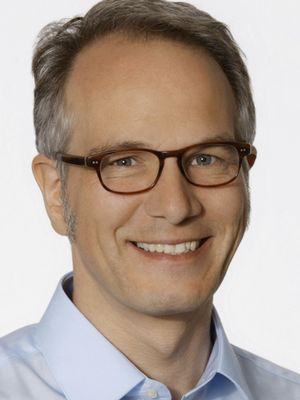
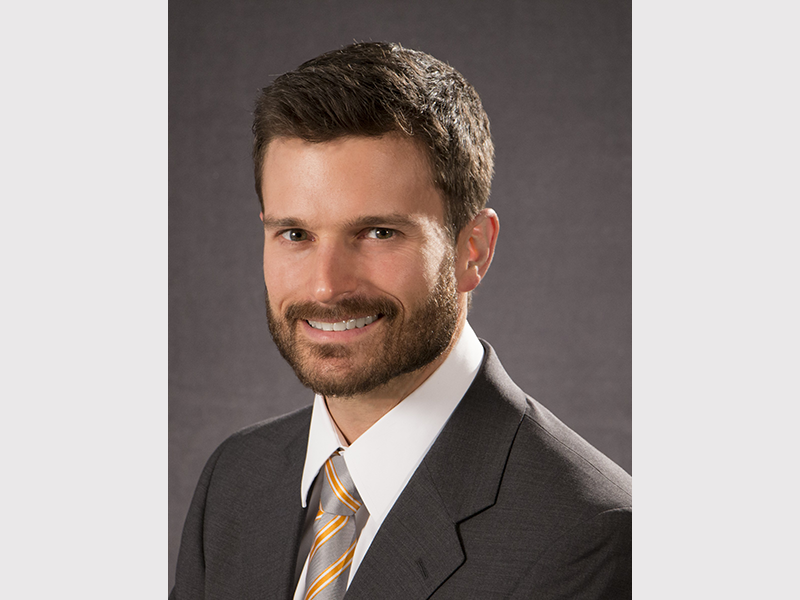
Carole J. Lee is a Professor in the Department of Philosophy at the University of Washington, with additional affiliations as Adjunct Professor at the Information School (iSchool) and Affiliate Faculty at multiple interdisciplinary centers including the Center for an Informed Public, Center for Statistics and the Social Sciences, eScience Institute, Center for Studies in Demography and Ecology, and Society + Technology Program. Her research focuses on the social structure of science, examining biases in peer review, disparities in grant funding (particularly Black-white and gender gaps), and emerging norms in scientific credit allocation. She engages with both normative and empirical questions in metascience, publishing in venues like Science , Philosophy of Science , and Plos ONE . National Science Foundation National Institutes of Health Mellon Foundation Career Enhancement Fellowship Lee has received notable awards, including the First Prize for NIH's Peer Review Challenge and the Philosophy of Science Association's Prize in Philosophy of Science & Race. She also holds leadership roles at Rapid Science and previously advised on the Transparency and Openness Promotion (TOP) Guidelines.
Vamvatsikos Dimitrios serves as an Associate Professor in the Department of Structural Engineering at the School of Civil Engineering, National Technical University of Athens (NTUA), maintaining active research and teaching roles in seismic engineering and structural dynamics. His work centers on risk assessment methodologies, fragility analysis, and innovative seismic protection systems for buildings and critical industrial infrastructure. His research spans seismic risk assessment of oil refineries and industrial facilities, development of advanced protection systems (including inerter devices and fiber-reinforced elastomeric isolators), and experimental validation of non-structural component performance. Key methodological contributions include probabilistic fragility curve estimation via Bayesian updating, analysis of vertical ground motion effects, and hazard-consistent risk frameworks. His work extends to cultural heritage protection and infrastructure resilience decision-support systems. Recent publications (2024-2025) demonstrate intense focus on practical industrial risk assessment, particularly for oil refineries and steel racking systems, integrating experimental shaking table tests with computational modeling to validate seismic protection strategies like nonlinear steel fuses. A growing trend incorporates sustainability-driven design principles and climate change impacts into risk assessment frameworks. Scientific Awards: No scientific awards were documented in the provided source material. Advising and Grants: No information regarding student advising, research grants, or funding sources was available in the scraped content.
Matthias Baitsch serves as Professor of Construction Informatics and Numerical Methods in the Department of Civil and Environmental Engineering at Bochum University of Applied Sciences, where he concurrently heads the BIM Institute. His academic trajectory includes research assistant and senior engineer roles at Ruhr-University Bochum (2000-2009), academic coordination at the Vietnamese-German University (2009-2012), and an acting professorship at the University of Kassel (2012-2014). His educational foundation comprises: Civil Engineering studies at the University of Dortmund (1991-1997) under the interdisciplinary "Dortmund Model" Doctorate from Ruhr-University Bochum (2003) on geometric imperfection-based optimization of compressive beam structures Professor Baitsch's research integrates computational mechanics with civil engineering practice, specializing in construction informatics, numerical optimization, and high-order finite element methods. His work pioneers distributed optimization frameworks, structural health monitoring for wind energy infrastructure, and BIM-based construction informatics. Key methodological contributions include hp-FEM implementations, parallel optimization algorithms, and mobile structural analysis tools. Analysis of his recent publications reveals three dominant research trajectories: (1) Advanced numerical methods for structural optimization under uncertainty, (2) Health monitoring-driven lifetime prediction for wind turbine systems, and (3) Computational modeling of tunnel environments using viscoacoustic inversion techniques. These threads demonstrate consistent focus on robust numerical implementations and real-world civil engineering applications. As Head of the BIM Institute, he leads institutional efforts in digital construction technologies, fostering industry-academia collaboration on building information modeling standards and applications. His teaching portfolio spans foundational mathematics, numerical methods, and computer science for civil engineering students, emphasizing practical computational skills.
Laura Kudrna is an Associate Professor in Applied Health Sciences, focusing on behavioral change programs and workplace wellbeing. She supervises PhD students in areas such as COM-B and Mindspace frameworks, subjective wellbeing, and time-use tracking. Affiliation: Applied Health Sciences Key Projects: Springboard (cultural survey design), PRE-EMPT (cervical screening), Rwanda912 (emergency transport algorithms) Research Interests: Her work bridges behavioral science with public health, emphasizing structured interventions to improve wellbeing in workplaces, post-cancer care, and low-income settings. She employs mixed-methods evaluations and cluster trials to assess health initiatives. Recent Trends: Analysis of pandemic impacts on mental health (type 2 diabetes), workplace incentive structures, and socioeconomic determinants of wellbeing dominate her publications. Collaborations span the UK, Rwanda, and Mali, with funding from NIHR and the Academy of Medical Sciences. Advising: Currently accepts PhD students but no named advisees are listed. She leads major cross-regional studies and contributes to policy frameworks for health programs.
Tiago Manuel Ribeiro Gomes is an Assistant Professor at the Department of Industrial Electronics within the School of Engineering at the University of Minho, Portugal. He is also a Senior Researcher at Centro ALGORITMI and a member of both the IE R&D Group and the ESRG R&D Lab. Holding a Ph.D. in Electronics and Computers Engineering, his research focuses on embedded real-time systems, computer architectures, and hardware/software co-design for IoT devices. Academic Degree: Ph.D. in Electronics and Computers Engineering Current Position: Assistant Professor, School of Engineering, University of Minho Gomes has led extensive research in IoT systems over 15 years, particularly in hardware acceleration for automotive LiDAR sensors, secure embedded systems, and efficient OS frameworks for low-end devices. His work includes the EU-funded CROSSCON project and spans hardware-assisted security, dynamic binary translation, and wireless sensor networks. Recent publications highlight his expertise in automotive sensor technology, with articles like FOG-Zip for LiDAR compression, SecureQNN for TinyML security, and Hardware-Assisted Range Image Generation for LiDAR processing. His work bridges IoT, embedded systems, and cybersecurity, focusing on real-time performance and hardware-software co-design. Projects include the development of reliable/secure automotive sensor solutions and EU project CROSSCON. He contributes to open-source frameworks like UTango for IoT security and investigates heterogeneous fault tolerance architectures using Arm/RISC-V processors. Labs: IE R&D Group, ESRG R&D Lab Education: Ph.D. in Electronics and Computers Engineering, Master’s in Telecommunications Engineering (both from University of Minho)
Kazuyoshi Miyagawa is a Professor at Waseda University's Department of Applied Mechanics and Aerospace Engineering within the Faculty of Science and Engineering, School of Fundamental Science and Engineering. With a Doctor of Engineering from Osaka University, he has maintained a continuous academic career at Waseda University since 2011, progressing from Associate Professor to full Professor. His educational background includes undergraduate and graduate studies in Mechanical Engineering at Waseda University, followed by specialized research at Osaka University's Graduate School of Engineering Science. Professor Miyagawa's research focuses on Fluid Engineering, Fluid Machinery, Cavitation, and Flow Induced Vibration . His work bridges theoretical fluid dynamics with practical applications in turbomachinery, particularly in hydraulic turbines, pumps, and rocket turbopumps. His research demonstrates a consistent emphasis on improving efficiency, stability, and reliability of fluid machinery through innovative design and thorough understanding of complex flow phenomena. His extensive publication record (107 papers with 683 Scopus citations and 1543 Google Scholar citations) reveals a strong focus on draft tube flow in hydraulic turbines, cavitation phenomena, and unsteady flow characteristics in various turbomachinery applications. His recent work shows increasing attention to computational fluid dynamics validation through experimental methods and practical engineering solutions for flow instability problems. Scientific Awards Multiple Technical and Paper Awards from the Turbomachinery Society of Japan (2001-2021) Recognition for development of new water turbines, high-efficiency turbochargers, and low-noise pumps Research on Francis turbine performance and cavitation phenomena Professor Miyagawa actively contributes to the engineering community through leadership roles including President of the Turbomachinery Society of Japan (2023-present) and Board Director of The Japan Federation of Engineering Society (2025-present). His professional memberships span multiple international and Japanese engineering societies including ASME, IAHR, and The Japan Society of Mechanical Engineers.
Masashi Okumura is Professor at Waseda University’s School of Commerce (Faculty of Commerce) where he has taught since 2006. Holding a Doctor of Commerce from the same university, he specialises in empirical accounting research, focusing on earnings restatements, accounting discretion, disclosure strategy, and the capital-market effects of digital reporting technologies such as XBRL. Education: Doctor of Commerce, Waseda University Master of Commerce, Waseda University Bachelor of Commerce, Waseda University Research Interests: Professor Okumura’s work straddles financial accounting and capital-markets research. He investigates why firms restate earnings, how investors react, and how disclosure timing and complexity affect liquidity and pricing. Recent projects explore digital technology’s impact on accounting information quality. Publication Trends: Across more than 60 refereed articles he repeatedly examines earnings restatements, disclosure behaviour, IFRS adoption motives, and the economic consequences of accounting choice. Studies published in 2022-23 utilise XBRL data to link financial-statement complexity to intraday bid-ask spreads and post-announcement drift. Scientific Awards: NOMURA Award (Special Prize) 2025 Japan Disclosure Research Association Book Award 2017 Business Analysis Association Book Award 2014 Ota-Kurosawa Award 2014 Vernon Zimmerman Best Paper Award 2000 Grants & Leadership: He currently leads a JSPS KAKENHI project (2022-25) on the capital-market and managerial impacts of earnings restatements. He served as Editor-in-Chief of the Japan Accounting Association’s journal and, since April 2024, as President of the Japan Accounting & Economic Association. Labs & Teams: Okumura heads the Financial Reporting & Analysis research group at Waseda’s Research Institute of Business Administration and mentors graduate students conducting archival accounting research.
Professor Tomoji Kishi is a distinguished faculty member at Waseda University's School of Creative Science and Engineering, where he has been serving since 2009. Previously, he held academic positions at Japan Advanced Institute of Science and Technology (2003-2009) following a 21-year career at NEC Corporation (1982-2003). He earned his Ph.D. in Information Science from Japan Advanced Institute of Science and Technology in 2002, building upon his earlier engineering graduate studies at Kyoto University. Professor Kishi's research focuses on software engineering, particularly in software product line development, model checking, formal verification, and aspect-oriented modeling. His work bridges theoretical formal methods with practical applications in embedded systems, automotive software, and IoT technologies. He has made significant contributions to scalability challenges in model checking for configurable systems and has pioneered approaches to variability management and approximate modeling techniques. His publication record demonstrates remarkable consistency and evolution, with 42 papers and 153 citations according to Scopus data (h-index: 7), spanning from foundational work in software architecture in the 1990s to cutting-edge research on AI-enhanced verification methods in 2025. His recent work shows increasing application of machine learning techniques to traditional formal methods problems, particularly in the context of highly configurable systems and IoT applications. ITS Standardization Activity Merit Prize (2022) from Society of Automotive Engineers of Japan IPSJ/ITSCJ Standardization Contribution Award (2017) IPSJ/ITSCJ Project Editor Award (2016 and 2013) Information Processing Society of Japan Society Activity Contribution Award (2010) IPA/SEC Journal Best Paper Award (2007) Information Processing Society of Japan Yamashita Memorial Research Award (1998) Professor Kishi has led multiple JSPS-funded research projects, including recent work on 'variability management methods prioritizing usability through variability mining' (2020-2023) and 'utility-first modeling method' (2017-2020). His industry collaborations, particularly with automotive systems developers, demonstrate the practical impact of his research. He maintains active membership in major professional societies including IEEE Computer Society, ACM, and the Information Processing Society of Japan.
Karim Abu Salem serves as a Fixed-term Assistant Professor in the Department of Mechanical and Aerospace Engineering (DIMEAS) at the Polytechnic University of Turin, affiliated with the College of Mechanical, Aerospace, and Automotive Engineering. He additionally holds invited membership in the College of Management and Production Engineering. His teaching portfolio includes Aerospace Vehicle Design, Space Flight Mechanics/Structures, Space Environment Operations, and Aeronautical Legislation courses for both bachelor's and master's programs in Aerospace Engineering. Dr. Abu Salem's research centers on sustainable aviation innovation, specializing in box-wing aircraft configurations, hybrid-electric and hydrogen propulsion systems, and advanced structural design methodologies. His work addresses critical challenges in emissions reduction, flight dynamics optimization, and climate impact mitigation through computational modeling, metamodeling techniques, and multidisciplinary design analysis. Key focus areas include unconventional aircraft architectures, power management systems, and metamaterial applications for next-generation aerospace vehicles. Analysis of his recent publications (2023-2025) reveals a concentrated research trajectory toward decarbonizing regional and medium-range aviation. His work demonstrates increasing emphasis on liquid hydrogen propulsion, box-wing aerodynamic efficiency, and holistic environmental impact assessment beyond CO 2 emissions. The publications exhibit strong collaboration patterns with researchers like G. Palaia and E. Carrera, primarily targeting high-impact journals in aerospace engineering and sustainability. As an active educator, Dr. Abu Salem contributes to curriculum development across multiple aerospace engineering programs, bridging theoretical concepts with emerging sustainable aviation technologies through his course collaborations and lectures.
Joshua D. Rhodes serves as a Lecturer and Research Scientist at The University of Texas at Austin, with additional roles as a non-Resident Fellow at Columbia University and Founding Partner of IdeaSmiths LLC. His expertise centers on smart grid technology, bulk electricity systems, and energy policy within the Texas electricity market (ERCOT). His academic credentials include: Double Bachelor's in Mathematics and Economics from Stephen F. Austin State University Master's in Computational Mathematics from Texas A&M University Master's in Architectural Engineering from The University of Texas at Austin Ph.D. in Civil Engineering from The University of Texas at Austin Rhodes' research spans smart grid applications , resource planning , distributed generation , and energy storage , with emphasis on ERCOT grid dynamics. He investigates how energy efficiency retrofits, renewable integration, and climate change impact grid reliability, while analyzing policy effects on micro/macro economic efficiency. His work frequently combines spatial modeling with economic analysis to address infrastructure challenges. Analysis of his 40+ publications reveals dominant themes in Texas electricity infrastructure, including renewable integration economics, electrification impacts, and climate resilience. Key trends show increasing focus on Winter Storm Uri aftermath analysis, hydrogen infrastructure development, and optimal maintenance scheduling under climate change. His research consistently bridges engineering systems with policy implications, particularly regarding ERCOT's unique market structure. Rhodes actively engages public discourse as a Forbes contributor and AXIOS Expert Voice, while serving on the board of Catalyst Cooperative—a nonprofit advancing energy data transparency. His professional activities demonstrate strong integration of academic research with real-world energy policy applications.
Talia Ringer is an Assistant Professor at the University of Illinois at Urbana-Champaign , focusing on making program verification using interactive theorem provers more accessible through improved proof engineering tools and practices. Her research addresses challenges in maintaining proofs as programs evolve and advancing formal verification. Ph.D., University of Washington (2021), NSF GRFP and P.E.O. Fellow B.S., Mathematics and Computer Science, University of Maryland Former software engineer at Amazon Her research interests include: Program Verification Proof Engineering Dependent Type Theory Interactive Theorem Provers (Coq) Key trends in her publications include: Automated proof generation and repair using large language models Tool development for Coq and other proof assistants Formal verification of software and data structures Integration of identifiers and type equivalences in verification Test input generation for software reliability Scientific awards and honors: NSF Graduate Research Fellowship Program (GRFP) P.E.O. Scholar Award She has advised numerous researchers through her work and founded the SIGPLAN-M Mentoring Program and Computing Connections Fellowship . No specific student names are listed in the scraped text.
Jürgen Hackl is an Assistant Professor at Princeton University in the Department of Civil and Environmental Engineering. He previously held academic positions at the University of Liverpool (2020) and the University of Cambridge (2022), and was a senior researcher at the University of Zürich’s Department of Computer Science (2019–2022). His work bridges formal network science methods with computational modeling for infrastructure systems. PhD in Civil Engineering Science (2019), ETH Zürich CAS in Risk and Safety (2015), ETH Zürich MSc in Structural Engineering (2013) and Construction Management (2012), TU Graz BSc in Civil Engineering Science (2011), TU Graz Dr. Hackl’s research focuses on complex urban systems , emphasizing network analysis , risk and reliability , and digital twins . He develops scalable data analytics and machine learning techniques for spatial-temporal networks, aiming to model systemic risks in socio-technical systems and integrate physics-based models with data-driven approaches. He is the lead developer of pathpy , a Python package for higher-order network analysis, and maintains tools like tikz-network for LaTeX visualization. His work spans natural hazard modeling , infrastructure deterioration , and urban resilience under climate change. Current openings for PhD and postdoc positions focus on network dynamics , graph machine learning , and probabilistic modeling . Funding covers tuition, stipend, and conference travel.
Michael L. Scott is the Arthur Gould Yates Professor of Engineering in the Department of Computer Science at the University of Rochester's Hajim School of Engineering and Applied Sciences. He received his Ph.D. from the University of Wisconsin-Madison in 1985 and has been a faculty member at Rochester since 1985, serving as Department Chair multiple times (1996-99, 2007, 2017, 2020-2024). He is a Fellow of the ACM, IEEE, and AAAS, and recipient of numerous awards including the Edsger W. Dijkstra Prize in Distributed Computing. Dr. Scott's research focuses on parallel and distributed systems, with particular expertise in synchronization mechanisms, transactional memory, and persistent memory systems. His work spans theoretical foundations to practical implementations, with numerous influential publications and open-source systems like RSTM and Ralloc. His research has addressed critical challenges in concurrent programming, memory management, and system reliability. His publications show a consistent focus on improving the reliability and performance of concurrent systems, with recent work centered on persistent memory technologies. The trajectory of his research demonstrates a progression from fundamental synchronization algorithms to sophisticated systems addressing modern hardware challenges. His publications span top venues in systems, architecture, and programming languages. His scientific honors include: ACM Fellow (2006) IEEE Fellow (2010) AAAS Fellow Edsger W. Dijkstra Prize in Distributed Computing (2006) University of Rochester's Goergen Award for Teaching (2001) Hajim School Lifetime Achievement Award (2018) IEEE TCCA/HPCA Test of Time Award (2022) Dr. Scott has advised over 25 Ph.D. students who have gone on to successful careers in academia and industry at institutions including Lehigh University, Google, Intel, Facebook, and NVIDIA. His textbook 'Programming Language Pragmatics' is a standard reference in the field, now in its 5th edition. He also co-authored 'Shared-Memory Synchronization,' a comprehensive treatment of the field. He spent the 2014-2015 academic year as a Visiting Scientist at Google. His research group, the Rochester Concurrent Systems Group, has developed numerous influential systems including RSTM (a software transactional memory system), Ralloc (a persistent memory allocator), and Montage (a system for persistent data structures). His work often bridges theoretical correctness with practical performance considerations.
Jeffery A Goldstein, MD, PhD is an Associate Professor in the Department of Pathology at Northwestern University Feinberg School of Medicine, where he serves as Director of Perinatal Pathology with additional appointments in Autopsy Pathology. He is an attending physician at Northwestern Memorial Hospital with clinical and teaching responsibilities in perinatal and autopsy pathology. His educational background includes: PhD: University of Chicago (2012) MD: University of Chicago (2014) Residency: Vanderbilt University, Anatomic Pathology (2017) Fellowship: Northwestern University, McGaw Medical Center (Lurie Children's Hospital), Pediatric Pathology (2018) Dr. Goldstein is an early-stage investigator focusing on maternal-child health with particular expertise in placental pathology. His research integrates bioimaging, informatics, and machine learning to transform placental examination from a specialized, resource-intensive process into a widely accessible diagnostic tool. He develops AI algorithms that can analyze placental photographs and microscopic slides to detect abnormalities associated with infection, neonatal sepsis, and other pregnancy complications. His work bridges computational science with clinical pathology to address the significant gap that less than 20% of placentas receive clinical examination despite their diagnostic value for future maternal and child health. His research portfolio includes multiple innovative projects applying machine learning to placental diagnosis, deep phenotyping, and quantitative description of placental features in health and disease. His recent publications demonstrate applications of deep learning for fetal inflammatory response diagnosis, machine learning assessment of gestational age, and analysis of placental lesions in gestational diabetes. Dr. Goldstein holds board certifications in Anatomic Pathology and Pediatric Pathology from the American Board of Pathology. His clinical work focuses on microscopic examination of placental slides, which forms the foundation of his research. He is affiliated with several research centers including the Center for Reproductive Science, the Institute for Artificial Intelligence in Medicine (specifically the Center for Computational Imaging and Signal Analytics in Medicine), and the Northwestern University Clinical and Translational Sciences Institute (NUCATS). His work has been featured in Northwestern Medicine news regarding AI applications for placental analysis to detect neonatal and maternal problems.
Yunyun Wu is an Assistant Professor in the Department of Biomaterials & Applied Oral Sciences and the School of Biomedical Engineering at Dalhousie University. Her research focuses on developing cost-effective, sustainable, and scalable biomaterials and structures for healthcare applications, including eco/bioresorbable electronics, biosensors, and energy storage solutions. Her work emphasizes wearable and implantable devices for health monitoring and disease treatment. Research interests include electroactive biomaterials, biosensors, electronic textiles, and stretchable electronics. Key projects involve skin-interfaced microfluidic biosensors and sewing-based fabrication of bioresorbable electronics. Recent publications highlight innovations in wearable sensors, implantable devices, and textile-based electronics. These contributions address challenges in medical monitoring, energy storage, and biocompatible materials. The Wu Lab actively explores sustainable materials and scalable manufacturing techniques to advance wearable and bioresorbable technologies. No scientific awards are explicitly listed in the provided texts, but her extensive publication record reflects her impactful contributions to biomedical engineering. Advising and grants details are not provided in the current data. The lab’s activities are centered on interdisciplinary approaches to biomedical device development, as detailed on their website (www.yyunwulab.com).