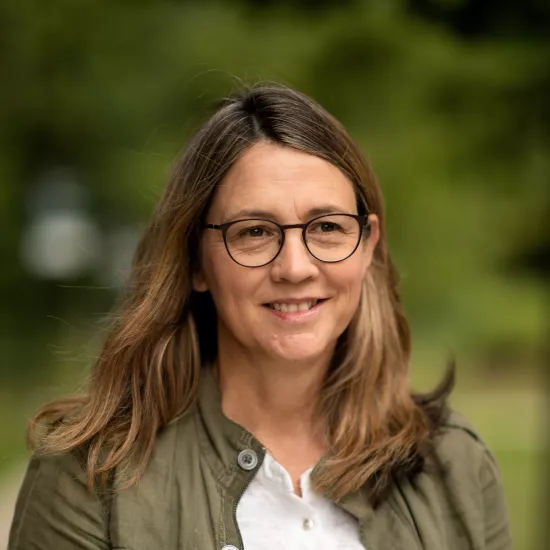
Lillie Padilla is an Assistant Professor of Spanish Linguistics at Sam Houston State University's Department of World Languages and Cultures. Holding a Ph.D. and M.A. in Spanish Linguistics from Arizona State University alongside a Bachelor of Arts from the University of Ghana, her research explores interdisciplinary connections between: Afro-Latinx representation in educational materials Discourse analysis and language ideologies Sociolinguistic studies in Equatorial Guinea Critical race theory applications in language teaching Her work focuses on Spanish subject pronoun expression patterns in multilingual contexts and curriculum development for inclusive pedagogy. Recent publications examine: Representation gaps in Spanish language textbooks Methodological challenges in Equatorial Guinea research Critical discourse analysis of Netflix's Elite series Intersectional representation of Afro-Latinx women Scientific achievements include: Finalist for American Association of Linguistics 2025 award for co-edited volume Representation, Inclusion and Social Justice in World Language Teaching Padilla's research continues to shape conversations about linguistic diversity and marginalized voices in language education through both empirical studies and theoretical frameworks.
Jonathan Rosa is Associate Professor in the Graduate School of Education, Center for Comparative Studies in Race and Ethnicity, and, by courtesy, Departments of Anthropology, Linguistics, and Comparative Literature at Stanford University. He serves as Director of Stanford's Program in Chicanx-Latinx Studies and has held leadership positions including President of the Association of Latina/o and Latinx Anthropologists of the American Anthropological Association. Dr. Rosa's educational background includes: Ph.D. in Sociocultural and Linguistic Anthropology from the University of Chicago (2010) M.A. in Sociocultural and Linguistic Anthropology from the University of Chicago (2006) B.A. in Linguistics and Educational Studies from Swarthmore College (2003) Dr. Rosa's research examines the co-naturalization of language and race as a key feature of modern governance, tracking colonially structured interrelations among racial marginalization, linguistic stigmatization, and institutional inequity. His scholarship centers on raciolinguistic ideologies, Latinx studies, and educational justice, with a community-based approach that develops tools for challenging systemic vulnerability. He investigates how race and language are jointly defined across historical, geopolitical, and institutional contexts, with particular focus on Latinx communities and educational settings. His recent publications demonstrate a consistent thematic focus on decolonizing linguistic and educational frameworks, challenging standard language ideologies, and examining the intersections of race, language, and power. The work spans multiple disciplines including sociolinguistics, anthropology, education, and critical race studies, increasingly emphasizing undoing raciolinguistics and addressing coloniality in language education and assessment practices. Dr. Rosa has received numerous prestigious awards for his scholarship: Distinguished Summer Scholar, Banks Center for Educational Justice, University of Washington College of Education (2024) Outstanding Book of the Year Award for "Looking like a Language, Sounding like a Race," American Association of Teaching and Curriculum (2022) First Book Award for "Looking like a Language, Sounding like a Race," American Association for Applied Linguistics (2021) Prose Award for Excellence in Language & Linguistics for "Looking like a Language, Sounding like a Race," Association of American Publishers (2020) Charles A. Ferguson Award for Outstanding Scholarship, Center for Applied Linguistics (2018) Dr. Rosa actively mentors doctoral students across multiple programs, serving as primary advisor for students researching race, ethnicity, language, and education. His research has been supported by major grants from the National Science Foundation, Andrew W. Mellon Foundation, Woodrow Wilson National Fellowship Foundation, and Ford Foundation. He collaborates extensively with community organizations, particularly in Chicago, to develop educational approaches grounded in decolonial praxis, focusing on how scholarship can serve as a platform for social transformation. Dr. Rosa co-directed Stanford's Center for Global Ethnography (2021-2023) and directed Stanford's Program in Chicana/o-Latina/o Studies (2020-2023). He serves on multiple editorial boards including Current Anthropology and Equity & Excellence in Education, and has held leadership positions in professional organizations including President of the Association of Latina/o and Latinx Anthropologists (2020-2022).
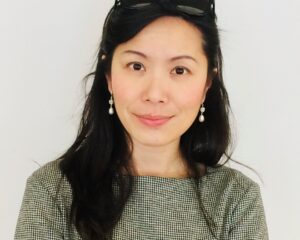
Maile Arvin is a Kanaka Maoli feminist scholar and Assistant Professor at the Department of Ethnic Studies, University of Hawaiʻi at Mānoa. Her research and teaching focus on Indigenous relationships to land, histories of race and settler colonialism in Hawaiʻi, Oceania, and the United States. Previously, she was faculty in History and Gender Studies at the University of Utah and founding director of the Center for Pasifika Indigenous Knowledges. PhD in Ethnic Studies, University of California San Diego (2013) MA in Ethnic Studies, University of California San Diego (2009) BA in English, Swarthmore College (2005) Her research examines: Colonial production of racial categories, particularly Polynesians as an 'almost white race' in historical social science History of incarceration of Native Hawaiian children in government institutions (1865–1960s) Intersection of settler colonialism and Indigenous feminisms Critique of eugenics and genomic studies in the Pacific Community-engaged memorialization projects in Hawaiʻi Recent scholarly trends include analyses of Indigenous sovereignty, critiques of settler colonial whiteness, and interdisciplinary studies of race-gender dynamics. Arvin's publications explore Polynesian racialization, decolonial feminism, and the socioeconomic impacts of colonial institutions. NEH Chair's Grant for Nā Lei Poina ʻOle ACLS Digital Justice Seed Grant Arvin leads Nā Lei Poina ʻOle (Beloved Children Never Forgotten), a community history project about reformatories and industrial schools in Hawaiʻi. In collaboration with Kawela Farrant and the North Shore Community Land Trust, this project uses archival and oral histories to confront the legacy of child incarceration. She also critiques the nonprofit-industrial complex's role in limiting Indigenous sovereignty.
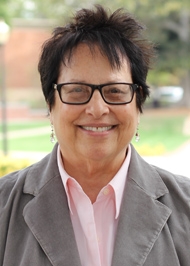
Dr. Janet Garcia-Hallett is an Associate Professor of Criminal Justice in the Henry C. Lee College of Criminal Justice and Forensic Sciences at the University of New Haven. She earned her Ph.D. in Criminal Justice from Rutgers University School of Criminal Justice and specializes in research examining the intersection of race, gender, and the criminal legal system, with particular focus on formerly incarcerated mothers of color. Dr. Garcia-Hallett's educational background includes: Ph.D., Criminal Justice, Rutgers University School of Criminal Justice M.A., Criminal Justice, Rutgers University School of Criminal Justice B.A., Cum Laude, Honors in Sociology and Psychology, CUNY Macaulay Honors College: Hunter College Her research interests focus on the detrimental impact of incarceration on communities of color and the intersectional obstacles women of color face throughout the criminal legal process. She examines how formerly incarcerated mothers navigate motherhood while confronting systemic barriers related to gender, race, and criminal record. Her work challenges traditional narratives about mass incarceration that have historically centered on men, instead highlighting the unique experiences of women of color who must perform motherwork under oppressive conditions of surveillance and marginalization. Analysis of Dr. Garcia-Hallett's publications reveals consistent themes across criminal justice, gender studies, and race theory. Her work demonstrates a strong focus on qualitative methodologies to center the voices of marginalized populations, particularly examining the intersection of motherhood and incarceration. Recent publications increasingly address public health issues within correctional settings and community reentry challenges. Her research consistently applies critical race and feminist frameworks to challenge systemic oppression within the criminal legal system. Dr. Garcia-Hallett has received significant recognition for her scholarship: 2023 ASA Ida B. Wells-Barnett Distinguished Book Award Multiple 2023 finalists and honorable mentions for book awards 2019 SAGE Junior Faculty Professional Development Teaching Award University of Missouri President's Award for Intercampus Collaboration Her grant funding demonstrates substantial research impact, including the Prison Research and Innovation Network ($200,000) and collaboration on a $2.8 million Arnold Ventures grant for the Missouri Prison Transformation Project. Dr. Garcia-Hallett actively engages in community partnerships, such as her work with Winning Ways Inc. to empower women in the community. Her media presence shows significant public engagement through op-eds in Ms. Magazine and Hartford Courant addressing critical issues like abortion rights for incarcerated women.
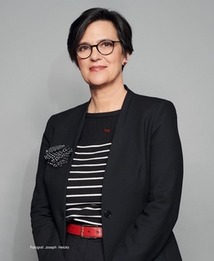
Prof. Paula-Irene Villa Braslavsky holds the Chair of Sociology/Gender Studies at Ludwig Maximilian University of Munich (LMU), Faculty of Social Sciences. She is on sabbatical during Summer Semester 2025 but continues research supervision and colloquia. Her research focuses on intersections of racism, sexism, and neoliberalism, with notable works like The Future of Difference and Top Girls . She co-edits the journal Gender Salon and leads projects on gender studies, queer theory, and postfeminism. Her academic contributions span monographs, anthologies, and journal articles addressing global social movements, anti-genderism, and body politics. Key themes include critical analysis of contemporary gender regimes, decolonial theory, and the sociocultural implications of neoliberalism. Her work frequently bridges theory and activism, emphasizing intersectional approaches to systemic oppression. Publications include edited volumes on #MeToo, fat studies, and the sociological analysis of bodies, reflecting her commitment to interdisciplinary research. She maintains an active academic presence through her website LMU Gender Studies and Academia.edu .
Alice Reagan is Professor of Professional Practice and Director of Undergraduate Studies in the Department of Theatre at Barnard College, Columbia University. She teaches directing, performance, and seminars on Zora Neale Hurston, Black performance, and AIDS activism, while also directing professionally across the U.S. Education: B.A., Bates College M.A., Tisch School of the Arts, New York University M.F.A., Columbia University, School of the Arts Her research and artistic practice centers on theatre directing, adaptation, new play development, and ensemble-based work , with a strong commitment to feminist and socially engaged theatre. She founded New Plays at Barnard , commissioning works by women-identified playwrights. Her recent and upcoming productions include Evelyn Brown (A Diary) , Cherry Orchard , Measure for Measure , and The Thanksgiving Play . Her recent publications and public scholarship focus on the revival of María Irene Fornés' work and the ethics of white educators teaching Black diasporic material, especially her influential 2019 article Teaching While White . The articles reflect a consistent engagement with race, pedagogy, classical reinterpretation, and feminist performance . Selected Awards & Honors: Named to Kilroys List, 2023 Individual Artist Grant, NYSCA, 2023 Cherry Orchard Teaching Excellence Award, 2022 Princess Grace Award Drama League Directing Fellow Berkshire Theatre Award nominations (9) She advises student productions and leads the New Plays at Barnard program, shaping the next generation of theatre artists. She has received grants from the Shubert Foundation and NYSCA. Her professional affiliations include Stage Directors and Choreographers Society, New Georges, and Wingspace Design. She is deeply involved in lab programs such as the Lincoln Center Directors Lab and Mabou Mines/SUITE. She leads the New Plays at Barnard initiative and collaborates with professional ensembles like Portland Experimental Theatre Ensemble and Shakespeare & Company, bridging academic and professional theatre.
Alison Ledgerwood is a Professor in the Department of Psychology at the University of California, Davis, and Principal Investigator of the Attitudes and Group Identity Lab. Her research examines how social context shapes attitudes and preferences, with a focus on open and inclusive scientific practices. Ph.D., Social Psychology, New York University (2008) M.A., Psychology, New York University (2006) B.A., Psychology, Amherst College (2003) Her research explores psychological distance , framing effects , and system justification theory , while methodologically advancing preregistration , collaborative science , and equity in publishing . She also investigates group identity dynamics and implicit/explicit bias measurement . Recent publications highlight her work on racial bias methodology , open science reform , and contextual framing . Awards include the 2024 Distinguished Service to the Society award, 2021 UC Davis Advising and Mentoring Award, and 2017 SPSP Service to the Field award. 2024 Distinguished Service to the Society, SPSP 2021 UC Davis Graduate Advising and Mentoring Award 2017 Service to the Field, SPSP Hellman Fellowship (2010-2011), UC Davis UC Davis Chancellor's Fellow APS Fellow SESP Fellow Ledgerwood advises on scientific integrity through roles like Chair of the Transparency and Openness Promotion (TOP) II Guidelines Task Force and Anti Colorism and Eurocentrism in Methods and Practices (ACEMAP) Task Force. Her lab fosters contextual evaluation studies and psychological distance frameworks .
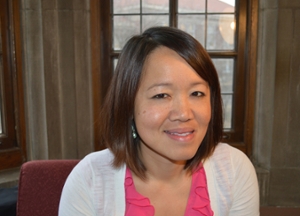
Monica Trieu is an Associate Professor in the School of Interdisciplinary Studies at Purdue University, where she focuses on the intersection of race, ethnicity, and immigration with particular emphasis on children of immigrants. Her scholarly work bridges sociology and Asian American studies through critical examination of identity formation and systemic inequalities. Education: Ph.D. in Sociology, University of California, Irvine (Asian American Studies emphasis) Master's in Sociology, University of California, Irvine Research Focus: Professor Trieu's expertise spans International Migration, Post-1960s Immigrants and Refugees, 1.5 and Second-Generation Identity, Transnational Ties, and Historical/Contemporary Asian American Experiences. Her scholarship critically analyzes internalized racism, regional identity formation (particularly in the Midwest), and the psychological impacts of anti-Asian violence during the pandemic. She employs intersectional frameworks to explore how refugee experiences, cultural adaptation, and transnational connections shape ethnic identity among Southeast Asian Americans and other immigrant communities. Publication Trends: Her 2013-2024 publications reveal evolving engagement with contemporary crises—from pandemic-induced mental health challenges and anti-Asian violence to structural invisibility of Midwest Asian American communities. While maintaining core focus on identity negotiation among second-generation immigrants, her recent work expands into comparative analyses of Asian American/Latina/o transnational patterns and refugee resettlement experiences, demonstrating methodological versatility across ethnographic, survey, and media analysis approaches. Professional Impact: As author of Identity Construction among Chinese-Vietnamese Americans: Being, Becoming, and Belonging (2009) and publications in Journal of Ethnic and Migration Studies and Journal of Asian American Studies , Trieu has established herself as a key voice in Midwest Asian American scholarship. Her research directly informs institutional responses to rising anti-Asian sentiment and contributes foundational frameworks for understanding regional ethnic identity formation beyond coastal enclaves.
Patrick Metze is Professor of Law at Texas Tech University School of Law, where he has served since 2008. He initially joined as an adjunct professor teaching the criminal defense clinic in 2007 and became a full-time Associate Professor of Law and Director of the Criminal Defense Clinics in May 2008. He was promoted to Professor of Law with tenure in September 2012. Professor Metze has established several groundbreaking clinical programs including the Capital Punishment Clinic (2010), the Caprock Regional Public Defender Office and Clinic (2010) - the first full-time public defender office operated from within a law school, and the Texas Tech School of Law Innocence Clinic (2016). Professor Metze earned his B.A. from Texas Tech University in 1970 and his J.D. from the University of Houston in 1973. Before joining academia, he maintained a private law practice in Levelland and Lubbock, Texas for over 30 years, initially handling general practice including banking, collections, corporate law, and oil and gas matters, but shifting focus to criminal and family law following the 1986 oil industry collapse in West Texas. He was one of only 14 attorneys qualified for appointment as first chair in Capital Murder cases in the 9th Administrative Judicial Region. Professor Metze's research focuses on criminal law and procedure, with particular emphasis on capital punishment, innocence projects, and the school-to-prison pipeline. His publications reveal a consistent concern with constitutional protections, ethical obligations of courts and practitioners, and systemic reforms in criminal justice. His work spans both theoretical analysis of legal principles and practical guidance for criminal defense attorneys. Among his professional recognitions, Professor Metze is a Life Fellow of The Texas Bar Foundation and maintains membership in The Pro Bono College of the State of Texas. His presentations at numerous professional seminars demonstrate his active engagement with the criminal defense bar and commitment to advancing legal practice. Professor Metze has served on various committees including the Criminal Justice Council of the State Bar of Texas, the Advisory Committee to the Lubbock Special Needs Defenders Office, and as a former board member of the Lubbock Criminal Defense Lawyers Association (where he served as President) and the Texas Criminal Defense Lawyers Association.
Nadia E. Brown is a Professor of Government and Director of the Women's and Gender Studies Program at Georgetown University's College of Arts and Sciences. She holds a Ph.D. in Political Science from Rutgers University and specializes in intersectional analyses of Black women’s politics, legislative studies, and identity politics. Her work emphasizes holistic approaches to understanding race, gender, and their intersections in political systems. Dr. Brown leads the #MeTooPoliSci Collective, focusing on eradicating sexual harassment in political science, and co-PIs a million-dollar NSF grant addressing systemic issues in the discipline. She is editor of Politics, Groups and Identities and contributes to The Monkey Cage blog. Her research spans Black women’s legislative representation, digital activism, and feminist methodologies, with award-winning books including Sisters in the Statehouse and Sister Style . Education: Ph.D. in Political Science, Rutgers University Key Affiliations: African American Studies Program, #MeTooPoliSci Collective Research Methods: Case studies, ethnography, interviews Her advocacy extends beyond academia, influencing public discourse on racial justice and gender equity through media engagement and policy-focused scholarship.
Mary Pattillo serves as the Harold Washington Professor of Sociology and Chair of the Department of Black Studies at Northwestern University's Weinberg College of Arts and Sciences, with additional affiliation at the Institute for Policy Research. Her work centers on Chicago's urban landscape as a critical site for examining systemic racism and inequality. Her academic foundation includes a PhD in Sociology from the University of Chicago (1997) and a BA in Urban Studies from Columbia University (1991), establishing her expertise in urban analysis and racial dynamics. Pattillo's research agenda prioritizes race and ethnicity, urban sociology, and inequality through the lens of Black communities, with particular focus on housing, criminal legal systems, and the Black middle class. Her ethnographic approach reveals how spatial dynamics shape life outcomes, as demonstrated in her influential books Black Picket Fences (1999) and Black on the Block (2007), which introduced the pivotal "middlemen/middlewomen" framework for understanding professional Black roles in mediating inequality. Current work advances the "Black Advantage Vision" paradigm to reframe racial inequality research. Her publication trajectory shows deepening engagement with structural racism across multiple domains: from early neighborhood ethnographies to contemporary analyses of monetary sanctions and placemaking. This evolution reflects an interdisciplinary expansion into criminology, policy studies, and cultural sociology while maintaining core commitments to urban inequality and Black community resilience. Major recognitions include: Election to the American Academy of Arts and Sciences (2020) Robert E. Park Award for Best Book (2008) Oliver Cromwell Cox Best Book Award (2000) Fulbright Scholar designation (2019-2020) Weinberg College Community Building Award (2018) Outstanding Academic Book Award (2000) Pattillo actively mentors students through courses like Urban Ethnography and Sociology of Housing while leading significant research initiatives on school choice and criminal legal sanctions. Her community impact extends through board service at the W.T. Grant Foundation and Chicago Appleseed Center, plus founding Urban Prep Academies. Current projects examining Black safety in Chicago demonstrate her sustained commitment to community-engaged scholarship addressing urgent urban challenges.
Sherry B. Ortner is a Distinguished Research Professor of Anthropology at UCLA, specializing in cultural and social theory, feminist theory, and media studies. She holds degrees from Bryn Mawr College (A.B.), University of Chicago (M.A., Ph.D.). Her research spans Sherpa ethnography in Nepal, U.S. social class dynamics, and independent film critique. She has been awarded the J.I. Staley Prize, Retzius Medal, and MacArthur Fellowship. Ortner’s work interrogates late capitalism, neoliberalism, and cultural production, particularly through independent film movements. Her shift from Himalayan studies to U.S. cultural analysis reflects a focus on global and local power structures. She has held academic positions at Berkeley, Columbia, and the University of Michigan before joining UCLA in 2004. Key Research Themes : Feminist theory, media anthropology, class and capitalism, cultural critique. Awards : American Academy of Arts and Sciences membership, Guggenheim and NEH fellowships. Her publications include Not Hollywood (2013), New Jersey Dreaming (2003), and Life and Death on Mt. Everest (2000). Ortner’s recent work critiques patriarchal structures and neoliberalism’s cultural impacts. She is a foundational voice in contemporary anthropological theory.
Lin Fang is a Professor and Factor-Inwentash Chair in Children’s Mental Health at the University of Toronto's Factor-Inwentash Faculty of Social Work (FIFSW). She holds a Ph.D. from Columbia University and founded the Talk It Out Counseling Clinic , which provides free mental health services to marginalized communities. Her research focuses on cross-cultural experiences, immigrant family dynamics, substance abuse prevention, and anti-Asian racism interventions. Education: Ph.D., Columbia University. Research & Projects: Lin’s work includes SSHRC-funded initiatives like Project APPA (combating anti-Asian racism through parent collaboration), This is My Regent Park (youth perspectives on urban redevelopment), and My Script My Voice (addressing anti-Asian racism among Asian youth). She employs community-based participatory and arts-based methodologies. Developed web-based intervention programs for mental health services. Explores neighborhood and structural factors impacting youth well-being. Grants & Partnerships: Principal Investigator for SSHRC grants, collaborating with organizations like Baycrest and Hong Fook Mental Health Association. The Talk It Out Clinic has trained 39 MSW students, serving over 450 clients in Toronto. Awards: Recipient of the 2015-2016 FIFSW Teaching Award for integrating clinical practice with research in pedagogy. Community Engagement: Advocates for mental health access in racialized communities, particularly during the pandemic. Her work bridges academia and grassroots organizing, emphasizing social justice and equity.
Tracey Galloway is an Associate Professor in the Department of Anthropology at the University of Toronto Mississauga (UTM), where she conducts critical research on Indigenous health disparities and policy interventions in northern Canada. Her work bridges medical anthropology, public health, and community-based participatory research to address systemic inequities affecting circumpolar populations. Education: PhD, McMaster University, 2008 MA (institution unspecified) BA (institution unspecified) BScN (institution unspecified) Dr. Galloway's research program centers on chronic disease risk assessment and health system improvement in Indigenous communities, with specific expertise in nutrition transition, food security, child growth patterns, and public health policy evaluation. She examines the impact of federal programs like Nutrition North Canada while developing community-led solutions for health equity. Her methodological approach combines quantitative analysis of health outcomes with qualitative community engagement, emphasizing Indigenous research sovereignty and decolonizing methodologies. Her publication record reveals consistent thematic focus across 15 recent articles, demonstrating interdisciplinary collaboration between anthropology, epidemiology, and health economics. Key trends include rigorous evaluation of colonial impacts on Indigenous food systems, innovative analysis of subsidy program effectiveness, and centering Indigenous patient experiences in healthcare design. Her work consistently prioritizes community-defined research questions and actionable policy recommendations. Dr. Galloway actively mentors graduate students including Darci Belmore, Carly Checholik, Neda Maki, and Hiliary Monteith, guiding research on Indigenous health determinants and policy interventions. While specific grant details aren't publicly enumerated, her collaborative projects involve partnerships with Indigenous communities across Northern Canada and interdisciplinary teams addressing complex health system challenges. She maintains strong community partnerships for her applied research, particularly in Nunavut and Northwestern Ontario, working directly with Anishinabeck and Inuit communities to translate findings into culturally safe health initiatives and policy reforms that address the root causes of health inequities.
Professor Oliver Razum at Bielefeld University's Faculty of Health Sciences leads Working Group 3 in Epidemiology & International Public Health. He serves on multiple commissions including the Faculty Conference and Teaching Commission, and contributes to the Center for Statistics and Bielefeld Center for Data Science. His work focuses on Epidemiology of migration and health Refugee health inequalities Medical rehabilitation equity Othering processes in public health Gender-sensitive health research Recent articles explore 2026 medical rehabilitation for people with disabilities, 2025 refugee mental health frameworks, and 2024 pandemic equity research. Key scientific contributions include the 2025 Georg Forster Fellowship and leadership in diversity-sensitive healthcare initiatives. His research spans urban neighborhood health effects , digital rehabilitation , and structural racism in healthcare . Current projects address intersectional inequalities , post-migration stress , and gender as social determinant . Professor Razum maintains active collaborations with institutions like the German Research Foundation and DRV Westphalia.