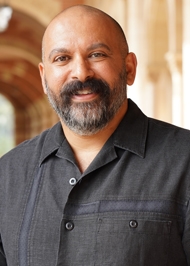
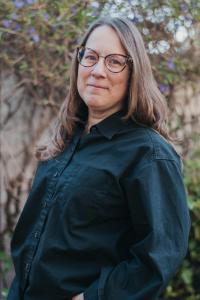
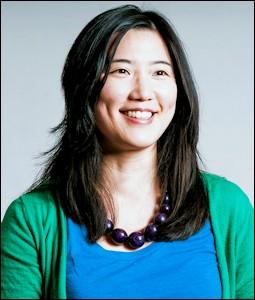
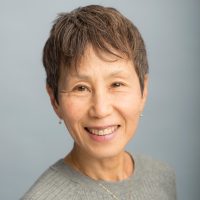
Sharese King is the Neubauer Family Assistant Professor of Linguistics at the University of Chicago, where she has taught since 2018. She earned her Ph.D. and Master's in Linguistics from Stanford University, focusing on language variation across African American communities. Her research bridges sociolinguistics, critical race theory, and phonetics to examine how African American speech is constructed, racialized, and socially evaluated. Education: Ph.D., Linguistics, Stanford University (2018) M.A., Linguistics, Stanford University Research Interests: Sociolinguistics Language Variation & Change African American Language Critical Race Theory Phonetic and experimental analysis Dialect and judicial systems Notable Contributions: Interdisciplinary studies on raciolinguistics and courtroom bias Analysis of /s/ articulation in intersectional contexts Reconceptualization of AAVE as AAL to emphasize linguistic diversity Fieldwork in Bakersfield, Rochester, and Chicago Publications in American Speech , Journal of Sociolinguistics , Language , and Nature Scientific Awards: Provost's Postdoctoral Fellowship Neubauer Family Assistant Professorship Labs & Projects: Co-founder of the Chicagoland Language Project
Jonathan Rosa is Associate Professor in the Graduate School of Education, Center for Comparative Studies in Race and Ethnicity, and, by courtesy, Departments of Anthropology, Linguistics, and Comparative Literature at Stanford University. He serves as Director of Stanford's Program in Chicanx-Latinx Studies and has held leadership positions including President of the Association of Latina/o and Latinx Anthropologists of the American Anthropological Association. Dr. Rosa's educational background includes: Ph.D. in Sociocultural and Linguistic Anthropology from the University of Chicago (2010) M.A. in Sociocultural and Linguistic Anthropology from the University of Chicago (2006) B.A. in Linguistics and Educational Studies from Swarthmore College (2003) Dr. Rosa's research examines the co-naturalization of language and race as a key feature of modern governance, tracking colonially structured interrelations among racial marginalization, linguistic stigmatization, and institutional inequity. His scholarship centers on raciolinguistic ideologies, Latinx studies, and educational justice, with a community-based approach that develops tools for challenging systemic vulnerability. He investigates how race and language are jointly defined across historical, geopolitical, and institutional contexts, with particular focus on Latinx communities and educational settings. His recent publications demonstrate a consistent thematic focus on decolonizing linguistic and educational frameworks, challenging standard language ideologies, and examining the intersections of race, language, and power. The work spans multiple disciplines including sociolinguistics, anthropology, education, and critical race studies, increasingly emphasizing undoing raciolinguistics and addressing coloniality in language education and assessment practices. Dr. Rosa has received numerous prestigious awards for his scholarship: Distinguished Summer Scholar, Banks Center for Educational Justice, University of Washington College of Education (2024) Outstanding Book of the Year Award for "Looking like a Language, Sounding like a Race," American Association of Teaching and Curriculum (2022) First Book Award for "Looking like a Language, Sounding like a Race," American Association for Applied Linguistics (2021) Prose Award for Excellence in Language & Linguistics for "Looking like a Language, Sounding like a Race," Association of American Publishers (2020) Charles A. Ferguson Award for Outstanding Scholarship, Center for Applied Linguistics (2018) Dr. Rosa actively mentors doctoral students across multiple programs, serving as primary advisor for students researching race, ethnicity, language, and education. His research has been supported by major grants from the National Science Foundation, Andrew W. Mellon Foundation, Woodrow Wilson National Fellowship Foundation, and Ford Foundation. He collaborates extensively with community organizations, particularly in Chicago, to develop educational approaches grounded in decolonial praxis, focusing on how scholarship can serve as a platform for social transformation. Dr. Rosa co-directed Stanford's Center for Global Ethnography (2021-2023) and directed Stanford's Program in Chicana/o-Latina/o Studies (2020-2023). He serves on multiple editorial boards including Current Anthropology and Equity & Excellence in Education, and has held leadership positions in professional organizations including President of the Association of Latina/o and Latinx Anthropologists (2020-2022).
University of California, Los AngelesUnited States
H. Samy Alim is a Professor and David O. Sears Presidential Endowed Chair in the Division of Social Sciences at UCLA, holding a joint appointment in the Department of Anthropology. He serves as Associate Director of the Ralph J. Bunche Center for African American Studies and leads the UCLA Hip Hop Initiative. Alim’s research focuses on Hip Hop Culture, Black Language, and Culturally Sustaining Pedagogies, with over 25 years of scholarship in these areas. His work bridges academia and activism, emphasizing Hip Hop’s transformative role in global social justice movements. Alim earned his PhD in Anthropology from Stanford University (2003), following MA (2002) and BA (1999) degrees. His academic contributions include twelve authored/edited books, such as Freedom Moves (2023) and Articulate While Black (2012). His research spans Hip Hop’s linguistic innovations, racialized language politics, and its pedagogical potential in education. Key projects include ethnographic studies in Cape Town, South Africa, and collaborative initiatives like the UC Press Hip Hop Studies Book Series. He co-edits the Oxford Handbook of Language and Race and directs the Center for Race, Ethnicity, and Language. Alim has engaged with global Hip Hop artists (e.g., Chuck D of Public Enemy) to co-produce knowledge, emphasizing Hip Hop as a site of theorizing and activism. His teaching and research highlight intersections of language, race, and power, advocating for pedagogies that sustain cultural identities while fostering equity. Collaborations with organizations like Heal the Hood in South Africa reflect his commitment to community-driven scholarship.
University of California , Santa Barbara (UCSB)United States
Mary Bucholtz is a Professor in the Department of Linguistics at the University of California, Santa Barbara (UCSB). She holds affiliations with multiple departments including Anthropology, Feminist Studies, Spanish and Portuguese, the Gevirtz Graduate School of Education, Comparative Literature, and Latin American and Iberian Studies. Her research integrates sociocultural linguistics with anthropological, gender, and social justice frameworks. Education: PhD in Linguistics, University of California, Berkeley (1997) Bucholtz's work examines how language shapes and is shaped by social identities, particularly among youth, through dimensions like race, gender, and cultural practices. She emphasizes community-centered research , linguistic activism , and interdisciplinary methodologies to address systemic inequalities. Recent publications explore affective agency in Latinx youth, educational equity, and antiracist linguistics. Her collaborative projects often involve partnerships with educational institutions and youth communities in California, focusing on translanguaging , Black language justice , and raciolinguistic ideologies . Grants from the National Science Foundation, Spencer Foundation, and Wenner-Gren Foundation support her research. She co-edited the open-access volumes Decolonizing Linguistics and Inclusion in Linguistics (Oxford University Press, 2024), alongside authoring White Kids: Language, Race, and Styles of Youth Identity (Cambridge, 2011) and Talking College: Making Space for Black Language Practices in Higher Education (Teachers College Press, 2022).
Emma Trentman is an Associate Professor of Arabic at the University of New Mexico (UNM) and Director of the Language Learning Center. Her research focuses on Applied Linguistics, particularly on language learning during study abroad programs, virtual exchange, and the impact of language ideologies on multilingual approaches. Research Interests: Multilingualism, Language Ideologies, Study Abroad Programs, Intercultural Communication, Arabic Language Education, and Curriculum Development. Key Publications: Co-editor of Language Learning in Study Abroad: The Multilingual Turn (2021), with works featured in The Modern Language Journal , Foreign Language Annals , and Critical Multilingualism Studies . Teaching: Offers Arabic language courses and the Languages Capstone class, integrating critical perspectives into language pedagogy. Editorial Work: Co-editor for Critical Multilingualism Studies Journal , advocating for plurilingual practices in education. Publications: Explores topics such as translanguaging, sociolinguistic competence, and decolonizing language learning frameworks across diverse contexts (Egypt, Tanzania, China). Advocacy: Engages in critical discussions on equity, identity, and sociocultural dimensions in language education.
Elaine Chun is an Associate Professor in the Department of English Language and Literature at the McCausland College of Arts and Sciences, University of South Carolina. She holds a Ph.D. in Linguistics from the University of Texas at Austin (2007) and an A.B. in Linguistics from Stanford University (1995). Education: Ph.D. in Linguistics, University of Texas at Austin (2007); A.B. in Linguistics, Stanford University (1995). Research Interests Dr. Chun specializes in sociolinguistics and linguistic anthropology, with a focus on language, race, gender, and sexuality. Her work examines how language practices traverse racial and national boundaries, particularly in contexts like Asian American YouTube commentary, K-pop fandom, and U.S. public spaces. She investigates ideologies of race and gender, collaborative interpretation in social media, and anti-racist strategies. Publication Trends Her recent publications emphasize language in digital media, racial ideologies, and sociocultural identity. Topics include racism in public discourse, transnational social media analysis, racial parody, and the intersection of language with race and gender. Her work spans journals like American Speech , Language in Society , and Discourse & Society .
Ryuko Kubota is a Professor in the Department of Language and Literacy Education at the University of British Columbia (UBC), Faculty of Education, since 2009. Her research spans critical applied linguistics , race and language education , and decolonial pedagogies . She has contributed extensively to understanding language ideologies , multicultural education , and critical literacies . Education: BA in English Linguistics, Rikkyo University (1980) MAT in TESOL, School for International Training (1987) PhD in Education, OISE/University of Toronto (1992) Her research interests focus on the intersection of race, language policies, and critical pedagogies. She examines neoliberal paradoxes in language learning, translingual practices , and antiracist engagement in global contexts. Her work addresses systemic inequities in English language education and immersion programs . Recent publications highlight critical approaches to World Englishes , AI-assisted writing , and raciolinguistic hegemony . These studies span interdisciplinary sub-fields including critical race theory , decolonial education , and language teacher identity . Scientific awards include the DSSA Award 2020 . She supervises graduate students like Charu Gupta (PhD) and collaborates with institutions such as the Language Sciences Institute at UBC. Her teaching includes courses on critical multicultural education and language politics .
Dr. Martha Sidury Christiansen is a Professor of Applied Linguistics/TESOL at the University of Texas at San Antonio , where she serves in the College of Education and Human Development . She is the Principal Investigator of Project RESPETO , a NSF-funded initiative exploring racial equity in engineering education. Her work spans sociolinguistics, digital literacies, and raciolinguistic analysis, with a focus on transnational multilingual communities. Born in Veracruz, Mexico Ph.D. in Foreign/Second Language Education (Ohio State University, 2013) M.A. in English Composition (Indiana University, 2007) B.A. in English Language Teaching (Universidad Veracruzana, 2002) Her research examines how transnational youth navigate digital spaces through multiliteracies , challenges Western academic writing norms via Mexican decolonial methodologies , and investigates raciolinguistic intersections in identity formation. The 15 most recent publications reveal a strong focus on digital communication , transnationalism , and critical pedagogy across journals like TESOL Quarterly and Language@Internet . 2023-2025: Expanding raciolinguistic frameworks in digital contexts 2021-2022: Analyzing multimodal identity construction 2019-2020: Exploring Mexican bilinguals' online language use She has received multiple honors including ACUE Fellow (2023), Fulbright Scholar (2017), and Faculty Leadership Fellow (2021-2022). Her presentations at conferences like ICOLLITE and DDVM Lab highlight her expertise in critical sociolinguistic awareness and digital discourse analysis . Dr. Christiansen actively consults for nonprofits on linguistic equity and multilingual education .
Katherine Yaw is an Assistant Professor of Applied Linguistics in the Department of World Languages at the University of South Florida (USF). She is core faculty in USF's MA Linguistics/ESL program and PhD program in Linguistics & Applied Language Studies. Her research focuses on speech perception , language attitudes , and cognitive processing of L2-accented speech , alongside work in research methodology and quantitative research ethics . She has published in journals like Journal of Multilingual and Multicultural Development and Language Teaching , with recent articles exploring raciolinguistic stereotyping, ethics frameworks, and listener processing dynamics. Her publications highlight trends in applied linguistics intersecting with sociolinguistics , cognitive science , and educational ethics , particularly emphasizing the Delphi method , questionable research practices , and accent discrimination in educational contexts.
Kashif Raza is a Postdoctoral Fellow at the Department of Educational Studies (EDST) within the Faculty of Education at the University of British Columbia (UBC). His research focuses on multilingual education, TESOL (Teaching English to Speakers of Other Languages), language policies, and systemic issues in education, such as racism and immigration integration. He examines topics like racialized voter behavior, institutional racism in educational leadership, and the role of language in immigrant integration. His work often intersects with critical race theory, sociolinguistics, and policy analysis. Raza’s research spans diverse contexts, including Canadian, Gulf, and South Asian educational systems. He has explored challenges faced by immigrant professionals in healthcare, the impact of digital networks on political engagement, and the design of multilingual curricula. His contributions also include practical guidance for scholars, such as advice on publishing and navigating language policies in higher education. While his profile does not explicitly list educational credentials, his articles indicate deep engagement with global educational challenges. He has collaborated on projects addressing pandemic-era language education and climate action through EDST’s initiatives. No awards or grants are mentioned in the provided texts.
Fatemeh Mollaei is a Lecturer in Clinical Language Sciences at the University of Reading, affiliated with the School of Psychology and Clinical Language Sciences. She is a core member of the Centre for Integrative Neuroscience and Neurodynamics (CINN), focusing on neurophysiological mechanisms of speech disorders. Her work integrates behavioral, electrophysiological, and neuroimaging techniques to study Parkinson’s disease (PD) and develops neuro-rehabilitation methods using non-invasive brain stimulation (e.g., TMS, tDCS). Her research explores how sensory and motor systems interact during speech production in PD, employing tools like EEG, fMRI, and MEG. She investigates microstructural white matter changes and auditory processing deficits linked to speech impairments, aiming to translate findings into clinical interventions. Her studies also address broader topics like sensorimotor adaptation and stuttering, emphasizing translational neuroscience. Publications highlight trends in neuroimaging of speech disorders, auditory feedback mechanisms, and neuroplasticity in PD. While no formal awards are listed, her contributions to understanding speech motor control and rehabilitation practices are significant. Advising and grant details are not explicitly provided, but her involvement in interdisciplinary CINN projects suggests active collaborative research. Labs/Teams: Active contributor to the Centre for Integrative Neuroscience and Neurodynamics (CINN) at the University of Reading, collaborating on translational neuroscience projects.
University of Illinois Urbana-ChampaignUnited States
Mónica González Ybarra is an Assistant Professor in both the Department of Curriculum and Instruction and the Department of Latina/Latino Studies at the University of Illinois at Urbana-Champaign. Her research focuses on centering Chicanx/Latinx communities' linguistic and cultural knowledge in educational spaces, particularly through community-based pedagogies and youth participatory action research. She earned her B.A. in Latina/Latino Studies and Spanish from the University of Illinois (2011), M.A. from the University of Utah (2013), and Ph.D. from the University of Colorado Boulder (2018). Dr. González Ybarra’s work emphasizes the intersection of education, race, and language, advocating for transformative educational practices that honor students' home and community knowledge. Her research explores topics such as translanguaging, resistant pedagogies, and the role of 'chisme' (gossip) as a literacy tool for marginalized girls. She has received awards including the Cultivating New Voices Fellowship (NCTE) and AERA Minority Dissertation Fellowship. Awards: Cultivating New Voices Fellow (NCTE), AERA Minority Dissertation Fellowship Research Focus: Bilingual education, sociopolitical navigation, community literacies Teaching: Prepares bilingual teachers to integrate homeplace knowledge into curricula Her recent publications analyze Latinx youth agency, linguistic expertise, and feminist pedagogies, with a focus on creating equitable educational spaces for communities of color. She collaborates with after-school programs and pre-service teachers to reimagine literacy and leadership frameworks.
Seyed Hadi Mirvahedi is an Assistant Professor in the Faculty of Arts at the University of Groningen, specializing in Critical Sociolinguistics and Language Policy. He holds a PhD in Applied Linguistics from Victoria University of Wellington (2014), followed by postdoctoral research at Nanyang Technological University (2017–2019) and the University of Oslo (2020–2023). His research focuses on multilingualism in globalized contexts, exploring family language policies, sociolinguistic ideologies, and the intersection of language with race, policy, and identity. Notable projects include studies on Afghan refugee families in Norway, Malay families in Singapore, and transnational families in Italy/China and India/Iran. Teaching includes undergraduate and graduate courses in sociolinguistics, multilingualism, and language policy within the Minorities & Multilingualism program. He supervises BA/MA theses on topics like language maintenance, education, and policy implementation. Publications span peer-reviewed journals (e.g., International Journal of Bilingualism , Language Policy ) and edited volumes, addressing themes such as demographic agency in family language policy, raciolinguistics in refugee contexts, and transnational language practices. His work integrates ethnographic methods with sociological theory to analyze multilingualism at micro- and macro-scales. Current research emphasizes phenomenological approaches to race and language in refugee families, as well as the role of demographic factors in family language decision-making. He advocates for interdisciplinary frameworks to understand language policies' real-world impacts in diverse settings.
Devin Grammon serves as an Assistant Professor of Spanish Sociolinguistics in the Department of Romance Languages at the University of Oregon, affiliated with both the Spanish Program and the Spanish Heritage Language Program within the Schnitzer School of Global Studies and Languages. His educational background includes a Ph.D. in Hispanic Linguistics from The Ohio State University (2018), an M.A. in Hispanic Linguistics from the University of Colorado Boulder (2012), and a B.A. in Spanish and History from the University of Northern Colorado (2010). Grammon's research centers on critical examinations of language ideologies, sociolinguistic variation, and language learning during study abroad experiences, with a particular focus on Southern Peru. His work critically engages with racialized language ideologies, the problematic 'native speaker' construct, and how sociolinguistic competence develops in multilingual contexts. He examines how language learning can reproduce or challenge systems of oppression, particularly through his ethnographic research in Cuzco, Peru, where he investigates Spanish-Quechua language contact and study abroad programs. His recent publications reveal a strong emphasis on decolonizing language education, examining how study abroad contexts shape learners' sociolinguistic competence, and challenging the colonial underpinnings of the 'native speaker' concept. His work appears consistently in top linguistics and language education journals including Language, Modern Language Journal, and Applied Linguistics. Co-editor of the 2025 volume 'Aquí se habla: Centering the Local and Personal in Spanish Language Education' (De Gruyter Mouton) Recipient of recognition through student awards (Maya Mackey received a Global Studies award at the 2020 Undergraduate Research Symposium for work under his guidance) As an educator, Grammon teaches undergraduate and graduate courses including Sociocultural Linguistics, Linguistic Landscapes, and Spanish Pronunciation & Phonetics. His teaching philosophy emphasizes preparing students to critically engage with sociolinguistic diversity. His current research includes linguistic landscape projects examining Spanish signage in Eugene, Oregon and Quechua signage in Cuzco, Peru, demonstrating his commitment to community-engaged scholarship that connects classroom learning with real-world applications.
Lisa M. Dorner is a Professor in the Department of Educational Leadership and Policy Analysis at the University of Missouri-Columbia and a Faculty Fellow at the Cambio Center. Her work centers on language policy, educational equity, and the integration of immigrant families in new destination communities. She is a leader in dual language education research and policy, co-founding the Missouri Dual Language Network and co-editing a major volume on critical consciousness in bilingual education. PhD and MA in Human Development and Social Policy, Northwestern University Fulbright Specialist to Colombia (2018) Principal Investigator on U.S. Department of Education and Spencer Foundation grants Her research focuses on language policy and planning , educational policy implementation , and immigrant childhoods , using qualitative and mixed methods to explore how policies are enacted in schools and communities. She examines how dual language programs can promote equity and how educators and families navigate systemic challenges, especially during crises such as the pandemic. Her recent publications and projects emphasize raciolinguistic justice , critical consciousness in education , and research-practice partnerships . She has led ethnographic studies on pandemic response in schools, highlighting the role of external partnerships and structural inequities. Her edited volume Critical Consciousness in Dual Language Bilingual Education (2022) offers case studies that challenge dominant narratives and promote anti-racist practices. Her scholarly work appears in leading journals such as American Educational Research Journal , Educational Policy , and TESOL Quarterly . She has developed graduate curricula, including the Graduate Certificate in Global Education and Leadership, and teaches doctoral courses in research design and qualitative methods. Fulbright Specialist to Colombia (2018) Lisa Dorner advises graduate students and collaborates with a broad network of scholars, including Drs. Deb Palmer, Claudia Cervantes-Soon, and Trish Morita-Mullaney. She leads major funded projects that connect research with practice, such as the Spencer Foundation-supported initiative on building equity in Midwestern dual language programs. She also organizes webinars and community engagement efforts through the Cambio Center and CARLA to foster practitioner-researcher collaboration. She is actively involved in public scholarship, maintaining a personal blog where she reflects on writing, identity, and social boundaries. Her recent retreat on academic writing underscores her belief in the personal and transformative nature of scholarly communication.