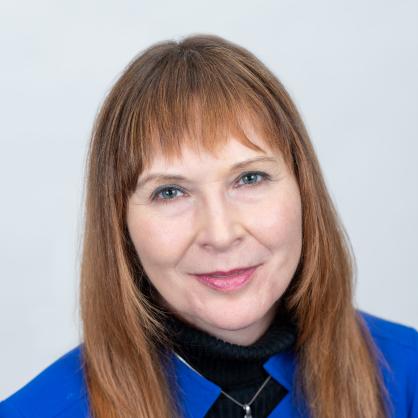
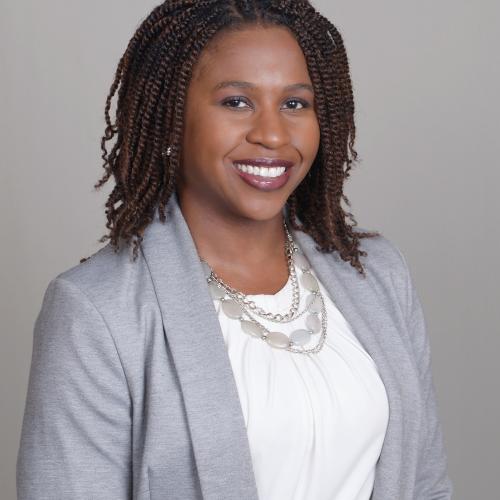
Emily Johansen is an Associate Professor of English at Texas A&M University , specializing in 20th/21st-century transnational literatures and cultural theory. Her research explores intersections of cosmopolitanism, neoliberalism, postcolonialism, and global precarity through literary and cultural analysis. Education: Ph.D., McMaster University (2008) M.A., University of Guelph (2004) B.A., University of Alberta (2003) Research Interests include: Cosmopolitanism and global citizenship Neoliberal cultural economies Risk and precarity in contemporary fiction Postcolonial spatial theory Empathy in literature Publication Trends show focus on: 21st-century Anglophone fiction Neoliberalism’s impact on narrative form Risk ethics in global crises Urban/rural cosmopolitan intersections Postcolonial responses to trauma Email: ejohansen@tamu.edu
Dr. Jessica Ford is a Senior Lecturer in Media at the University of Adelaide's School of Humanities, within the Faculty of Arts, Business, Law, and Economics. She previously held positions at the University of Newcastle (2019-2023) and completed her PhD in Film and Media Studies at UNSW Sydney in 2017. Her research focuses on contemporary media feminisms, examining women's representation in TV, film, and popular culture. Key areas include feminist sensibilities in TV markets, gender in TV musicals, and the intersection of labor and affect in media. Her work spans analyses of Taylor Swift, Hallmark movies, and shows like Orange Is the New Black . She contributes regularly to The Conversation and ABC Radio National. Professional roles include General Secretary of the Screen Studies Association of Australia and Aotearoa New Zealand (SSAAANZ), Contributing Editor for MAI: Feminism and Visual Culture, and Advisory Board member for Punctum Books' 'MAI: Feminism and Culture' imprint. Jessica's research trends emphasize feminist critiques of media representation, interrogating how gender dynamics intersect with pop culture, capitalism, and structural inequalities. Her articles often bridge academic analysis with accessible commentary on current TV/film trends. Awards include AdvanceHE Fellow status and membership in the Adelaide Education Academy. She actively supports early-career researchers through professional networks and advocates for equitable workplace practices in academia. Current projects include a monograph exploring feminism as a sensibility in contemporary TV markets.
Crystal Eddins serves as an Associate Professor in the Department of Sociology at the University of Pittsburgh's Dietrich School of Arts & Sciences. Her academic work centers on historical analysis of race, gender, and resistance within the African Diaspora, with particular emphasis on revolutionary movements and structural oppression. Her research interests include: Historical Sociology of Slavery and Resistance Racial Capitalism and Black Social Movements Gender Studies and Reproductive Justice The Haitian Revolution and Black Internationalism Memory Politics of Civil Rights Movements She investigates how enslaved communities employed marronage, ritual practices, and collective action to challenge oppressive systems, especially focusing on Black women's experiences. Analysis of her recent publications reveals three dominant trends: (1) the Haitian Revolution as foundational to Black revolutionary consciousness across the Atlantic World, (2) intersections of racial capitalism with gendered oppression in reproductive justice and land dispossession contexts, and (3) political transformations of historical memory regarding civil rights struggles. Her work consistently centers diasporic resistance while connecting historical patterns to contemporary social justice issues. While no specific scientific awards are documented in the source material, Dr. Eddins' extensive publication record in high-impact journals demonstrates significant scholarly contribution. Information regarding student advising, grant funding, or laboratory affiliations was not provided in the available texts.
Dr. Marwa Ghazali is an Assistant Professor of Anthropology at the University of Houston's College of Liberal Arts and Social Sciences. She holds a Ph.D. from the University of Kansas. Her interdisciplinary research focuses on cultural and medical anthropology, African Diaspora studies, and Muslim American studies. Dr. Ghazali has held the W.E.B. Du Bois Research Fellowship at Harvard University's Hutchins Center. Her work examines migration, structural oppression, urban precarity, and the politics of death and dying. She employs ethnographic and archival methods to study marginalized communities in Africa, the Middle East, and the U.S. Her current book project, City of Living-Death , explores Egyptian tomb-dwelling communities in Cairo’s necropolis and their displacement due to urban development. This research highlights necropolitics, gentrification, and social justice. She also studies Afrodiasporic Muslims in the U.S., analyzing immigration policies and their impact on health, family, and mortality. Dr. Ghazali extends her research to Houston, investigating its Afrodiasporic Muslim communities. Education: Ph.D. in Anthropology, University of Kansas, Kansas Her research interests bridge Black feminist, decolonial, and critical race theories. She explores how marginalized groups navigate structural violence through creative agency and social networks. Her work has been featured on NPR/KCUR Public Radio. Awards: W.E.B. Du Bois Research Fellowship (Harvard University) Dr. Ghazali has advised students across multiple disciplines and served as Ethnographic Research Coordinator at the Kansas African Studies Center. She is an Editorial Board Member of the Sage Handbook of Cultural Anthropology and serves on the Board of Directors for the Uplift Institute. Her teaching spans anthropology, African studies, and Arabic studies in the U.S., Africa, and Europe.
Mimi (Paulomi) Bhatt, PhD, MPH, CNM, is an Assistant Professor at NYU Rory Meyers College of Nursing. She is a certified nurse-midwife, researcher, educator, and theorist whose work centers on birth equity, reproductive justice, and the integration of midwifery care in public health systems. She actively provides clinical care within NYC Health + Hospitals and contributes to national and global maternal health policy. PhD in Nursing Theory, NYU Meyers College of Nursing MSN, Frontier Nursing University MPH in Global Health Leadership, NYU Global Institute of Public Health BSN, NYU Steinhardt School of Education BA in Comparative Literature and English Education, NYU College of Arts & Science Dr. Bhatt’s research is grounded in critical feminist theory and qualitative methodologies. Her work investigates how midwifery models can advance health equity, particularly for Black, Indigenous, and other minoritized communities. She explores themes such as autonomy in childbirth, respectful maternity care, perinatal mental health, and systemic barriers faced by midwives of color. Her scholarship emphasizes anti-oppression frameworks and community-based participatory research. Her recent publications analyze experiential outcomes in maternity care, revealing that midwife-led care—especially in community settings—leads to higher autonomy, respect, and lower mistreatment. She has also published on the experiences of sexual and gender-diverse parents, cervical cancer screening in the Dominican Republic, and midwifery integration in India. Her work consistently highlights structural inequities and advocates for transformative change in maternal health systems. Scientific awards and honors include: NYU University-wide Dissertation Award – Allied Health & Social Services (2020) Jonas Nurse Leaders Scholar Award (multiple years) Johnson & Johnson Minority Faculty Nurse Scholar Award (multiple years) Herman Biggs Health Policy Fellow Women’s Leadership Initiative at NYU Dr. Bhatt mentors future nurse-midwives and contributes to policy through service on the NYC Maternal Mortality and Morbidity Review Committee and the International Confederation of Midwives’ Americas Regional Committee. She received postdoctoral training at the Birth Place Lab, University of British Columbia, and as a Provost Postdoctoral Fellow at NYU. Her clinical and academic work is deeply informed by her identity as a first-generation immigrant and her mother’s legacy as a nurse-midwife in India. She is affiliated with the Birth Place Lab and collaborates with multidisciplinary teams focused on respectful maternity care, midwifery practice climate, and global maternal health capacity building.
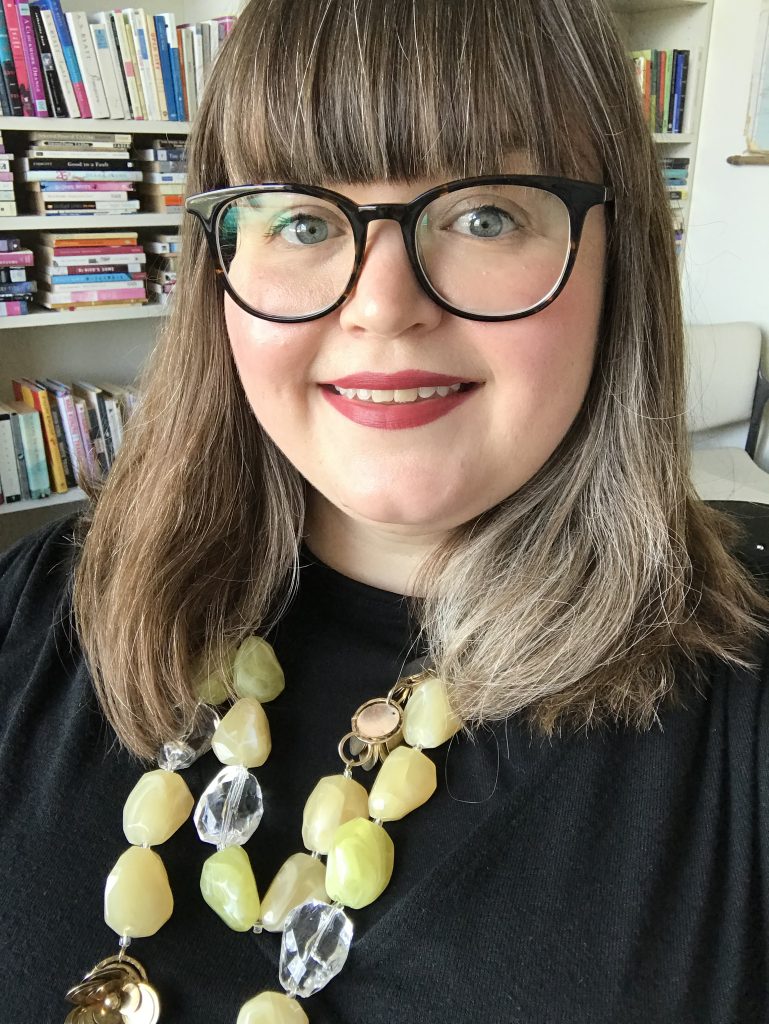
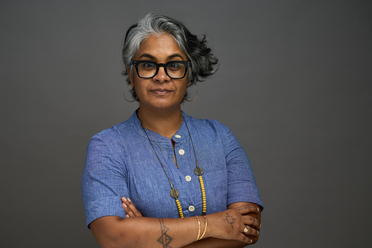
Angela Naimou is an Associate Professor of English at Clemson University’s College of Arts and Humanities, where she teaches literatures of the Middle East and North Africa, postcolonial and world literatures, American literatures of race/ethnicity/migration, and world literature. She serves as Editor of Humanity: An International Journal of Human Rights, Humanitarianism, and Development and has held editorial roles at Contemporary Literature and College Literature . Her research bridges literary form, legal theory, and political movements, with a focus on how aesthetics interrogate legal personhood's fictions. Ph.D., English, Cornell University M.A., English, Cornell University B.A., English, University of Michigan Her scholarship engages anti-colonial/postcolonial theory, race/diaspora/migration studies, law and literature intersections, and world literature in translation. She explores how legal fictions—from the 19th-century maritime law to modern refugee policy—shape narratives of exclusion and survival. Recent publications analyze legal precedent’s role in global fiction, refugee temporalities, and war’s banalization in cultural discourse. Her work critiques liberal legal frameworks and death-bound biopolitical paradigms, advocating for decolonizing methodologies that prioritize marginalized voices. ASAP Book Prize (2015) for Salvage Work MLA William Sanders Scarborough Prize Honorable Mention (2015) for Salvage Work At Clemson, Naimou collaborates on the Every Campus a Refuge initiative, integrating refugee resettlement advocacy with academic research. She is currently studying contemporary Arabic literature and refugee narratives to expand her analysis of global border regimes and humanitarian practices.
Annemarie Gockel serves as an Associate Professor and Practicum Seminar Instructor at Smith College's School for Social Work, teaching foundational practice courses and specialized mindfulness electives to develop clinical competencies in future social workers. Her academic preparation includes: B.A. from Concordia University M.S.W. from the University of Toronto Ph.D. from the University of British Columbia Gockel's research program centers on amplifying marginalized client voices to reshape clinical interventions, particularly in addiction treatment and child welfare. She pioneers the integration of mindfulness and somatic strategies to address fragmentation in healing processes, while developing contemplative approaches for critical consciousness development regarding systemic oppression. Her work bridges spirituality, trauma recovery, and social justice through client-centered methodologies. Analysis of her recent publications reveals a cohesive trajectory toward applying mindfulness in social work education and critical dialogue for social justice. The body of work demonstrates methodological consistency in qualitative approaches while expanding from individual clinical applications to group work and systemic oppression analysis, with increasing focus on pedagogical innovation and structural transformation. Her scholarly contributions have been recognized with the 2022 Best Qualitative Article award from Smith College's School for Social Work. As an educator, Gockel mentors students through practicum seminars and has developed evidence-based mindfulness curricula for direct practice instruction. She collaborates with interdisciplinary teams on research addressing client needs across addiction services, child welfare systems, and spiritual counseling contexts, emphasizing co-creation of interventions with service recipients. Within Smith College's academic community, she contributes to faculty research initiatives advancing clinical training models that integrate contemplative practices with anti-oppressive frameworks, particularly through the School for Social Work's practice-focused programs.
Subini Ancy Annamma is an Associate Professor at Stanford University's Graduate School of Education, specializing in the intersections of racism, ableism, and educational equity. Her work critically examines the criminalization of marginalized youth in urban schools and youth prisons, emphasizing student narratives as tools for pedagogical innovation. Ph.D. in Educational Equity & Cultural Diversity, University of Colorado Boulder (2013) M.A. in Special Education & English as a Second Language, University of Colorado Boulder (2008) B.S. in Special Education, University of Wisconsin-Oshkosh (2002) Her research focuses on DisCrit (Disability Critical Race Theory) , investigating how systemic oppressions shape educational trajectories. Recent publications explore prison schooling, abolitionist praxis, and color-evasive educator discourse. She has co-edited special issues advancing DisCrit as a methodological lever for equity. Dr. Annamma has received prestigious awards, including the AESA Critic’s Choice Book Award (2019) for The Pedagogy of Pathologization , Ford Postdoctoral Fellowship (2018-2019), and AERA Division G Early Career Award (2017-2018). She mentors doctoral students like Ruben Gonzalez and Alexandros Orphanides. As a scholar-activist, she collaborates with the Stanford Accelerator for Learning and SHIPS (School of Humanities, Interpretation, and Policy Studies) program, advocating for policy reforms to elevate marginalized voices in education.
Professor Yossef Rapoport is a historian specializing in the social, cultural, and legal aspects of medieval Islamic Middle Eastern societies (1000–1500 CE). Affiliated with Queen Mary University of London's School of History since 2008, he holds a Leverhulme Major Research Fellowship (2019–2022) for his project on tribal identity and conversion in rural Egypt and Syria. His work focuses on under-researched groups such as peasants, women, and nomads, alongside the history of medieval Islamic maps. Trained at Tel Aviv University (Israel), Princeton University (USA), and Oxford University (UK), Rapoport’s research spans: Fatimid, Ayyubid, and Mamluk dynasties Islamic legal frameworks and gender dynamics Medieval cartography and geographical knowledge Rural socio-economic structures Recent achievements include the Middle East Medievalists bi-annual book prize for Rural Economy and Tribal Society in Islamic Egypt (2018). His current sabbatical (2024–2025) reflects ongoing scholarly engagement. Editorial roles include serving on the board of Islamic Law and Society . Supervised PhD topics include Mamluk genealogy, medieval childhood experiences, and building craftsmanship.
Dr. Sean Arayasirikul (they/them) is an Associate Professor in the Department of Health, Society, and Behavior at the University of California, Irvine (UCI) Program in Public Health. They serve as Associate Director of the UCI-affiliated University of California Global Health Initiative Center for Gender and Health Justice and hold leadership roles in the Society for Implementation Research Collaboration and Robert Wood Johnson Foundation Interdisciplinary Research Leaders Program. Doctorate in Sociology, University of California, San Francisco B.A. in Asian American Studies, University of California, Los Angeles Their research examines health inequities among sexual and gender minoritized (SGM) communities through community-engaged methodologies, with a focus on: Health disparities among trans women, BIPOC, and intersectionally marginalized groups Digital health interventions and implementation science Participatory surveillance approaches for health justice Recent publications emphasize digital HIV care navigation tools, structural barriers to STI/HIV prevention, and intersectional analyses of mental health risks. They have secured grants for structural racism studies and developed homegrown interventions within the House and Ballroom community. Scientific Awards Robert Wood Johnson Foundation Interdisciplinary Research Leaders Fellow (2021-2024) Inter-CFAR Implementation Science Fellow (2020-2021) AMA Minority Fellow (Cohort 38) NIAAA T32 Pre-Doctoral Fellow NIH Loan Repayment Program Awardee (2018-2021, 2022-2023) Dr. Arayasirikul's applied experience includes public health work with HIV-positive youth, STI testing programs, and federal-level health literacy initiatives. They advocate for data democratization and community-driven solutions to address systemic inequities.
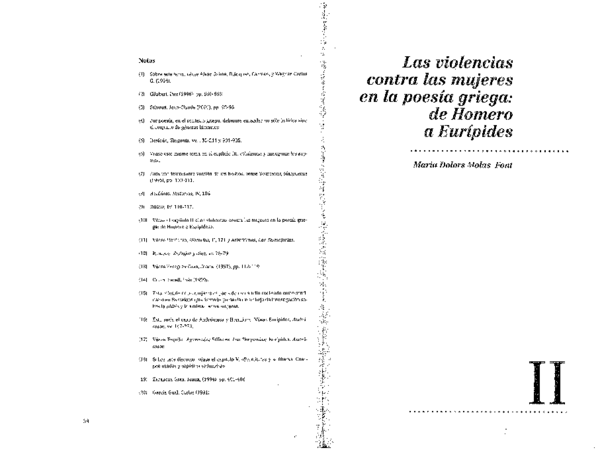
Maria Dolors Molas Font is an Associate Professor of Ancient History at the University of Barcelona and a researcher at the ADHUC-Research Center of Theory, Gender and Sexuality . She co-founded and coordinates the Tàcita Muta research group on women and gender in antiquity since 1998. Her work bridges Mediterranean protohistory and gender studies in antiquity. University of Barcelona (since 1998) ADHUC Research Center (since 2016) Her research spans various subfields, including: Archaeology of Childhood Feminist Archaeology Gender Dynamics in Antiquity Iberian World Studies Classical Reception of Women Violence in Ancient Societies Article themes reveal expertise in: Homeric and Euripidean textual analysis Roman Republican settlement archaeology Slavery and power structures in antiquity Transgressive practices in classical myth Perinatal archaeology in Iberian contexts Gendered interpretations of oratory
Celeste Malone, PhD, is an Associate Professor and Coordinator of the School Psychology Program at Howard University's School of Education. She holds a PhD in School Psychology from Temple University and postdoctoral training from Johns Hopkins University. Her research focuses on multicultural competence in school psychology, diversification of the profession, and culturally responsive practices. She leads the Multicultural School Psychology Research Group (MSPRG), developing tools like the School Psychology Multicultural Competence Scale. Dr. Malone has held leadership roles in NASP (2022–2023 President, first Black woman in the role) and APA, advocating for equity. She received presidential awards from NASP, APA Division 16, and others. Education: Brown University (BA Psychology), Johns Hopkins (MS Counseling), Temple University (PhD School Psychology) Research interests include bridging research-practice gaps, addressing microaggressions, and improving mental health access for marginalized youth. Notable contributions include frameworks for MTSS (Multi-Tiered Support Systems) in anti-racist schooling and pandemic-era advocacy for educational equity. Key awards: 2024 Outstanding Article Award (School Psychology Review), Jean Baker Mid-Career Service Award (APA) Her work emphasizes social justice through leadership development, policy advocacy, and anti-oppressive training. Current projects explore faculty diversity recruitment, LGBTQ+ competency in training, and liberatory mentoring practices.
Caleb Luna is an Assistant Professor of Feminist Studies at the University of California, Santa Barbara. They hold a Ph.D. in Performance Studies with a Designated Emphasis in Gender and Women’s Studies from UC Berkeley (2022) and a B.A. in Anthropology and Women’s and Gender Studies from the University of Texas at Austin (2015). Previously, they served as a UC President’s and Mellon Foundation Postdoctoral Fellow in Feminist Studies at UCSB. Research focuses on fat studies, queer of color critique, disability studies, and women of color feminisms. Key interests include examining race, size, sexuality, and disability in media and culture, with a commitment to embodiment as a tool for collective liberation. Their work spans academic publishing, performance art, and podcasting (e.g., co-hosting Unsolicited: Fatties Talk Back ). Publications include the award-winning book REVENGE BODY (Nomadic Press, 2022) and articles in Fat Studies , Performance Matters , and Queer Nightlife . Research areas encompass anti/colonialism, body politics, HIV/AIDS, and visual arts. Their cultural work challenges normative frameworks while centering marginalized voices in movements for liberation. Luna’s scholarly contributions emphasize interdisciplinary approaches, blending performance studies, media analysis, and decolonial theory. They actively engage in public-facing scholarship through podcasts, anthologies, and community-driven projects.
Dr. Andrea Baldwin (she/her), currently serving as associate dean of research at the School for Cultural and Social Transformation (University of Utah), is a leading scholar in Black feminist geographical and ecological studies. Her interdisciplinary work bridges academia and community activism through initiatives like the Black Feminist Eco Lab (BFEL), a platform for advancing Black feminist thought via research, podcasting, and collaborative workshops. Dr. Baldwin’s research focuses on: Black feminist theorizing toward futurity and resilience Caribbean feminist ecologies and diasporic knowledge production Decolonial methodologies in academic and community contexts Urban geographies and pedagogies centering Black women The BFEL’s groundbreaking projects, such as the Working at Aliveness workshop and the nationally ranked podcast Standpoints , highlight her commitment to creating spaces for Black and brown communities to reorient narratives beyond oppression. She has been recognized for her impact with the 2024 Afro Utah Diversity, Equity, and Inclusion Excellence Award . Dr. Baldwin prioritizes community-engaged scholarship, emphasizing the urgency of translating academic work into real-world solutions for racial and gender justice. Her work challenges the alienation of Western feminist frameworks and reclaims Caribbean feminist methodologies as tools for world-making.
Joelle Cruz is an Associate Professor in the Department of Communication at the University of Colorado. Her research reimagines organizational communication through postcolonial and feminist frameworks, focusing on alternative logics like indigenous and grassroots organizing, cultural assumptions in global scholarship, and globalization’s impacts. She has conducted fieldwork in Liberia, examining women’s indigenous organizing, LGBTQ+ struggles during political homophobia, and community responses to the Ebola crisis. Her work appears in leading journals such as Management Communication Quarterly , Organization , and Women’s Studies in Communication . Cruz employs decolonial methodologies to challenge Eurocentrism and theorize marginalized agency. While no formal awards are listed, her collaborative projects and manifestos highlight her commitment to equity-driven communication praxis, particularly in transnational and post-conflict contexts.

:quality(75)/https%3A%2F%2Fassets.lareviewofbooks.org%2Fuploads%2F201712naimou-photo.jpg)