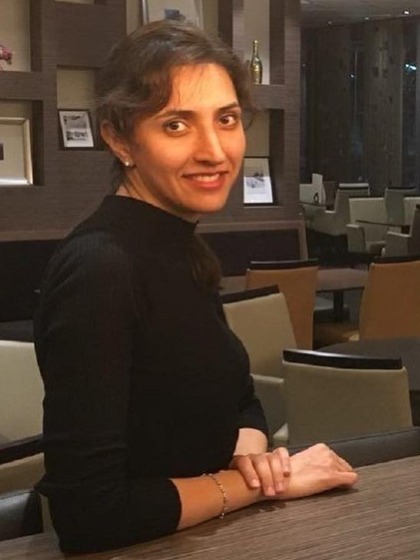
Dr. Johan van Rooij is an Assistant Professor in the Algorithms and Complexity group at Utrecht University , Faculty of Science. His work focuses on algorithm design, computational complexity, and data science applications. Specializes in exact algorithms for NP-hard graph problems Active in parameterized complexity and treewidth-based techniques Contributes to applied data science through transportation optimization and railway inspection projects Research trends show consistent contributions to: Exponential time algorithms for graph problems Treewidth and branch decomposition optimization Data science applications in public mobility Scientific Recognition: 2018: Hendrik Lorentz Prize (Dutch Data Science Prizes) 2022: Finalist for Prize for OR for the Common Good
Prof. Miriam Kullmann is a Professor of International and European Law at Utrecht University, affiliated with the School of Law. Her career includes roles as Associate Professor at Radboud University (2022–2024), Assistant Professor at VU Amsterdam (2021–2022), and Visiting Scholar at Harvard University (2020–2021). She holds a PhD from Radboud University (2015) and has extensive experience in European labor law research and policy. Her research focuses on the Future of Work , addressing issues like temporary agency work, algorithmic discrimination, and EU social policy. She contributes to initiatives like the European Working Group on Labor Law (EWLL) and the European Centre of Expertise (ECE) on labor law. Key professional roles include Deputy Judge at the Amsterdam Court of Appeal and editorial positions at European Labour Law Journal and Law and Labour . Her publications span labor law, digital labor platforms, and GDPR compliance in employment contexts. She advises on EU legal frameworks affecting labor mobility, AI governance, and social rights. Awards include the Schumpeter Fellowship (Harvard, 2020–2021). Education: PhD in Law (Radboud University, 2015); Legal Assistant at European Labour Law Network (2009–2017). Labs/Teams: European Working Group on Labor Law (EWLL), Bluesky Initiative. Grants & Advising: Supervised PhD candidate Lieke Oosterveld-Haveman (with Prof. Femke Laagland).
Bahar Haghighat is a Tenure Track Assistant Professor in Robotics and Automation at the Faculty of Science and Engineering, University of Groningen. She leads the Distributed Autonomous Intelligent Systems (DAISY) Lab as Principal Investigator and contributes to academic governance as a Member of the Faculty Council. Her professional affiliations include the Royal Netherlands Institute of Engineers (KIVI), the Institute of Electrical and Electronics Engineers (IEEE), and editorial roles with Nature Portfolio Journal Robotics and Springer Nature Journal Autonomous Robots. Her educational background includes: PhD in Robotics, Control, and Intelligent Systems from the Swiss Federal Institute of Technology in Lausanne (EPFL), Switzerland (2018) Master's degree in Electrical Engineering/Digital Electronics from Sharif University of Technology (SUT), Tehran, Iran Bachelor's degree in Electrical Engineering/Physics (double major) from Sharif University of Technology (SUT), Tehran, Iran Dr. Haghighat's research focuses on building novel miniaturized robotic swarms and algorithmic frameworks for sensing, surveying, and inspection applications. Her work spans mechatronics, electronics, embedded systems, embedded artificial intelligence and machine learning, and distributed systems. She envisions developing surface, aquatic, and aerial miniaturized robot swarms and small-scale intelligent devices for basic research and commercial applications including inspection of complex structures, environmental monitoring, space exploration, and search-and-rescue operations. Her recent publications demonstrate a strong focus on swarm robotics, particularly using particle swarm optimization techniques for multi-robot coordination, surface inspection tasks, and spacecraft hull inspection. Her research shows an interdisciplinary approach combining mechatronic design with advanced algorithms for self-assembly and collective decision-making in resource-constrained robotic systems. Her notable scientific achievements include: EPFL's PhD research award of Gilbert Hausmann for the best PhD thesis in mechanical engineering, electricity, and physics (2019) EPFL distinction of excellence for a PhD thesis in Robotics, Control, and Intelligent Systems (2018) Swiss National Science Foundation Postdoc Mobility Fellowship (2019) Swiss National Science Foundation Early Postdoc Mobility Fellowship (2017) Third place in EPFL's "My Thesis in 180 Seconds" competition (2017) EECS Rising Star recognition (2021 at MIT and 2019 at UIUC) Dr. Haghighat has served as Program Co-Chair for The International Symposium on Distributed Autonomous Robotic Systems (DARS) and has held visiting scholar positions at MIT and Harvard University. Her research has received media attention for applications in Mars rover technology and drone swarms for defect detection. She leads the DAISY Lab, which focuses on distributed autonomous intelligent systems for various inspection and monitoring applications.
Irina Stipanovic is an Assistant Professor specializing in Market Dynamics, focusing on infrastructure maintenance, climate change adaptation, and railway systems. Her research integrates advanced technologies like Digital Twins and machine learning to enhance decision-making in civil engineering contexts. Her work addresses critical challenges in infrastructure management, including risk-based maintenance scheduling, structural health monitoring, and flood resilience. She explores innovative methods such as entity-embedding neural networks and vision-based 3D inspections to improve predictive maintenance and asset lifecycle management. Key themes in her research include: Railway earthwork maintenance under climate change Multi-objective decision models for infrastructure prioritization Integration of Structural Health Monitoring (SHM) into Digital Twin platforms Resilience planning for critical infrastructure against floods and other hazards She has contributed to EU initiatives on standardization of Digital Twin applications and has published extensively on railway, tunnel, and bridge management. Her work emphasizes data-driven approaches to sustainable infrastructure solutions.
Silvania Pereira is an Associate Professor at the Department of Imaging Physics within the Faculty of Applied Sciences at Delft University of Technology. Her academic journey includes a B.Sc. and M.Sc. in Physics from the University of Campinas (Brazil), a Ph.D. in Experimental Quantum Optics from the University of Texas (USA), and postdoctoral research at the University of Constance (Germany) and Leiden University (Netherlands). She has been a permanent member of TU Delft's Optics Research Group since 2000. Current research focuses: optical metrology, scatterometry, diffraction, vectorial optics, and nanostructure characterization Leadership roles: Member of PhotonicsNL board and Dutch Network of Women Professors Her work centers on developing advanced optical techniques for nanoscale measurement, including coherent Fourier scatterometry for particle detection and structural analysis. Recent publications highlight innovations in: Broadband two-pulse scatterometry Steep side-wall angle calibration Thermo-optic device tuning Beam scanning methodologies Scientific contributions include key awards like the Humboldt Fellowship and FOM Stimuleeringsfonds grant. She actively supervises students, contributes to optics education, and collaborates with international research networks like the European Optical Society.
Derk H. Bos is a postdoctoral researcher in the Department of the Built Environment at Eindhoven University of Technology (TU/e), specialising in 3D concrete printing and quality control engineering. He completed his MSc cum laude in 2019 and defended his PhD dissertation in October 2024, both at TU/e. Education MSc in Structural Engineering and Design, Eindhoven University of Technology (cum laude, 2019) PhD in Concrete Structures, Eindhoven University of Technology (2024) Research Interests Derk’s research integrates additive manufacturing, materials science, and process engineering to advance 3D concrete printing. He develops parametric mortar design methodologies, rheological models for mixing and pumping, and novel in-line quality-control tests. His work addresses the challenges of ensuring structural integrity and process reliability in large-scale digital construction. Key focus areas include: – Rheology and yield stress optimisation of printable cementitious composites – Real-time monitoring techniques such as dye-tracer and gravity-induced compression tests – Multi-scale quality assessment from material to structural level Scientific Awards Digital Concrete Conference – Best Paper Award (2022) Service & Collaboration Since 2019, Bos chairs the PhD Network Civil Engineering, fostering early-career researcher engagement. He co-organised the Second RILEM International Conference on Concrete and Digital Fabrication in 2020, strengthening international collaboration in digital construction. Labs & Teams He is embedded within the Concrete Structures chair of the Unit Structural Engineering and Design, working closely with the TU/e 3D Concrete Printing research group led by Prof. Theo Salet and Dr. Rob Wolfs.
Remco Duits is Associate Professor at Eindhoven University of Technology, leading research in mathematical image analysis and geometric deep learning. His work develops PDE-based methods on Lie groups for medical imaging, crack detection in infrastructure, and optimal transport. Key innovations include equivariant neural networks for homogeneous spaces and geodesic tracking algorithms for vascular analysis. Dr. Duits holds an ERC Starting Grant (2013) for Lie Group Analysis in Medical Imaging and an NWO VICI Grant (2021) for Geometric Learning. His team pioneers data-driven Cartan connections for vascular tree tracking and PDE-CNN architectures with axiomatic foundations.
Kor Grit is an Assistant Professor at the Erasmus School of Health Policy & Management, Erasmus University Rotterdam, where he is affiliated with the Health Care Governance (HCG) research group. His work bridges theoretical and practical approaches in health policy, with a focus on governance, ethics, and quality assurance in healthcare systems. He obtained his PhD from the University of Groningen in 2000 with a thesis on the economization of public institutions, titled 'Economisering als probleem. Een studie naar de bedrijfsmatige stad en de ondernemende universiteit'. His academic journey has been centered on the intersection of social theory and health policy implementation. His research interests include science and technology studies, ethical governance in healthcare, regulatory mechanisms, and qualitative methodologies. He has contributed significantly to understanding how quality and accountability are constructed in healthcare through inspection, accreditation, and performance measurement. His work often critically examines the tensions between market logic, professional autonomy, and patient involvement. His recent publications reveal a strong thematic focus on reflexive regulation, epistemic justice in incident investigations, and the governance challenges in integrated and elderly care. Across these works, qualitative research methods such as semi-structured interviews and documentary analysis are consistently employed to explore complex organizational dynamics. Kor Grit is actively involved in PhD supervision, having guided Femke Vennik to completion and currently co-supervising Jacqueline van Oijen and David de Kam. He also contributes to institutional education governance as a member of the Exam Board and chair of the Test Committee at his institute. His research aligns with the UN Sustainable Development Goals, particularly in advancing quality healthcare and ethical governance. Though no formal awards are listed, his sustained scholarly output and leadership in collaborative research projects underscore his impact in the field.
Kim Loyens is an Associate Professor at Utrecht University's School of Governance within the Department of Public Administration and Organizational Science. Her academic career focuses on integrity management, organizational behavior, and policy implementation in public sector contexts. Her research expertise spans Public Management, Ethical Organizational Culture, Integrity, Scientific Integrity, and Organizational Culture. Dr. Loyens specializes in the implementation of integrity management policies, ethical decision making by street-level bureaucrats in enforcement agencies, transgressive behavior, and whistleblowing mechanisms. Her work examines how organizations handle inappropriate behavior and wrongdoing reporting, with particular attention to law enforcement agencies and public sector institutions. Analysis of her recent publications and media appearances (2022-2024) reveals a strong focus on whistleblowing systems, inappropriate behavior in organizations, and integrity management. Her research shows consistent attention to practical applications of organizational ethics, with increasing focus on police culture, workplace misconduct, and the implementation challenges of integrity policies across different institutional contexts. Dr. Loyens has been actively engaged with media and policy discussions, contributing expert commentary on 29 different media appearances between 2022-2024. Her work bridges academic research and practical policy implementation, particularly regarding how organizations can better address transgressive behavior and create effective reporting systems. Her research connects with broader institutional frameworks including Institutions for Open Societies (IOS), specifically focusing on Contesting Governance and the Future of Work themes, as well as Sport and Society research areas.
Prof. Melanie Ehren is a Full Professor of Educational Sciences at the Faculty of Behavioural and Movement Sciences, Vrije Universiteit Amsterdam. She leads the LEARN! research group focusing on educational governance, diversity, and identity. Her roles include international consultancy for organizations like OECD and UNICEF, and advisory positions at Ofsted (UK) and the Centre for Education Systems (Cambridge University). Her research emphasizes school effectiveness, teacher accountability, and systemic trust in education. Key areas include lesson study implementation, social-emotional learning outcomes, and the global SDG-driven reforms. She has published 79 works, including articles on South African school dynamics, UK inspection reforms, and trust-building strategies in education systems. Ehren co-leads major projects like EISON (focusing on organizational networks) and advised on pandemic-era catch-up programs. Her work bridges policy and practice, addressing challenges like 'stuck' schools and accountability pressures. She teaches courses on educational innovation and policy, integrating research into practical frameworks for systemic improvement.
Edwin C. Dertien serves as Assistant Professor at the University of Twente with dual appointments at the Digital Society Institute and in the Department of Robotics and Mechatronics within the Faculty of Engineering Technology. With 42 research publications spanning from 2006 to 2024, his work bridges theoretical robotics with practical applications in healthcare and industry. Dr. Dertien's research expertise encompasses: Human-Robot Interaction (HRI) and social robotics Soft and compliant robotic systems Haptic technology and tactile feedback mechanisms Sensor integration and real-time computing for robotic control Wearable computing and assistive technologies Robot appearance design and human perception studies His work demonstrates a growing emphasis on making robotic interactions more natural through improvisation techniques, textile-based actuators, and stress-wave detection systems. Recent publications reveal an interdisciplinary approach combining engineering principles with human-centered design methodologies. Dr. Dertien has received significant recognition including: Best Functional Design Award (2019) for wearable computing and biofeedback systems ECIU European award for Innovation in Teaching and Learning (2017) He actively contributes to public discourse on robotics through media appearances discussing robot evolution, innovative assistive tools, and the societal implications of robotic technologies, demonstrating commitment to translating research into real-world impact.
Robert C. Lanzafame is a Senior Lecturer at Delft University of Technology's Faculty of Civil Engineering and Geosciences, specializing in Hydraulic Structures and Flood Risk. Holding a PhD from UC Berkeley and licensed as a California Civil Engineer, he teaches foundational engineering methods, programming, probability theory, and applied levee design while supervising bachelor's and master's students. His educational background includes BSc and MSc degrees in Civil Engineering from UC Berkeley, with doctoral research on vegetation effects on dike stability using probabilistic design methods. Professional experience encompasses geotechnical consulting on California levees, dams, and pipeline projects, informed by firsthand work in the Sacramento-San Joaquin Delta. Lanzafame's research integrates flood risk management with educational innovation, focusing on structural reliability, probabilistic design, and computational thinking. Recent work examines animal burrow impacts on levees and human stability during wave overtopping, while his educational research develops interactive Jupyter Book tools for engineering curricula. Since 2023, he leads the MUDE module for all first-year MSc engineering students. His teaching excellence is recognized through multiple awards: 1st Place, Best Teacher, Hydraulic Engineering (2020) 1st Place, Best Teacher, Hydraulic Engineering (2021) 2nd Place, Best Teacher, Hydraulic Engineering (2021) 2nd Place, Best Teacher, Program Core and MUDE Modules (2022) 2nd Place, Best Teaching Team (MUDE), Structural Engineering Track (2022) Lanzafame directs the faculty-wide TeachBooks project to create interactive educational materials using open-source tools, collaborating with university initiatives to transform engineering pedagogy through computational thinking integration. He actively presents workshops on Python programming in education and interactive book development across TU Delft.
Prof. AF (Frank) van der Stappen is a Professor of Robotics and Automation at Utrecht University's Faculty of Science, Department of Information and Computing Sciences. He also holds a position at University College Roosevelt. His research focuses on robotics (grasping, manipulation, motion), algorithmic automation, simulation, computational geometry, and computer animation. He has been an IEEE Fellow since 2017. His work emphasizes geometric computing and its applications in automation, with contributions to form-closure grasping, path planning, and virtual character animation. Education: PhD in Motion Planning from Utrecht University (1994), MSc in Distributed Data Structures from Eindhoven University of Technology (1988). Research Interests: Robotics (manipulation/grasping), algorithmic automation, geometric algorithms, computer animation, and crowd simulation. His work bridges theoretical foundations with practical applications in manufacturing, virtual environments, and agricultural robotics. Awards: IEEE Fellow (2017). Advisees/Grants: No explicitly listed students, but extensive collaborative work with researchers like Elon Rimon, Ken Goldberg, and Mark Overmars. His research includes grants related to motion planning, caging, and automation. Labs/Teams: Involved in geometric computing and robotics teams at Utrecht University, contributing to Game Research themes and interdisciplinary projects.
N. Nappo, PhD, serves as an Assistant Professor within the Department of Geoscience and Remote Sensing at Delft University of Technology's Faculty of Civil Engineering and Geosciences. Their research centers on geotechnical hazard mitigation with a focus on urban environments and infrastructure resilience. Research interests span landslide risk management, UAV remote sensing applications, and infrastructure damage assessment in geohazard contexts. Key specialties include: Structural measures for subsidence risk reduction Drone-based road network monitoring in landslide areas Urban resilience planning against geological hazards Integration of Earth observation technologies for disaster management Recent publications demonstrate strong emphasis on practical engineering solutions for natural hazard mitigation, particularly through advanced remote sensing techniques. Work shows consistent focus on metropolitan areas where infrastructure vulnerability intersects with geological risks. Professional activities indicate active collaboration within international geoscience networks, with research outputs published in high-impact journals and edited volumes through publishers like Elsevier. Current projects involve UAV imagery applications for infrastructure inspection in geohazard zones.
Ihsan Engin Bal is a Lecturer in Construction Safety & Earthquakes at the Hanze University of Applied Sciences , affiliated with the Research Centre for Built Environment – NoorderRuimte . With a background in Civil and Structural Engineering from Karadeniz Technical University (2000), his work bridges seismic risk mitigation, timber-masonry structural systems, and digitalization of construction processes. Education: BEng in Civil and Structural Engineering (1996-2000), Karadeniz Technical University. His research focuses on earthquake engineering , particularly unreinforced masonry (URM) walls, timber structural connections, and low-cost sensor applications for construction safety. Recent projects include Hysteresis (hybrid testing of timber buildings) and Trust in Timber (bio-based construction workforce development). He explores applying digital tools like automated crack detection and vibration monitoring to enhance structural resilience. Key themes in his 2024-2025 publications include seismic performance of URM walls, noise-resistant crack segmentation via machine learning, and climate-proof infrastructure. He collaborates extensively with researchers like E. Smyrou and O. Arslan. Professor Bal actively engages in public discourse, notably analyzing Turkey-Syria earthquake vulnerabilities and advocating for improved construction practices. His work spans practical experiments, computational modeling, and policy-oriented insights for disaster prevention.