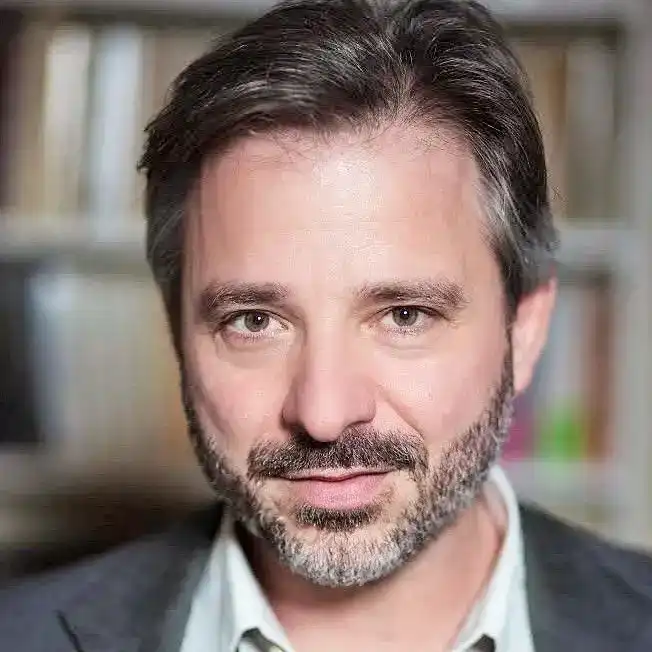
Professor Neil Walker holds the Regius Chair of Public Law and the Law of Nature and Nations at the University of Edinburgh's School of Law . He is a Fellow of the British Academy (FBA) and Royal Society of Edinburgh (FRSE) with a distinguished career spanning institutions like the European University Institute in Florence and the University of Aberdeen. LLB, PhD (Edinburgh) LLD (Honoris Causa), Uppsala University His research focuses on constitutional theory across sub-state, state, EU-supranational, and global levels, examining sovereignty, legal pluralism, and the intersection of security, law, and political community. He also explores broader legal theory and UK/EU public law dimensions. Recent work includes Intimations of Global Law (2015) and the Leverhulme Trust-funded project Law, Community and Utopia (2019-2022). His 178+ publications span constitutionalism, EU law, sovereignty debates, and transnational legal theory. Scientific Awards : Francqui Medal (2017), Leverhulme Trust Major Research Fellowship As director of the Law and Polity Project , he collaborates with Dr. Cormac MacAmhlaigh and Professor Claudio Michelon. He has advised governments on constitutional matters, including Scotland's final appellate jurisdiction review (2008-2010).
Stuart Lakin is an Associate Professor at the University of Reading, specializing in UK constitutional and administrative law. He holds roles including Director of the International Legal Studies programme and Chair of the Justice, Rights and Legal Theory research cluster. His research focuses on constitutional theory, legal theory, and the interplay between morality and law. Lakin earned a B.A. and M.A. from the University of Cambridge, followed by an LL.M. and Ph.D. from University College London (UCL), and is a qualified barrister. His research interests span constitutional theory methodologies, separation of powers, parliamentary sovereignty, and judicial review. He has advised three Ph.D. students on topics including democratic constitutionalism, legislative monitoring, and religious freedom. Lakin’s recent work critiques and reinterprets UK constitutional frameworks through moral and legal philosophy lenses. Key contributions include analyzing the Bancoult litigation, debating common law constitutionalism, and exploring parliamentary sovereignty through manner-and-form theories. He frequently engages with legal theory’s role in public law and has presented at conferences on Brexit constitutional implications and legal/principled governance. Lakin’s publications span constitutional law journals and edited volumes, emphasizing theoretical rigor and practical legal analysis. His academic leadership includes co-editing The Methodology of Constitutional Theory (2022) and contributing to the UK Constitutional Law Group Blog.
Timothy Endicott is the Vinerian Professor of English Law at the University of Oxford's Faculty of Law and a Fellow of All Souls College. He holds a DPhil from the University of Oxford (1997), an MPhil from Oxford (1985), an LLB from the University of Toronto (1988), and an AB from Harvard College (1983). His career includes roles as Dean of the Faculty of Law (2007–2015), Professor of Legal Philosophy (2006–2020), and Fellow in Law at Balliol College (1999–2020). Endicott specializes in Philosophy of Law, Philosophy of Language, and Administrative Law. His research explores legal interpretation, judicial reasoning, constitutional principles, and the interplay between law and language. Key works include Administrative Law (5th edn) and seminal articles on judicial review, legal vagueness, and the rule of law. His recent publications address topics like the philosophical foundations of precedent, computational norms and the rule of law, and the legacy of legal theorists like Joseph Raz. Endicott’s scholarship bridges theoretical jurisprudence and practical legal analysis, emphasizing the clarity and precision required in legal adjudication. His teaching spans constitutional law, civil dispute resolution, and jurisprudence. He has contributed to debates on proportionality in judicial review, the role of human rights in executive actions, and the ethical boundaries of law.
Guy Azebové Tetang is a Lecturer at the Faculty of Law of the University of Montreal, specializing in comparative constitutional law with a focus on sub-Saharan Africa. His research explores the interplay between constitutional 'standards' (universalism) and 'localisms' (relativism), particularly in Francophone Africa. He holds a PhD from the University of Montreal (2023), supervised by Professors Jean-François Gaudreault-Desbiens and Pierre Noreau. Education: Doctor of Law (PhD), Université de Montréal (2023). Research Interests: Constitutional transplants, African political imaginaries, legal hybridity, postcolonial constitutionalism, and the tension between global legal norms and local practices. His work analyzes how African states navigate constitutional borrowing from Western models while reinterpreting them through local contexts. Key themes include constitutional polymorphism, legal reappropriation, and the 'constitutional threshold' as a space of cultural negotiation. Notable Achievements: 2024 AHJUCAF Special Mention Prize (for doctoral thesis), exceptional mention for thesis defense (2023), and Pierre Noreau/Jean-François Gaudreault-Desbiens doctoral scholarship (2016). His publications include chapters in *From One Threshold to Another* (2017) and *Secrets of States* (2017), exploring constitutional dynamics in Africa and Canada. He has presented at conferences such as *Les après-midis de la Justice* (2022) and the CRDP Young Researchers' Lunchtime Conferences (2020), discussing topics like Cameroon's social justice challenges and judicial power excess. Current Affiliations: CRDP (Centre de recherche en droit public), where he contributes to research groups on law and new social relations. His work intersects with legal pedagogy, interdisciplinary collaboration, and global justice studies.
Yasuo Hasebe is a Professor at Waseda University's School of Law, with a distinguished career spanning multiple institutions including the University of Tokyo (1995-2014) and Gakushuin University (1982-1993). He has held significant roles such as Dean of the University of Tokyo's Law School (2007-2008) and leadership positions in academic organizations like the Japan Association of Constitutional Law (President, 2015-2017). Education: Graduated from the Faculty of Law at the University of Tokyo in 1979. Research Interests: Centered on public law, constitutional theory, and comparative constitutional law, with specific focus on the monarchical principle, war powers, judicial review, media regulation, and the intersection of law with political philosophy. His work examines constitutional identity in Japan, structured proportionality principles, and the historical reception of constitutional concepts like the Rechtsstaat. Recent Publications: His articles address topics such as comparative political process theory, judicial conscience in constitutional reasoning, and the evolution of broadcasting law in digital environments. These works reflect his engagement with constitutional legitimacy, global values, and the application of classical political philosophy to modern legal frameworks. Projects & Grants: Currently leads research on the monarchical principle's theoretical foundations and contemporary speech freedom challenges, funded by institutions like the Nomura Foundation and Japan Society for the Promotion of Science.
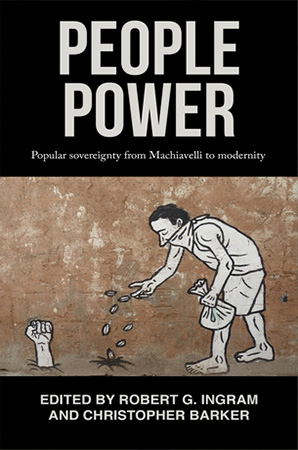
Robert G. Ingram is a Professor of Humanities and Associate Director of the Robert M. Beren Program on Jewish Classical Education at the University of Florida’s Hamilton Center for Classical and Civic Education. His research focuses on the early history of liberal democracy in the English-speaking world, particularly the intersections of religion and politics. He holds a Ph.D. in History from the University of Virginia (2002), an M.A. in History (1995), and a B.A. in History from the University of the South (1993). Affiliations: Hamilton Center for Classical and Civic Education, Robert M. Beren Program on Jewish Classical Education Key Roles: Co-editor of the book series Ideas and Practices, 1300–1850 , editor of Capitalism: Histories (forthcoming 2025) His research interests include the Reformation’s legacy in post-revolutionary England, Enlightenment debates on religion and politics, and the role of religious identities in shaping modern political thought. Ingram has authored or co-edited influential works like Reformation Without End (2018), Religious Identities in Britain, 1660–1832 (2017), and Freedom of Speech, 1500–1850 (2020). Ingram’s current projects include a book on The Religion of the State: Sovereignty, Pluralism and Constitutionalism, 1890–1920 and a co-edited volume Liberal Democracy and the Age of Revolution . He also collaborates on scholarly editions of historical texts, including John Lord Hervey’s memoirs and Conyers Middleton’s Free Inquiry into the Miraculous Powers . Awards and Recognition: 2020 Ohio University Presidential Research Scholar Slater Fellow at Durham University (2020) Ingram’s teaching includes courses on God and Science and Civil Discourse and the American Political Order . He actively contributes to interdisciplinary initiatives like the Hamilton Center’s programs on classical education and Jewish studies.
Dr. Víctor Muñiz-Fraticelli is an Associate Professor of Law and Political Science at McGill University's Faculty of Law and Department of Political Science. He holds a PhD in Political Science from the University of Chicago (2008) and a JD from the University of Puerto Rico (1999), with judicial clerkships at the Puerto Rican Supreme Court. His research focuses on political theology, legal pluralism, church-state relations, and intergenerational justice. He has authored The Structure of Pluralism (Oxford, 2014) and numerous articles on constitutional law and religious freedom. Awards include the Mellon New Directions Fellowship (2019–2021) and a Nootbaar Fellowship (2020). Education: PhD, Political Science, University of Chicago (2008) Juris Doctor, University of Puerto Rico (1999) Bachelor of Arts, Cornell University (1996) Research Interests: His work bridges political theory and law, examining religious liberty, constitutionalism, and the institutional dimensions of legal pluralism. Recent projects explore political theology and the governance of religious schooling. He critiques secular neutrality frameworks and advocates for a pluralist approach to legal authority. Grants & Service: Principal Investigator on SSHRC, Templeton, and Mellon grants totaling over CAD 800,000 Associate Director, Centre for Research on Religion (2017–2019) Member, Research Group on Constitutional Studies Labs/Teams: Active in the Centre for Human Rights & Legal Pluralism and the Yan Lin Centre for the Study of Freedom & Global Orders.
Shreya Atrey is an Associate Professor in International Human Rights Law at the Faculty of Law, University of Oxford, based at the Bonavero Institute of Human Rights. She holds multiple prestigious affiliations including Official Fellow and Welfare Dean of Kellogg College, Senior Teaching Fellow at New College, and associate membership with the Oxford Human Rights Hub. Her academic career includes postdoctoral fellowships at the European University Institute (Max Weber Fellow) and NYU School of Law (Hauser Global Fellow). She earned a BCL with distinction and a DPhil in Law on the Rhodes Scholarship from Magdalen College, University of Oxford. Shreya’s research focuses on discrimination law, feminist theory, poverty law, disability law, and structural racism. Notably, her monograph Intersectional Discrimination (2019) won the runner-up Peter Birks Book Prize and influenced landmark rulings in South Africa and India. Her work bridges legal theory with practice, emphasizing intersectional approaches to address compounded inequalities faced by marginalized groups. Her publications consistently explore how intersectionality can reshape legal frameworks to combat systemic discrimination. Key themes include xenophobia, racialized economic impacts, gender violence, and climate justice. Shreya is Editor of the Human Rights Law Review and contributes to initiatives like the Oxford Pro Bono Publico and International Human Rights Law Summer School. Awards: Runner-up Peter Birks Book Prize (2020). Advising/Grants: While no specific grants are cited, her academic leadership roles (e.g., Welfare Dean) imply involvement in institutional research support. She has advised on transformative constitutionalism in Asia and edited volumes on exponential inequalities and climate justice, indicating collaborative research projects. Labs/Teams: Active in the Bonavero Institute of Human Rights, Oxford Human Rights Hub, and co-edits Exponential Inequalities: Equality Law in Times of Crisis (2022).
Garrett West is an Associate Professor of Law at Yale Law School , focusing on torts, remedies, federal courts, administrative law, constitutional interpretation, and doctrinal coherence. He received his J.D. from Yale Law School in 2018 and a B.A. from Hillsdale College in 2015. Prior to joining Yale, he practiced appellate litigation in Washington, D.C., and clerked for Judge Diarmuid O’Scannlain , Judge Thomas Griffith , and Justice Samuel Alito . Research Interests include integrating private law theory into public law, constitutional interpretation through doctrinal change, and analyzing the interplay between tort law and constitutional rights. His work addresses challenges in judicial oversight, administrative deference, and structural constitutional issues. Recent Scholarship explores the shadow docket, Bivens actions, Chevron waiver, congressional contempt, appointments clause distinctions, and constitutional torts. These publications reflect a trajectory toward refining judicial doctrines governing federal courts and administrative agencies. Contact: garrett.west@yale.edu | SSRN Profile
Aaron John Spitzer is an Associate Professor of Arctic Governance at the Department of Comparative Politics, University of Bergen (UiB), Norway. He is co-leader of the international research project Indigenous Peoples and Governance in the Arctic and leads the ERC-funded Contested Frontiers (CONFRONT) project (2024–2029), which explores constitutional politics in settler-state peripheries. His academic work bridges comparative politics, constitutional law, and normative political theory. Research Interests: Arctic and Indigenous Governance Settler-Colonial Constitutionalism Metapolitics and the Boundary Problem Self-Determination vs. Liberal Democracy Truth Commissions and Transitional Justice Land Claims and Co-Management Institutions His recent publications analyze the Finnmark Act, Sami land rights, settler voting rights in US territories, and truth commissions in Norway and Canada. The articles reflect a consistent thematic focus on the tension between individual liberal rights and collective Indigenous self-determination, particularly in federal and post-colonial contexts. His methodological approach combines comparative case studies, legal analysis, and political theory. Scientific Awards and Funding: European Research Council (ERC) Starting Grant (101115513), 2024–2029 Advising and Grants: Aaron Spitzer has co-supervised PhD research, notably collaborating with Per Selle on Sami governance topics. He has secured major external funding, including from the Research Council of Norway (projects 302041, 274976, 248159, 259416, 230839), and leads a high-profile ERC project, indicating strong grant-writing capacity and leadership in Arctic political studies. Labs and Research Teams: Spitzer is co-leader of the Indigenous Peoples and Governance in the Arctic project and principal investigator of the Contested Frontiers (CONFRONT) research group. He collaborates extensively with scholars at UiB, Chr. Michelsen Institute, and UiT The Arctic University of Norway, forming a robust network in Indigenous and Arctic political studies.
Mikhaïl Xifaras serves as Professor of Public Law at Sciences Po's Law School since September 2008, holding a secondment position at New York University Abu Dhabi since 2021. His academic appointments include Visiting Professorships at Harvard Law School (since 2011) and Keio Law School in Japan (since 2012). His educational background spans multiple disciplines: Agrégation de l'enseignement supérieur in Public Law (2004), Agrégation in Philosophy (1993), and Doctorate in Philosophy from Besançon (2001). He graduated from the École Normale Supérieure of Fontenay-Saint Cloud in 1990. Xifaras specializes in the intersection of legal philosophy and political theory, with particular focus on property theory, critical legal studies, and the historical evolution of legal thought. His research examines how philosophical frameworks from Kant to contemporary critical theorists shape legal institutions, with recurring themes in global governance, democratic theory, and the critique of presidential systems. He explores property not merely as an economic institution but as a site of political struggle and emancipatory potential. His scholarly output demonstrates consistent engagement with structuralist and post-structuralist methodologies, particularly through Barthesian semiotics applied to legal doctrine. The articles reveal a trajectory moving from national legal theory toward global constitutionalism, with increasing focus on transnational commons and post-capitalist property models. Prix Ouverture Internationale of the Université Libre de Bruxelles (2003) Marie-Curie Grant from the European Commission (2003) Fulbright Scholarship at Harvard Law School (2000) Fondation Thiers Grant (1999) Junior Member of the Institut Universitaire de France (2006-2011) Xifaras has secured significant competitive research funding including European Commission grants and Fulbright support. His academic leadership includes directing doctoral programs and co-editing the journal Jurisprudence. His international collaborations span institutions in the United States, Japan, and across Europe, reflecting his transnational research focus. While specific lab affiliations aren't documented, his work with the Law School's Research Centre and participation in cooperative projects like Digilaw and Environmental Justice initiatives indicate active engagement with interdisciplinary research teams.
Dr. Stephanie Alice Baker serves as Deputy Head of the Department of Sociology and Criminology at City St George's, University of London, where she holds the position of Reader. She earned her PhD from the University of Western Sydney in 2010 and a BA (Hons. 1st Class) from the University of Sydney in 2006. Prior to her current position, she held academic appointments at Goldsmiths University of London, University of Greenwich, and research positions at Indian Institute of Technology-Bombay and several Australian universities. Her research focuses on health and wellness cultures, particularly how influencers establish trust, intimacy and authority online. She has published extensively on the self-help and wellness industry, including the books Lifestyle Gurus: constructing authority and influence online (Polity, 2019) and Wellness Culture: how the wellness movement has been used to empower, profit and misinform (Emerald, 2022). Her current research examines the role of new media technologies in amplifying false, misleading and harmful content online, with particular attention to the connections between wellness culture and conspiracy theories. Dr. Baker's recent publications reveal a consistent trajectory exploring how wellness culture has become a gateway to misinformation, conspiracy theories, and far-right extremism. Her work demonstrates how influencers weaponize wellness discourse to promote anti-vaccine messaging, conspiracy theories, and radical political views, particularly during the COVID-19 pandemic. Her research employs cultural sociology frameworks to understand the appeal of 'truther' narratives and the structural conditions that facilitate belief in conspiracy theories. Emerald Literati Network Award for Excellence (2013) Outstanding Paper Award Winner European Association for Sociology of Sport (2011) Young Researcher's Award Australian Federal Government (2010) Endeavour Research Award University of Western Sydney (2008) Postgraduate Research Award (full PhD scholarship) University of Sydney (2007) Dr. Baker has advised numerous government bodies, providing evidence to UK Parliament committees on influencer culture and misinformation. She has collaborated with international organizations including the World Health Organization and has been consulted by the UK Cabinet Office's Open Innovation Team on AI and mis/disinformation. Her media presence is significant, with appearances in BBC, The Guardian, New York Times, and co-creation of the podcast series Twenty-first Century Cults .
Robert J. Smith serves as Executive Director & Senior Research Fellow at the Fair Punishment Project, a joint initiative of the Charles Hamilton Houston Institute & Criminal Justice Institute at Harvard Law School. His professional focus centers on criminal justice reform with particular emphasis on racial disparities in capital punishment systems, implicit racial bias in legal proceedings, and constitutional challenges to excessive sentencing practices. Smith's scholarly contributions have significantly advanced understanding of how systemic biases operate within ostensibly race-neutral legal frameworks, particularly in death penalty cases across multiple jurisdictions. Smith's research program systematically examines the intersection of race, implicit cognition, and criminal justice outcomes. His empirical studies document patterns of implicit white favoritism and the 'race of victim effect' in capital sentencing determinations. His constitutional scholarship analyzes Eighth Amendment challenges to excessive punishment, exploring evolving standards of decency in American jurisprudence. A recurring theme throughout his work is how cognitive biases influence prosecutorial discretion, jury decision-making, and sentencing outcomes despite formal legal safeguards against racial discrimination. Smith's publication record demonstrates consistent scholarly engagement with systemic issues in American criminal justice, particularly regarding racial disparities in capital punishment. His research combines rigorous legal analysis with social science methodologies to document how implicit biases operate across various stages of criminal proceedings. His work reveals that ostensibly neutral legal processes frequently produce racially disparate outcomes, suggesting the need for structural reforms to ensure equal justice under law. The interdisciplinary nature of his scholarship bridges legal theory, empirical psychology, and constitutional doctrine. Smith's leadership of the Fair Punishment Project has facilitated collaborative research initiatives examining excessive punishment practices nationwide. His work has influenced legal scholarship and practice by highlighting previously under-recognized mechanisms through which racial bias operates within the criminal justice system. Through his publications and institutional leadership, Smith has contributed significantly to contemporary debates about racial justice, constitutional rights, and the future of capital punishment in America.
Eizo Nakauchi is a Professor at the Faculty of Political Science and Economics , Waseda University , with a Master of Political Science degree from the same institution. His career spans decades of research and teaching in European political history, legal traditions, and political philosophy. Education Background: 1992: Graduate School, Division of Politics, Waseda University 1982: Faculty of Political Economics, Waseda University His research focuses on Prussian absolutism , Max Weber's political theory , and the historical evolution of political institutions . His publications analyze bureaucratic systems in 18th-century Prussia, Weber's conceptualization of political elements ("dignified leisure" and "spiritual imprint"), and intersections between ancient Greek political thought and modern European philosophy. Scientific awards include the Sakuradakai Encouragement Award (1995) for his early contributions. His academic memberships span the Japanese Political Science Association , Japan Legal History Association , and Comparative Legal History Society . He actively teaches graduate courses in European political history , political thought , and Max Weber studies , while participating in internal research projects at Waseda's Institute of Comparative Law since 1989. His work bridges historical analysis with contemporary political theory.
Andrew Arato is a Professor at The New School for Social Research in New York, USA. He is a prominent scholar specializing in constitutional theory and democratic politics, with particular expertise in post-sovereign constitutionalism and constituent power. Research Interests Professor Arato's research focuses on constitutional theory, with special attention to democratic transitions and constitution-making processes. His work examines how societies can establish legitimate constitutional orders through inclusive processes that go beyond traditional sovereign models. His scholarship particularly emphasizes: Post-sovereign constitutional design and theory Constituent power and authority in democratic transitions Round table negotiations in constitutional processes Multi-track constitutionalism and informal constitutional change Comparative analysis of constitutional transitions, particularly in South Africa Constitutional rigidity and legitimate forms of informal change Scholarly Contributions Professor Arato's work demonstrates a consistent focus on how constitutional orders can be established through inclusive negotiation processes rather than sovereign imposition. His research shows particular interest in the role of civil society and negotiated transitions in constitutional design, with significant comparative work on the South African constitutional process. His scholarship bridges theoretical political philosophy with practical constitutional design, offering frameworks for understanding how societies can overcome deep political divisions through constitutional negotiation. The evolution from his 2008 lectures on foundational constitutional theory to his 2012 work on multi-track constitutionalism reveals a trajectory toward increasingly nuanced analyses of constitutional flexibility and informal change mechanisms.