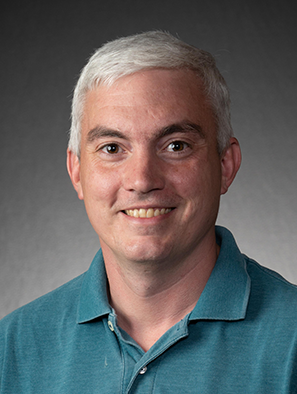
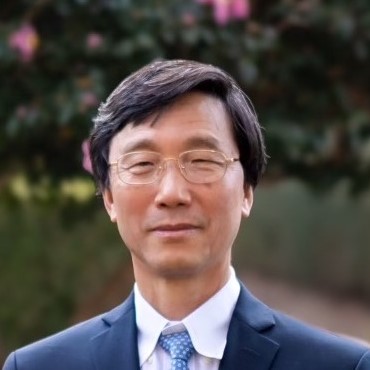
Paul Horn is a Professor and Associate Chair of Graduate Studies in the Department of Mathematics at the University of Denver, within the College of Natural Sciences and Mathematics. He earned his Ph.D. in Mathematics from the University of California, San Diego (2009), under the supervision of Fan Chung. Prior to joining DU in 2013, he held postdoctoral positions at Emory University and Harvard University. His research focuses on combinatorics, graph theory, and probability, with a particular emphasis on applying probabilistic, algebraic, and geometric methods to analyze networks and graphs. Dr. Horn co-organizes the Rocky Mountains-Great Plains Graduate Research Workshop in Combinatorics (GRWC) and contributes to the graph theory section of the Masamu Advanced Studies Institute in southern Africa. He also serves as the graduate coordinator in the Mathematics Department, overseeing graduate student advising and program administration. His work spans theoretical contributions to graph structure, stochastic processes on networks, and applications in multi-agent systems and sensor networks. Publications highlight his expertise in graph curvature, network robustness, and combinatorial optimization, reflecting his interdisciplinary approach to discrete mathematics and its real-world applications. His research bridges pure and applied mathematics, addressing challenges in algorithm design, network dynamics, and geometric graph theory. Horn’s advising and mentorship activities include guiding graduate and undergraduate students in mathematics, emphasizing hands-on research experiences through workshops and collaborative projects. His contributions to academic leadership and research dissemination are evident through editorial roles and conference organization in combinatorics and graph theory.
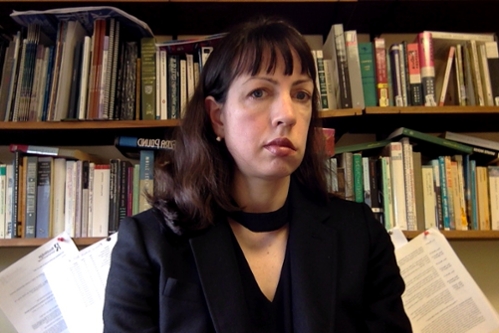
Magdalena Kay is a Professor and Honours Program Adviser in the Department of English at the University of Victoria. She has been teaching since 2007, specializing in contemporary British, Irish, and Polish poetry, comparative literature, and poetics. Her research explores the complex interplay between form, cultural context, and identity in poetry. Education: She earned a B.A. (magna cum laude) in English from Harvard University (1999) and a Ph.D. in Comparative Literature from the University of California, Berkeley (2007). Teaching: Her courses cover modern and contemporary British and Irish literature, including seminars on practical criticism, Modernism, and the poetry of Seamus Heaney. She has taught both undergraduate and graduate-level courses, emphasizing close reading and comparative analysis. Research Interests: Kay’s work focuses on 20th- and 21st-century poetry, particularly examining how Eastern European poets like Czesław Miłosz and Zbigniew Herbert influence Irish and British writers. She investigates themes of belonging, cultural displacement, and the ethical dimensions of poetic form. Publications: Her monographs include Poetry Against the World (2012) and In Gratitude for All the Gifts (2012), which analyze the transnational connections between poets. Recent articles explore the aesthetics of Seamus Heaney, the legacy of Philip Larkin, and the cross-cultural dialogues shaping modern poetry. Advising & Engagement: As Honours Program Adviser, Kay mentors students in advanced literary studies. Her work also extends to co-creating The Close Reading of Poetry , a resource for students and educators.
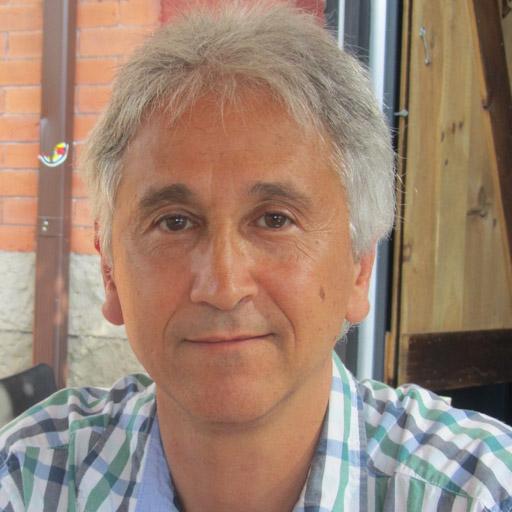
Naftali Raz is a Professor of Psychology at Stony Brook University, specializing in Integrative Neuroscience. He holds a Ph.D. from the University of Texas at Austin (1985) and a B.A. from the Hebrew University of Jerusalem (1979). His research focuses on understanding age-related changes in the brain and cognition, particularly exploring metabolic, vascular, and inflammatory risk factors influencing cognitive aging. He employs neuroimaging techniques such as MRI, MRS, and fMRI to study brain structure, function, and metabolism in healthy aging populations. Raz’s research emphasizes the 'FRIENDS' model (Free-Radical Induced Energetic and Neural Decline in Senescence), linking aging to energy production decline. His work includes longitudinal studies on brain atrophy, myelin content, and iron accumulation. He investigates how physiological risk factors like cardiovascular disease and metabolic syndrome impact neurocognitive trajectories. Current grants include NIA funding for neural correlates of cognitive aging and hippocampal glutamate modulation studies. Education: Ph.D. in Psychology, University of Texas at Austin (1985) B.A. in Psychology, Hebrew University, Jerusalem, Israel (1979) Labs/Facilities: Integrative Neuroscience Group, SCAN Center (Stony Brook Advanced Neuroimaging) His publications span over three decades, with recent works on recognition memory strategies, hippocampal subfield analysis, and cerebral blood flow dynamics. Collaborations include multi-institutional projects on neuroimaging protocols and aging mechanisms.
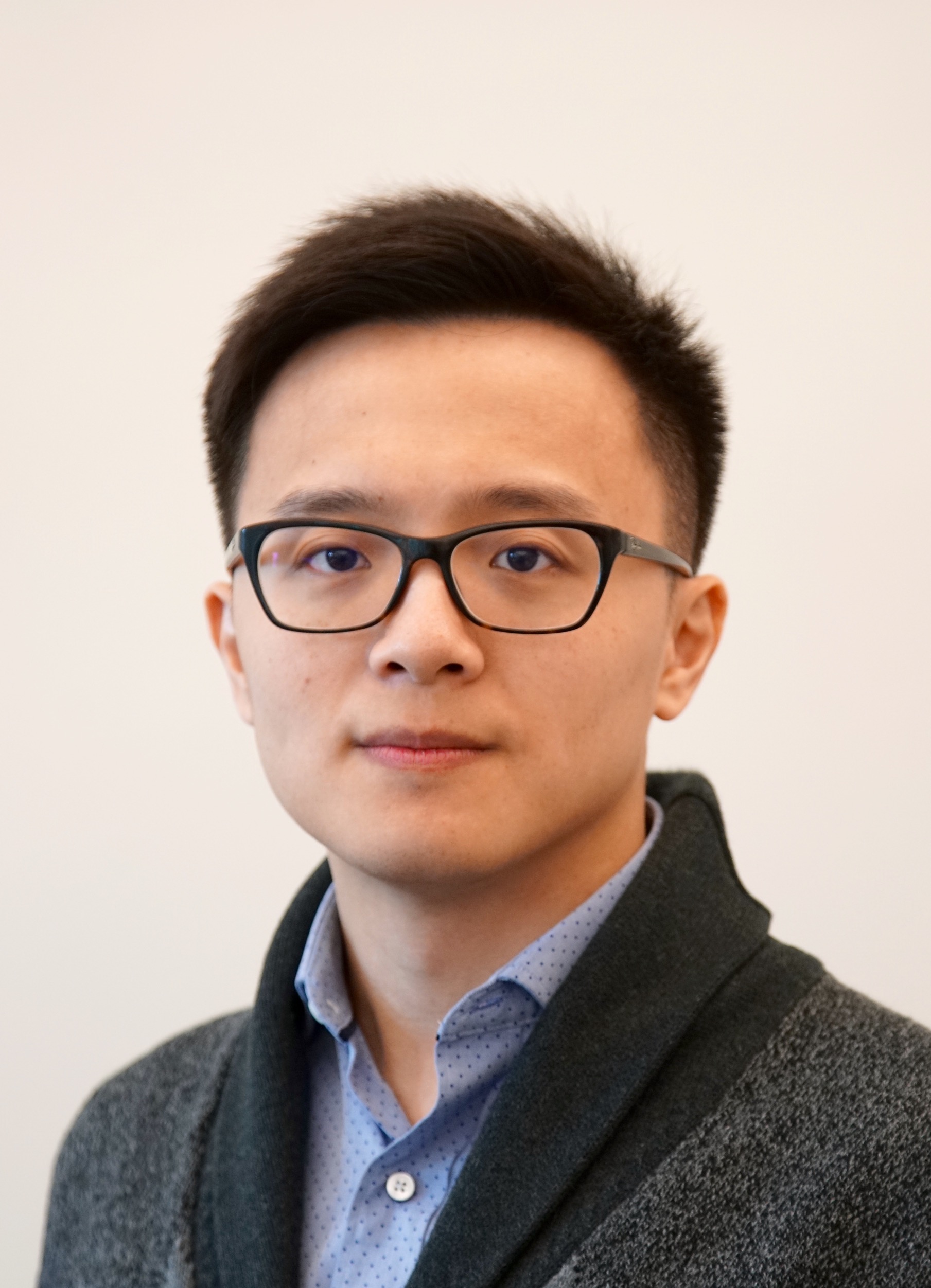
Dr. Min Sun is an Associate Professor and Director of the Undergraduate Program in the Department of Civil Engineering at the University of Victoria (UVic). He holds a PhD from the University of Toronto. His research focuses on structural engineering and steel structures, particularly in the areas of steel connections, seismic resilience, and numerical modeling. Dr. Sun has extensive academic and professional experience, including roles as Assistant Professor at UVic (2016–2022), Lecturer at the University of Toronto, and structural design roles in industry. His research interests emphasize the performance of steel structures under extreme loads, including earthquake engineering and material behavior. Recent work includes studies on stress concentration factors in steel connections, thermal integrity of piles, and wood-frame building reliability under lateral loads. He actively contributes to professional organizations, such as serving as Vice President (Western Region) for the Canadian Society for Civil Engineering (2018–2020). Dr. Sun teaches courses including Advanced Structural Analysis (CIVE 421) and Solid Mechanics (CIVE 220) at UVic. He currently supervises graduate students in structural steel design and construction. His publications span experimental and numerical analyses, with a focus on improving design standards for steel and wood structures. Labs/Teams: Affiliated with UVic's Engineering and Computer Science faculty and the IESVIC (Institute for Energy Systems and Sustainability at UVic), though specific lab names are not explicitly stated in the text.
Donato Totaro is a Part-time Lecturer in Film Studies at Concordia University's Faculty of Fine Arts in Montreal, Canada, where he has taught since 1990. He holds a PhD in Film & Television from the University of Warwick (UK), supervised by Victor F. Perkins, and serves as founding editor of the online film journal Offscreen since 1997. Totaro is also a member of the Association québécoise des critiques de cinéma (AQCC) since 2004. Education: PhD in Film & Television, University of Warwick (UK) Research Interests: Totaro's work spans film criticism , the horror genre , Andrei Tarkovsky , cinema and temporality , and film style . His research explores theoretical and aesthetic dimensions through projects like The Face at the Window (analyzing horror motifs), Women in Horror (documenting post-2010 female contributions), and Monster Kid Generation (tracing cultural impacts of 1950s-1970s horror fandom on filmmakers like Spielberg and Del Toro). He pioneers audio-visual essays as critical tools. Publication Trends: His scholarship reveals evolving focus from Tarkovsky's temporal aesthetics to contemporary horror studies and genre hybridity (e.g., apocalyptic westerns). Recent works demonstrate increasing interdisciplinary reach, connecting film theory with cultural studies, gender analysis, and fan communities while maintaining rigorous formal analysis of cinematic techniques. Scientific Awards: Canada Council for the Arts Grants to Literary Magazines (2002-2019, $200,000+) SSHRC Scholarship (1997-2000) FCAR Quebec Research Grants (1987-1989) York University Research Grant (1988-89) Teaching & Editorial Impact: Totaro has received multiple teaching honors including the Faculty of Fine Arts Distinguished Teaching Award (2017) and Oksana and John Locke Award (2018). He teaches courses ranging from introductory film studies to specialized seminars on horror, Tarkovsky, and film criticism. As Offscreen's editor, he has shaped critical discourse for 25+ years, publishing hundreds of essays while mentoring emerging critics through this influential platform.
Joseph Ramsey is a Researcher in the Department of Philosophy at Carnegie Mellon University , affiliated with the Dietrich College of Humanities and Social Sciences . He serves as Director of Research Computing and has been instrumental in developing computational infrastructure and algorithms for causal inference. Core projects: Tetrad (causal search algorithms), AProS (proof generator for logic), Causality Lab , and Laboratory for Symbolic and Educational Computing . His research spans causal modeling, algorithm design, and applications in neuroscience, bioinformatics, and education. He has contributed to software tools like Causal-learn and Py-Tetrad , enabling scalable causal discovery in high-dimensional datasets. He has received funding from NASA, NSF, and the University of Pittsburgh for projects ranging from Martian rover software to glaucoma detection models. His work integrates philosophy, computer science, and applied statistics.
Lexin Li is a Professor in the Department of Biostatistics and Epidemiology at the University of California, Berkeley School of Public Health, with additional affiliations at the Helen Wills Neuroscience Institute, the UC Berkeley-UCSF Joint Program on Computational Precision Health, and the Center for the Theoretical Foundations of Learning, Inference, Information, Intelligence, Mathematics and Microeconomics at Berkeley (CLIMB). He received his BE in Electrical Engineering from Zhejiang University (1998) and PhD in Statistics from the University of Minnesota (2003), followed by postdoctoral training at UC Davis School of Medicine. He joined North Carolina State University as Assistant Professor in 2005, was promoted to Associate Professor in 2011, and served as visiting faculty at Stanford University and Yahoo Research Labs (2011-2013) before joining UC Berkeley as Associate Professor in 2014, where he was promoted to Full Professor in 2018. Dr. Li's research spans statistical methodology development for neuroimaging data analysis, tensor statistics, and machine learning applications to biomedical problems. His work focuses on brain connectivity and network analysis, imaging causal inference, tensor regression, dimension reduction, and statistical machine learning with applications to Alzheimer's disease, Parkinson's disease, and other neurological disorders. His methodological innovations bridge theoretical statistics with practical neuroscience applications, particularly in multimodal neuroimaging analysis and brain network modeling. His recent publications demonstrate a strong trajectory in integrating deep learning with classical statistical inference, particularly in tensor analysis, functional data modeling, and causal inference. The research shows increasing sophistication in handling high-dimensional, complex neuroimaging data while developing rigorous statistical frameworks for inference. His work increasingly focuses on multimodal data integration and developing methods that can handle the complexity of real-world neurological data. Dr. Li has received numerous prestigious honors including being elected as a Fellow of the American Statistical Association (2017), Fellow of the Institute of Mathematical Statistics (2021), Elected Member of the International Statistical Institute, and Fellow of the American Association for the Advancement of Science (2024). Fellow, American Statistical Association (2017) Fellow, Institute of Mathematical Statistics (2021) Elected Member, International Statistical Institute Fellow, American Association for the Advancement of Science (2024) Editor-in-Chief, Annals of Applied Statistics (2025-2027) As an academic leader, Dr. Li serves as Co-Director of the Biostatistics Program (2019-) and Director of Graduate Admissions (2015-) at UC Berkeley. He is an active editor, currently serving as Editor-in-Chief of the Annals of Applied Statistics (2025-2027), and has held associate editor positions at multiple top statistical journals including the Journal of the American Statistical Association and Journal of Computational and Graphical Statistics. He also serves as a Standing Member of the NIH Emerging Imaging Technologies in Neuroscience Study Section (2023-2027). His research has been supported by various NIH grants focused on statistical methodology for neuroimaging analysis. Dr. Li leads a vibrant research group focused on statistical neuroimaging and machine learning methodology, with strong connections to the Helen Wills Neuroscience Institute and collaborations across multiple departments at UC Berkeley. His team develops innovative statistical methods that address real challenges in neuroscience research while maintaining rigorous theoretical foundations. The group maintains active collaborations with neuroscientists and clinicians working on Alzheimer's disease, Parkinson's disease, and other neurological conditions.
Dr. Mahvish Shami is an Assistant Professor at the Department of International Development, London School of Economics and Political Science. She serves as Programme Co-Director of Development Management and holds visiting research affiliations with Johns Hopkins University and Oxford University. Her academic background includes a PhD from LSE, post-doctoral fellowship at Copenhagen University, and a Leverhulme Early Career Fellowship. Her research examines how unequal power relations—particularly clientelism—impact poverty outcomes. She investigates alternative solutions beyond redistributive policies, focusing on bargaining power dynamics that affect public goods provision, collective action under hierarchical structures, and interventions improving formal justice access for marginalized groups. Current projects analyze urban clientelism in Lahore slums using unique household data, contrasting rural-urban network variations. Publications demonstrate consistent focus on clientelism's intersection with development challenges, evolving from market exposure studies to sophisticated analyses of justice barriers and urban brokerage systems. Recent work (2022-2024) shows intensified examination of institutional constraints in justice access and urban poverty targeting. Awards: Leverhulme Early Career Fellowship
Konstantin Sokolov is a Professor at the University of Memphis, affiliated with the Fogelman College of Business and Economics. His research bridges finance, technology, and market design, focusing on liquidity dynamics, high-frequency trading, and blockchain systems. University of Memphis - Fogelman College of Business and Economics Collaborations with institutions across the U.S. and globally His work explores market microstructure , cryptocurrency , and cybersecurity , with recent studies on ransomware impacts, gamification in finance, and blockchain governance. Articles show a trend toward integrating machine learning and network theory into financial systems. Key themes include: Liquidity and volatility in algorithmic trading environments Blockchain congestion and cybersecurity externalities Regulatory implications of fast trading technologies Behavioral responses to gamified financial platforms
Andrea Collevecchio is a Professor in the School of Mathematics at Monash University, Australia, where he has been a faculty member since 2012. His research focuses on the intersection of Probability, Mathematical Physics, and Statistical Mechanics, with particular expertise in stochastic processes and theoretical modeling. He earned his PhD in Statistics from Purdue University in 2004, followed by postdoctoral positions in Italy and Germany. In 2006, he became Assistant Professor at Ca’Foscari University in Venice before joining Monash University. Collevecchio specializes in Reinforced Processes and Large Deviations, investigating complex systems through random walk models. His work bridges abstract probability theory with applications in statistical mechanics, examining phenomena like memory effects in stochastic processes and phase transitions in lattice systems. Recent research emphasizes hypercube structures, non-reversible dynamics, and reinforcement mechanisms. His 2021-2025 publications reveal a concentrated focus on hypercube random walks, with increasing exploration of non-reversible processes, vertex-reinforced dynamics, and bootstrap methods. These works consistently apply probabilistic frameworks to problems in mathematical physics, demonstrating strong connections between theoretical probability and physical modeling. Collevecchio has secured multiple research grants including ARC-funded projects on self-interacting random walks (2023-2026) and random walks with long memory (2018-2022). He contributes to interdisciplinary initiatives like the Smart Vehicles project for dementia support (2025-2027) and actively organizes academic events including the AIM Day series connecting mathematics, AI, and industry applications.
Dr. Tanzil M. Arefin is an Assistant Professor of Neuroscience at the University of Rochester School of Medicine and Dentistry and Associate Director of the Preclinical Imaging Core at the Center for Advanced Brain Imaging and Neurophysiology (CABIN). His research focuses on developing neuroimaging techniques to study brain functions and microstructures in animal models of human disorders, including neurodegenerative and psychiatric illnesses. He holds affiliations with the Del Monte Institute for Neuroscience and the Neuroscience Ph.D. Program. **Education**: Ph.D., Neuroscience, University of Freiburg and University of Strasbourg (2017) M.Sc., Biomedical Engineering, Czech Technical University and University of Groningen (2012) B.Sc., Electrical and Electronic Engineering, Islamic University of Technology (2007) **Research Interests**: Dr. Arefin's lab employs multimodal MRI methodologies (resting-state fMRI, diffusion MRI, ASL perfusion MRI, MR spectroscopy) alongside optogenetics and chemogenetics to elucidate molecular mechanisms impairing brain plasticity. Current projects include studying cerebellar connectivity's role in non-motor behaviors and developing interventions for alcohol-dependent brains. **Awards**: Magna cum Laude, Summa Cum Laude, Erasmus Mundus Fellowships (both Doctoral and Masters). **Grants & Advising**: Not explicitly listed in texts, but lab activities suggest involvement in NIH-funded projects. Advising details are pending explicit student listings. **Lab & Affiliations**: Arefin Lab focuses on translational imaging tools. Affiliated with UR CABIN and URMC's Neuroscience programs. Location: 430 Elmwood Ave, Rochester, NY.
Florian Naef is an Assistant Professor in the School of Mathematics at Trinity College Dublin. His research spans topological and algebraic structures with applications to mathematical physics, including string topology, Poisson geometry, and homotopy theory. Publications emphasize formality theorems, torsion invariants, and quantization methods. Recurring themes include loop spaces, deformation quantization, and connections between differential geometry and algebraic topology.
Scott Fraundorf is an Associate Professor in the Department of Psychology at the University of Pittsburgh, affiliated with The Dietrich School of Arts & Sciences and the MAPLE Lab at the Learning Research and Development Center (LRDC). His research focuses on psycholinguistics, memory systems, cognitive aging, metacognition, and educational technology. He holds a Ph.D. from the University of Illinois at Urbana-Champaign and has been recognized with an NSF Graduate Research Fellowship (2007-2011) and inclusion in the List of Teachers Ranked as Excellent by Students ("Outstanding"). Key research themes include the role of prosody and disfluency in language processing, cognitive aging effects on memory, and the application of statistical modeling to study decision-making and learning strategies. His work bridges experimental psychology with real-world educational interventions, such as adaptive grammar instruction tools and investigations into digital literacy practices among adolescents. Recent publications emphasize cognitive mechanisms underlying expertise retention in medical professionals and the impact of exercise on memory preservation in older adults. He collaborates on projects analyzing how contrastive linguistic cues (e.g., pitch accent, beat gestures) influence online discourse comprehension and long-term memory encoding. Labs/Teams: MAPLE Lab (Memory, Attention, Processing, Learning, Education) Grants: NSF Graduate Research Fellowship Advising: Advises graduate student Jessica Macaluso
Hoon Hong is a Professor in the Department of Mathematics at North Carolina State University (NC State), affiliated with the College of Sciences. He holds editorial roles, including former Editor-in-Chief of the Journal of Symbolic Computation. His primary research focuses on developing mathematical theories, algorithms, and software for solving algebraic constraints in mathematics, science, and engineering. Key areas include computer algebra, computational real algebraic geometry, and quantifier elimination. Education: PhD in Mathematics from The Ohio State University (1990). He leads the Symbolic Computation research group and has advised numerous PhD and Master’s students since 1993. His work emphasizes efficiency in solving algebraic constraints through novel mathematical frameworks and algorithmic improvements, often leveraging structure and approximation techniques. Research Interests: Hong’s research centers on solving algebraic constraints via mathematical theories (e.g., subresultants, discriminants), algorithm design (e.g., parameterization, reparameterization), and software development (e.g., ImUp package). He explores applications in geometric modeling, optimization, and numerical analysis, with a focus on real algebraic geometry and symbolic computation. Notable Contributions: Development of the ImUp package for uniformity-improved curve reparameterization, structural analysis of cyclotomic polynomials, and advancements in quantifier elimination techniques. His work bridges theoretical computer algebra with practical applications in engineering and science. Lab/Team: Active in the Symbolic Computation group at NC State, collaborating on projects related to algebraic algorithms, computational geometry, and mathematical software development.
Ronald Coifman is the Sterling Professor of Mathematics and Professor of Computer Science at Yale University. His research focuses on nonlinear analysis, scattering theory, complex analysis, numerical analysis, and their applications in data science, signal processing, and biomedical imaging. He holds the National Medal of Science and is a member of the National Academy of Sciences and the American Academy of Arts and Sciences. Coifman's work bridges pure mathematics and applied sciences, emphasizing harmonic analysis, manifold learning, and data-driven modeling. His contributions include foundational advancements in wavelet theory, diffusion maps, and nonlinear dimensionality reduction techniques. Key innovations include the development of empirical intrinsic geometry for analyzing complex systems and the use of Wasserstein distances in high-dimensional data analysis. His academic portfolio includes over 250 publications since the 1960s, spanning topics from theoretical mathematics to practical medical diagnostics. Notable applications include methods for stroke detection, medical imaging analysis, and anomaly detection in dynamic systems. Coifman collaborates across disciplines, integrating computational methods with domain-specific challenges in biology, chemistry, and engineering. Education: Ph.D. in Mathematics from the University of Geneva (1965) Awards: National Medal of Science (2001), Member of NAS (1993), Member of AAAS (2006) Key Projects: Development of diffusion maps, manifold learning algorithms, and empirical geometry frameworks Coifman's current research explores the intersection of machine learning and mathematical analysis, with recent focus on intrinsic data organization, emergent dynamical models, and scalable computational methods for large datasets.