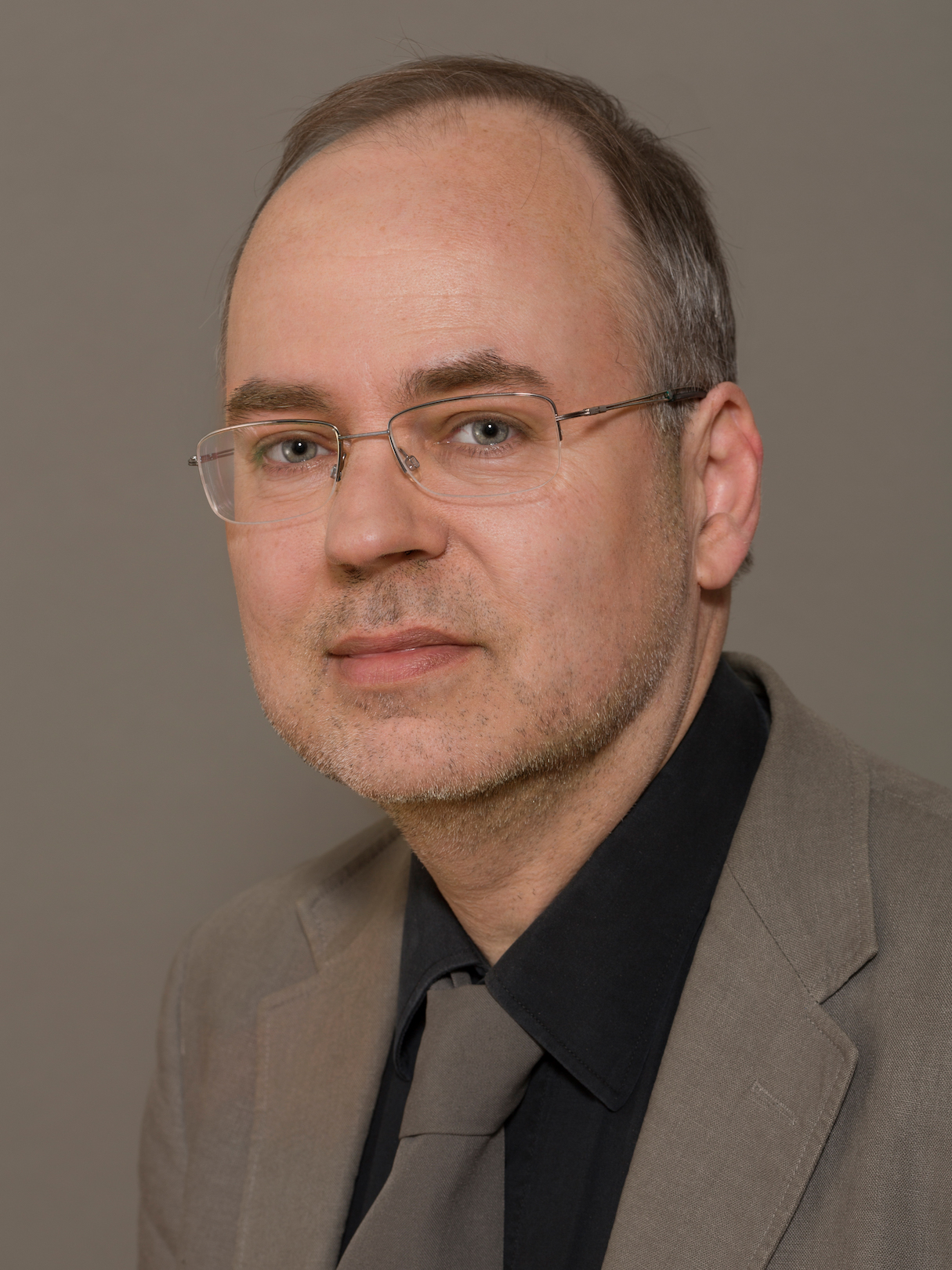
Gábor Bodnár is a Professor at the Institute of Arts Communication and Music , Eötvös Loránd University (ELTE) , where he serves as Head of the Department of Music Culture. His work bridges music pedagogy, creative education, and interdisciplinary studies. Academic Focus : Music education, creative teaching methods, and the integration of formal and non-formal education. Research Themes : Application of the Kodály concept in global teacher training, translation theory in musical contexts, and the interplay between text and music in art song repertoires. Publications : Recent works explore Aldous Huxley's musical ideas, Schumann's Dichterliebe revisions, and innovative pedagogical frameworks for music educators. Professional Impact : Bodnár has developed postgraduate programs emphasizing talent care and Kodály principles, influencing music education curricula and assessment systems in Hungary and beyond.
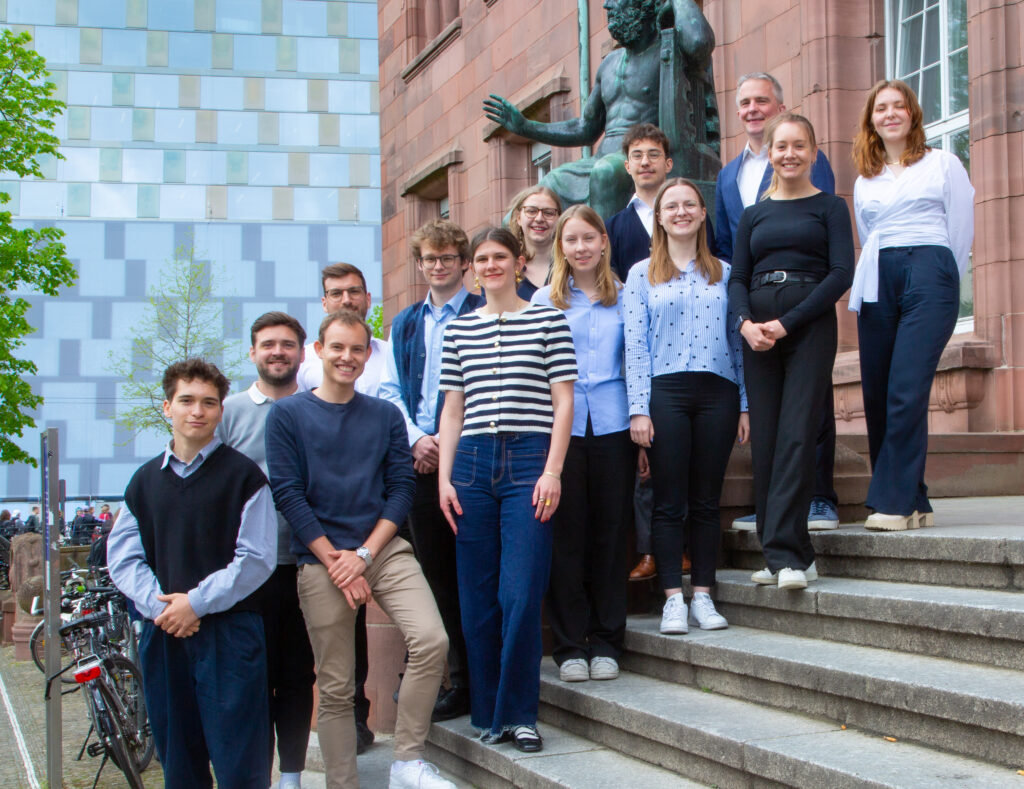
Jan Henrik Klement is a University Professor and Dean of Studies at the Faculty of Law, University of Freiburg, where he has been teaching and researching since August 2021. He serves as Director of Department 3 at the Institute for German, European and International Public Law. Since October 2022, he has held the position of Dean of Studies at the Faculty of Law. In addition to his academic work, since March 2020, he serves as a part-time judge at the Administrative Court of Baden-Württemberg with jurisdiction over waste law. Albert Ludwig University of Freiburg (2021-present): University Professor University of Mannheim (2018-2021): Professor of Public Law, Commercial Law, Information Law and Legal Economics Saarland University (2013-2018): University Professor (W3) of Constitutional and Administrative Law Professor Klement and his team research public law in all its breadth and depth, with particular focus on German and European administrative law (especially environmental law, public economic law, and information law) as well as constitutional law (especially fundamental rights). Closely linked to this is fundamental legal research in the fields of legal theory and methodology. In teaching, he offers courses in German, European and International Public Law, Media and Information Law, and Philosophical and Theoretical Foundations of Law. His scholarly output demonstrates a consistent engagement with the intersection of legal theory, constitutional principles, and practical regulatory challenges, particularly in environmental and economic domains. The publications show progression from foundational work on legal responsibility to sophisticated analyses of European integration, digital governance, and sustainable development frameworks. Professor Klement holds significant academic governance positions including membership in the Standing Committee of the German Association of Law Faculties (since 2021, Deputy Chairman since 2024), the Board of Directors of the Internal Accreditation Committee of the University of Freiburg (since 2023), and serves as Liaison Lecturer of the Konrad Adenauer Foundation (since 2022). His educational background includes studies at Justus Liebig University of Giessen (First State Examination 2002), a doctorate from the same institution in 2006, and habilitation at Heidelberg University in 2013. Prior to his academic career, he worked as a freelance journalist for major German newspapers from 1993-2003.
Sari Graben serves as Professor and Associate Dean of Research & Graduate Studies at Toronto Metropolitan University's Lincoln Alexander School of Law, where she provides strategic research leadership and directs the Professional Development Program. She previously held positions as counsel at a national law firm, adjunct faculty at Queen's University, and associate professor at Ted Rogers School of Management. Education PhD from York University (2010) LLM from Queen's University (2004) LLB from Dalhousie University (2000) BA from York University (1996) Research Focus Her research examines Indigenous governance frameworks through interdisciplinary lenses, focusing on regulatory institutions, emergent property systems, and risk assessment. She specializes in how legal structures impact Indigenous communities in resource development contexts, with particular attention to gender equity in environmental negotiations and the evolution of Indigenous administrative law. Recent publications demonstrate growing emphasis on legal education transformation, including technology integration and cultural competency training. Her scholarship consistently intersects Indigenous rights with environmental governance, treaty implementation, and comparative institutional analysis. Awards & Recognition President’s Blue and Gold Award for Staff Excellence (2020) Dean’s Scholarly Research and Creativity Award (2015) Best Paper Award, Canadian Academy of Legal Studies (2018) Fulbright Visiting Research Chair (University of Washington) SSHRC Postdoctoral Fellowship (UC Berkeley) Queen’s University Arctic Policy Fellowship Leadership & Grants Graben leads multiple SSHRC-funded initiatives including research on Indigenous financial inclusion and Impact Benefit Agreement gender analysis. As Associate Dean, she oversees graduate program development and mentors emerging scholars. She directs the law school's Professional Development Program, creating training frameworks for legal practitioners across diverse communities.
Peter Halewood is a Professor in the Department of Law and Business at Toronto Metropolitan University's Ted Rogers School of Management. His extensive career includes previous positions as Professor of Law at Albany Law School (2001-2018), where he held the Gov. George E. Pataki Distinguished Professorship (2018-2020). He has been a visiting professor at Osgoode Hall Law School and University of Paris X, and a visiting scholar at University of Rome Tre Faculty of Law. His professional background includes litigation work in Toronto, clerkship at the Court of Appeal for Ontario, and consultancy for international organizations including the International Development Law Organization. Education LLM, Columbia University (1993) LLB, University of British Columbia (1990) MA, McGill University (1987) BA, University of Toronto (1985) Research Focus Halewood's scholarship intersects legal theory with social justice, examining how law perpetuates or challenges systemic inequalities. His work spans international economic law, human rights frameworks, food security policy, and the racial dynamics of legal institutions. He actively investigates how neoliberal policies impact academic freedom, campus activism, and educational equity, with recent work focusing on anti-subordination norms within university structures. Publication Trends His articles demonstrate evolving focus from foundational property law and commodification studies (2008-2011) toward critical examinations of racial justice in voting rights and citizenship (2012-2015). Recent scholarship (2016-2020) addresses campus activism, free speech debates, and the intersection of trade law with human rights. Methodologically, he employs critical race theory, political economy analysis, and comparative legal frameworks across jurisdictions. Honors & Awards Gov. George E. Pataki Distinguished Professorship (Albany Law School, 2018-2020) Professional Leadership Halewood has chaired the AALS Section on International Human Rights and serves on the Executive Committee of the AALS Section on Law in the Americas. He has directed transnational academic programs including the Tulane-Albany summer program at McGill Faculty of Law and developed USAID-funded training on trade law and economic rights for professionals in Kenya, Uganda, and Mozambique. He remains admitted to practice law in New York State.
Mariola Marczak, PhD, DSc is a Professor at the Department of Media Research , Institute of Journalism and Social Communication of the University of Warmia and Mazury in Olsztyn . A scholar of international acclaim, her research focuses on media and audiovisual arts through aesthetic, ethical, metaphysical, religious, and communication lenses . She contributes to the "Media–Culture–Social Communication" journal and has supervised 1 doctoral student while mentoring 1 researcher under supervision. ORCID: 0000-0002-5970-6492 Personal website: Profile Email: mariola.marczak@uwm.edu.pl Her research spans Polish and international reception of Krzysztof Zanussi's work , communication potential of audiovisual messages , and empirical studies on media . She has contributed to understanding religious and metaphysical narratives in Polish cinema and the cultural competence of the Church in visual arts . Her work includes analysis of hagiographic film structures , contemporary women's freedom in Cannes films , and Shakespearean adaptations as interpretative frameworks. She emphasizes securing research funds through grant projects for doctoral supervision and infrastructure needs.
Hyunjae Park is a Research Professor in the Department of Mechanical Engineering at Marquette University College of Engineering . His work bridges energy conversion systems with educational innovation in engineering pedagogy. Ph.D., 1992, Mechanical Engineering, University of California at Los Angeles M.S., 1983, Mechanical Engineering, Yonsei University, Korea B.S., 1981, Mechanical Engineering, Han Yang University, Korea Dr. Park specializes in thermal analysis of energy systems , including computational fluid dynamics (CFD) modeling of coiled tube systems, heat exchangers, and printed circuit board cooling. His educational research focuses on integrating entrepreneurial mindset development in freshman engineering courses through problem-solving and design challenges. Recent publications highlight his dual expertise: Engineering Computing with MATLAB editions (2020, 2018, 2017) and Freshman Discovery Course papers spanning 2014-2020. These demonstrate his commitment to engineering education reform and technical software tools while maintaining research in thermal systems optimization .
John Kim is an Associate Professor at Emory University's Goizueta Business School, specializing in Organization & Management. He teaches 500+ business school students annually across BBA, MBA, and Executive Education programs, focusing on strategy, consulting, and healthcare. His work bridges academic theory with practical tools for sustainable organizational change. Education: MBA in Strategy and Management Consulting from Emory University; BA in Economics from the University of Southern California. His research interests center on consulting fundamentals , including client decision-making processes, project implementation frameworks, and professional development in management consulting. He emphasizes actionable methodologies over jargon, prioritizing clarity for diverse audiences. Recent publications highlight his book Consulting Fundamentals , which distills decades of consulting practice into accessible tools. The work addresses topics like client interviewing techniques, proposal writing, and consulting design principles, reflecting his expertise in translating executive challenges into structured educational content. Kim actively engages with students through Coursera's Management Consulting specialization and maintains the #1 Google-ranked consulting blog at ConsultantsMind.com .
Karin M Best serves as an Assistant Adjunct Professor in the Department of Psychiatry and Biobehavioral Sciences at the David Geffen School of Medicine, University of California, Los Angeles (UCLA). Her academic career spans nearly two decades with consistent scholarly output from 2004 through 2022, demonstrating sustained engagement in child and adolescent psychiatric research and education. Dr. Best's research program focuses on critical areas in psychiatric medicine with particular emphasis on child and adolescent populations. Her work spans several interconnected domains: psychotherapy competencies and training models (particularly the MAP Curriculum); mental health service delivery for children with autism spectrum disorder; neurobiological aspects of developmental disorders like ADHD; and interventions for vulnerable populations including HIV-affected families. Her research consistently bridges clinical practice and academic scholarship, with strong emphasis on evidence-based approaches and practical implementation in real-world settings. Analysis of Dr. Best's publication history reveals an evolving research trajectory that maintains consistent focus on improving mental health outcomes for children and adolescents. Her recent work (2021-2022) emphasizes curriculum development for psychotherapy training and implementation science in community mental health settings. Earlier work (2012-2014) examined HIV-affected families and medical education models, while her foundational research (2004) investigated long-term outcomes of adolescent psychiatric hospitalization. Across her career, she has maintained focus on translating research into practice while addressing the needs of vulnerable pediatric populations. Dr. Best maintains an extensive collaborative network across the University of California system, with significant co-authorship ties to researchers at UCSD (particularly Lauren Brookman-Frazee), UCLA colleagues including Shantanu Joshi and Sheryl Kataoka Endo, and USC researchers like Eric Rice. Her work has demonstrated practical impact beyond academia, with one publication referenced in policy sources and multiple papers garnering substantial academic readership on platforms like Mendeley. Her research activities appear integrated with broader initiatives at UCLA's Semel Institute for Neuroscience and Human Behavior, though specific lab affiliations aren't explicitly detailed in the available information. Her work contributes to ongoing efforts to improve mental health service delivery systems, particularly for children and families facing complex challenges including developmental disorders and chronic health conditions.
Daniel Bernal Serrano is an Adjunct Researcher at the School of Social Sciences and Government, Tecnológico de Monterrey, specializing in public health policy and government systems with a regional focus on Mexico and Latin America. His work bridges clinical medicine, health systems analysis, and social determinants of health. Education: Specialty in Internal Medicine, Universidad Nacional Autónoma de México MSc Health Policy, Planning and Financing, University of London Master of Science, University of London Master's Degree in Humanistic Studies, Programas en Línea Surgeon, Tecnológico de Monterrey Research Interests: Dr. Bernal-Serrano's work centers on health policy evaluation , obesity epidemiology , and pandemic response systems . He investigates government interventions in Mexican public health, particularly childhood obesity trends, rural maternal care experiences, and community-led pandemic measures. His research integrates structural competency frameworks and examines digital health information ecosystems. Publication Trends: His 2020-2025 publications reveal consistent focus on Mexican health systems through mixed-methods studies. Key themes include obesity policy impacts (40% of output), pandemic response innovations (30%), and health equity gaps in Latin America (20%). He frequently publishes in The Lancet family and BMC journals using systematic reviews, qualitative analysis, and interrupted time series methodologies. Scientific Awards: Mexican Researcher Certification - Candidate Advising and Grants: No student advisement or grant information was disclosed in source materials. His research demonstrates institutional collaboration with Mexican public health agencies and international consortia. Labs and Teams: Expertise aligns with UN Sustainable Development Goals initiatives (SDG 3, 9, 1, 10) but specific research teams or laboratories were not referenced.
Professor Aileen Bell currently serves as Head of the Dental School and Professor of Oral Surgery and Dental Education at the University of Glasgow, positions she has held since 2021. She leads the Glasgow Dental School within the School of Medicine, Dentistry & Nursing, overseeing dental education programs and research initiatives. Her academic career at Glasgow spans over three decades, beginning with her PhD research in 1990 and progressing through clinical training to her current leadership roles. Professor Bell's educational background includes: BSc with Honours First Class in Biology, University of Stirling (1990) PhD in Effects of Alcohol on Rat Lingual Epithelium, University of Glasgow (1993) BDS with Honours, University of Glasgow (1998) - Most Distinguished Graduate Postgraduate Certificate in Academic Practice, University of Glasgow (2007) Certificate of Completion of Specialist Training in Oral Surgery (2008) Professor Bell's research focuses on two primary areas: Educational Research and Three Dimensional Imaging. She has pioneered work in digital and blended learning approaches in dental education, particularly through the innovative use of 3D visualization technologies. Her work with the Community in Dental Research and Scholarship at Glasgow Dental School has significantly influenced modern dental pedagogy. She has a special interest in 3D Imaging and Digital Technology as educational tools, building on her earlier work with the £1.5 million NHS Education for Scotland Funded project on 2D and 3D Visualisation Supporting Interactive Dental Education. Analysis of Professor Bell's recent publications reveals a strong emphasis on educational innovation, particularly in response to the challenges of the COVID-19 pandemic. Her work demonstrates a clear trajectory toward digital transformation in dental education, with significant contributions to virtual assessment methods, blended learning models, and technology-enhanced teaching approaches. There is also a consistent thread of research connecting her clinical expertise in oral surgery with educational applications of 3D imaging technology, particularly in the context of cleft lip and palate surgery outcomes. Professor Bell has received numerous professional recognitions: Most Distinguished Graduate for 1998, University of Glasgow Dean Webster Prize Lord Provost's Prize for highest marks in Dental School Examinations T.C. White Medal for outstanding performance in MFDS examination Fellow of the Higher Education Academy Fellow of the International Team for Implantology (2015) As an educational leader, Professor Bell has served as Director of Dental Education since 2012, Deputy Director of Dental Education prior to that, and currently as Head of the Dental School. She chairs the Intercollegiate Specialty Fellowship Examination in Oral Surgery and serves as Training Programme Director for Specialty Training in Oral Surgery in the West of Scotland. Her grant portfolio includes significant funding, notably a £1.5 million NHS Education for Scotland project on 3D visualization for dental education and an educational grant from a major Dental Implant company for teaching implantology to undergraduates since 2012. Professor Bell leads and collaborates with multiple interdisciplinary teams, including the Community in Dental Research and Scholarship at Glasgow Dental School and the Association of British Academic Oral and Maxillofacial Surgeons National Education Group. Her work has involved collaborations with Computing Science, Clinical Psychology, Statistics, and Plastic Surgery departments on applications of 3D imaging in facial trauma and cleft lip/palate surgery outcomes. She is currently exploring digitally guided surgery and robotics as both clinical and educational tools.
Declan Phillips is an Associate Professor at the School of Engineering, University of Limerick (UL). He has been with UL since 2005, serving as the inaugural course director for civil engineering and construction management programmes. His academic roles include designing UL’s civil engineering programme, which emphasizes Problem-Based Learning (PBL), flipped learning, and case-based instruction. Phillips holds a BSc (Eng) from DIT/TCD (1989), an MSc and PhD from Trinity College Dublin (1995, 2002), and is a licensed Professional Engineer in Pennsylvania and Chartered Engineer with Engineers Ireland. He advocates student-centered education and has received a regional Teaching Excellence Award (2008). Research focuses on geotechnical engineering (soil mechanics, instrumentation, forensic engineering), sustainable materials (recycled municipal waste applications), and innovative education methods. He has supervised IRCSET and IRC-funded projects on flood defenses and waste reuse. Phillips chairs ISSMGE’s Geo-Education Committee (TC306) and edits journals for the American Society of Civil Engineers. His scholarly contributions span geotechnical pedagogy, forensic engineering education, and PBL implementation. Notable works include studies on student understanding of effective stress, forensic engineering moot courts, and integrating life cycle assessment into curricula. He actively participates in international engineering education conferences and initiatives.
Prof. Ulrike Barth holds the Professorship for Transformative and Inclusive Education at Alanus University's Institute for Waldorf Education, Inclusion and Interculturality. She previously served as Junior Professor for Special Needs and Inclusion Education (2019-2024) and Deputy Professor for Special and Inclusive Education (2016-2019). Her career includes teaching roles at the Freie Waldorfschule Kreuzberg since 1995 and doctoral work at TU Berlin (2008). Her research focuses on inclusive institutional development, phenomenological methodologies using perceptual vignettes, and inclusive didactics. Key projects include the 'BaSiG' initiative exploring anthroposophical communities' inclusive practices and the 'waldorflernt' digital education platform. She co-leads the 'Inclusive Volunteering as Employment Bridge' project promoting workforce integration for people with disabilities. Publications emphasize inclusive education frameworks, perceptual vignette methodology, and Waldorf pedagogy modernization. She collaborates with organizations like Anthropoi Bundesverband and Aktion Mensch Stiftung. Her work addresses child protection, hybrid learning models, and inclusive curriculum design across diverse educational contexts.
Lars Magne Lundheim is a Professor at the Department of Electronic Systems at Norwegian University of Science and Technology (NTNU). He holds an MSc and PhD in electrical engineering from NTNU. His career includes roles as Associate Professor (2002–2010), Research Scientist at SINTEF, and part-time academic positions. He belongs to the Signal Processing Group and focuses on signal processing for radar systems, power consumption optimization, and engineering education. His research spans technical domains like multicarrier communication systems and pedagogical innovations such as project-based learning and curriculum design. Notable contributions include work on sustainability integration in STEM education and competency development through active learning strategies. Lundheim is a Senior Member of IEEE and has reviewed for major journals/conferences including IEEE Transactions on Signal Processing. Recent publications emphasize educational frameworks linking mathematics with engineering practice, while earlier works address technical challenges in radar distortion correction and power-efficient multiplier design. He has contributed to 16 PhD examination committees and teaches courses like TTT4270 (Electronic System Design) and TTT4260 (Electronic System Design and Analysis). Lundheim’s outreach includes presenting at events like the Læringsfestivalen and collaborating on national initiatives like the 'Fremtidens teknologistudier' educational strategy report. His interdisciplinary work bridges technical innovation with pedagogical excellence in electrical engineering education.
Dr. Amira Aftab is a Senior Lecturer at Macquarie Law School, specializing in gendered institutions, domestic violence, and human rights. She holds a PhD in Law from Macquarie University (2018), focusing on Sharia debates in Australia, Canada, and the UK. Prior to Macquarie, she was a Lecturer/Senior Lecturer at Western Sydney University (2020–2024). Her research addresses marginalized communities, particularly examining family law, gendered violence, and intersections of gender, religion, and culture. Current projects include analyzing pandemic impacts on domestic violence services and barriers faced by visa holders experiencing violence. She co-leads the James Martin Institute-funded project on CALD/faith-based communities and chairs the Women and Girls’ Rights Subcommittee for Australian Lawyers for Human Rights. Key areas of focus include Muslim women’s experiences, legal reform, and culturally sensitive dispute resolution. Her work combines feminist institutionalism with interdisciplinary approaches to promote equity in legal systems.
Professor Keith Townsend is a Professor of Employment Relations and Human Resources at Griffith University's Department of Management within the Business School. He holds a PhD and B.Commerce (1st Class Honours) from Griffith University. His research focuses on frontline management, employee voice mechanisms, human resource management systems, and workplace well-being, with particular attention to mental health in high-risk industries like construction and emergency services. Education: PhD in Management, Griffith University (2005) B.Commerce (1st Class Honours), Griffith University Research Interests: Frontline manager roles and leadership challenges Employee voice and organizational communication HRM system implementation and effectiveness Mental health and well-being in construction/emergency sectors Flexible work arrangements and telework dynamics Funded Research Highlights: ARC Discovery Project (2023-2026): Re-Theorising Employee Voice in Times of Change ARC Linkage Project (2016-2021): Improving People Management Systems in Emergency Services MATES in Construction Consultancies: Mental health programs and suicide prevention strategies Advising & Grants: Supervised over 10 doctoral students focusing on HRM implementation, frontline management, and workplace well-being Total grant funding exceeding $1.2M AUD from ARC, industry partners, and government bodies Labs/Teams: Active member of Griffith's Centre for Work, Organisation and Wellbeing, collaborating on projects addressing psychosocial hazards, construction industry mental health, and emergency services HRM challenges.