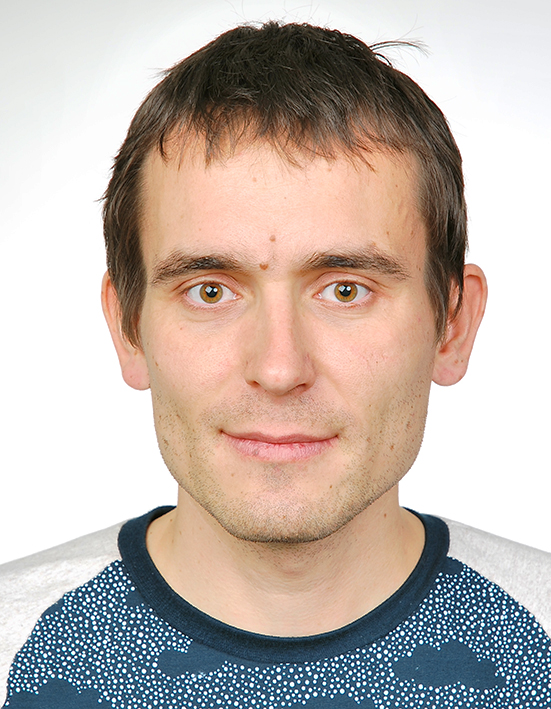
Oldrich Rakovec is a Researcher at the Department of Computational Hydrosystems (Helmholtz Centre for Environmental Research - UFZ, Germany). His work focuses on hydrological modeling , climate change impacts , drought analysis , and flood forecasting using the Mesoscale Hydrologic Model (mHM) . Key collaborations: NCAR (USA), Czech University of Life Sciences Prague, Kansas University, Bocconi University Research Interests : Parameter regionalization in large basins Paleo-hydrology and continental water cycles Model sensitivity analysis and uncertainty quantification Flood impact assessments Climate change effects on water resources Article Trends : His recent publications (2021-2025) emphasize climate change impacts on droughts/floods, global hydrological modeling , data assimilation , and multi-model intercomparison . Notable work includes drought monitoring tools for South Asia, flood counterfactuals for disaster preparedness, and high-resolution soil moisture datasets . Scientific Awards : ASCE-EWRI 2023 Best Case Study Award Education : PhD in Hydrology (Wageningen University, 2014), MSc in Hydrology and Water Quality (Wageningen), MSc in Environmental Modeling (Czech University of Life Sciences Prague).
Dr. Richard Dallison is a Lecturer in the School of Environmental and Natural Sciences at Bangor University, where he contributes to teaching and research in environmental systems, climate change, and sustainable resource management. His academic journey includes a PhD in Geography from Bangor University (2021) and a BSc in Geography with International Experience from the same institution (2016). His research focuses on the impacts of future climate change on hydrological regimes and water-energy nexuses, particularly in the context of hydropower generation and public water supply across Great Britain and Ireland. He employs advanced modeling tools such as the Soil and Water Assessment Tool (SWAT) to assess streamflow, water quality, and resource availability under various climate scenarios. His work extends to transdisciplinary sustainability initiatives and innovative applications of virtual reality in geography education. The recent publication trends reflect a strong emphasis on climate change impacts on renewable energy systems, water resource sustainability, and digital innovations in fieldwork. His research bridges environmental science, policy, and education, with a consistent focus on practical solutions for climate adaptation and sustainable development. Fellow of the Higher Education Academy Member of the European Geosciences Union Member of the American Geophysical Union Dr. Dallison actively supervises student research projects at undergraduate and postgraduate levels, including dissertations in renewable energy, catchment modeling, and environmental management. He is involved in knowledge exchange through public engagement, such as interviews with BBC Radio Wales on climate and hydropower, and consultancy for community flood risk groups. He also contributes to academic conferences and workshops globally, particularly in hydrology and sustainability science. His additional role as SENS Welcome Week Coordinator highlights his commitment to student integration and academic community building.
Professor Prysor Williams is a faculty member at Bangor University, serving in the School of Environmental and Natural Sciences. He holds the academic rank of Professor in Agriculture and Environment and is actively involved in research, teaching, and policy advisory roles. His work bridges academic inquiry with practical farming, informed by his lifelong experience on an upland livestock farm. Research Interests: His research focuses on sustainable livestock systems, with emphasis on achieving Net Zero greenhouse gas emissions, managing organic resources like slurry and manure, understanding soil health, antibiotic resistance, and land use policy. He explores sustainable intensification and the provision of public goods through agriculture. His interdisciplinary work extends to the water-energy nexus, including energy efficiency in distilleries and leisure centres, and small-scale hydropower. Publication Trends: His recent articles reflect a strong focus on climate-smart agriculture, life cycle assessment, circular economy in food systems, and environmental monitoring. Key themes include carbon footprinting of livestock, nutrient management, heat recovery, and ecosystem services. His work often involves transdisciplinary collaboration and policy-relevant outcomes. Scientific Awards: 2023 External Award from the Welsh Farmers' Union for "services to agriculture" Advising and Grants: He supervises PhD and MRes students and has led multiple research projects funded by KESS, Hybu Cig Cymru, and EU Interreg programmes. Notable projects include Dŵr Uisce (water-energy nexus), Hydro-BPT (hydropower), and Land Use for Net Zero – Hub (LUNZ-Hub). He has served as Principal Investigator on numerous grants focusing on agricultural sustainability, carbon footprinting, and resource efficiency. Labs and Teams: He is a key member of the Global Farm Platform group and collaborates with the Centre for Ecology & Hydrology. His work involves close partnerships with Farming Connect, Hybu Cig Cymru, and the NFU Net Zero Scientific Advisory Panel, integrating research with industry and policy.
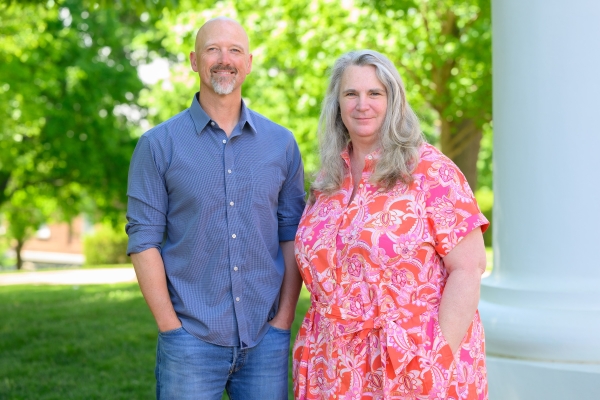
Robert Humston is a Professor of Biology and the John Kyle Spencer Director of Environmental Studies at Washington and Lee University. He has been a faculty member since 2008 and is actively engaged in research focused on Virginia watersheds and aquatic ecosystems. Humston serves as a Faculty Athletic Mentor for the men’s wrestling team, bridging academic and athletic cultures through mentorship. Bachelor's in Biology and English from Bowdoin College Doctorate in Marine Biology and Fisheries from University of Miami’s Rosenstiel School His recent research involves a two-phase study of the Jackson River trout population decline, collaborating with state agencies and student researchers to assess environmental factors like temperature, streamflow, and dam impacts. Humston emphasizes a holistic approach to student-athlete mentorship, highlighting the importance of visible support and engagement.
John Koehn is a research-active academic at Charles Sturt University, contributing significantly to freshwater fish ecology and conservation biology in Australia. His work focuses on native species protection, invasive carp impacts, and water management effects on aquatic ecosystems. Research Interests: His expertise spans Freshwater Ecology , Conservation Biology , Fish Biology , Invasive Species Management , and Population Modeling . He investigates how environmental changes affect riverine fish, particularly in the Murray–Darling Basin. Publication Trends: Recent articles (2023–2025) emphasize ecological modeling, spatial distribution analysis, and conservation policy. Key themes include metapopulation dynamics, carp impact assessment, and lifetime growth modeling of mobile fish species. Scientific Awards: Australia Day Honours: Public Service Medal (2021) Hall of Fame membership (2020) Advising and Grants: While no formal students are listed, he collaborates widely across institutions and contributes to major research initiatives. His work is supported by datasets and collaborative projects, indicating involvement in funded research, though specific grants are not detailed. Labs and Teams: He is part of a broad research network in Australian freshwater science, collaborating with experts in ecology, hydrology, and conservation. His work is associated with large-scale datasets and multi-institutional studies, reflecting team-based, policy-relevant environmental research.
Evelyn Uuemaa is a Professor of Geoinformatics at the University of Tartu's Institute of Ecology and Earth Sciences, where she also served as Head of the Department of Geography (2020–2023). Her research focuses on geospatial data management, environmental modeling, and remote sensing applications. She holds a Doctorate in Landscape Ecology and Environmental Protection (2007) and has extensive experience in EU-funded projects, including Marie Curie fellowships. Uuemaa's work emphasizes machine learning for environmental spatial data and integrates remote sensing with socio-economic analysis. She leads the Landscape Geoinformatics Lab and contributes to national sustainability initiatives, such as Estonia's ecosystem service valuation projects. Her teaching includes geoinformatics fundamentals, spatial analysis, and Python/R geoprocessing. Education: PhD in Landscape Ecology (2007), MSc in Geoinformatics (2004), BSc in Physical Geography (2003). Awards: 2022 Best Lecturer, Marie Curie Fellowship (2015), Estonian Academy Prize (2004). Administrative Roles: Member of University Senate, Estonian Geoinformatics Society Board, and AGILE Council. Publications: Over 90 articles on remote sensing, hydrological modeling, and geospatial techniques, including high-impact journals like Remote Sensing of Environment and Ecological Informatics.
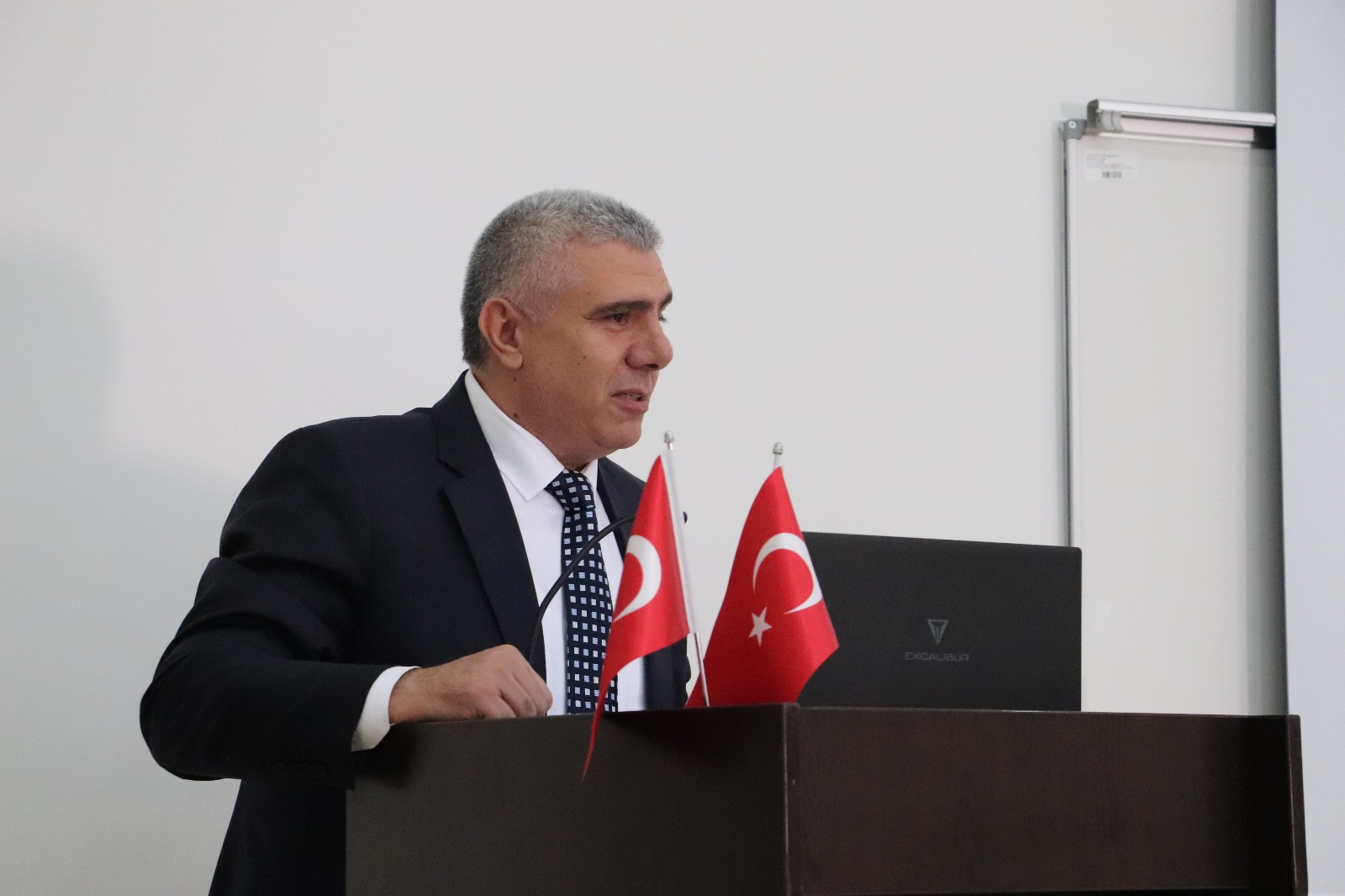
Prof. Dr. Mehmet Özger is a faculty member at the Civil Engineering Department of Istanbul Technical University . His research focuses on Hydrology , Coastal Sciences and Engineering , and Water Resources and Water Structures . PhD in Water Engineering (2003) MSc in Hydroelectronics (2001) BSc in Civil Engineering (1999) His work spans climate change impacts , urban water systems , groundwater management , and coastal engineering . He leads major projects on managed aquifer recharge , stormwater modeling , and flood risk assessment in Istanbul. Recent publications emphasize machine learning applications in hydrology, multi-criteria decision frameworks for water resource planning, and GIS-based vulnerability assessments . He has supervised 23 theses and contributed to technical reports on Turkish Straits hydrodynamics and urban drainage systems . Prof. Özger serves as Principal Investigator (PI) for projects like Online Drought Monitoring Model (2021-2023) and Seismic Infrastructure Damage Model (2023-2024). His research group uses hybrid models combining discrete wavelet decomposition , genetic programming , and stochastic gradient boosting for water-climate interactions. He directs the Hydraulics Laboratory at ITU Ayazağa Campus and teaches graduate courses in Computational Hydraulics and Water Resources Systems .
Rosemary Carroll is a Research Professor in Hydrology at the Desert Research Institute (DRI), where she contributes to the Graduate Program of Hydrologic Sciences. Her work focuses on understanding complex water systems, particularly in mountainous and snow-dominated regions of the western United States. Dr. Carroll's educational background includes: Ph.D. in Hydrology from the University of Nevada, Reno (2010) M.S. in Hydrology from the University of Nevada, Reno (1999) B.S. in Physics from Bates College, Lewiston, Maine (1989) Dr. Carroll's research spans multiple dimensions of hydrological science, with particular expertise in groundwater-surface water interactions and integrated watershed modeling . Her work addresses critical challenges in water resources management through: Numerical modeling of groundwater and surface water interactions Application of MODFLOW and MODSIM for water rights transfers Investigating climate impacts on mercury transport and bioaccumulation Developing integrated models to understand climate-vegetation-hydrology linkages Incorporating remote sensing data into hydrological model evaluation Using stable isotope techniques to trace water sources and pathways Her research emphasizes snow-dominated headwater systems and agricultural hydrology , with growing attention to the implications of climate change for water security in the western United States. Analysis of Dr. Carroll's recent publications (2023-2025) reveals several key trends: Increasing focus on groundwater dynamics in mountain systems as climate buffers Development of novel isotope techniques for understanding water sourcing and age Examination of how declining snowpack affects streamflow and water availability Integration of physical hydrology with ecological and social dimensions Application of advanced modeling approaches to address water resource challenges Dr. Carroll actively collaborates with researchers across multiple institutions through the Watershed Function Science Focus Area, contributing significantly to our understanding of mountain hydrology and informing water management decisions in snow-dependent regions.
Sudeep Chandra is Professor of Limnology in the Department of Biology at the University of Nevada, Reno. He directs the Global Water Center: Solutions for Sustainability and the Ozmen Institute for Global Studies, and previously co-directed the Lake Tahoe Science Advisory Council. As director of the Castle Lake Environmental Research Station (founded 1959), he oversees the longest-running mountain lake science program in the Americas, guiding research on environmental changes in aquatic ecosystems. Ph.D., University of California, Davis (2003) B.S., University of California, Davis (1996) Acting coDirector, Interdisciplinary Graduate Program in Hydrologic Sciences (2016-18) Chandra’s research program integrates limnology , ecosystem ecology , and environmental policy to address human-induced perturbations such as invasive species, climate change, and water management. He pioneered international collaborations with Mongolia, Russia, Guatemala, and the Lower Mekong River Basin, focusing on science-based solutions for sustaining aquatic livelihoods and biodiversity. His work spans climate change impacts on alpine lakes, plastic pollution in rivers, and dams as threats to freshwater megafauna. Recent publications highlight interdisciplinary approaches to freshwater risk assessment under climate change, with emphasis on metabolic responses to wildfire smoke, hydrogeomorphic drivers of fish assemblages, and plastisphere effects on river productivity. His Castle Lake dataset (60+ years) and Mekong fisheries studies exemplify long-term ecological inquiry. American Fisheries Society California-Nevada Chapters Award of Excellence Tahoe-Baikal Institute Alumni of the Year University of Nevada Teacher of the Year Mad Hatter’s Award (Interdisciplinary Graduate Program in Hydrologic Sciences) Mousel-Feltner Award for Excellence in Research and Creativity Activity (2022) Chandra’s lab trains students in freshwater ecology and management, including invasive species control via UV light and eDNA detection . He advocates for cross-sector collaborations to protect Lake Tahoe and co-led the Unidos por El Lago Atitan project in Guatemala, now expanding regionally through the Inter-American Institute. His Wonders of the Mekong project addresses dam development and food security for 60 million people.
Dr. Han Feng is a Research Associate Professor at the School of Environmental Science and Engineering, Southern University of Science and Technology, collaborating with Professor Yi Zheng. He has been with the institution since 2015, progressing from Post-doctoral Research Fellow (2015-2018) to Research Assistant Professor (2018-2021), and currently holds his present position since 2021. His educational background includes a Ph.D. in Mechanics (Energy and Resources Engineering) from Peking University (2008-2015) and a Bachelor's degree in Theoretical and Applied Mechanics from the same institution (2004-2008). Dr. Han specializes in eco-hydrological and water environmental simulation, with research focusing on numerical simulation of hydrological processes, ecological processes, and water quality processes at watershed scale . His work encompasses development of new computational models, exploration of efficient model-data fusion methods, and investigation into coupling paradigms of deep learning and process-based models. His expertise spans eco-hydrological modeling, non-point source pollution simulation, data assimilation, uncertainty analysis, and machine learning applications in environmental systems. His publication record demonstrates significant contributions to the field, with over 40 papers including 38 SCI-indexed articles in top journals such as Water Research, Water Resources Research, and Journal of Hydrology. His recent work shows a clear trend toward integrating artificial intelligence with traditional hydrological modeling, particularly in applying physics-encoded deep learning to distributed hydrological modeling and using Bayesian approaches for assimilating sensor data in water quality modeling. National Natural Science Foundation of China青年科学基金 project (41807164) as PI (2019-2021) NSFC-CONICYT International Cooperation project (5191101522) as main participant (2020-2024) Chinese Academy of Sciences Strategic Priority Research Program (XDA20100104) as main participant (2018-2023) Shenzhen Municipal Engineering Lab of Environmental IoT Technologies as key member (2018-2020) China Postdoctoral Science Foundation project (2017M612505) as PI (2017-2018) As one of the main developers of the three-dimensional distributed eco-hydrological model HEIFLOW (Hydrological-Ecological Integrated watershed-scale FLOW), Dr. Han's research has been applied across diverse geographical contexts including the Heihe River Basin, Pearl River Basin, Luanhe River Basin, Miho Basin (South Korea), Skjern Basin (Denmark), and San Joaquin Basin (United States).
Dennis Newell is a Professor and Interim Department Head in the Department of Geosciences at Utah State University. His work bridges multiple disciplines within earth sciences, focusing on the intersection of geochemistry, tectonics, and fluid dynamics. His research group maintains active collaborations with institutions across the United States and internationally, particularly in field sites throughout the Andes and western North America. Dr. Newell earned his PhD in Earth and Planetary Sciences from the University of New Mexico in 2007, following an MS in Geology from Colorado State University (1997) and a BS in Geology from New Mexico Institute of Mining and Technology (1992). His educational background provided the foundation for his interdisciplinary approach to earth system science. His research interests focus on field-oriented aqueous and stable isotope geochemistry to interrogate the origins and history of geofluids in continents, fluid-flow in faults with connections to the earthquake cycle, and fluid-rock-biosphere interactions. His work addresses fundamental questions in continental tectonics, low-temperature geochemistry, and applied problems in energy and environmental geosciences. A common theme across his research portfolio is the integration of multiple geochemical and isotopic tools along with an interdisciplinary approach to interpret the composition, temperature, and provenance of modern and ancient fluids in the crust. Analysis of his recent publications reveals a strong emphasis on the connections between deep earth processes and surface expressions, particularly examining fluid flow in tectonically active regions. His work spans diverse settings from the Denali Fault in Alaska to the Peruvian Andes and western North America, with particular focus on how tectonic processes influence fluid circulation, geochemical signatures, and even microbial communities in hot spring systems. His research increasingly incorporates interdisciplinary approaches, including collaborations with hydrologists and computer scientists for advanced modeling of complex earth systems. Dr. Newell has mentored numerous graduate students through completion of their degrees, with recent graduates including Coleman Hiett (2023), Heather Upin (2020), Ashley Provow (2019), Brandt Scott (2019), and Jace Koger (2017), among others. His research has been supported by multiple grants that have enabled extensive field work, laboratory analyses, and student training opportunities. He directs the Stable Isotope Lab at Utah State University, which serves as the central analytical facility for his research group's work on fluid-rock interactions. The lab supports ongoing projects examining volatile cycling in subduction zones, fluid flow in fault systems, and the geochemical signatures of geothermal systems. His team frequently conducts field work in challenging environments, from high-altitude Andean sites to active fault zones in western North America.
Mehmet İshak Yüce is a Professor in the Department of Hydraulics within the Faculty of Engineering at Gaziantep University. His career spans over 30 years, starting as a Research Assistant in 1993 and achieving professorship in 2021. He holds a PhD in Civil Engineering from the University of Manchester (2005), an MSc in Water Engineering from Istanbul Technical University (1995), and a BSc in Civil Engineering from Middle East Technical University (1992). Research Focus: Dr. Yüce specializes in hydrology, fluid mechanics, and climate impacts on water systems. His work integrates computational modeling, statistical hydrology, and sustainable resource management. Key themes include: Drought prediction using copula models and machine learning Hydrokinetic turbine design for renewable energy Hydraulic transients and pollutant transport Climate-driven hydrological variability in Mediterranean basins Awards & Recognition: Gaziantep University 2015 Second Best Doctoral Thesis Award Academic Leadership: He has supervised 6 doctoral and 32 master's students, focusing on hydrology, energy systems, and hydraulic infrastructure. His grants include projects on hydrokinetic turbines (2012-2022) and drought analysis (2015-2019), funded by national agencies. Administrative Roles: Former Dean of Engineering (2021), Institute Director (2020-2023), and multiple terms as Department Deputy Head.
Prof. Dr. Bihrat Önöz serves as Head of the Civil Engineering Department and full-time faculty at Işık University's Faculty of Engineering and Natural Sciences. She specializes in water resources engineering with extensive contributions to hydrological modeling and drought analysis across Turkish river basins. Her academic credentials include: 1974-1977: B.Sc. in Civil Engineering, Ege University 1984-1986: M.Sc. in Hydraulics, Istanbul Technical University 1988-1992: Ph.D. in Water Engineering, Istanbul Technical University Research focuses on hydrological extremes, featuring pioneering work in statistical streamflow estimation for ungauged basins, multivariate drought indexing, and climate change impacts on water resources. Her methodologies integrate wavelet analysis, copula-based modeling, and machine learning to address water scarcity challenges in Mediterranean ecosystems. She actively supervises graduate research and leads hydrological projects, with recent work emphasizing seasonal drought prediction and reservoir management under changing climate conditions. Notable supervision includes 58 graduate students across doctoral and master's programs, with thesis topics spanning low-flow analysis, flood frequency modeling, and renewable energy-water nexus studies. Current projects include hydrostatistical flow estimation models for ungauged basins and drought characterization in Eastern Black Sea watersheds.
Vladislava Mihailović serves as an Associate Professor at the Faculty of Forestry, University of Belgrade, where she has been employed since 1997. Appointed to her current academic rank in 2018, she teaches Technical Mechanics for Wood Technologies and Ecological Engineering in Protection of Land and Water Resources programs. Her educational background includes a diploma from the University of Belgrade's Faculty of Civil Engineering in 1994, followed by a Master's degree in 2003 and a PhD in 2012 from the same institution. Dr. Mihailović's research focuses on the mechanics of deformable bodies, particularly linear elastic orthotropic materials, stochastic analysis of hydrological time series and extreme hydrological events, and the study of rainfall-runoff transformation processes using hydraulic-hydrological models. She is also a member of the Engineering Chamber of Serbia, demonstrating her professional standing in the engineering community. Analysis of her publication record from 1999-2021 reveals two primary research streams: wood material mechanics (particularly particleboard and furniture joint analysis) and hydrological modeling (with emphasis on flood frequency analysis and drought assessment). Her most recent work demonstrates sophisticated methodological approaches to handling missing data in flood frequency analysis using perception thresholds, showing her ability to address complex data challenges in hydrological studies. Her educational contributions include co-authoring a textbook collection for Technical Mechanics titled 'Zbirka zadataka iz Tehničke mehanike – statika i otpornost materijala.' While specific grant information isn't provided in the available materials, her research appears to be connected to water resource assessment projects, potentially including the 'Assessment of climate change impacts on water resources in Serbia' (MPNTR - 37005) project mentioned in one of her publications.
Emily Arnold is an Associate Professor in the Department of Aerospace Engineering at the University of Kansas, where she also serves as Graduate Program Director. Her research centers on multifunctional aerospace structures, remote sensing technologies, and unmanned aerial systems (UAS) for glaciological applications. Key trends in her recent publications highlight advancements in reconfigurable radar systems for UAS-based ice and snow sounding, wing-mounted antenna design under flight stress, and 3D-printed microwave components. She merges aerospace structural analysis with electromagnetic simulation to enhance UAV sensor performance in polar environments. NSF CAREER Award (2019) for UAS radar systems NSF MRI Grant (2022) for radar instrumentation Her work at CReSIS (Center for Remote Sensing of Ice Sheets) supports Operation IceBridge and COLDEX projects, focusing on oldest ice core exploration. She explores the intersection of structural dynamics, microwave engineering, and environmental monitoring via airborne platforms.