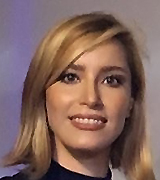
Elmira Hassanzadeh is an Associate Professor at the Department of Civil, Geological and Mining Engineering , Polytechnique Montréal, with a focus on integrated water resource modeling and management under climate and anthropogenic changes. She is affiliated with the Global Institute for Water Security (University of Saskatchewan) and the Experimental and Digital Water Flow Engineering Group (GENIE EAU) . Education: PhD in Civil Engineering, University of Saskatchewan Postdoctoral Fellow, McGill University Research interests include climate change impact assessment, socio-hydrological modeling, stakeholder engagement in water management, and sustainable development of water systems in cold regions. Her work emphasizes decision-making under uncertainty and adaptive strategies for ungauged basins. Recent publications (2024–2020) span coastal flood hazard modeling, climate-driven hydrological changes in tropical and Canadian watersheds, evaluation of agricultural practices under warming climates, and integrated approaches to water quality and system dynamics. Keywords include Hydrology , Climate Change , Water Security , and Socio-Hydrology . Supervision: She has mentored 15+ graduate students in projects related to Lake Urmia, Saskatchewan River Basin, and climate adaptation in Africa and the Pacific.
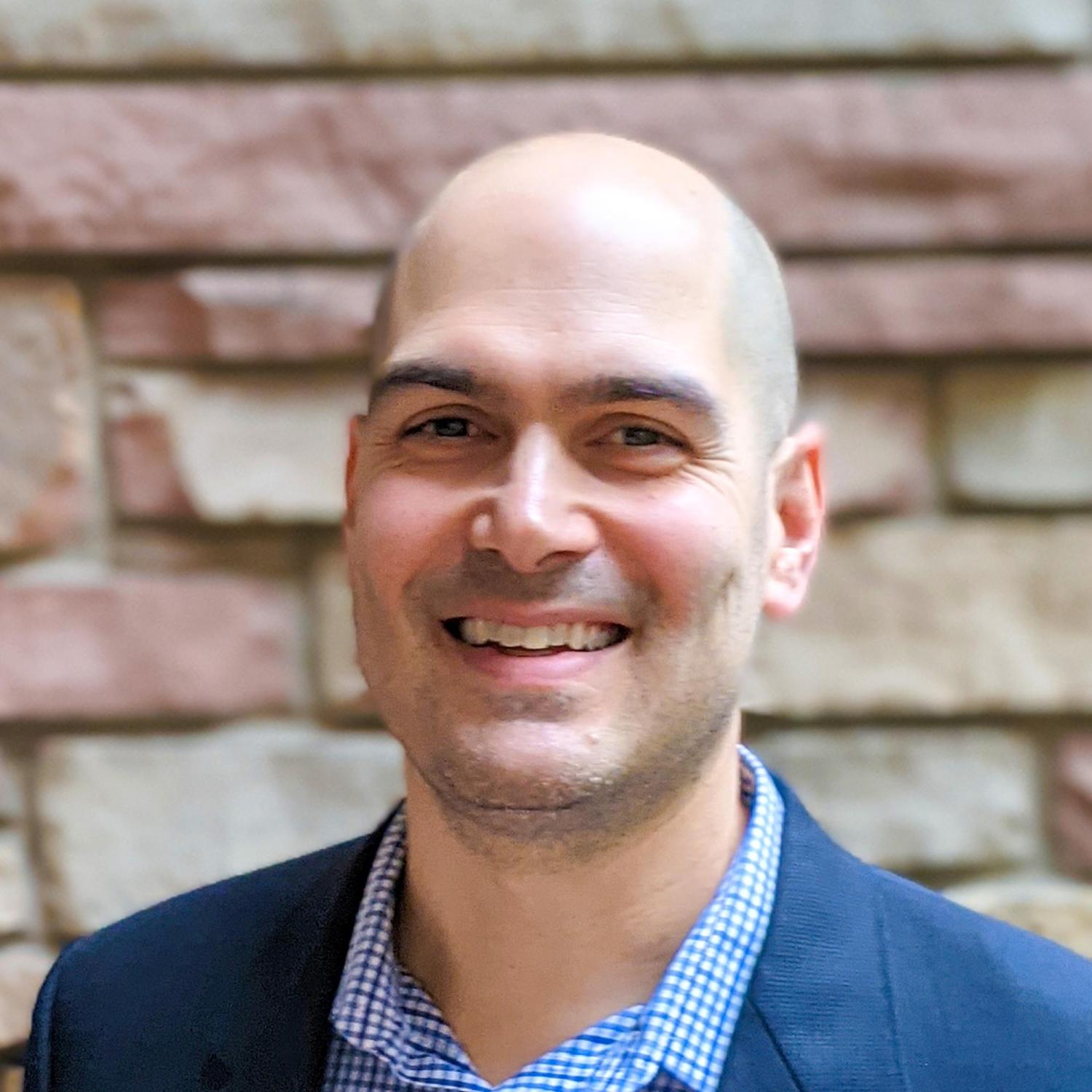
Ben Livneh is an Associate Professor at the University of Colorado Boulder , affiliated with both the Civil, Environmental, and Architectural Engineering Department and the Cooperative Institute for Research in Environmental Sciences (CIRES) . As Director of the Western Water Assessment , he bridges academic research with regional climate resilience initiatives. Ph.D. in Civil Engineering (Hydrology), University of Washington (2012) MESc in Civil Engineering, University of Western Ontario (2006) His research explores hydrologic responses to climate and land-cover changes , focusing on snowpack dynamics, wildfire impacts on water quality, sediment transport, and drought predictability. Key projects include simulations of montane snowpack for wolverine habitat preservation and post-fire landslide susceptibility analysis . Recent publications highlight continental-scale hydraulic geometry datasets , climate-energy nexus challenges , and global lake level reconstructions using satellite data. His work has been recognized by the AGU Hydrologic Sciences Early Career Award (2022) and NASA New Investigator Program (2018) . Scientific Awards AGU Hydrologic Sciences Early Career Award (2022) NASA New Investigator Award (2018) Symposium Scholar, DISCCRS VIII (2013) CIRES Visiting Fellowship (2012) Ben leads interdisciplinary collaborations with institutions like the University of Alaska Southeast and NOAA , addressing climate-water-energy-food nexus challenges through advanced modeling and remote sensing techniques.
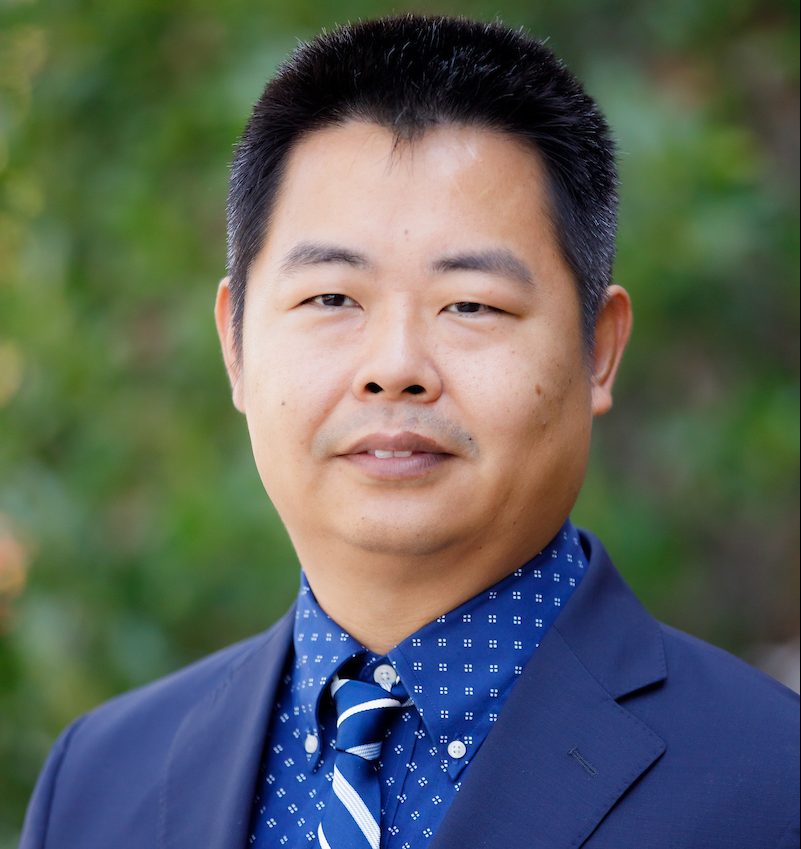
Dr. Jiaqi Gong serves as Associate Professor in Computer Science and Adjunct Associate Professor in Mechanical Engineering at The University of Alabama's College of Engineering, while directing the Alabama Center for the Advancement of Artificial Intelligence. His academic foundation includes: B.S. in Engineering, China University of Geoscience (2004) Ph.D. in Engineering, Huazhong University of Science and Technology (2010) Dr. Gong's research pioneers human-AI convergence through cyber-physical systems and smart health technologies, developing mobile/wearable platforms to enhance human perceptual, cognitive, and physical capabilities. His work spans artificial intelligence, machine learning, computer vision, and IoT with applications in healthcare, environmental monitoring, and education. The Sensor-Accelerated Intelligent Learning (SAIL) laboratory he founded drives innovation in behavior change interventions, human movement modeling, and educational data mining. Recent publications reveal strong interdisciplinary trends: healthcare AI dominates with medication adherence prediction and surgical classification systems, while environmental applications feature flood-risk communication and drought analysis. His work increasingly integrates generative AI and LLMs across domains, demonstrating methodological innovation in federated learning, knowledge graphs, and explainable storytelling frameworks. Notable recognitions include: Best Student Paper Award, IEEE/ACM Connected Health Conference (2022) Best Student Paper Award, Body Sensor Networks Conference (2019) Data Challenge Win, IEEE Biomedical Health Informatics (2018) Best Paper Award, Body Area Networks Conference (2014) Best Demonstration Award, IEEE Wireless Health Conference (2014) Dr. Gong leads significant funded projects including a $2M CDC/NIOSH grant for first responder safety and $3M NSF funding for hydrologic research. As SAIL laboratory director, he mentors students in developing clinically deployed technologies for multiple sclerosis, dementia, and mental health. Future work focuses on scaling AI applications in chronic disease management and climate resilience through the Alabama AI Center. The SAIL laboratory (founded 2017) operates as a multidisciplinary hub developing wearable/mobile systems for health applications, with active collaborations across medical clinics and engineering departments for real-world deployment of behavior change interventions and movement analysis tools.
Jim Hall is a Professor of Climate and Environmental Risk at the University of Oxford's School of Geography and the Environment, and serves as Director of Research there. He is also a Visiting Fellow at Linacre College and holds leadership roles including Chair of the Science Advisory Committee at IIASA, and Expert Advisor to the UK's National Infrastructure Commission. His work focuses on systemic risk analysis, infrastructure resilience, and policy implications of climate change adaptation. Prof Hall has pioneered methodologies like the National Infrastructure Systems Model (NISMOD) and chairs the Data and Analytics Facility for National Infrastructure (DAFNI). His research spans flood risk management, energy systems decarbonization, and transboundary water resource conflicts in regions such as the Eastern Nile Basin and the Caribbean. Key research areas include robust decision making under uncertainty, info-gap theory applications, and integrated assessments of human-environmental systems. He has contributed to major international assessments, including the IPCC's Fourth Assessment Report, and developed frameworks for multi-hazard stress testing of infrastructure networks. Scientific Awards: George Stephenson Medal (2001), Prince Sultan Prize for Water (2018), Royal Academy of Engineering Fellowship (2010) His advising and grants work includes mentoring a DPhil student Erin Canning and leading projects like MARIUS and ENHANCE. He has also developed innovative modeling tools for coastal erosion prediction and probabilistic assessments of global shipping fuel transitions. Prof Hall’s research groups actively engage in interdisciplinary projects, including the Oxford Martin Programme on Resource Stewardship and the UK Infrastructure Transitions Research Consortium. His work emphasizes bridging scientific analysis with actionable policy solutions for climate adaptation.
Diana Allen is a Professor in the Department of Earth Sciences at Simon Fraser University, where she leads the Groundwater Resources Research Group (GRRG). Her research focuses on hydrogeology with particular emphasis on groundwater resource evaluation and hydrogeological modeling, with current research on climate change impacts on groundwater systems, groundwater resources in mountainous and coastal regions, and low temperature geothermal systems. Education: B.Sc. Honours, Carleton University, 1986 M.Sc., Carleton University, 1988 Ph.D., Carleton University, 1996 Dr. Allen's research spans several key areas of hydrogeology and water resources. Her work on climate change impacts examines how extreme climate events affect groundwater systems, particularly in mountainous regions. She has developed methodologies for reconstructing historical groundwater levels using tree ring widths to understand long-term drought patterns. Her research on coastal aquifers assesses vulnerability to salinization, while her work in Northeast British Columbia evaluates water security risks associated with shale gas development. She also investigates aquifer-stream connectivity and the impacts of pumping on streamflow. Dr. Allen's publication record shows a strong focus on applied hydrogeology with significant contributions to understanding groundwater responses to climate extremes, drought assessment methodologies, and coastal aquifer vulnerability. Her research combines field studies with numerical modeling across diverse environments from mountainous regions to coastal deltas. Dr. Allen has successfully secured funding from major agencies including NSERC, the Canadian Mountain Network, the Pacific Institute for Climate Solutions, and various BC government ministries. Her research has practical applications for water resource management under climate change. As a dedicated educator and mentor, Dr. Allen supervises numerous graduate students working on cutting-edge hydrogeological research projects across British Columbia and beyond. Her students pursue careers in hydrogeology and environmental geoscience, applying GIS methods and computational hydrogeology to analyze field data.
Stefano Galelli is a tenured Associate Professor in the School of Civil and Environmental Engineering at Cornell University, where he leads the Critical Infrastructure Systems Lab. He also holds an adjunct position as a Research Scientist at the Lamont-Doherty Earth Observatory, Columbia University. His career spans roles in Singapore, including a Postdoctoral Research Fellow at NUS (2011–2013) and faculty at the Singapore University of Technology and Design (2013–2023). Dr. Galelli earned his B.Sc. (2004), M.Sc. (2007), and Ph.D. (2011) in Environmental and Land Planning Engineering and Information Technology from Politecnico di Milano, Italy. His research focuses on the interactions between critical infrastructure systems and natural environments, emphasizing adaptive management solutions for water-energy systems. Techniques include process-based modeling, climatology, statistical learning, control theory, and optimization. He explores topics like hydro-climatic variability impacts, dam re-operation for environmental flows, and cyber-physical security in infrastructure. His contributions to journals such as Nature Sustainability, Earth’s Future, and Environmental Modelling & Software have earned him multiple awards, including the Early Career Research Excellence Award (2014) and SUTD Excellence in Research Award (2017). He has served as an editor for several journals and is recognized for advancing interdisciplinary approaches to water-energy nexus challenges. Teaching highlights include foundational mathematics courses and advanced topics in data analytics, optimization, and water-energy management. He is developing new courses on data-driven control of coupled human-natural systems and risk management for interconnected systems.
Giuliano Di Baldassarre is a Professor of Hydrology and Environmental Analysis at the Department of Earth Sciences, Uppsala University , Sweden. He serves as Head of Division for LUVAL (Air, Water and Landscape Sciences) and directs the Centre of Natural Hazards and Disaster Science (CNDS) (2016–2025). His work bridges water, environment, and society through interdisciplinary methods , focusing on disaster risk reduction, climate adaptation, and sustainable development. Education : Details not explicitly provided in the text. His research examines feedbacks between human activities and hydrological processes , including floods, droughts, and reservoir management . Key themes include social-ecological systems , inequalities in water crises , and policy implications of hydrological extremes . He has pioneered sociohydrology and human-water system modeling . Recent articles highlight global drought-flood interactions , urban water inequality , climate service maladaptation , and sociohydrological modeling . His work spans Nature Sustainability , Science Advances , and Hydrological Sciences Journal . Scientific Awards : International Hydrology Prize (Volker Medal) Plinius Medal (EGU) Witherspoon Lecture Award (AGU) European Research Council Consolidator Grant He led Panta Rhei - Everything Flows (2013–2022), IAHS’s global initiative on water-society interactions. Current efforts include transdisciplinary praxis and climate risk reduction frameworks .
Noah Molotch is a Professor of Geography at the University of Colorado Boulder, where he serves as Director of the Mountain Hydrology Group and is a Fellow of INSTAAR (Institute of Arctic and Alpine Research). His research and teaching focus on hydrologic processes in mountainous regions with expertise in snow hydrology, remote sensing, and ecohydrology. Molotch earned his Ph.D. from The University of Arizona in 2004. His research utilizes ground-based observations, remote sensing, and computational modeling to understand hydrological processes, particularly snow distribution and water-carbon-nitrogen fluxes in mountain ecosystems. His work has significant implications for sustainable resource management and environmental policy. His recent publications show a strong focus on snow water equivalent estimation, snowmelt timing impacts on forest productivity, and the development of advanced remote sensing techniques for monitoring mountain hydrology. His research increasingly addresses climate change impacts on water resources, with particular attention to the Western United States. Fellow of INSTAAR Art+Science fellowship in partnership with artist Hannah Taylor Molotch advises numerous graduate students and leads significant research projects including those funded by NASA and NSF. His Mountain Hydrology Group operates field sites across the Western U.S., including Storm Peak Laboratory and Niwot Ridge Long Term Ecological Research Program. The group produces near-real-time snow water equivalent estimates and contributes to the Snow Today website at the National Snow and Ice Data Center.
Professor Dörthe Tetzlaff is a leading figure in ecohydrology, serving as Head of Department (A1) Ecohydrology at the Leibniz Institute of Freshwater Ecology and Inland Fisheries (IGB) and as Full Professor of Ecohydrology at Humboldt-Universität zu Berlin, Faculty of Mathematics and Natural Sciences, Geography Department. She also holds an Honorary Professorship at the University of Aberdeen, Scotland. Her work bridges theoretical hydrology with practical applications for water security and environmental management. Professor Tetzlaff's research focuses on ecohydrological processes, particularly using stable water isotopes to understand water cycling, catchment functioning, and landscape connectivity. Her work spans from pristine natural systems to complex urban environments, with particular emphasis on drought resilience, water security, and nature-based solutions. She has pioneered tracer-aided modeling approaches to quantify water storage, fluxes, and ages across the soil-plant-atmosphere continuum. Her publication record shows a clear trend toward increasingly sophisticated integration of multi-tracer approaches with ecohydrological modeling, with recent work focusing on urban systems, drought impacts, and nature-based solutions. The publications demonstrate expertise across hydrology, biogeochemistry, and ecological applications, with strong methodological development in isotope hydrology and modeling techniques. Polubarinova-Kochina Hydrologic Sciences Mid-Career Award of the American Geophysical Union AGU (2024) Water Resource Prize of the Rüdiger Kurt Bode Foundation (2024) Member of the Berlin-Brandenburg Academy of Sciences and Humanities (2023) Fellow of The European Academy of Sciences (2022) Fellow of the Geological Society of America GSA (2020) Professor Tetzlaff actively supervises numerous PhD students and postdoctoral researchers, with her group focusing on cutting-edge ecohydrological research. She leads multiple significant research projects including WETSCAPES2.0, ECCO, ISO-SCALE, and BiNatUr, which address critical questions about water security, climate change impacts, and nature-based solutions in urban environments. Her work is supported by substantial funding from various national and international sources. She leads the Ecohydrology research group at both IGB and Humboldt-Universität zu Berlin, which employs an integrative approach combining field measurements, isotope techniques, and advanced modeling to understand water dynamics across diverse landscapes. The group collaborates extensively with international partners across Europe, North America, and Asia, contributing to global understanding of hydrological processes.
Professor Tirthankar Roy holds the position of Professor of Economic History at the London School of Economics and Political Science (LSE). His expertise spans South Asian economic history, global historical dynamics, environmental history, and the legacies of colonial empires. He teaches courses such as EH307 (Economic History of South Asia, 1600–2000) and EH404 (India and the World Economy). His research interrogates long-term patterns in Indian capitalism, the interplay between climatic conditions and economic change, and the persistence of colonial legal frameworks in modern India. Key contributions include Monsoon Economies: India’s History in a Changing Climate and co-authored works like Law and the Economy in Colonial India and its sequel. His recent book Water and Development: The Troubled Economic History of the Arid Tropics examines water resource management in arid regions. He actively engages with public discourse via social media, countering historical myths about colonialism with evidence-based scholarship. Research interests include the economic development of South Asia, global historical comparisons, environmental determinants of economic activity, and the socio-political dimensions of colonial legal systems. His work bridges historical analysis with contemporary policy debates, emphasizing the need for evidence-based understanding of historical processes.
Professor Ashish Sharma is a Professor of Hydrology and Water Resources in the School of Civil and Environmental Engineering at the University of New South Wales, Sydney, Australia. With a PhD in Civil Engineering from Utah State University and extensive experience in hydrological research, he has established himself as a leading expert in his field. Dr. Sharma's research focuses on hydrological uncertainty, with particular emphasis on the impact of climate change and variability on hydrological practice. His work spans multiple areas including remote sensing applications, stochastic hydrological modeling approaches, development of hydrological models, and addressing key hydrology challenges such as design flood estimation and water resources management. He has made significant contributions to understanding how climate change affects hydrological extremes and water availability. His publications reveal a strong trend toward advanced modeling techniques for climate change impact assessment, with recent work focusing on spectral transformation methods, multivariate bias correction in climate models, flood forecasting improvements, and the relationship between temperature and precipitation extremes. His research increasingly integrates remote sensing data with hydrological modeling to address challenges in data-scarce regions. Professor Sharma has held significant leadership positions including President of the International Commission of Hydrologic Sciences (IAHS) Commission on Statistical Hydrology (STAHY) since 2016, service on the Australian Research Council's College of Experts twice, and participation on the Technical Committee for the Australian Rainfall and Runoff Design Flood Estimation guidelines (ARR2016). In addition to his research leadership, Professor Sharma actively mentors students and collaborates with researchers globally, as evidenced by his extensive publication record across top hydrology and climate journals. His work bridges theoretical hydrology with practical applications for water resources management under changing climate conditions.
Prof. Dr. Ralf Merz serves as Head of the Department of Catchment Hydrology at the Helmholtz Centre for Environmental Research (UFZ) and holds a Full Professorship in Catchment Hydrology at Martin-Luther University Halle-Wittenberg since 2011. His career bridges hydrological modeling, flood risk assessment, and water quality analysis across diverse climates from Central Asia to Europe. MSc in Civil Engineering (Technical University of Karlsruhe, 1997) PhD in Hydrology (Vienna University of Technology, 2002) Habilitation in Hydrology (Vienna University of Technology, 2009) Research Interests span comparative hydrology, flood generation mechanisms, climate change impacts on water resources, and nitrate dynamics in river systems. His work emphasizes process-based understanding of runoff events and regional flood modeling through innovative approaches like the PHEV distribution framework. Scientific Contributions include over 100 publications (2003-2025) on: Flood frequency analysis in changing climates Groundwater recharge in arid regions Hydrochemical response to droughts Remote sensing applications for groundwater studies Multi-response calibration of hydrological models Key projects involve MOSES observatory development, TRACER research school, and Pamir Mountains glaciological studies. Recognitions : APART research grant (Austrian Academy of Sciences, 2006) Leadership extends to directing the Catchment Hydrology department and participating in European hydrological networks like the Bode Hydrological Observatory and TERENO infrastructure. His methodological advancements include flood time-scale analysis and event runoff coefficient regionalization.
Daniel Farinotti is a Professor of Glaciology at the Department of Civil, Environmental and Geomatic Engineering at ETH Zurich and at the Swiss Federal Institute for Forest, Snow and Landscape Research (WSL). His work focuses on understanding glacier evolution and its impacts on water resources across mountainous regions globally. Dr. Farinotti's research interests center on glaciological modeling and its applications to water resource management. His expertise includes estimating glacier ice thickness from surface properties, long-term modeling of glacier mass changes, quantifying runoff contributions from glaciated catchments, and implications for water management in high mountain areas. His research integrates field observations, remote sensing data, and numerical modeling to address critical questions about glacier response to climate change. Dr. Farinotti's scientific achievements have been recognized with prestigious awards including the 2017 Nature Research Award for Outstanding Achievements in Review and the 2013 Award for Outstanding Contributions to Review from the Journal of Geophysical Research - Earth Surface. His publications demonstrate a consistent pattern of high-impact research across glaciology, hydrology, and climate science, with particular emphasis on the interactions between glacier dynamics and water resources. As a principal investigator, Dr. Farinotti has secured significant research funding from organizations including the Swiss National Foundation and German Federal Foreign Office. His work often involves international collaborations across multiple institutions, reflecting the global nature of glacier research and its implications for water security. He maintains active involvement in major scientific initiatives focused on glacier monitoring and climate change impacts. Dr. Farinotti leads the Glaciology research group at ETH Zurich's Laboratory of Hydraulics, Hydrology and Glaciology (VAW), which conducts fieldwork across multiple mountain ranges globally. The group employs advanced techniques including geophysical surveys, remote sensing, and numerical modeling to investigate glacier dynamics and their hydrological impacts.
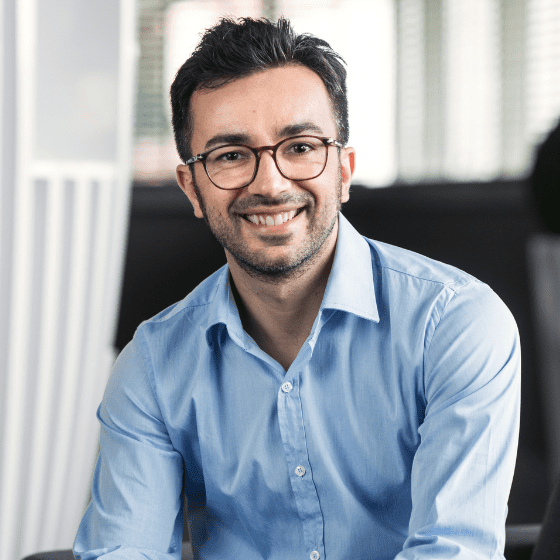
Dr. Miguel Rico-Ramirez serves as Associate Professor of Radar Hydrology and Hydroinformatics at the University of Bristol's School of Civil, Aerospace and Design Engineering. His research integrates advanced radar technology with hydrological modeling to address critical water resource challenges including flood forecasting, drought management, and precipitation measurement across diverse global contexts from South Korea to Mexico City. Education: Bachelor of Engineering (Eng.) Master of Engineering (M.Eng.) Ph.D. in Engineering, University of Bristol His research program focuses on radar-based precipitation estimation, hydroinformatics, and flood prediction systems. He pioneers deep learning applications for rainfall nowcasting and develops innovative methods for uncertainty quantification in hydrological modeling. Current work emphasizes cosmic-ray neutron sensor validation, satellite-based flood mapping, and seasonal forecast applications for reservoir operations, with strong emphasis on translating research into operational water management solutions. Recent publications (2023-2025) reveal three dominant research thrusts: (1) deep learning frameworks for spatiotemporal rainfall prediction, (2) global validation of precipitation and soil moisture datasets using novel sensor networks, and (3) operational implementation of seasonal forecasts for drought mitigation in South Korea. His work consistently bridges radar meteorology with practical hydrological applications across urban and data-scarce environments. Scientific Awards: No specific awards documented in source materials Dr. Rico-Ramirez supervises postgraduate researchers in radar hydrology and hydroinformatics, with projects spanning flood early warning systems, precipitation nowcasting, and climate adaptation strategies. His research receives funding for international collaborations focused on water security challenges, particularly in drought-prone regions and data-scarce basins like the Nile Delta. Current grants support development of integrated forecasting systems combining global datasets with machine learning for extreme event management. He leads the Radar Hydrology research group within Bristol's Water and Environmental Engineering division, collaborating closely with Professor Dawei Han on hydroinformatics and Dr. Rafael Rosolem on water-climate interactions. The team maintains active partnerships with meteorological agencies and water authorities globally, particularly in flood forecasting system implementation across South Korea and Mexico.
Paul D. Brooks is a Professor in the Department of Geology/Geophysics at the University of Utah, where he has been a faculty member since July 2014. His research focuses on understanding water, energy, and biogeochemical cycling in seasonally snow-covered catchments, with increasing emphasis on predicting how climate and land use changes impact snow accumulation, ablation, and snowmelt-derived surface and ground water resources. His educational background includes a BS in Biology and Chemistry from Florida State University, followed by an MS in Ecohydrology (1991) and PhD in Biogeochemistry (1995), both from the University of Colorado, Boulder. Prior to his position at the University of Utah, Dr. Brooks was a Professor in the Department of Hydrology and Water Resources at the University of Arizona from December 2000 to June 2014. Dr. Brooks' research spans multiple disciplines within earth sciences, focusing primarily on hydrology, ecohydrology, and biogeochemical cycling in mountainous, snow-dominated environments. His work examines how climate change affects snowmelt processes, groundwater-surface water interactions, and water resource availability in the western United States. He employs a combination of field measurements, isotope hydrology, and modeling approaches to understand complex hydrological processes across multiple spatial and temporal scales. His research increasingly involves collaboration with stakeholders to translate scientific findings into practical water resource management applications. Analysis of Dr. Brooks' recent publications reveals a strong focus on groundwater-surface water interactions in snowmelt-dominated systems, with particular attention to how climate change affects streamflow generation processes. His work bridges fundamental hydrological science with practical water resource concerns, examining topics such as runoff efficiency, groundwater storage dynamics, and the impacts of land cover changes on hydrological processes. A significant portion of his recent research investigates the Western United States water resources under changing climate conditions. AGU Fellow (American Geophysical Union) Dr. Brooks actively mentors graduate students through thesis research (both PhD and Master's level) as evidenced by his teaching activities. His lab conducts research supported by various grants focused on understanding water resources in mountainous regions, particularly examining how climate change affects snowmelt hydrology and water availability. He collaborates extensively with researchers across multiple institutions, as demonstrated by his numerous co-authored publications with scientists from various universities and research organizations. Dr. Brooks leads research efforts through his lab at the University of Utah and is involved with the Wasatch Environmental Observatory, a mountain-to-urban research network in the semi-arid Western US. His work integrates field measurements across complex terrain to understand how topography, vegetation, and climate interact to control water, energy, and biogeochemical cycling in seasonally snow-covered environments.