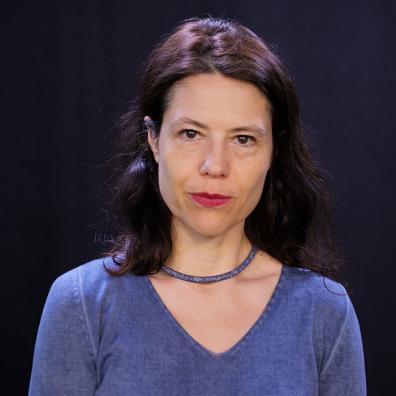
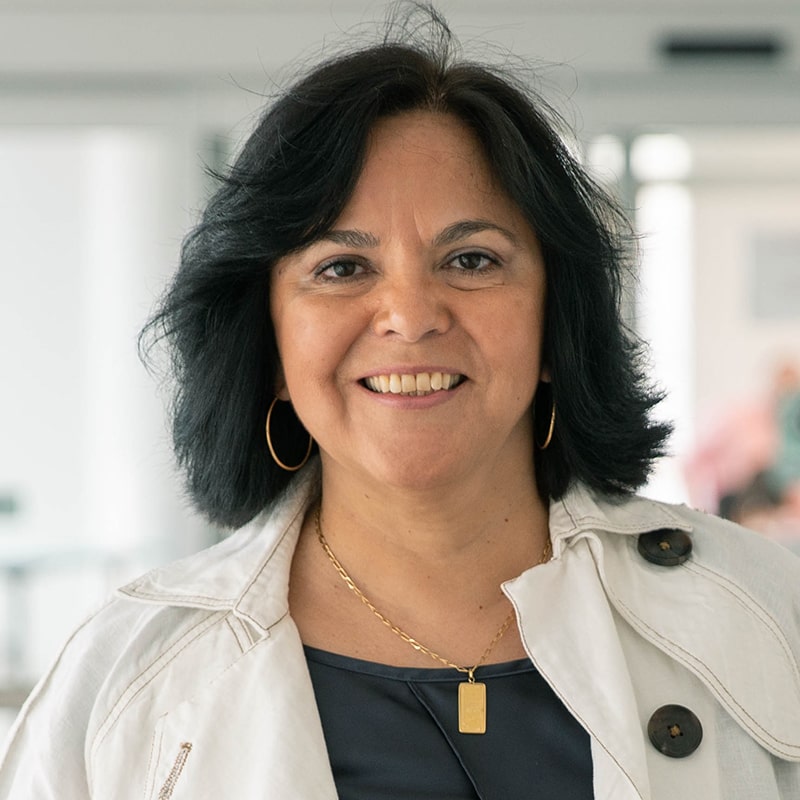
Guibourg Delamotte is a tenured Full Professor of Political Science and head of the Japanese Studies Department at the French Institute of Oriental Studies (Inalco), where she has been affiliated since 2006. She also teaches at Sciences Po Paris and holds international research fellowships at the University of Tokyo’s Research Center for Advanced Science and Technology (RCAST), Temple University Japan, and the Japan Forum on International Relations (Tokyo). Her career spans Japanese defense policy, domestic politics, parliamentary institutions, and Indo-Pacific security dynamics. Education: Law, University of Paris Panthéon Assas Law, University of Oxford Japanese (BA, MA), Inalco Political Science, Sciences Po Paris PhD in Political Studies, EHESS (2007, Highest Honours, Shibusawa-Claudel Award) Habilitation à Diriger des Recherches, Sciences Po Paris (2022) Her research focuses on Japanese domestic and foreign policy, parliamentary governance, defense modernization, and Indo-Pacific security. She has authored/co-edited eight books, including Le Japon, un leader discret (Eyrolles, 2023) and La Démocratie au Japon, singulière et universelle (ENS Ed., 2022), and over 20 journal articles and book chapters. Recent publications emphasize Japan's strategic evolution in the Indo-Pacific, AUKUS implications, and democratic governance challenges. She examines security policy intersections with domestic politics, legal frameworks, and international alliances. Scientific Awards: Shibusawa-Claudel Award for PhD dissertation Highest Honours (PhD, EHESS) Delamotte leads the French Research Institute on East Asia (IFRAE)’s program on Contemporary East Asia's trajectory. She serves on the National Academic Council’s Political Science Section (CNU, Section 4) and contributes to policy debates through academic and governmental institutions.
Gavin Schwarz is a Professor and Head of School at the School of Management and Governance within the UNSW Business School . He specializes in organizational change , organizational failure and inertia , and the dynamics of virtual teams , with a focus on how organizations fail during change processes and how to develop applied strategies for change management . His work spans diverse sectors including healthcare, technology, and education, with publications in leading journals such as Academy of Management Learning and Education and Administrative Science Quarterly . Education : PhD in Management (University of Queensland), MPhil (Hons) in Management (University of Auckland), BA in Management and English (University of Auckland). Grants : 2020 Brock University grant for "University communication in times of COVID-19" , 2020 UNSW Medicine grant for "Translation and change: Embedding effective change management in health" , and earlier Australian Research Council and Gordon J. Samuels Fellowship awards. His research explores the development of knowledge in organizational theories , with an emphasis on collective responses to change , HR management during crises , and technology strategy . He has contributed to understanding organizational communication , team innovation , and structural inertia . His 15 most recent publications cover topics from AI’s role in organizational change to pandemic-driven research adaptation, with keywords spanning management science , behavioral economics , and digital transformation . Scientific Awards 2021-2023 : Outstanding Reviewer Awards (Academy of Management Review) 2017-2020 : Best Reviewer Awards (Journal of Organizational Behavior) 2019, 2013, 2011 : Best Paper Finalist/Awardee (Academy of Management divisions) 2007, 2006 : Editorial Board Excellence (Academy of Management Journal) and Gordon J. Samuels Fellowship As an active supervisor in organizational change and HR development , his work supports healthcare innovation and digital transformation. He serves as Editor-in-Chief for the Journal of Applied Behavioral Science and is on the editorial boards of Academy of Management Review , Journal of Management , and Journal of Organizational Behavior . Contact: g.schwarz@unsw.edu.au
Dr. Todd D. Murphey is a Professor of Mechanical Engineering at Northwestern University's Robert R. McCormick School of Engineering and Applied Science. He serves as Director of Transformative Research and Director of the Master of Science in Robotics Program at Northwestern, leading initiatives in computational dynamics, control systems, and robotics. His work bridges engineering, neuroscience, and biomedical applications, with a focus on developing systems that interact effectively with humans and their environments. Dr. Murphey received his Ph.D. in Control and Dynamical Systems from the California Institute of Technology in 2002, with a thesis titled "Control of Multiple Model Systems." Prior to that, he earned a B.S. in Mathematics, summa cum laude, from the University of Arizona in 1997. Dr. Murphey's research centers on computational methods in dynamics and control, with applications spanning neuroscience, health science, robotics, and automation. His work in the Interactive & Emergent Autonomy Lab focuses on computational models of embedded control, biomechanical simulation, dynamic exploration, and hybrid control. The group develops mathematical approaches that lead to orders of magnitude improvement in computational efficiency for real-time implementation. Key application areas include assistive exoskeleton control, stabilization of energy networks, bio-inspired active sensing, entertainment robots, robotic exploration, and software-enabled stroke rehabilitation. Analysis of Dr. Murphey's recent publications reveals a strong emphasis on human-swarm interaction, algorithmic matter, and control of cyber-physical systems in uncertain environments. His work increasingly integrates information theory with physical systems, exploring how both autonomous and biological systems interact with environments to learn and improve behaviors. Recent trends show growing applications in rehabilitation technology, with particular focus on human-machine interaction in biomedical devices and embodied intelligence. Dr. Murphey has received numerous honors and awards for his contributions to robotics and engineering: Named Director of Transformative Research at Northwestern University (2025) Appointed IEEE Robotics and Automation Society Vice President of Publication Activities (2022) Co-recipient of Best Paper Award for IEEE Transactions on Robotics (2020) Appointed to Air Force Scientific Advisory Board (2019) Recipient of ABB Best Student Paper Award for CPL-SLAM research (2019) Cole-Higgins Award from Northwestern Engineering (2015) Dr. Murphey has supervised numerous graduate students including Taosha Fan, Giorgos Mamakoukas, and Ian Abraham, with research spanning robotic exploration using electrosense and mechanical contact, human-in-the-loop control, and shared control for rehabilitation devices. His lab has secured significant funding from the National Science Foundation, DARPA, and industry partners including Siemens and Ekso Bionics, supporting research in algorithmic matter, emergent behavior, and human-swarm collaboration. The Interactive & Emergent Autonomy Lab, led by Dr. Murphey, investigates how both autonomous systems and biological systems interact with their environments to learn and improve behaviors. Current projects include active learning and data-driven control, active perception in human-swarm collaboration, algorithmic matter and emergent computation, control for nonlinear and hybrid systems, cyber physical systems in uncertain environments, harmonious navigation in human crowds, information maximizing clinical diagnostics, reactive learning in underwater exploration, robot-assisted rehabilitation, and software-enabled biomedical devices. The lab collaborates with researchers across Northwestern and institutions including Georgia Tech, MIT, and industry partners.
Jacques deLisle is the Stephen A. Cozen Professor of Law and Professor of Political Science at the University of Pennsylvania. He serves as Director of the Center for the Study of Contemporary China, co-director of the Center for Asian Law, and director of the Asia Program at the Foreign Policy Research Institute. His expertise centers on contemporary Chinese law, politics, and U.S.-China relations, with a focus on legal reform, cross-strait relations, and Taiwan's international status. DeLisle’s research explores the interplay between law, governance, and international dynamics in China. His notable works analyze China’s engagement with international law, Taiwan’s diplomatic strategies, and the implications of U.S. policy toward the region. Recent publications include studies on China-India territorial disputes, political warfare tactics by authoritarian regimes, and the evolving role of the Chinese Communist Party. His work frequently addresses geopolitical issues such as the South China Sea disputes, the impact of the pandemic on U.S.-China relations, and the legal frameworks governing cross-strait interactions. DeLisle has advised on legal reform initiatives in China and frequently engages in policy discussions, including as an expert witness on Chinese law and a consultant for development programs.
Christian Geisler Asmussen serves as Professor of Strategic and International Management at Copenhagen Business School's Department of Strategy and Innovation. His research investigates competitive advantage, globalization, and multinational enterprise organization through formal modeling, game theory, and theories of the firm, with current emphasis on foreign location choices and global corporate social responsibility. Appointed after earning his PhD from CBS in 2007, he maintains active contributions to international business scholarship and executive education. His research portfolio centers on: Organization and Expansion of Multinational Firms Internalization Theory Game Theory applications Corporate Social Responsibility frameworks Foreign location decision-making Global CSR implementation challenges Analysis of his recent publications reveals a strategic evolution toward integrating sustainability into multinational operations, with 2024-2025 works examining global cities' role in reducing liability of foreignness, modular value chain design, and CSR orchestration mechanisms. His scholarship consistently applies game-theoretic approaches to multinational strategy while addressing emerging challenges in global governance and ethical operations. Recognition for his scholarly impact includes: Barry M. Richman best dissertation award Haynes Prize Tietgen Prize JIBS Decade Award Professor Asmussen supervises Cand.Merc. Master Theses and CEMS Business Projects while teaching Strategy, Contemporary Issues in International Business, Macroeconomics, and PhD-level Strategic Management. His external engagements include providing Strategic Risk Management training for Saxo Bank (2024) and serving as external accreditor for Cyprus' Higher Education Quality Assurance Agency (2024-2025).
Miles Maochun Yu is a Professor of East Asia and military/naval history at the United States Naval Academy, a Senior Fellow at the Hudson Institute, and the Robert Alexander Mercer Visiting Fellow at Stanford University's Hoover Institution. His expertise spans China policy, military history, US-China relations, and geopolitical strategy, with a focus on historical precedents influencing modern conflicts. Doctorate in History, University of California, Berkeley Master’s Degree, Swarthmore College Bachelor’s Degree, Nankai University Yu’s research synthesizes military history and contemporary CCP behavior, analyzing ideological roots of Chinese aggression toward Taiwan, military technology evolution in US-China rivalry, and Cold War parallels. His work examines how historical events like the 1958 Quemoy-Matsu Crisis and 1979 Sino-Vietnamese War inform current strategic dynamics. His recent publications reveal trends in China’s strategic deception, post-CCP transition scenarios, and the role of AI in future military engagements. These works bridge historical analysis with policy recommendations, emphasizing ideological clarity in countering authoritarian regimes. Recipient of USNA Top Researcher Award US Navy Special Action Award US Navy Meritorious Service Awards As former China Policy Advisor to Secretary Mike Pompeo, Yu has shaped U.S. foreign policy discussions. He regularly consults governmental agencies, testifies before Congress, and serves as chief historian for military documentaries on the History and Discovery Channels.
Prof Corneliu Bjola is a Professor of Digital Diplomacy at the University of Oxford and Head of the Oxford Digital Diplomacy Research Group . His work examines how digital technology transforms diplomacy, focusing on public diplomacy, international negotiations, and AI-driven diplomatic functions. Education : MA from KU Leuven, PhD from the University of Toronto. Research Interests include AI’s role in crisis management, ethical challenges in algorithmic diplomacy, and digital disruptions in global governance. Recent projects analyze international responses to digital propaganda and multilateral policy adaptations. Publications span edited volumes like The Oxford Handbook of Digital Diplomacy (2024) and foundational works on digital diplomatic theory. His research bridges technological innovation with diplomatic practice. Organizational Engagement : He has led training for foreign ministries in the UK, EU, Germany, Greece, and international bodies like the United Nations and Commonwealth.
Seth Frey is an Associate Professor in the Department of Communication at the University of California, Davis, with affiliate status at Indiana University's Ostrom Workshop and as Research Director at Metagov. His research focuses on computational social science approaches to understanding self-governance in complex social systems, particularly through the lens of online communities as model institutions. Education: Ph.D. in Cognitive Science and Informatics (complex systems), Indiana University, 2013 B.A. in Cognitive Science, UC Berkeley, 2004 Research Interests: Frey specializes in computational approaches to institutional analysis and the cognitive science of strategic behavior . His work examines how communities design governance systems to overcome collective action problems, with emphasis on: Emergent institutional structures in digital commons Policy-as-data through NLP and institutional grammar frameworks Cognitive mechanisms underlying cooperative behavior Design principles for participatory change in online platforms His methodology integrates large-scale data analysis, web-based experiments, and computational modeling across diverse contexts including Minecraft, Reddit, and professional sports ecosystems. Publication Trends: Recent publications (2023-2025) demonstrate a cohesive trajectory toward computational institutional analysis, with increasing focus on NLP-driven policy analysis (e.g., NLP4Gov), decentralized governance architectures (DAOs, multi-level platform governance), and the cognitive foundations of collective action. His work consistently bridges theoretical institutional analysis with practical applications in digital community design, showing particular growth in translating Ostrom's design principles into computational frameworks. Awards: Honorable Mention Award for Best Paper at ACM CSCW 2019 Advising and Grants: Frey mentors students interested in data science applications at the intersection of communication, cognition, and complex systems, emphasizing resourcefulness and intellectual curiosity. His research has secured substantial funding from: National Science Foundation (NSF) NASA Ford Foundation Google Open Source Foundation He actively encourages aspiring graduate students with strong self-directed research skills to explore computational approaches to social phenomena. Labs and Teams: He leads the Computational Communication Lab at UC Davis and co-directs the Institutional Grammar Research Initiative. Through Metagov, he develops the 'Governance API' framework for modular community governance. His past affiliations include Disney Research (Walt Disney Imagineering) where he applied complexity science to theme park systems, and the New England Complex Systems Institute (NECSI). Current collaborations span Ethereum governance, Minecraft server ecosystems, and Colorado's cannabis monitoring infrastructure.
Brett K. Jakubiak is an Associate Professor in the Department of Psychology at Syracuse University, College of Arts and Sciences. His research focuses on relational well-being, affectionate behaviors, and social support dynamics. He holds a Ph.D. from Carnegie Mellon University (2017) and has been recognized with the Laura J. and L. Douglas Meredith Teaching Award (2021). Jakubiak's work bridges theory and scalable interventions to enhance relationship quality and individual thriving across life stages. Research Interests: Impact of affectionate touch on relational satisfaction Role of social support in stress regulation Attachment theory applications in close relationships Psychological well-being through interpersonal interactions Recent Work Highlights: Explores human-AI relationship dynamics (2024), examines self-disclosure patterns tied to attachment avoidance (2024), and investigates touch's role in shared positive experiences (2023). His NSF-funded research examines affectionate touch in diabetic couples (2022–2027). Service Contributions: Serves on editorial boards for Journal of Social and Personal Relationships and Personality and Social Psychology Review . Active in department governance including tenure committees, diversity initiatives, and strategic planning.
Professor Anne Keegan is a Full Professor of International Human Resource Management at University College Dublin (UCD), leading the HRM and Employment Relations Group within the School of Business. She previously held roles at the Amsterdam Business School and Erasmus University Rotterdam, and completed her PhD at Trinity College Dublin. Her research focuses on HRM in online labor platforms, gig economies, project-based organizations, and institutional/paradox theories. Education: Bachelor of Arts (BA), Trinity College Dublin Doctor of Philosophy (DPhil), Trinity College Dublin Research Interests: HRM in digital labor platforms and gig economies Institutional complexity and paradox theory applications HR practices in project-based organizations Career dynamics in non-traditional work environments Awards: EGOS Award in Honour of Max Boisot (2014) Van der Schroeff Award for Best Lecturer (2013) Professional Activities: Editorial Board roles for International Journal of Human Resource Management and International Journal of Project Management Committee memberships: UCD Academic Council, Faculty Promotions Committee, Widening Participation initiatives Keynote speaker at NEON Annual Conference (2019) Grants: UCD School Funded Research Account (2024-2027) Labs/Teams: Leading research on algorithmic management, platform ecosystems, and gig economy ethics through collaborative international projects.
Likoebe Maruping is a Professor of Computer Information Systems and Director of the Ph.D. program at Georgia State University's J. Mack Robinson College of Business. He is a member of the Center for Digital Innovation and serves as a senior editor for MIS Quarterly , having previously held editorial positions at Information Systems Research and the Journal of the Association for Information Systems . Previously, he taught at the University of Arkansas and the University of Louisville. Education: Ph.D. in Information Systems, University of Maryland, Robert H. Smith School of Business B.S. in Information Systems, University of Maryland, Robert H. Smith School of Business B.S. in International Business, University of Maryland, Robert H. Smith School of Business Maruping's research spans digital innovation , open source software development , agile methodologies , and team collaboration in dispersed settings . His work explores how leadership styles, particularly empowering leadership , can mitigate stress and improve performance in software development teams. He examines governance in digital platform ecosystems and investigates the relationship between digital technologies and social justice, as evidenced by his 2024 MIS Quarterly special issue contribution. His research often employs multilevel analysis approaches to connect micro and macro phenomena in information systems. Maruping's recent publications reveal a strategic shift toward examining AI innovation frameworks, platform ecosystem governance, and the social implications of technology. His 2025 work on AI innovation contrasts with traditional IT innovation through patent analysis, while his research on digital skill visibility in open source communities demonstrates practical applications of theoretical frameworks. These publications consistently bridge academic rigor with practical business implications. Editorial Recognition: Senior Editor, MIS Quarterly Former Associate Editor, Information Systems Research Former Associate Editor, MIS Quarterly Former Senior Editor, Journal of the Association for Information Systems As Ph.D. program director and former CIS department Ph.D. coordinator, Maruping has advised numerous doctoral students. His leadership extends to strategic program development, curriculum innovation, and enhancing recruitment of diverse doctoral candidates. He frequently leads workshops on multilevel theorizing, as evidenced by his 2023 workshop at Hong Kong Baptist University. His research has been supported through collaborations with major institutions and has influenced both academic discourse and industry practices in information systems management. Maruping is actively engaged with the Center for Digital Innovation at Robinson College of Business, which serves as his primary research hub. His work often involves cross-institutional collaborations with researchers from leading universities worldwide, reflecting the global nature of contemporary information systems research.
Dr. Mehmet Kaya is a Lecturer in the History Department of Bingöl University's Faculty of Arts and Sciences since 2009. He holds a PhD in Republic History from Fırat University (2004) and has served as Department Head (2009-2012) and currently leads the Republican History Subdivision. His research focuses on Turkish-Iranian relations, modern Middle Eastern history, and the diplomatic history of the Republic of Turkey. Education: BA in History (Fırat University, 1987), MA in Revolutionary History (Istanbul University, 1992), PhD in Turkish-Iranian Relations (Fırat University, 2004) Research interests include 20th-century diplomacy, Ottoman-Turkish transition, and regional geopolitics. He has published extensively on topics like Iran's 1979 Revolution, Turkish-Israeli relations, and Kurdish uprisings. Recent works analyze Iran's Syria policy (2022) and Ali Şeriati's influence on the Iranian Revolution (2024). He co-authored chapters in volumes like Modern İran Tarihi (2021) and participated in international conferences on Karabakh conflicts and Iranian opposition groups. Serves as referee for Bingöl University's Social Sciences Journal.
Cleotilde (Coty) Gonzalez is a Research Professor of Decision Sciences at Carnegie Mellon University, with primary affiliation in the Department of Social and Decision Sciences (SDS). She serves as the Founding Director of the Dynamic Decision Making Laboratory (DDMLab) and Research Co-Director of the NSF National Institute for AI for Societal Decision Making (AI-SDM). Her extensive academic affiliations include the Security and Privacy Institute (CyLab), the Societal Computing program in the Software and Societal Systems Department (S3D), the Human-Computer Interaction Institute (HCII) in the School of Computer Science, and the Center for Behavioral Decision Research (CBDR) and Center for Neural Basis of Cognition (CNBC). Dr. Gonzalez holds a Ph.D. in Management Information Systems and has developed Instance-Based Learning Theory (IBLT), a significant contribution to cognitive science that explains how people make decisions based on past experiences. Her research spans experimental studies and computational modeling of cognitive processes in dynamic decision environments, with applications in cybersecurity, human-machine teaming, and societal decision making. Her recent publications reveal a strong focus on human-AI collaboration, collective intelligence, cybersecurity, and cognitive modeling. The research trends show increasing integration of AI systems with human decision processes, particularly examining how humans and AI can complement each other in complex decision environments. Her work increasingly addresses cybersecurity challenges through behavioral science perspectives, exploring how cognitive models can improve defense mechanisms against social engineering attacks. Lifetime Fellow of the Cognitive Science Society Lifetime Fellow of the Human Factors and Ergonomics Society Member of the Governing Board of the Cognitive Science Society Member at Large of the Policy Council of the System Dynamics Society Committee member of the National Academies Division Committee for the Behavioral and Social Sciences and Education Dr. Gonzalez has mentored over 50 post-doctoral fellows and doctoral students, with many going on to successful careers in academia, government, and industry. Her research has been supported by major collaborative efforts including Collaborative Research Alliances (CRA) and Multi-University Research Initiative grants from the Army Research Laboratories (ARL) and Army Research Office (ARO), as well as projects with the Defense Advanced Research Projects Agency (DARPA). She directs the Dynamic Decision Making Laboratory, which conducts research involving laboratory experiments and cognitive computational models to derive theoretical conclusions about dynamic decision making and develop applications for societal problems.
Maarten Renkema is an Assistant Professor at the University of Twente, specializing in Artificial Intelligence (AI) and its intersection with Human Resource Management (HRM) , Healthcare , and Organizational Innovation . His research explores how AI transforms work design, employee autonomy, and HRM practices in formalized contexts. Key Research Themes: Algorithmic HRM and Digitalization Human-AI Collaboration in Healthcare Self-Managing Teams and Organizational Structures AI Literacy in Education Scientific Awards: Best Dissertation Award (2019) from the Dutch HRM Network Research Trends: His recent work focuses on AI adoption in HRM, ethical implications of algorithmic management, and redefining professional roles in AI-integrated environments. Articles from 2024-2025 highlight practical applications of AI in healthcare workflows, employee-driven innovation, and the evolving responsibilities of HR professionals. Collaborations: Active in cross-sector partnerships, including projects on AI literacy frameworks and talent management in sports. Regularly contributes to professional discourse through invited talks and media commentary on AI's societal impact.
Associate Professor Sunghoon Kim holds a position at the University of Sydney Business School's Discipline of Work and Organisational Studies. He previously taught at UNSW Business School, Cornell University, and Peking University. His PhD is from Cornell University, with MBA and BBA degrees from Seoul National University. His research focuses on strategic HRM, employment relations, and the impact of technological changes like AI on workplaces. He has edited major works including the Routledge Handbook of Human Resource Management in Asia and contributes to the APRU project on 21st-century work transformations. Kim serves as Associate Editor for journals like Human Resource Management and Asia Pacific Journal of Human Resources . His recent work addresses algorithmic management, employee well-being in AI contexts, and cross-border labor dynamics. He has advised students researching migrant worker choices and voice processes in organizations. Media engagements include commentary on workplace perks and work-life balance in South Korea. Teaching responsibilities include courses on performance management, strategic HRM, and international HR practices. His research highlights the intersection of technology, culture, and organizational sustainability.