
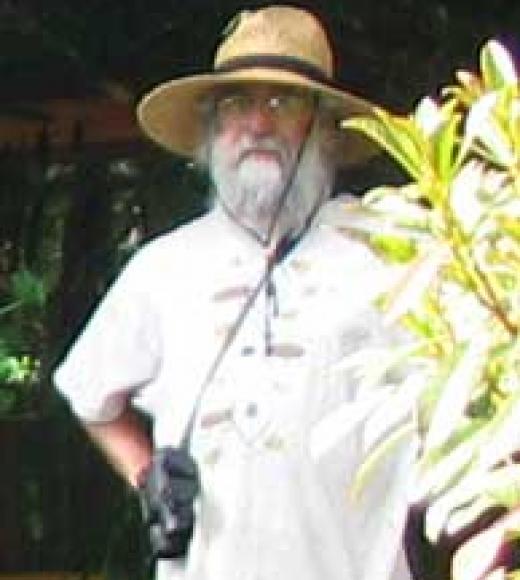
Michael Turelli is a Distinguished Professor in the Department of Evolution and Ecology at the University of California, Davis. His research focuses on theoretical population genetics, speciation mechanisms, and the population biology of Drosophila, particularly exploring Wolbachia-induced cytoplasmic incompatibility and its evolutionary implications. He is affiliated with the College of Biological Sciences and contributes to interdisciplinary initiatives in ecological biogeography and microbial symbiosis. His work bridges theoretical models with empirical studies, addressing questions in evolutionary genetics, disease control, and species diversification. Education details are not explicitly mentioned in the provided text, but his academic career has been centered at UC Davis since 1990s. His research interests include the dynamics of Wolbachia infections in insects, the genetic basis of reproductive isolation, and the application of ecological niche modeling tools (e.g., ENMTools) to study species distributions and evolutionary processes. Key research themes include the evolution of Wolbachia-host interactions, the mechanisms driving speciation in Drosophila, and the development of mathematical models to predict symbiont spread in disease vectors like Aedes aegypti. His studies often integrate lab experiments, genomic analysis, and computational simulations to understand evolutionary outcomes at both micro- and macroevolutionary scales. Labs/Teams: His work is conducted within the Evolution and Ecology Department at UC Davis, collaborating with researchers in microbiology, ecology, and computational biology to advance understanding of symbiotic relationships and their ecological impacts.


