Dr. Jun Yan is a Professor in the Department of Statistics at the University of Connecticut. His research spans network analytics, spatial extremes, survival analysis, and statistical computing with applications in public health, finance, and environmental science. His core research interests include: network modeling and analysis, spatial statistics for climate extremes, survival analysis methodologies, statistical computing frameworks, and applications in interdisciplinary domains including sports analytics. Dr. Yan has developed significant statistical methodologies for network analysis, climate change detection, financial modeling, and health analytics. His recent publications demonstrate innovation in modeling complex network structures, analyzing climate extremes, developing computational approaches for massive datasets, and creating specialized statistical methods for health and finance applications. He maintains active collaborations across disciplines and contributes to open-source statistical software. Honors include: Guggenheim Fellowship, multiple Fromm Foundation commissions, and Barlow Endowment recognition.
Tracy Camp is a Professor and Founding Department Head of Computer Science at the Colorado School of Mines. She leads the Toilers research group, focusing on ad hoc networks and wireless sensor systems for geosystems. With over 20 NSF grants and $20M in funding, her work has produced 12 software tools used globally. She holds ACM and IEEE Fellowships, a Fulbright Scholarship, and the Mines Outstanding Faculty Award. Education: B.S. Mathematics, Kalamazoo College (1987) M.S. Computer Science, Michigan State University (1989) Ph.D. Computer Science, The College of William & Mary (1993) Research Interests: Her work bridges machine learning and geosystems, including dam integrity monitoring via seismic data, UAV communication protocols, and secure encrypted traffic classification. She emphasizes interdisciplinary approaches for real-world challenges like disaster response and environmental safety. Awards: ACM Fellow (2017) IEEE Fellow (2015) NSF CAREER Award (2007) Fulbright Scholar (2006) Grants & Impact: Over 80 refereed publications and 12 invited articles, cited ~7,000 times. Her grants include initiatives to broaden participation in computing, such as the S-STEM scholarship program. Software tools developed under her grants have been adopted by 3,000+ researchers in 86 countries. Labs & Teams: Directs the Toilers group, advancing ad hoc network evaluation and geophysical monitoring. Collaborates on projects like the ADMIRE dam monitoring system and the DREAM master’s program for underrepresented students.
Sebastian Diehl is a Professor at Umeå University's Department of Ecology, Environment and Geoscience. His research focuses on mathematical modeling of aquatic ecosystem dynamics, with particular emphasis on consumer-resource interactions and climate change impacts on northern lake ecosystems. Current affiliations: Umeå University (Department of Ecology, Environment and Geoscience) Previous affiliations: Ludwig-Maximilians-Universität München (Professor of Aquatic Ecology) Academic background: Biology undergrad from University of Göttingen, PhD in Animal Ecology from Umeå University (1994) Research interests center around aquatic ecosystem dynamics in response to environmental change, including: Climate change effects on lake ecosystems (temperature and terrestrial nutrient inputs) Mathematical modeling of consumer-resource interactions Benthic-pelagic coupling in nutrient and energy flows Phytoplankton-zooplankton dynamics under environmental stressors Trophic interactions in stream and lake systems Stoichiometric constraints on ecosystem function His recent publications (2025-2020) demonstrate an integrated approach combining mathematical modeling with experimental validation through field studies and lab experiments, focusing particularly on: Climate-induced regime shifts in lake ecosystems Stoichiometric mismatch in warming systems Functional response modeling Vertical niche partitioning in plankton Resource acquisition trade-offs Browning impacts on primary producers Administrative roles include: Final examiner for PhD education Chair of Umeå Marine Science Centre advisory council Steering group member of Integrated Science Lab (IceLab)
Karthik Srinivasan is an Assistant Professor in the Analytics, Information, and Operations Academic Area at the University of Kansas School of Business. He holds a Ph.D. in Management Information Systems from the University of Arizona, an M.Mgt. in Business Analytics from the Indian Institute of Science, and a B.E. from Mumbai University. His research focuses on interpretable machine learning, explanatory modeling, text mining for business applications, and healthcare information systems. He develops methods to enhance transparency in AI systems and applies data science to healthcare, finance, and retail contexts. Recent work includes predictive modeling for incomplete data, graph-based retail analytics, and analyzing pandemic impacts on stock markets and public health. His publications span journals like MIS Quarterly, Decision Support Systems, and Nature Digital Medicine. He also contributes open-source tools like TextRegress and MoreThanSentiments for advanced text analysis. Teaching responsibilities include undergraduate and graduate-level data management courses. His research emphasizes practical applications in business and public health, leveraging interdisciplinary approaches to address real-world challenges.
Dr. Andrew McCarren is an Associate Professor and Head of the School of Computing at Dublin City University (DCU). He holds a PhD and BSc from DCU and is a funded investigator in the Insight Centre for Data Analytics. His research focuses on applying data analytics to Fintech, Agriculture, Health, and Sports Performance. As a former industry professional with 20+ years experience in Agri, Engineering, and Pharmaceuticals, he bridges academic and industrial collaboration. Professional Affiliations: Fellow of Royal Statistical Society and Advance HE Key Roles: PI on SFI/EI projects, Visiting Professor at Princess Nourah bint Abdulrahman University Research spans software engineering (microservices architecture), health informatics (exercise interventions), and agri-tech (automated food processing). Over 100 publications across data science, sports analytics, and engineering.
Dr. Cheryl Barnes is an Assistant Professor in Marine Fisheries at Oregon State University, affiliated with the Coastal Oregon Marine Experiment Station and the Department of Fisheries, Wildlife, and Conservation Sciences. She leads the Integrated Marine Fisheries Lab focusing on management-relevant research of groundfish populations. Education includes: PhD in Fisheries from University of Alaska Fairbanks MS in Marine Science from Moss Landing Marine Laboratories BS in Biology from San Diego State University Her research investigates population and community dynamics of North Pacific groundfish, emphasizing biogeographic effects on life history traits, food web interactions, and climate change impacts. She develops scientific products to inform stock assessments and ecosystem-based fisheries management through field sampling, laboratory research, and statistical modeling. Research employs collaborative approaches with agency scientists, resource managers, and fishery stakeholders. Current projects examine spatial ecology, climate vulnerability, and statistical tool development for fisheries management. Dr. Barnes mentors graduate students including Madison Bargas (MS) studying black rockfish life history and Peri Gerson (MS) modeling prey availability. She serves as Oregon's representative on the Pacific Fishery Management Council's Scientific and Statistical Committee.
Joel E. Cohen is the Abby Rockefeller Mauzé Professor at The Rockefeller University, where he leads the Laboratory of Populations. With over five decades of research experience, Cohen has pioneered innovative mathematical approaches to study biological populations and variability. His work bridges mathematics, biology, and environmental science, fundamentally changing how scientists understand population dynamics and the significance of biological variability. Dr. Cohen's research focuses on developing new mathematical tools to address population problems in demography, epidemiology, and ecology. He has made seminal contributions to the understanding of heavy-tailed distributions that describe extreme events like hurricanes and disease outbreaks, challenging traditional statistical approaches. His laboratory has conducted groundbreaking research on the spatial distribution of human populations in relation to geophysical factors, with unexpected practical applications ranging from soap formulation to semiconductor manufacturing. Cohen has also developed mathematical models for Chagas disease control in rural Argentina and created algorithms to predict international migration patterns. Analysis of Cohen's recent publications reveals a sustained focus on Taylor's law of fluctuation scaling, population dynamics, and ecological statistics. His work consistently demonstrates how abstract mathematical concepts can transform our understanding of biological systems, from cellular processes to global population trends. The research spans theoretical mathematics to practical applications in disease control, conservation biology, and environmental management. Olivia Schieffelin Nordberg Prize for excellence in writing in the population sciences (March 1997) Gheorghe Lazar Prize of Romanian Academy (December 2000) As director of the Laboratory of Populations, Cohen has led research on human population growth, infectious diseases, food webs, and international migration. His methods for assessing the uncertainty of population projections have been applied in court cases for predicting future claimants of asbestos-related diseases. Cohen's laboratory has collaborated with the United Nations Population Division on migration studies and developed mathematical models that account for more than half of the variability in annual migration numbers among 229 countries. Current research directions include understanding how demographic, economic, and cultural changes interact with Earth's physical, chemical, and biological environments. The Laboratory of Populations employs a multidisciplinary approach that combines mathematical modeling, statistical analysis, and field studies to address complex population issues. Their work exemplifies how basic quantitative research on populations frequently yields unexpected practical applications, demonstrating the profound connections between theoretical mathematics and real-world challenges in public health, environmental science, and resource management.
Dr. Saptarshi Sengupta is an Assistant Professor in the Department of Computer Science at San José State University (SJSU), leading the Machine Intelligence and Complex Systems (MICoSys) Lab. He advises the ACM student club at SJSU and holds a 'Alien of Extraordinary Ability' visa (Einstein Visa) from USCIS. His work focuses on resilient cyber-physical systems, risk analysis, and deep learning applications in healthcare and industrial systems. Education: Ph.D. in Electrical Engineering, Vanderbilt University M.S. in Electrical Engineering, Vanderbilt University B.Tech. in Electronics & Communication Engineering, West Bengal University of Technology Research Interests: Cyber-Physical Systems Security Healthcare AI for Cancer and Chronic Disease Prediction Battery Prognostics and Energy Systems Machine Learning for Complex Systems Analysis Key Achievements: Dr. T.M.A. Pai Gold Medal Award for Healthcare AI contributions Recipient of multiple best paper awards at international conferences Author of over 30 peer-reviewed publications Labs & Teams: Leads the MICoSys Lab, developing AI solutions for healthcare diagnostics, industrial prognostics, and smart infrastructure systems. Collaborations include interdisciplinary projects with biomedical and engineering domains.
Jovica Milanovic is a Professor in the School of Electrical and Electronic Engineering at the University of Manchester, where he leads the Electrical Energy and Power Systems research group. He holds a Dipl.Ing. and MSc in Electrical Engineering from the University of Belgrade, a PhD from the University of Newcastle, and a DSc from the University of Manchester. With over 600 publications, his research focuses on probabilistic modeling of power systems, renewable integration, and power quality. Research Expertise: Probabilistic assessment of uncertain power systems Machine learning applications for grid stability Demand side management in low-carbon networks Global power quality monitoring frameworks Awards & Leadership: FIEEE, FIET, and IEEE PES Distinguished Lecturer Editor-in-Chief of IEEE Transactions on Power Systems Chair of multiple international conferences including PowerTech 2017 Recipient of the Verriest Medal for contributions to power systems
John D. Albertson is a Professor in the School of Civil and Environmental Engineering at Cornell University, where he has been since 2015. Previously, he served as Department Chair of Civil and Environmental Engineering at Duke University. He holds visiting appointments at the University of Cork, University of Cagliari, University of Padova, and EURAC (Italy). His research focuses on mass, energy, and momentum exchange between land and atmosphere, with applications in hydrometeorology, air quality, and model-data fusion. B.S. in Civil Engineering (SUNY Buffalo, 1985) M.B.A. in Finance (University of Hartford, 1989) M.E.S. in Hydrology (Yale University, 1993) Ph.D. in Hydrology (UC Davis, 1996) Research interests include fluid dynamics, environmental fluid mechanics, remote sensing, and sustainable energy systems. His work integrates computational methods with field measurements to advance environmental science and engineering solutions. Awards: Croll Fellow Professor (2015), Natural Resource Institute Award (2000), NASA New Investigator Award (1999) Teaching includes courses on hydrology, environmental transport processes, and smart cities. His lab (Albertson Lab) develops innovative approaches for environmental monitoring and sustainable systems.
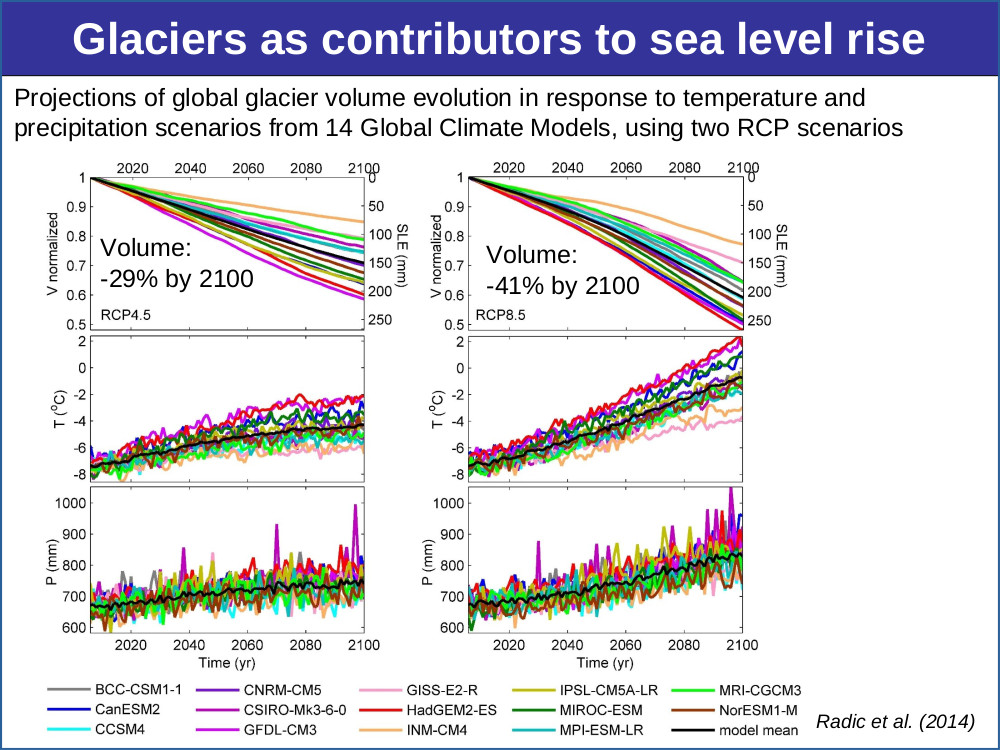
Valentina Radic is an Associate Professor in the Department of Earth, Ocean and Atmospheric Sciences at the University of British Columbia. Her research focuses on quantifying the response of mountain glaciers to climate change, including projections of sea-level rise and regional hydrology impacts. She holds a PhD from the University of Alaska Fairbanks and has led major initiatives like the updated global glacier contribution projections featured in the IPCC Fifth Assessment Report. Education: PhD, Geophysical Institute, University of Alaska Fairbanks (2007–2008) Licentiate, Stockholm University, Department of Physical Geography and Quaternary Geology (2004–2007) MSc & BSc, University of Zagreb, Department of Geophysics (1998–2004) Research Interests: Glacier dynamics, climate modeling, energy balance processes, turbulent fluxes at glacier surfaces, and applications of machine learning in geosciences. Her work bridges field observations, numerical models, and data analysis to address uncertainties in glacier melt projections. Grants & Collaborations: Leads projects on glacier mass balance modeling, turbulent heat flux parameterization, and hydrological impacts of deglaciation. Ongoing collaborations involve PhD students in dynamical downscaling and katabatic flow modeling. Labs & Teams: Directs research groups focusing on glacier evolution modeling, surface energy balance studies, and interdisciplinary approaches combining physics-based models with machine learning.
Dr. Amin Darvazehban is an Adjunct Research Fellow at the School of Electrical Engineering and Computer Science, The University of Queensland. His research focuses on electromagnetic antenna design for biomedical imaging systems, particularly targeting torso and liver diagnostics. Key Research Areas: Medical microwave imaging systems Metasurface and reconfigurable antenna technologies Dielectric property analysis for diagnostics Biomedical electromagnetic sensors Quantum signal processing applications Publication Trends: Recent work highlights electromagnetic solutions for non-invasive steatotic liver detection, torso imaging optimization, and metasurface-based antenna systems. His articles span IEEE journals in Antennas, Microwaves in Medicine, and Biosensors. Education: Completed his PhD thesis in 2021 on 'Reconfigurable antennas for electromagnetic torso imaging' at the School of Information Technology and Electrical Engineering, The University of Queensland. Patent: Co-inventor of an apparatus for electromagnetic characterization of internal features (US20230228917A1, 2023).
Professor Andrew N. Jordan is a Full Professor of Physics at the University of Rochester. He holds affiliations with the Center for Quantum Information, Center for Coherence and Quantum Optics, and Institute for Quantum Studies at Chapman University. He received his BS in Physics and Mathematics (1997) from Texas A&M University and his PhD in Theoretical Physics (2002) from the University of California, Santa Barbara. His postdoctoral work included a fellowship at the University of Geneva (2002–2005) and a Research Scientist position at Texas A&M (2005–2006). He joined the University of Rochester in 2006, advancing to Associate Professor (2012) and Full Professor (2015). His research focuses on quantum optics, condensed matter physics, and nanophysics, with emphasis on quantum measurement theory, quantum information, and statistical physics. Notable contributions include studies on superoscillations, weak measurements, and quantum thermodynamics. He co-authored the textbook Quantum Measurement: Theory and Practice (2024) and holds patents in quantum refrigeration and sensing technologies. Recent work explores superresolution imaging, optimal quantum control, and entanglement dynamics in open systems. His articles span foundational quantum theory and applied technologies, including radar ranging, quantum error correction, and AI-driven quantum systems. Awards and grants are not explicitly listed, but his research is supported by grants from institutions like the National Science Foundation. Collaborations include teams at Chapman University, Texas A&M, and international partners. His lab designs quantum sensors and refrigeration systems, advancing both theoretical and experimental quantum science.
Dr Regina Baltazar Bispo is a Lecturer in Statistics at the University of St Andrews' School of Mathematics and Statistics. Her research focuses on applying statistical methodologies to environmental and ecological challenges, including spatial modeling of bird mortality at power lines, urban fire patterns in Portugal, and high-dimensional data analysis in food traceability. She collaborates extensively with interdisciplinary teams to address real-world problems through data-driven approaches. Her work contributes to the UN Sustainable Development Goals, particularly in sustainable cities and responsible consumption. Dr Bispo's research interests span spatial statistics, environmental statistics, and biostatistics. She employs advanced techniques such as regularization methods, multi-omics data integration, and spatial point process models. Her recent publications highlight contributions to ecological impact assessments, urban fire management, and marine biology. Her work demonstrates a commitment to methodological innovation and practical applications, with a focus on Portugal's environmental challenges and global food safety. Despite no explicitly listed awards, her active research portfolio reflects a dedication to impactful academic contributions.
Andreas Milias Argeitis is an Associate Professor in the Faculty of Science and Engineering at the University of Groningen. He leads the Milias-Argeitis Lab within the Molecular Systems Biology research unit at the Groningen Biomolecular Sciences & Biotechnology Institute (GBB). His research focuses on integrating experimental and computational approaches to understand cellular processes, particularly the coordination between cell growth, division, and metabolic dynamics in budding yeast. Key research areas include systems biology, TOR signaling pathways, cell cycle regulation, and the application of machine learning and mathematical modeling. His lab develops advanced tools like optogenetic control systems and deep learning algorithms for cell segmentation and tracking. Recent work has revealed metabolic oscillations linked to the cell cycle and explored the role of proteins like Sch9 in TORC1-dependent signaling. Notable achievements include an NWO Vidi Grant (2018) and an ENW Science-M Grant (2023) for studying how growth drives the cell division cycle. He has over 40 peer-reviewed publications, including work in Nature Communications , Nature Metabolism , and Journal of Cell Science . His research bridges fundamental biology with technological innovations in single-cell analysis and synthetic biology. Lab activities include CRISPR/Cas9 genome editing protocols, fluorescent protein maturation studies, and the development of photo-switchable enzymes. Collaborations span biochemistry, mathematics, and engineering, reflecting his interdisciplinary approach to unraveling cellular mechanisms.